

Why Buy a Secondhand Designer Wedding Dress?
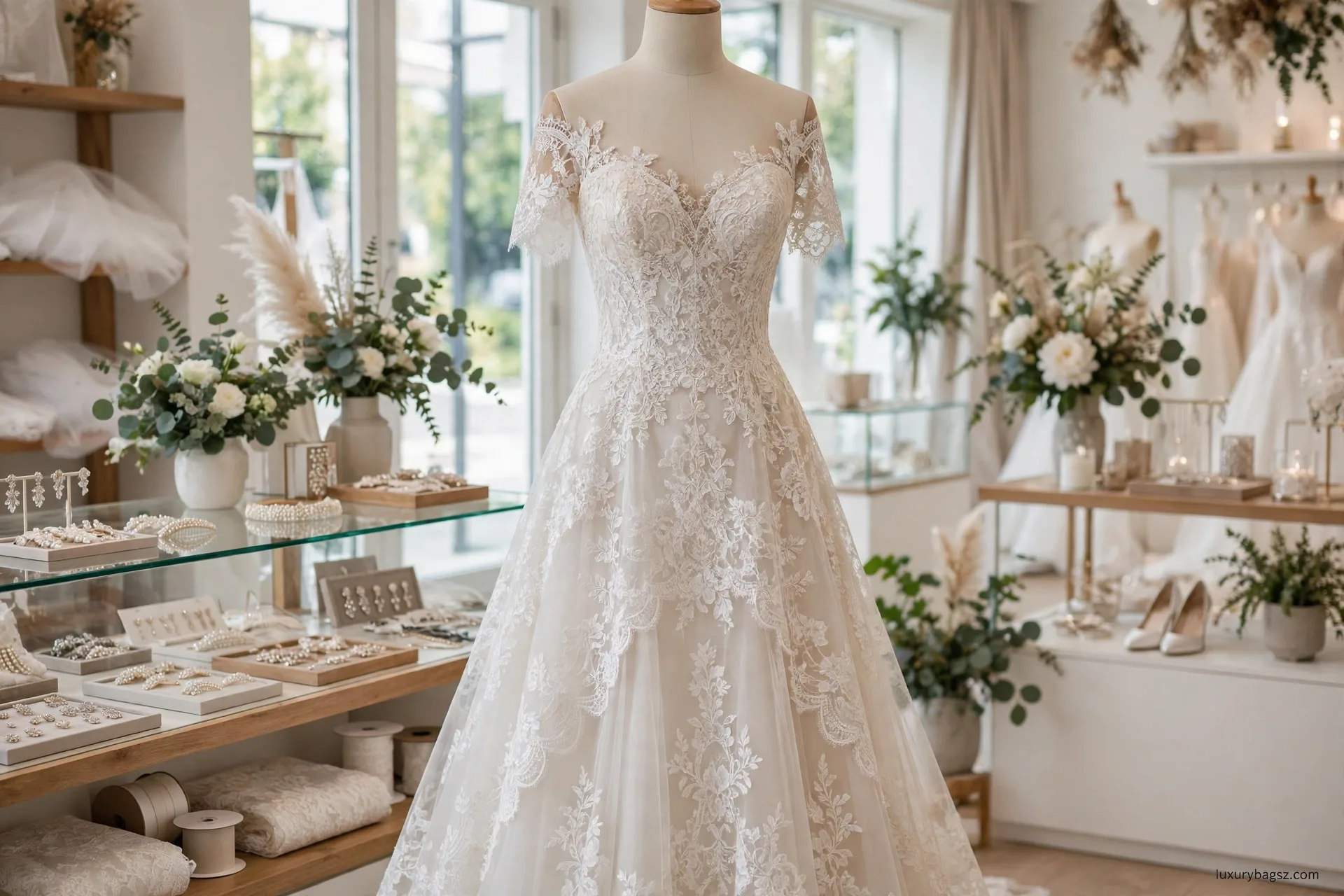
The Short Version: A Better Dress, for Less, Worn Once
A secondhand designer wedding dress offers something that is hard to find anywhere else in bridal shopping: a dress made to designer standards, often worn for a single day, at a price far below its original retail cost. The first owner paid for the boutique experience, the newness, and the full price. The second owner pays for the dress itself.
That saving is the headline reason, but it is not the only one. Buying secondhand widens choice, because discontinued designs and past collections become available again. It can shorten waiting times, because a dress already exists rather than needing months of production. And it keeps a beautiful, barely worn garment in use, rather than letting it sit in storage or go to waste.
None of that means every secondhand dress is a bargain. Size, condition, alterations, and cleaning all affect whether a dress will work for you, and a dress that needs major remaking can cost more than a new dress in the end. This guide explains the real advantages, the honest drawbacks, and how to judge a secondhand designer dress before you commit.
Key Takeaways
- Secondhand designer dresses often sell for a large fraction below original retail, because they were usually worn once.
- You can access discontinued designs, past collections, and higher-tier designers than a new-dress budget would allow.
- A dress that already exists avoids long production lead times, which helps brides with shorter timelines.
- Keeping a dress in use is a more sustainable choice than buying new, though sustainability alone should not drive a poor fit or condition decision.
- Size, prior alterations, and condition are the three factors that decide whether a secondhand dress is a bargain or a costly project.
- Always budget for professional cleaning and alterations, and inspect the dress in person or through detailed photographs before paying.
Part 1: The Price Advantage, Stated Honestly
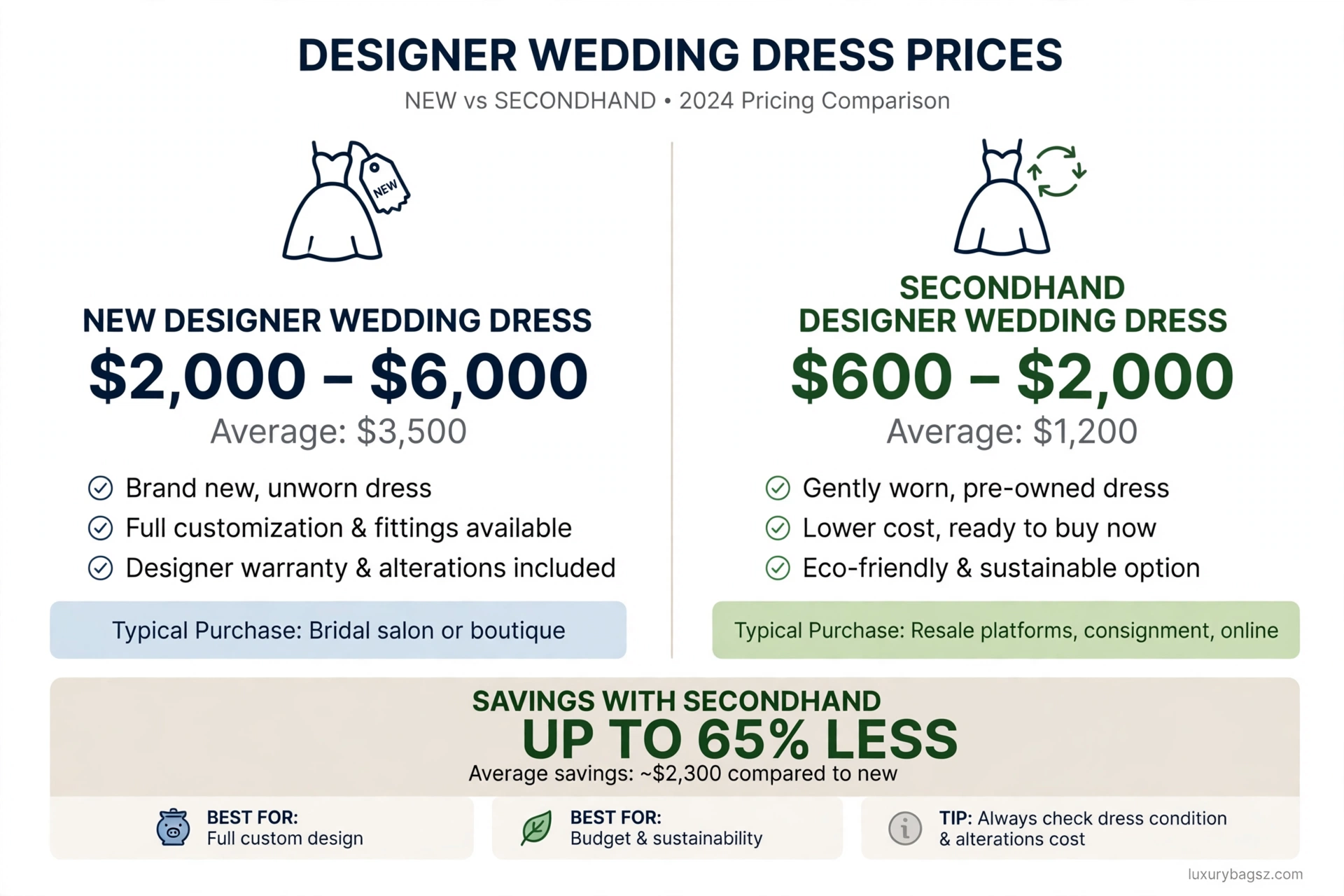
Wedding dresses lose value quickly after purchase, not because they are poorly made, but because they are made for a single occasion and a single owner. A designer dress bought for several thousand may sell secondhand for roughly half that amount, and sometimes far less, depending on designer, condition, and demand.
That fall is the buyer's opportunity, and it is the reason secondhand bridal shopping attracts budget-conscious brides who still want designer quality.
The size of the saving varies. Current, sought-after designs from popular designers hold more of their price than older or less-known designs. A dress in a popular size, in excellent condition, with its original paperwork, will command more than the same dress in a rare size with visible wear.
A dress that has been heavily altered, or that needs significant work, will sell for less still, because the buyer must pay for that work on top of the purchase price.
Compare total cost, not just dress price. A secondhand dress at 1,500 plus 400 for cleaning and alterations costs 1,900 in total. A new dress at 2,500 with alterations included may cost a similar amount overall, but the secondhand route may still offer a higher-tier designer or a more elaborate design for that money.
The comparison that matters is the dress you actually want, at its total ready-to-wear cost, not the cheapest dress on either route.
Be cautious of prices that look too good for a well-known designer. A price far below comparable secondhand examples can signal a copy, a damaged dress, or a seller who has not disclosed alterations. A fair secondhand price should sit within the range of comparable sales, and a seller who can explain why their price sits where it does is a better prospect than a seller who cannot.
Part 2: Designer Quality at a Reachable Price
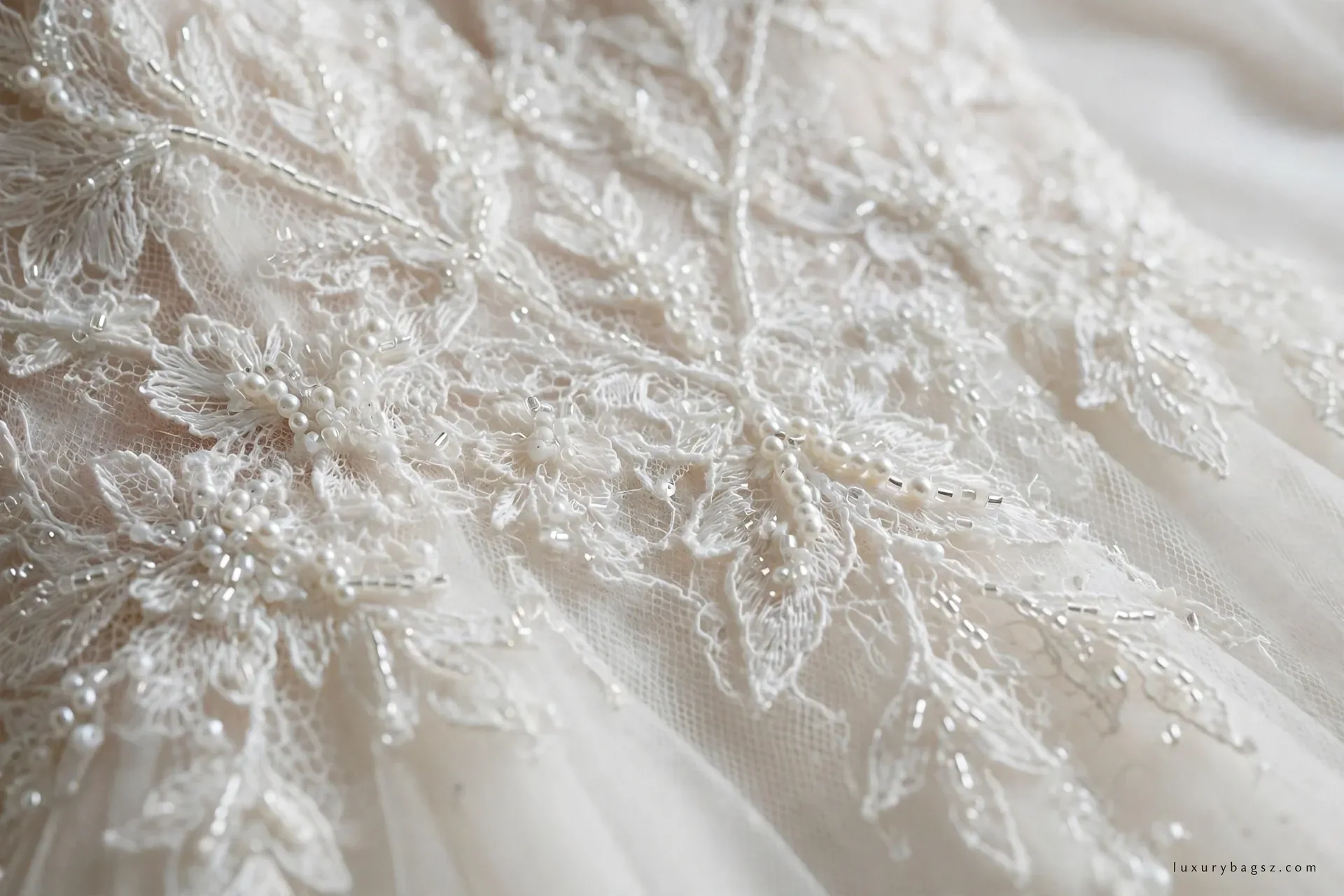
Designer wedding dresses earn their prices through materials, construction, and finishing that are often visible only up close. Hand-finished lace, structured bodices, quality linings, and careful beadwork all take time and skill, and they show in how a dress moves, photographs, and feels over a long day. Buying secondhand brings that quality within reach of brides whose budgets would otherwise point to simpler new dresses.
That quality also affects how a dress ages. A well-made dress in silk, lace, or a quality mikado will usually survive a single wedding day in good condition, provided it was stored and cleaned properly afterwards. Cheaper dresses, by contrast, may show wear after one day in ways that are harder to repair, such as torn seams, flattened structure, or damaged embellishment.
A secondhand designer dress, inspected carefully, can therefore be a more reliable purchase than a new dress of lower quality at a similar price.
Design detail is another advantage. Designer dresses often include thoughtful features that mass-market dresses omit: built-in support, well-placed seams, linings that prevent transparency, and trains that bustle cleanly for dancing. Those features matter on the day, when comfort and movement matter as much as appearance. A secondhand dress that already includes them, at a lower price, offers value that a photograph alone does not show.
Finally, designer dresses tend to photograph well, which matters for a garment that will appear in photographs for decades. The structure, fabric quality, and finishing that justify a designer price at retail are the same qualities that make a dress look expensive in pictures. A secondhand designer dress, chosen well, does not look secondhand in photographs. It looks like the dress it is.
Part 3: Choice Beyond the Current Season
Bridal boutiques stock current collections, which means a bride shopping new is limited to what designers are producing now. Secondhand shopping removes that limit. Discontinued designs, past collections, and dresses from designers who have closed or changed direction all reappear on the secondhand market, giving brides a wider field to search.
That wider choice matters for brides with a specific vision. A bride who fell in love with a dress from three years ago, or who wants a particular silhouette, fabric, or detail that is no longer in production, may find it secondhand when no boutique can order it new. Vintage-inspired brides, in particular, benefit, because secondhand stock includes genuine period designs alongside modern dresses with vintage styling.
Choice also extends to size and style experimentation. A bride who is unsure between two silhouettes can try secondhand examples of both, often at lower cost than ordering new samples, and can learn what suits her before committing. That freedom to explore, without boutique pressure or order deadlines, suits brides who want time to decide rather than a single high-pressure appointment.
The trade-off is availability. A specific secondhand dress exists in one size, in one place, with one seller. It cannot be ordered in another size or colour, and it may sell while you are still thinking. Brides shopping secondhand should therefore search broadly, act promptly when the right dress appears, and keep a shortlist of acceptable alternatives, so a missed dress does not become a missed wedding plan.

Part 4: Time — When Secondhand Is the Faster Route
New designer dresses often require months between ordering and delivery, followed by alteration appointments. That timeline suits brides planning far ahead, but it creates stress for brides with shorter engagements, destination weddings, or changed plans. A secondhand dress that already exists can be bought, cleaned, and altered in weeks rather than months, which removes a major source of wedding stress.
Speed is not just about the calendar. It is also about certainty. A new dress order can face production delays, shipping delays, or a delivered dress that differs from the sample tried on. A secondhand dress can be inspected before purchase, in the exact form it will be worn, with its actual fabric, colour, and condition visible. That certainty is valuable, especially when time is short and there is no room for a second order.
Secondhand shopping also allows a different kind of timeline. A bride can buy a dress early, store it safely, and arrange alterations closer to the wedding, when her size and plans are settled. Or she can buy late, with confidence, because the dress is already made. Either approach works, provided cleaning and alteration time is built into the plan and a reliable seamstress is booked in advance.
One caution applies to speed. A dress bought in a rush, without proper inspection, can create more problems than a slower new order. Fast should mean efficient, not careless. Even with a short timeline, insist on condition photographs, a clear return policy where available, and a seamstress's opinion before finalising alterations that cannot be undone.
Part 5: Sustainability — A Real Benefit, Not a Sales Line
Keeping a wedding dress in use is a genuinely more sustainable choice than buying new, because dress production uses materials, energy, water, and skilled labour, and most dresses are worn once. Extending a dress's life by a second wearing spreads that production impact across two weddings rather than one, and it avoids the waste of a garment sitting unused or being discarded.
That benefit is real, but it should not be overstated. A secondhand dress still requires cleaning, which uses chemicals and water, and it may require shipping, packaging, and alterations, all of which carry their own impact. The sustainability case for secondhand is strong in comparison with buying new, not in absolute terms, and brides should be wary of sellers who present secondhand shopping as impact-free.
Sustainability also connects to the wider wedding. A bride who buys secondhand often becomes more thoughtful about other wedding choices, from reusing decor to choosing a venue and menu with less waste. That wider effect is hard to measure, but it is a genuine part of why many brides choose secondhand, alongside price and choice.
The honest position is this: sustainability is a good reason to consider secondhand, and for some brides it is the main reason, but it should not override fit, condition, or comfort. A dress that does not fit, cannot be altered safely, or makes the bride uncomfortable on her wedding day is not a sustainable choice, however it was sourced. The best secondhand purchase is one that is sustainable and wearable, not one or the other.
Part 6: Fit — The Factor That Decides Everything
Fit is the single most important factor in secondhand bridal shopping, because wedding dresses are structured garments that cannot always be altered as easily as everyday clothes. A dress that is too small is much harder to fix than a dress that is too large, because letting out a dress requires extra fabric in the seams, and many designer dresses have little spare fabric.
A dress that is too large can usually be taken in, within limits, by a skilled seamstress.
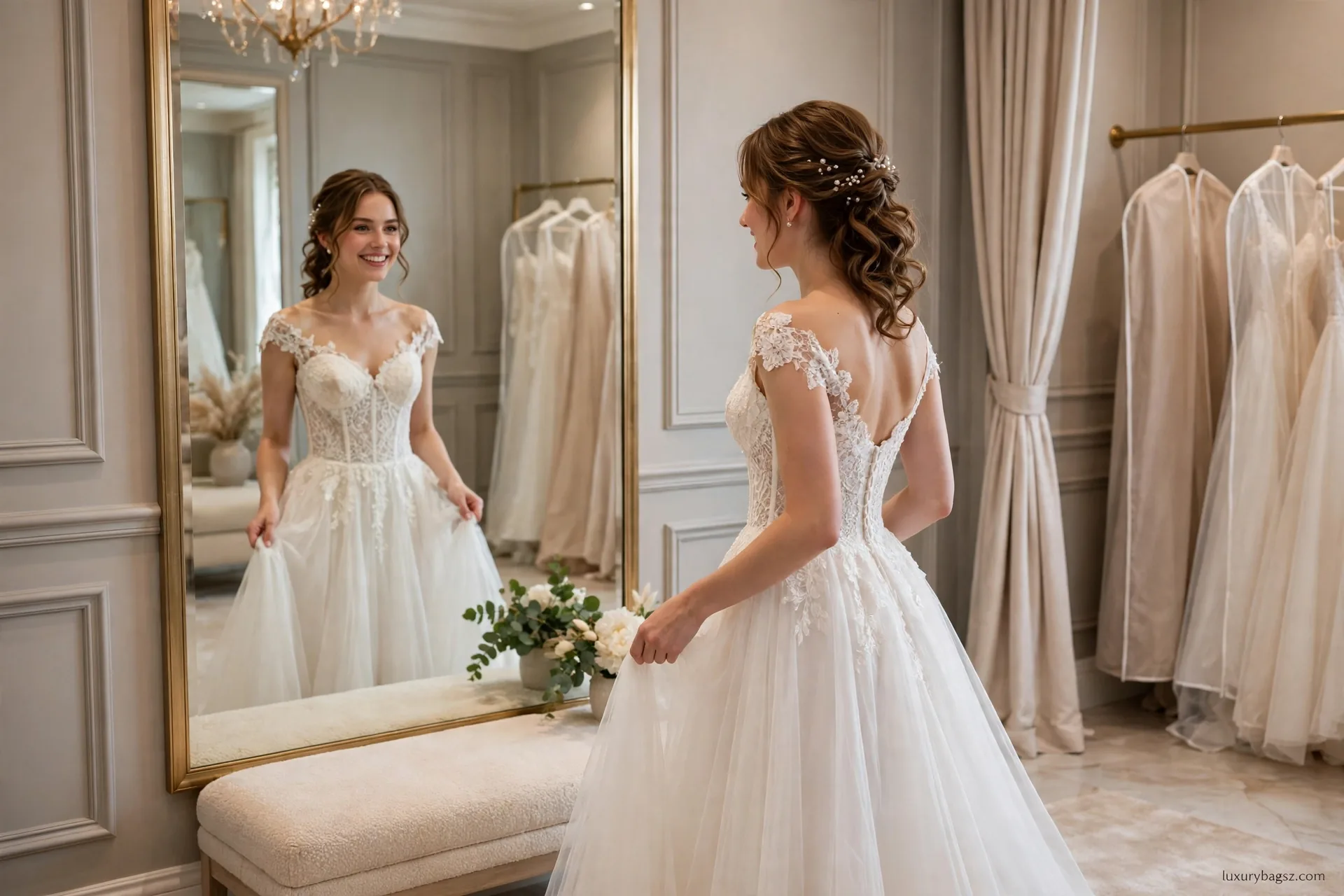
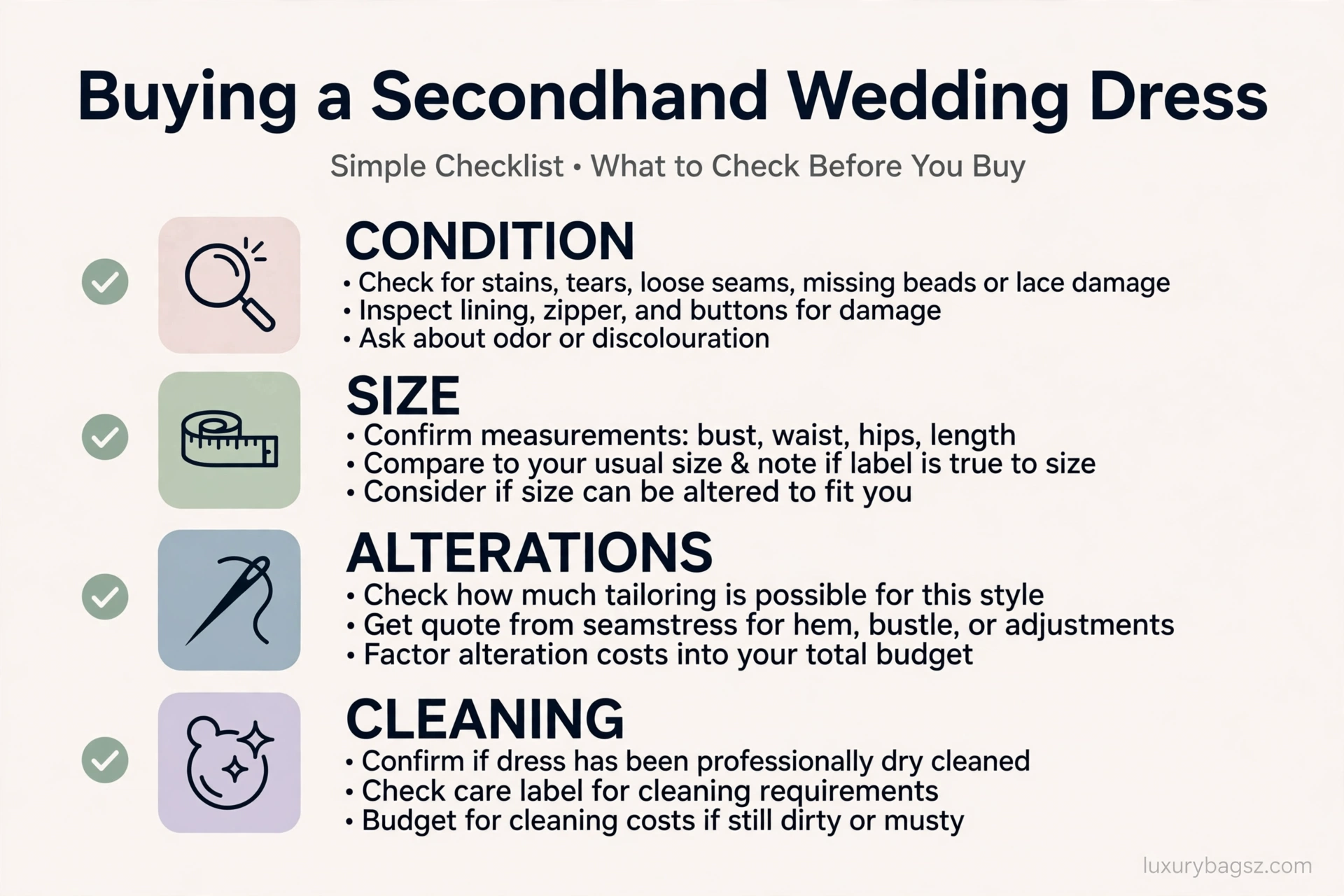
Start with measurements, not dress sizes. Bridal sizing differs from everyday sizing and varies by designer, so a bride's usual size tells very little. Measure bust, waist, hips, and hollow-to-hem length, and compare those measurements with the dress's actual measurements, not with the size label. Ask the seller for the dress's measurements taken flat, and for information about prior alterations, which change the dress from its original size.
Try the dress on where possible, or arrange a video inspection with the seller showing the dress on a person or mannequin of similar size. Photographs alone can hide fit issues, especially around the bodice, shoulders, and waist. If an in-person try-on is impossible, check the seller's return policy carefully, and consider whether a local seamstress can assess the dress on arrival before any alteration work begins.
Prior alterations deserve special attention. A dress that was taken in, shortened, or restructured for a previous owner may not return to its original shape, even if the seller describes it as a standard size. Ask what was altered, by whom, and whether the original fabric or hem remains. A dress with a cut hem, for example, cannot be lengthened easily, which matters for taller brides or for brides planning different shoes.
Part 7: Condition — What to Check, Stain by Stain
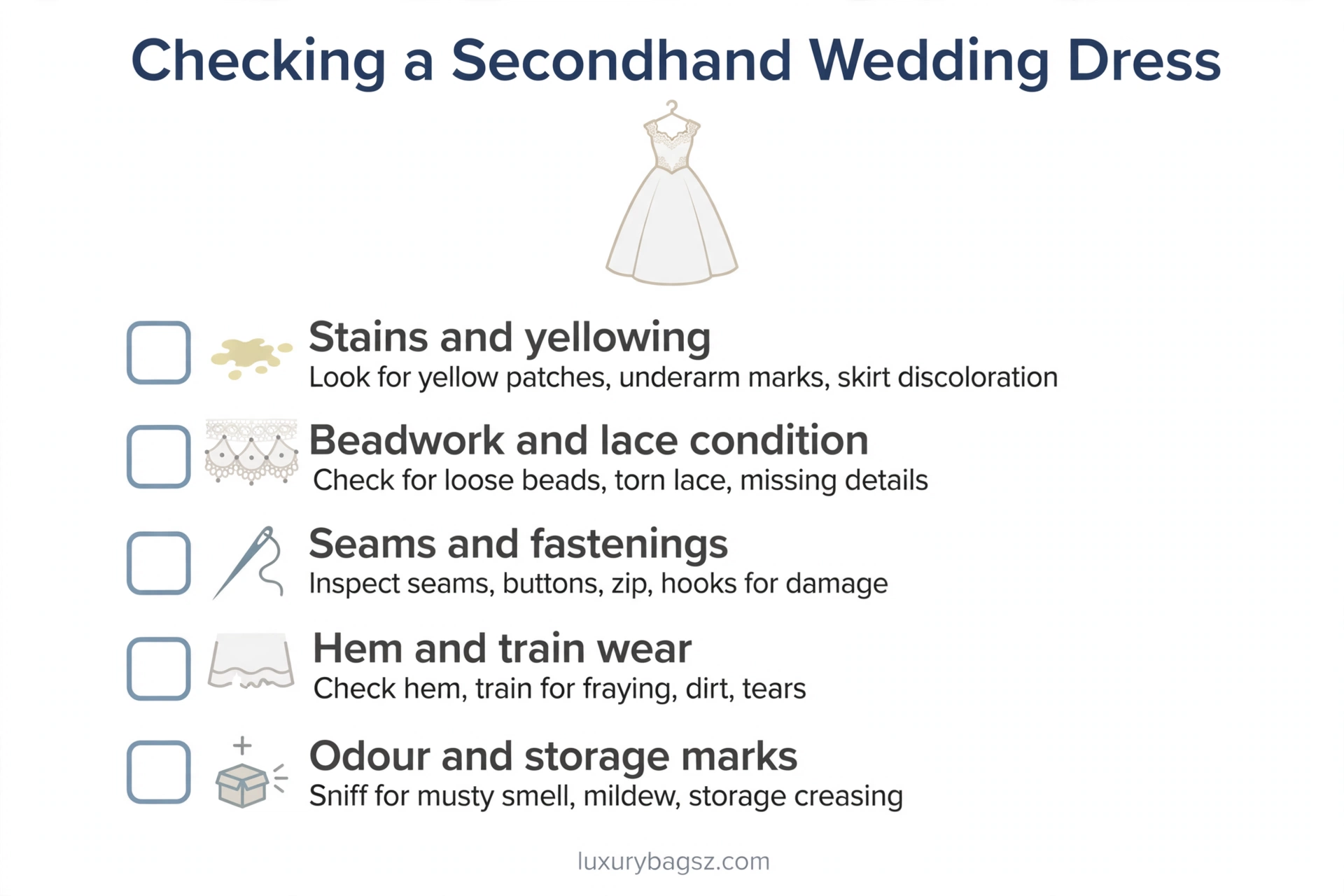
Condition checking for a wedding dress starts with the obvious and moves to the hidden. Look first at the hem, which picks up dirt, scuffs, and damage from walking, dancing, and outdoor photographs. Then check the train, the underarms, and the bodice lining, where sweat, deodorant, and makeup can leave marks that are not visible in a front photograph. Then check beadwork, lace, and appliqué for missing pieces, loose threads, or repairs.
Stains fall into categories, and each has a different outlook. Surface dirt on a hem often cleans well. Food, drink, and grass stains may clean with professional treatment, depending on fabric and age. Yellowing from storage, or set-in stains that have been there for years, are harder to remove and may not come out fully.
A seller who says a dress "just needs a clean" may be right, but a professional cleaner's opinion, before purchase, is worth more than a seller's hope.
Fabric condition matters as much as cleanliness. Silk can weaken with age, light, and improper storage. Lace can tear at stress points. Beadwork can loosen, and a single missing bead can be hard to match. Check seams for strain, boning for bending or breakage, and zips and buttons for smooth function. A dress that looks perfect standing still may reveal problems when moved, so ask the seller to show the dress in motion where possible.
Storage history tells you much about condition. A dress stored in a breathable garment bag, in a cool, dry place, will usually fare better than one stored in plastic, in a damp loft, or in a box with other items pressing on beadwork. Ask how the dress was stored, when it was last cleaned, and whether it was cleaned after its wedding day or stored uncleaned. An uncleaned dress stored for years is a higher-risk purchase than a promptly cleaned one.
Part 8: Alterations and Cleaning — Budget for Both
Every secondhand dress budget should include cleaning and alterations, even when the dress looks perfect. Professional bridal cleaning is specialised work, because wedding fabrics, beadwork, and lace require different treatments, and a general dry cleaner may damage a designer dress. Use a cleaner experienced with bridal gowns, and ask for a quote and a realistic assessment before committing to the dress.
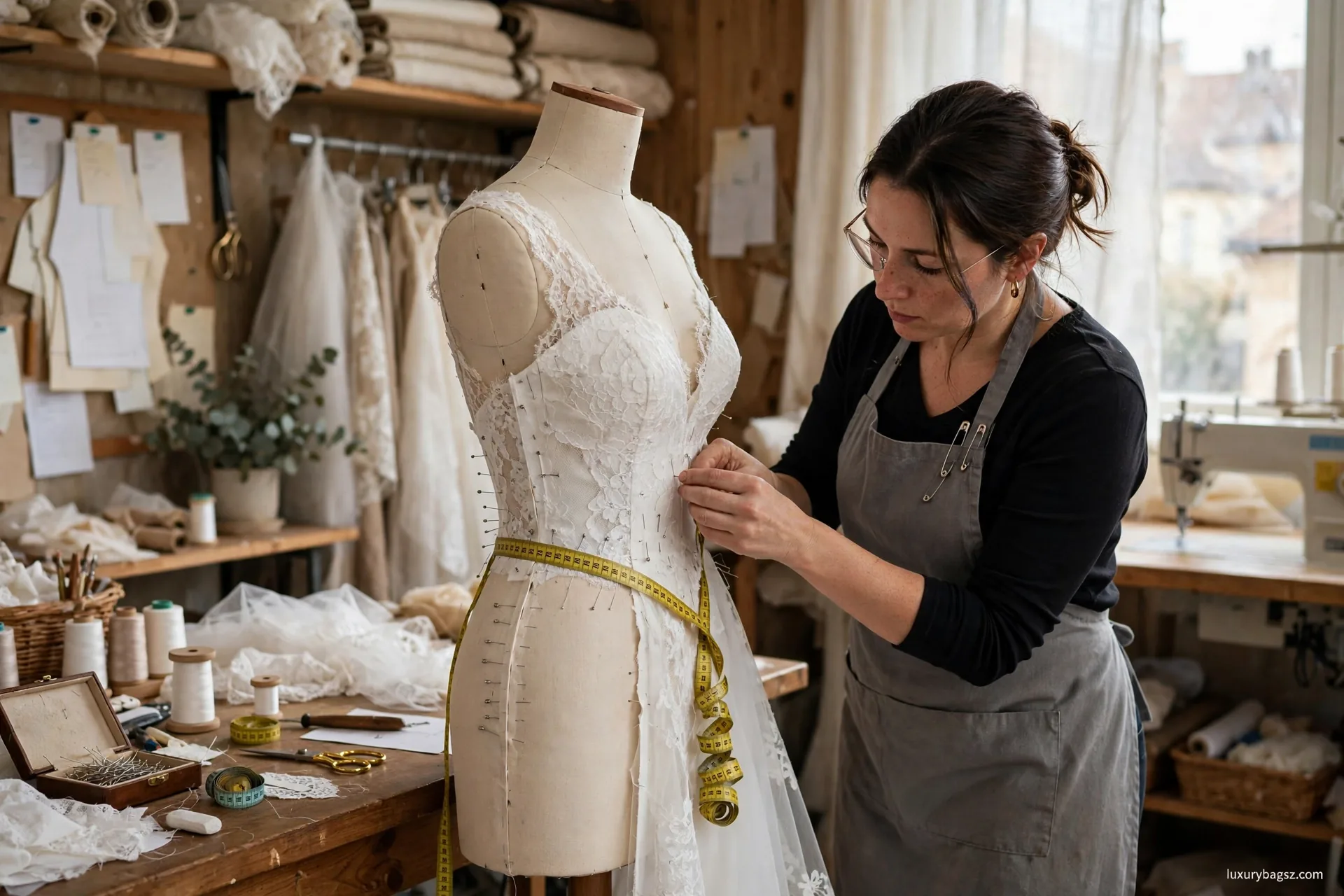
Alterations range from simple to major. Hemming, taking in a bodice, adjusting straps, and adding a bustle are common and usually straightforward for an experienced bridal seamstress. Restructuring a bodice, changing a neckline, adding sleeves, or remaking a train are major works that cost more, take longer, and carry more risk.
A seamstress's opinion, given before purchase where possible, can prevent a bargain dress from becoming an expensive rebuild.
Get alteration quotes in writing, with a timescale that fits the wedding date, and leave a margin for fittings. Most dresses need at least two fittings, and a dress with complex beadwork or lace may need more. Book the seamstress early, because good bridal seamstresses are in demand, especially in peak wedding season, and a late booking can mean a rushed job or no availability at all.
Cleaning and alterations also affect resale after your own wedding, if you plan to sell the dress on. A dress cleaned promptly after your wedding, with alterations documented, will sell more easily than a dress stored uncleaned with unknown changes. Keeping the dress's history clear, from purchase through your wedding to resale, is a kindness to the next buyer and a benefit to your own sale price.
Part 9: Where to Buy, and How to Buy Safely
Secondhand designer dresses are sold through specialist bridal resale platforms, consignment boutiques, general resale marketplaces, and private sellers. Specialist platforms usually offer buyer protection, detailed listings, and sometimes authentication or condition checks, which justify their fees. Consignment boutiques allow in-person try-ons and expert advice, which is valuable for fit and condition.
General marketplaces offer wider choice but less protection, and private sales offer the lowest prices with the highest risk.
Whichever route you choose, insist on detailed information before paying. Ask for the designer's name, the dress's model or collection, its original size and current measurements, its alteration history, its condition in detail, and photographs of the hem, train, bodice, lining, beadwork, and any flaws. A seller who provides this information willingly is a better prospect than a seller who offers only styled photographs and brief descriptions.
Payment safety matters. Use a platform's protected payment system where available, rather than paying by untraceable transfer. For high-value dresses, an escrow-style arrangement or a platform hold, released after inspection, protects both sides. Avoid sellers who insist on payment before any inspection, who refuse to answer condition questions, or who pressure you to decide within hours.
A genuine dress will still be genuine tomorrow, and a pressured sale is rarely a good one.
Delivery also needs care. A wedding dress should be shipped in a proper garment bag, in a box that protects beadwork and structure, with tracking and insurance at full value. On arrival, inspect the dress at once, in good light, against the listing photographs and description, and raise any discrepancy immediately, while return and protection windows remain open.
Do not start alterations until you are satisfied with the dress, because altered dresses are usually non-returnable.
Part 10: The Emotional Side — Is Secondhand Right for You?
Buying secondhand is a practical decision, but weddings carry emotion, and that emotion matters. Some brides love the idea of a dress with a history, worn once in happiness and now worn again. Others want the experience of choosing a new dress, with a boutique appointment, a first fitting, and the knowledge that no one has worn the dress before. Neither feeling is wrong, and neither should be dismissed as snobbery or as sentimentality.
Consider what matters most to you. If the dress itself, its design, quality, and fit, matters more than its newness, secondhand shopping is likely to suit you. If the boutique experience, the untouched dress, and the feeling of being the first owner matter most, a new dress may be worth its higher price, even when a secondhand equivalent exists.
A wedding dress is worn for one day, but it is remembered for a lifetime, and the memory should include feeling right, not just saving money.
Talk to your partner, family, or close friends if their views matter to you, but remember that the decision is yours. A dress bought to please others, secondhand or new, rarely feels right on the day. A dress bought because it suits you, fits well, and feels like yours, whatever its history, usually does. Trust that feeling, and do not let anyone else's idea of newness override your own judgement about the dress in front of you.
Finally, remember that a secondhand dress can be made fully yours through fitting, styling, and personal touches. Different shoes, jewellery, a veil, and hair and makeup choices all shape how a dress looks and feels. The previous owner's wedding does not live in the dress. Your wedding does, from the moment you choose it, fit it, and wear it as your own.
Part 11: After the Wedding — Keeping, Selling, or Passing On
A secondhand dress has already lived one wedding before yours, and after your wedding you face the same choice its previous owner faced: keep it, sell it, or pass it on. Each choice deserves thought before the wedding, not after, because how you treat the dress on the day and in the days after affects every option. A dress cleaned promptly, stored properly, and documented well keeps all three options open.
A dress left uncleaned, folded damp, or stored in plastic may lose them.
Keeping a dress is a valid choice, especially when it carries strong memory or when you hope a family member may wear it one day. If you keep it, have it professionally cleaned and preserved, not just cleaned and boxed. Preservation uses acid-free materials, proper folding with tissue, and a box that protects beadwork and structure, and it should be stored in a cool, dry place, not in a loft or garage where temperature and damp vary.
Check the dress occasionally, because even preserved dresses can develop issues over years, and early attention prevents larger damage.
Selling the dress on continues the cycle that benefited you, and it can return a meaningful share of what you paid, especially if the design remains popular and the dress is in excellent condition after your wedding. Sell with the same honesty you expected as a buyer: full measurements, alteration history including your own alterations, condition photographs, and cleaning records.
A seller who documents a second wearing clearly will attract buyers who trust the listing, while a seller who hides a second wearing will face the same disputes you hoped to avoid.
Passing a dress on, to a family member, a friend, or a charitable bridal programme, is a generous choice that suits dresses with strong sentimental value but limited resale appeal, or brides who prefer giving to selling. Charitable programmes vary in what they accept, so check condition requirements, cleaning requirements, and whether the programme can use your dress's size and style before donating.
A donation that cannot be used helps no one, while a dress passed to a specific person who loves it and fits it continues its story in the best possible way.
Before you decide, talk through the options with anyone who will help store, clean, or transport the dress, because a kept dress needs a safe home and a sold dress needs photographs, listings, and postage. A plan agreed in advance avoids a dress sitting uncleaned in a spare room while everyone assumes someone else is handling it.
Put a date in your diary for two weeks after the wedding to clean, photograph, and decide, and keep that appointment even when honeymoon tiredness tempts you to postpone it indefinitely.
Whichever choice you make, remember that a wedding dress's value is not only financial. A dress worn happily, cared for, and then kept, sold, or passed on with honesty has served its purpose twice over, and that double service is the quiet argument for secondhand bridal shopping in the first place.
Frequently Asked Questions
Why buy a secondhand designer wedding dress?
Because you can access designer quality, discontinued designs, and a wider choice at a large saving, often for a dress worn only once. The saving, the quality, and the shorter timeline together make secondhand bridal shopping attractive for many brides.
How much can I save buying a secondhand wedding dress?
Savings vary by designer, condition, and demand, but secondhand designer dresses often sell for roughly half their original retail price, and sometimes far less. Always compare total cost, including cleaning and alterations, rather than dress price alone.
Is it safe to buy a secondhand wedding dress online?
Yes, with care. Use protected payment, insist on detailed measurements, alteration history, and condition photographs, and inspect the dress on arrival before starting alterations. Specialist bridal resale platforms offer more protection than general marketplaces or private sales.
What size should I buy in a secondhand wedding dress?
Buy by measurements, not by size label, because bridal sizing varies by designer and prior alterations change a dress from its original size. Compare your bust, waist, hips, and hollow-to-hem measurements with the dress's actual measurements, and favour a dress that can be taken in over one that needs letting out.
Can a secondhand wedding dress be altered?
Yes, within limits. Taking in, hemming, adjusting straps, and adding a bustle are usually straightforward. Major restructuring, lengthening a cut hem, or changing a bodice shape is harder and costlier, so get a seamstress's opinion before buying a dress that needs major work.
How do I check a secondhand wedding dress for damage?
Check the hem, train, underarms, bodice lining, beadwork, lace, seams, boning, and fastenings, in good light, and ask for photographs of each. Ask about stains, storage history, and last cleaning, and get a professional cleaner's opinion on any stain before purchase if you are unsure.
Should a secondhand wedding dress be cleaned before wearing?
Yes, in almost all cases. Use a cleaner experienced with bridal gowns, because wedding fabrics and embellishments need specialised treatment. Budget for cleaning in the total cost, and clean the dress promptly after your own wedding if you plan to resell it.
Are secondhand designer wedding dresses authentic?
Most sold through reputable platforms and boutiques are, but copies exist, so check the designer's labels, construction, and paperwork, and buy from sellers who provide detailed photographs and answer questions plainly. A price far below comparable examples deserves extra scrutiny.
How far in advance should I buy a secondhand wedding dress?
Earlier is usually better, to allow time for cleaning, fittings, and alterations, but secondhand dresses suit shorter timelines far better than new orders, because the dress already exists. Allow at least several weeks for cleaning and alterations, and book a seamstress early in peak season.
Can I resell my wedding dress after buying it secondhand?
Yes, and many brides do. A dress cleaned promptly after your wedding, with documented alterations and honest condition photographs, will sell more easily. Expect its price to reflect a second wearing, further alterations, and current demand for that design.
Final Verdict
Buying a secondhand designer wedding dress is, for many brides, the smartest bridal purchase available. It offers designer quality, wider choice, and a large saving, for a dress that was usually worn for a single day and cared for afterwards.
It is not a shortcut, though. Fit, condition, alterations, and cleaning decide whether a dress is a bargain or a project, and those factors deserve the same attention you would give to choosing a new dress. Buy by measurements, inspect honestly, budget for cleaning and alterations, and buy through a safe route.
Done that way, a secondhand designer dress does not feel secondhand at all. It feels like your dress, chosen wisely, worn beautifully, and ready to carry its next happy memory.
Start your search early, keep your measurements to hand, and shortlist more than one dress, so a single missed listing never becomes a crisis. When the right dress appears, check it thoroughly, budget honestly for cleaning and alterations, and buy through a route that protects you. The dress you choose this way will not just save money. It will arrive with its quality intact, its history clear, and its next chapter entirely yours.
And if you later pass it on, cleaned and documented, you give another bride the same opportunity you enjoyed: a beautiful designer dress, at a fair price, ready for a day that deserves nothing less than a dress chosen with care, worn with confidence, and remembered with happiness for years afterwards.






