

Tadashi Shoji Evening Gowns: Fit, Prices, Sizes and What to Check
Tadashi Shoji in Brief: Red-Carpet Polish Without the Couture Bill
Tadashi Shoji evening gowns deliver the gala look — lace, draping, sequins and sweeping chiffon — at prices far below the Paris houses, typically in the hundreds rather than the thousands of pounds. The fit is the real selling point: engineered draping and stretch linings flatter a wide range of bodies, and the size range is broader than most designer labels, running into plus sizes. Choose these gowns for weddings, galas and black-tie dinners where you want to look fully dressed up and still move, sit and eat like a person.
One more reason the house matters: it photographs kindly. The draping breaks light softly, the colours are chosen for evening rather than daylight, and the gowns rarely need filters to flatter their wearer.
Key Takeaways
- Prices sit in the accessible band for designer eveningwear — hundreds, not thousands.
- Draping and ruching are cut to flatter, with stretch linings that forgive.
- The size range is unusually wide, including plus sizes on many styles.
- Lace, chiffon and sequins are the core fabrics; capes and sleeves feature often.
- Fit runs true to size for most wearers, unlike many European houses.
- Care is gentle: specialist cleaning, breathable bags and cool storage.
The Designer and His Idea of Evening
Tadashi Shoji founded his Los Angeles house in 1982 with a simple brief: evening dresses that women of many ages and sizes could actually wear beautifully. Our Tadashi Shoji profile traces how that idea carried him from art training to red carpets around the world. The design language follows from it: draped bodices, ruched waists, lace that stretches, and sleeves or capelets for women who want arm coverage without a shrug. It is glamour engineered for real evenings, which is why the gowns recur on award-season guests and mothers of brides season after season.
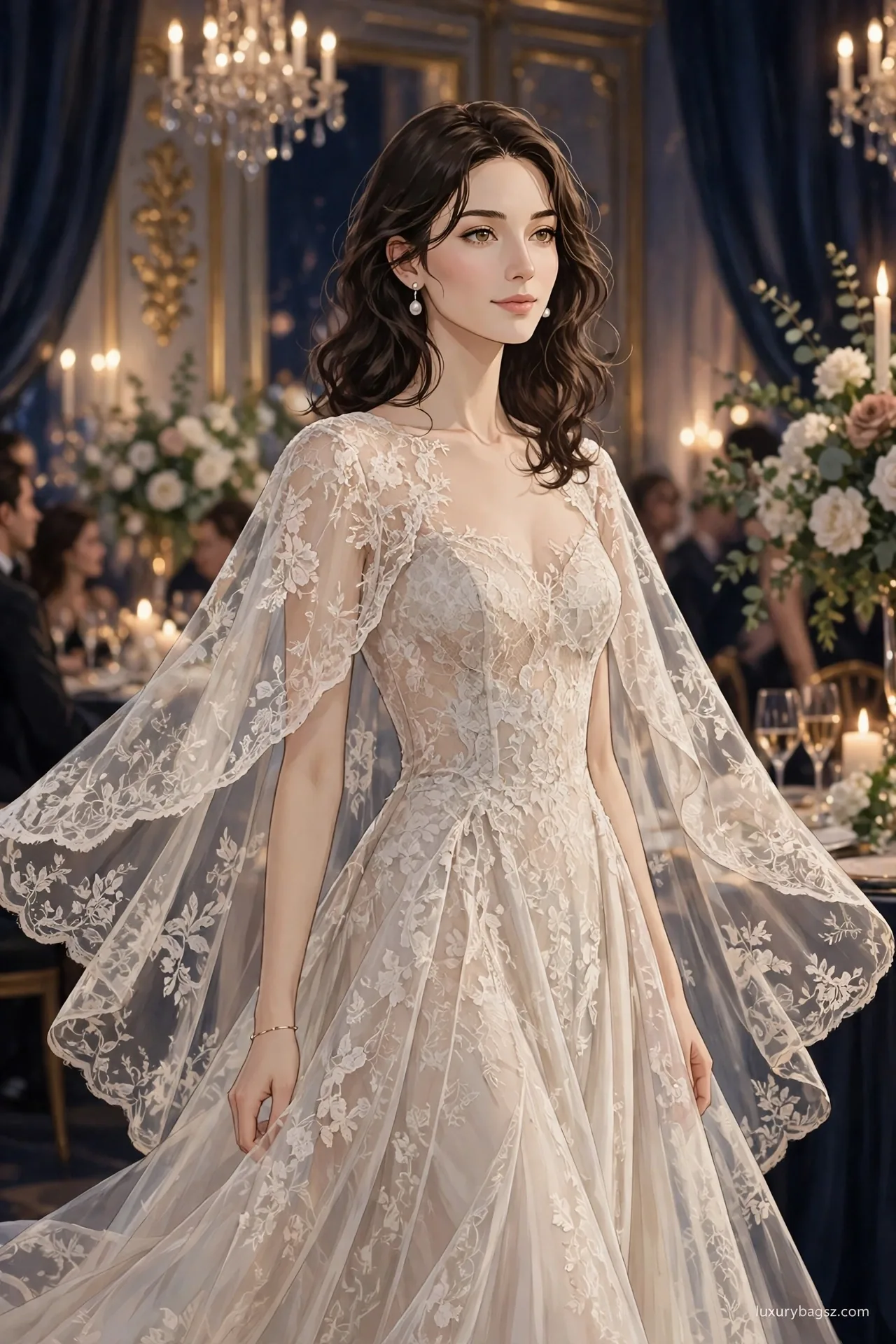
Cape gowns deserve their own mention: a sheer lace or chiffon cape attached at the shoulders gives movement like a train without anything trailing to be stepped on. They are the house's most requested party trick.
Signature Styles to Know
The draped jersey gown is the workhorse: ruched through the waist, smooth over the hip, and kind in photographs from every angle. Lace gowns carry the romance — full lace, lace bodices over chiffon skirts, and the cape gowns where sheer lace sleeves flow into the back. Sequin styles handle the sparkle brief. They are lighter than the dense beading of couture houses, which makes them easier through a long evening. Off-the-shoulder and one-shoulder necklines appear every year. They balance a fuller skirt and show jewellery well, which suits gala dressing.
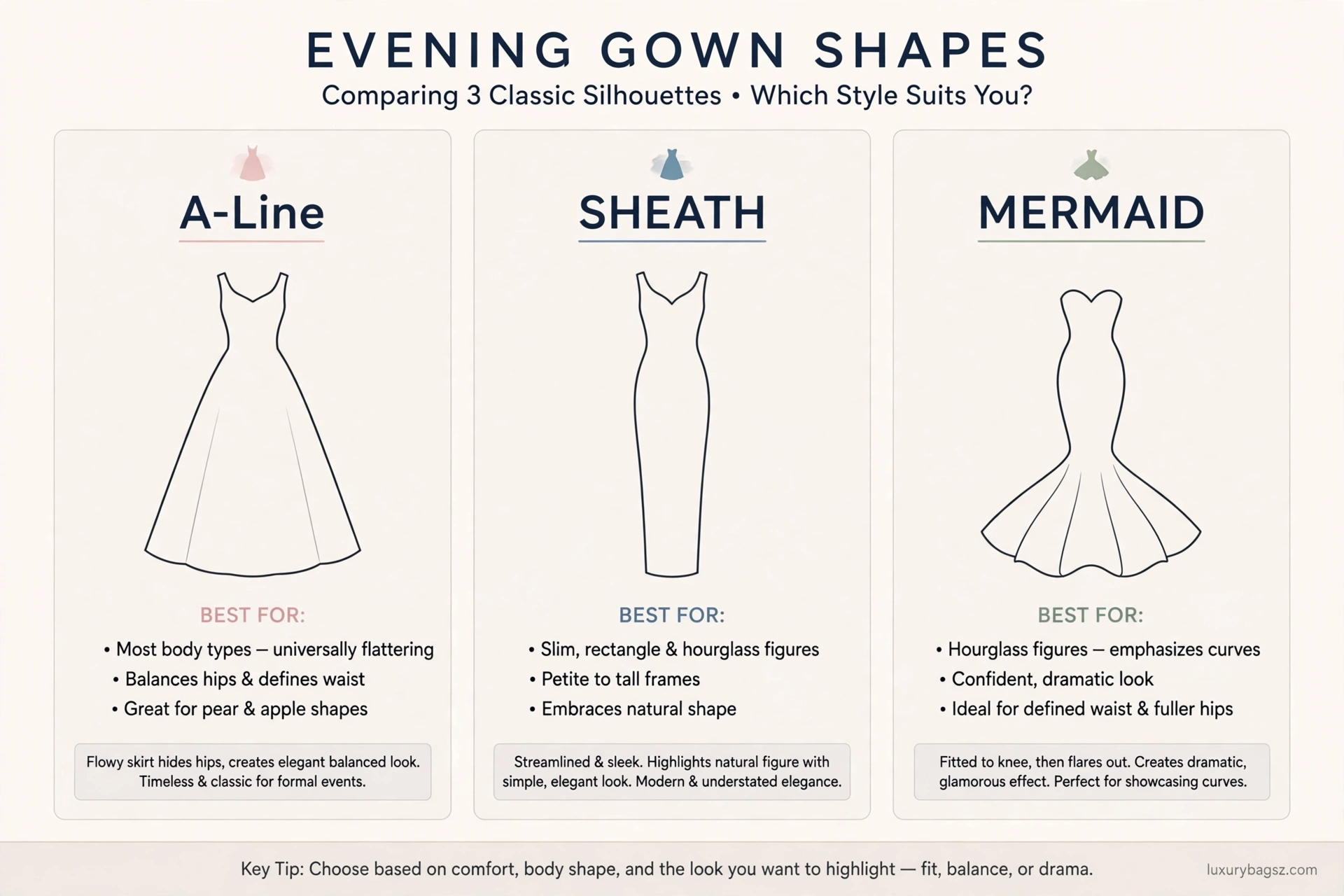
Necklines steer the shape choice further: off-shoulder styles suit A-lines for balance, while high-neck lace belongs on sheaths where the line stays clean. Try one of each family before deciding the shape is wrong.
Shapes: A-Line, Sheath and Mermaid
The A-line is the house's most forgiving shape, skimming the waist and floating over the hip. It suits almost everyone and dominates the range. Sheath gowns follow the body in draped jersey or crepe. The ruching does the shaping work, so the line stays sleek without hard structure. Mermaid styles appear in lace for maximum occasion. They ask more of the wearer — movement is mannered — but the draped versions are kinder than most. Match shape to evening, not just to mirror. A sheath you can dance in beats a mermaid you must be carried around in.
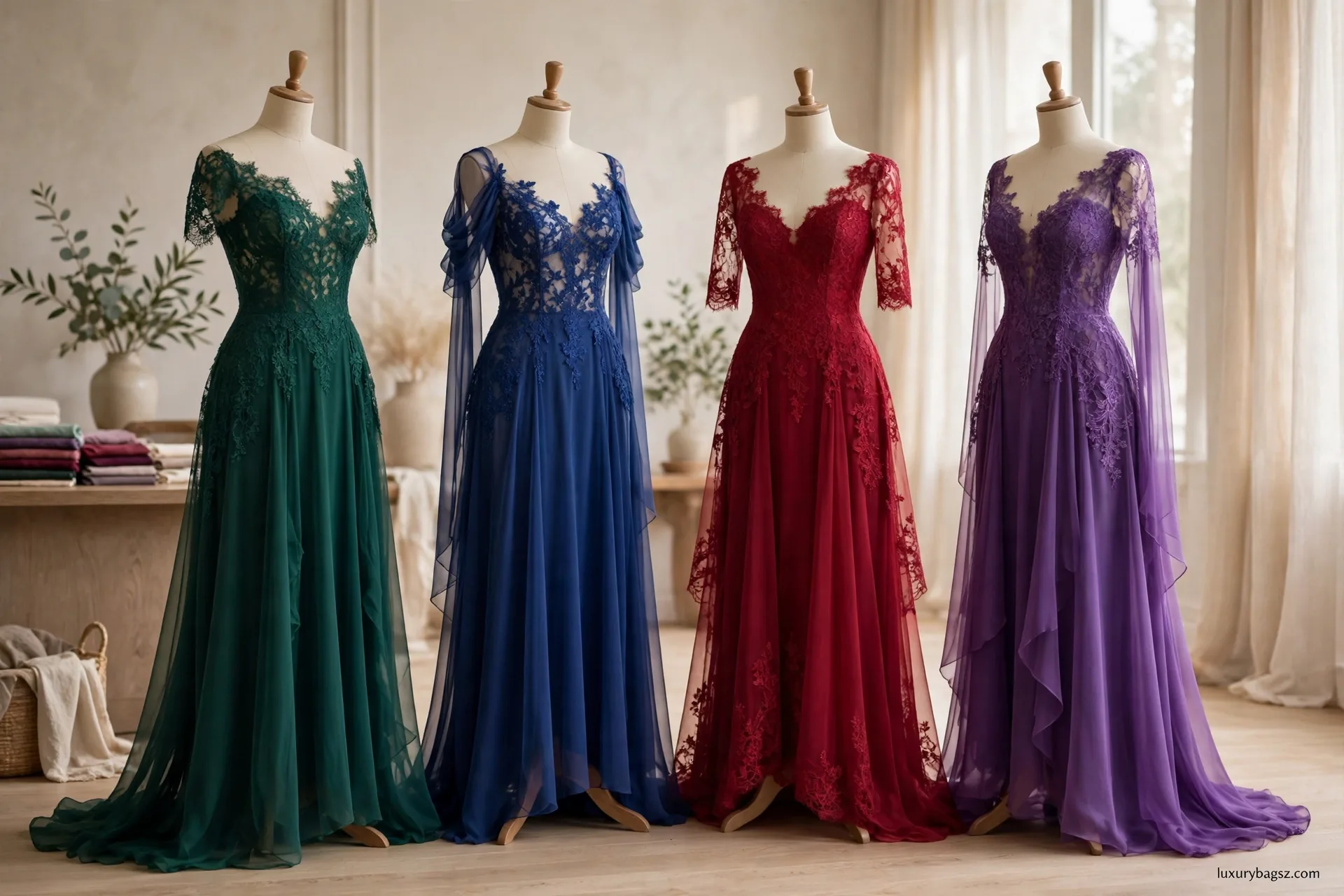
Colour is a fabric decision too. Deep jewel tones — emerald, sapphire, burgundy — dominate because they suit evening light and many skin tones; pastels arrive for spring weddings and garden ceremonies.
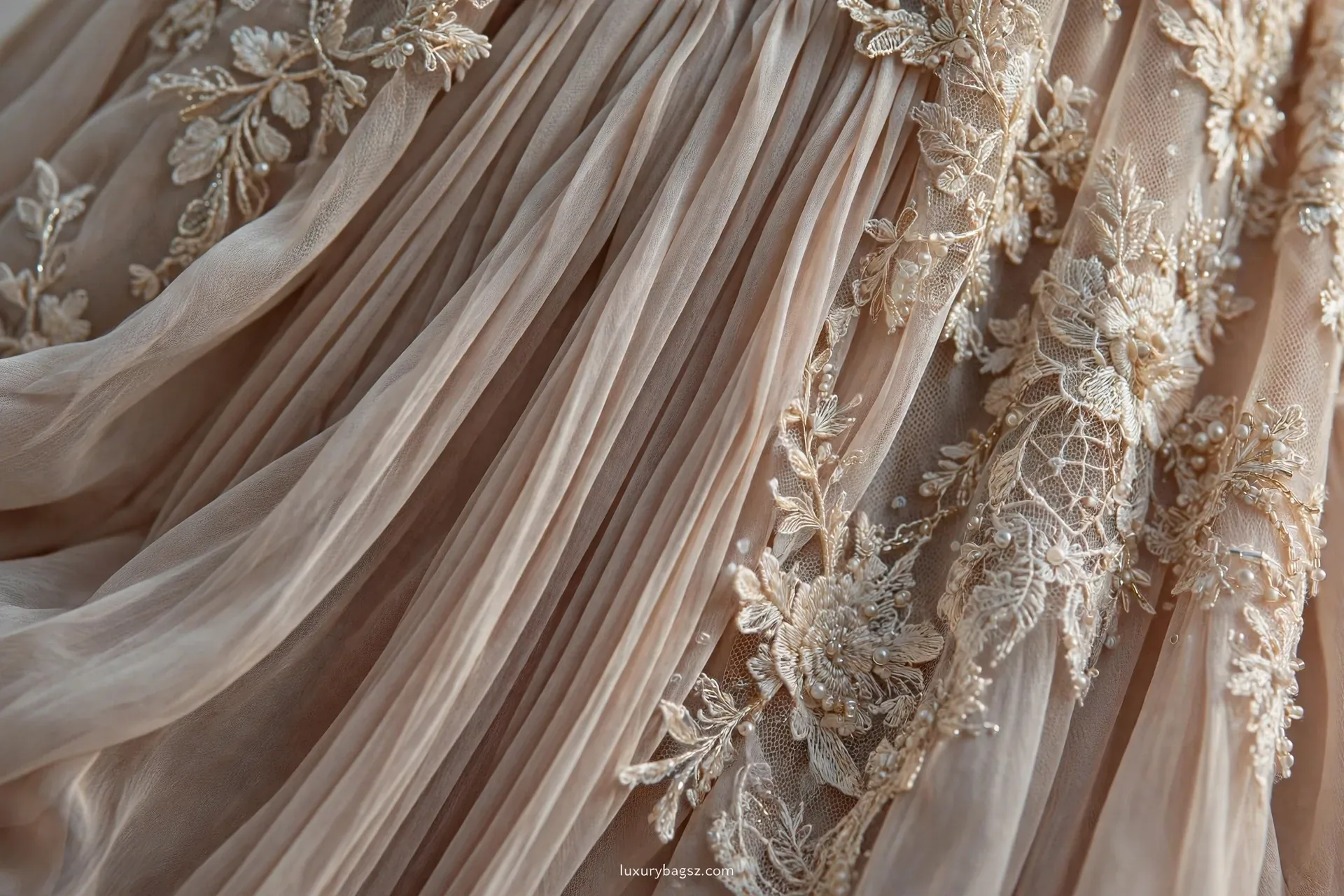
Pleating is the third technique to know: accordion pleats in chiffon give skirts their sunray movement, and they are set to survive careful cleaning — another reason these gowns travel and rewear so well.
Fabrics: Lace, Chiffon, Jersey and Sequins
Stretch lace is the cleverest cloth here: it gives the lace look with give through the bodice, so the gown fits like it was made for you. Chiffon skirts keep big silhouettes light. Pleated and tiered chiffon moves beautifully and travels better than stiff satin. Draped jersey does the quiet work in many styles. It resists creasing, packs well and photographs smoothly under flash. Sequins are applied on mesh in patterns rather than solid armour. The effect is sparkle with air in it, and noticeably less weight on the shoulders.
Comfort is engineered, not accidental: waist seams sit where ruching can disguise them, and straps are placed to carry weight without digging. If a gown pinches at the first try, try the next size before blaming the style.
Sizing and Fit: The Forgiving Designer
Sizes run from petite through plus on many styles, one of the widest offerings in designer eveningwear. Most wearers find their usual size correct. The draping is doing deliberate work: ruching at the waist creates definition, and diagonal drapes draw the eye lengthways. Fit the bust and hip; the waist will flatter itself. Length is the usual alteration. These gowns are cut long for heels, so budget for hemming in your event shoes. The runway film in this part shows the drape in motion. For stricter dress codes, our designer formal dresses guide covers which of these shapes pass at formal daytime events too.
Outlet and past-season stockists widen the choice further. Because styles repeat across years with small changes, last year's gown in your size is often identical in effect to this year's at full price.
Bridal-adjacent lines extend the value story: bridesmaid and mother-of-the-bride styles share the same draping at the same gentle prices, so a whole party can dress coherently without couture arithmetic.

Prices: The Accessible Band, Honestly
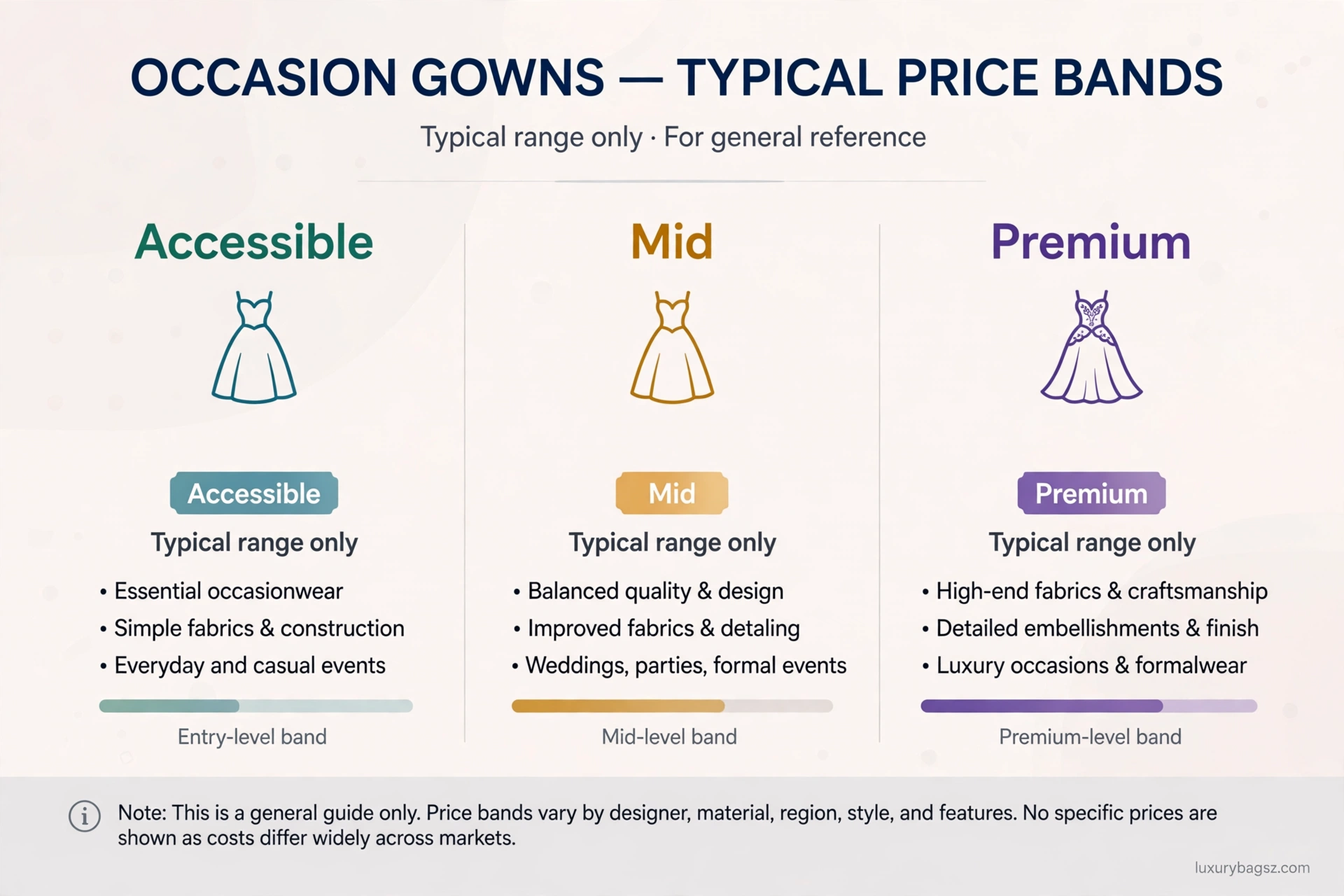
Most gowns sit in a band of a few hundred pounds, with sequin and heavily worked lace styles at the top of it. That is the house's whole point. You are not paying for hand embroidery at couture level, and should not expect it. You are paying for clever pattern cutting and consistent finishing. Sales are frequent at stockists, and end-of-season colour can discount deeply. Our festive party dresses guide uses the same band logic for the party season. Pre-owned prices are gentle, which makes these gowns one of the best-value secondhand buys in eveningwear if the condition checks pass.
Ask sellers for the gown's measurements laid flat as well as the label size. Draped styles measure generously across the waist by design, and flat numbers prevent the commonest sizing surprises.
Pre-Owned Checks: Lace, Hems and Sequins
Hold lace to the light and look for tears at stress points: underarms, zip edges and the seat. Stretch lace hides small breaks until they run. Check hems for heel punctures and floor staining, especially on chiffon, which marks easily and cleans unevenly. Sequins should lie in unbroken patterns. Rub gently — loose sequins in the storage bag mean losses have started and will continue. Smell matters with jersey: it holds perfume and smoke. Airing fixes most of it, but price any gown that arrives scented as a cleaning job.
After an event, air the gown overnight before bagging it. Perfume, smoke and perspiration fade with air; sealed into a bag immediately, they settle into jersey and lace and return months later.
Store sequinned gowns inside out in their bags. Sequins catch on everything they touch, including each other, and inside-out storage is the simple habit that saves the most repairs.
Care for Lace and Chiffon
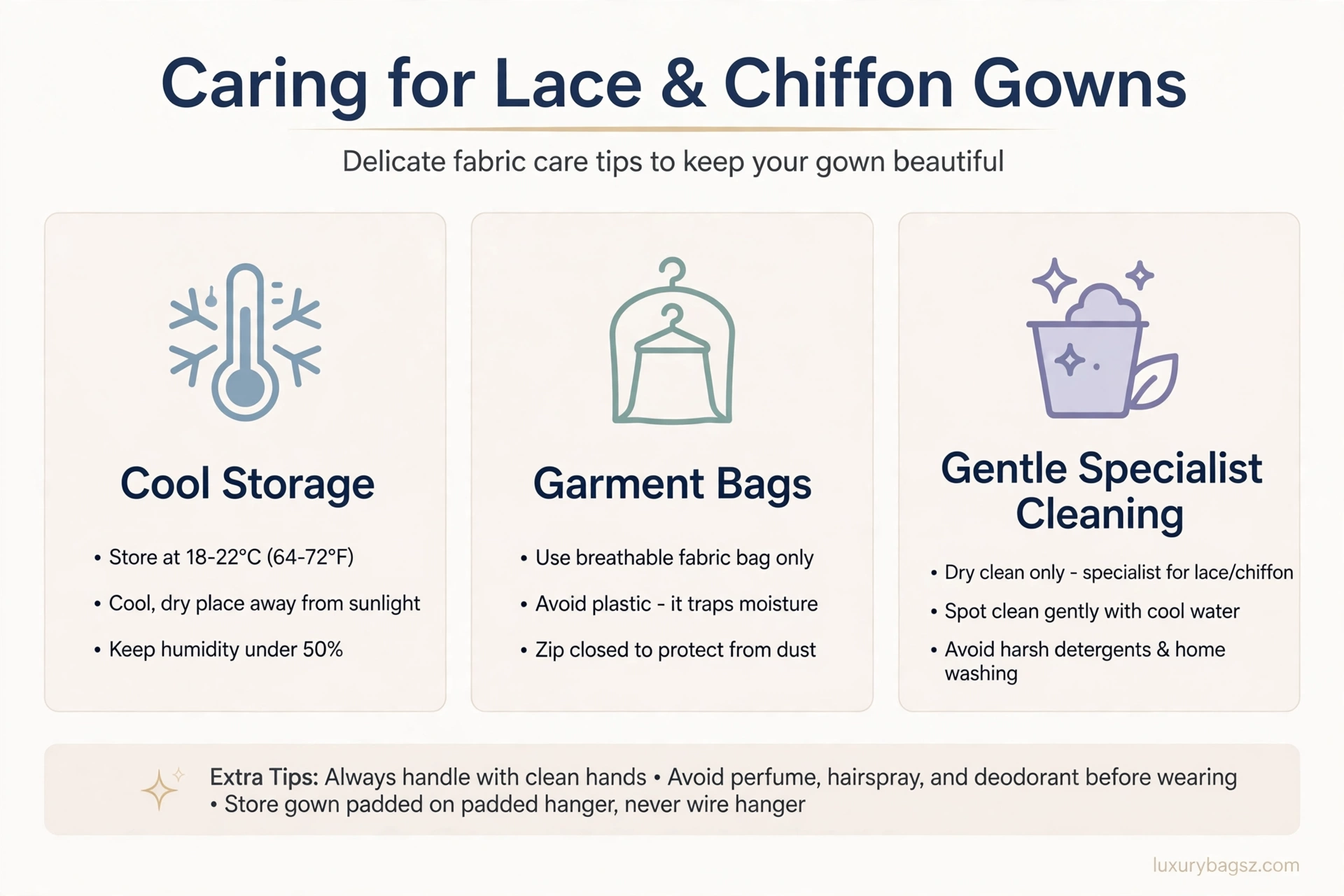
Use a specialist cleaner for lace and sequins, and say clearly which fabrics the gown mixes — mesh, chiffon and jersey each want different handling. Hang chiffon and jersey gowns by their inner loops on padded hangers, in a breathable bag. Wire hangers distort draped shoulders over time. Keep the gown cool, dry and away from sunlight, which yellows pale lace and fades sequin colour. A spare wardrobe beats a loft every time. Steam gently to release creases, keeping the steamer moving and away from sequins. Never iron lace or pleated chiffon directly.
Frequently Asked Questions
Are Tadashi Shoji gowns true to size, and can one be altered?
Yes, for most wearers. The draped cut and stretch linings make the sizing forgiving, and the range runs from petite to plus on many styles. Fit the bust and hip first.
Usually, yes. Hems are straightforward, and draped bodices can often be taken in. Letting out is limited, and lace patterns complicate major resizing, so buy your size or one up.
How much do the gowns cost, and are they good value secondhand?
Most styles cost a few hundred pounds new, with sequinned and heavily laced gowns at the top of the band. That is well below couture-house eveningwear with a similar visual effect.
Often excellent value. Resale prices are modest, the styles date slowly, and the forgiving fit suits more buyers. Condition of lace and hem decides everything.
Are these gowns suitable for black tie, and do they suit mothers of the bride?
They are one of the most recommended choices: sleeves and capelets give coverage, draping flatters, the colours are rich, and the price does not demand a second mortgage.
Yes. Floor-length lace, chiffon and sequin styles meet black-tie dress codes comfortably. Add evening shoes and a clutch, and keep daytime fabrics like plain jersey minimal.
What is the difference between this and couture eveningwear?
Pattern cleverness versus hand labour. These gowns achieve the gala look with draping and good stretch lace; couture houses add hand embroidery and bespoke fit at many times the price.
Do the gowns travel well?
Jersey and chiffon styles travel best, rolled or folded with tissue and steamed on arrival. Heavy sequin styles travel worst and should hang as soon as you arrive.
How do I check a pre-owned gown's lace?
Hold it to the light and inspect underarms, zip edges and seat for small tears. Check the hem for heel holes, and confirm sequin patterns have no bare patches.
What shoes work with these gowns?
A strappy sandal or court in metallic, nude or a tone from the gown. Long skirts hide most of the shoe, so comfort for a full evening should win over drama.
Summary: The Gala Look, Engineered for Real Bodies
Tadashi Shoji is where to look when the invitation says black tie and the budget says be sensible. The draping flatters, the sizes include, and the price band stays honest. Buy your usual size, hem for your shoes, and check secondhand lace against the light. Worn with confidence, these gowns read far above their price.






