

How to Find the Perfect 70s Dress: Silhouettes, Sizing, and Vintage Checks
Start With the Silhouette, Not the Decade Label
The perfect 70s dress is not the loudest one on the rail. It is the one whose silhouette suits your frame, whose print flatters rather than fights the shape, and whose condition survives a close look. Start there, and the decade styling takes care of itself.
The 70s were not one look. Early in the decade, bohemian ease ruled, with flowing maxis and folk prints. Mid-decade disco brought shine, wrap shapes, and bold colour, while late-decade styles softened into cleaner, more minimal lines. Knowing which 70s you want narrows the search fast.
This guide covers the three main silhouettes, the fabrics and prints to look for, and the vintage checks that separate a genuine find from an expensive disappointment. It also covers sizing, since vintage labels cannot be trusted, and styling that keeps a 70s dress wearable rather than costume-like.
Key Takeaways

- Pick a silhouette first: flowing maxi for boho, midi shift for understated polish, wrap for disco and everyday ease.
- Vintage sizes run smaller than modern sizes, so buy by measurements, never by the label number.
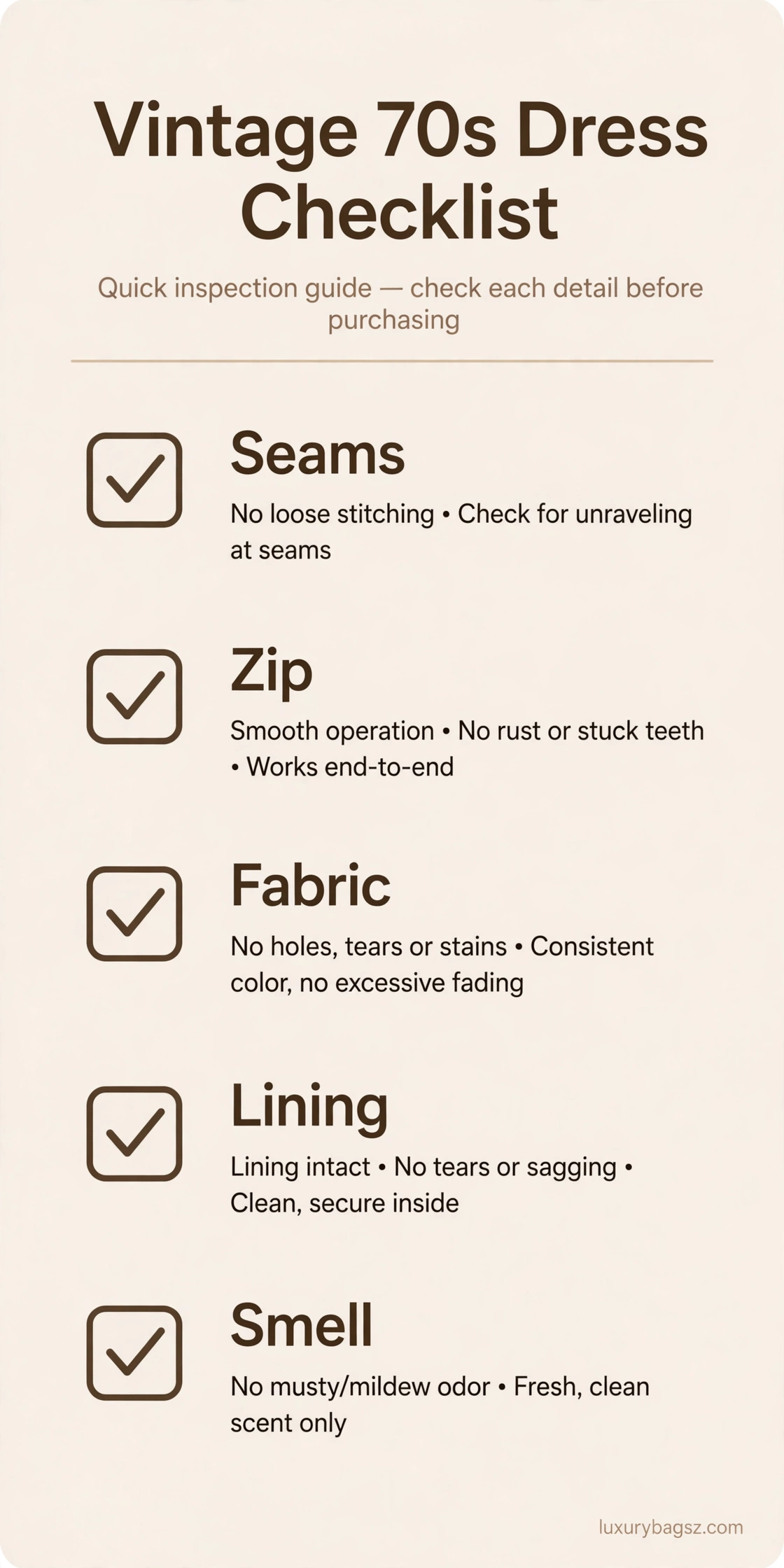
- Check seams, zips, fabric, lining, and smell before paying, and ask for close-up photos when buying online.
- Let the print enhance the shape, not compete with it: large prints suit confident, simple styling.
- Style with one or two 70s notes, such as platforms or a wide-brim hat, and keep the rest modern.
The Three Silhouettes That Define the Decade
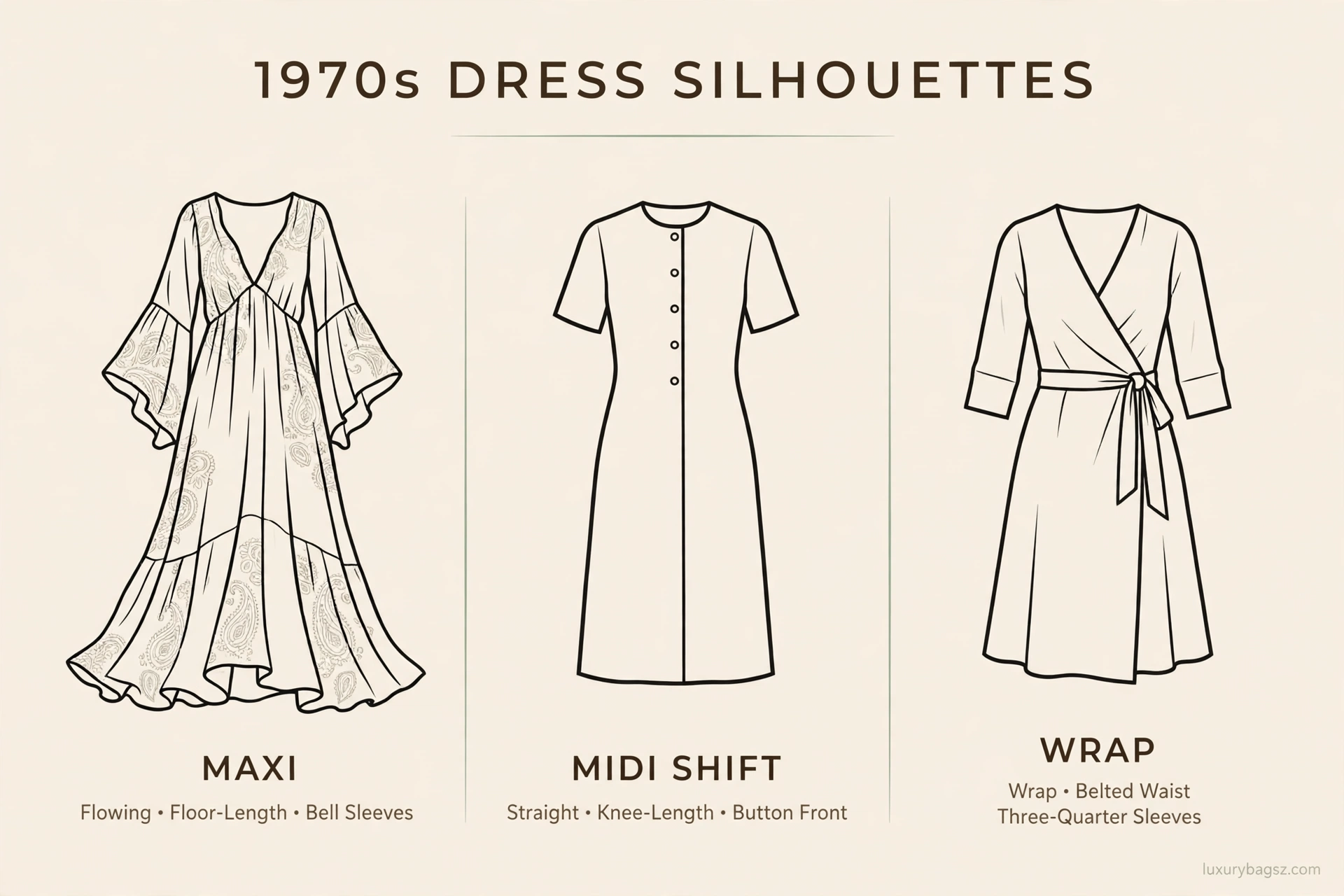
The maxi is the most recognisable 70s dress. Floor-length, often with a high waist or empire line, fluid sleeves such as bishop or bell, and bias-cut fabric that moves as you walk, it prioritises freedom and romance. It suits taller frames easily and works on shorter frames with platform shoes and a defined waist.
The midi shift is the quieter 70s dress. Hitting mid-calf, usually straight or slightly A-line, with clean lines and modest necklines such as crew, boat, or square, it reads intellectual and understated. Wool, cotton poplin, and jersey versions all exist, and the shape suits offices, dinners, and days when a maxi would overwhelm.
The wrap dress is the decade's most practical invention. Diane von Furstenberg's wrap, introduced in the mid-70s, tied at the waist, flattered many shapes, and moved from day to evening with a shoe change. Jersey wraps are forgiving and packable, while silk and satin wraps suit dressier occasions.
A fourth shape, the shirt dress, bridges the three. With a collar, button front, and a defined waist, it suits those who like structure with their 70s flavour. It also layers well, working open as a long layer over trousers when the dress itself is not the outfit.
Boho, Disco, or Minimal: Which 70s Is Yours
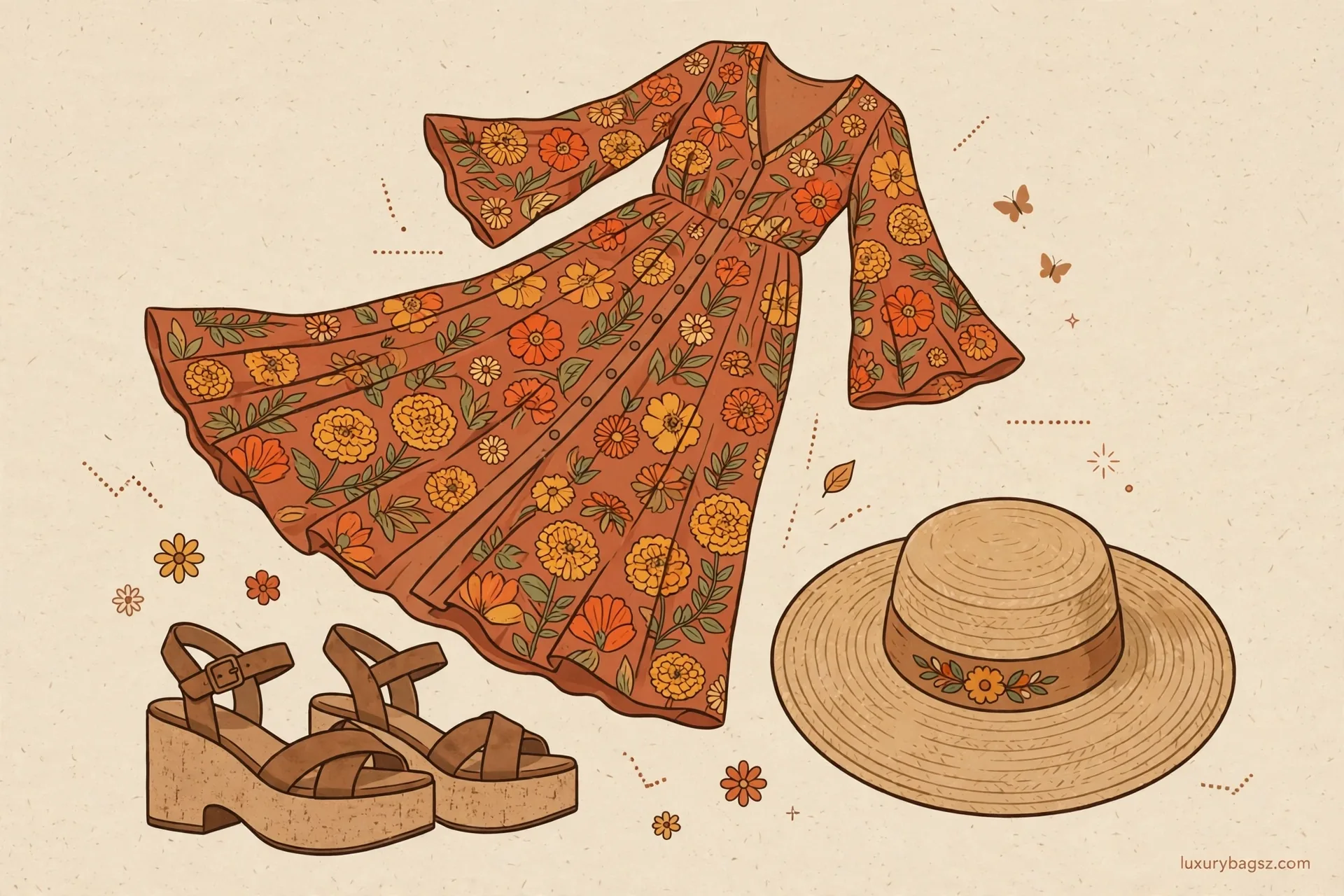
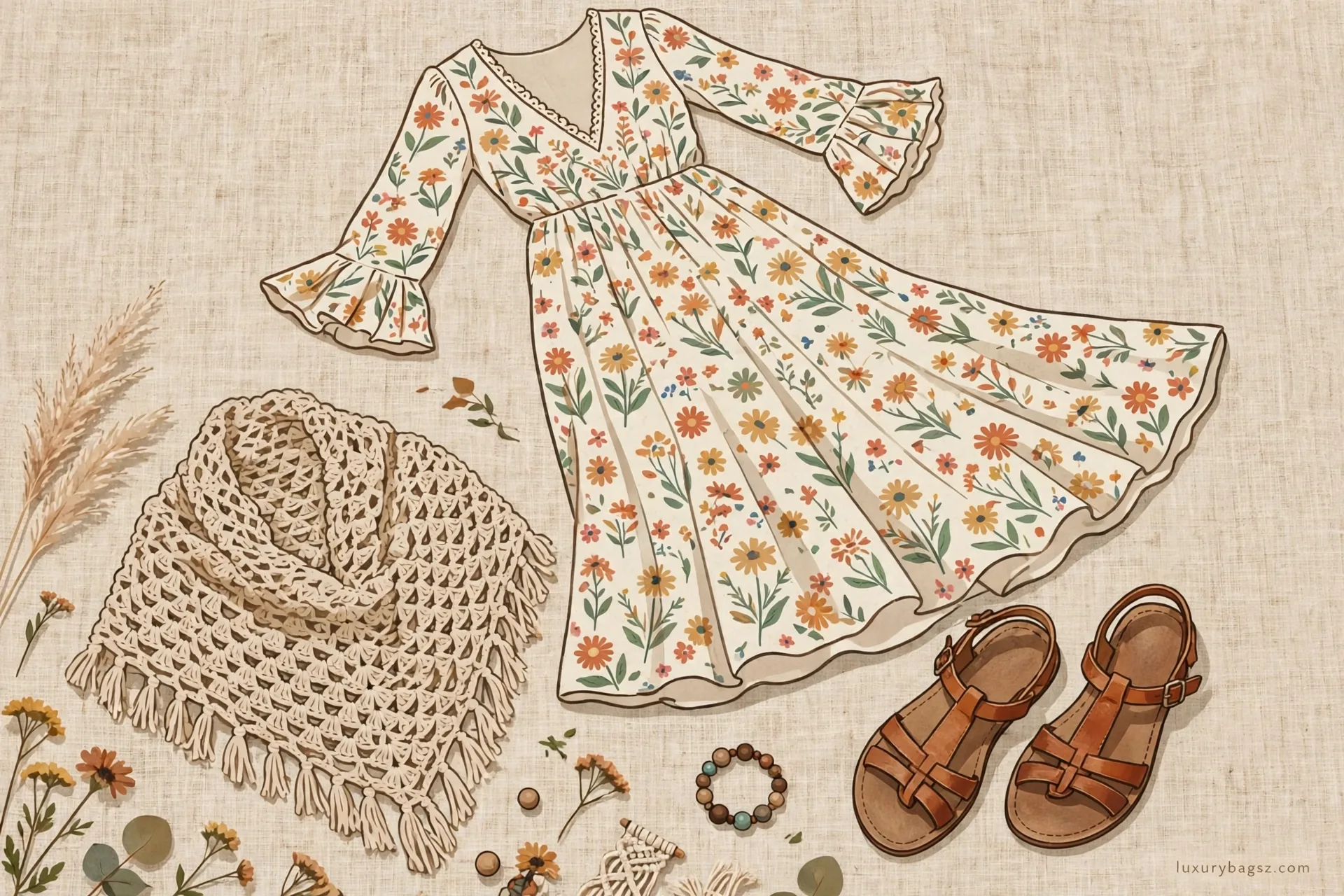
Boho 70s dressing is about flow and texture. Look for floral and folk prints, crochet and lace details, bishop sleeves, and earthy colours such as rust, mustard, and olive. The mood is relaxed and romantic, and the dress should move when you do, not hold a stiff shape.
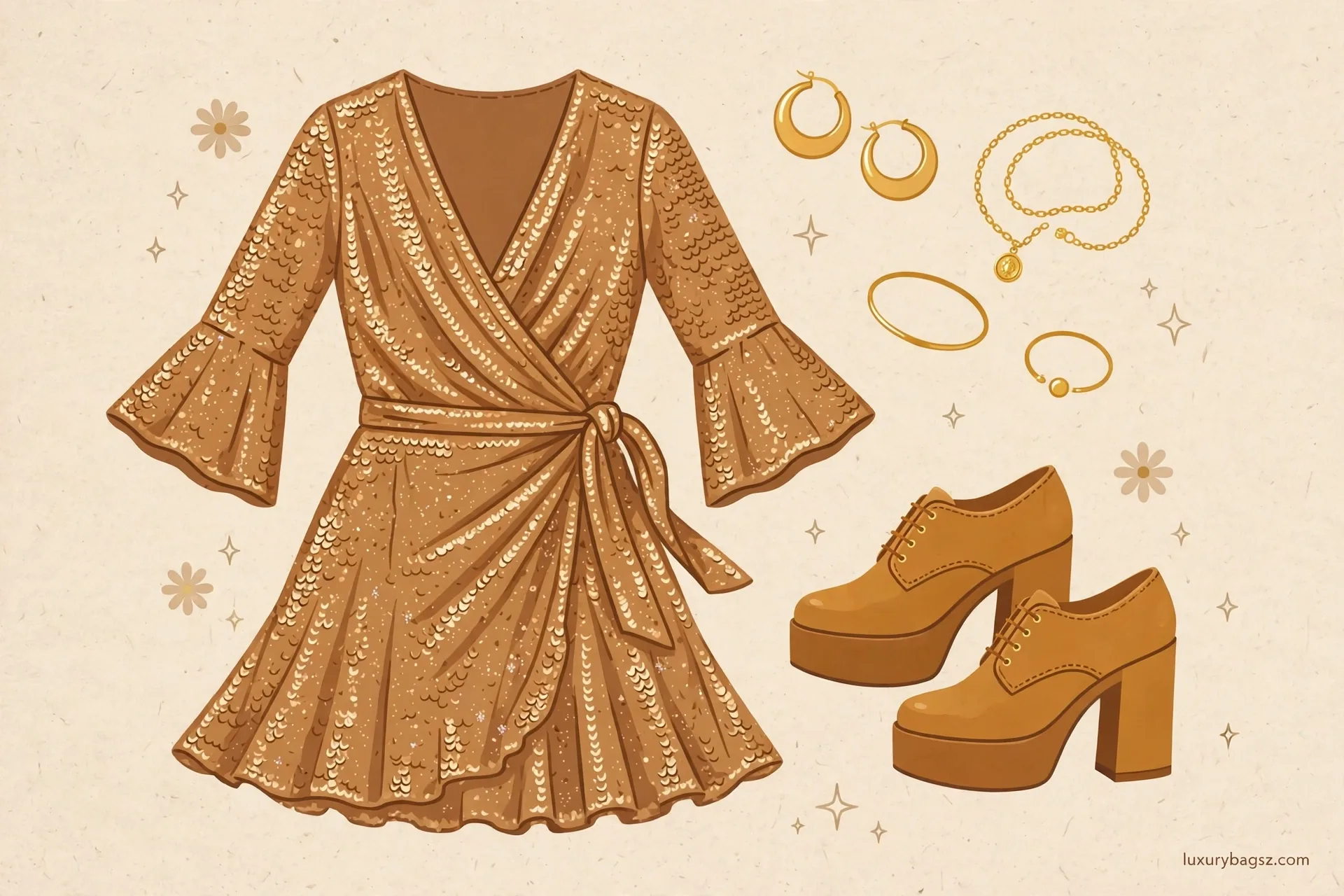
Disco 70s dressing is about shine and precision. Look for wrap shapes, metallic and satin fabrics, bold colours, and clean, body-conscious cuts that catch light on movement. The mood is confident and glamorous, and the dress should feel like it belongs after dark as much as on the dance floor.
Late-70s minimal dressing is about clean lines and quiet colour. Look for simple shifts, muted tones, and unfussy details, with the quality of the fabric doing the talking. This is the easiest 70s look to wear daily, since it needs almost no period styling to work.
Most buyers lean towards one of the three without realising it. If your wardrobe is already relaxed and textured, boho will slot in. If you dress up often, disco will earn its keep. If you prefer clean and simple clothes, the minimal route will get worn most.
Prints, Fabrics, and Colours That Read True 70s
Prints are the fastest way to signal the decade, and scale matters more than pattern. Large florals and bold geometrics command attention and suit confident, simple styling, while smaller, scattered motifs offer versatility and quiet sophistication. If the print fights the silhouette, the dress will look busy rather than vintage.
Fabrics tell you about authenticity and wear. True 70s dresses often use polyester crepe, jersey, cotton, and rayon, with disco styles adding satin, lurex, and metallic finishes. Modern reproductions in similar fabrics can look right, but very thin, shiny polyester usually reads as costume rather than vintage.
Colours follow the same split as silhouettes. Boho palettes lean earthy: rust, tangerine, mustard, olive, and brown. Disco palettes go bold: hot pink, gold, silver, and jewel tones. Minimal palettes stay muted: cream, burgundy, navy, and soft neutrals that work across seasons.
When choosing between authentic vintage and a modern reproduction, weigh condition against convenience. A genuine 70s dress carries history and often better fabric, but may need repairs. A good reproduction offers modern sizing, returns, and easier care, and suits buyers who want the look without the hunt.
Styling a 70s Dress Without Looking Like a Costume
The costume trap comes from stacking too many period notes at once. A maxi, platforms, a floppy hat, round sunglasses, and layered beads together read as fancy dress, while any one or two of those notes with modern shoes and a simple bag read as style. Pick your 70s signals and stop there.
Footwear sets the era fastest. Platform sandals suit maxis and disco wraps, knee-high boots suit midi shifts and autumn wear, and simple block heels suit office-friendly 70s looks. Avoid wearing every 70s shoe at once: one era shoe per outfit is enough.
Accessories should echo, not shout. A wide-brim hat suits a boho maxi outdoors, a simple gold chain suits a disco wrap, and a structured bag grounds any 70s dress in the present. Modern bags help most here, since a full vintage outfit, bag included, tips quickly into costume.
Hair and makeup follow the same restraint. Soft waves or a simple centre part suit most 70s dresses, while heavy period makeup and hair can push the look over the edge. Let the dress carry the decade, and keep everything else recognisably current.
Buying Vintage: Where to Look and What to Check
Good sources include curated vintage shops, vintage markets, and online marketplaces with detailed listings. Curated shops cost more but save time and usually authenticate stock, while markets and auctions reward early arrival and a sharp eye. Online, search specific terms such as 1970s wrap dress rather than generic vintage dress.
Condition checks come before price negotiations. Inspect seams for loose stitching and unravelling, run the zip end to end, and check for holes, tears, stains, and fading. Look inside at the lining, which should be intact and clean, and trust your nose: musty or mildew smells can be hard to remove from old fabric.
Labels help date a dress but do not guarantee it. Period labels, metal zips, and fabric weights all point towards genuine 70s origin, while modern care labels, plastic zips, and very uniform stitching suggest a reproduction. Ask sellers for photos of labels, seams, and fabric texture before committing online.
Value follows the same logic as other pre-owned buys. Rarity, condition, designer names, and wearability all push price up, while damage, heavy alterations, and awkward sizing push it down. Our guide to buying vintage designer bags vs new covers the value thinking that applies equally to dresses.
Sizing: Why the Label Lies, and How to Measure
Vintage sizing is famously unreliable. A 1970s size 12 can fit like a modern size 8, and sizing varied by maker, country, and even year. Ignore the number on the label and buy by measurements, every time, whether you shop in person or online.
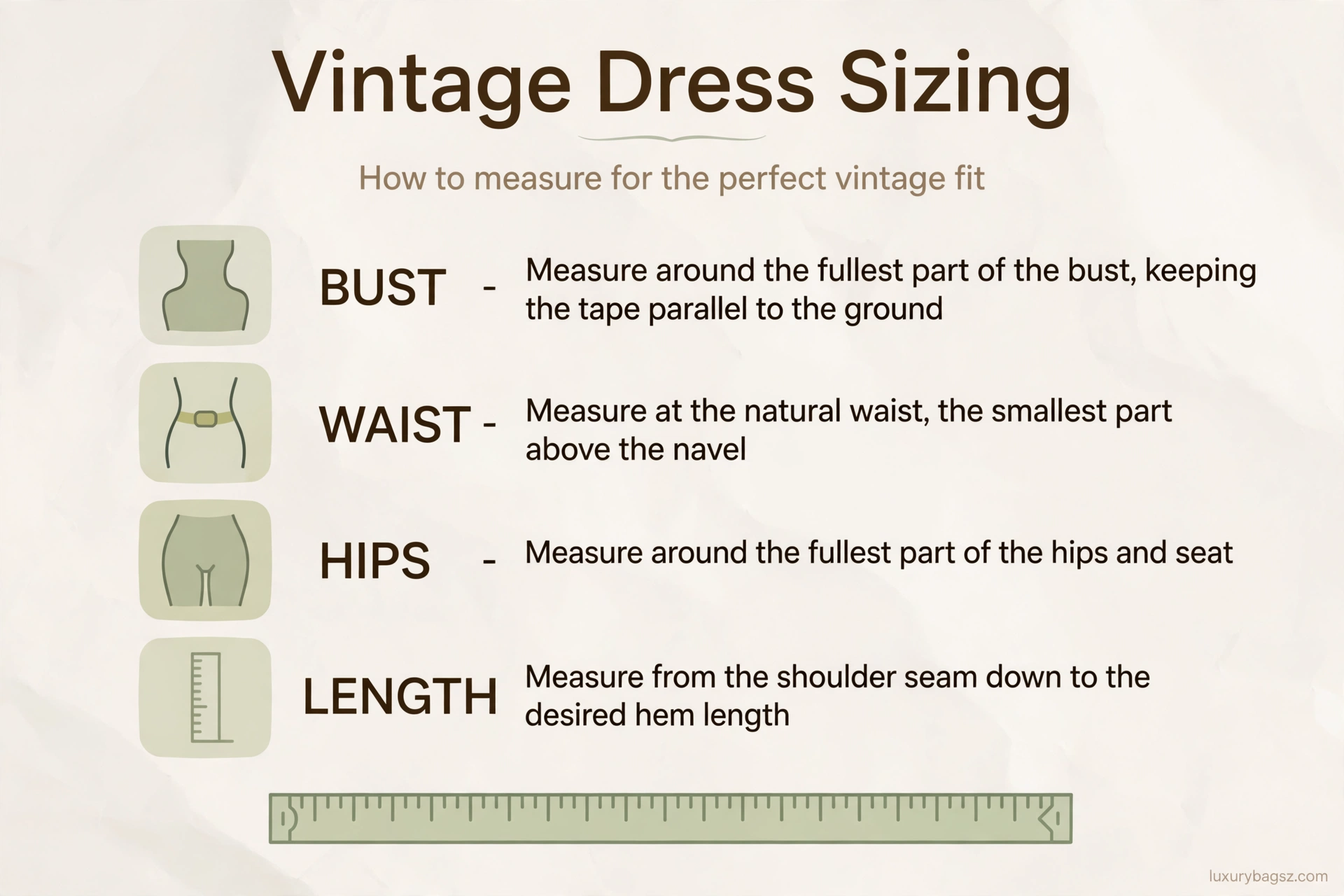
Measure yourself over underwear with the tape snug but not tight. Take bust at the fullest point, waist at the natural crease, hips at the fullest point, and length from shoulder seam to the desired hem. Write these down and keep them on your phone for market and online shopping.
Compare your measurements to the garment's flat measurements, not to a size chart. Ask online sellers for bust, waist, hip, and length measured flat, and double flat measurements to get the full circumference. If a seller cannot provide them, treat that as a warning sign, not a minor gap.
Allow for tailoring, but price it in. A hem, a taken-in waist, or a moved strap can rescue an almost-perfect dress, while a dress that is too small across the bust or hips rarely alters well. Buy the fit that needs the smallest fix, and get a tailor's opinion before paying for a major alteration.
Care, Storage, and Building Outfits Around Your Find
Care depends on fabric, and vintage fabric deserves caution. Hand-wash or dry-clean where the label or seller advises it, test cleaning on a hidden spot first, and avoid tumble drying old polyester and rayon, which can warp. Store the dress hanging in a breathable cover, not in plastic, which traps moisture.
Outfit building starts from the dress's own mood. A boho maxi pairs with flat sandals and a simple tote for daytime, and with platforms and gold jewellery for evening. A disco wrap pairs with heels and a clutch after dark, and with boots and a blazer for a daytime edge that still reads 70s.
Denim is a useful partner for casual 70s styling, especially a denim jacket over a floral midi or a shirt dress worn open over jeans. Keeping denim in good shape matters, and our guide to denim care covers washing and fading for jeans that sit next to a vintage dress.
Bags finish the outfit and pull it into the present. A structured modern bag, a neat crossbody, or a simple tote all work, and our guide to designer handbag styles helps match the bag shape to the dress length and occasion. One modern bag is often the difference between vintage style and vintage costume.
Frequently Asked Questions
What defines a 70s dress?
Flowing or wrap silhouettes, bold or folk prints, and fabrics such as jersey, crepe, cotton, and satin define the decade. Maxis, midi shifts, and wrap dresses are the three shapes most people mean when they say 70s dress.
How do vintage 70s sizes compare to modern sizes?
Vintage sizes usually run smaller than modern sizes, so a 1970s size 12 may fit like a modern size 8. Always buy by bust, waist, hip, and length measurements, never by the label number alone.
Where is the best place to find a 70s dress?
Curated vintage shops offer authenticated stock at higher prices, markets reward early arrival, and online marketplaces offer the widest choice. Search specific terms such as 1970s wrap dress, and ask for detailed photos before buying online.
How can you tell if a dress is genuinely from the 70s?
Check period labels, metal zips, fabric weight, and construction details, and compare them with known 70s pieces. Modern care labels, plastic zips, and very uniform stitching usually point to a reproduction.
What shoes go with a 70s dress?
Platform sandals suit maxis and disco wraps, knee-high boots suit midi shifts in cooler weather, and block heels suit office-friendly 70s looks. One era shoe per outfit keeps the look stylish rather than costume-like.
Can you wear a 70s dress every day?
Yes, if you choose the right silhouette. A midi shift or wrap dress in a muted print works daily, while a full boho maxi or disco dress suits weekends and evenings better. Keep accessories modern for everyday wear.
How do you avoid looking like you are in costume?
Wear one or two 70s notes, such as platforms or a wide-brim hat, and keep the rest of the outfit modern. A modern bag, simple shoes, and restrained hair and makeup stop the look tipping into fancy dress.
What should you check before buying a vintage dress online?
Ask for flat measurements, photos of seams, zips, lining, and labels, and close-ups of any damage. Check the seller's return terms, and walk away if measurements or condition photos are missing.
How do you care for a vintage 70s dress?
Follow the fabric: hand-wash or dry-clean as advised, test cleaning on a hidden spot, and avoid tumble drying old fabrics. Store hanging in a breathable cover, not sealed plastic, which traps moisture.
Is a reproduction 70s dress worth buying?
Yes, if the fabric and cut are good. Reproductions offer modern sizing, returns, and easier care, while genuine vintage offers history and often better fabric. Choose based on how much hunting and repair you are willing to do.
Final Verdict
The perfect 70s dress starts with a silhouette that suits you, a print that enhances rather than fights it, and measurements that prove the fit. Buy the boho maxi, midi shift, or wrap that matches your life, check condition honestly, and style it with one or two period notes and modern accessories. Done that way, a 70s dress stops being a costume and becomes a wardrobe favourite with a story.






