

Swarovski History: From an Alpine Workshop to a Global Crystal House
Swarovski in Brief: A Diamond for Everyone, Made from Crystal
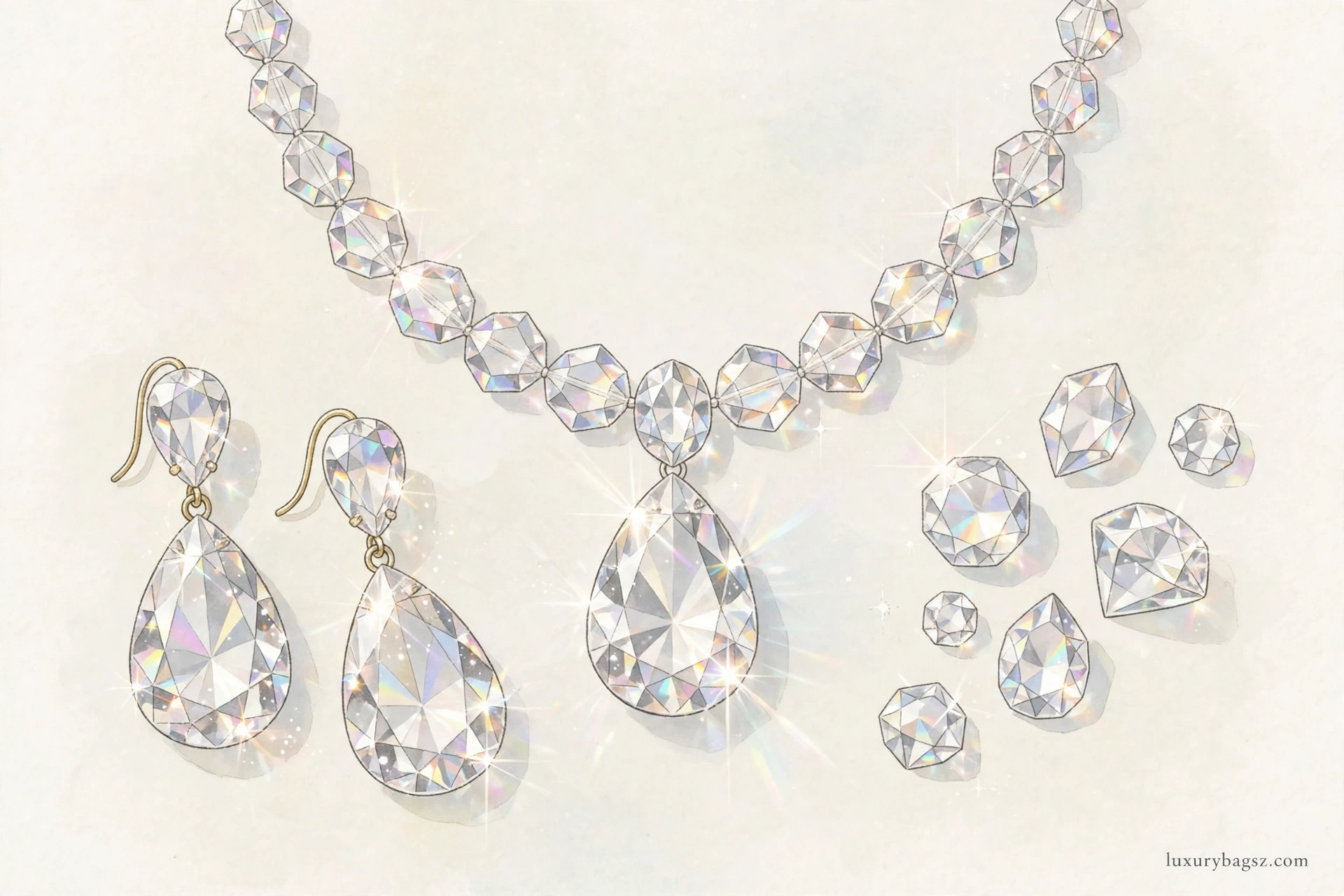
Swarovski began in 1895 in Wattens, in the Tyrol region of Austria, when Daniel Swarovski set out to make diamond-like sparkle available to far more people. His idea was simple and bold: precision-cut crystal, made with machine accuracy, could give ordinary buyers a taste of luxury. That vision still shapes the house today, more than 130 years later.
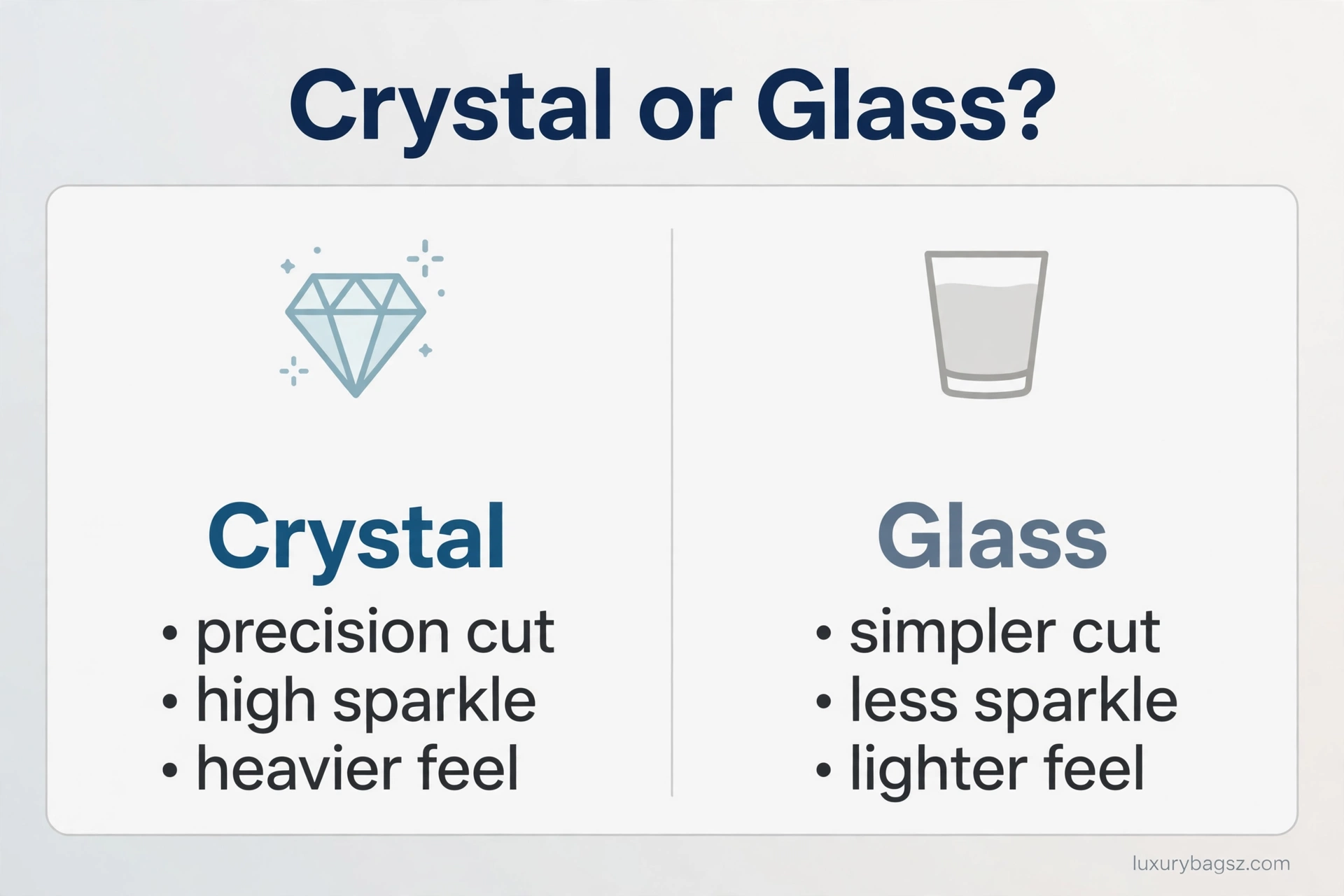
It is important to be clear about what Swarovski crystal is. It is precision-cut crystal glass, not a natural gemstone and not a diamond. The brilliance comes from cutting, polishing and the way light moves through the facets. Once you understand that distinction, the rest of the story makes sense, from Paris fashion houses to Hollywood dressing rooms and collecting shelves around the world.
Key Takeaways
- Swarovski was founded in 1895 in Wattens, Austria, by Daniel Swarovski.
- The breakthrough was an electric crystal cutting machine, patented in 1892.
- Swarovski crystal is precision-cut crystal glass, not a natural diamond or gemstone.
- Early fame came through Paris fashion, then Hollywood and stage costume.
- Figurines, jewellery and crystal components are three distinct lines to judge separately.
- Modern pieces moved to lead-free crystal formulas in 2012, according to brand histories.
- Buy for design and condition first, not for diamond-style investment value.
Daniel Swarovski and the Machine That Changed Sparkle
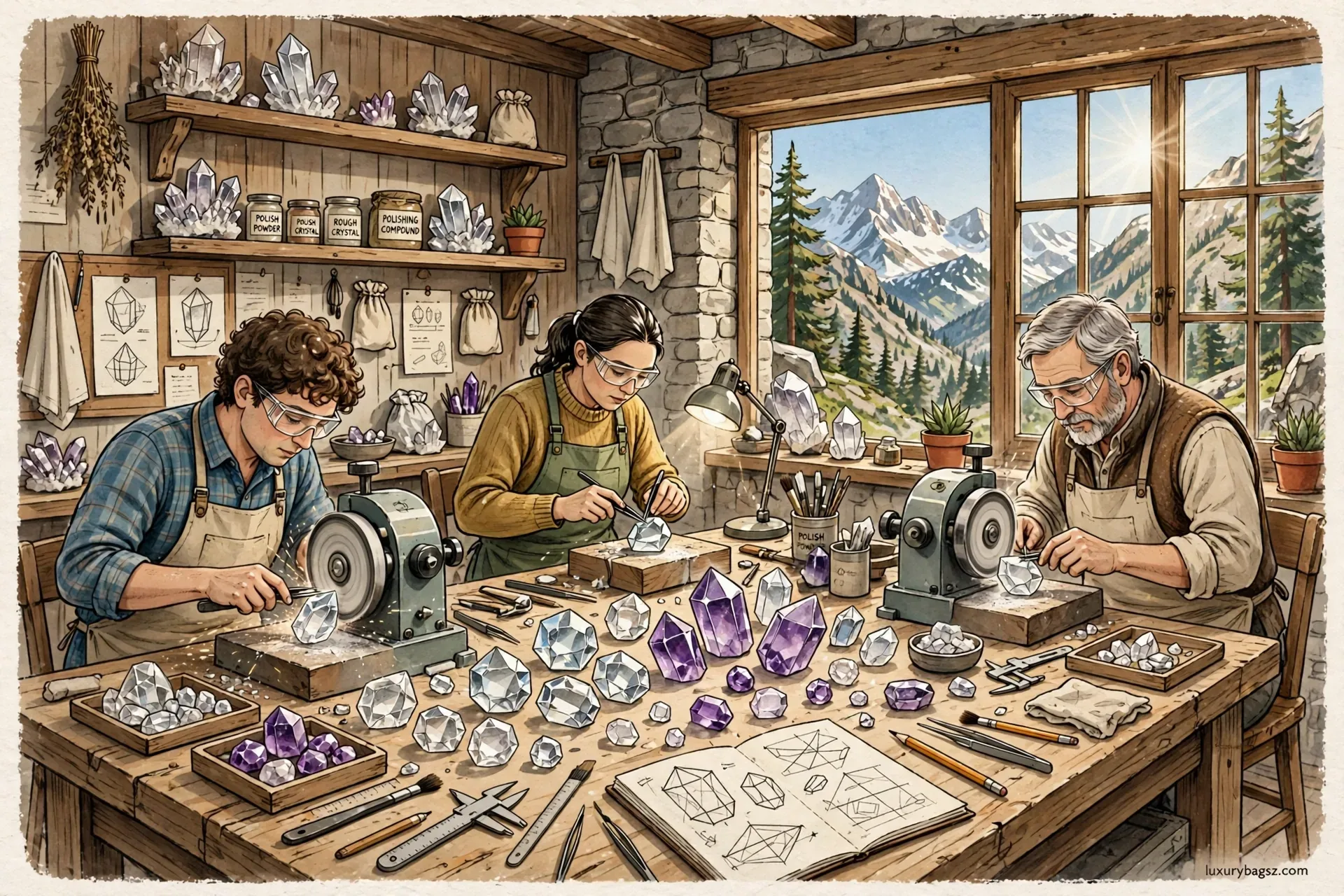
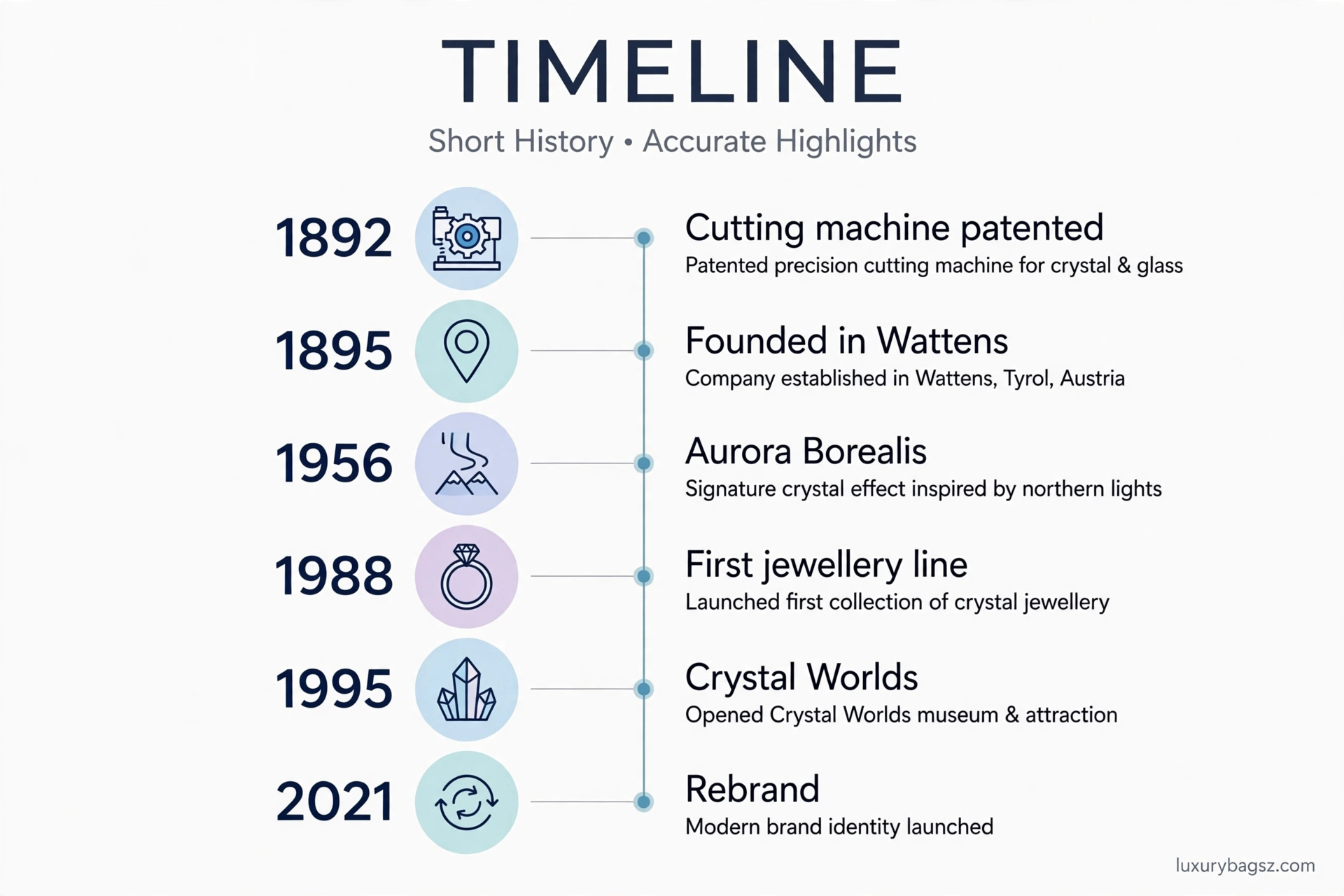
Daniel Swarovski was born in Bohemia in 1862 and learned glass cutting in his father's small factory. He later studied in Paris and Vienna, and a visit to the International Electrical Exhibition in Vienna in 1883 showed him how electricity could transform production. He patented an electric-powered cutting machine in 1892, which cut crystal far faster and more precisely than hand cutting alone.
In 1895 he founded the company in Wattens with partners Franz Weis and Armand Kosmann. Wattens was chosen for its clean water and hydro-power, and for privacy: a remote Alpine site helped keep the cutting process secret. The company remains family owned, a rare feat for a house of this age and scale.
The early business was not mainly a jewellery shop. It supplied cut crystals to others, including fashion houses and designers who needed reliable sparkle in quantity. That business-to-business strength explains why Swarovski became a quiet ingredient in so many famous looks, long before most buyers knew the name.
Wattens, Water Power and the First Decades
Wattens gave the young company two practical advantages: power for machines and distance from competitors. Daniel Swarovski built his own glassworks in 1911 to keep up with demand, and by 1913 the company was producing its own crystal rather than relying on outside supply. Control over melting, cutting and polishing meant consistent colour, clarity and cut.
Paris noticed quickly. By the early 1900s, Swarovski crystals were reaching Parisian ateliers, and designers including Charles Frederick Worth used them. Coco Chanel and Elsa Schiaparelli also drew on crystal embellishment in later decades, which helped move crystal from craft supply to fashion material.
In 1919 the cutting expertise branched into a new field with Tyrolit, a maker of grinding, drilling and polishing tools. It is easy to overlook this side of the story, yet it shows how central precision engineering was to the house. Swarovski was never only about pretty stones; it was about machines, measurement and repeatable quality.
Hollywood, Couture and the Aurora Borealis Effect
From the 1930s onwards, Swarovski crystals became part of screen glamour. They appeared in the 1932 film Blonde Venus, and later in costumes that defined an era of show business. Marilyn Monroe's sparkling stage looks are the best-known example, and her 1962 birthday dress remains one of the most retold crystal stories in fashion history.
Haute couture followed the same path. In 1956 Swarovski worked with Christian Dior on the Aurora Borealis stone, an iridescent crystal inspired by the northern lights. Cristóbal Balenciaga used Swarovski crystals in his haute couture collections in the late 1950s, and Audrey Hepburn wore a Swarovski-embellished tiara in Breakfast at Tiffany's.
These moments matter for buyers today because they explain the price of vintage crystal pieces. A piece is rarely valuable simply because it sparkles. Provenance, designer collaboration, condition and rarity matter far more. A well-documented vintage piece with a clear maker and era will always be easier to resell than a pretty but anonymous one.

Figurines, Jewellery and Crystal for Other Makers
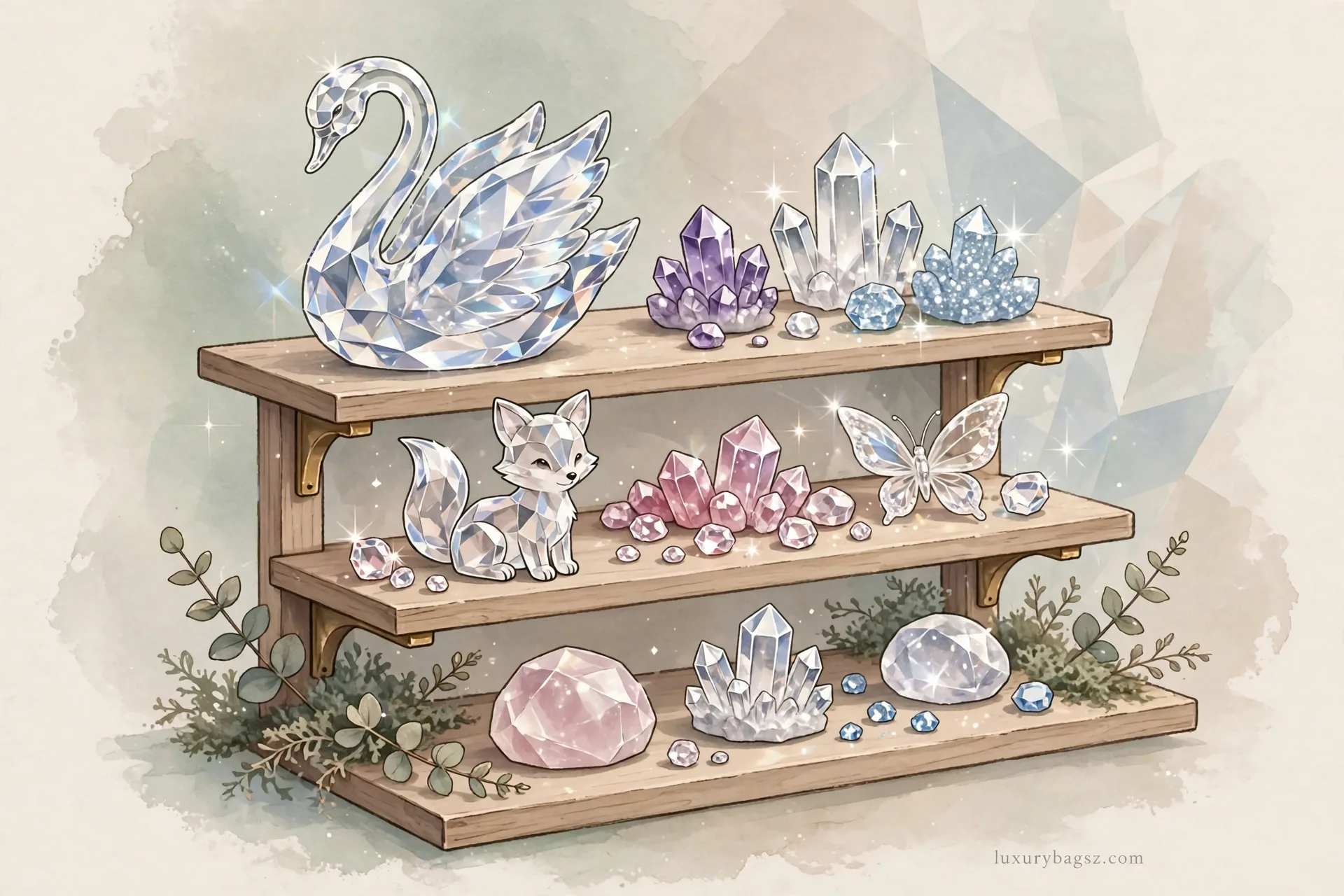
Swarovski's own product lines split into three broad groups, and it helps to judge each on its own terms. Crystal components are stones and embellishments supplied to fashion, film and design. Jewellery is the house's own necklaces, earrings, rings and bracelets. Figurines are collectible crystal objects, from animals to ornaments.
The figurine story began almost by accident. In 1976 craftspeople shaped chandelier pieces into a mouse, and crystal mice given to Winter Olympians that year struck a chord with the public. Production followed, and the swan became the most recognisable figurine. Collectors should note that figurines were made in large numbers, so rarity varies hugely by model, colour and retirement date.
The first Swarovski jewellery line arrived in 1988, along with the first boutique on London's Bond Street. That was a turning point: the house was no longer only a supplier hiding inside other people's designs. It had its own retail voice, its own collections and, eventually, its own logo story, moving from the edelweiss flower to the swan in 1988 and then to a swan inside an octagon in 2021.
If you love crystal jewellery, compare Swarovski with fashion jewellery houses on design and wearability, not on gemstone value. Crystal jewellery is best bought to wear and enjoy, with the understanding that it sits in a different market from fine diamond or signed gold jewellery.
What Swarovski Crystal Is, and What It Is Not
Swarovski crystals are made from quartz sand, soda, potash and other ingredients, melted and then precision cut. Older formulas used lead oxide, typically around 32%, to improve clarity and sparkle. In 2012 the brand moved to lead-free crystal formulas, keeping brilliance without lead-based components, according to brand histories.
This is where many buyers get confused. Crystal is glass, however finely cut. It will not hold value like a diamond, and it should not be sold as one. Reputable sellers say so plainly, and any listing that calls a Swarovski stone a diamond, or prices it as a gemstone, deserves a second look.
There are also myths to set aside. Swarovski did not make the original 1939 Wizard of Oz ruby slippers, which used sequins, although it later made a famous crystal replica. Checking a single famous claim like this is a useful habit: if a seller repeats a dramatic story without a source, treat the rest of the listing with the same caution.
How to Choose, Wear and Care for Crystal Pieces
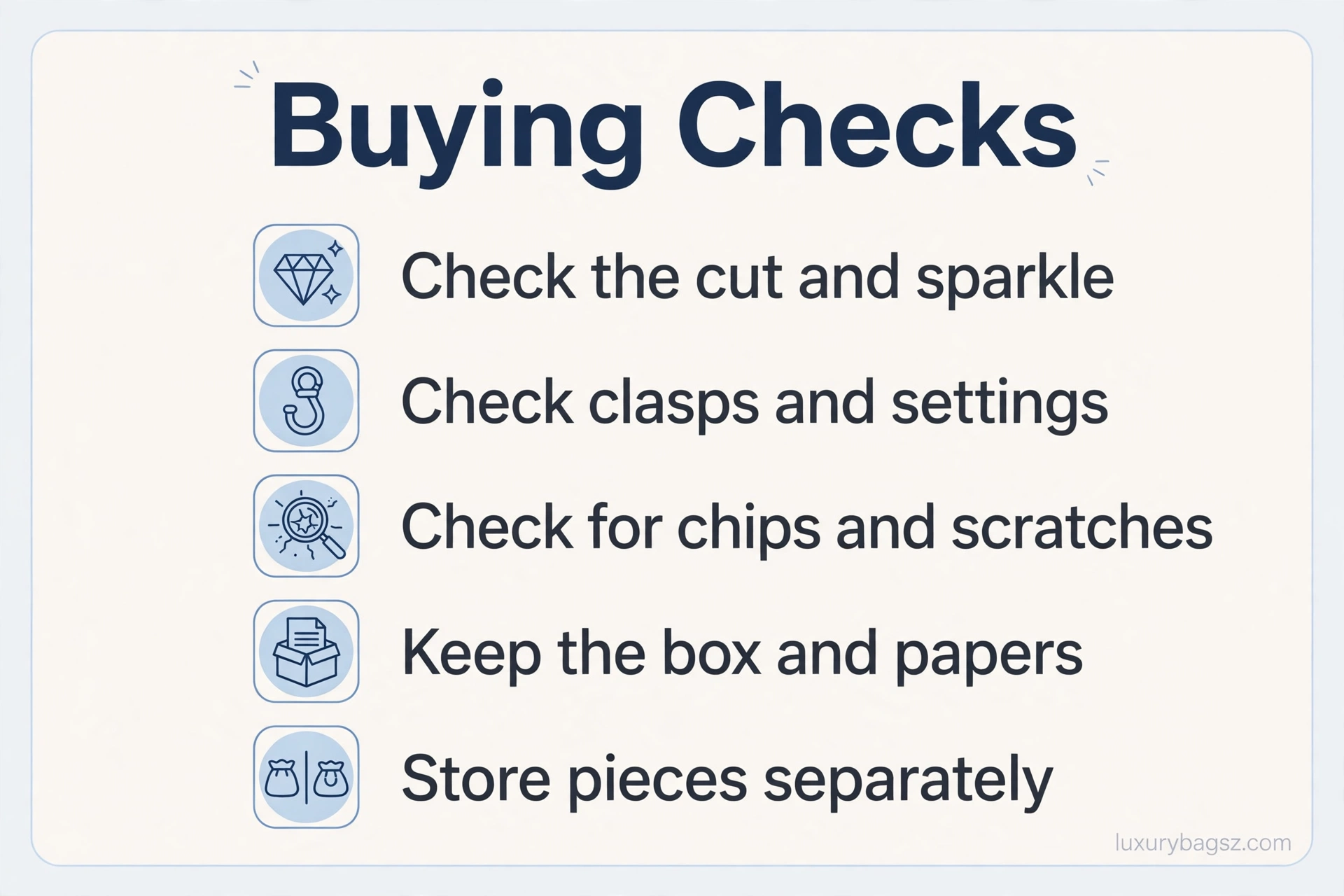
Start with cut and sparkle. Hold the piece under good light and turn it slowly. Well-cut crystal gives even, lively reflections rather than dull patches. Check settings and clasps next, since a loose stone or weak clasp causes more losses than any other fault. For earrings, check backs and posts; for necklaces, check the chain and closure.
Chips and scratches matter more than dust. Run a fingertip gently over edges and points, and look closely at the most exposed facets. Small chips on a figurine's thin parts, such as ears, wings or tails, are common and reduce collector value. For jewellery, avoid harsh cleaners and ultrasonic cleaning unless the maker advises it, and store pieces separately so crystals do not scratch each other or softer metals.
Cleaning is usually simple: a soft, dry or slightly damp cloth, followed by a dry cloth, is enough for most pieces. Keep crystal away from perfume, hairspray and household chemicals, and put jewellery on last when dressing. The same gentle approach applies to gold and diamond rings and to gemstone jewellery, where harsh treatment does more harm than daily wear.
Buying Pre-Owned, Collecting and Avoiding Overpaying
Pre-owned Swarovski can be good value, but only when you buy the right thing at the right price. Retired figurines in perfect condition with their original box and certificate tend to hold interest best. Common current pieces, by contrast, are widely available new, so a pre-owned price close to retail rarely makes sense.
Ask for clear photos of the whole piece, the base or clasp, and any marks. Ask whether the box, certificate and papers are included, and whether any part has been repaired or re-glued. For figurines, ask about chips under bright light, since sellers sometimes photograph only the best angle. For jewellery, ask about plating wear, missing stones and stretched chains.
Do not buy crystal as an investment in the diamond sense. Some retired pieces rise in collector markets, but most do not, and the house itself is a broad consumer brand rather than a rare gemstone maker. A practical guide to price designer jewellery for resale will help you set a realistic ceiling before you bid. Buy the piece you will display or wear with pleasure, at a price you would still accept if resale value stayed flat.
Frequently Asked Questions
When was Swarovski founded?
Swarovski was founded in 1895 in Wattens, Austria, by Daniel Swarovski with partners Franz Weis and Armand Kosmann.
Who was Daniel Swarovski?
He was a Bohemian-born glass cutter, born in 1862, who learned the trade in his father's factory and later invented an electric crystal cutting machine.
Is Swarovski crystal a diamond?
No. Swarovski crystal is precision-cut crystal glass. It is made to sparkle like a diamond, but it is not a natural gemstone.
What is the Aurora Borealis stone?
It is an iridescent crystal developed with Christian Dior in 1956, inspired by the northern lights, and used as a signature embellishment.
When did Swarovski start making jewellery?
The first Swarovski jewellery line launched in 1988, the same year the first boutique opened on London's Bond Street.
What is the Swarovski swan logo?
The swan, adopted in 1988, symbolises purity and elegance. Earlier the logo used the Alpine edelweiss flower, and since 2021 the swan sits inside an octagon.
Are Swarovski crystals lead-free now?
Yes, according to brand histories, Swarovski moved to lead-free crystal formulas in 2012, after older formulas used lead oxide for clarity.
What are Swarovski figurines worth?
Value varies widely. Retired models in perfect condition with box and papers interest collectors most, while common current models are widely available and worth far less pre-owned.
How should I clean Swarovski crystal?
Use a soft, dry or slightly damp cloth, then dry the piece. Avoid harsh chemicals, perfume and hairspray, and store pieces separately to prevent scratching.
Is pre-owned Swarovski a good investment?
Usually no, in the diamond sense. Buy pre-owned Swarovski for design and enjoyment, and only pay a price you accept if resale value stays flat.
Final Verdict: Sparkle with Clear Eyes
Swarovski's story is a story of engineering made beautiful: a cutting machine, an Alpine workshop, and a century of fashion and film that turned crystal into a shared language of glamour. The house deserves its place in design history, and its best pieces remain joyful to wear and collect.
Buy with clear eyes, though. Judge crystal as crystal, check condition and completeness, and let design lead the decision. Done that way, a Swarovski piece is not a diamond substitute at all. It is something simpler and, at its best, just as satisfying: precision, light and colour, made for everyday pleasure.






