

Ralph Lauren Brand History: From a Drawer of Ties to an American Empire
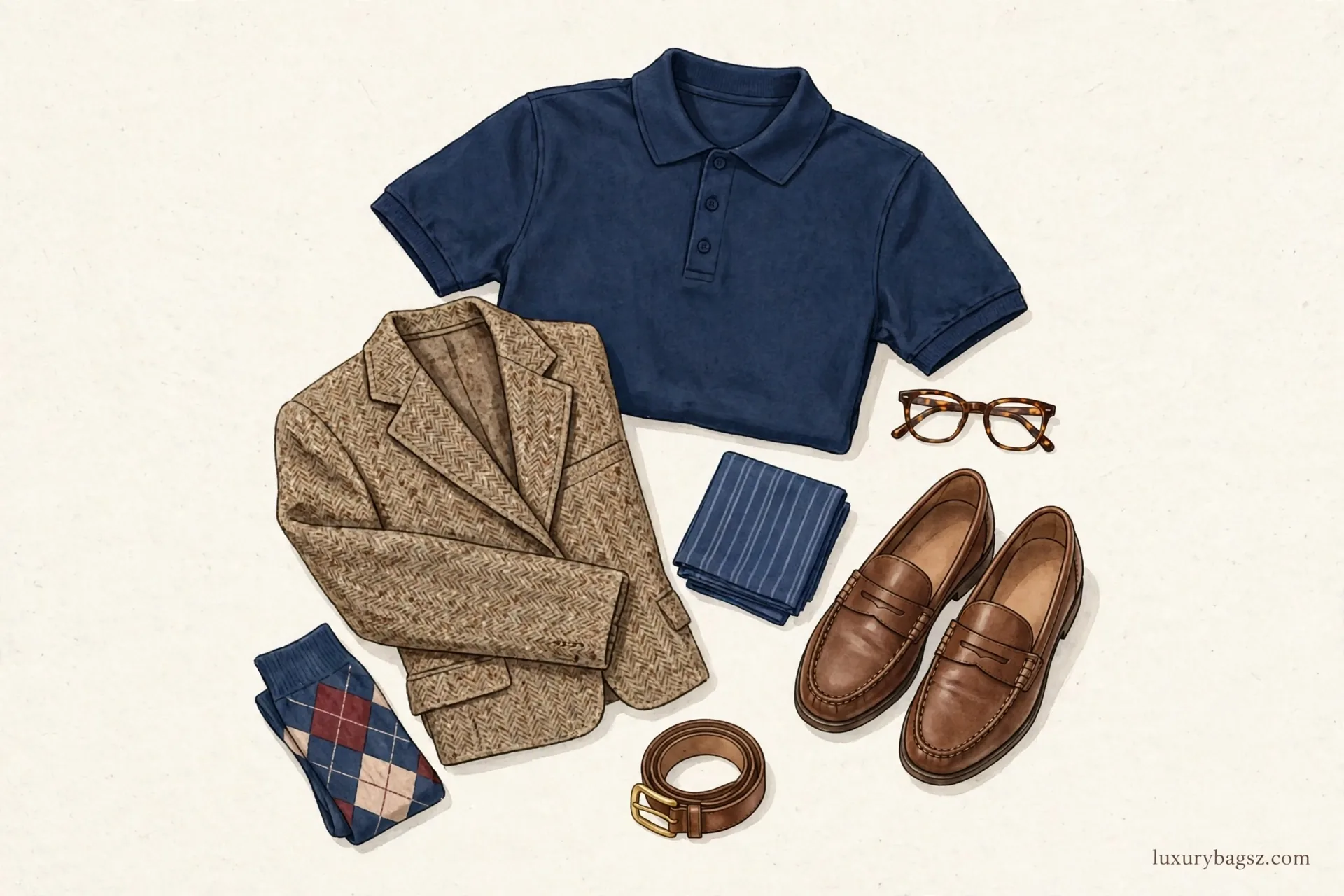
Ralph Lauren in Brief: Selling a Dream of American Life
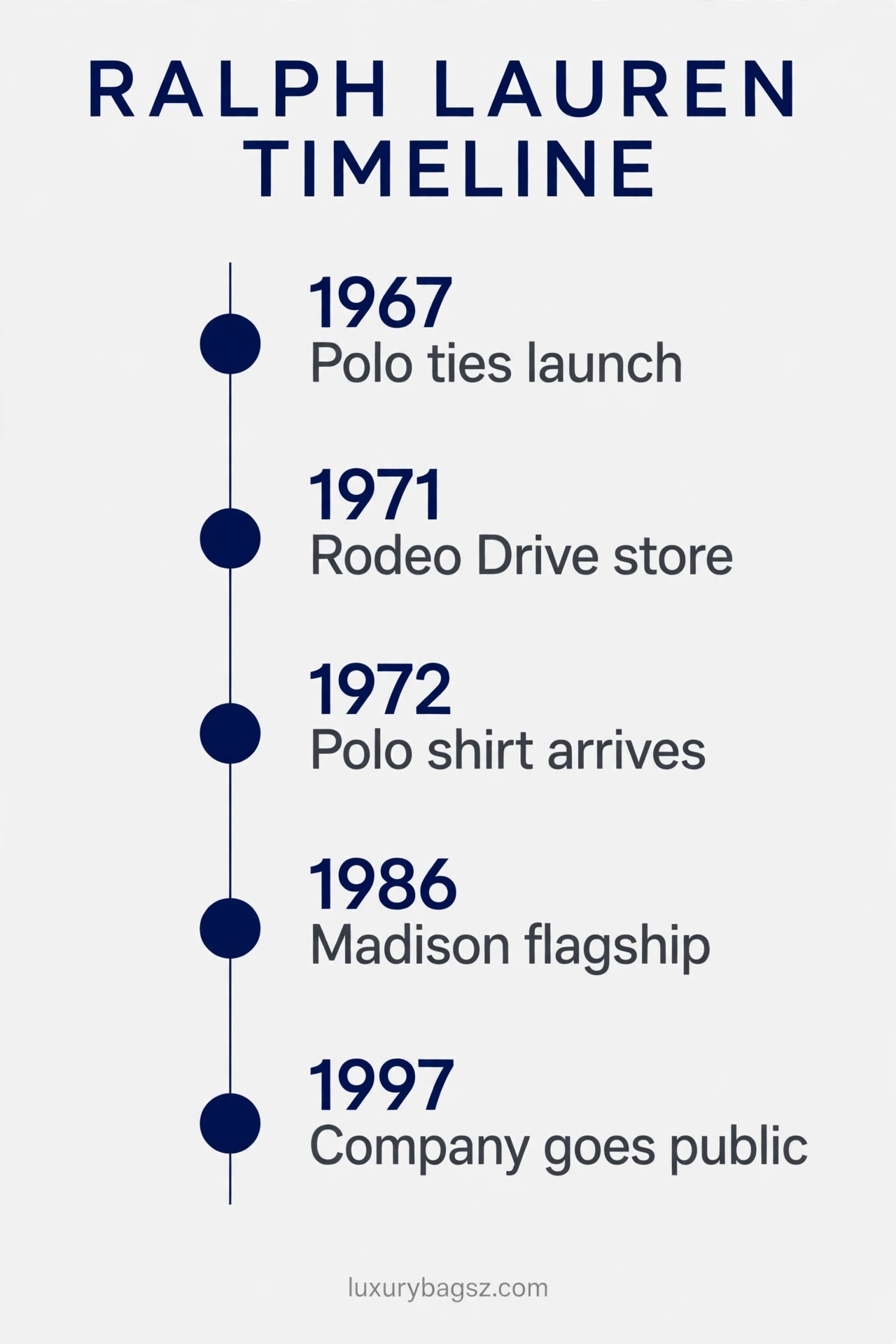
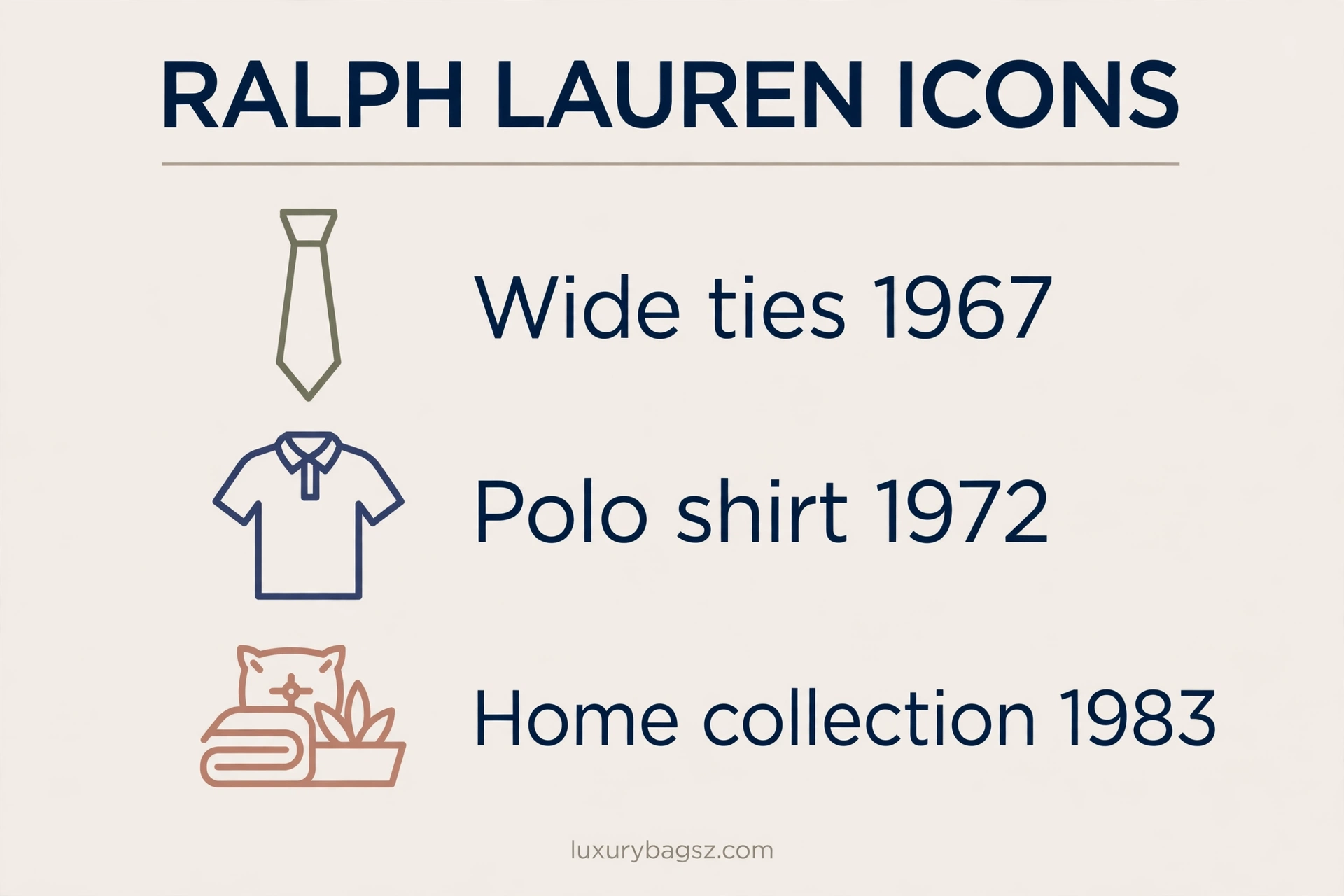
Ralph Lauren began in 1967, when a Bronx-born tie salesman named Ralph Lifshitz — who had changed his surname to Lauren as a teenager — launched a line of wide, boldly patterned neckties under the name Polo, working from a drawer in the Empire State Building. The ties were the opposite of what the market wanted: wider, brighter, and more expensive than the narrow, plain ties of the day. Bloomingdale's bought them, shoppers loved them, and a fashion empire followed.
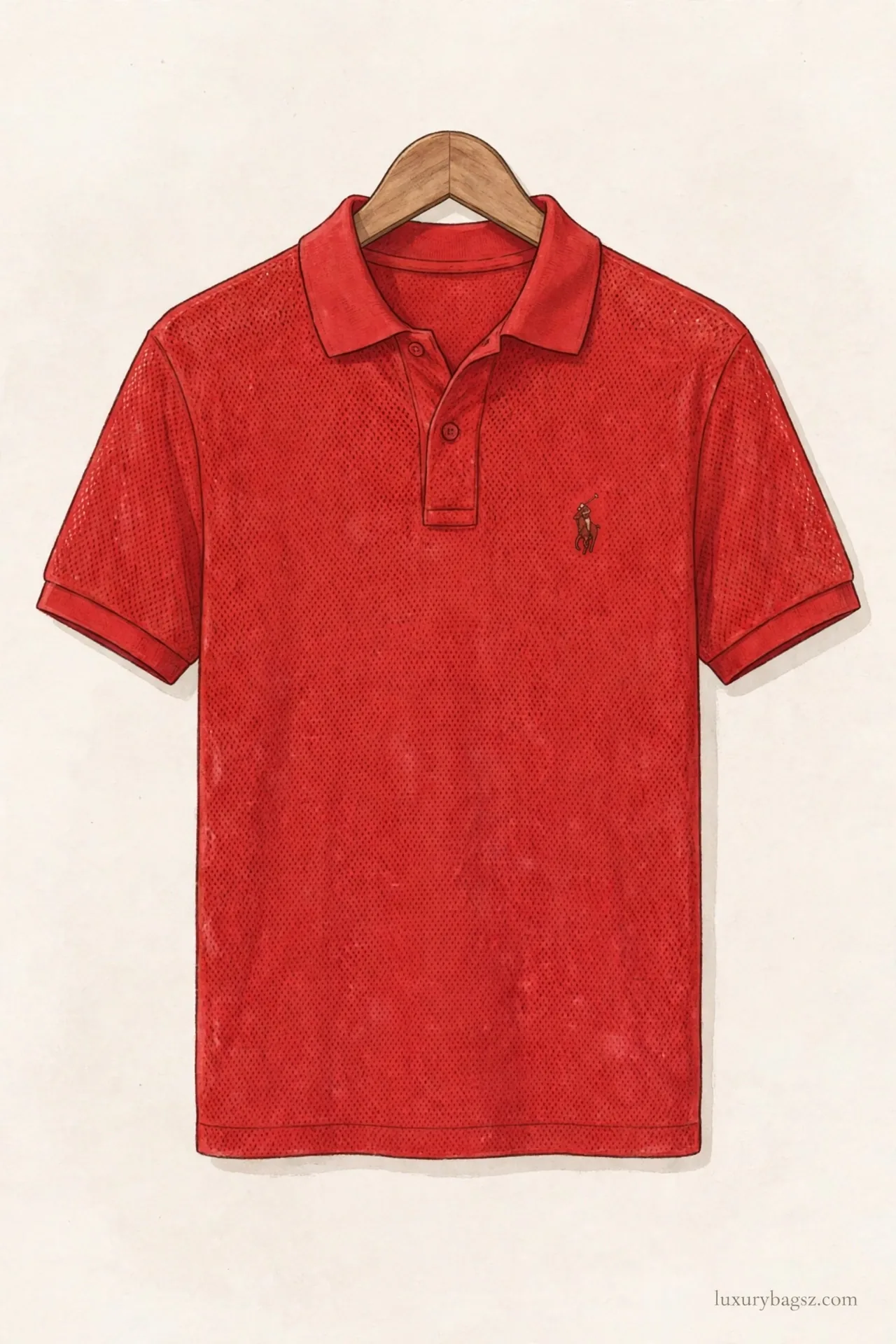
The Polo shirt arrived in 1972, a mesh cotton shirt with a small embroidered polo player on the chest, and it has barely changed since. From there, Lauren built not just a clothing brand but a world: menswear, womenswear, home goods, fragrances, and restaurants, all expressing the same idealised American life of country houses, polo fields, and Ivy League ease. The company went public in 1997, and Lauren stepped down as chief executive in 2015 while staying on in a creative role.
Ralph Lauren matters to shoppers today for a practical reason as well as a cultural one: vintage Polo is one of the most traded names in second-hand fashion, from thrifted polo shirts to the coveted Snow Beach collection. Knowing the brand's history helps you date pieces, spot fakes, and understand why some Polo items command premiums while others sell for a few pounds.
Key Takeaways
- Ralph Lauren was founded in New York in 1967 by Ralph Lauren, born Ralph Lifshitz in the Bronx in 1939.
- The first product was a wide necktie, sold under the Polo name from a drawer in the Empire State Building.
- The mesh Polo shirt with the embroidered player logo arrived in 1972 and remains the brand's signature.
- The first freestanding Polo store opened on Rodeo Drive, Beverly Hills, in 1971, the first by an American designer.
- Ralph Lauren Corporation went public in 1997; Lauren stepped down as chief executive in 2015 but remains in a creative role.
The Bronx Kid Who Dreamed in Films
Ralph Lifshitz was born on 14 October 1939 in the Bronx, New York, the youngest of four children in a family of immigrants from Belarus. He grew up working-class, far from the country clubs and Ivy League quads his brand would later celebrate, and he fell in love with that world through Hollywood films: Cary Grant's suits, Katharine Hepburn's ease, the clean lines of American sportswear. At school he was teased for his surname, and at sixteen he and his brother legally changed it to Lauren, a name he felt sounded better and fitted the person he wanted to become.
He studied business briefly at Baruch College, served in the United States Army from 1962 to 1964, and then worked as a sales assistant at Brooks Brothers, the venerable American clothier. There he learned how classic menswear was made and sold — and how dull it could feel when it followed rules too rigidly. He married Ricky Low-Beer in 1964, and she became both his partner and his muse, modelling early pieces and shaping the womenswear vision that followed.
Lauren's ambition was famously recorded in his high-school yearbook, where he wrote that he wanted to be a millionaire. It sounds like a joke until you realise he meant it as a design brief: he wanted to build a life, and then a brand, around the American dream as he imagined it — not inherited wealth, but earned elegance, worn with confidence. That outsider's view of old money became the brand's greatest asset: Lauren sold the dream precisely because he had dreamed it himself.
A Drawer of Ties in the Empire State Building
In 1967, at twenty-eight, Lauren was working for the tie manufacturer Beau Brummell when he persuaded its president to let him design his own line. He named it Polo, after the sport he associated with wealth, athleticism, and old-world glamour, and he cut the ties wide — around four inches, roughly twice the width of the era's standard — in bold colours and European fabrics. Retailers were sceptical: wide ties looked wrong on the racks of the day, and a mere salesman designing his own line was unheard of.
Bloomingdale's proved the exception. Lauren insisted his ties carry his own name, reportedly turning down an initial order that would not, and Bloomingdale's eventually gave him a dedicated shop — virtually unheard of for a newcomer. The ties sold $500,000 worth in their first year, a remarkable figure for a one-man line working from a single drawer in the Empire State Building. Neiman Marcus and other stores followed, and by 1968 Polo had expanded into a full menswear line of shirts, sport coats, slacks, and suits.
The tie story contains the whole Ralph Lauren method in miniature: take a classic, make it bolder and better, insist on your name, and sell a world rather than a product. It also explains the brand's later strength in retail presentation. Lauren understood early that how clothes are displayed — in a dedicated shop, in a room that feels like a home — matters as much as how they are cut. That lesson would shape every flagship that followed.
The Polo Shirt and the Birth of a Uniform
The product that made Ralph Lauren a household name arrived in 1972: a short-sleeved mesh cotton polo shirt, cut slim, with a small embroidered polo player on the left chest. It was not the first polo shirt — Lacoste had sold one since the 1930s — but Lauren's version was different in spirit. Where Lacoste's shirt was sportswear, Lauren's was a lifestyle statement, offered in a rainbow of colours and worn as readily with a blazer as on a tennis court.
The shirt's genius is its stability. It has barely changed in fifty years, which means a Polo shirt from the 1980s and one from today are recognisably the same garment. That consistency built trust: buyers knew what they were getting, and the shirt became a uniform for preppy America, then for the world. It also became a canvas for subcultures, most famously hip-hop's Lo Lifes in late-1980s Brooklyn, who collected Polo with obsessive devotion and turned a country-club label into streetwear legend.
By the early 1970s, Lauren had also launched womenswear, in 1971, and won the Coty Award for menswear in 1970, his first major industry honour. The brand's range widened steadily: tailored clothing, knitwear, denim, and the Double RL line, launched in 1993, which celebrated vintage Americana and workwear. Each line expressed a different corner of the same imagined America, from ranch to Riviera, and each found its own loyal audience.
The Mansion, the Films, and the World-Building
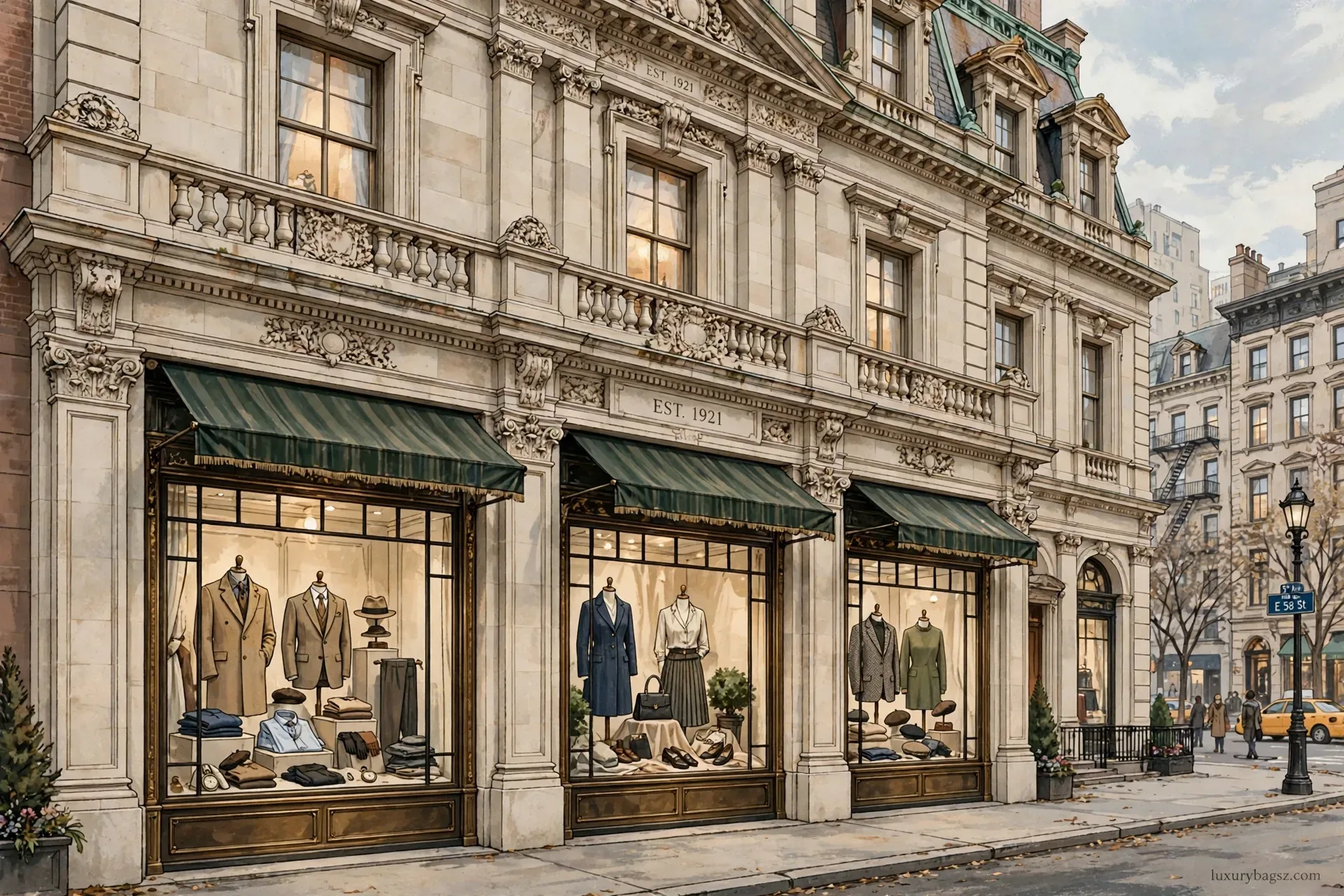
If the Polo shirt made Lauren famous, the Rhinelander Mansion made him mythic. In 1986 he opened his flagship inside the limestone Rhinelander Mansion on Madison Avenue, New York, a château-style building restored to feel like an old-money home rather than a shop. Shoppers walked through rooms furnished with antiques, books, and fireplaces, buying clothes in a setting that felt like visiting a wealthy friend. It was retail as theatre, and it set a standard luxury flagships still follow.
Film cemented the image further. Lauren designed costumes for The Great Gatsby in 1974, dressing Robert Redford in the Jazz Age elegance the brand had always evoked, and his clothes appeared in Annie Hall in 1977, where Diane Keaton's menswear-inspired wardrobe became a fashion moment. These were not product placements in the modern sense; they were proof that Lauren's imagined America looked convincing on screen, because it had been imagined so completely.
The home collection, launched in 1983, made Lauren the first fashion designer to offer a full home range, from bedding and towels to furniture and paint. It was a logical step: if you sell a lifestyle, you must sell the house it lives in. Restaurants followed much later, including the Polo Bar in New York, extending the world from wardrobe to table. For shoppers, the lesson is that Ralph Lauren has never been just a shirt brand; it is a complete environment, and its pieces make most sense when you buy into the world, not just the logo.

Labels, Lines, and the Confusion to Avoid
Ralph Lauren's success created a labelling maze that confuses even experienced shoppers. The core lines include Polo Ralph Lauren, the main sportswear label; Ralph Lauren Collection, the luxury runway line; Double RL, the vintage Americana line; and Lauren Ralph Lauren, a more accessible line sold through department stores. Each sits at a different price and quality level, and a bargain "Ralph Lauren" shirt from an outlet may belong to a very different line than a Collection piece.
One confusion deserves special attention: US Polo Assn. is not Ralph Lauren. It is a separate brand licensed by the United States Polo Association, and the two companies have fought in court over their similar polo-player logos. Only Ralph Lauren is the fashion house founded in 1967. If you are buying second-hand, check the label wording carefully: "Polo by Ralph Lauren" and "Polo Ralph Lauren" are Lauren labels, while "US Polo Assn." is not, however similar the horse-and-player emblem may look.
Quality also varies by era and line. Vintage Polo from the 1980s and 1990s, made in the USA or Hong Kong, is often prized for heavier cotton and careful construction, while later mass-market lines use lighter fabrics. That does not make newer pieces bad — many are excellent everyday shirts — but it means era and line matter when judging value. A heavyweight 1990s Polo shirt in good condition is a different purchase from a thin, recent outlet shirt, even if both carry a player logo.
Hip-Hop, the Lo Lifes, and a Second Life
No history of Ralph Lauren is complete without the Lo Lifes. In late-1980s Brooklyn, working-class teenagers from Brownsville and Crown Heights adopted Polo with extraordinary passion, collecting, trading, and wearing the label head-to-toe, sometimes acquiring it by shoplifting, a fact the community's own documentary does not hide. For these young men, Polo's country-club imagery was not exclusionary; it was aspirational, a way of claiming a dignity and style the world denied them.
Rappers followed, including Raekwon, whose Snow Beach jacket — a bright, ski-inspired Polo pullover from the early 1990s — became one of the most sought-after vintage pieces in streetwear. By the 2010s, Ralph Lauren itself acknowledged the subculture, collaborating with elements of it and reissuing archive pieces. The Lo Life story matters because it proves a brand's meaning is not fixed by its founder: Lauren imagined old money, and a generation of Black and Latino youth remade it as street luxury, expanding the brand's cultural reach far beyond its original audience.
That second life also drives the vintage market. Snow Beach, Stadium, and other 1990s collections now trade at prices their original buyers would find astonishing, while ordinary Polo shirts remain affordable thrift finds. The gap between a rare archive piece and a common shirt is enormous, so research matters: know which collection, colourway, and era you are buying before paying a premium, and be wary of reproductions that imitate 1990s graphics.
Buying Vintage Ralph Lauren Safely
Vintage Ralph Lauren rewards patience. Start with the label: genuine vintage Polo labels vary by era — the early "Polo by Ralph Lauren" labels, the 1990s labels, and modern labels all differ — so compare with dated reference examples rather than expecting one universal label. Check the embroidered player: on genuine pieces it is neatly stitched, correctly proportioned, and consistent in colour, while fakes often show loose threads, a distorted horse, or a player facing the wrong way.
Next, check fabric and construction. Genuine Polo shirts use mesh cotton with a consistent knit, ribbed cuffs and collar that recover their shape, and mother-of-pearl or high-quality buttons on better lines. Seams should be straight and finished, and the fit should match the stated size — vintage sizing runs differently from modern sizing, so measure a shirt you own and compare rather than trusting the label alone. Look for wear at collars, cuffs, and underarms, and for fading that suggests heavy washing.
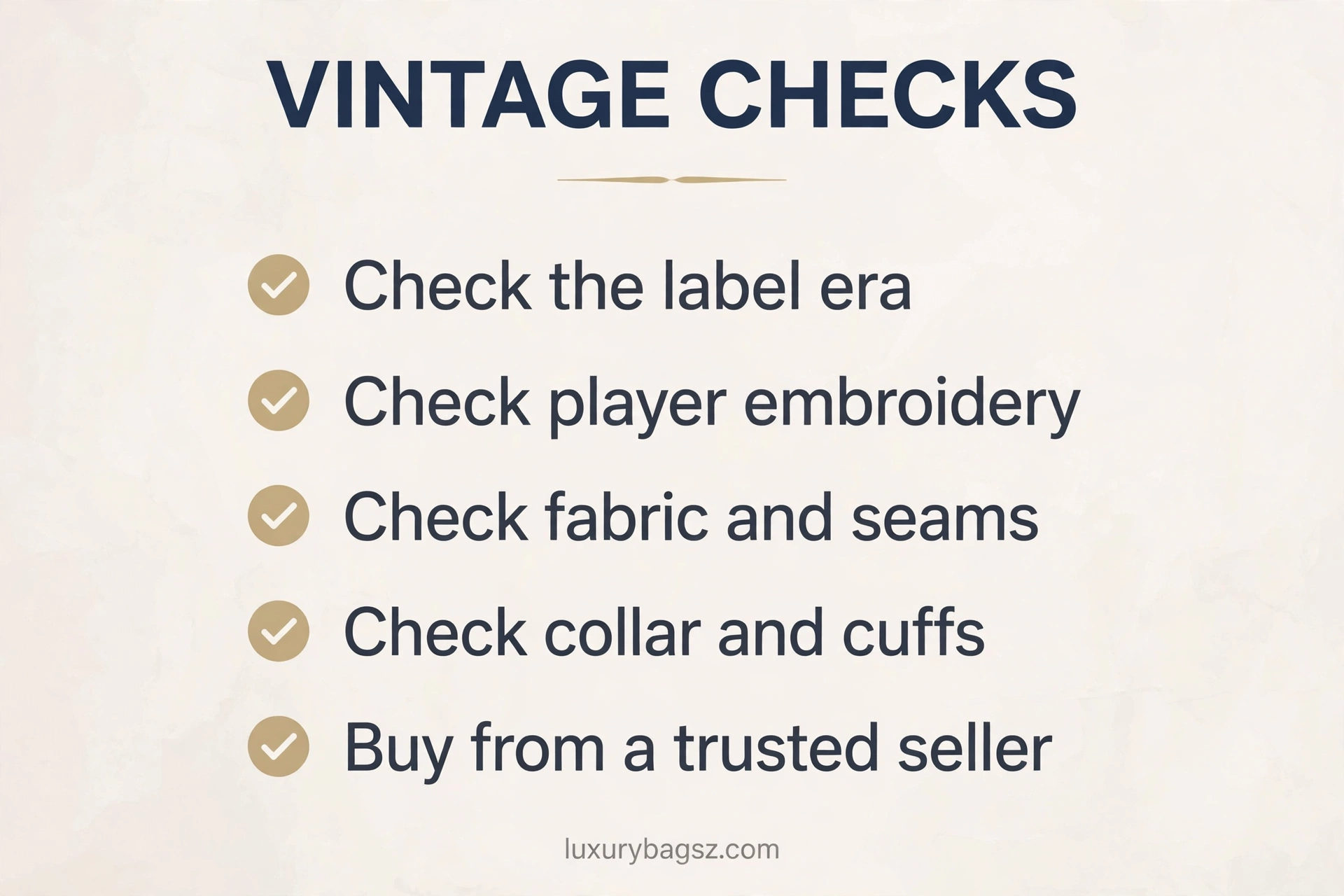
Price is the final check. A common Polo shirt in good condition is a thrift-store price, not a collector price, however nice the colour. Rare pieces — Snow Beach, Stadium, early Double RL — command premiums, but only with provenance, condition, and correct era details to support them. Our guide on how to buy vintage clothing online covers safe payment and returns habits, and our guide to finding unique clothing will help you hunt beyond the obvious listings. Buy the piece, not the hype, and check every detail before paying a collector price.
Ralph Lauren Today
Ralph Lauren Corporation went public in 1997 and trades on the New York Stock Exchange. Lauren stepped down as chief executive in 2015, handing the role to Stefan Larsson and later Patrice Louvet, while remaining as executive chairman and chief creative officer — a structure that keeps the founder's vision at the centre while professional managers run the business. The company now sells in stores and online worldwide, across apparel, home, accessories, and fragrances.
Recent years have brought sustainability efforts, digital innovation, and a renewed focus on the brand's archive, including reissues of classic pieces for new generations. The Polo shirt remains the anchor, but the brand's strength is its breadth: a shopper can buy a tailored suit, a rugby shirt, a paint colour, and a coffee at a Ralph Lauren restaurant, all expressing the same world. Critics sometimes argue the brand leans too heavily on nostalgia, and that its vision of America excludes as much as it includes — a fair criticism that the Lo Life story partly answers, by showing how outsiders remade the brand for themselves.
For today's buyer, the sensible approach is to start with the classics: a well-fitting Polo shirt in a colour you will wear weekly, a good knit, or a vintage find with character. Avoid the trap of buying a logo rather than a garment, and remember that Ralph Lauren's best pieces earn their place not by shouting wealth, but by looking effortless. That effortlessness was always the dream — a Bronx kid's idea of how America should dress, made real one tie, one shirt, and one mansion at a time. If you collect across brands, our guide to vintage designer bags applies the same condition-first thinking to bags as to clothing.
Frequently Asked Questions
When was Ralph Lauren founded?
Ralph Lauren was founded in New York in 1967, when Ralph Lauren launched a line of wide neckties under the Polo name.
Who founded Ralph Lauren?
Ralph Lauren, born Ralph Lifshitz in the Bronx in 1939, founded the company. He changed his surname to Lauren as a teenager.
What was Ralph Lauren's first product?
A wide necktie, cut around four inches wide in bold colours and European fabrics, sold from a drawer in the Empire State Building.
When was the Polo shirt introduced?
The mesh Polo shirt with the embroidered polo player logo was introduced in 1972 and has barely changed since.
What is the difference between Ralph Lauren and US Polo Assn.?
Ralph Lauren is the fashion house founded in 1967. US Polo Assn. is a separate brand licensed by the United States Polo Association, and the two are not related.
When did Ralph Lauren go public?
Ralph Lauren Corporation went public in 1997 and trades on the New York Stock Exchange.
Is Ralph Lauren still involved in the company?
Yes. Lauren stepped down as chief executive in 2015 but remains executive chairman and chief creative officer.
What is Double RL?
Double RL, launched in 1993, is Ralph Lauren's vintage Americana and workwear line, inspired by old denim, ranch wear, and military clothing.
Why is vintage Polo so popular?
Vintage Polo, especially 1990s collections such as Snow Beach, is prized for heavier fabrics, archive graphics, and cultural associations with hip-hop and streetwear.
How do I spot a fake Polo shirt?
Check the label against dated examples, the embroidered player's stitching and proportions, fabric quality, seam finishing, and sizing, and buy from a reputable seller.
Conclusion: A Dream Worn Daily
Ralph Lauren's history runs from a drawer of ties to a global empire, yet its core never changed: an outsider's dream of American elegance, made into clothes people could actually wear. The Polo shirt endures because it is simple, well made, and endlessly adaptable — from country clubs to Brooklyn streets. Buy the classics, check vintage pieces carefully, and wear them with the confidence Lauren always intended: not as a costume of wealth, but as an expression of a life well imagined.






