Jimmy Choo Brand History: From an East London Atelier to Red-Carpet Icon
Jimmy Choo in Brief: The Shoemaker, the Editor and the Stiletto
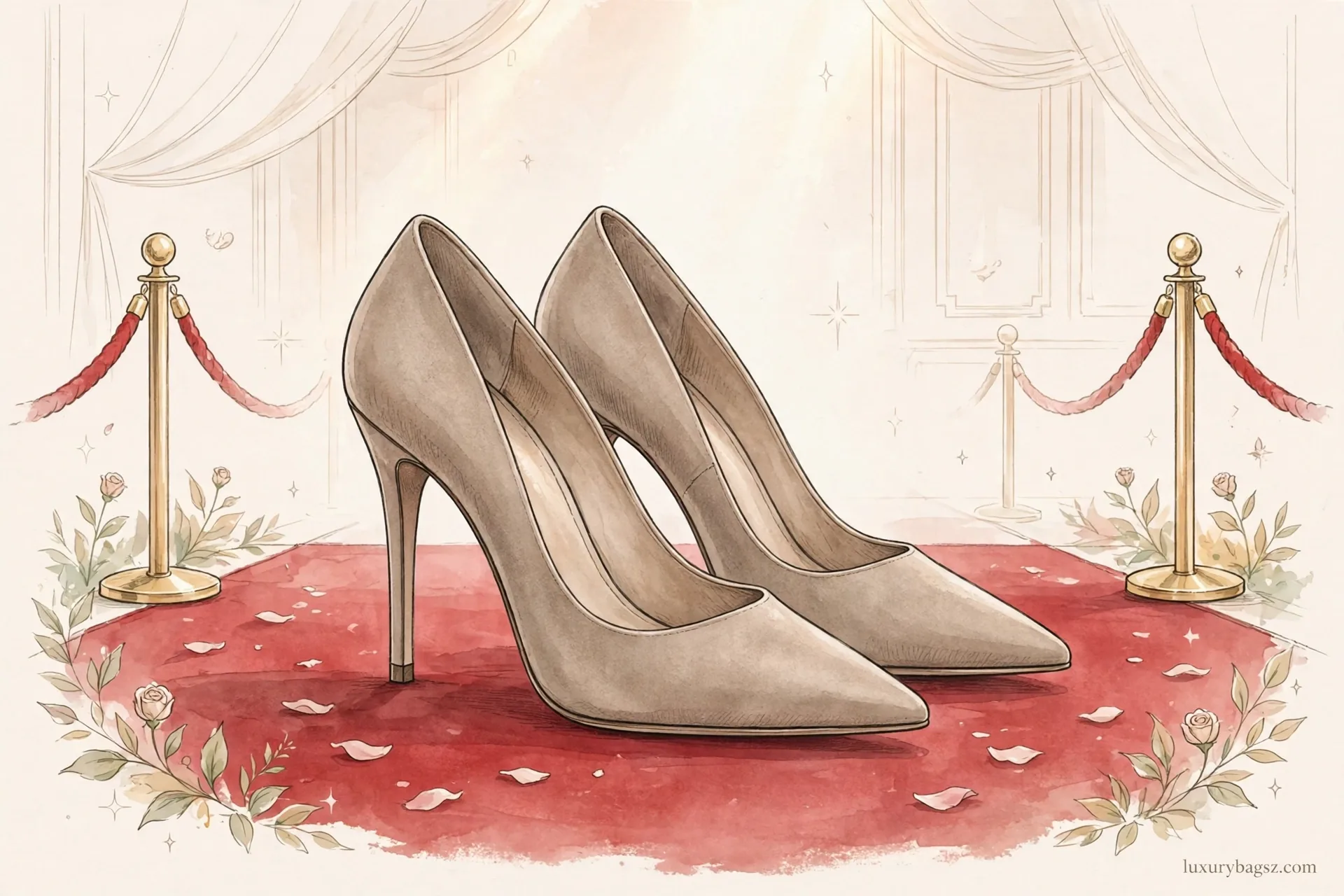
Jimmy Choo is a British luxury accessories house founded in London in 1996, best known for pointed-toe pumps and red-carpet glamour. The name belongs to a shoemaker from Penang, Malaysia, who made bespoke shoes by hand in East London long before the brand existed. The company that bears his name was built with Tamara Mellon, then an accessories editor at British Vogue, and designed from the start by Sandra Choi.
That distinction matters. Jimmy Choo the man left the business in 2001, while the house continued under Choi's design direction and later under Capri Holdings. When you buy Jimmy Choo today, you are buying the house's design language and Italian craftsmanship, not a pair made by the founder himself. Keeping those two stories apart makes the history, and the shopping, much clearer.
Key Takeaways
- Jimmy Choo the shoemaker was born in Penang in 1948 and trained in London.
- The brand Jimmy Choo Ltd was co-founded in London in 1996 by Jimmy Choo and Tamara Mellon.
- Sandra Choi, Choo's niece by marriage, has overseen design since the founding.
- The first boutique opened on Motcomb Street, London, in 1996.
- Princess Diana and Sex and the City turned the house into a household name.
- Jimmy Choo left in 2001; Tamara Mellon left in 2011; Capri Holdings acquired the house in 2017.
- Shoes use Italian sizing, so always check the conversion before ordering.
A Shoemaker from Penang
Jimmy Choo, born Zhou Yang Jie on 15 November 1948 in Penang, Malaysia, grew up in a family of shoemakers. Family accounts say he made his first pair of shoes, slippers for his mother, at the age of 11. The detail is small, but it captures the house's founding myth: craft learned early, by hand, at home.
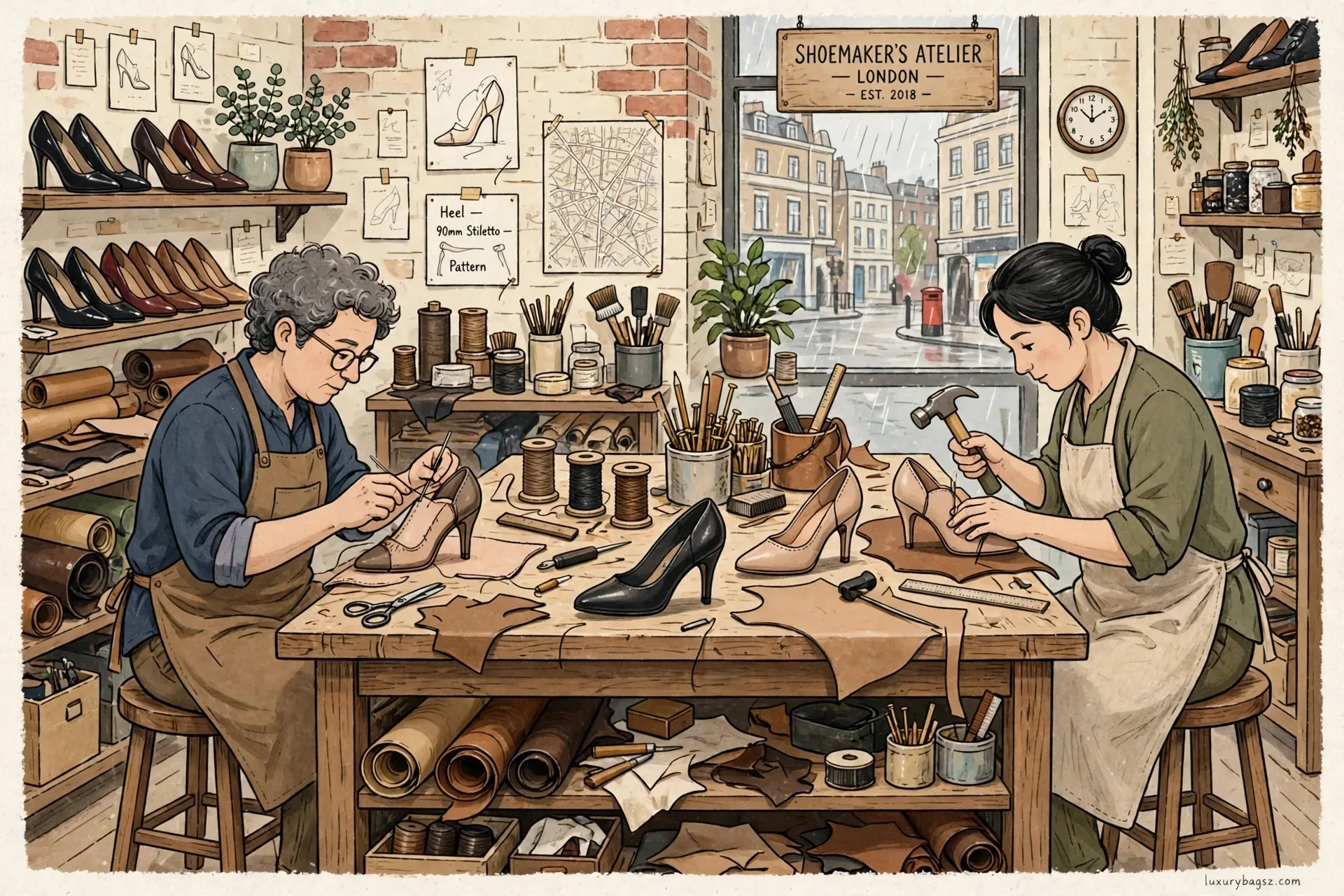
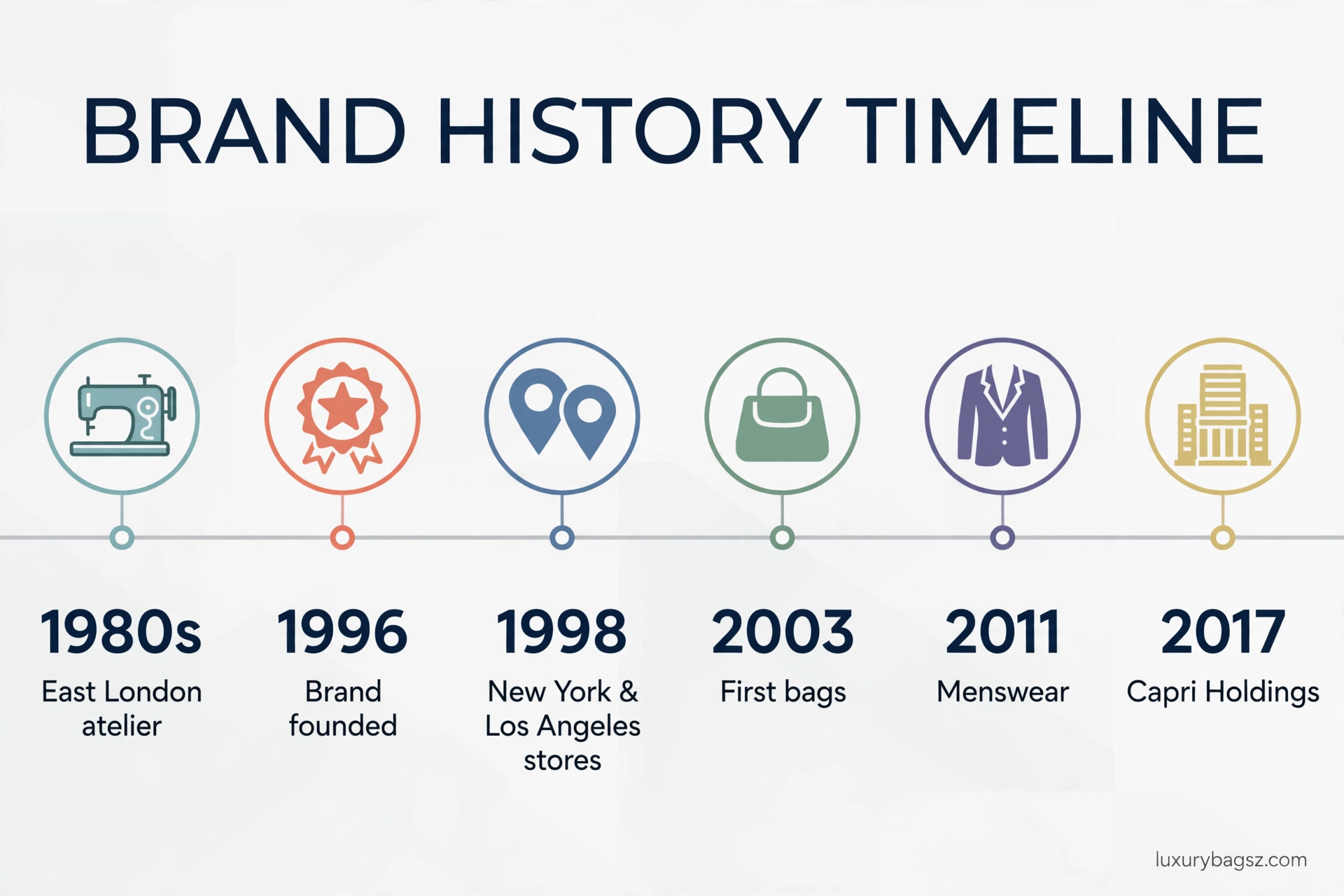
He came to London in the early 1980s to study at Cordwainers Technical College, now part of London College of Fashion, and graduated in 1983. Rather than return to Malaysia, he stayed and built a bespoke business in East London, opening a workshop in a former hospital building in Hackney in 1986. His shoes were handmade, made to measure, and priced for a clientele who valued fit above fashion noise.
In 1988 his work appeared at London Fashion Week and earned an eight-page spread in British Vogue. That press attention changed everything. A bespoke shoemaker with a small East London studio suddenly had a national profile, and a new kind of customer: editors, social figures and, soon, royalty.
Diana, Vogue and the Road to a Brand
Princess Diana became a client in the early 1990s and wore Jimmy Choo shoes on major occasions, including pale-blue satin slingbacks for Swan Lake at the Royal Albert Hall in 1997. For a small atelier, that kind of patronage was worth more than any advertisement. It told buyers that these shoes were not only beautiful, but trusted by someone whose every outfit was photographed.
Tamara Mellon, then accessories editor at British Vogue, saw a different opportunity. Bespoke shoes could not scale, but ready-to-wear luxury shoes made in Italy could. She proposed a partnership that would keep the craft and polish of the atelier while reaching far more customers. Sandra Choi, Choo's niece by marriage, joined as a founding director in charge of design, a role she still holds as creative director.
In 1996 J. Choo Limited was co-founded by Choo and Mellon, and the first boutique opened on Motcomb Street in London. By 1998 stores had opened on Madison Avenue in New York and Rodeo Drive in Los Angeles. The house was no longer a London secret; it was an international luxury name within two years.
Sex and the City, the Red Carpet and the Romy
Popular culture did the rest. In a 2000 episode of Sex and the City, Carrie Bradshaw famously cried "I lost my Choo!" as a heel came off while she ran for a ferry. The line turned the brand into shorthand for glossy, urban glamour, and the house credits the show with making its name a household one.
The house also pioneered red-carpet dressing at the Academy Awards, lending and fitting shoes for major film stars. That strategy built a loop: stars wore the shoes, photographs spread worldwide, and customers arrived asking for the same pointed toe and high heel. It was marketing, but it was also product truth, since the shoes were designed to photograph well and to hold a clean line under a gown.
Later icons kept the story going. The Romy, a pointed-toe pump launched in 2016, became a signature almost at once, alongside the Anouk pump. Both show what the house does best: a sharp toe, a clean vamp, a heel that reads elegant rather than costume. If you want one pair that sums up Jimmy Choo, start with a pointed pump in a neutral leather or suede.

Bags, Menswear, Fragrance and the House Today
Jimmy Choo did not stay a shoe-only brand. The first bag collection launched in 2003, followed by eyewear in 2007 and a men's collection and first fragrance in 2011. Today the range covers shoes, bags, small leather goods, jewellery, soft accessories, eyewear and fragrance for women and men, all designed in the London studio under Sandra Choi.
Ownership changed along the way, and buyers sometimes confuse the timeline. Jimmy Choo sold his stake in 2001 and left the business that November, later launching a couture line and, in 2021, the JCA London Fashion Academy. Mellon left in 2011. In November 2017 Michael Kors Holdings, renamed Capri Holdings in 2018, acquired Jimmy Choo for about $1.2 billion.
In 2019 the house bought its first factory in Florence, Italy, with a second Florence factory acquisition following in 2024. That move matters for quality claims: it reasserts control over craftsmanship and legacy skills rather than relying entirely on outside workshops. For shoppers, the practical point is simpler: modern Jimmy Choo shoes are Italian-made luxury shoes, with Italian sizing and Italian production standards.
Sizing, Fit and What to Choose First
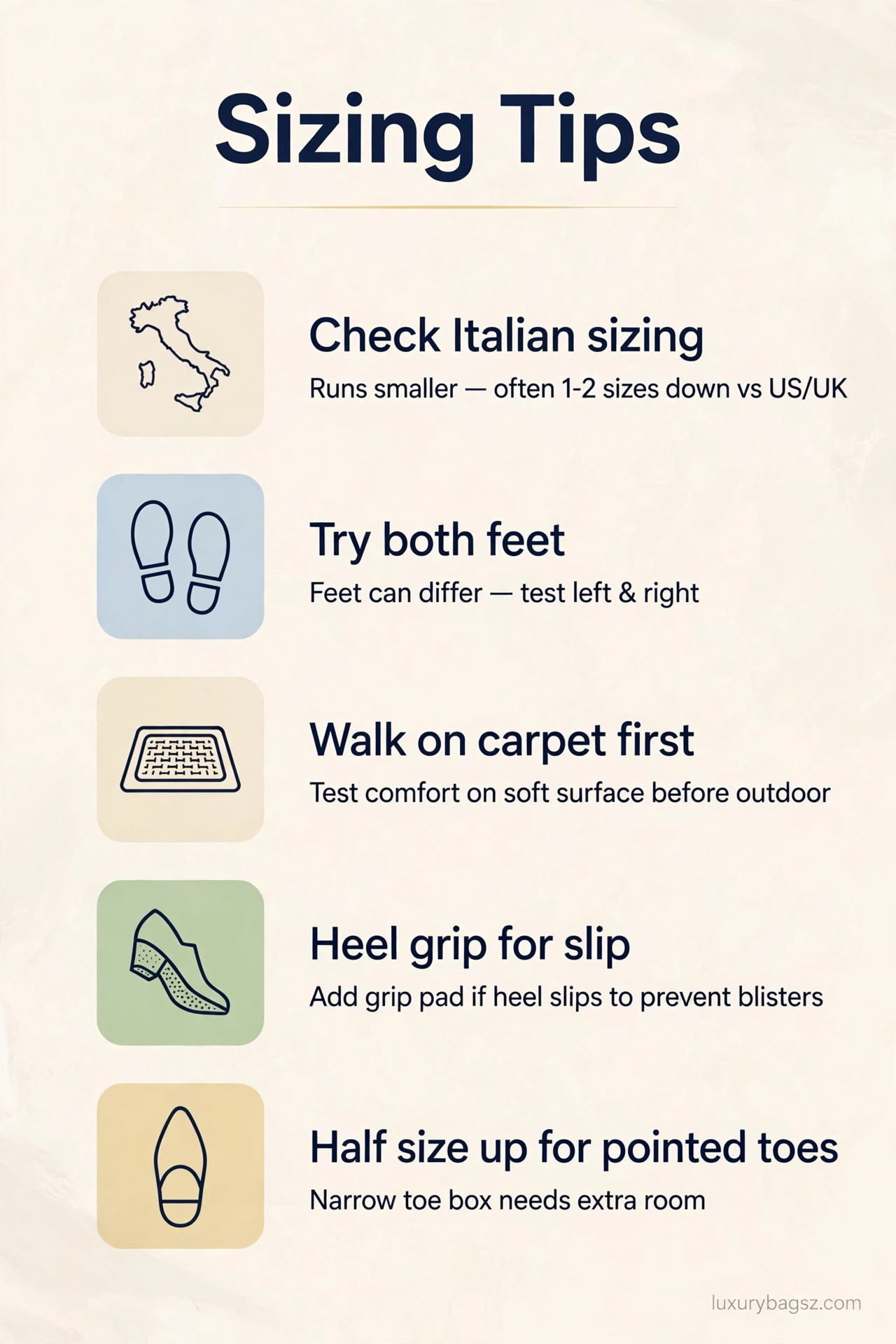
Jimmy Choo shoes are made in Italy and sized in Italian sizes, so do not order your usual UK or US size without checking the conversion. On most of the house's own product pages, styles are marked true to size, but pointed toes change the feel. A pointed pump often feels tighter across the toes than a round-toe shoe in the same size, even when the length is correct.
If you are between sizes, or buying a sharply pointed style, consider trying a half size up, and always try both feet. Feet differ, and the larger foot should decide the size. Walk on carpet first, so you can return unworn shoes if the fit is wrong, and check heel grip: a little slip at first is normal in leather, but a heel that lifts freely with every step will not break in well.
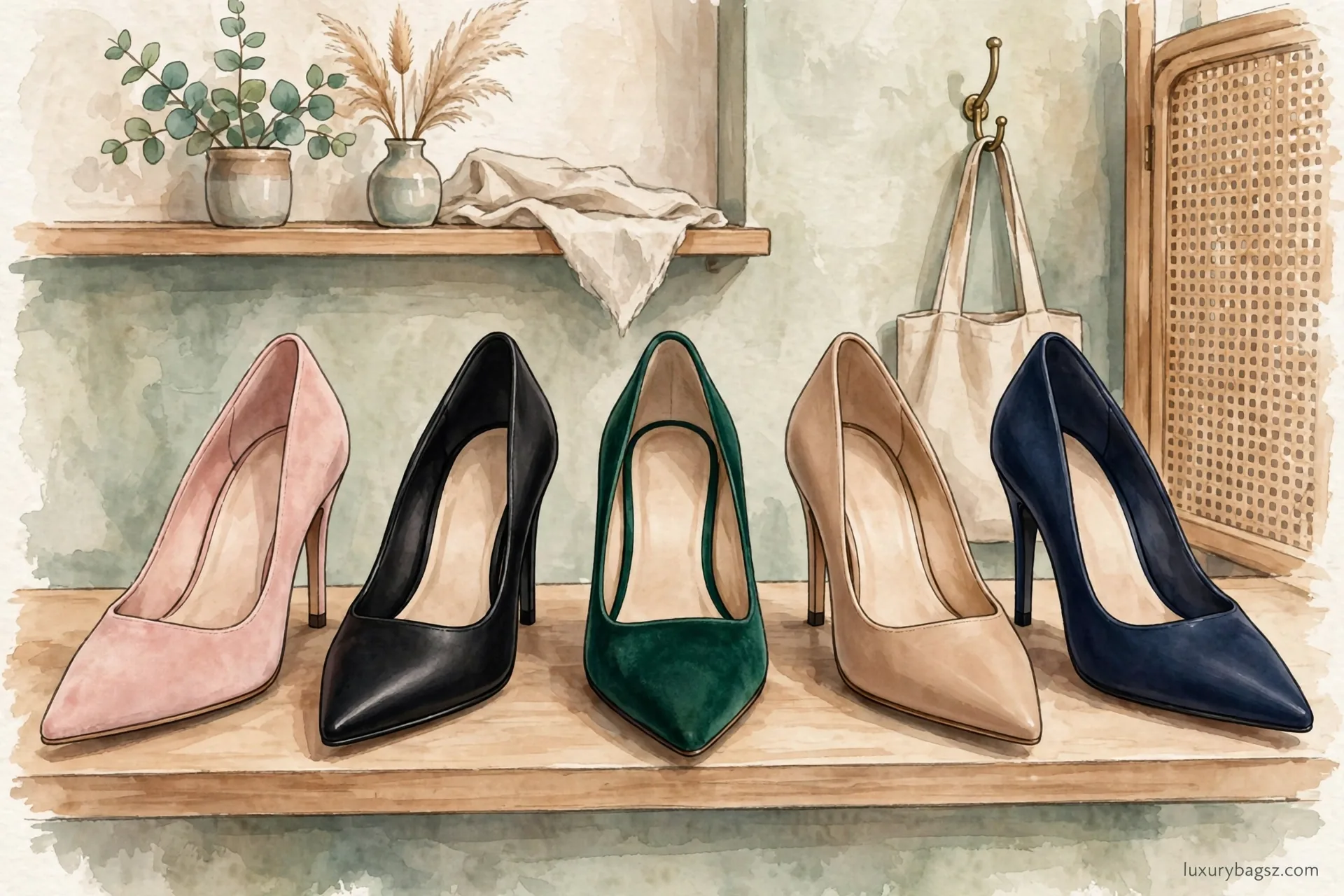
For a first pair, a neutral pointed pump or a classic slingback is the safest choice, since both work for work, weddings and evenings. A full guide to Jimmy Choo shoe sizing covers conversions in detail, and if this is your first luxury pair, read a guide to first designer shoes before spending. Comfort matters as much as looks: compare heel height honestly with ballet flats comfort if you will be on your feet all day, and choose the lower heel without guilt.
Buying Pre-Owned: Checks That Actually Work
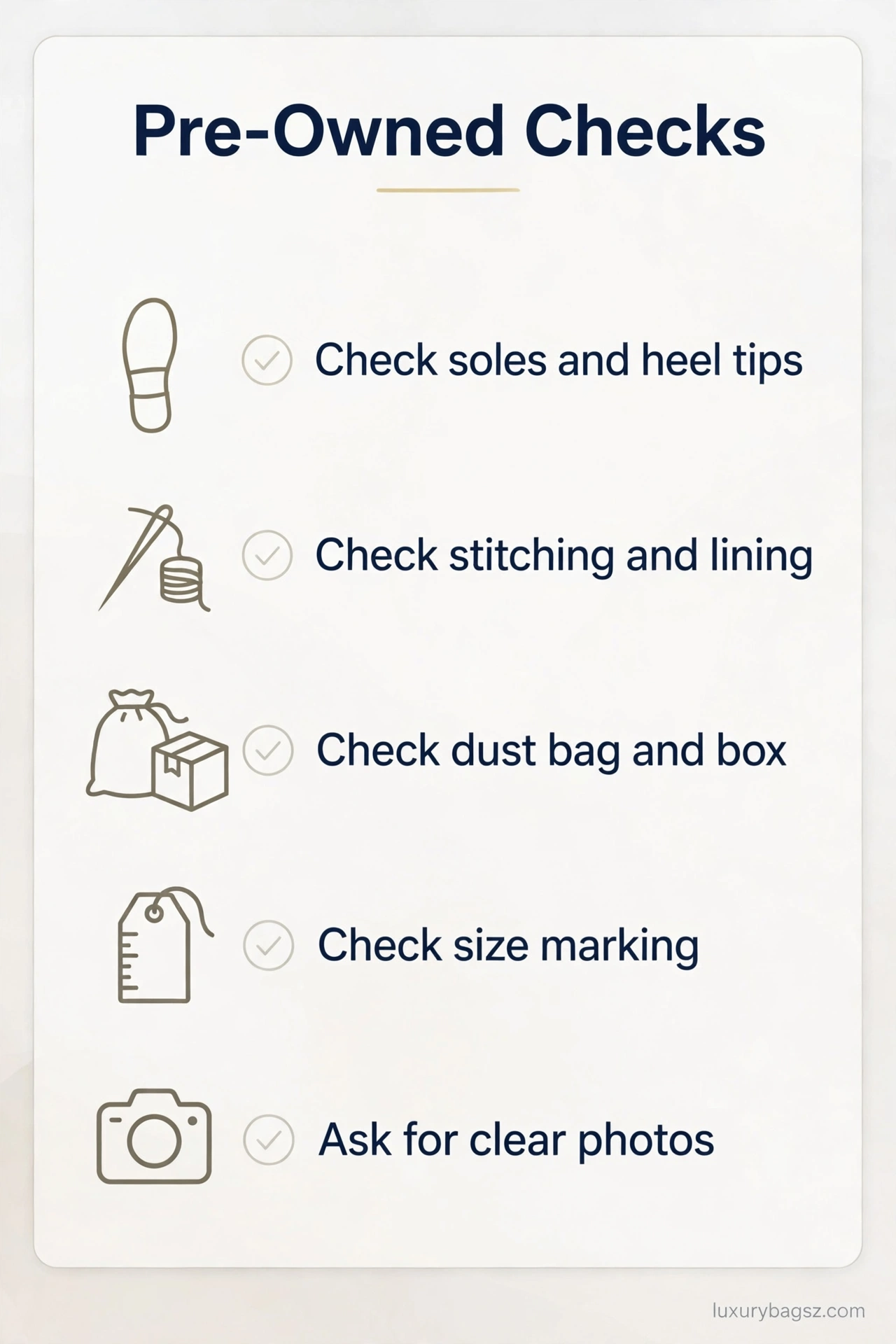
Pre-owned Jimmy Choo shoes can be excellent value, especially for classic pumps in neutral colours. Start with soles and heel tips, which show real wear fastest. Worn heel tips are cheap to replace, but a worn sole edge or a bent heel suggests heavy use. Check stitching, lining and insoles next, and look inside for the size marking and made-in-Italy label.
Ask for the dust bag and box, and for clear photos of both shoes, not just one. Pairs photographed from a single flattering angle hide uneven wear, and a missing dust bag is not a deal-breaker but should lower the price. Check for odour, stretching and colour transfer, especially on light suede and satin, which mark easily and clean poorly.
Condition language varies by seller, so use a consistent scale rather than trusting words like "excellent" alone. A guide to grade designer shoe condition helps you compare listings fairly. As a rule, pay a premium only for unworn or barely worn pairs with full packaging; for worn pairs, price the cost of a cobbler's heel tips and cleaning into your offer.
What to Avoid, and How the House Holds Value
Avoid buying a famous name instead of a shoe that fits. A Romy in the wrong size, however beautiful, will sit unworn, while a less famous style that fits perfectly will earn its price many times over. Avoid very high heels for all-day events unless you have tested them, and avoid light satin for wet or crowded occasions, since stains and scuffs are hard to reverse.
Resale value is mixed, and honesty helps here. Classic pointed pumps in black, nude or navy hold interest best, while seasonal colours, novelty materials and extreme heels are harder to resell. Jimmy Choo is a strong fashion brand, not a rare-asset brand like Hermès, so buy for wear first and treat any resale return as a bonus.
Finally, beware of the founder confusion in listings. A seller who claims a modern ready-to-wear pair was "made by Jimmy Choo himself" is either mistaken or misleading, since he left in 2001. The value of a modern pair lies in the house's design, materials and Italian making, and that is plenty when the fit is right.
Frequently Asked Questions
When was Jimmy Choo founded?
The brand Jimmy Choo Ltd was founded in London in 1996 by Jimmy Choo and Tamara Mellon, with Sandra Choi overseeing design.
Is Jimmy Choo still involved with the brand?
No. Jimmy Choo sold his stake and left the business in November 2001. Sandra Choi remains creative director, and Capri Holdings owns the house.
Where are Jimmy Choo shoes made?
Modern Jimmy Choo shoes are made in Italy, and the house owns factories in Florence acquired in 2019 and 2024.
What is the Romy pump?
The Romy is a pointed-toe pump launched in 2016 that became a signature Jimmy Choo style, known for its sharp toe and clean line.
Do Jimmy Choo shoes run true to size?
On most house product pages they are marked true to size, but they use Italian sizing, and pointed toes can feel tighter than round toes.
What did Sex and the City do for Jimmy Choo?
A 2000 episode gave the brand its famous "I lost my Choo!" line, which the house credits with making its name a household one.
Did Princess Diana wear Jimmy Choo?
Yes. She was a client in the early 1990s and wore the shoes on major occasions, including pale-blue satin slingbacks in 1997.
When did Jimmy Choo launch bags and menswear?
Bags launched in 2003, eyewear in 2007, and menswear and fragrance in 2011.
How do I check pre-owned Jimmy Choo shoes?
Check soles and heel tips, stitching, lining, size marking, dust bag and box, and ask for clear photos of both shoes.
Are Jimmy Choo shoes a good investment?
Buy them to wear. Classic neutral pumps hold interest best pre-owned, but Jimmy Choo is a fashion brand, not a rare-asset investment.
Final Verdict: Buy the Fit, Not Just the Name
Jimmy Choo's history is a partnership story: a Penang shoemaker's hand craft, a Vogue editor's business sense, and a niece's design eye that has steered the house for three decades. The red-carpet fame followed the product, not the other way round, and the pointed pump remains the clearest expression of what the house does.
Choose with that history in mind. Get the Italian size right, pick a classic shape first, and check pre-owned pairs with care. A Jimmy Choo shoe that fits beautifully and suits your life is worth every penny; one bought only for the name will not be.