Summer Dresses Guide: How to Pick Cotton and Linen Dresses That Flatter
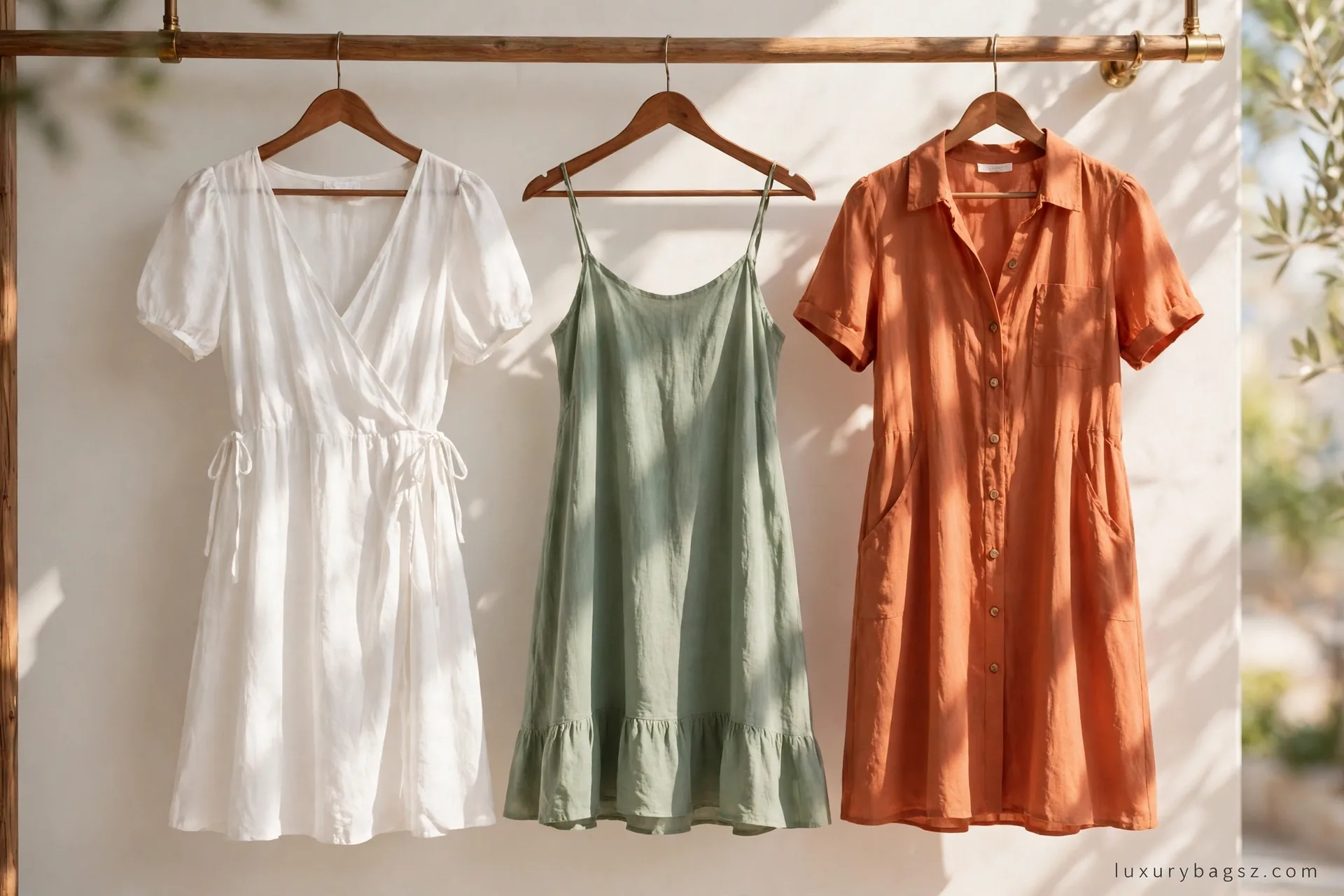
Summer Dresses, Picked Properly: Fabric First, Then Cut
The flattering summer dress starts with fabric, not style. Choose breathable cotton or linen in a weave with enough body, and almost any classic cut will flatter. Choose a thin, clingy synthetic and even a good cut will fight you all day. Heat makes fabric behaviour impossible to hide. This guide compares the two natural fibres honestly, then walks through cuts, necklines, fit checks and care, so one dress can carry a whole season.
Key Takeaways
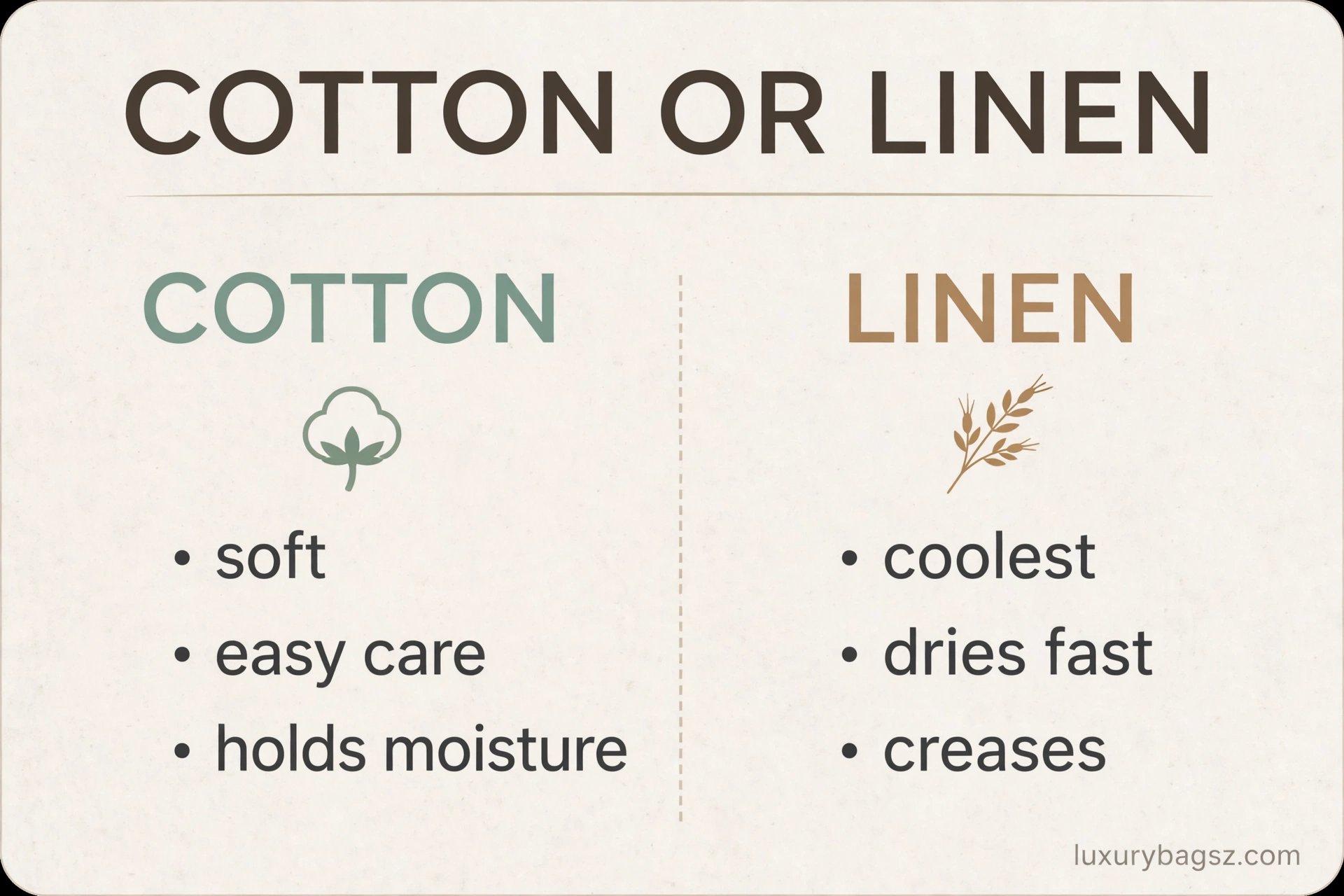
- Linen breathes best and dries fast, but creases as part of its character.
- Cotton is softer, cheaper and easier to care for, but can hold moisture.
- Hold every dress to the light: a good weave should not need a slip by default.
- Wrap, A-line and shirt cuts flatter the widest range of figures.
- Fit the shoulders and bust first; waists can be belted, shoulders cannot.
- Wash cool, dry in shade and store clean to keep natural fibres fresh.
Cotton Versus Linen: The Honest Split
Linen is woven from flax fibres that are hollow, which lets air move and moisture leave quickly. It feels cool on skin and softens beautifully with washing. Cotton is softer from day one and usually cheaper. In a loose weave such as voile or seersucker it breathes well, but in heat it can hold sweat longer than linen. Blends split the difference: linen-cotton mixes crease less than pure linen and keep much of the airflow. Read labels rather than trusting a summer look. Our sustainable materials in luxury fashion guide explains how both natural fibres compare with synthetics on footprint too.
Weave, Weight and the See-Through Test
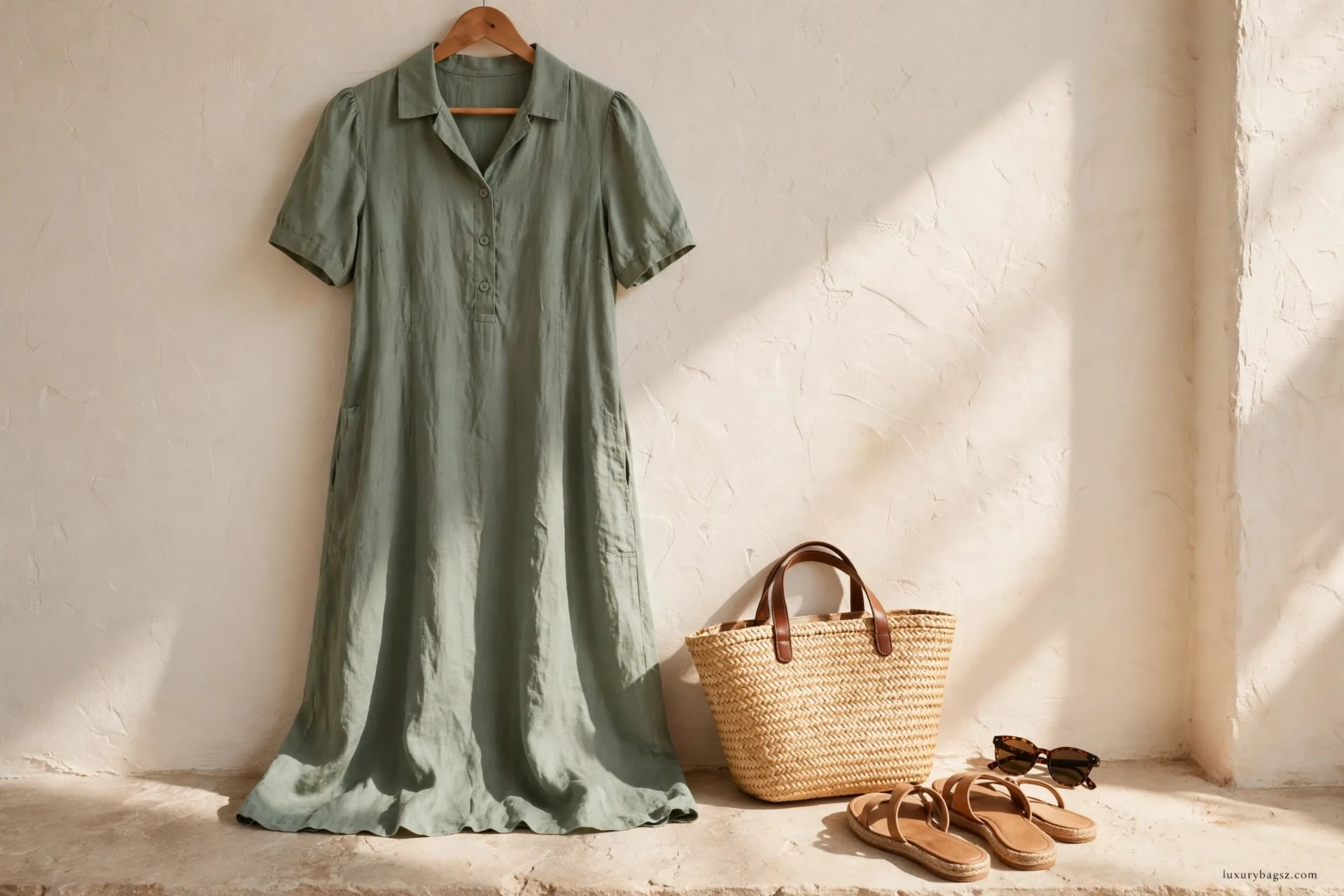
Hold the dress up to a window before you buy. If you can see the outline of your hand clearly through a single layer, plan for a slip or keep looking. A compact, even weave signals quality in both fibres. Irregular gaps, slubs where they do not belong and thin patches at stress points suggest a short life. Weight matters by use. A feather-light dress is glorious on holiday but may feel insubstantial at work; a midweight linen serves both settings calmly. Check the inside as well. French seams or bound seams, secure buttons and a lining that hangs straight are the marks of a dress made to last summers.
Cuts That Flatter: Wrap, A-Line, Shirt and Empire
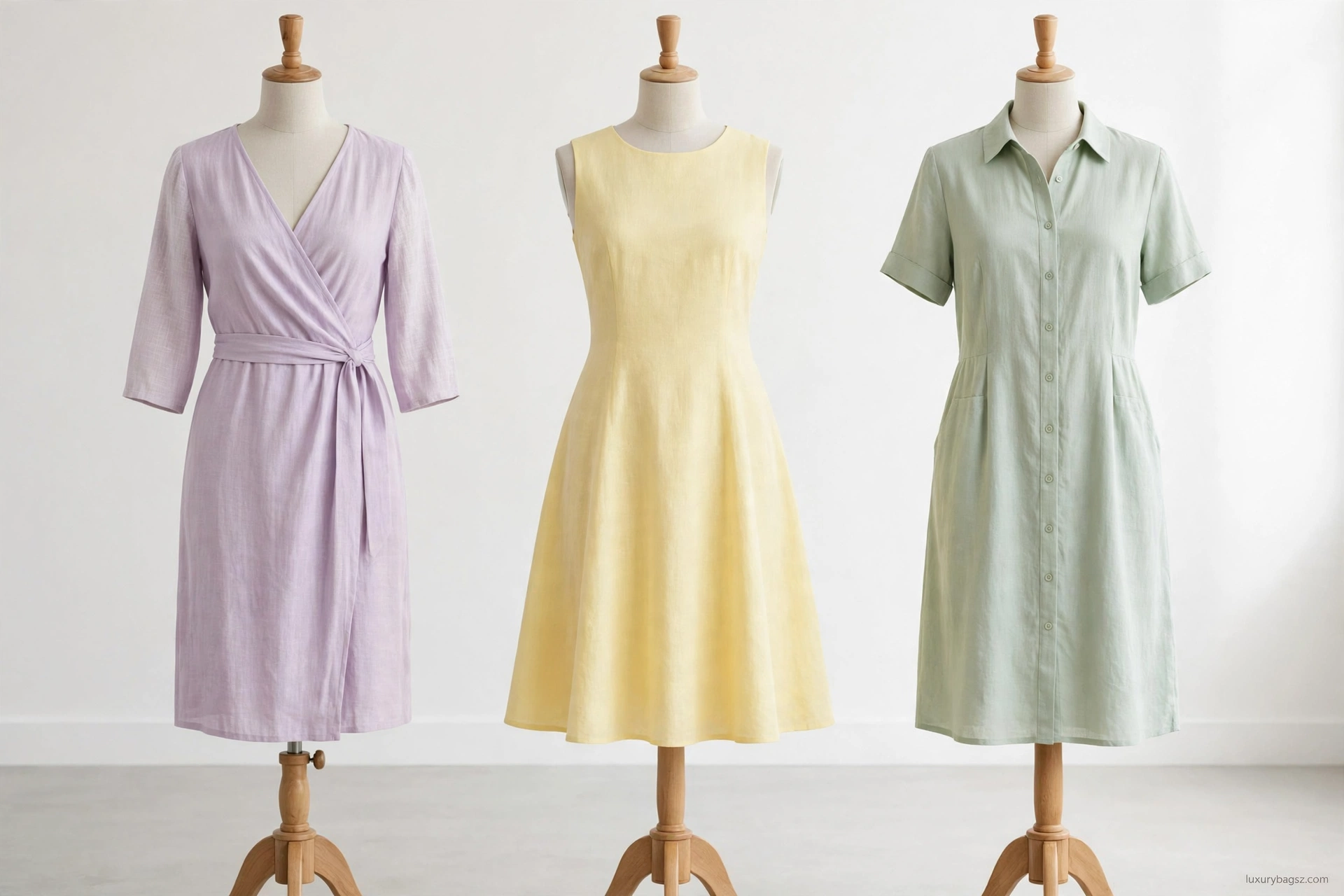
The wrap dress earns its fame honestly. It defines the waist, adjusts to the body and suits almost every figure, in cotton or linen alike. An A-line skims the hips and suits pear shapes and anyone who dislikes cling. A shirt dress brings structure, buttons and a collar that smarten summer dressing. An empire line lifts the waist to just under the bust and floats over the middle, which many apple shapes find the kindest cut of all. Straighter figures gain shape from belts, tiers and ruffles placed with intent. Our how to find the perfect 70s dress guide shows those retro shaping tricks well.
Necklines, Sleeves and Lengths
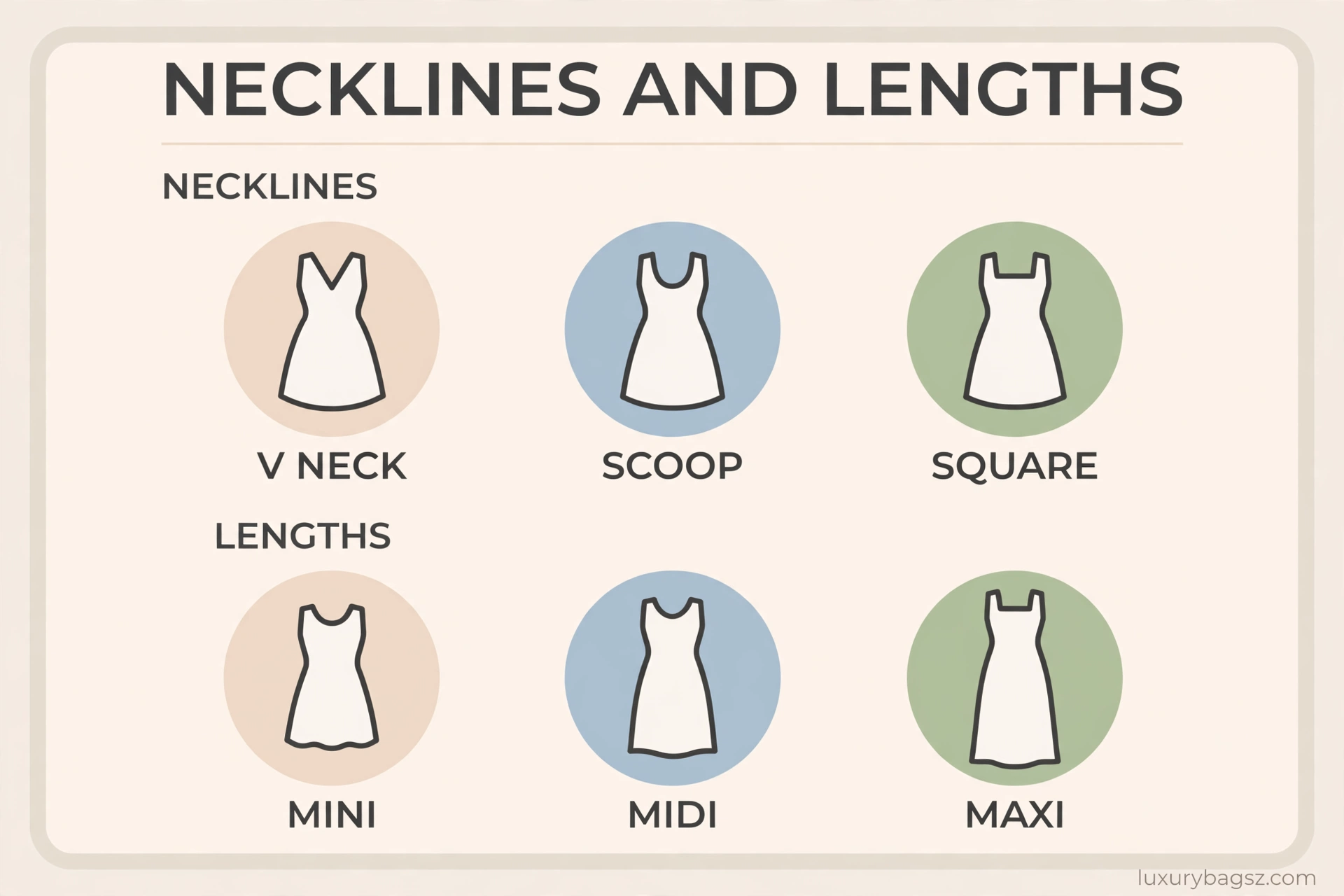
Necklines balance the whole dress. A V or wrap front lengthens the neck and suits fuller busts; a scoop is friendly and bra-forgiving; a square neck feels modern. Straps should be wide enough for a normal bra unless the dress is honestly a holiday piece. Sleeves, even short ones, add polish and sun cover for work and travel. On length, midi is the modern workhorse: cool, covered and easy with flats. Maxi gives drama and shade, and mini belongs to holidays and evenings. Try the length with the shoes you will actually wear. A hem that only works in heels you avoid is a hem that will keep the dress in the wardrobe.

Fit Checks Before You Commit
Fit the shoulders first. Seams should sit at the shoulder point, because a loose summer dress can be belted but a wandering shoulder always looks sloppy. Check ease where it matters: you should be able to sit, reach and climb stairs without the bust gaping, the waistband biting or the skirt pulling across the hips. Compare garment measurements with a dress you already love when shopping online. Label sizes vary too much between brands to trust blindly. Walk around the shop or your hallway for a minute. Natural fibres give a little as they warm, so a dress that feels perfect standing still should still feel right moving.
Colours, Prints and Scale
Summer light is honest, so colour choice carries weight. White and pale shades are coolest but demand the sheerness test twice; mid tones forgive more. Print scale should suit your frame and the dress size. Large prints can swamp a petite figure, while tiny prints can look busy on a maxi's wide canvas. Stripes earn their keep: vertical or chevron arrangements lengthen, and a striped shirt dress in linen-cotton is close to a summer uniform. Keep one plain, darker dress for evenings. It dresses up with jewellery, hides city marks better and stretches a small holiday wardrobe much further.
Styling: Shoes, Bags and Cool-Evening Layers
Day styling should stay light. Our flat shoes and summer flats guide pairs breathable dresses with shoes that will not punish hot feet. For evenings, our summer sandals day to night guide shows how one sandal swap lifts the same dress after dark. Add a light layer for air conditioning and late evenings: a linen blazer, a fine knit or a denim jacket keeps the dress working past sunset. For a smarter night look, our black lace dress style and history guide is the evening counterpoint to these breezy day styles.
Care: Washing, Creasing and Storage
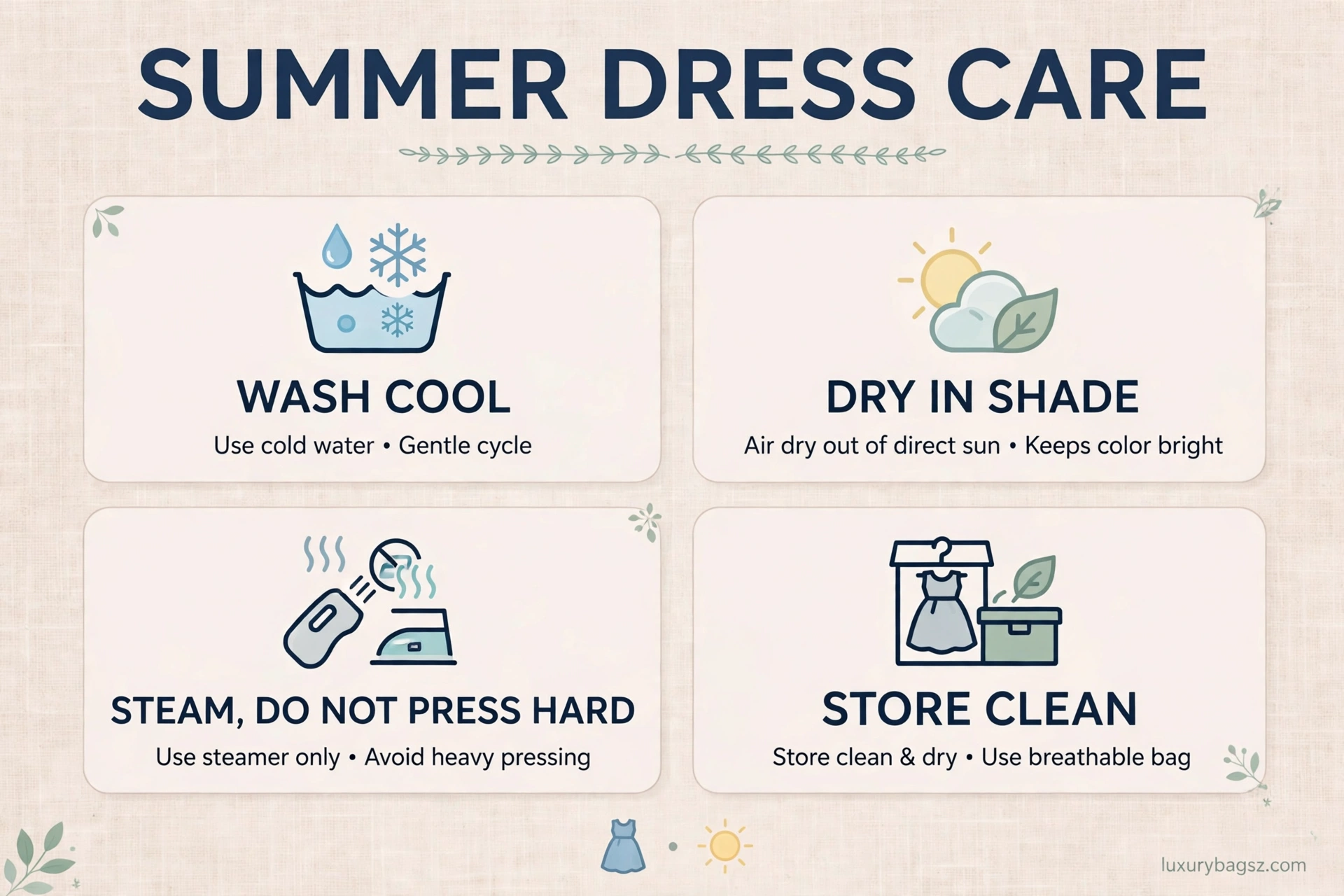
Wash natural fibres cool and gentle, with similar colours, and skip the tumble dryer where you can. Shade drying protects colour and fibre strength. Our how to clean cotton linen silk guide gives the detailed fibre-by-fibre washing rules behind this summary. Accept linen's creases as texture, and reduce the worst by hanging the dress in a steamy bathroom or using a quick steam rather than a hard iron. Store dresses clean, since invisible summer marks set into stains over winter. Pad shoulders, button shirt dresses and give natural fibres room to breathe.
Beyond Cotton and Linen: The Other Summer Fabrics
Cotton and linen lead this guide because they lead the market, but a summer wardrobe meets other fibres worth knowing. Viscose and its cousin rayon drape more fluidly than either, feel cool against the skin and take prints beautifully, which is why so many flowing holiday dresses use them.
Their costs are care and creasing: viscose wrinkles readily, can shrink or distort if washed roughly, and wants the gentlest cycle in the care advice below. A viscose dress is a fair-weather friend, glorious on the day and a little demanding in the laundry.
Seersucker solves a different problem: its puckered weave holds the fabric slightly off the skin, so air moves even in humid weather and the dress never clings flat. Eyelet cotton builds ventilation into the cloth itself, the cutwork holes acting as tiny windows, though it needs the sheerness test with extra care.
Chambray gives the look of denim at a fraction of the weight, and textured weaves generally, crinkled cotton and dobby among them, outperform flat weaves in heat for the same lift-off reason. The principle behind all of them is this guide’s opening one: air between cloth and skin is the cooling system.
The Lining Trap
A breathable dress can be quietly ruined by its lining. Many summer dresses are lined in polyester, chosen because it is cheap and slippery, and a synthetic layer against the skin traps exactly the heat and moisture the outer fabric was picked to release.
Check the lining’s fibre before the dress’s style. The best summer linings are cotton voile or the same natural fibre as the shell; the honest alternative is no lining at all in a weave with enough body, which is why the see-through test in this guide matters so much.
Part-lining is the sensible compromise many good makers use: a lined bodice for structure and modesty with an unlined skirt that moves air around the legs. Ask where the lining stops, not just whether one exists.
If a dress you love fails the lining test, a natural-fibre slip can rescue it, at the price of one more layer. Judge that trade in the shop, in summer light, rather than at home in October optimism.
One Dress, Three Settings: Work, Wedding, Holiday
At work the summer dress earns its place by structure: covered shoulders or a sleeve, a knee-or-below hem, a weave with body and a print or colour that survives a meeting room. The shirt dress and the midweight linen A-line are the reliable citizens here, finished with the flat shoes this guide’s styling advice recommends.
As a wedding guest, the same fabric rules meet etiquette: not white or its near neighbours, a formality step up from day dresses, and a fabric that will not crease into informality during a long afternoon. Linen’s creases are character at lunch and carelessness by the speeches, so blends and structured cotton often serve a guest better.
On holiday, reverse the priorities: the dress that packs flat, rinses in a sink, dries overnight and forgives creasing wins, whatever its fibre. Tiered cotton and crinkle weaves are the packer’s friends, and a maxi earns its suitcase space by covering legs against sun and evening chill alike.
Naming the setting before shopping is the whole method. Most summer-dress disappointments are good dresses bought for the wrong occasion, judged later as if the dress had failed rather than the brief.
Underneath It All: Slips and Summer Underpinnings
What sits under a summer dress decides how it behaves by afternoon. A slip in a natural or modern moisture-managing fabric stops a light dress clinging to legs, smooths the line through the skirt and rescues dresses that fail the sheerness test only slightly.
Colour is the quiet rule: under white and pale dresses, underwear and slips closest to your own skin tone disappear, while white under white famously shows through. Test the full combination in daylight before an occasion, not in bedroom light the night before.
For walking days, light anti-chafe shorts under a dress are the unglamorous purchase that saves holidays: they prevent thigh rub on long sightseeing days, guard modesty on windy steps and boat decks, and wash and dry faster than anything else in the case.
Straps and necklines from this guide’s fit advice should be settled with the actual bra you plan to wear. A dress that needs a special bra you do not own is a dress with a hidden second price, and summer is the wrong season for complicated foundations.
Frequently Asked Questions
Which is cooler in summer, cotton or linen?
Linen, in most conditions. Its hollow fibres move air and release moisture quickly, so it feels cooler and dries faster. Cotton is softer, but can hold sweat longer in heavy heat.
What is the most flattering summer dress cut?
The wrap dress flatters the widest range, defining the waist and adjusting to the body. A-line cuts suit pear shapes, and empire lines are kindest to apple shapes.
How can I tell if a white summer dress is too sheer?
Hold it to a window or bright light. If your hand's outline shows clearly through one layer, you will need a slip. A compact, even weave is the quality sign to look for.
Are linen dresses worth the creasing?
For most wearers, yes. The coolness and drape repay the creases, and linen-cotton blends reduce them. Hanging a dress in a steamy bathroom relaxes most wrinkles overnight.
What length is most versatile?
Midi. It stays cool, covers enough for work and travel, and works with flats, sandals and trainers. Maxi is lovelier for holidays; mini is best kept for evenings and heatwaves.
How many summer dresses do I actually need?
A small rotation of three to five covers most lives: two day dresses, one shirt dress, one smarter style and one holiday piece. Fabric quality matters more than quantity.
Can I wear a summer dress to the office?
Yes, in a structured cut: a shirt dress or a lined midi with sleeves or a layer over it. Check sheerness in daylight and keep hems and necklines work-appropriate.
Why does my cotton dress feel heavy when I sweat?
Cotton absorbs moisture and releases it slowly, so the fabric can feel damp and heavy. Linen releases moisture faster, which is why it feels fresher late in the day.
How should summer dresses be washed?
Cool and gentle, with similar colours, then dried in shade. Follow the label for blends, and use the detailed fibre rules for delicates before the first wash.
What shoes work best with summer dresses?
Flats and low sandals for day, a heeled sandal for evening. Match the shoe weight to the dress: light fabrics want light shoes, while a structured shirt dress can carry more.
Summary: Cool Fabric, Kind Cut, Honest Fit
Pick the fabric for the weather, the cut for your shape and the fit at the shoulders first. Do those three things and a summer dress almost chooses itself. Cotton for softness and value, linen for true heat, blends for easy living: buy fewer, better dresses and they will carry you through many summers.