

The Black Lace Dress: Style Guide and Red-Carpet History From Mourning to Modern Icon
The Black Lace Dress in Brief: Romance With a Dark Edge
A black lace dress works because it holds two ideas at once: the delicacy of lace and the discipline of black. It can read modest or daring depending on its lining. That tension explains its long life. Few garments have moved from mourning dress to couture gown to red-carpet default without losing their charge. This guide traces the journey, then turns practical: the lace types worth knowing, how to wear the dress now, and how to buy and care for one well.
Key Takeaways
- Black lace began as costly handmade work, tied to wealth and mourning.
- Chanel-era black dresses made the colour modern rather than funereal.
- Alaïa's sculpted lace in the 1980s gave the dress its second-skin fame.
- Modern red carpets return to black lace whenever romance trends rise.
- Lining choice decides the dress: lined reads classic, sheer reads daring.
- Buy on lace quality and finishing, and store it flat or padded, never crushed.
What Black Lace Actually Is
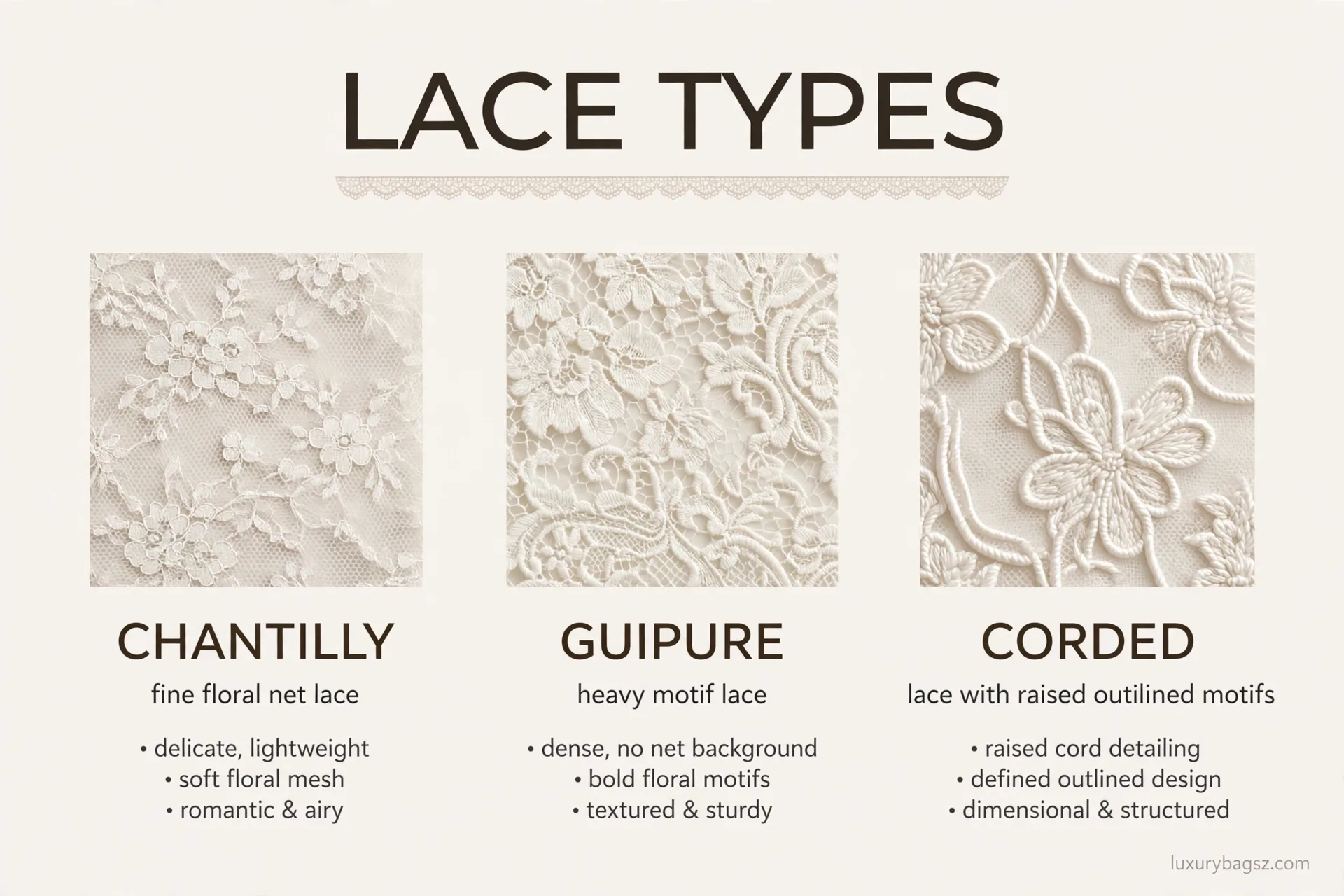
Lace is a patterned openwork fabric, built from threads looped, twisted or knotted into motifs. In black, every motif reads like ink drawing on skin. Chantilly is the fine, soft classic, with delicate floral patterns on a light net ground. It drapes beautifully and suits gowns and sleeves. Guipure is heavier, with motifs joined by bars rather than net, giving a sculptural feel. Corded lace outlines its motifs with a raised thread for definition. Knowing the types helps you price a dress honestly. Fine handmade-look lace costs more, drapes better and lasts longer than stiff printed imitations.
Early History: Wealth, Widows and Black Silk
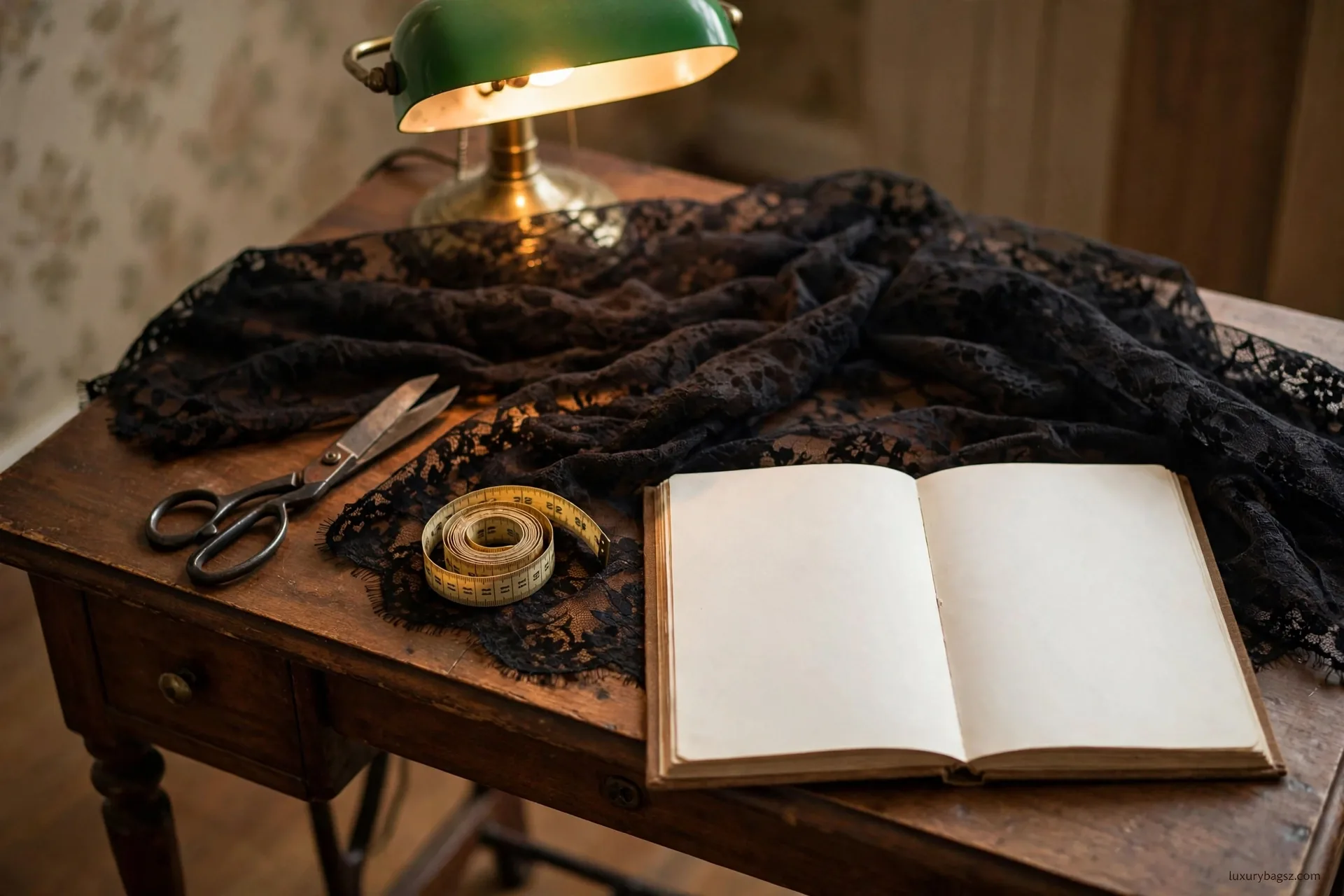
For centuries lace was a luxury taxed by time. Handmade lace took so long to produce that it signalled wealth as clearly as jewellery did. Black lace carried a double role in the nineteenth century. It dressed mourning, where etiquette demanded black, yet its richness kept it fashionable beyond grief. Spanish mantillas made black lace romantic in the popular imagination, draped over combs and shoulders with a drama plain fabrics could not match. Machine making later widened access, but the association stuck: black lace would always suggest ceremony, memory and a certain grown-up glamour.
The Twentieth Century Turn: Black Becomes Modern
In the 1920s the little black dress reframed black for evening: modern, urban and freed from mourning rules. Lace versions kept the romance, minus the gloom. Our influential women who changed fashion guide profiles the designers and wearers behind that shift in taste. Post-war couture then gave lace the full treatment: fitted bodices, full skirts and lace worked as the dress itself rather than a trim. By mid-century the black lace cocktail dress was a wardrobe institution, the safe-but-sultry answer to almost any evening invitation.
Screen Moments and the Cocktail Years
Film fixed the image. Lace gowns and cocktail dresses on mid-century stars taught audiences that black lace meant sophistication with a pulse. The 1950s silhouette loved lace: a nipped waist, a swirling skirt and lace sleeves that let a dress stay covered and alluring at the same time. Photographs from the era still guide designers now. When a modern label wants instant vintage glamour, it reaches for that exact formula. Notice what the screen versions share: careful lining. The lace is the story, but the dress beneath it is tailored like any other fine garment.
Alaïa, Power Dressing and the Second-Skin Years
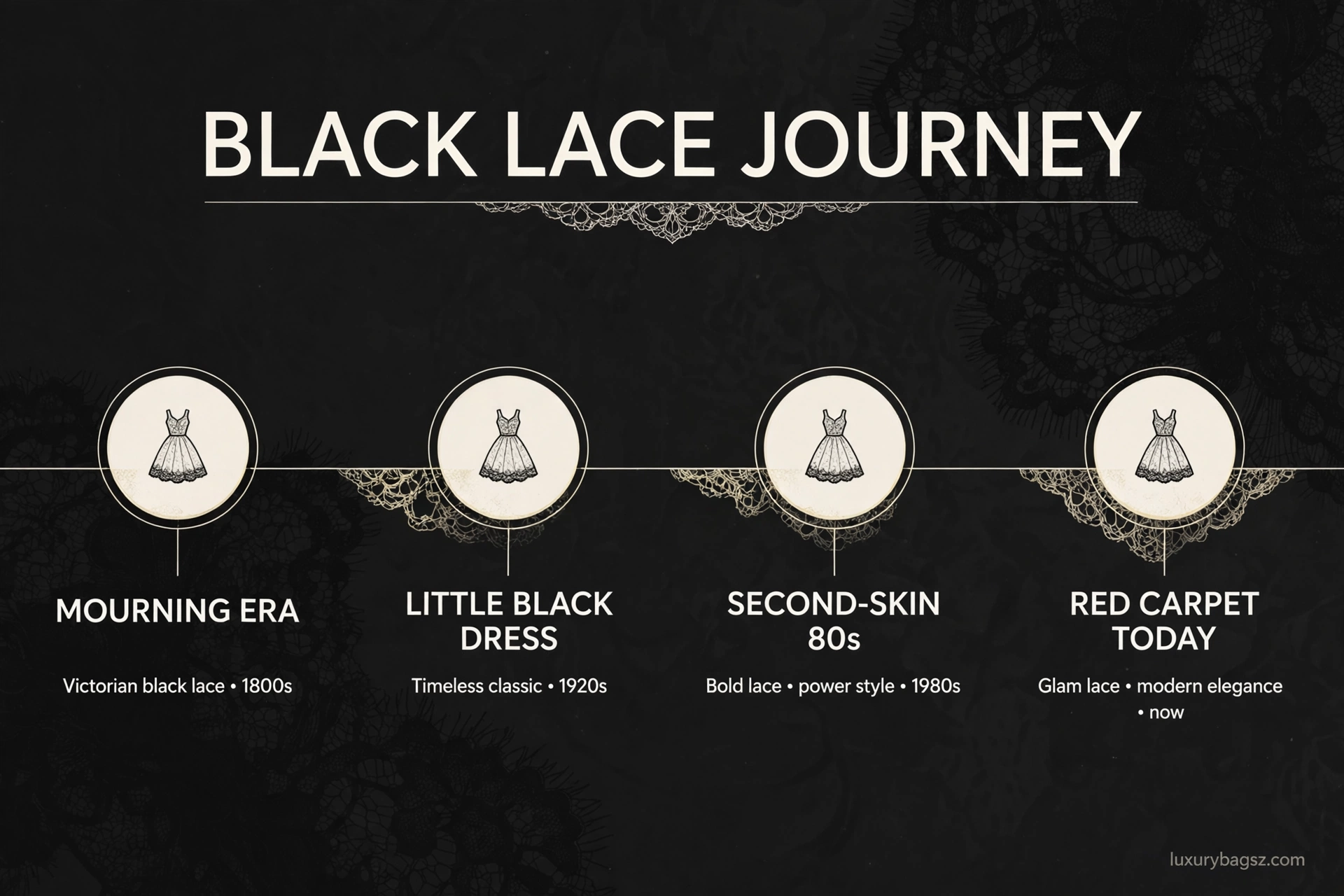
The 1980s took black lace somewhere new. Azzedine Alaïa sculpted it close to the body, turning a romantic fabric into something architectural and strong. Lace in that decade stretched, clung and celebrated the body rather than veiling it. The black lace dress became a power garment, not a pretty one. The 1990s cooled the mood toward minimalism, and lace rested. Our timeline below shows how reliably it returns whenever fashion swings back to romance.
The Red-Carpet Revival, 2000s to Now
The 2000s brought lace back to the carpet with sheer panels, visible lining choices and gowns built around the contrast of lace against skin. The slip dress era fed straight into it. Our why the slip dress became a 90s favourite guide covers the underwear-as-evening mood lace inherited. Recent seasons show the pattern holding: at major gala parties, groups of guests arrive in black lace gowns in the same week, and the photographs lead the coverage. Designers now cut lace for every mood: prim collars, dramatic trains, sleek columns. The fabric's range is exactly why the revival never fully ends.


How to Wear a Black Lace Dress Now
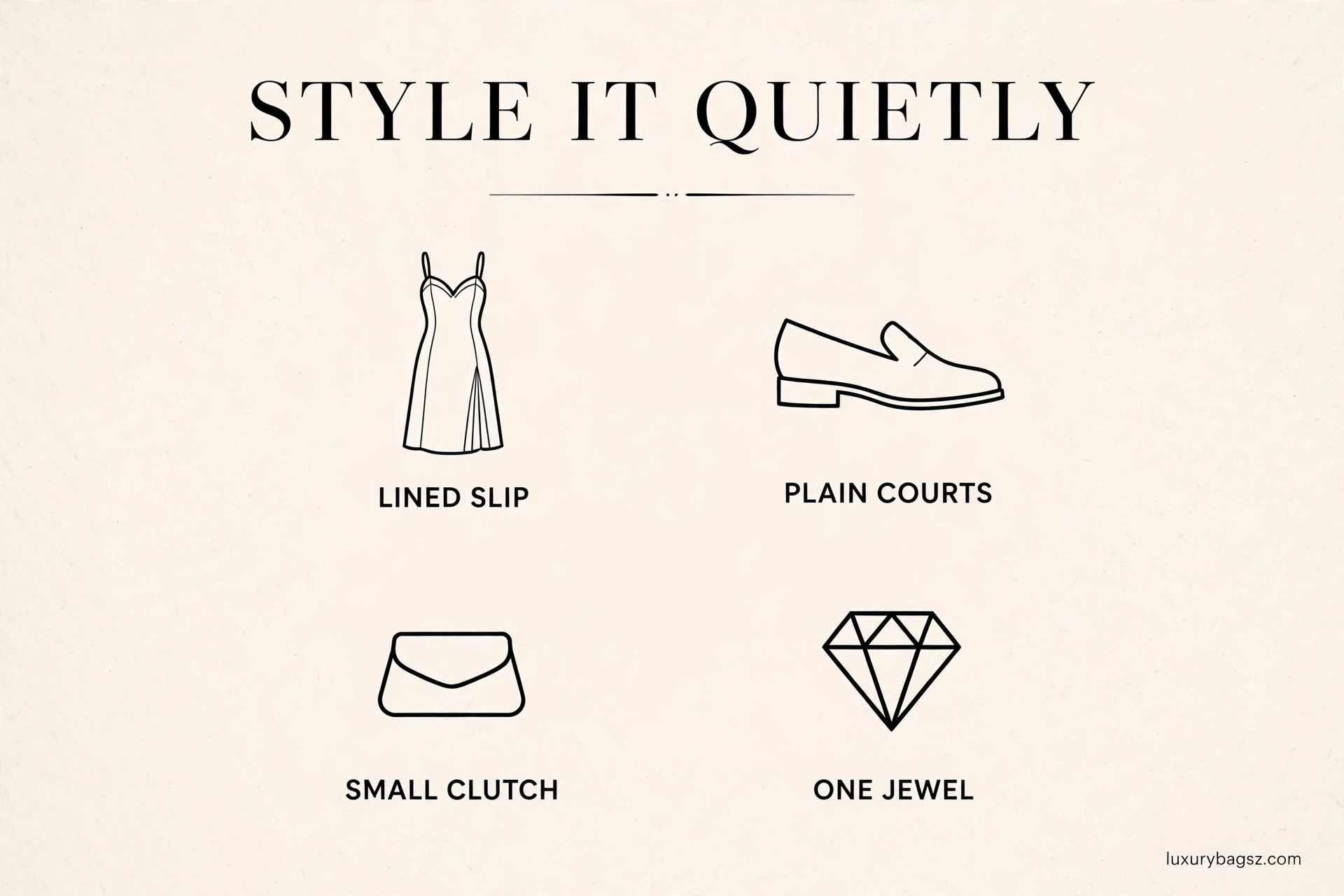
Decide on lining first. A fully lined dress in a skin-tone or black slip reads elegant anywhere; a part-lined dress is an evening statement and should be chosen deliberately. Our why a satin dress is a wardrobe staple guide helps you judge the slip and lining fabrics that sit under lace. Keep accessories quiet and let the pattern work. Our designer party bags guide suits a small, clean clutch that does not fight the motifs. Shoes follow the same rule. Our perfect party shoes guide points to simple courts or fine sandals over busy embellishment.
Buying Well and Caring for Lace
Buy on the lace itself. Motifs should be cleanly formed, evenly repeated and firmly attached, with no fraying at the edges or loose bars between patterns. Check the finishing: bound or neatly trimmed edges, a lining that hangs straight, and a zip that does not catch the lace as it closes. Care gently. Most lace dresses want dry cleaning or careful hand care as the label directs, and never a hot iron pressed flat onto the motifs. Store the dress padded or flat, with tissue at folds and shoulders. Hanging a heavy lace gown by thin straps stretches it out of shape over a single season.
Madonna, Punk and the Street Rebellion
Between Alaïa’s couture sculpture and the minimal 1990s sits the moment black lace went to the street. In the mid-1980s Madonna wore black lace bustiers, gloves and layered skirts as pop uniform, and a fabric of mourning and couture became a symbol of defiance almost overnight.
Punk and goth dressing had been making the same argument from the other direction: black lace as armour, romance with the sweetness removed. Vintage lace, thrifted and torn, signalled a wearer who knew exactly what the fabric used to mean and enjoyed bending it.
The two movements matter to the dress’s modern life because they widened its register permanently. A black lace dress can now be read as classic, romantic, severe or rebellious depending on styling, and few fabrics carry that many honest readings.
When today’s designers mix lace with leather, boots or tailoring, they are spending the capital those years created. The dress kept its mystery and gained an attitude problem, and both suit it.
Black Lace at Weddings and Funerals Now
Etiquette moved. Black at weddings, once read as disapproval, is now an ordinary guest colour in most circles, and a black lace dress is among the most chosen guest dresses precisely because it photographs formally and flatters reliably.
Two cautions survive. Keep the lining modest enough for the setting, because lace that reads daring at a party reads differently at a ceremony; and if the couple or the culture keeps older rules, the dress in another colour is the respectful answer. Our designer wedding shoes guidance pairs naturally here: quiet shoes, formal finish.
At funerals the dress’s history comes home. Black lace remains entirely appropriate, arguably the most appropriate fabric of all, because it carries the mourning tradition the garment was born in. Covered shoulders, a lined bodice and restrained accessories are the whole requirement.
The same dress often serves both occasions across a lifetime, which is part of its economics. Few purchases in a wardrobe are asked to perform at a wedding and a funeral and be right at both; this one is.
Silhouettes and Necklines: Choosing the Shape
The sheath is the modern default: lace over a clean column, sleeveless or with lace sleeves, working from cocktail parties to formal dinners. It asks the most of fit and rewards it, because there is nowhere for a poor line to hide.
Fit-and-flare is the forgiving classic, the 1950s formula from this guide’s screen chapter: nipped waist, full skirt, lace sleeves. It suits the widest range of figures and photographs like the vintage it quotes.
The slip silhouette in lace is the evening risk-taker, bias-cut and light, and it lives or dies on its lining and underpinnings. Treat it as lingerie-adjacent by design and choose it only where that register is welcome.
Necklines steer the mood as much as cut: a high lace neck reads prim and modern, a sweetheart reads romantic, and an off-shoulder reads red carpet. Sleeves are lace’s home advantage, giving coverage that stays sheer, which is why so many formal versions keep them long.
Vintage Black Lace: Buying Yesterday’s Dresses
Vintage black lace rewards and punishes in the same fitting room. The rewards are workmanship: hand-finished edges, complex motifs and linings built like dresses in their own right, at prices modern equivalents cannot match.
The punishments are fragility with a chemical twist. Very old black dyes were often iron-based, and iron mordants slowly rot the silk they coloured, which is why much 18th- and early 19th-century black lace has simply perished. Later pieces survive better, but every vintage lace dress should be treated as an artefact that happens to fit.
Check before buying: hold the lace to the light for thinning and breaks, flex nothing, look for shattering silk along fold lines, and test zips and seams gently. Smell matters too; mustiness that dry cleaning cannot lift is a storage history you are buying.
Wear vintage lace like a guest in it: no bags rubbing at the hip, no jewellery that can catch, and rest it between outings. The dress has already survived decades by being handled as if it mattered, and it is asking you to continue the arrangement.
Daytime Lace: Taking the Dress Off Duty
The fastest way to modernise a black lace dress is to dress it down deliberately. A lace sheath under a denim jacket or an oversized blazer, with flat boots or clean trainers, moves the fabric from occasionwear into the street without mocking it.
Knitwear does the same work in cold months: a fine black or charcoal jumper over a lace skirt’s dress, with the lace showing below the hem, reads as a considered outfit rather than a dress being hidden.
Daylight does change one rule: it audits the lace. Motifs that candlelight flatters are examined plainly at noon, so daytime lace should be your best quality piece, fully lined, with the jewellery kept to the simple end of the box.
The reward for the effort is cost per wear. A dress that only attends parties might be worn six times a year; the same dress, learnt by daylight, can be worn thirty, and clothing history suggests it will be loved in proportion.
Frequently Asked Questions
Why is the black lace dress such a lasting style?
Because it balances delicacy and discipline. Lace brings romance and texture, black brings restraint, and together they suit mourning, couture and red carpets alike.
What is the difference between Chantilly and guipure lace?
Chantilly is fine and soft, with floral motifs on a light net ground. Guipure is heavier, its motifs joined by bars instead of net, giving a sculptural feel.
Is a black lace dress appropriate for a wedding guest?
Usually yes, with judgement. Choose a lined, knee-length or midi style and add colour in accessories. Avoid bridal-looking white linings and overly sheer cuts.
How do I stop a sheer lace dress looking too revealing?
Choose the lining with care. A skin-tone or black slip under the lace gives coverage while keeping the pattern visible, and it is how most red-carpet gowns are built.
Which shoes suit a black lace dress best?
Simple ones. Plain courts, fine-strap sandals or sleek ankle boots let the lace lead. Busy, embellished shoes compete with the pattern and date the look quickly.
Can a black lace dress be worn in the daytime?
Yes, in lighter styling: a lined midi or shirt style with flats, a blazer or a denim jacket. Keep jewellery simple and let the texture carry the outfit.
How can I tell good lace from cheap lace?
Good lace has clean, even motifs, firm joins and a soft but substantial feel. Cheap lace frays at the edges, feels stiff or scratchy and repeats its pattern crudely.
How should I store a lace gown?
Padded or flat, with tissue at the folds, in a breathable garment bag. Avoid hanging heavy lace by thin straps, which stretches the bodice over time.
Is black lace only for evening wear?
No. Its history is evening-heavy, but modern shirt dresses, midis and layered styles wear it happily in the day. Cut and lining decide the mood, not the fabric alone.
Can lace be repaired if it tears?
Small tears can often be invisibly mended by a skilled hand, and a good alterations tailor is the right call. Large damaged areas may need a motif appliqué to blend the repair.
Conclusion: A Dress That Keeps Its Mystery
The black lace dress has outlived mourning rules, couture houses and several minimal decades because its central tension never dates: softness held in black. Choose good lace, honest lining and simple styling, and you own the current chapter of a very long story. Few dresses earn their place so completely.






