

Designer Cotton Clothing for Summer: Weaves, Styles, Fits and Care
Cotton, Done Properly: The Summer Edit in Brief
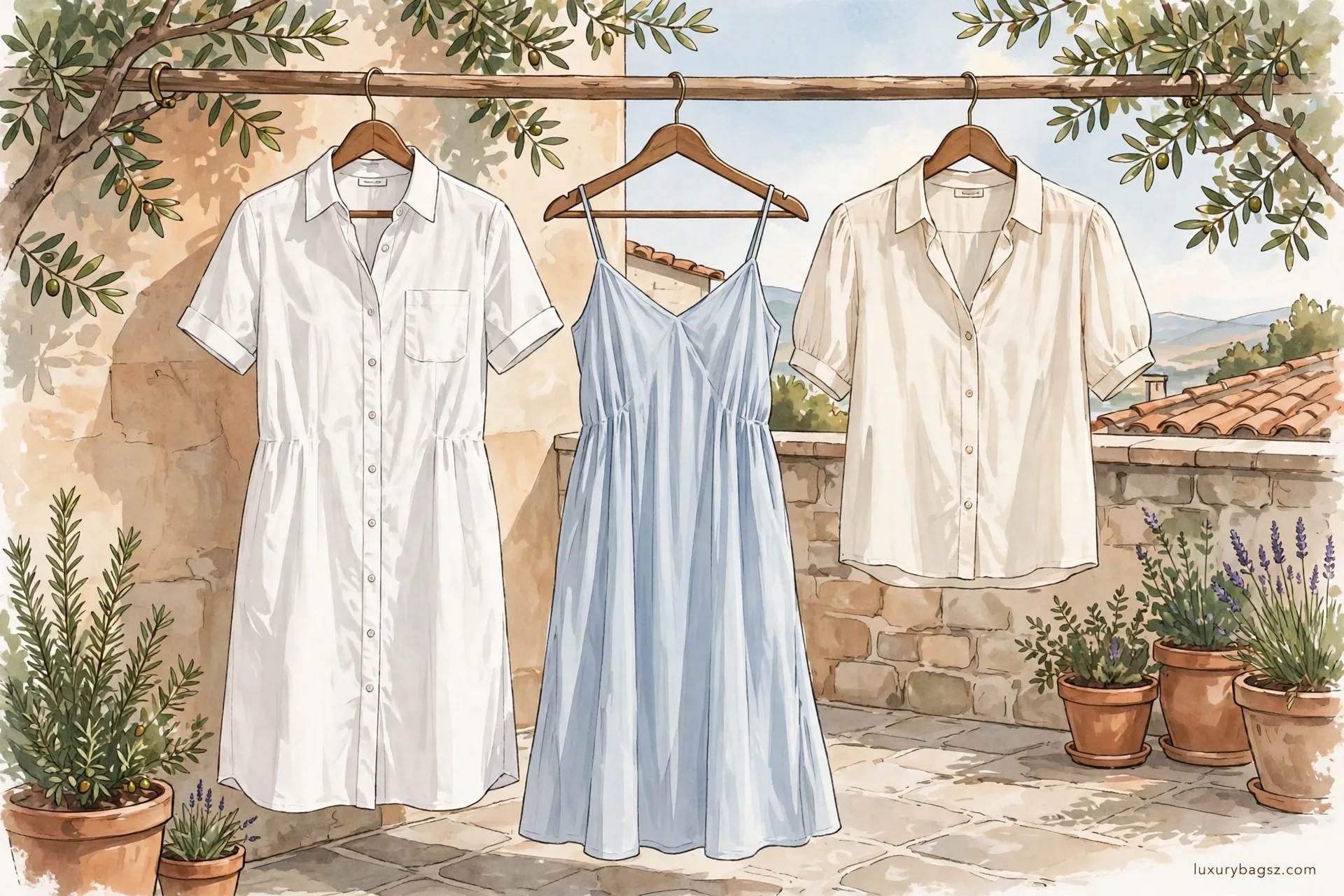
The coolest designer summer wardrobe is built on cotton, not synthetics. A crisp cotton shirt dress, a lawn sundress and a voile blouse will keep you cooler than almost any technical fabric, and they look better at lunch than gym-born cloth ever will. The trick is the weave. Poplin and lawn stay smooth and smart, voile and gauze float, and seersucker's puckered stripes lift cloth off the skin. Choose the weave first, the colour second, and summer dressing gets very simple.
Key Takeaways
- Weave decides comfort: poplin and lawn for polish, voile and gauze for the hottest days.
- Pure cotton breathes and washes well; a touch of elastane helps only in fitted shapes.
- White, cream and pale blue show quality best and pair with everything you own.
- Designer prices buy finer yarns, better stitching and shapes that keep their line.
- Wash cool, dry in shade and iron warm, and good cotton lasts for many summers.
- Buy the shirt dress first; it is the hardest-working piece in this whole edit.
Why Cotton Beats Everything Else in Heat
Cotton absorbs moisture instead of letting it sit on the skin, and its fibres let air move through the cloth. That is why a cotton dress still feels civilised at 30 degrees while a polyester one feels like a wrapper. It also takes dye cleanly, presses to a sharp edge and softens with washing rather than pilling. For summer, no other everyday fibre does all four jobs at once. Designer labels earn their price here through long-staple yarns. Longer fibres make smoother, stronger cloth that resists the fuzzy halo cheap cotton grows after a few washes. Cotton also suits sensitive skin better than most synthetics, which can trap heat and odour. On the third wear of a holiday week, a cotton dress still smells like cloth, not like the beach bar.
The Five Weaves Worth Knowing
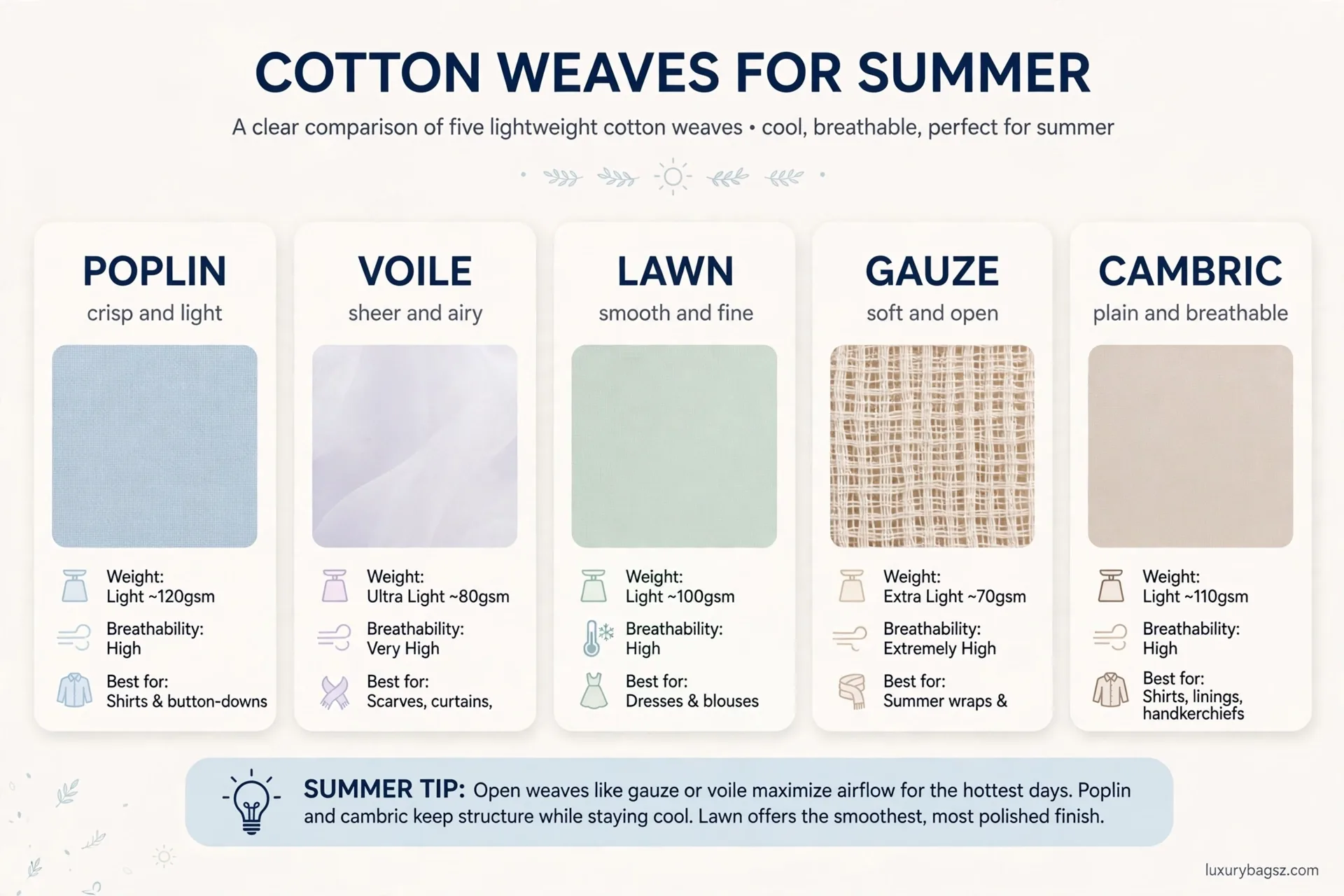
Poplin is the shirt fabric: tight, smooth and slightly crisp, ideal for shirt dresses and tailored tops. Lawn is finer and softer, the classic sundress and blouse cloth. Voile is sheer and featherlight, best lined or layered. Gauze is open and crinkly, made for beach cover-ups and loose dresses. Cambric sits between lawn and poplin and makes excellent everyday shirts. Our guide on how to clean cotton, linen and silk explains how each weave behaves in the wash, which is where cheap versions often fail first. Seersucker deserves an honorary place on the list. Its woven stripes pucker the cloth so only part of it touches the skin, which is why seersucker shirts and dresses feel cool even in heavy, still air.
The Shirt Dress: Start Here
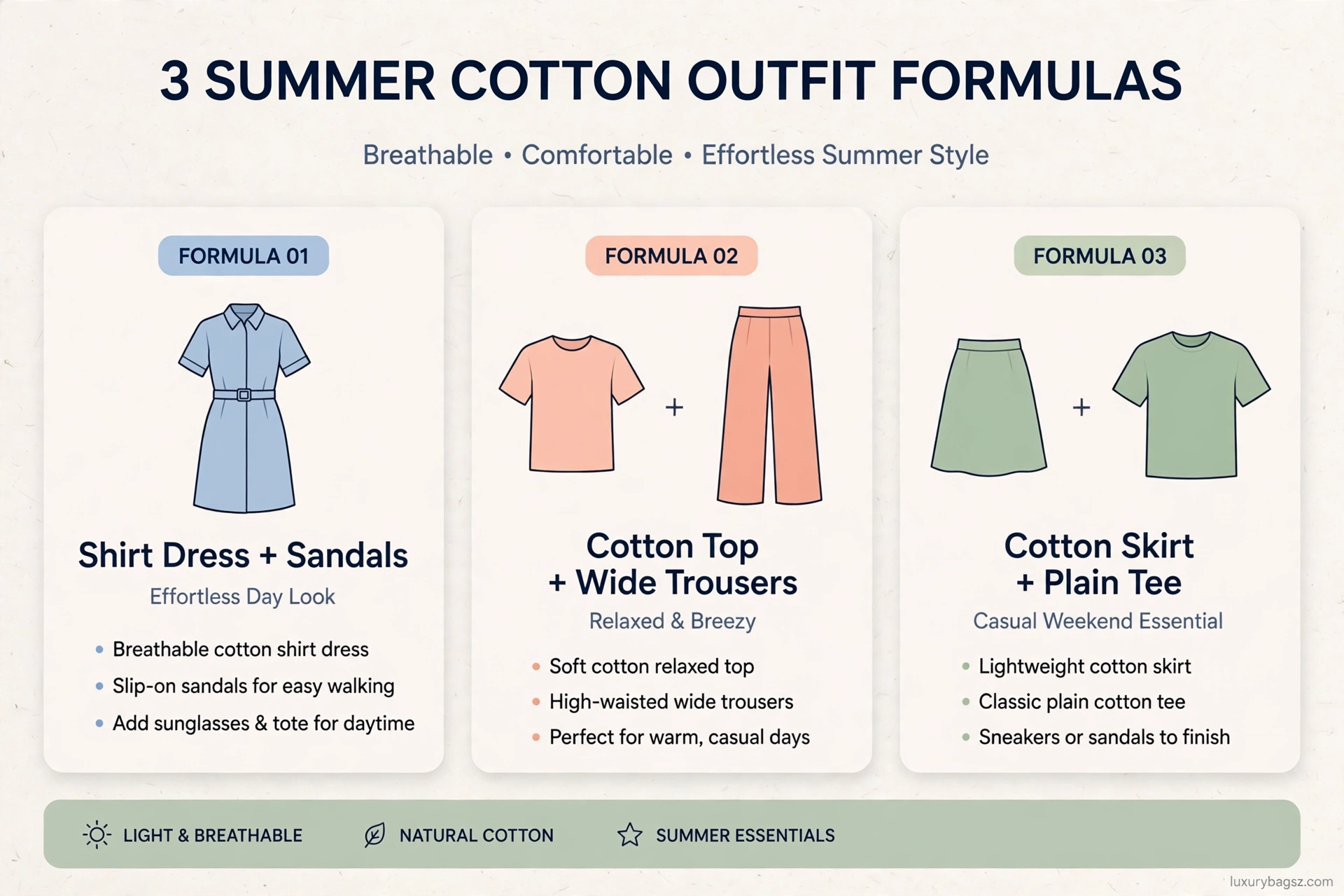
If you buy one designer cotton piece, make it the shirt dress. It covers arms politely, buttons to the neckline you want, belts or hangs loose, and goes from market to meeting without a change. Look for a collar that stands, buttons that are sewn through rather than glued, and a hem that falls below the knee. In white or pale blue it will be worn weekly all season. Worn with flat sandals and a woven tote it is the whole summer uniform. Nothing else in the wardrobe works this hard for this little thought. For evenings, unbutton the collar, swap the belt for a slimmer one and add heeled sandals. The same dress reads as deliberate, not repeated, because the shape is plain enough to take new styling.

Sundresses, Skirts and Summer Tops
A lawn or voile sundress in a floral or plain pastel is the second buy. Choose straps wide enough for a normal bra and a lining that stops at the thigh, so the skirt still moves. Cotton skirts in A-line or pleated cuts pair with the plain tees you already own. A white cotton skirt with a navy top is a complete outfit, not a compromise. Finish the trio with one good top: a poplin blouse or a cambric shirt. Our edit of designer straw bags shows the totes that carry all three looks without fighting them. Trousers deserve a mention too. Wide cotton trousers in cream or khaki, cut from a mid-weight twill, are the answer on days when even a dress feels like too much air on the legs.
Colours That Earn Their Place
White is the headline, but bright white shows every crease and splash. Cream and ecru are kinder, photograph warmly and hide a day's wear far better. Pale blue is the professional choice; it reads as a shirt, not a holiday. Soft pink, sage and butter yellow cover the pretty end of the rail. Keep prints small and spaced. A tight floral on fine lawn looks expensive, while a huge print on thin cloth looks like a beach wrap. Styling a full day around one dress is easy with summer sandals day to night as the footwear plan. Stripes are the other safe pattern. A blue-and-white stripe in poplin is practically a neutral, works with every skin tone and hides creases better than any plain colour on this page.

Fit Checks Before You Pay
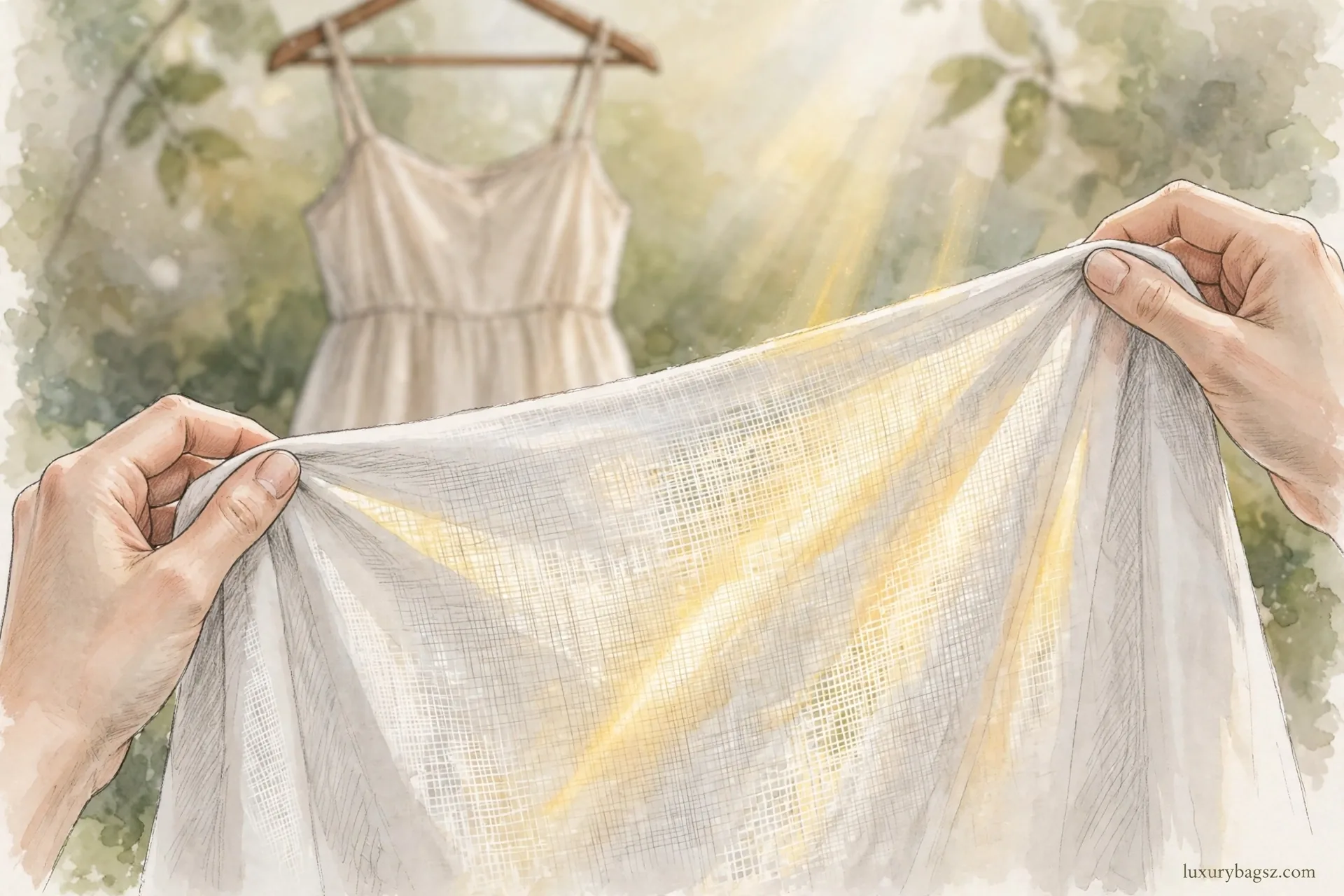
Hold the cloth to the light. If you can see your fingers clearly through a dress body, it needs a lining, a slip, or a pass. Fine cotton is light, not transparent. Check the armholes and button line on fitted shapes; gaping means the cut is wrong, not that you need a bigger size everywhere. Waist seams should sit at your waist, not above it. Sit down in it. Cotton has almost no give, so a dress that feels merely snug standing will feel strict after a long lunch. Also check the lining. A cotton dress lined in polyester loses half its cooling advantage; look for cotton voile linings or half-linings that leave the skirt free.
What Designer Cotton Costs, Honestly
Expect typical summer dresses from well-known labels to run from around £120 to £450, shirts and tops from roughly £70 to £220, and skirts in between. Sales at the end of the season cut those figures hard. You are paying for yarn quality, pattern cutting and finishing: matched stripes, clean buttonholes, French seams. Those details are exactly what survives washing. Judge by cost per wear instead of the ticket. A £240 shirt dress worn forty times in one summer is cheaper per outing than a £60 dress that pills, fades and is retired by August. Shoppers weighing fibre choices can compare cotton's footprint with other cloth in our piece on sustainable materials in luxury fashion before spending.
Care That Keeps Cotton Bright
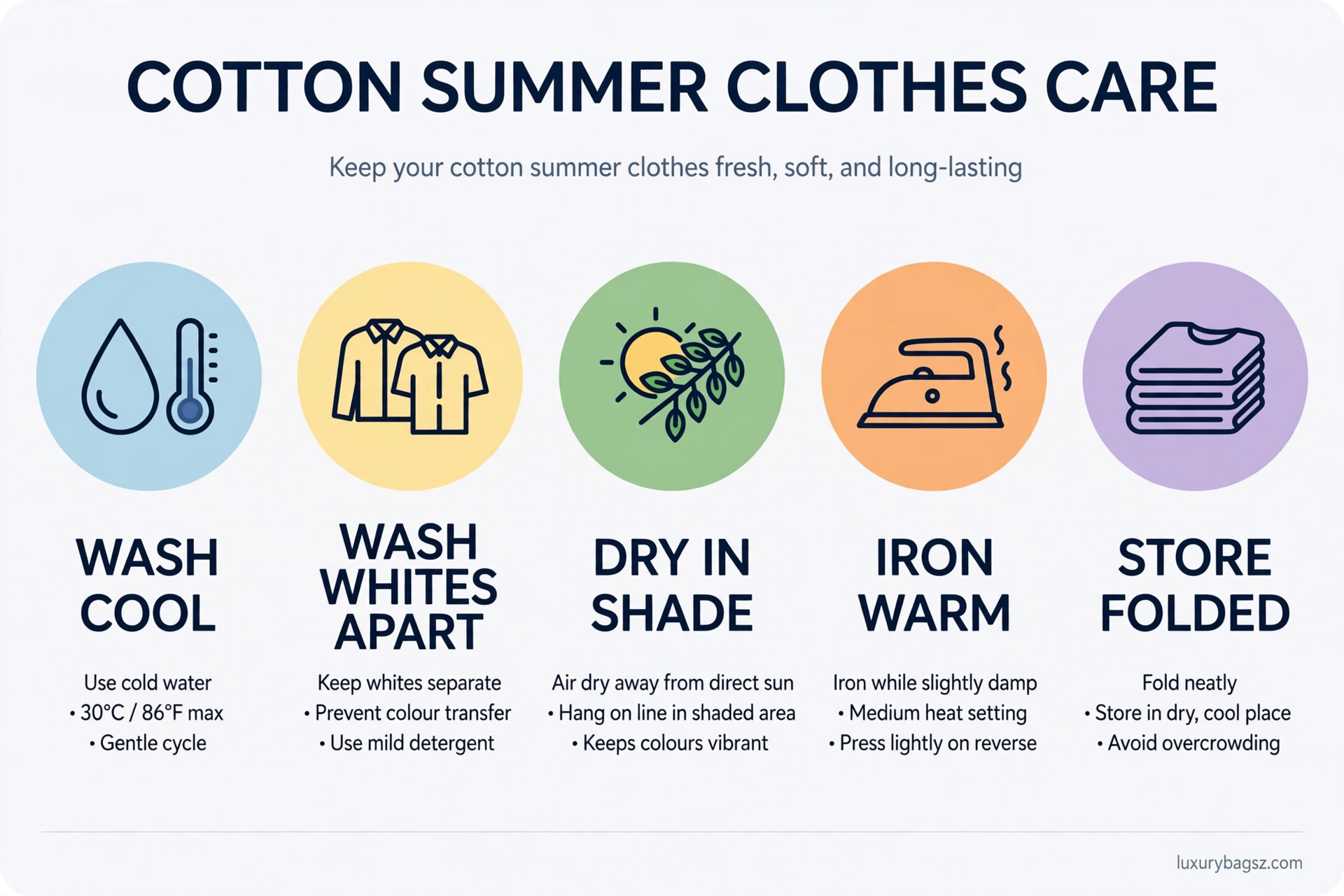
Wash at 30 degrees with similar colours, and keep whites strictly separate; one grey sock can dull a whole load of summer whites for good. Dry in shade where you can. Strong sun bleaches pale colours and weakens fibres, and tumble drying shrinks cotton that was cut close to size. Iron while faintly damp on a warm setting, and store folded or on padded hangers. Voile and gauze need almost no ironing if they are shaken out and hung straight from the wash. At the end of the season, wash everything before it goes away, and store it out of direct light. Cotton stored dirty attracts marks that only show up next June, when it is too late to fix them easily.
Frequently Asked Questions
Is cotton really cooler than linen in summer?
They are close. Linen moves air slightly faster, cotton feels softer and smoother against skin. Choose linen for loose shapes and cotton where you want a cleaner, smarter finish.
Which cotton weave is best for a shirt dress?
Poplin. It holds a collar, presses crisply and resists creasing better than lawn or cambric, so the dress still looks tailored by late afternoon.
Does designer cotton shrink?
A small amount is normal on the first wash if the cloth was not pre-shrunk. Washing cool and skipping the tumble dryer keeps shrinking to a minimum.
How can I tell good cotton from cheap cotton?
Rub it. Fine cotton feels smooth and dense, with no scratchy halo. Hold it to the light: the weave should look even, with no thin patches or slubs you did not expect.
Is cotton voile too sheer to wear in the city?
On its own, often yes. Choose voile dresses with a cotton lining, or wear a light slip. Lined voile is one of the coolest things you can put on in August.
What colours should I buy first?
White or cream, then pale blue. Those two cover work, weekends and evenings out, and they pair with every sandal and bag colour in a normal wardrobe.
Can cotton dresses look smart enough for work?
Yes, in poplin or cambric with a collar, sleeves and a hem below the knee. Add a belt and closed shoes and a shirt dress passes in most offices.
How many cotton pieces make a full summer wardrobe?
Five is plenty: a shirt dress, a sundress, a skirt, a blouse and a plain top. In matching colours they combine into roughly two weeks of outfits.
Is organic cotton worth paying more for?
It avoids the heaviest farm chemicals and usually comes with better traceability. The wearing quality depends on the yarn and weave, so judge the cloth in hand, not the label alone.
How do I stop white cotton going grey?
Wash whites only with whites, use enough detergent for the load, and dry them away from pollution-heavy air where you can. An occasional soak in oxygen-based whitener revives them.
Final Verdict: Buy the Weave, Not the Label
Designer cotton earns its price when the weave suits the job: poplin for structure, lawn for dresses, voile and gauze for pure heat. Start with a shirt dress in white or pale blue, add a sundress and a skirt, and wash cool with whites kept apart. That is a summer wardrobe that stays cool, looks deliberate and lasts for years.






