

How to Clean Cotton, Linen and Silk: Washing, Drying and Stain Care for Natural Fabrics
Cotton, Linen and Silk Cleaning in Brief
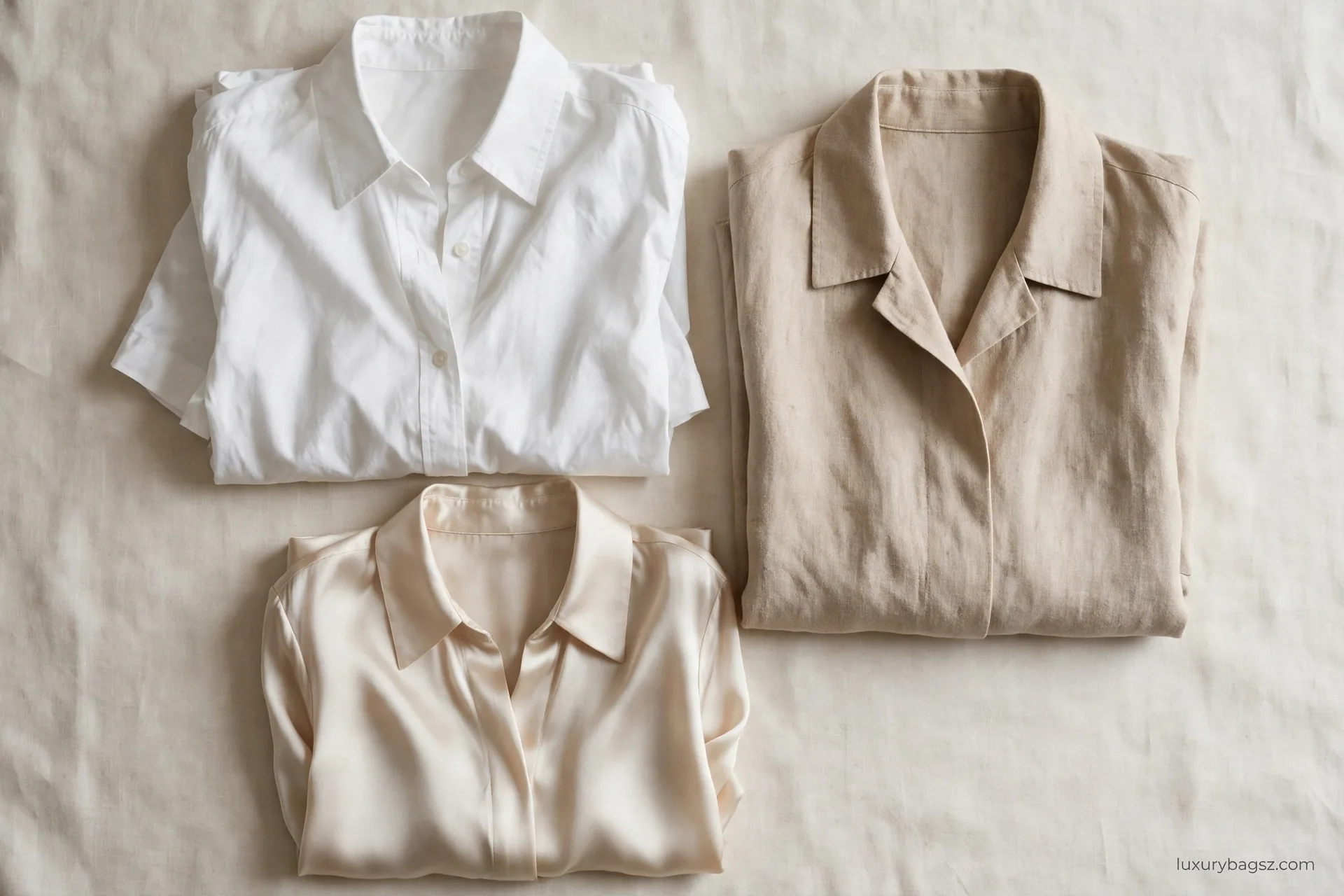
Cotton, linen and silk are all natural fibres, but they do not share one washing routine. Cotton is sturdy and forgiving, linen is strong yet creases and shrinks if mishandled, and silk is delicate, water-sensitive and easily marked. Cleaning them well means matching water, detergent, agitation and drying to the fibre in front of you, not using the same cycle for everything.
The rule that covers all three is gentleness plus a label check. Read the care label first, sort by fibre and colour, use a gentle detergent, and dry away from heat and direct sun. Most damage comes from hot water, harsh detergents, aggressive spinning and tumble drying, all of which are avoidable once you know what each fibre tolerates.
Cotton and linen are covered here in full, since no general guide for them exists yet in this series. Silk garments are covered briefly, because silk scarves already have a dedicated washing guide, and repeating it here would duplicate that work. The silk guidance below gives you the essentials for garments, and points you to the scarf guide where it fits.
If you remember one thing, let it be this: when a fibre's needs conflict, follow the most delicate fibre in the garment. A cotton-silk blend follows silk rules, and a linen garment with silk trim follows silk rules for the whole piece. Blends and trims decide the routine, not the main fibre alone.
Key Takeaways
- Read the label first: it overrides every general rule in this guide for that garment.
- Cotton tolerates the warmest water and most agitation of the three, but still shrinks in hot water.
- Linen needs cool or lukewarm water, gentle handling and shade drying to limit shrinkage and creasing.
- Silk needs cool water, gentle detergent, minimal agitation and no wringing, heat or bleach.
- Sort by fibre and colour, turn garments inside out, and use mesh bags for delicate items.
- Dry flat or on a line in shade; tumble drying damages all three fibres, silk most of all.
- Blot stains at once without rubbing, and test any stain treatment on a hidden area first.
- For a silk scarf specifically, follow the dedicated scarf washing guide rather than improvising.
Read the Label and Sort Before You Wash
The care label is the authority for each garment. It tells you the fibre content, the maximum water temperature, whether machine washing is allowed, and whether the garment needs dry cleaning. A label that says dry clean only should be obeyed for structured, embellished or bonded garments, even if the fibre itself could be washed in another form.
Sorting protects every load. Sort by fibre first, then by colour, then by soil level. Wash cotton with cotton, linen with linen, and silk separately or by hand, so no garment suffers another fibre's routine. Wash whites, lights and darks separately, since dye transfer is a common and preventable disappointment, especially with new, dark cotton and linen.
Turn garments inside out before washing. This protects the outer surface, buttons, prints and embellishments from friction, and it reduces fading. Close zips, fasten buttons where the label advises, and place delicate items, such as silk blouses and fine linen, in mesh laundry bags so they do not snag on zips or hooks.
Check pockets, remove belts and detachable trims, and pre-treat visible marks before the wash, not after. A mark washed without pre-treatment can set in heat, while a mark treated gently beforehand often lifts in a normal cycle. Keep a small stain kit near the machine: a clean white cloth, a gentle detergent and a soft brush.
Water, Detergent and Machine Settings That Suit Natural Fibres
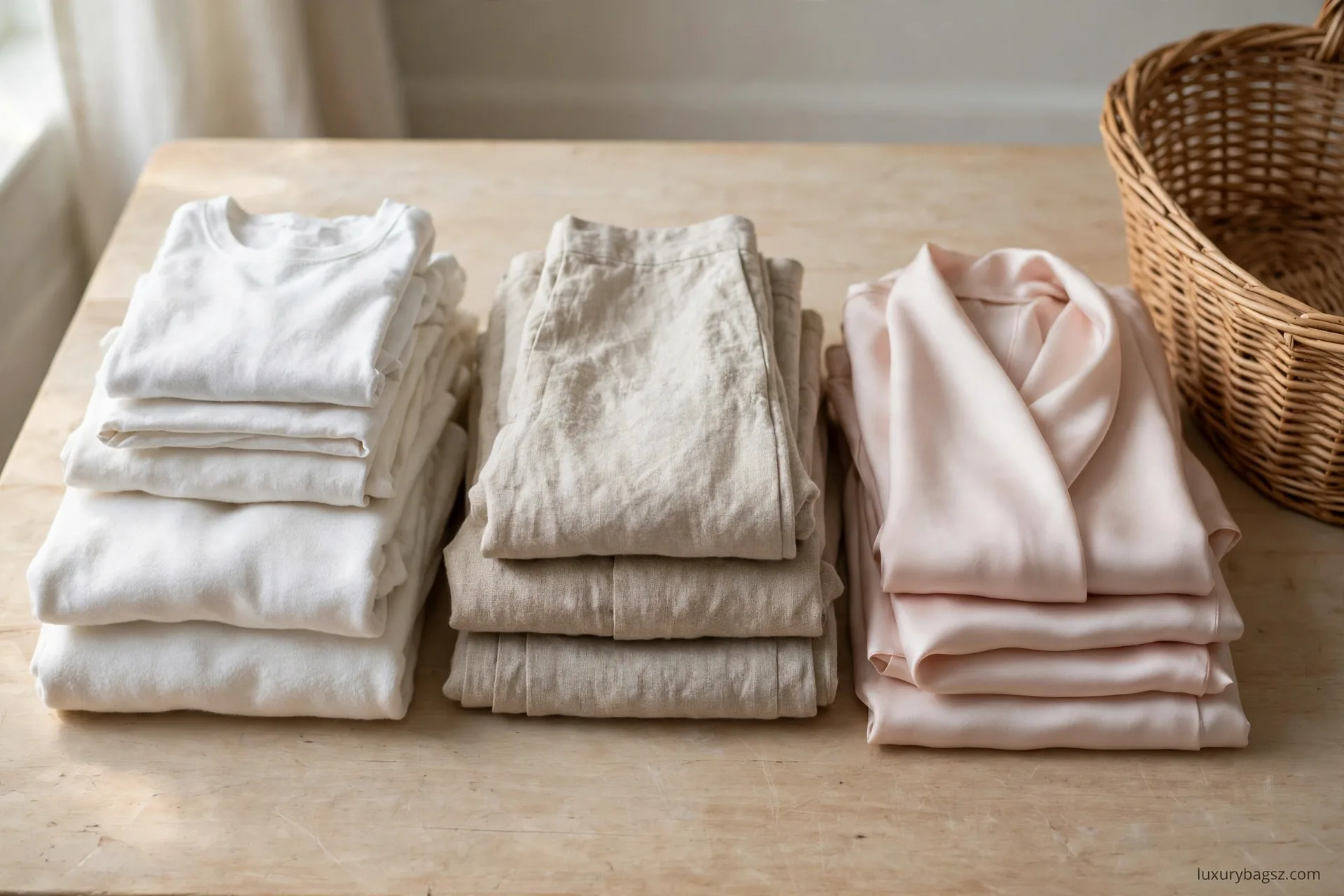
Water temperature is the most consequential choice. Cool water, around 30 degrees, is safe for almost all cotton, linen and silk, and it limits shrinkage, fading and fibre damage. Warm water, around 40 degrees, suits sturdy white cotton and heavily soiled linen, but it increases shrinkage risk and should never be used on silk or on coloured linen you value.
Detergent choice matters as much as temperature. Use a gentle, liquid detergent made for delicates or colours, measured carefully. Powder detergents can leave residue on dark fabrics and in cool water, while harsh detergents with bleach or optical brighteners can weaken silk and fade linen. Fabric softener is best avoided on all three fibres: it coats fibres, reduces absorbency in cotton and linen, and can leave silk feeling limp.
Machine settings should be the gentlest that still cleans. A delicate or hand-wash cycle with low spin suits silk and fine linen, while a normal or cotton cycle with moderate spin suits sturdy cotton. Avoid long, hot, high-spin cycles for anything you care about, and never overload the machine, since crowding prevents proper cleaning and increases creasing and friction.
Rinse thoroughly. Detergent residue dulls fabric, stiffens linen and can irritate skin, so an extra rinse is worthwhile for dark garments and for silk. If your machine offers a second rinse, use it for natural fibres, and skip the temptation to add extra detergent for a dirtier load; soaking beforehand cleans better than overdosing detergent.
Cotton: The Sturdy Fibre, and Its Limits
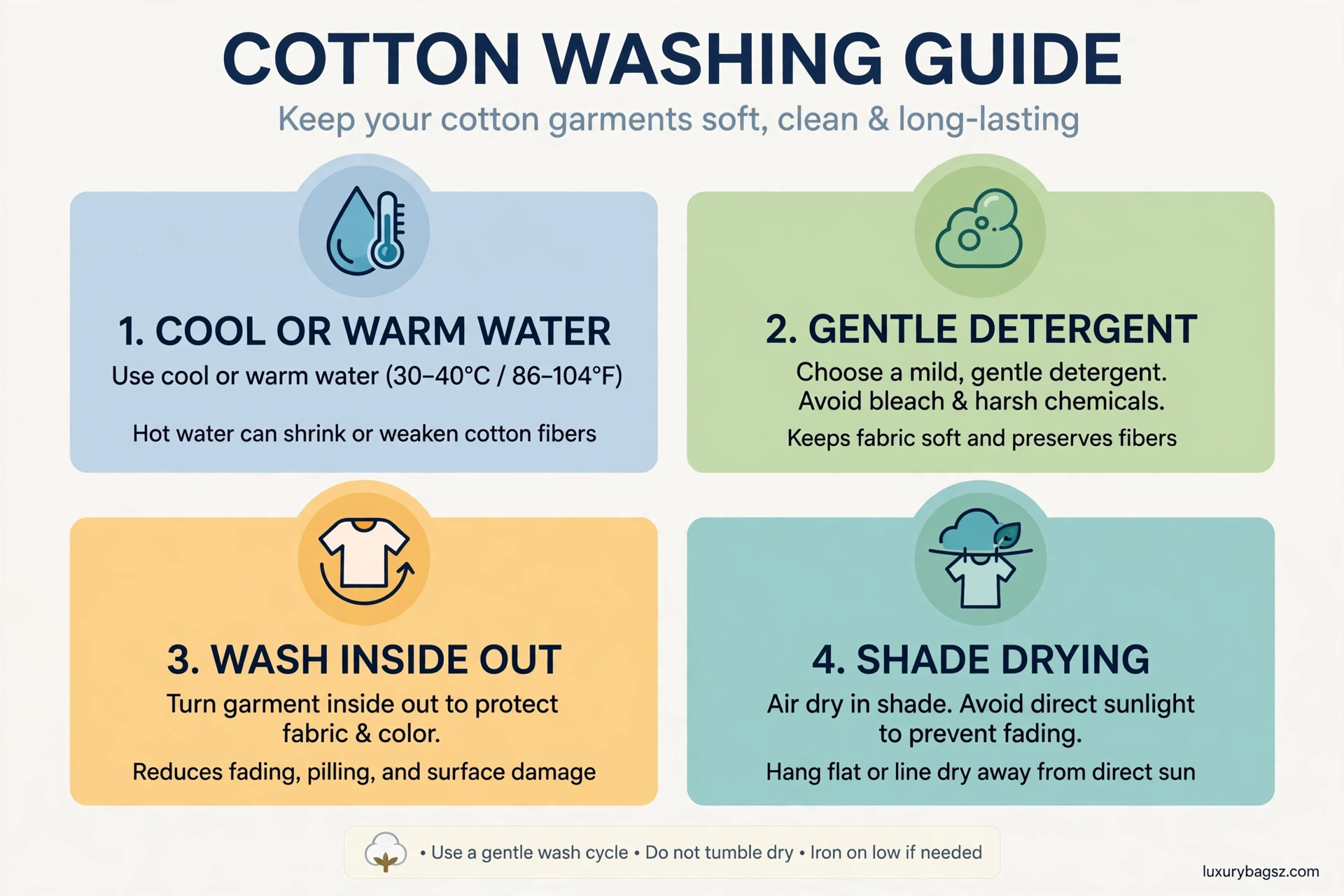
Cotton is the most forgiving of the three fibres, which is why it dominates everyday clothing. Most cotton shirts, trousers and dresses machine-wash well in cool or warm water with a gentle detergent, inside out, with similar colours. White cotton tolerates warmer water and, where the label allows, a mild oxygen-based brightener, but chlorine bleach weakens cotton over time and yellows it, so avoid it even on whites.
Shrinkage is cotton's main risk. Cotton shrinks most on its first few hot washes, and a hot dryer shrinks it further. To limit shrinkage, wash in cool or warm water, avoid high dryer heat, and reshape garments while damp. Pre-shrunk cotton still shrinks a little, so buy and wash with that in mind, and never tumble-dry a cotton garment you cannot afford to lose a size on.
Cotton comes in many forms, and form changes care. A sturdy cotton twill tolerates more agitation than a fine cotton lawn or voile, which needs a mesh bag and a gentle cycle. Denim, jersey and canvas are all cotton, but their weaves and finishes demand their own routines, so follow the garment's label and construction, not just the word cotton.
For one lighter cotton weave, the chambray guide explains how that fabric differs from denim, which helps you judge how firmly to wash it.
Drying cotton well is simple: shake the garment out, smooth it into shape, and dry on a line in shade or flat on a rack. Direct sun fades colour and stiffens cotton, while a hot dryer hardens it. Iron cotton while slightly damp, or steam it, using the label's heat guidance, and press from the inside where a print or embellishment could be damaged.
Cotton Stains, Whitening and Everyday Wear
Everyday cotton stains respond best to prompt, gentle treatment. Blot a fresh mark with a clean cloth, rinse with cool water from the back of the fabric where you can, and apply a small amount of gentle detergent before washing normally. Grease, food and drink marks usually lift this way, provided they have not been heated, since heat from a dryer or an iron sets many stains permanently.
Whitening white cotton without damage takes patience. Soaking in cool water with a gentle oxygen-based brightener, where the label allows, lifts yellowing and dullness gradually, while chlorine bleach gives a quick result and weakens fibres. Sunlight brightens whites naturally, but it also fades colours, so use sun only for whites, and only briefly.
Colour care matters for cotton more than for the other fibres, because cotton dyes vary widely. Wash new, dark cotton separately for its first few washes, since excess dye bleeds readily. Turn dark garments inside out, use cool water and a colour-protecting detergent, and dry in shade, since sun is the fastest fader of dark cotton.
Everyday wear also soils cotton in ways washing alone cannot fix. Collar and cuff grime, underarm marks and pocket wear accumulate gradually, so pre-treat those areas before washing, and inspect them after. A cotton garment that is washed promptly, dried in shade and pressed while damp looks new far longer than one that is left crumpled, overheated or stored dirty.
Linen: Strong, Breathable and Crease-Prone
Linen is made from flax, and it is stronger than cotton when wet, highly absorbent and naturally breathable, which is why it suits warm weather so well. Those strengths come with quirks: linen creases readily, shrinks if washed hot, and feels stiff when new, softening gradually with washing and wear.
Wash linen in cool or lukewarm water with a gentle detergent, on a gentle cycle, with similar colours. Avoid hot water, harsh detergents and high spin, all of which increase shrinkage and creasing. Linen's strength means it can handle a normal cycle when sturdy, but a gentle cycle preserves colour, drape and finish, especially on fine linen garments.
Do not overload a linen load. Linen needs room to move, or it creases deeply and unevenly, and those creases set if the garment is then dried under tension. Wash linen garments loosely, shake them out promptly after the cycle, and smooth them into shape before drying.
Linen softens with time, and that softening is desirable. A new linen garment that feels crisp will relax after several gentle washes, developing the soft drape linen is prized for. Do not try to force softness with fabric softener, which coats fibres and reduces absorbency; time and gentle washing do the job better.
Drying, Ironing and Living With Linen Creases
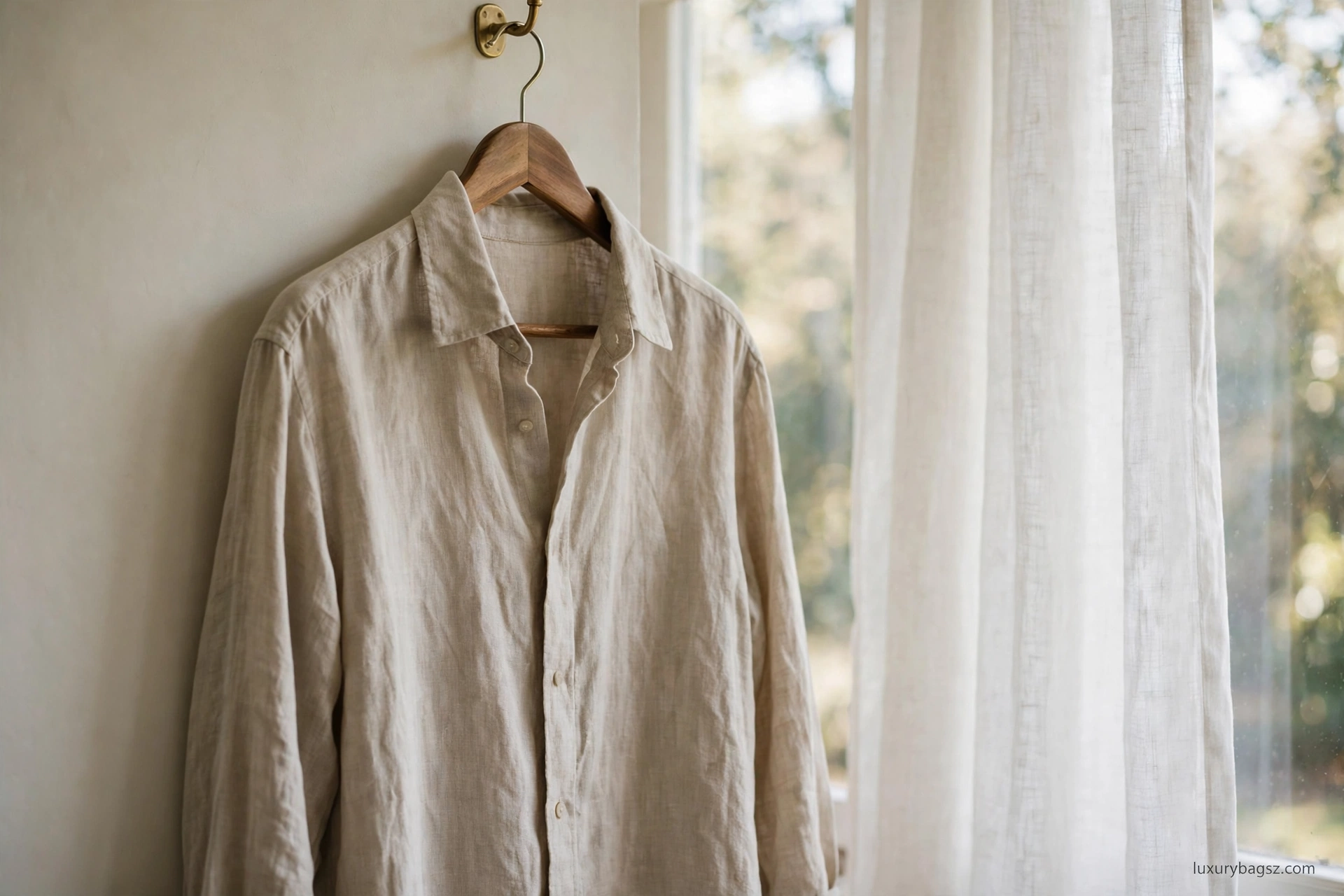
Drying decides how linen looks. Dry linen on a line in shade, or flat on a rack, smoothing it into shape while damp. Avoid direct sun, which fades colour and stiffens the fabric, and avoid tumble drying, which shrinks linen and sets deep creases. A linen garment dried in shade and pressed while damp looks far better than one dried hot and pressed dry.
Ironing linen works best while the garment is still slightly damp. Use a medium to hot iron where the label allows, with steam, and press on the reverse side where possible to protect the surface. For a crisp finish, press firmly and evenly; for a relaxed finish, steam lightly and accept soft creases as part of linen's character.
Creases are not a defect in linen. They are the fibre's nature, and fighting them with excessive heat or constant ironing damages the fabric faster than accepting them. Choose linen garments with cuts that drape well, and wear them with the expectation of soft creasing through the day. A linen garment that is clean, well-shaped and softly creased looks intentional; a linen garment that is over-pressed into stiffness looks uncomfortable.
For warm-weather dressing, linen's breathability is a genuine advantage, and the breathable fabrics guide places linen among other airy fabrics, which helps you choose linen wisely against cotton and blends. Store linen folded or hung with space, in a cool, dry place, and refold occasionally so permanent creases do not set along the same lines.
Silk: A Delicate Fibre That Rewards Gentleness
Silk is a protein fibre, smooth, lustrous and strong for its weight, but sensitive to water, heat, alkali and friction. Water can mark silk, especially on light colours and on certain weaves such as dupion and charmeuse, and heat can dull its sheen permanently. That sensitivity is why silk care leans on testing, cool water and minimal handling.
Always check the label first. Many silk garments are labelled dry clean only, particularly structured, lined, embellished or bonded pieces, and those should go to a professional. Simple, unstructured silk garments labelled washable can be hand-washed, provided you test first and accept that some water marking is possible even with care.
Test before you wash. Dampen a hidden area, such as an inside seam, with cool water, press it with a white cloth, and check for colour transfer or water marking after it dries. If colour transfers or a mark remains, do not wash the garment at home; take it to a professional and mention the test result.
Handle silk as little as possible while wet. Wet silk is weaker than dry silk, and wringing, twisting or scrubbing damages it. Support the garment's weight in water, move it gently, and never let it soak for long, since prolonged soaking weakens fibres and encourages dye bleeding.
Washing Silk Garments, Briefly and Safely
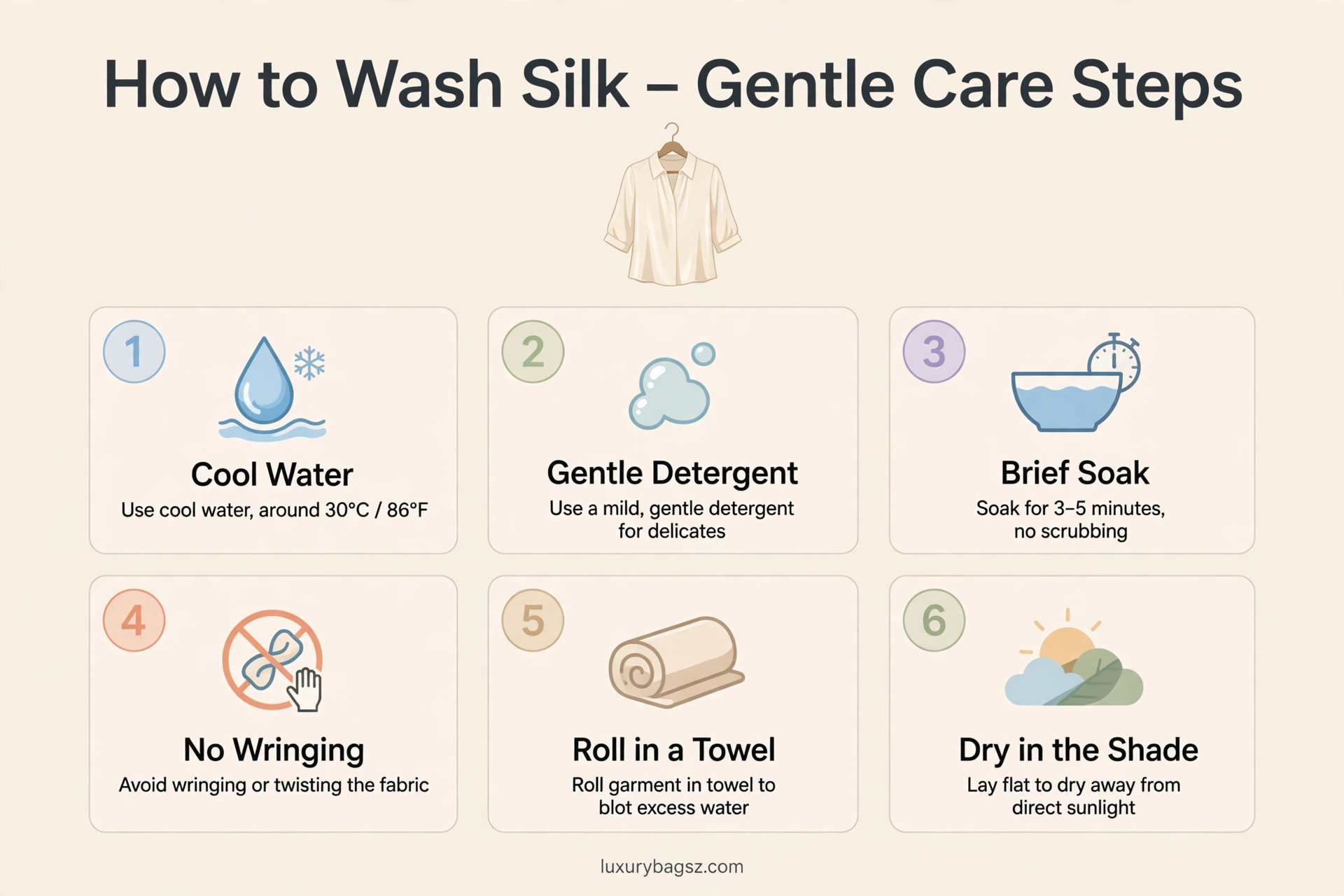
Hand washing is the safest home method for washable silk garments. Fill a basin with cool water and a small amount of gentle detergent made for delicates or silk, dissolve the detergent fully, and submerge the garment briefly. Move it gently with your hands for a few minutes, without scrubbing, twisting or rubbing one part against another.
Rinse in cool, clean water, changing the water until it runs clear and no detergent remains. A final rinse with a tiny amount of white vinegar is sometimes suggested to restore sheen, but it is optional, and it should be very dilute and followed by a plain-water rinse, since vinegar is an acid and silk is sensitive to it.
Dry silk by rolling it gently in a clean towel to remove water, without wringing, then laying it flat on a dry towel or a rack, reshaped, away from heat and direct sun. Never tumble-dry silk, never hang wet silk, which stretches under its own weight, and never iron silk while wet or with high heat.
For silk scarves specifically, do not improvise a routine here. The silk scarf washing guide covers scarf washing in detail, including handling for large silk squares, and it is the safer reference for that category. Garment silk follows the same principles, but scarves have their own size, hem and handling concerns that deserve their own guide.

Blends and Trims: Follow the Most Delicate Fibre
Blends are common, and they complicate every routine in this guide. A cotton-silk shirt, a linen-cotton trouser and a silk-wool knit each need the routine of their most delicate fibre, not an average of the two. When a label lists a blend, find the fibre with the strictest needs, and follow those needs for water, detergent, agitation and drying.
Trims change the routine too. A cotton dress with silk trim, a linen jacket with leather buttons, or a silk blouse with beading should be treated as delicately as its most delicate part. Leather trim should not be soaked, beading should not be agitated, and bonded areas should not be heated, so a garment with such trims often belongs with a professional even when its main fabric could be washed.
Construction matters as much as content. A lined, structured or interfaced garment behaves differently from an unlined, unstructured one in the same fabric, because linings, canvases and fusings react to water and heat in their own ways. When construction and fibre point in different directions, follow the stricter guidance, and ask a cleaner when you are unsure.
If a garment's label is missing, treat it as delicate, test a hidden area, and consider professional cleaning for anything valuable. The cost of asking a cleaner is small compared with the cost of shrinking, marking or distorting a garment you cannot replace.
Drying All Three Fibres Well
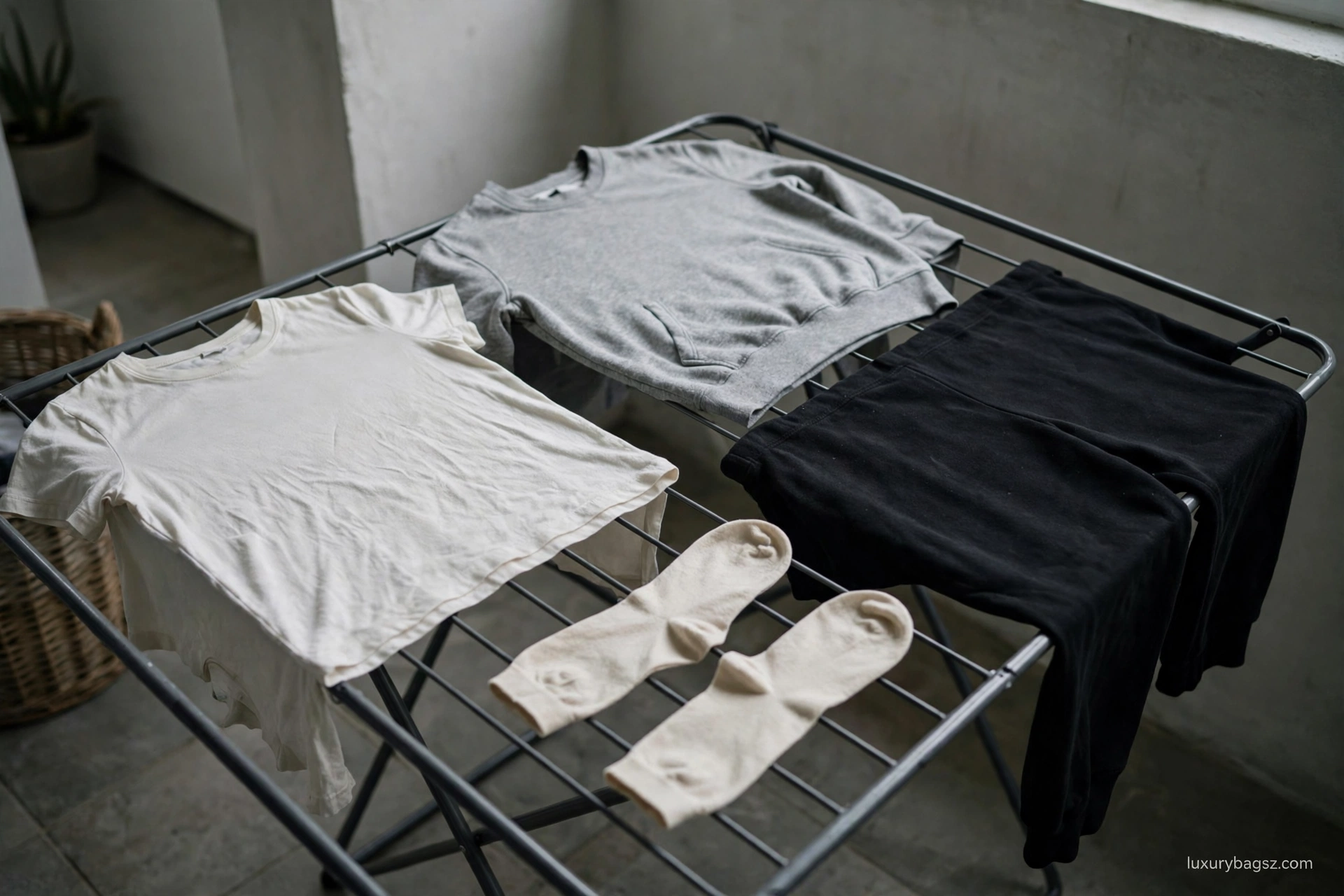
Drying is where good washing is most often undone. For all three fibres, the safest drying is flat or on a line in shade, with the garment reshaped while damp. Shake cotton and linen out before drying to reduce creases, smooth silk into shape without stretching, and keep every garment away from radiators, direct sun and tumble dryers.
Tumble drying deserves a clear warning. It shrinks cotton, shrinks and creases linen, and damages silk's sheen and strength. Even a low-heat tumble cycle risks shrinkage on a garment you value, so reserve tumble drying for sturdy, everyday cotton that the label explicitly allows, and line-dry everything else.
Hanging wet garments needs judgement. Sturdy cotton shirts hang well on a line or a hanger, but wet linen stretches if hung by one point, and wet silk stretches badly under its own weight. Dry knits and delicate garments flat, and hang only sturdy woven garments, with support at the shoulders or waistband rather than by clips on a delicate hem.
Drying time matters too. A garment left damp in a closed room or a plastic bag develops mustiness and mildew, while a garment dried too fast in heat stiffens and fades. Dry in a ventilated room or outdoors in shade, with air circulating, and bring garments in once dry rather than leaving them out overnight in damp air.
Ironing, Steaming and Pressing by Fibre
Ironing settings follow fibre tolerance. Cotton tolerates the highest heat of the three, with steam, and presses best while slightly damp. Linen needs medium to high heat with steam, also while damp, and benefits from pressing on the reverse side to protect the surface. Silk needs the lowest heat, no steam unless the label allows it, and a pressing cloth between iron and fabric.
Steaming suits cotton and linen well for refreshing wrinkles, and it suits silk only with caution, since steam is water and heat together, both of which can mark silk. Hold a steamer away from silk, keep it moving, and test on a hidden area first. For structured garments in any fibre, professional pressing often beats home ironing, because it protects shape and finish.
Pressing cloths are cheap insurance. A clean cotton cloth between iron and garment prevents shine, scorch and direct heat damage, especially on dark cotton, linen and all silk. Iron inside out where you can, and avoid pressing over buttons, zips, prints and embellishments, which can melt, crack or leave marks.
Store irons and steamers clean. A dirty soleplate transfers marks, and a steamer with mineral build-up can spit water onto silk and light linen. Clean tools, correct heat and a pressing cloth protect more garments than any expensive product, and they cost almost nothing.
Stains: First Aid for Cotton, Linen and Silk
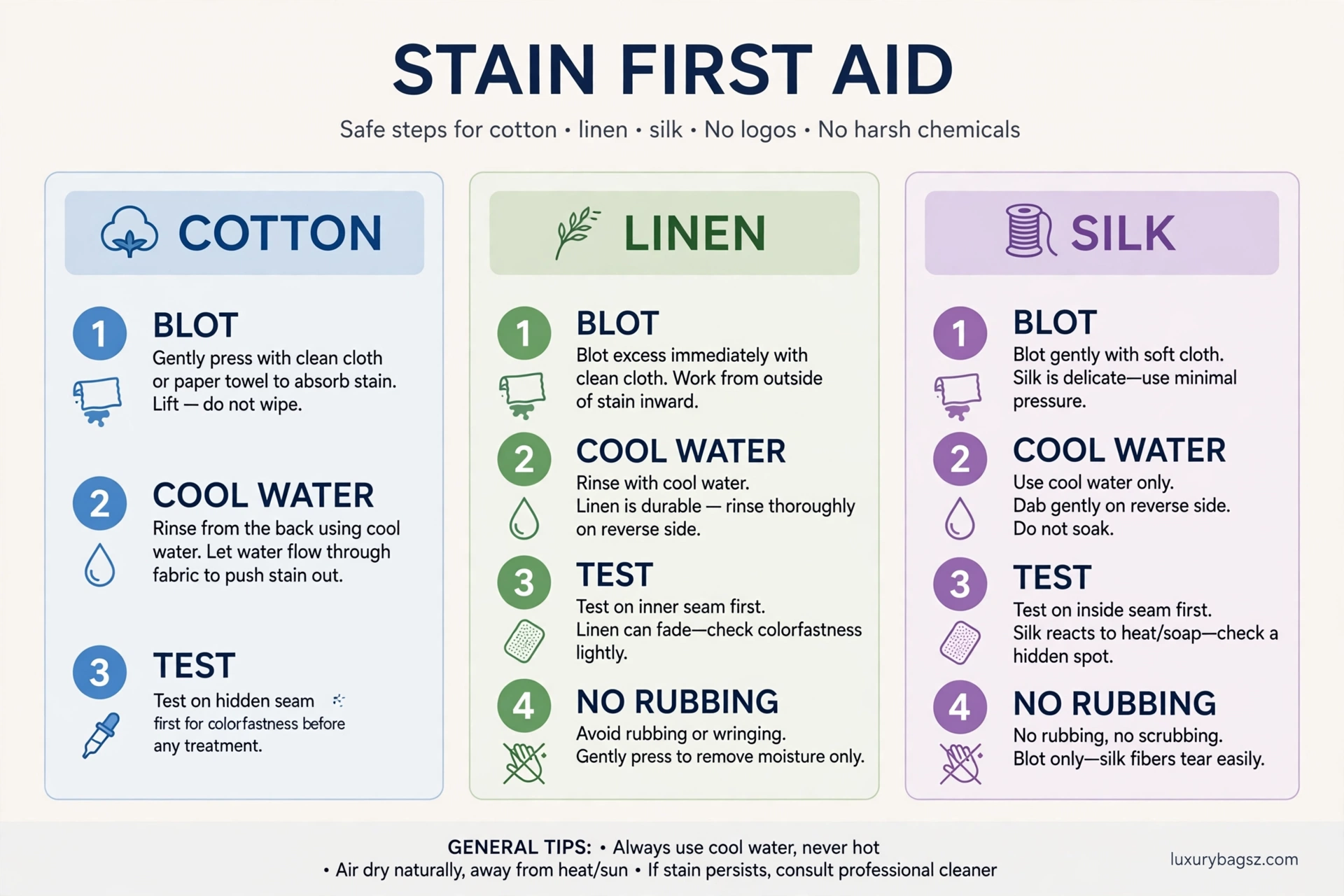
Stain first aid is the same across fibres, with one difference: gentleness increases as you move from cotton to linen to silk. Blot a fresh stain at once with a clean, dry cloth, working from the outside inward so the mark does not spread. Do not rub, since rubbing pushes the stain deeper and damages fibres, especially silk.
Rinse with cool water where the fabric allows, from the back of the stain where you can, so water pushes the stain out rather than through. Apply a small amount of gentle detergent to the mark, let it sit briefly, and wash normally. For grease, a gentle detergent applied before washing usually lifts the mark, while for protein marks such as food and sweat, cool water matters, since hot water sets protein stains.
Some stains need professional help. Ink, dye transfer, rust, old or set stains, and any stain on light silk or on a dry-clean-only garment should go to a professional, with an honest account of what the stain is and what you have tried. Home remedies involving bleach, vinegar, alcohol or harsh solvents are widely suggested online, and they damage silk and linen readily, so test anything unfamiliar on a hidden area first, or skip it.
Never put a stained garment in a dryer or under an iron before the stain is gone, since heat sets most stains permanently. Check after washing, in good light, before drying, and repeat gentle treatment or seek professional help if the mark remains. Patience at this stage saves garments that haste would ruin.
Storage After Washing: Keeping Clean Fabric Clean
Washing is wasted if storage undoes it. Store cotton, linen and silk clean, fully dry and uncompressed, in a cool, dry, ventilated place away from direct sun. A garment stored dirty attracts pests and sets stains, while a garment stored damp develops mildew and odour that can be hard to remove.
Fold knits and delicate garments, hang structured cotton and linen garments on suitable hangers, and keep silk garments hanging or folded with tissue, away from sharp hardware and rough fabrics that can snag them. Use breathable garment bags for long-term storage, and avoid sealed plastic, which traps moisture.
Refold stored garments occasionally so creases do not set permanently along the same lines, especially for linen, which creases deeply. Check stored wool and silk for pests at seasonal change, since moths favour soiled natural fibres, and clean storage is the best prevention.
Keep pale garments away from dark, newly dyed items, and keep silk away from perfumes, deodorants and cosmetics in storage, since these can mark silk even without direct contact. A clean, dry, ventilated wardrobe is the simplest storage rule, and it protects every fibre in this guide equally.
Seasonal storage deserves a final check. Before putting cotton, linen or silk away for a season, wash or clean each piece, let it dry fully, and inspect it for marks, loose buttons and thinning areas. A stain stored for months is harder to remove than a fresh one, and a loose button stored under weight can tear its fabric.
When the season returns, air each piece, check it again, and press or steam it gently before wearing, rather than discovering a storage problem on the morning you need it.
When to Choose Professional Cleaning
Professional cleaning is the right choice for dry-clean-only labels, structured or lined garments, embellished or bonded pieces, light silk, and any stain you cannot identify or cannot lift gently. A professional cleaner has solvents, equipment and experience that home washing cannot match, and the fee is small compared with replacing a designer garment.
Choose a cleaner with experience in natural fibres and designer pieces, and point out stains, their cause and anything you have tried. Check the garment on collection for remaining marks, shine, missing buttons or shape changes, and raise problems at once rather than weeks later.
Professional cleaning is not a cure for every problem. A stain that has been heated, a colour that has bled, or a fabric that has shrunk may not fully recover, and an honest cleaner will say so before treatment. That honesty helps you decide whether to clean, repair, restyle or retire a garment, rather than spending on a treatment that cannot succeed.
For everyday cotton and linen, home washing done well is usually enough, and professional cleaning is occasional. For silk and for special garments, professional cleaning is a regular part of care, not a last resort, and budgeting for it is part of owning the piece well.
Frequently Asked Questions
Can I wash cotton, linen and silk together?
No. Wash each fibre separately, or at least wash silk separately and keep cotton and linen loads separate by colour and soil level. Each fibre needs different water, agitation and drying, and a shared cycle forces at least one fibre into the wrong routine.
What water temperature is safe for all three fibres?
Cool water, around 30 degrees, is safe for almost all cotton, linen and silk, and it limits shrinkage, fading and damage. Warm water suits sturdy white cotton and heavily soiled linen, but it should never be used on silk or on coloured linen you value.
Can I machine wash silk?
Only if the label explicitly allows it, and then only on a delicate or hand-wash cycle in a mesh bag, with cool water and gentle detergent. Most silk garments, especially structured or embellished ones, should be hand-washed if washable at all, or dry cleaned.
Why does linen crease so much, and can I prevent it?
Linen creases because its fibres are stiff and inelastic, and creasing is natural, not a defect. You can reduce it by washing gently, drying flat or on a line in shade, smoothing while damp, and ironing while damp, but you cannot eliminate linen creases without damaging the fabric.
How do I stop cotton shrinking?
Wash in cool or warm water, never hot, avoid high dryer heat, reshape while damp, and line-dry in shade. Cotton shrinks most on its first few hot washes, so a cool, gentle routine from the start preserves size far better than trying to fix shrinkage later.
Should I use fabric softener on natural fibres?
No. Fabric softener coats fibres, reduces absorbency in cotton and linen, and can leave silk feeling limp. Gentle detergent, thorough rinsing and shade drying keep natural fibres soft without coating them.
How do I remove a stain from silk safely?
Blot at once without rubbing, rinse gently with cool water if the garment is washable, and apply a tiny amount of gentle detergent to the mark before washing normally. For light silk, old stains, ink or dye transfer, or any dry-clean-only garment, take it to a professional and describe the stain honestly.
Can I tumble-dry cotton, linen or silk?
Tumble drying shrinks cotton and linen and damages silk's sheen and strength, so avoid it except for sturdy everyday cotton that the label explicitly allows. Line drying in shade or flat drying is safer for all three fibres and preserves colour and shape.
How should I iron silk without marking it?
Use the lowest heat, a pressing cloth between iron and fabric, no steam unless the label allows it, and press on the reverse side where possible. Test on a hidden area first, and never iron silk while wet or with high heat, since both can dull its sheen permanently.
What should I do if a garment has no care label?
Treat it as delicate, test a hidden area with cool water and gentle detergent, and consider professional cleaning for anything valuable. Missing labels are common on vintage and pre-owned garments, and caution costs far less than a ruined wash.
Conclusion
Cotton, linen and silk reward the same discipline with different details: read the label, sort by fibre and colour, wash gently in cool water with a gentle detergent, dry flat or on a line in shade, and press with the heat each fibre tolerates. Start with one load done properly, cool and gentle and dried in shade, and the difference in softness, colour and shape will convince you faster than any guide can.
That single careful load is the best teacher, and the habit it starts will protect every natural-fibre garment you own. Natural fabrics reward this attention with softness, brightness and drape that harsh washing destroys, and the difference shows every time you wear a garment that still looks and feels as good as the day you bought it.
Cotton forgives the most, linen demands shade and patience with creases, and silk demands the lightest touch of all. Follow the most delicate fibre in every blend and trim, treat stains promptly without heat, and choose professional cleaning for structure, embellishment and doubt. Cleaned this way, natural fabrics stay soft, bright and well-shaped for years, rather than fading, shrinking or marking their way to an early retirement.






