Sustainable Materials to Look for in Luxury Fashion: Fibres, Leather, Certifications and Greenwashing
Materials Worth Looking For, and Why
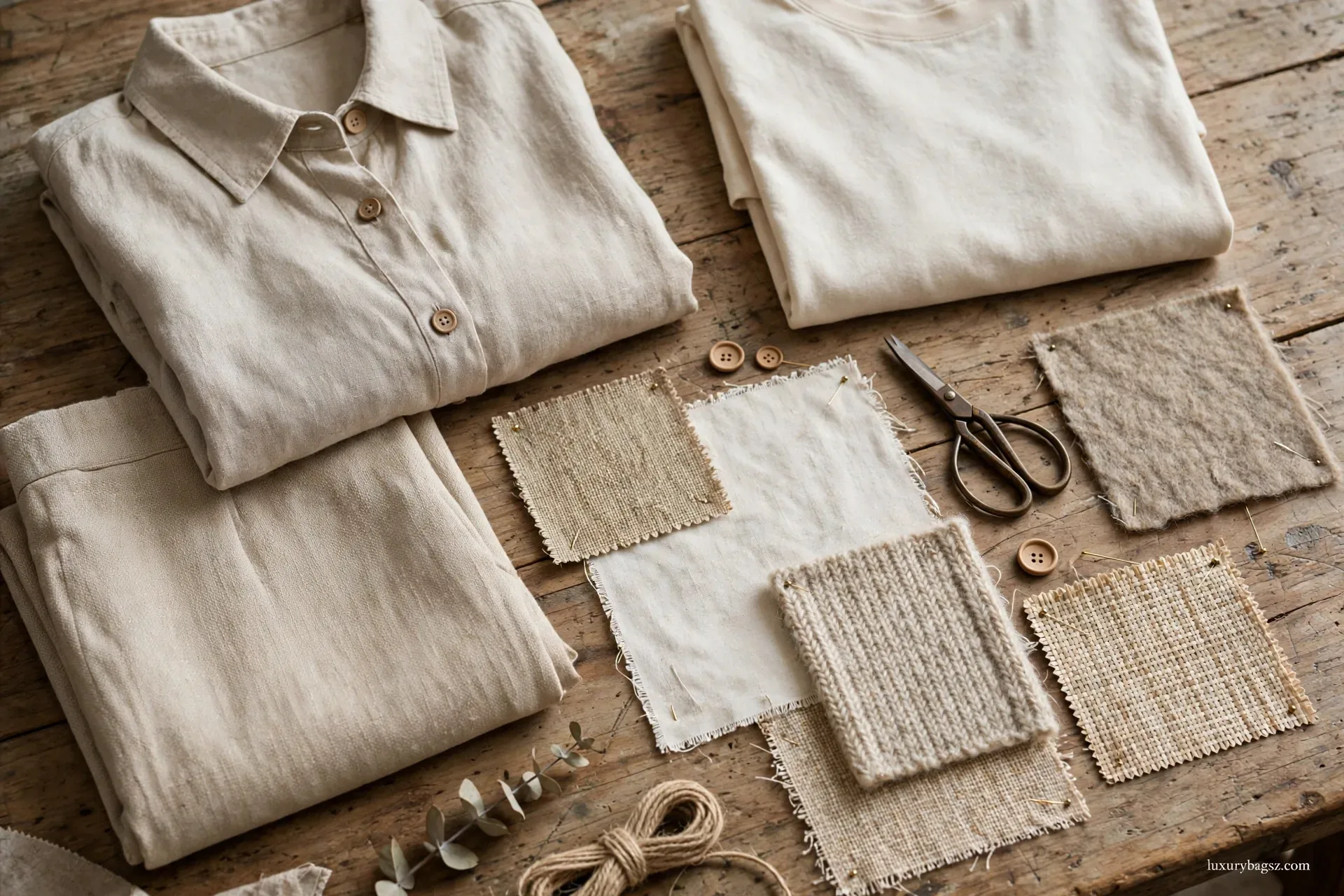
Look first for durability, then for named fibres with credible backing: organic cotton, linen and hemp; regenerative or recycled plant fibres; responsibly sourced wool, cashmere and silk; and recycled synthetics where durability matters. A durable piece kept in regular use for ten years will generally outperform one that falls apart quickly, on almost every count.
For leather, judge farming, tanning and traceability rather than the word leather alone. Alternatives need the same scrutiny, as some plant-based options are mostly plastic, so check the full composition breakdown.
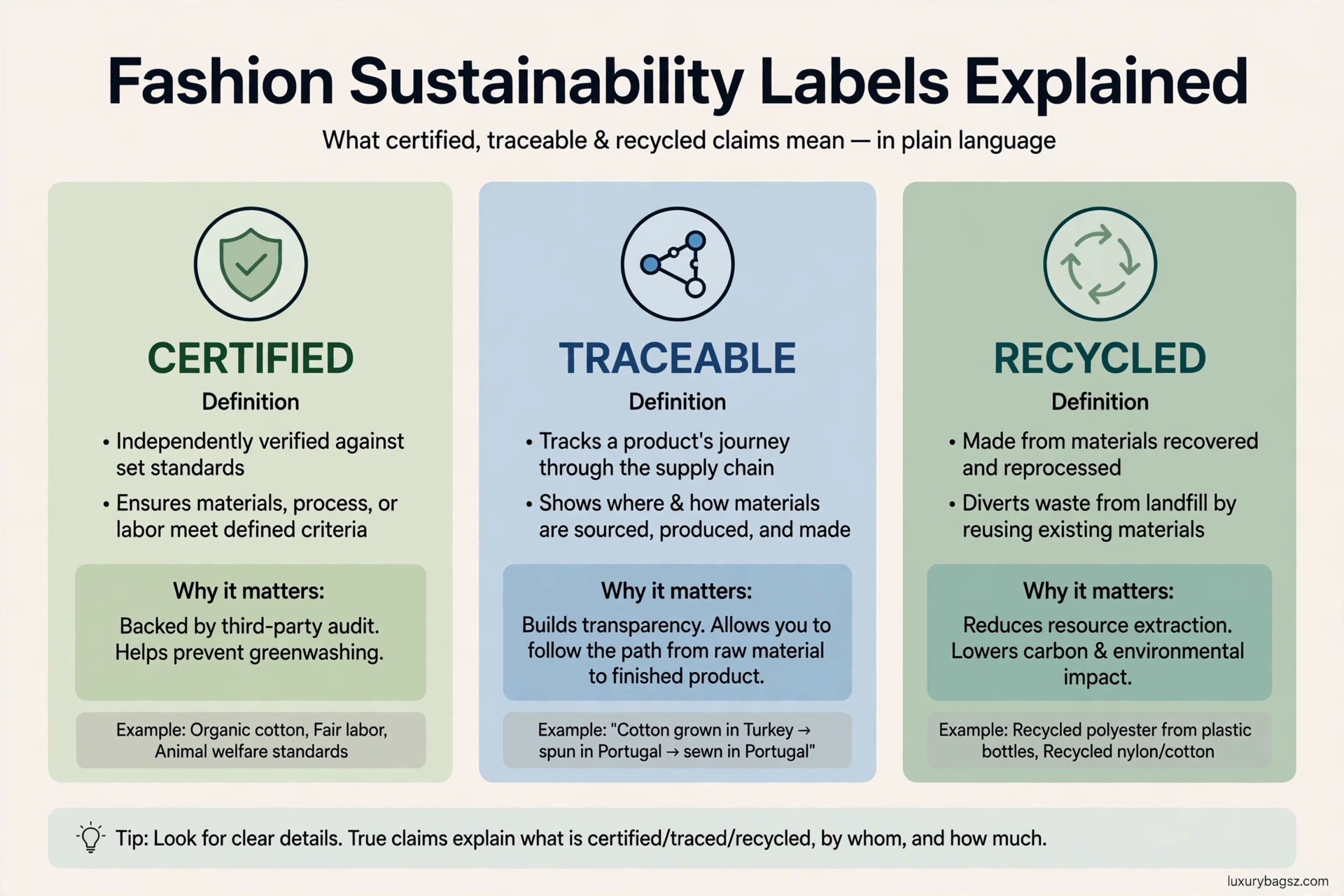
Trust only independent, specific and verifiable certifications for that garment. Vague terms, tiny percentages and brand-wide claims are the usual signs of greenwashing.
Sustainable Luxury Materials in Brief
Sustainable materials in luxury fashion are not a single fabric or a single label. They are a set of choices about how fibres are grown, how animals are raised, how fabrics are made, how long garments last, and how honestly all of that is reported. A material can be natural yet thirsty, recycled yet short-lived, or plant-based yet plastic-heavy, so the question is never just what a garment is made of, but how, where and for how long it serves.
Luxury has a natural advantage here: higher prices can support better materials, slower production and longer wear, while a well-made garment worn for a decade beats a cheap garment replaced yearly on almost every environmental measure. Durability is itself a sustainability feature, and it is the one luxury buyers can judge most directly.
This guide explains the materials worth looking for, the claims worth questioning, and the questions worth asking before you pay a premium for sustainability. It covers plant fibres, animal fibres, leather and its alternatives, recycled and regenerative materials, certifications, traceability and greenwashing, and it ends with a practical buying checklist you can use in any shop.
Where sources disagree, this guide says so. Sustainability measurement is contested, methods differ, and a material that wins on water may lose on land, chemicals or durability. No material is sustainable in isolation; it is sustainable, or not, in a particular product, supply chain and lifetime of use.
Key Takeaways
- Durability is the most reliable sustainability feature: a long-worn garment beats a short-lived one on most measures.
- Organic, regenerative and recycled fibres each help in different ways, and none is a complete solution alone.
- Responsible leather depends on farming, tanning and traceability, not on the word leather alone.
- Leather alternatives vary widely: some are plant-based, others are mostly plastic, so check composition, not marketing.
- Certifications help, but only when they are independent, specific and verifiable for that garment.
- Traceability, from fibre origin to finished garment, matters more than a single green claim.
- Greenwashing hides behind vague words, tiny percentages and irrelevant claims; ask for specifics.
- Care, repair and resale extend a garment's life, and they are part of its sustainability, not an afterthought.
What Sustainable Means in Fashion, and What It Does Not
Sustainable fashion is often described as if it were one property, but it covers several distinct impacts: water use, land use, chemical use, greenhouse gases, waste, biodiversity, animal welfare and worker welfare. A material can improve one impact while worsening another, which is why single-score claims should be treated with caution.
For example, a fibre that uses little water may need more land, a fibre that avoids pesticides may yield less per hectare, and a recycled fabric that saves virgin material may shed microfibres or last fewer washes. Trade-offs are normal, and honest brands describe them rather than hiding them behind a single green word.
Sustainable also does not mean natural, and natural does not mean sustainable. Conventional cotton is natural yet water- and pesticide-intensive in many regions, while a synthetic made from recycled inputs can outperform a natural fibre on some measures and underperform on others, such as microfibre shedding and end-of-life. Judge materials by evidence across impacts, not by whether they grew or were made.
Finally, sustainable does not mean disposable in a greener colour. A garment marketed as sustainable but made to be worn a few times and discarded is still a waste problem, whatever its fibre. Longevity, repairability and timeless design are sustainability features in their own right, and luxury's slower, better-made model supports them naturally when it is done honestly.
Organic Cotton, Linen, Hemp and Other Plant Fibres
Plant fibres form the backbone of sustainable luxury, and each has a different profile. Organic cotton is grown without synthetic pesticides and fertilisers, under certification that also covers soil, water and, in stronger schemes, worker conditions. It reduces chemical load compared with conventional cotton, but it still needs significant water, and yields vary by region, so organic alone does not make cotton low-impact everywhere.
Linen, made from flax, generally needs less water and fewer chemicals than cotton, grows in cooler climates, and produces a strong, breathable fabric that softens with wear. Its main impacts lie in retting, the process that separates fibre from stalk, and in dyeing and finishing, so look for linen with credible processing claims, not just a linen label.
Hemp is notable for fast growth, low pesticide need and strong fibre, and it improves soil where it is grown in rotation. Hemp fabric can feel coarse when new, softening with washing, and it blends well with cotton, linen and silk for drape and softness. As with linen, processing and finishing matter, since harsh processing can undo hemp's farming advantages.
Other plant fibres include ramie, nettle, banana and pineapple leaf fibres, each with niche strengths and limited scale. These fibres suit specific garments and trims rather than whole wardrobes, and their sustainability depends on farming, processing and transport at small scale, which is harder to verify than for mainstream fibres. Treat novel plant fibres as promising, not proven, until their supply chains are transparent.
Regenerative, Recycled and Low-Impact Plant Fibres
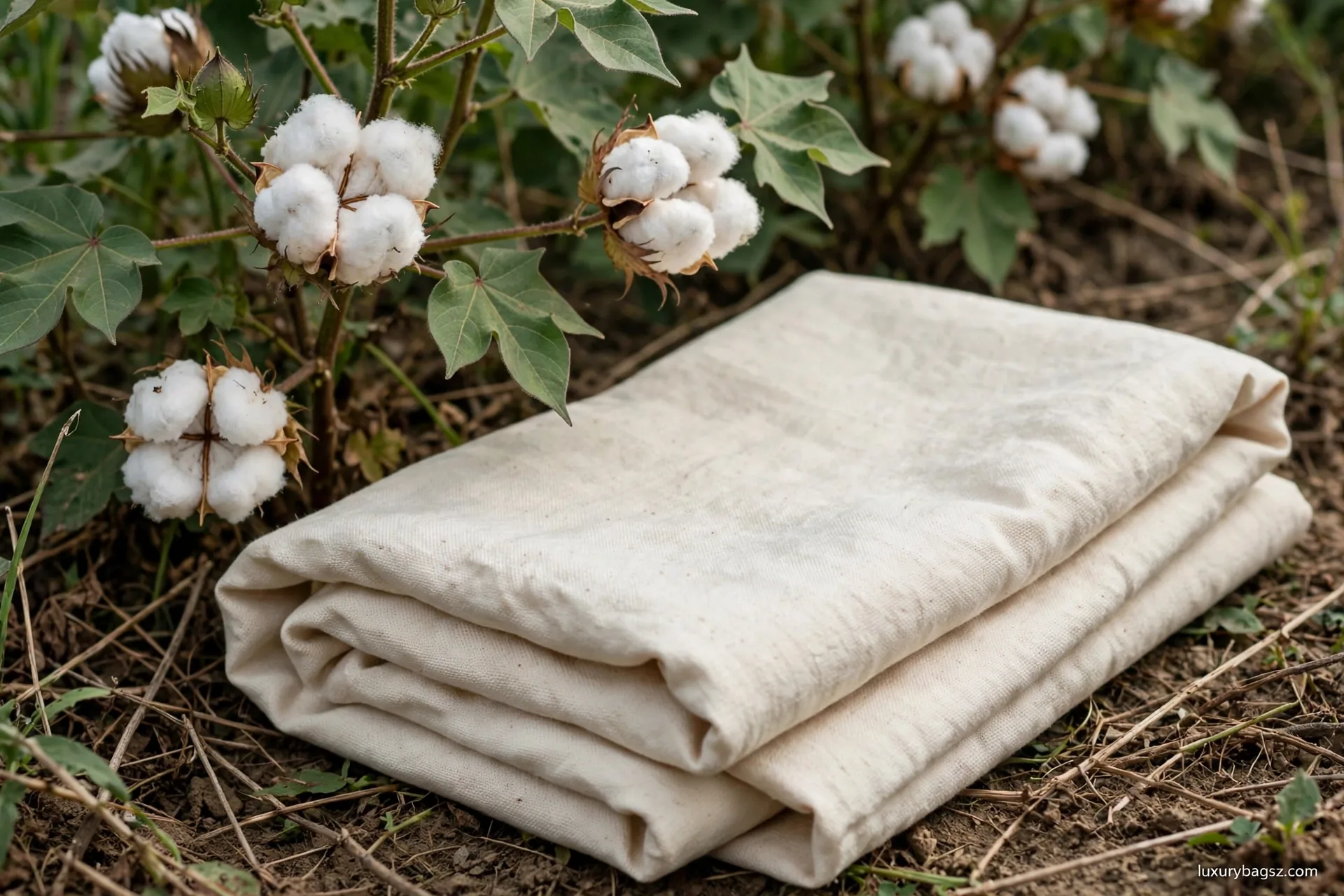
Regenerative agriculture goes beyond organic by aiming to improve soil health, biodiversity and carbon storage through rotation, cover cropping, reduced tillage and diverse planting. Regenerative cotton and wool are early-stage in luxury, with promising pilots and limited certified supply, so claims should name the programme, the region and the verification method, not just the word regenerative.
Recycled plant fibres, such as recycled cotton, save virgin material and reduce waste, but they face a quality trade-off: recycled cotton fibres are shorter than virgin fibres, so recycled cotton is often blended with virgin cotton for strength and softness.
A recycled cotton garment with a small recycled percentage is not meaningfully different from a virgin garment, so check the percentage and the source, whether pre-consumer offcuts or post-consumer garments.
Low-impact processing matters as much as farming. Waterless or low-water dyeing, closed-loop water systems, and safer chemistry reduce the footprint of any plant fibre, and they are often where luxury makers can differentiate honestly. Ask whether dyeing and finishing are covered by a credible standard, not just whether the fibre was grown responsibly, since most of a fabric's chemical and water impact happens after harvest.
For warm-weather plant fibres, breathability and comfort are practical sustainability features, since a garment worn often replaces several less-worn ones. The breathable fabrics guide places linen and other airy fabrics in context, which helps you choose plant fibres you will actually wear through summer, rather than fibres that sound sustainable but sit unworn.

Responsible Wool, Cashmere, Silk and Other Animal Fibres
Animal fibres carry welfare and land questions that plant fibres do not, and responsible sourcing depends on farming practice, not fibre name. Responsible wool schemes cover animal welfare, land management and chemical use, and they vary in strictness, so look for a named scheme with independent auditing, and ask what it covers for that specific wool.
Cashmere deserves special caution. Cashmere goats graze fragile grasslands, and overgrazing in some regions has degraded land and harmed livelihoods. Responsible cashmere schemes address grazing, herder income and fibre traceability, but supply is limited and claims are easy to make, so a cashmere garment's sustainability claim should name its scheme, origin and fibre percentage, and should be backed by a traceable chain.
Silk's impacts lie in mulberry farming, energy for rearing and reeling, and dyeing, with additional questions about silkworm welfare in conventional silk versus peace silk, where moths complete their lifecycle. Peace silk is a niche, higher-cost option with its own trade-offs in yield and texture, and it suits buyers who prioritise that welfare question, provided the claim is verified for that garment.
Other animal fibres, such as alpaca, mohair and yak, suit specific climates and garments, and their sustainability depends on herding, land and processing at small scale. Alpaca, for example, grazes lightly compared with some livestock, but its overall impact still depends on farming region, dyeing and transport, so treat origin and processing claims as essential, not optional, for niche animal fibres.
Recycled Synthetics, Bio-Based Synthetics and Microfibres
Recycled synthetics, most commonly recycled polyester from bottles or textile waste, save virgin plastic and reduce waste, and they suit performance, outerwear and linings where durability and water resistance matter.
Their limits are real: recycled polyester still sheds microfibres in washing, its recycling loop degrades fibre quality over cycles, and bottle-based recycling competes with bottle-to-bottle recycling, so it is not a closed loop for textiles.
Bio-based synthetics, made partly from plants such as corn or castor, reduce fossil inputs but vary widely in bio-content, biodegradability and performance. A fabric labelled bio-based may contain only a small bio fraction, and bio-based does not mean biodegradable or compostable, so check the percentage and the end-of-life claim, not just the prefix bio.
Microfibre shedding affects all synthetics, recycled or not, and it is a genuine environmental cost that washing filters, gentler cycles and longer wear can reduce but not eliminate. Luxury buyers can limit shedding by washing synthetics less often, in cooler water, in laundry bags designed to capture fibres, and by choosing natural fibres where performance does not require synthetics.
Blends complicate recycling. A garment blending natural and synthetic fibres, or several synthetics, is harder to recycle than a single-fibre garment, since separation is difficult at scale. Mono-material design, where a garment uses one fibre family throughout, including trims and threads where possible, is a design choice worth looking for, since it preserves future recycling options.
Responsible Leather: Farming, Tanning and Traceability
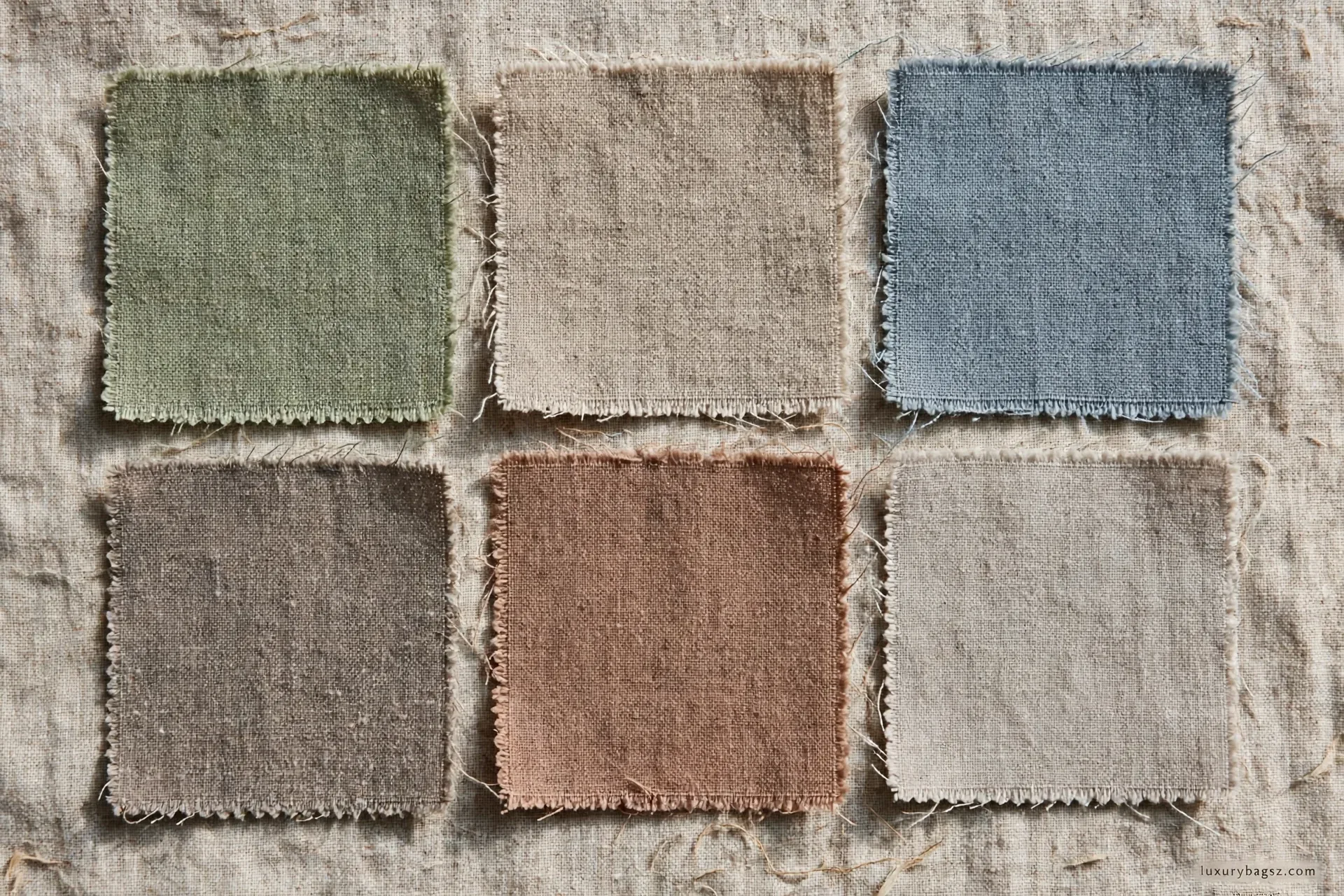
Leather's sustainability depends on three stages: how animals are raised, how hides are tanned, and how traceable the chain is from farm to finished leather. Hides are largely a by-product of meat production, which complicates simple claims, since leather's impact cannot be separated cleanly from meat's impact, and different allocation methods give different results.
Honest brands acknowledge this complexity rather than claiming leather is simply waste-free.
Tanning is where leather's chemical impact concentrates. Chrome tanning is fast and common, but it needs careful wastewater management, while vegetable tanning uses plant tannins, takes longer, and suits heritage leathers with patina. Neither method is automatically sustainable; both depend on water treatment, chemical management and worker safety at the specific tannery, which is why tannery-level auditing matters more than tanning type alone.
Traceability is leather's hardest problem, since hides pass through traders, tanneries and makers across regions. Schemes that audit tanneries, trace hides to slaughter or farm groups, and publish their methods offer the strongest leather claims available today.
The Leather Working Group guide explains how one such tannery auditing scheme works, what its medals mean, and what it does not cover, which helps you judge leather claims without taking a single label at face value.
Exotic leathers raise additional conservation and welfare questions, and their trade is regulated for many species. A sustainable exotic claim should name the species, origin, legality and scheme, and should be verifiable, since exotic leather's small scale and high value make it vulnerable to mislabelling. When exotic provenance cannot be verified, caution is the sustainable choice.
Leather Alternatives: Plant-Based, Mushroom, Lab and Plastic
Leather alternatives vary more than their marketing suggests, and composition is the key question. Some alternatives are substantially plant-based, using pineapple leaf, cactus, apple waste, mushroom mycelium or similar inputs, while others are mostly polyurethane with a small plant fraction for marketing. A material labelled plant-based may still be majority plastic, so check the composition breakdown, not the headline.
Plant-based alternatives offer lower animal impact and, in some cases, lower tanning chemical load, but they face durability questions: abrasion resistance, water resistance, ageing and repairability vary widely, and a short-lived alternative that needs replacing yearly may outperform leather on animal impact while underperforming on waste and lifetime cost. Look for durability evidence, repair options and warranties, not just origin stories.
Mushroom mycelium leather is promising for its low input use and leather-like hand feel, but it remains limited in scale, cost and long-term wear data, so treat it as an emerging material rather than a proven leather replacement.
Lab-grown collagen leather is earlier still, with pilot products and uncertain scaling, and its sustainability will depend on energy, feedstocks and manufacturing at scale, none of which can be judged from pilot claims alone.
Plastic-based vegan leather, usually polyurethane or PVC, avoids animal inputs but carries fossil, chemical and microplastic costs, and PVC in particular raises chemical concerns. Vegan does not mean sustainable, and sustainable does not mean vegan; the two labels answer different questions, and a buyer who cares about both should check both, garment by garment.
Dyes, Finishes and Chemistry: The Hidden Footprint
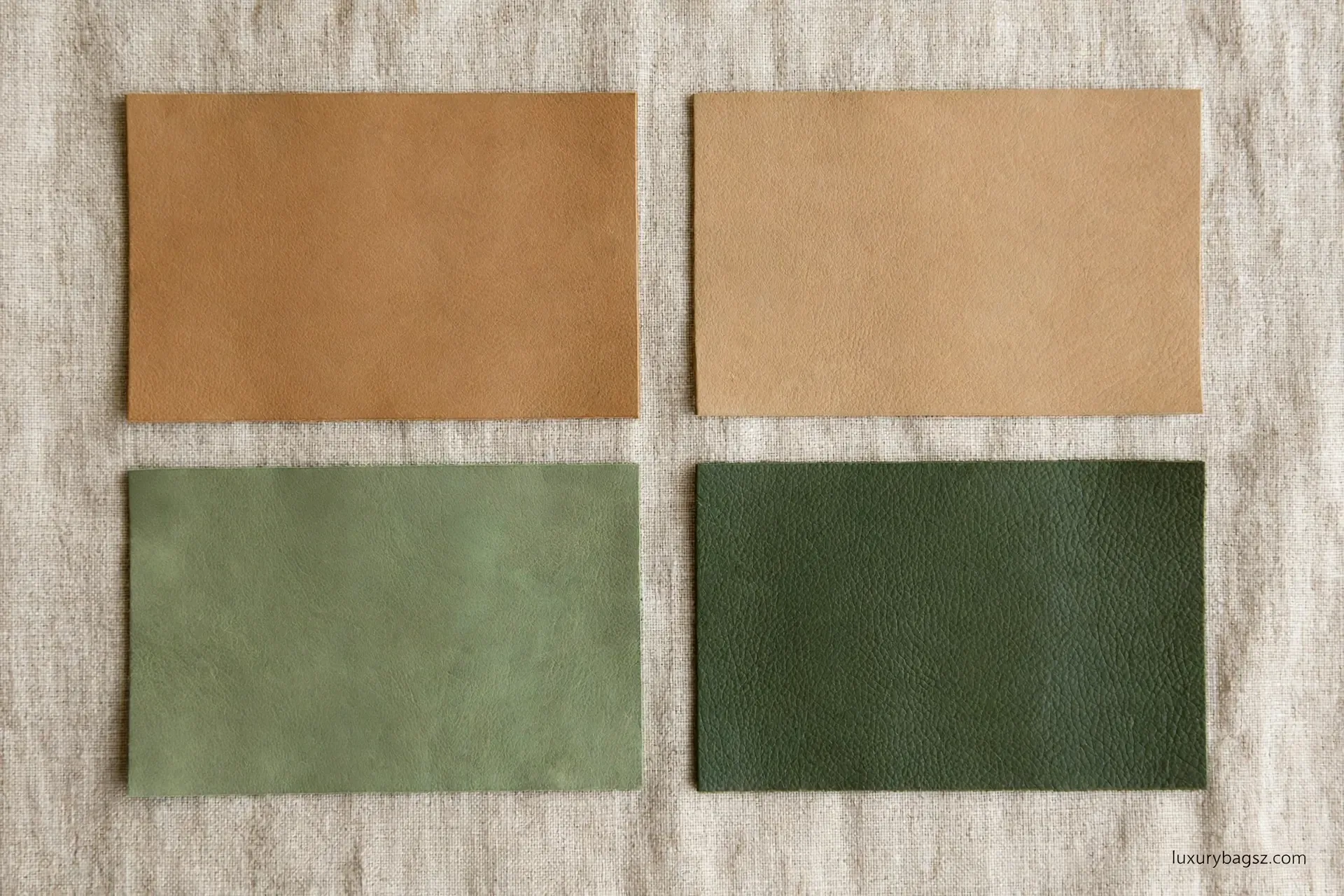
Dyes and finishes often dominate a fabric's environmental footprint, yet they rarely appear in marketing. Conventional dyeing uses large volumes of water, energy and chemicals, and wastewater, if untreated, harms rivers and communities near dye houses. Safer chemistry, water recycling, closed-loop systems and digital printing reduce these impacts, but they need verification at the dye house, not just a brand-level promise.
Finishes deserve the same scrutiny. Water repellents, wrinkle resistance, softeners and coatings can involve fluorinated chemicals, formaldehyde or other substances of concern, and they affect both wearer exposure and end-of-life. Look for finishes covered by credible chemical standards, and be wary of performance claims that do not name the chemistry behind them, especially durable water repellency on luxury outerwear.
Colour choice is a practical sustainability decision too. Undyed or naturally coloured fabrics avoid dye impacts entirely, while dark, saturated colours need more dye and more washes to fix colour. A naturally coloured wool or linen garment, worn often, can be a lower-impact choice than a heavily dyed alternative, even when both use the same fibre.
Care chemistry matters after purchase as well. Gentle detergents, cool washing and shade drying reduce a garment's lifetime chemical and energy use, and they preserve the finishes and dyes that makers applied. A garment's lifetime footprint is shaped as much by how you wash it as by how it was made, which is why care guidance belongs in any sustainability discussion.
Durability, Repairability and Design for Long Life
Durability is the sustainability feature buyers can judge best, and it deserves more weight than any single fibre claim. A garment with dense fabric, strong seams, quality buttons and a timeless cut, worn for ten years and repaired twice, outperforms a garment with a green fibre claim worn for one season on waste, cost per wear and most environmental measures.
Repairability should be designed in, not added later. Look for spare buttons, accessible seams, replaceable parts, and makers who offer repair services or partner with repairers. A luxury maker that repairs its own products signals confidence in longevity, while a maker that cannot repair its own garments is selling disposability at a luxury price, whatever its material claims.
Design for long life includes timelessness. A classic cut, a versatile colour and a fabric that ages gracefully, such as leather that patinas or denim that fades evenly, encourage long wear, while trend-driven cuts and fragile finishes encourage early replacement. Timeless design is not a style preference here; it is an environmental strategy, and it suits luxury's strengths.
Modularity and mono-material design help future repair and recycling. A garment whose parts can be separated, whose trims match its main fibre, and whose construction allows a tailor to work on it, will be repaired and eventually recycled more readily than a bonded, multi-material garment that cannot be taken apart. Ask how a garment can be repaired, not just how it was made.
Certifications: Which Labels Mean Something
Certifications vary enormously in strictness, scope and independence, and understanding them is essential to judging sustainability claims. Strong certifications are independent, audited by third parties, specific about what they cover, and verifiable for a particular garment, with a certificate number, a chain-of-custody record or a public database. Weak labels are self-declared, vague, or applied to a whole brand rather than a specific product.
Fibre certifications cover farming and fibre production, such as organic and responsible animal fibre schemes, while textile certifications cover processing, chemistry and worker conditions across the supply chain. A garment may carry a fibre certification but no processing certification, or vice versa, so check what each label on a garment actually covers, rather than assuming one label covers everything.
Chemical and safety standards, such as those limiting harmful substances in textiles, are valuable but narrow: they certify that a finished textile meets chemical limits, not that its farming, water use or worker conditions were sustainable. Treat chemical safety as one part of sustainability, not as a substitute for broader claims.
When a certification is unfamiliar, look it up: who runs it, who audits it, what it covers, and whether the garment's claim can be verified. A certification you cannot verify for that garment, or a label whose criteria are not public, should not command a price premium, whatever its green design suggests.
Greenwashing: Vague Words, Tiny Percentages and False Friends
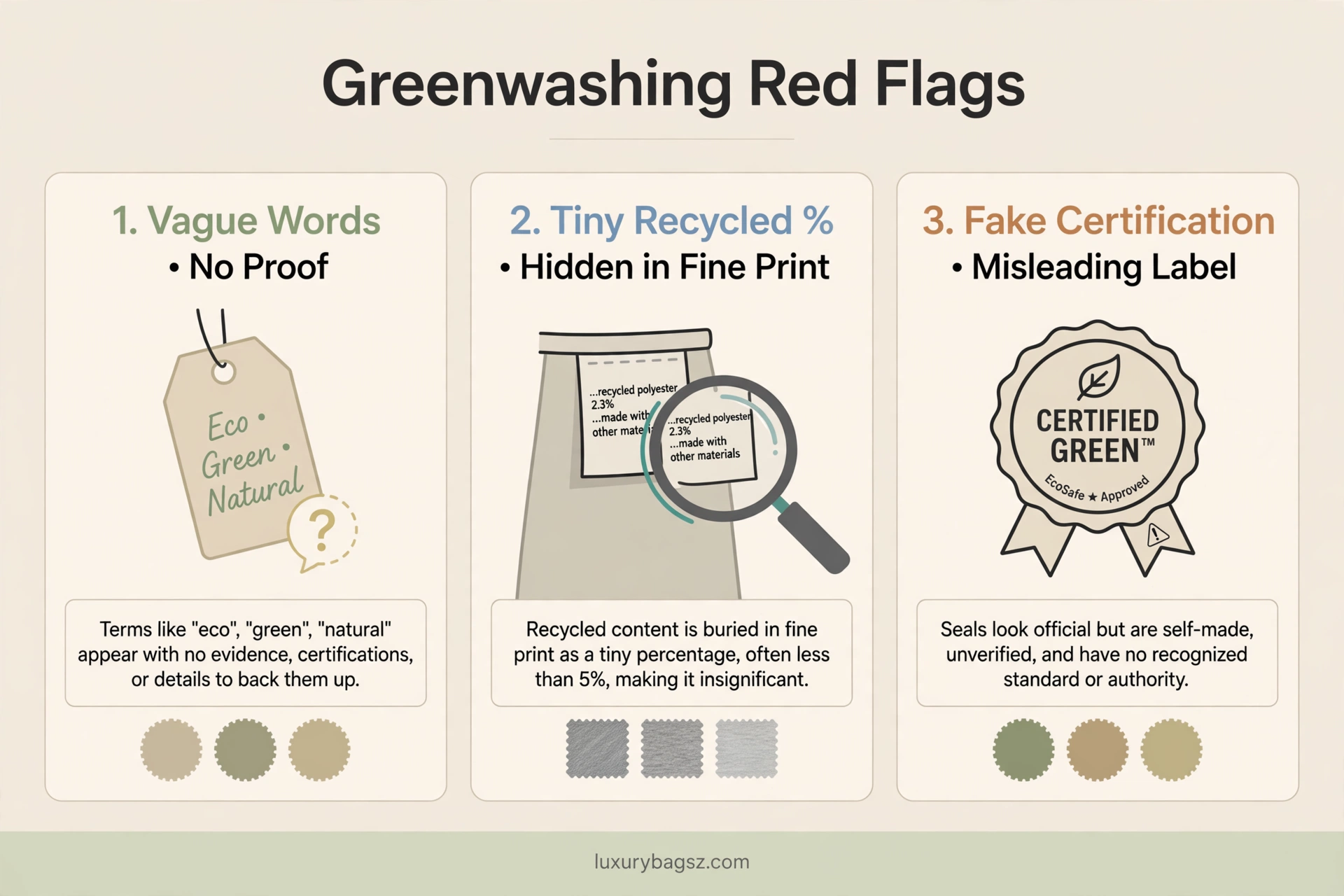
Greenwashing in fashion follows predictable patterns, and recognising them protects both money and impact. Vague words are the first pattern: eco, green, conscious, natural and sustainable without specifics, percentages, schemes or verification mean little on their own, and they often appear on garments whose main impact is unchanged.
Tiny percentages are the second pattern. A garment labelled recycled, organic or plant-based may contain only a small fraction of that material, with the rest conventional. Check the composition label and the claim's percentage, and treat a claim below a meaningful threshold, or a claim that does not state its percentage, as marketing rather than evidence.
Irrelevant claims are the third pattern. A claim that a product is free of a substance already banned, or that packaging is recyclable while the garment is not, distracts from the garment's real impact. Similarly, a carbon offset claim without reduction, or a take-back scheme without reuse data, may sound sustainable while changing little about production or lifetime.
False friends include natural, vegan, biodegradable and compostable when used without context. Natural does not mean low-impact, vegan does not mean sustainable, biodegradable often requires industrial conditions that home composting cannot provide, and compostable garments rarely reach composting facilities. Each word answers a narrow question, and only the full claim, with specifics, answers the sustainability question.
Traceability and Transparency: Following the Chain
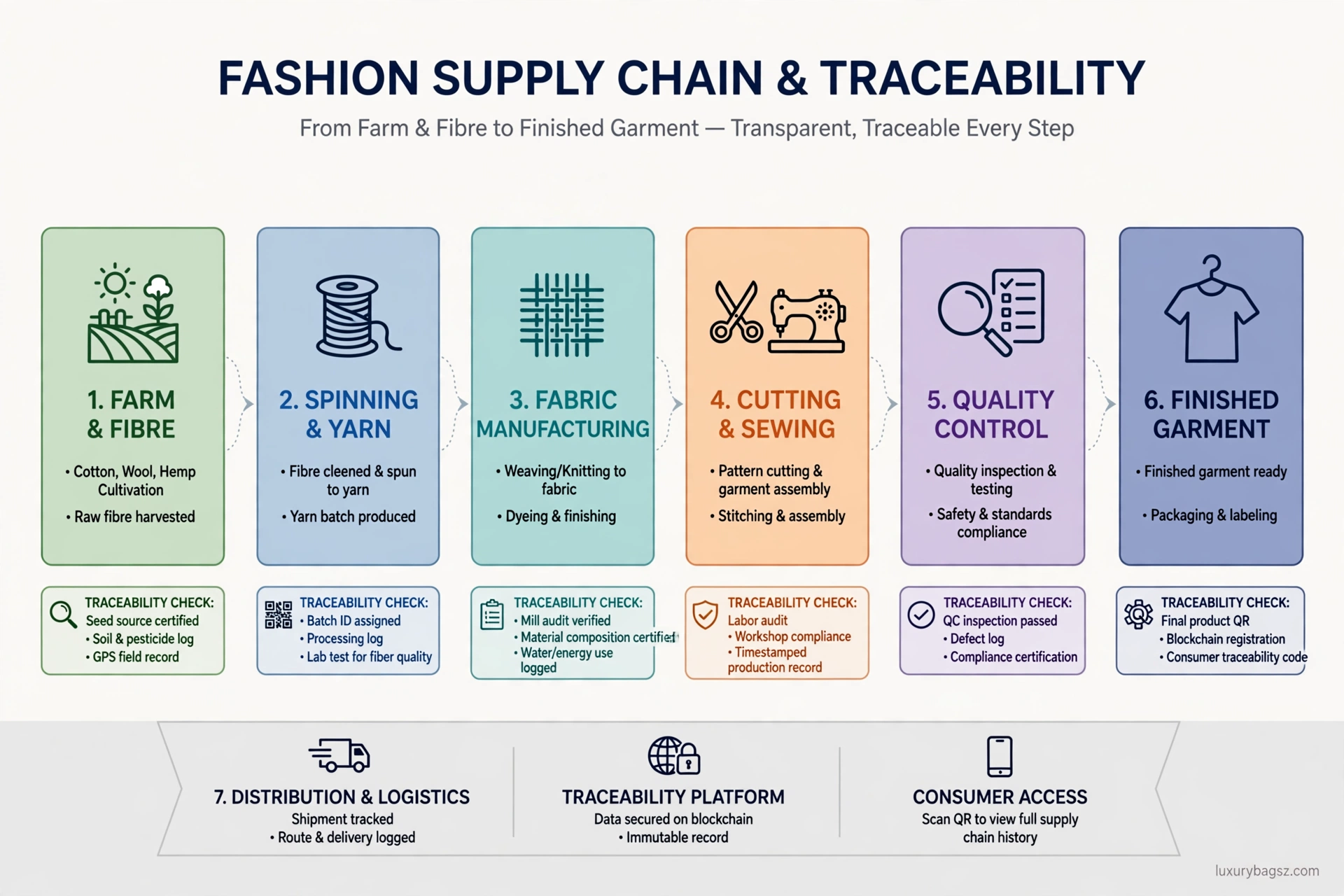
Traceability means knowing, and being able to verify, where a material came from, how it was processed, and who made the finished garment. Strong traceability covers fibre origin, processing locations, factory lists and audit results, published in enough detail that an independent checker could follow the chain. Weak traceability offers a country name, a region, or a story without records.
Transparency and traceability differ. A brand can publish a long sustainability report while revealing little about a specific garment, or it can offer garment-level traceability through a code, a passport or a digital record. Garment-level information, such as a digital product passport, is more useful to a buyer than a brand-level report, since it ties claims to the item in your hands.
Digital IDs and blockchain records are emerging tools for traceability, and they help when they link to verified audits and chain-of-custody records, rather than simply recording a brand's own claims. A digital record is only as trustworthy as the verification behind it, so ask who verified each step, not just whether a record exists.
For buyers, traceability questions are simple and powerful: where was this fibre grown or made, where was it processed, who made the garment, and how can I verify those answers? A maker who answers specifically, with names, schemes and records, deserves more trust than a maker who answers with stories and adjectives, however appealing the story.
Buying Checklist: Questions Before You Pay a Premium
Use a short checklist before paying a sustainability premium. First, what is the garment made of, in percentages, and what is the main fibre's origin and scheme? Second, what does the sustainability claim cover: fibre only, processing only, or the whole garment, and can you verify it for this item?
Third, how long will the garment last, and can it be repaired? Check fabric density, seams, buttons and construction, ask about repair services, and consider whether the cut and colour will still suit you in five years. Fourth, how will you care for it, and does its care routine support long life, or does it demand frequent, harsh cleaning that shortens it?
Fifth, what happens at end of life? Can the garment be resold, repaired, recycled or composted, and does the maker offer a credible take-back or resale route with published outcomes? A garment with no end-of-life route is not automatically unsustainable, but a maker that plans for end of life signals seriousness that a maker without such a plan does not.
Sixth, does the price reflect the claim? A premium should buy better materials, better processing, better durability or better verification, not just a greener label. If the premium buys none of those verifiably, the sustainable choice may be a well-made conventional garment worn longer, rather than a premium green garment worn briefly.
Care, Repair, Resale and the Second Life of Luxury
Sustainability does not end at purchase; it continues through wear, care, repair and resale. Gentle washing, shade drying, prompt repair and proper storage extend a garment's life, and each extra year of wear spreads its production impact over more uses, improving every per-wear measure. Care is therefore a sustainability action, not just a maintenance habit.
Repair is the most effective second-life action after long wear. A repaired seam, a replaced button, a relined jacket or a resoled shoe keeps a garment in use without new production, and luxury makers with repair services make this easy. Keep repair records, since they help future repairs and future buyers trust the garment's condition.
Resale extends life further, moving a garment from an owner who no longer wears it to one who will. Luxury resale works best for well-made, timeless pieces in good condition, with care records and original packaging, so the care you give a garment now protects its resale value later. A garment that is clean, repaired and documented resells for more and stays in use longer than a neglected one.
At true end of life, when a garment can no longer be worn or repaired, recycling routes depend on fibre and construction. Mono-material garments recycle more readily, while blended, bonded garments often cannot be recycled at scale and may be downcycled or discarded.
Design, care and honest end-of-life planning together decide whether a luxury garment's story ends in reuse, recycling or waste, and buyers who ask about all three stages make the whole chain more honest.
Frequently Asked Questions
What is the most sustainable material in luxury fashion?
There is no single winner, since sustainability depends on farming, processing, durability and lifetime use together. Durable, well-made garments in any responsibly sourced fibre, worn for many years and repaired, usually outperform short-lived garments in any green fibre, so judge the whole garment, not just its headline material.
Is organic cotton always better than conventional cotton?
Organic cotton reduces synthetic pesticide and fertiliser use, which is a genuine benefit, but it still needs significant water and its yields vary by region. Organic is better on chemical load, not automatically better on every measure, so look for organic plus water, processing and durability evidence for a full picture.
Is vegan leather more sustainable than real leather?
Not necessarily. Vegan leather avoids animal inputs, but much of it is polyurethane or PVC, with fossil, chemical and microplastic costs, while responsible leather's impacts lie in farming and tanning. Plant-based alternatives vary widely in composition and durability, so check the actual composition and lifetime, not just the vegan label.
What do sustainability certifications actually guarantee?
It depends on the scheme. Strong certifications are independent, audited, specific about scope, and verifiable for that garment, covering farming, processing, chemistry or worker conditions as stated. Weak labels are self-declared or vague, so look up who runs a scheme, who audits it and what it covers before paying a premium for it.
How can I spot greenwashing in fashion?
Watch for vague words without specifics, tiny percentages of a claimed material, irrelevant claims such as a ban that already applies, and narrow words like natural or biodegradable used as if they meant sustainable. Ask for percentages, schemes, origins and verification for the specific garment, and treat unanswered specifics as a warning.
Is recycled polyester sustainable?
Recycled polyester saves virgin plastic and reduces waste, which helps, but it still sheds microfibres, degrades over recycling cycles, and competes with bottle-to-bottle recycling. It suits performance and outerwear where durability matters, and it works best when garments are washed gently, worn long and designed for future recycling.
Does buying luxury fashion help sustainability?
It can, when higher prices buy better materials, slower production, stronger construction and longer wear, plus repair services and resale value. Luxury helps only when those features are real and verifiable, since a luxury price without durability, repair or transparency is no more sustainable than a cheaper equivalent.
How does garment care affect sustainability?
Greatly. Gentle washing, cool water, shade drying, prompt repair and proper storage extend a garment's life, spreading its production impact over more wears and reducing replacement. Care is a sustainability action in its own right, and a garment cared for well can halve its per-wear impact compared with the same garment neglected and replaced early.
What should I ask a brand about a sustainable garment?
Ask what the garment is made of in percentages, where the main fibre came from, what scheme certifies it, what the claim covers for this item, how it can be repaired, and what happens at end of life. Specific, verifiable answers deserve trust, while stories and adjectives without records do not.
Is it better to buy a sustainable new garment or a pre-owned one?
Usually pre-owned, since reuse avoids new production entirely, provided the pre-owned garment is well-made, in good condition and will be worn often. A pre-owned luxury piece with a long remaining life is often the lowest-impact choice, while a new sustainable garment is the better choice only when pre-owned options do not fit, suit or last.
Summary
Sustainable materials in luxury fashion reward scepticism and patience in equal measure. Look for specific fibres with named origins and schemes, responsible leather with tannery auditing and traceability, alternatives judged by composition and durability rather than marketing, and certifications that are independent, specific and verifiable for the garment in your hands.
Above all, buy durability: a timeless, well-made, repairable garment worn for a decade is the most sustainable luxury purchase most buyers will ever make. Ask the checklist questions, care for what you buy, repair it promptly, and resell it well, and your wardrobe will be sustainable in practice, not just in label.