What Is Saphir Pâte de Luxe? How to Use the Wax Polish for a Deep Shine
Pâte de Luxe at a Glance
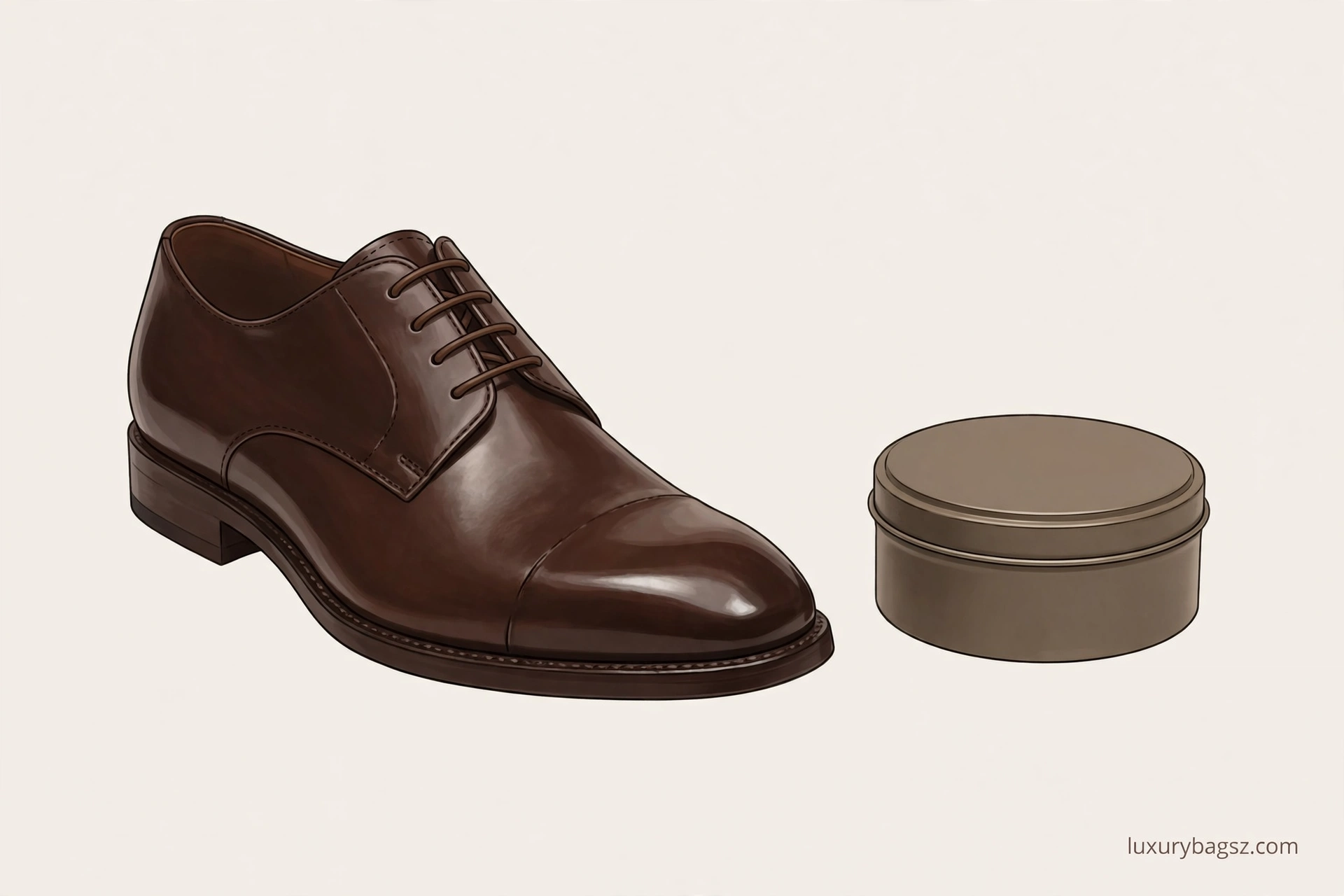
Saphir Médaille d'Or Pâte de Luxe is a traditional wax polish for smooth leather shoes and boots. It nourishes lightly, protects against water and light scuffs, and builds a deep, high-gloss shine. It is the polish to reach for when the leather is already conditioned and you want a finish, not just care.
Use it in thin coats, let each coat dry for about five minutes, and buff with a horsehair brush or wool glove. Keep heavy layers off the vamp, the part that bends when you walk, or the wax will crack and leave white marks. For a full mirror shine, build extra thin layers on the toe and heel only.
Key Takeaways

- Pâte de Luxe is Saphir's iconic wax polish, made with beeswax, carnauba wax, montan wax, and pine turpentine.
- It comes in 50 ml and 100 ml tins, in colours from black and neutral to burgundy, navy, and cognac.
- Cream nourishes and recolours; wax adds a hard, shiny, protective layer on top of that work.
- Apply one or two thin coats over the whole shoe, dry five minutes between coats, then buff.
- Build a mirror shine only on the toe and heel, never with thick wax on the bending vamp.
- Never use it on suede, nubuck, fabric, or patent leather, and always test a colour first.
What Pâte de Luxe Is
Pâte de Luxe is Saphir Médaille d'Or's best-known wax polish, sold in 50 ml and 100 ml tins. Saphir calls it one of its most iconic products, trusted by shoemakers during the finishing of fine shoes. It is a paste wax, not a liquid, and a little goes a long way.
Its formula blends natural waxes: beeswax from animals, carnauba wax from the leaves of a Brazilian palm, and montan wax, a mineral wax. Saphir counts six further waxes chosen for nourishing, softening, shining, and protecting. Pine turpentine spirit, a natural pine extract, helps the waxes sink in, then evaporates.
The pigments are chosen for transparency and depth, which is why repeated coats build a patina rather than a flat painted look. That patina, the rich colour that deepens with wear and care, is a large part of why enthusiasts stay loyal to this tin.
Wax Polish and Cream Polish: A Short Explanation
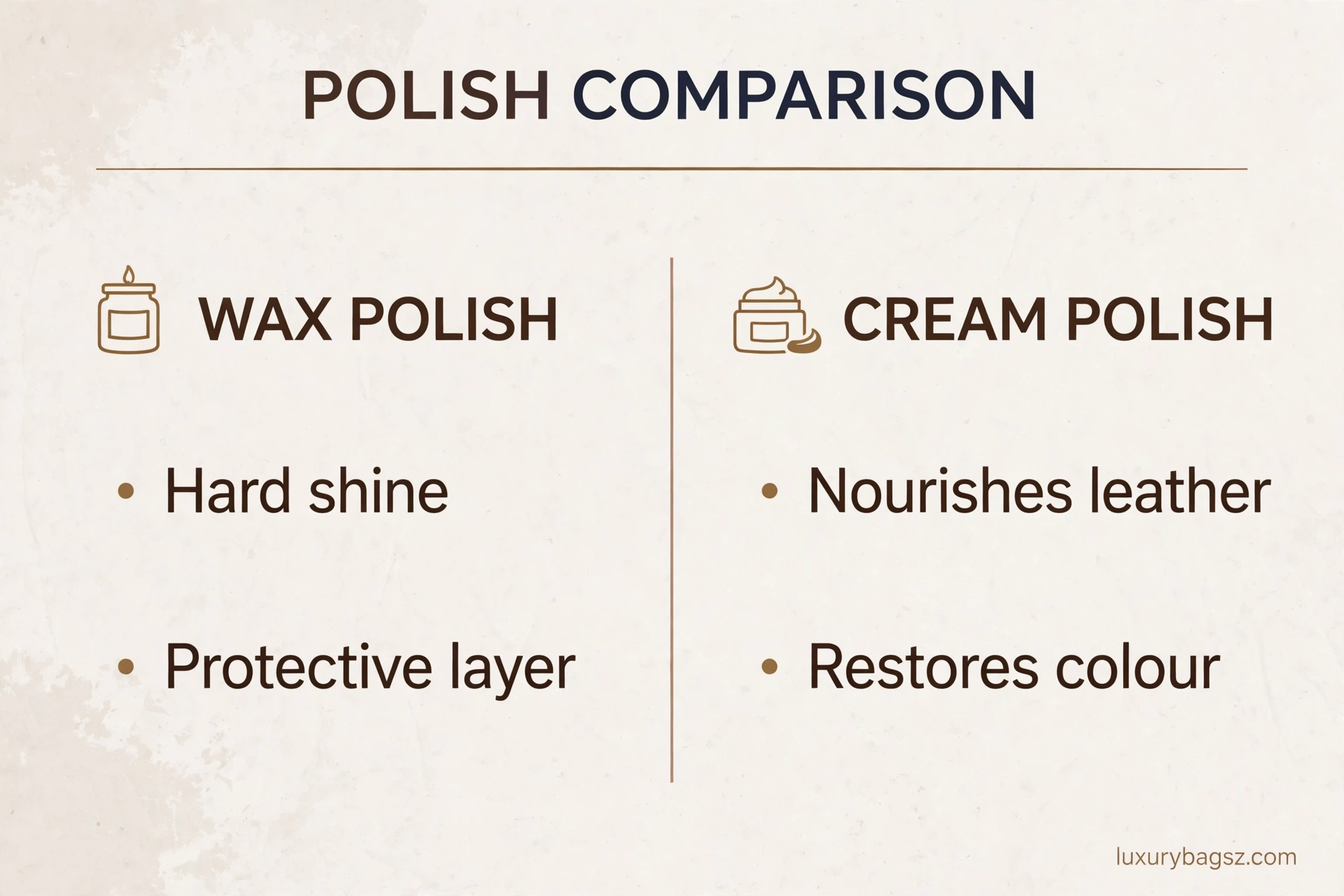
Cream polish and wax polish do different jobs, and using them in the wrong order is the most common beginner error. Cream, such as Saphir's Pommadier, is softer and richer in nourishing ingredients. It feeds the leather and restores colour, filling light scuffs with pigment.
Wax polish, such as Pâte de Luxe, is harder and richer in hard waxes. It sits more on the surface, forming a barrier that protects against water, light scuffs, and scratches, and it reflects light far better than cream. That hard layer is what makes a high shine possible at all.
The working order is therefore cream first, wax second. Condition and recolour with cream, let it dry, then seal and shine with wax. Using wax alone on dry leather gives a thinner, shorter-lived shine, because there is no nourished base beneath it.
Which Leathers and Items Suit It
Pâte de Luxe is made for smooth leather shoes and boots. Calf, boxcalf, and other fine smooth leathers take it well, and it suits both dress shoes and smarter boots. It also works on smooth leather goods such as belts and bag trims, where a hard shine is wanted.
It does not suit delicate, unprotected leather. A soft nappa bag or lambskin glove needs a gentle cream, not a hard wax layer that would change its feel. Our leather bags and shoes care guide places wax polish at the end of a routine, after cleaning and conditioning, which is the right order for bags too.
It must never go on suede, nubuck, or fabric, where wax would mat fibres and stain. Patent leather is also wrong for it, since its sealed coating cannot absorb wax. If the leather bends a great deal, such as a soft unstructured bag, keep wax use light and local.
How to Apply It, Step by Step
Start by brushing the shoe well to remove dust and dirt. If the leather is dirty or clogged with old wax, clean it first with a leather cleaner. If it is regularly maintained, condition it first; our Saphir Renovateur guide covers that gentle cleaning and conditioning step.
Saphir recommends nourishing with Crème 1925 before Pâte de Luxe, and letting that cream dry between applications. This is the cream-first, wax-second order from the wax and cream section, done properly. Skipping the cream step is fine on an already well-kept shoe, but not on a dry one.
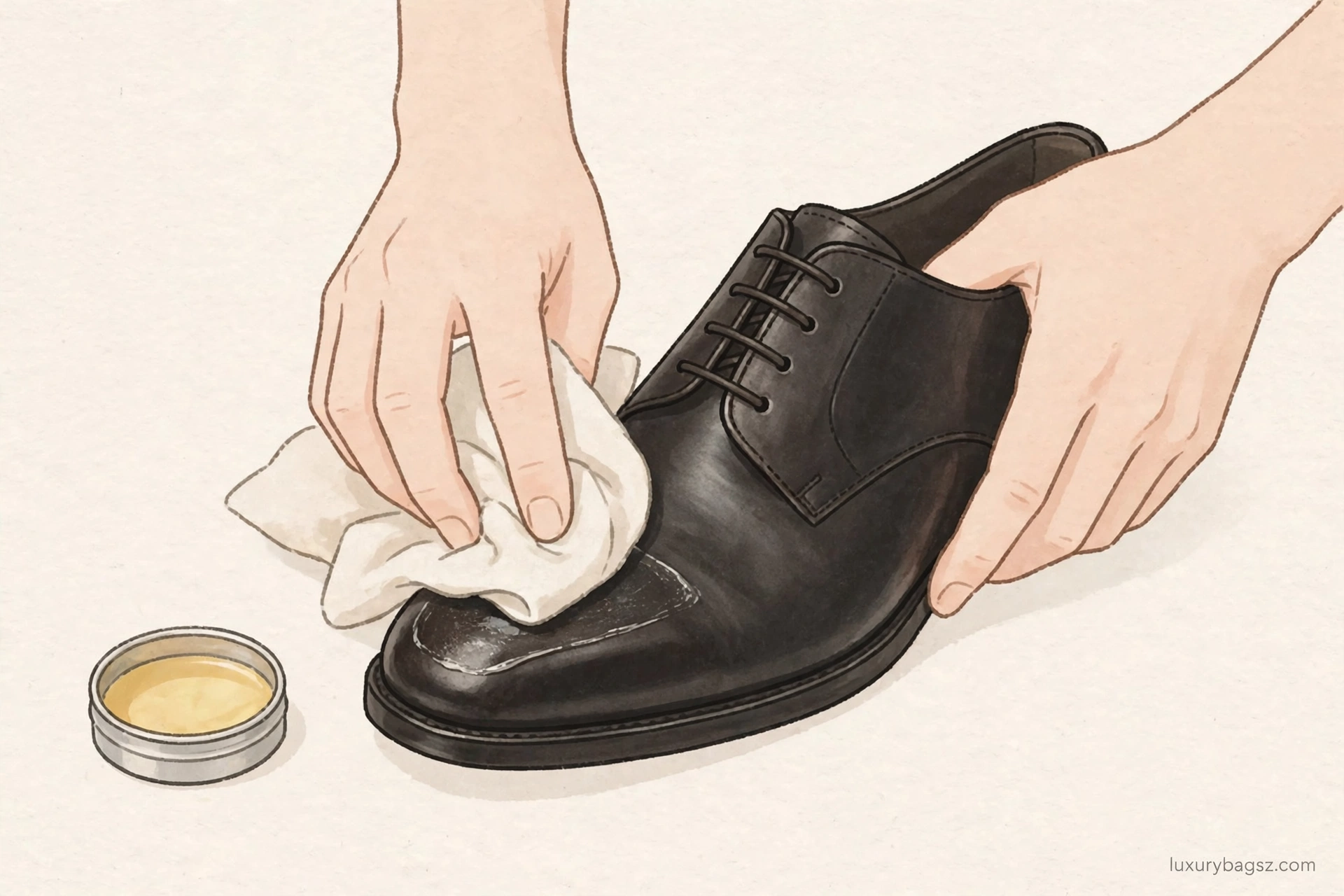
Apply a small amount with a cotton chamois cloth or a spreading brush, using the brush to reach welt seams. Massage gently in small circular motions, one or two thin coats over the whole shoe. Let each coat dry for five minutes, then buff with a bristle brush or a wool glove.
Choosing a Colour
Pâte de Luxe comes in a wide colour range, and Saphir's UK listing shows shades including black, neutral, light brown, dark brown, navy blue, burgundy, mahogany, cognac, grey, dark green, tobacco brown, medium brown, and wax yellow. Retailers variously count 12 or 13 shades, since availability differs by tin size, so check the shade list for the size you are buying.
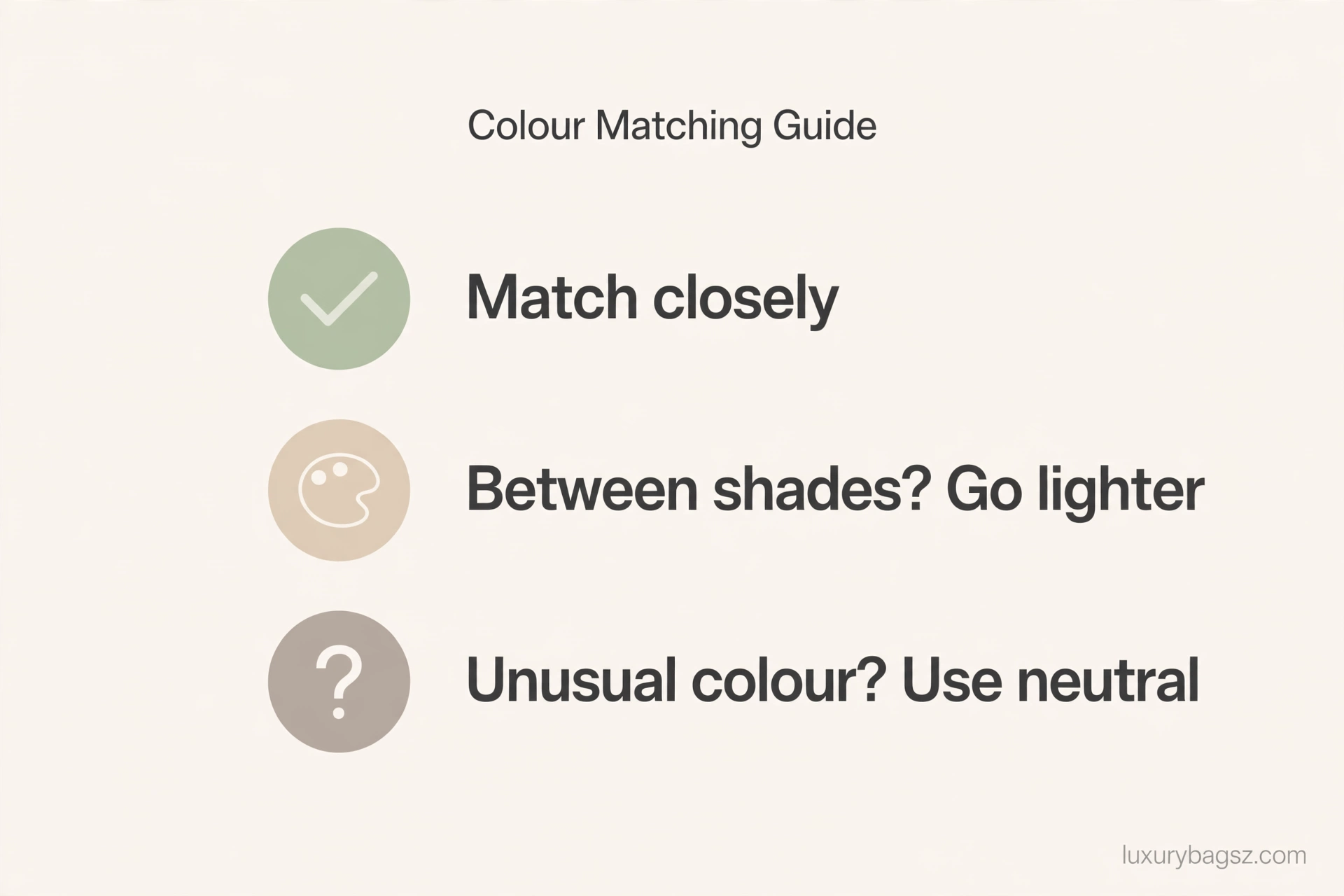
The rule is to match as closely as you can, not to chase an exact match. An exact match is rarely possible, and a near match blends in once buffed. If you sit between two shades, most guides advise going lighter, since a darker wax can dull or darken the leather's tone.
Neutral, the colourless shade, is the safe choice for unusual colours, two-tone shoes, or any pair where you want shine without changing colour. It also suits beginners, since a wrong colour choice cannot stain the leather. Test any coloured wax on a hidden spot first, especially on light tan leather.
Building a Shine, Layer by Layer
A good shine is built, not painted on. After the first thin coats and a buff, judge the result in daylight. If the shine is uneven, add another thin coat, let it dry, and buff again, rather than loading on a thick coat to fix it in one go.
Thin layers matter because wax is hard when dry. A thick layer looks cloudy, takes longer to dry, and buffs unevenly. Two or three thin coats, each fully dry before the next, will beat one heavy coat every time, for both looks and durability.
Between coats, keep the cloth nearly dry and the wax amount tiny. A useful image is polishing a table: you are spreading a film, not feeding the leather. If the cloth drags or the surface looks streaky, you are using too much wax, or the previous coat has not dried yet.
The Mirror Shine on Toes and Heels
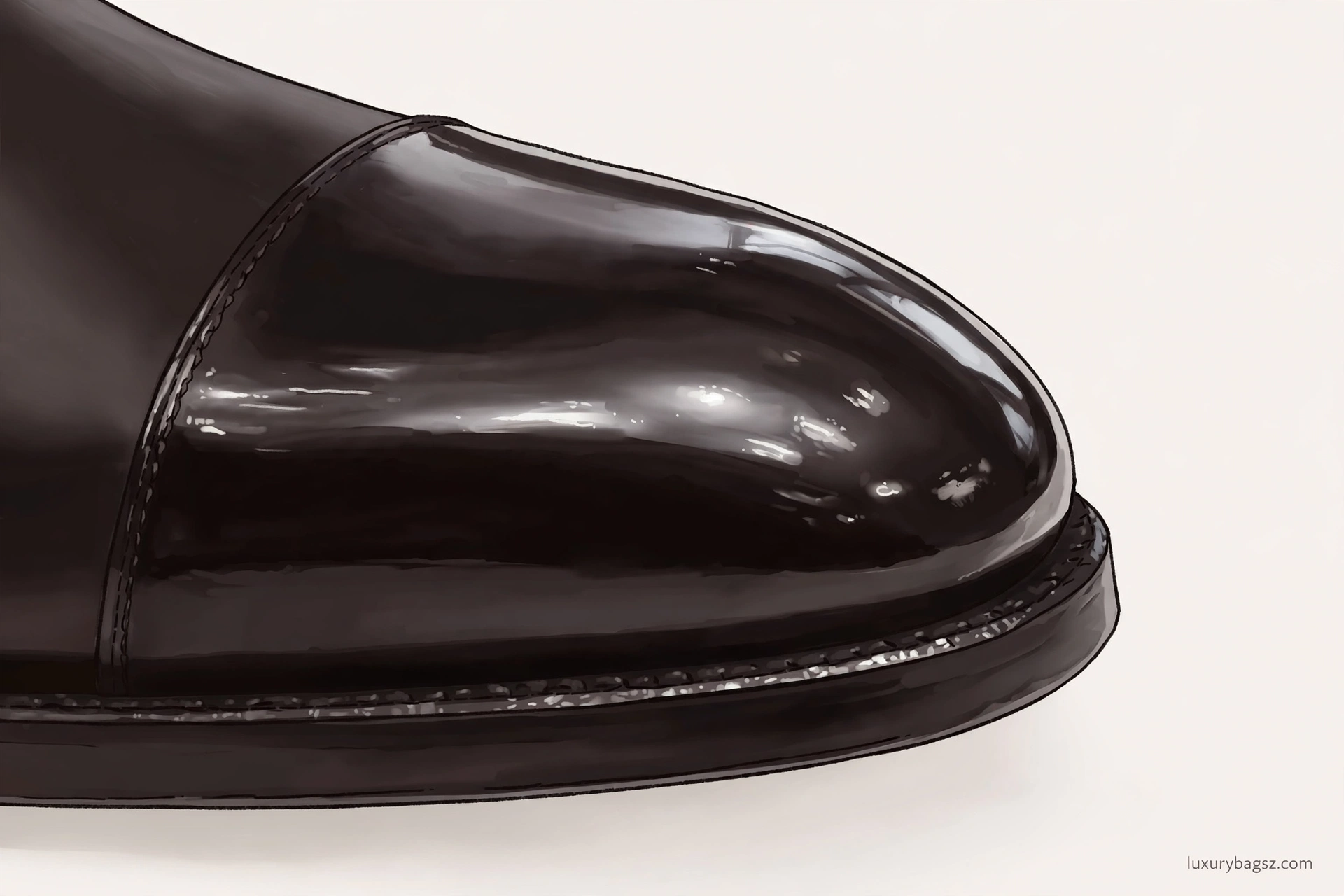
The famous "glaçage", or mirror shine, is Pâte de Luxe's signature trick. It works because repeated thin wax layers fill the leather's pores until the surface is smooth enough to reflect light like glass. Only hard, non-bending areas can hold that layer, which is why it belongs on toe caps and heels.
Apply additional thin coats to the toe and heel only, letting each dry for five minutes. Buff each coat with a soft cloth, using a drop or two of water on the cloth for the final layers if the wax feels dry. Patience matters more than pressure: many thin layers, lightly buffed, build the mirror.
Saphir notes that for a fast mirror shine, its Mirror Gloss wax, with harder waxes, finishes the job more quickly, and it can go over a Pâte de Luxe base. Note also that sources differ slightly on drying time: Kirby Allison's guide gives 3 to 5 minutes for wax coats, while Saphir gives 5 minutes. Either way, never buff a coat that still feels tacky.
What to Avoid
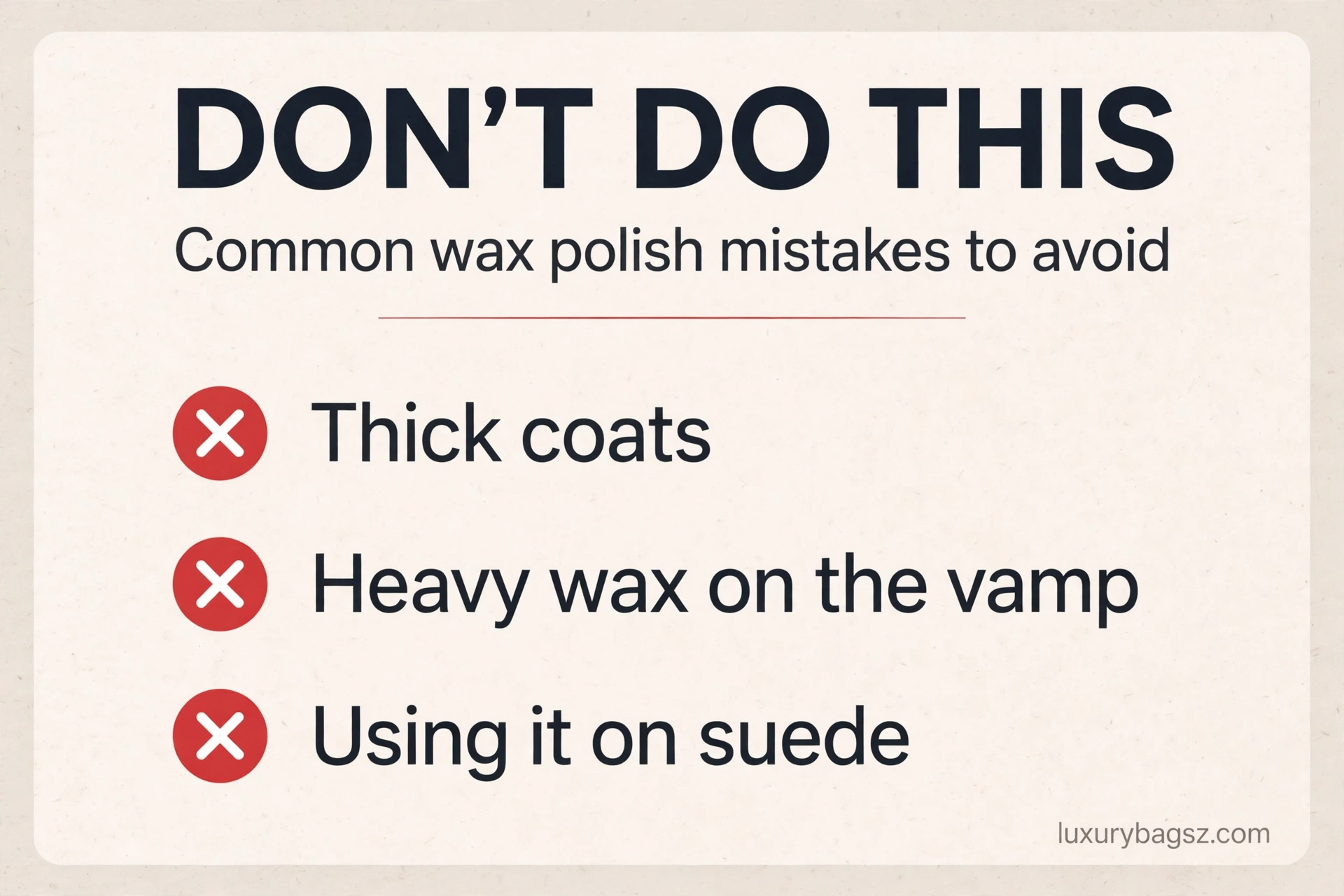
The top mistake is waxing the vamp heavily. The vamp bends with every step, and hard wax cracks there, leaving a white, chalky build-up that is hard to remove. Keep the vamp to one or two thin coats, and save the layering for the toe and heel.
The second mistake is using too much wax at once. Thick coats cloud, crack, and trap dust, and they waste a product that works best in tiny amounts. If your tin seems to last forever, you are using it correctly; a 50 ml tin should serve many polishes.
Avoid polishing dirty leather, waxing wet leather, and mixing coloured wax across pairs without cleaning the cloth. Also avoid expecting wax to rescue dried-out leather: wax protects, but it does not deeply nourish. Condition first, and treat wax as the finish, not the food.
Frequently Asked Questions
What is Saphir Pâte de Luxe?
It is Saphir Médaille d'Or's traditional wax polish for smooth leather shoes and boots, made with beeswax, carnauba wax, montan wax, and pine turpentine. It nourishes lightly, protects, and builds a high-gloss shine and patina.
How do you use Saphir Pâte de Luxe?
Brush away dust, clean or condition first, then apply a small amount with a cotton cloth in thin circular coats. Let each coat dry for five minutes, buff with a brush or wool glove, and add extra thin coats on toe and heel for a mirror shine.
Should I use wax polish or cream polish?
Use both, in order. Cream nourishes and restores colour, while wax adds a hard, shiny, protective layer. Apply cream first, let it dry, then finish with wax. Wax alone on dry leather gives a weaker, shorter-lived shine.
What colours does Pâte de Luxe come in?
Shades include black, neutral, light brown, dark brown, navy blue, burgundy, mahogany, cognac, grey, dark green, tobacco brown, medium brown, and wax yellow, though availability varies by tin size. Match closely, or choose neutral for unusual colours.
Can Pâte de Luxe give a mirror shine?
Yes, on toe caps and heels, by building many thin coats until the wax fills the pores and reflects light. For a faster mirror finish, Saphir's Mirror Gloss can be used over a Pâte de Luxe base, since it contains harder waxes.
Can I use Pâte de Luxe on suede?
No. It is for smooth leather only. On suede, nubuck, or fabric, wax mats the fibres and stains unevenly. Use dedicated suede products for those materials, and keep wax away from them entirely.
Why does wax crack on my shoes?
Wax cracks where leather bends, mainly the vamp, when too many or too thick coats are applied there. Keep the vamp to one or two thin coats, save layering for toe and heel, and brush off old build-up before re-polishing.
How long should Pâte de Luxe dry between coats?
Saphir advises five minutes between coats. Kirby Allison's guide gives 3 to 5 minutes for wax coats. In practice, wait until the coat feels dry, not tacky, before buffing or adding the next coat.
How much Pâte de Luxe should I use per shoe?
Very little. A small amount on a cloth, spread thin, covers a shoe. If the cloth drags, the surface looks cloudy, or the tin empties fast, you are using too much. Thin layers always beat thick ones.
Is Pâte de Luxe good for bags?
It can finish smooth leather bag trims and structured leather goods, but it is not a bag conditioner. For soft or delicate bag leather, use a gentle cream instead, and keep any wax use light and local, never on suede or patent panels.
Conclusion
Pâte de Luxe is a finishing polish, and it rewards the patient user. Condition first, apply thin coats, buff between layers, and reserve the heavy layering for toe and heel, and it will give smooth leather a deep shine and a patina that improves with every polish.
Treat it as the last step, not the only step. Used that way, one tin lasts a long while, protects against daily scuffs and damp, and keeps good shoes looking like they were finished by a shoemaker, not just polished in a hurry.