Luxury Wedding Rings: Metals, Diamonds and How to Choose Yours
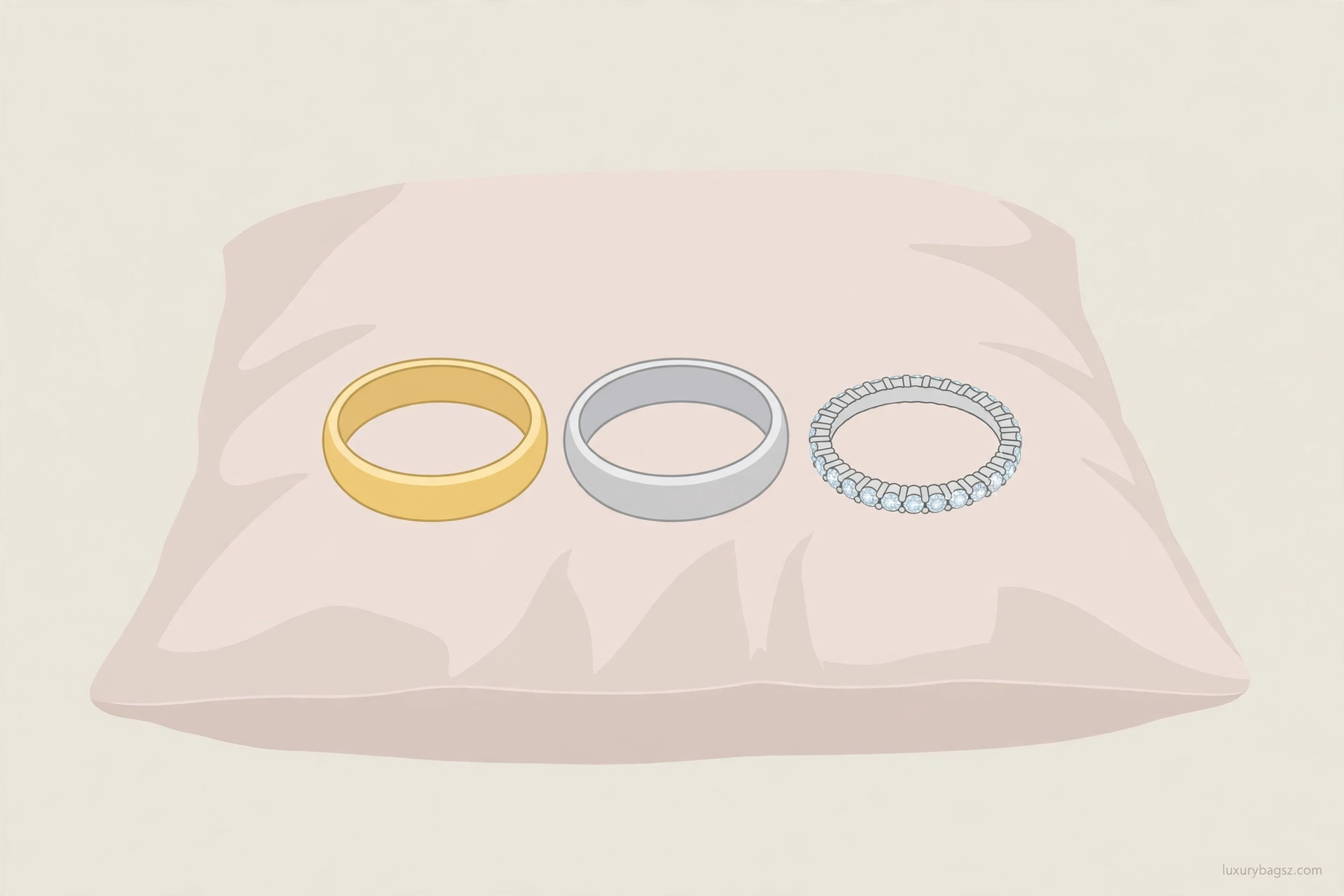
Wedding Rings in Brief: The One Piece You Never Take Off
A luxury wedding ring earns its name through metal quality, making and finish, not through size alone. A perfectly made plain platinum band is more luxurious than a large, poorly set diamond ring. Decide in this order: metal, profile, then stones. Platinum and 18-carat gold are the serious choices, a comfort-fit interior is the daily-wear upgrade, and diamonds should suit your hands and your life, not just the photograph.
Key Takeaways
- Platinum is the hardest-wearing luxury metal; 18-carat gold is the classic alternative.
- A plain band is never a lesser choice: fit, weight and finish are what you feel daily.
- Pavé and eternity styles add sparkle and need tighter settings checks over the years.
- The ring must sit well beside an engagement ring, or stand confidently alone.
- Luxury prices buy metal weight, hand finishing and aftercare, so compare specifications.
- Size carefully, in the afternoon, on a warm day; fingers change more than you expect.
What Makes a Wedding Ring Luxury
Luxury here is measurable: a solid band of precious metal with real weight, a shaped comfort-fit interior, edges finished by hand, and stones set so each one is secure and level. Branded rings from the great jewellery houses add design signatures and strong aftercare. Independent makers can match the metal and making at lower prices, without the name premium. What luxury is not: thin hollow bands, plated finishes sold as solid metal, or diamonds graded by the seller alone with no independent certificate on larger stones. Hold two rings at the same price and the better one usually feels denser, smoother inside and quieter in its details. Your finger will judge this ring every day, so let it vote.
Metals Compared: Platinum and Golds
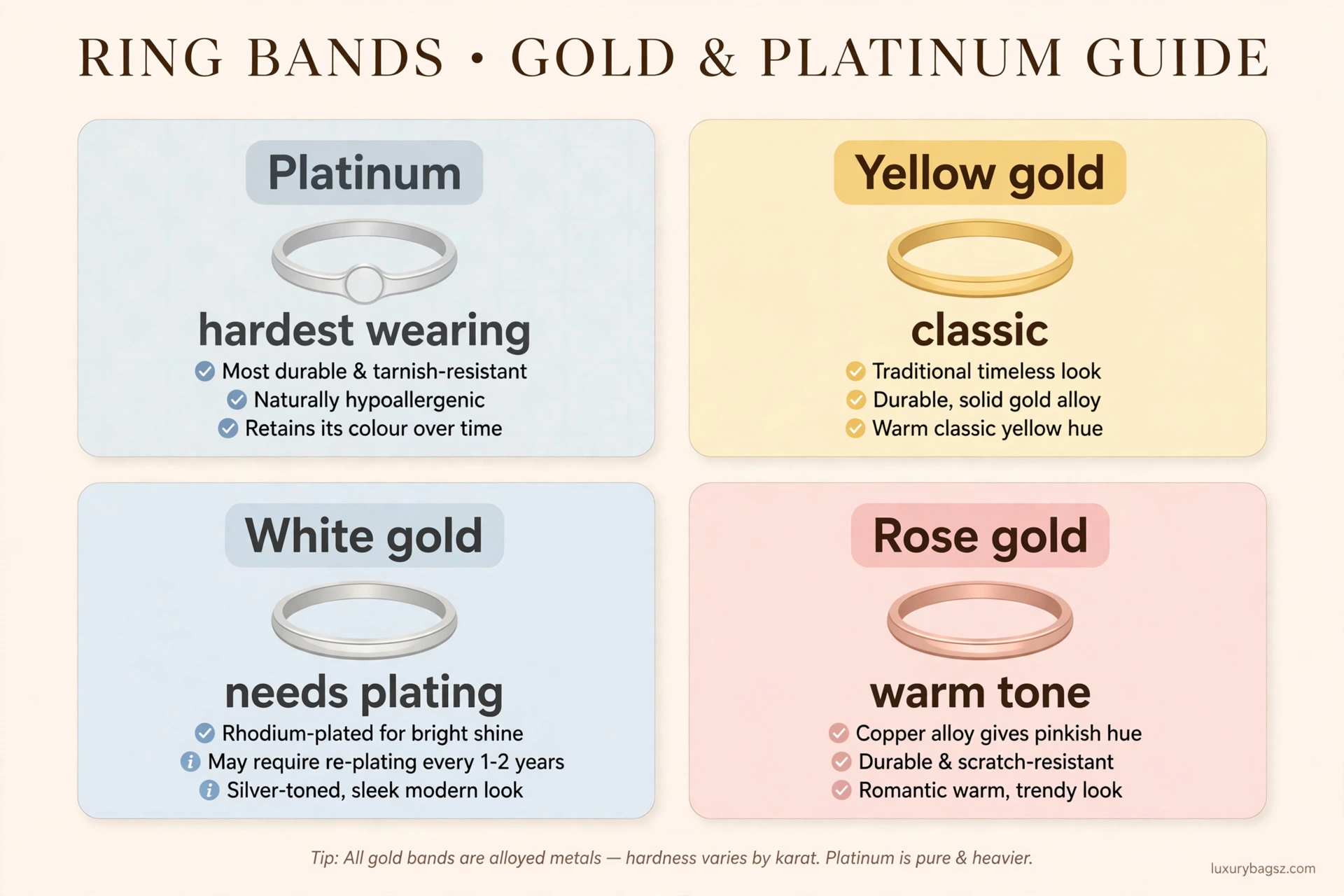
Platinum is dense, naturally white and does not need re-plating. It scratches into a soft patina rather than losing metal, and it is the hardest-wearing choice for stone settings. Yellow 18-carat gold is the traditional metal, warm in tone and easy for any jeweller to resize or repair. It wears faster than platinum but carries centuries of habit behind it. White gold is yellow gold alloyed and usually rhodium-plated for whiteness. The plating wears and needs renewal every year or two on a daily ring, a running cost to budget for. Rose gold's copper alloy gives a soft pink tone that suits many skin tones. It is durable and needs no plating, but resizing can be trickier, so choose the size carefully at the start.
Profiles and Comfort: The Part You Feel
Profile names describe the band's outer shape: court and D-shape are rounded and traditional, flat profiles look modern and sharp, and knife-edge styles suit design-led rings. Inside, a comfort fit curves gently against the finger. On a ring worn for decades, that small curve is the difference between forgetting the ring and fiddling with it. Width is personal: roughly 2 to 4 millimetres reads delicate, 4 to 6 millimetres makes a clear statement. Try widths on your own hand; photographs scale badly. Weight follows width and metal. Platinum feels notably heavier than gold at the same size, which many wearers love and some find tiring. Wear a sample ring for an hour if you can.

Plain, Pavé, Channel and Eternity
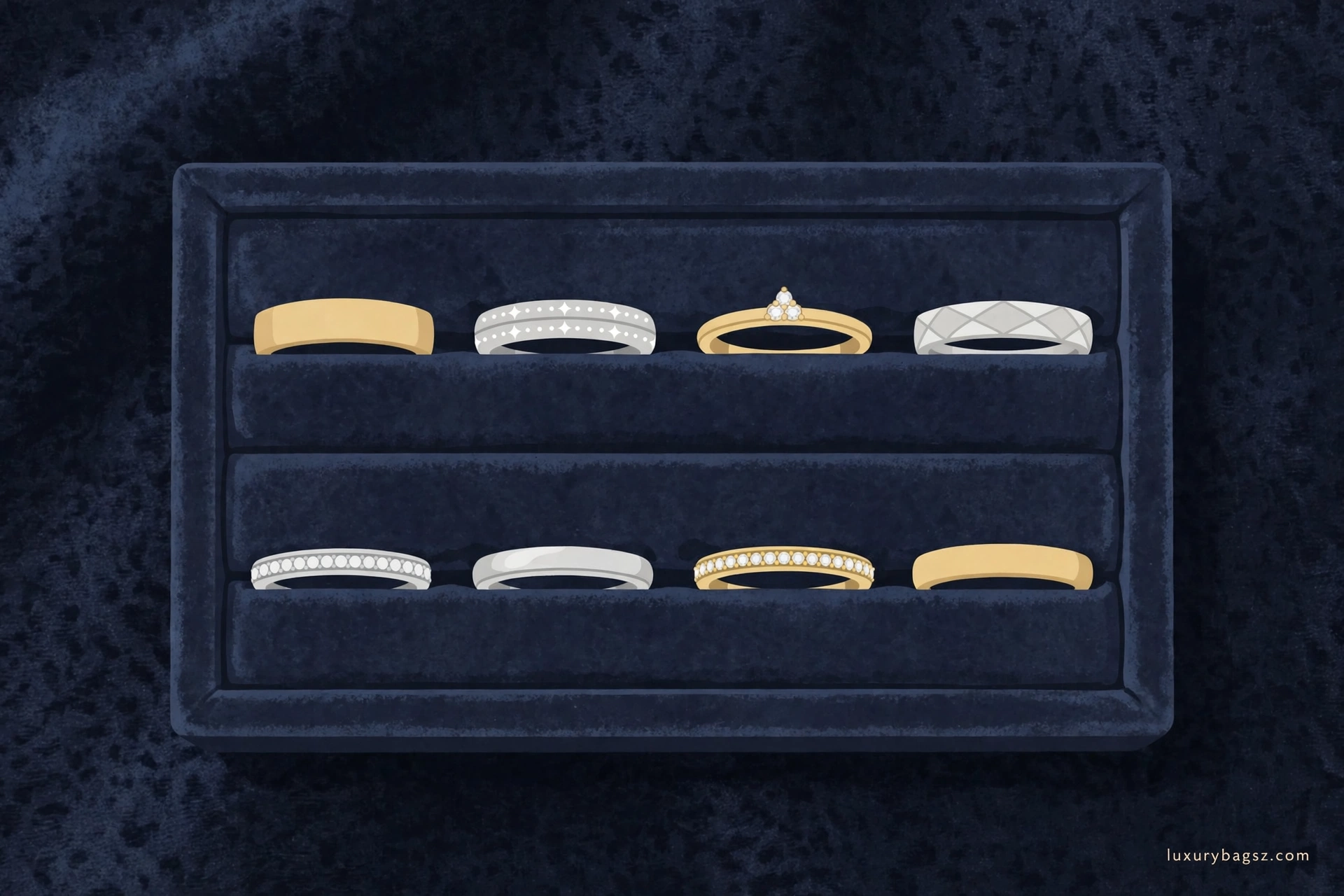
A plain band is the benchmark: nothing to loosen, nothing to catch, and the metal itself carries the design. In platinum or heavy gold it is the connoisseur's quiet choice. Pavé bands set small diamonds close together for a line of sparkle. They are beautiful and slightly delicate; tiny claws need checking, and resizing a full pavé band is limited. Channel-set bands protect stones between metal walls, a good middle ground for active hands. Eternity rings carry stones all the way round and cannot easily be resized at all. Half-eternity styles, with stones across the top only, solve the sizing problem and cost less. For most couples they are the practical diamond choice, whatever the full version promises.
Diamonds on a Wedding Band
Band diamonds are small, so cut quality and setting matter more than chasing high colour grades. Well-cut small stones sparkle hard even at modest grades; our guide on how to buy a diamond explains grading in plain terms. Match the band to any engagement ring: same metal, similar stone style, and heights that let the two sit flush without grinding. A shaped or curved band may be needed beside a low-set stone. Our overview of types of diamond cuts helps if you are choosing between round stones for sparkle and step cuts for a calmer, architectural line. Lab-grown diamonds now appear in fine bands too, at lower prices for the same look. Decide as a couple whether origin matters to you; the wearing experience is the same.
Sizing and Buying Checks
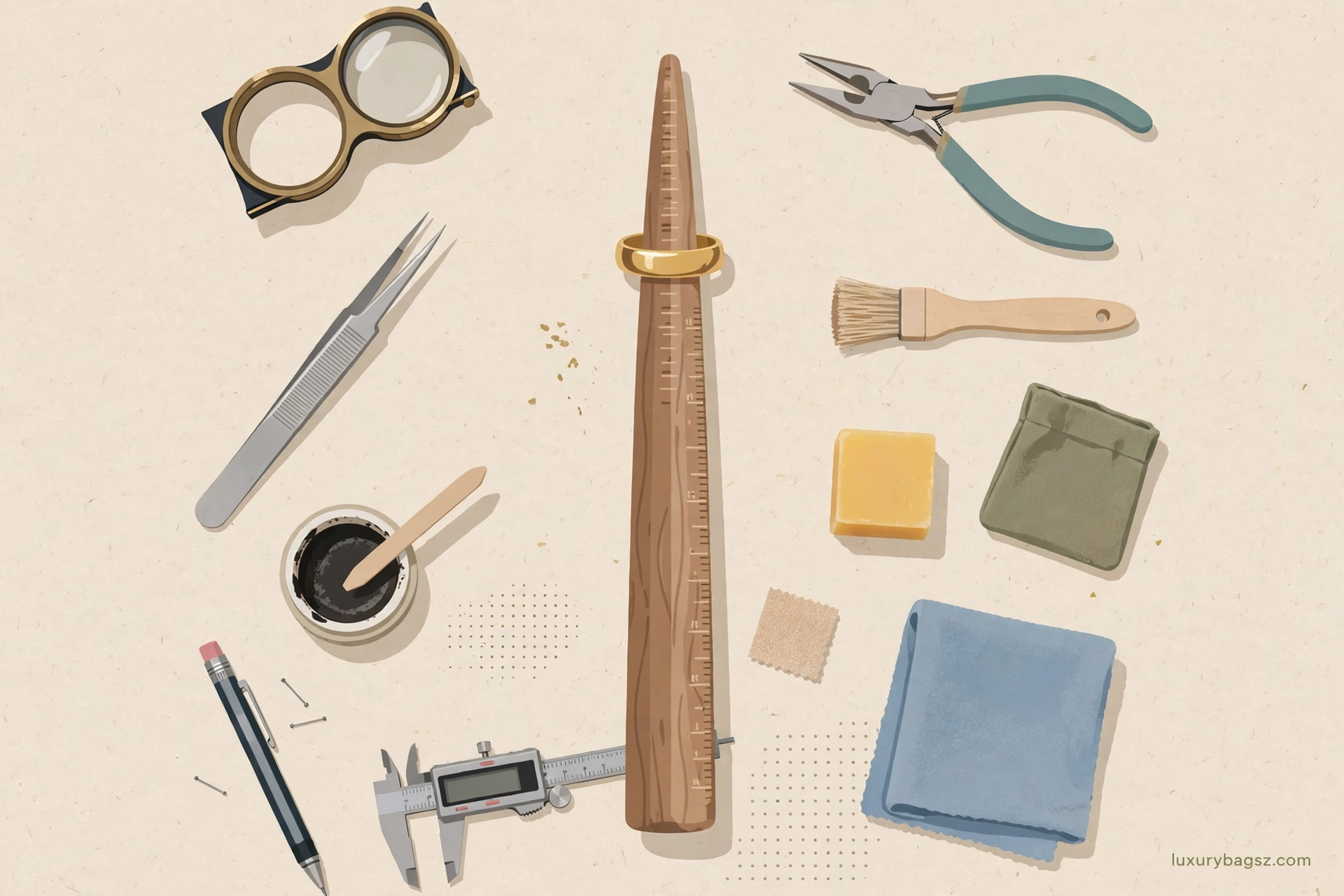
Get sized in a shop, late in the day, when fingers are at their normal largest. A ring that spins in a cool morning fitting will feel right; one that is snug then may strangle by evening. Check the hallmarks inside the band: metal purity and maker's marks should be crisp. On a luxury ring, sloppy hallmarks are as telling as sloppy setting. Ask what aftercare is included: resizing terms, re-polishing, setting checks and plating for white gold. Houses differ widely, and lifetime services have real cash value. Buy both partners' rings in one conversation if you want matching metals. Gold tones vary slightly between batches, and a matched pair bought together starts life identical.
Honest Price Tiers
Plain bands from serious makers typically start in the high hundreds for gold and above £1,000 for platinum, rising with width and weight. You are buying metal by weight plus making. Diamond bands span a wide range: half-eternity styles in 18-carat gold commonly run from around £1,000 to £3,000, with full eternities and big-house names above that. Our everyday diamond jewellery guide shows how small-stone pieces are priced across categories, which helps judge whether a quote is fair. Care is cheap by comparison: our notes on how to clean gold and diamond rings cover the home routine that keeps a band bright between professional checks.
Living With the Ring
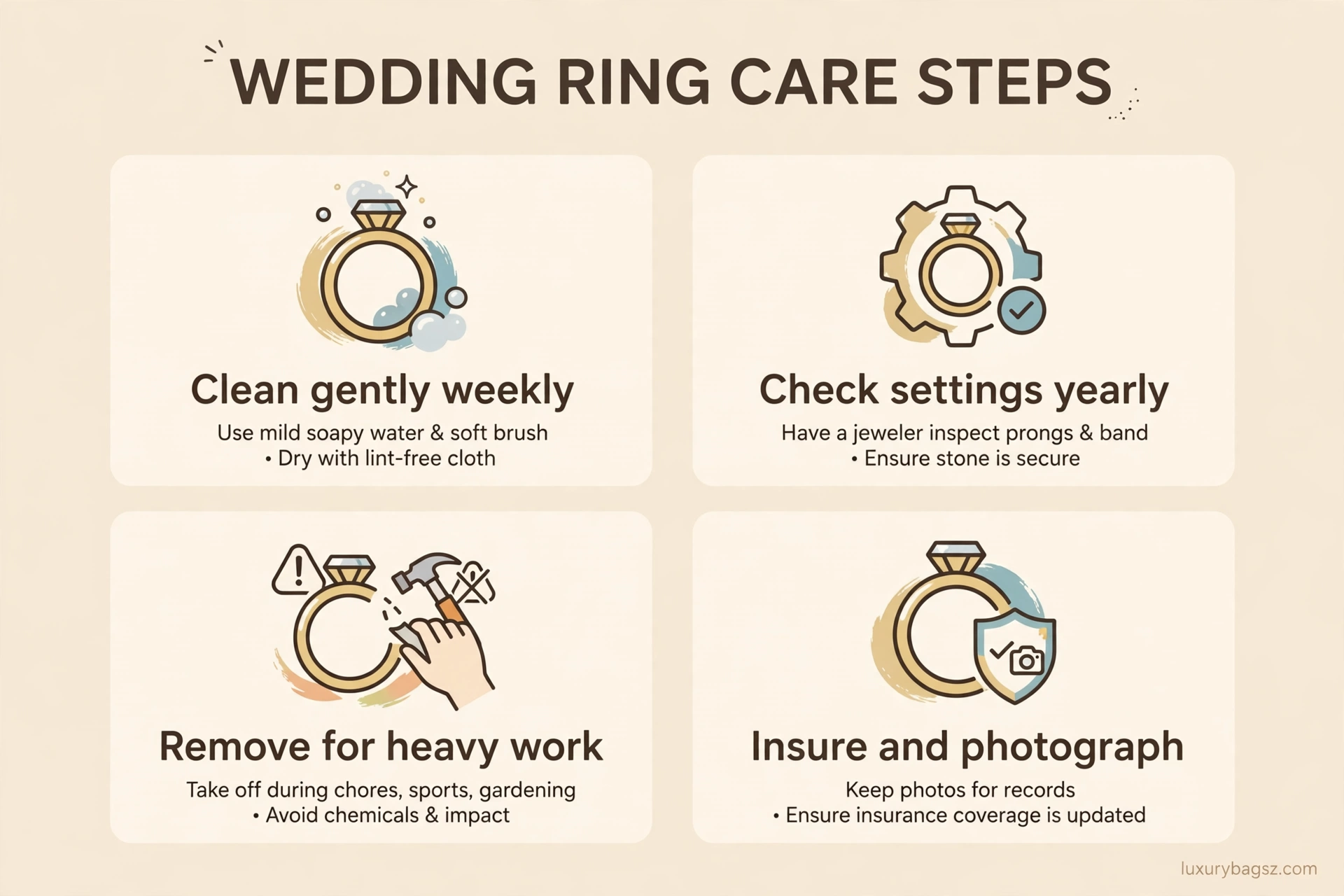
Take the ring off for weightlifting, climbing and heavy gardening. Gold bends, platinum displaces, and a crushed band can tighten around a finger faster than expected. Have settings checked yearly if your band carries stones. A two-minute professional check catches a loosening claw before it becomes a lost diamond and a large bill. Insure rings above a value you could not comfortably replace, and photograph hallmarks and certificates now. Replacement arguments are won with paperwork, not sentiment. Finally, expect the ring to change as you do. A soft patina on platinum, a re-polish on gold at anniversaries: these small renewals are part of owning one ring for life.
Frequently Asked Questions
Is platinum better than gold for a wedding ring?
For daily wear, platinum is harder-wearing, stays white without plating and holds stones securely. Gold is lighter, traditional and easier to resize. Both are true luxury choices.
How much should a luxury wedding ring cost?
Plain gold bands from serious makers start in the high hundreds; platinum usually starts above £1,000. Diamond bands commonly run from around £1,000 upward by style and house.
Can an eternity ring be resized?
Generally no, because stones run all the way round. Half-eternity bands can usually be resized. If your size may change, choose half-eternity or a plain band.
Does white gold need maintenance?
Yes. Most white gold is rhodium-plated for a bright finish, and the plating wears with daily use. Expect re-plating roughly every one to two years.
Should the wedding ring match the engagement ring?
Matching metal and a flush fit protect both rings from rubbing wear. Beyond that, harmony matters more than identical design; many pairs mix a plain band with a diamond ring.
What width should I choose?
Roughly 2 to 4 millimetres reads delicate, 4 to 6 millimetres bolder. Try several widths on your own hand and consider how the ring looks beside any engagement ring.
Are lab-grown diamonds acceptable in a luxury band?
They are real diamonds with the same hardness and sparkle, at lower prices. Whether they suit your ring is a personal and budget decision, not a quality problem.
When should I order wedding rings?
Allow at least six to eight weeks, longer for bespoke or shaped bands. Sizing changes, engraving and matched-pair making all take time you cannot rush near the day.
Can I wear my ring all the time?
Mostly, but remove it for heavy lifting, climbing and harsh chemicals. Settings and bands survive decades of normal wear; avoidable knocks are what shorten a ring's life.
What aftercare should a luxury ring include?
Annual setting checks, cleaning and polishing terms, and clear resizing rules. Ask before buying; strong aftercare is part of what a luxury price is paying for.
Final Verdict: Choose Metal and Fit Before Sparkle
A wedding ring is judged daily, by your own hand. Choose platinum or 18-carat gold, a comfort fit at the right width, and stones only where your life allows them. Spend on weight, making and aftercare, and the luxury will still be there in fifty years.