Neoprene Facts: What It Is, Where Luxury Uses It and How to Care for It

Neoprene in Brief: Rubber, Foam and a Fashion Moment
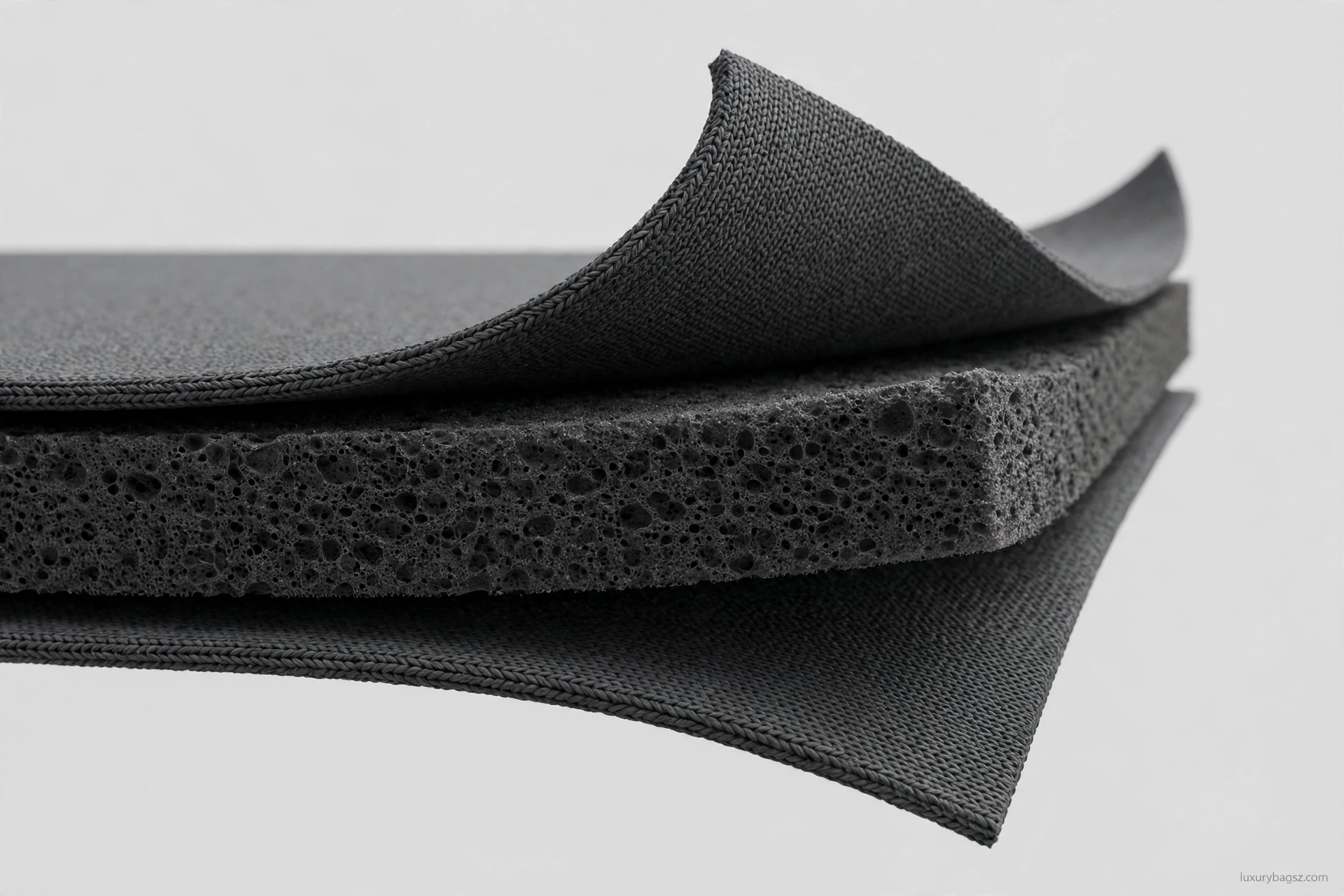
Neoprene is a synthetic rubber, properly called polychloroprene, developed by DuPont scientists around 1930. In fabric form it is a thin sheet of foam rubber with tiny closed gas cells, usually faced with knitted cloth on one or both sides. Those cells explain everything about it: neoprene insulates, resists water, cushions impact and holds sculpted shapes. It also insulates you, which is why fashion neoprene delights in winter and punishes in high summer.
Key Takeaways
- Neoprene is synthetic rubber foam, not a woven cloth; its closed cells trap gas for insulation.
- True neoprene is heavy and warm. Many fashion items sold as neoprene are lighter scuba knits.
- Luxury uses it for sculpted dresses, structured bags, sneakers, wetsuits and protective sleeves.
- It resists water and many chemicals but is not breathable and can crease permanently if folded.
- It is petroleum-based and not biodegradable; limestone-based versions exist and are debated.
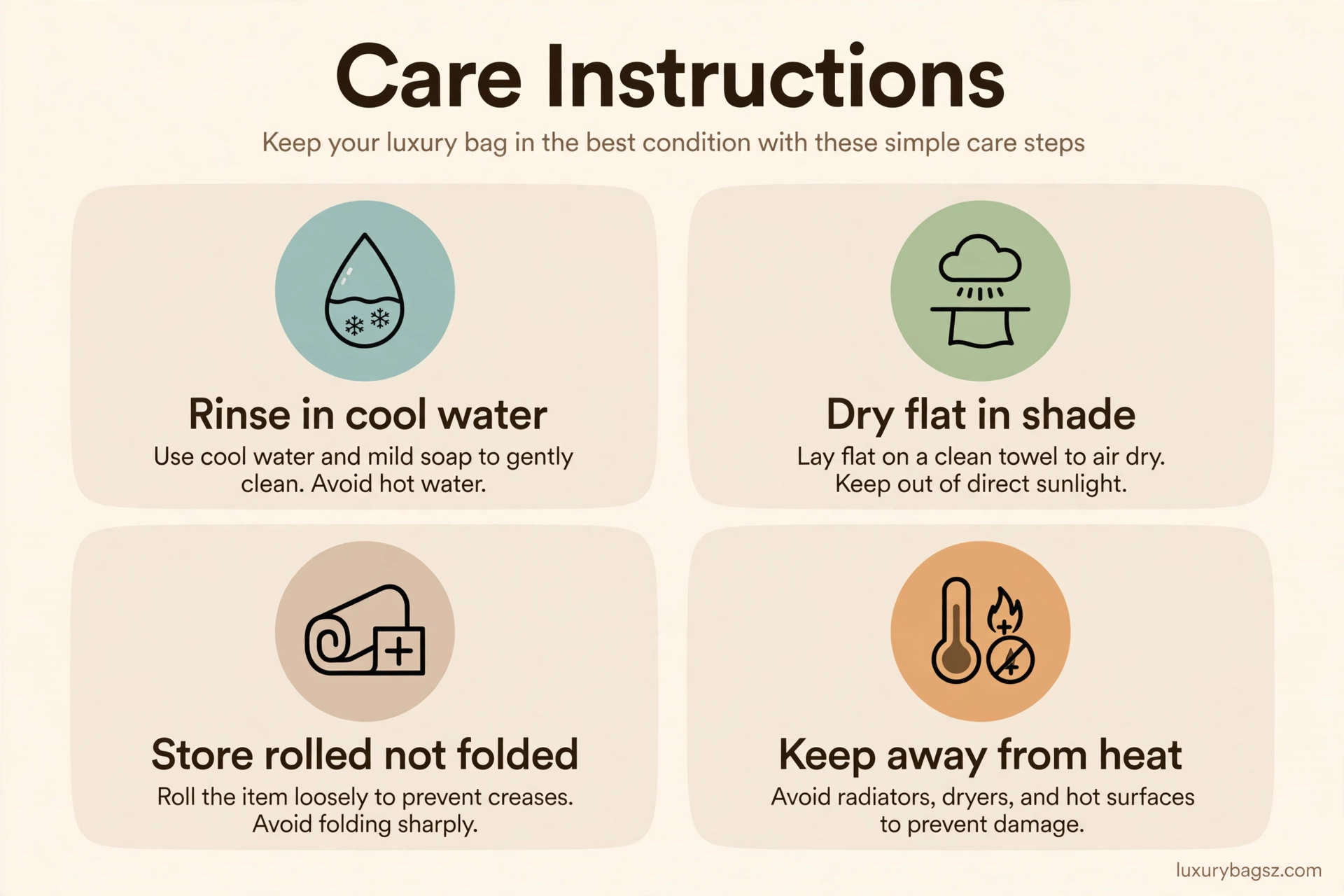
- Care is simple: rinse or hand wash cool, dry flat in shade, store rolled or flat, never folded hard.
What Neoprene Actually Is
Chemically, neoprene is polychloroprene: chloroprene molecules joined into long chains to make a stable synthetic rubber. DuPont commercialised it in the early 1930s as an oil-resistant rubber substitute. For clothing and bags, that rubber is foamed. Gas is blown into the sheet so it fills with closed cells, like a sponge whose bubbles never connect. The sheet is then sliced to thickness, often between 1 and 7 millimetres. Most fashion pieces laminate knitted faces onto the foam. The faces give colour and a smooth touch, while the foam core gives body, bounce and warmth. Because the cells are closed, liquid water does not soak through the core. Seams, zips and stitch holes are the weak points, which is why a neoprene bag is showerproof rather than a diving bell.
The Properties That Matter
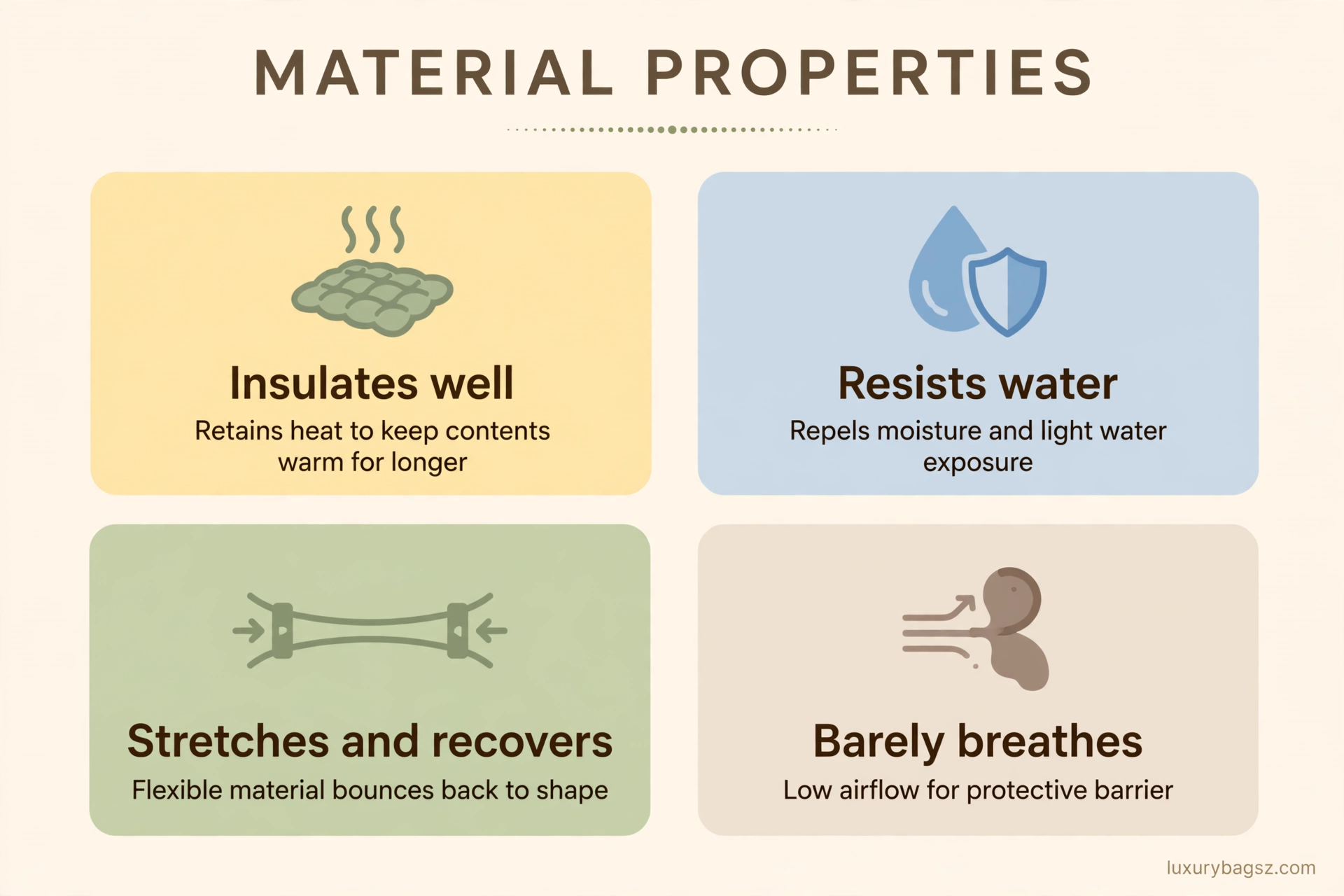
Insulation is the headline property. Trapped gas slows heat transfer, which keeps divers warm in cold water and makes a neoprene coat surprisingly toasty on land. Flexibility and recovery come next: the foam stretches and springs back, so garments hold sculpted silhouettes and bags keep their shape without internal frames. Cushioning explains the laptop sleeves, camera bags and sneaker uppers. The foam absorbs knocks that would mark leather or crack rigid plastics. The limits are just as real. Neoprene barely breathes, adds noticeable weight at thicker gauges, and takes a set if stored folded, leaving crease lines that may never fully relax.

Neoprene Versus Scuba Knit: An Honest Distinction
Many clothes labelled neoprene-look or scuba are not neoprene at all. Scuba knit is a thick double-knit of polyester and elastane with no rubber core, made to imitate the smooth, sculpted effect. Scuba knit is lighter, cheaper, easier to sew and more breathable. For a structured dress worn for an evening, it is often the better material, whatever the label implies. True neoprene feels denser and slightly rubbery, with a foam edge visible at cut seams. If a garment is very light and drapes softly, you are almost certainly holding scuba knit. Our guide to leather types explained shows the same naming problem in another material family: the word on the label and the substance in hand often part company.
Where Luxury Fashion Uses It
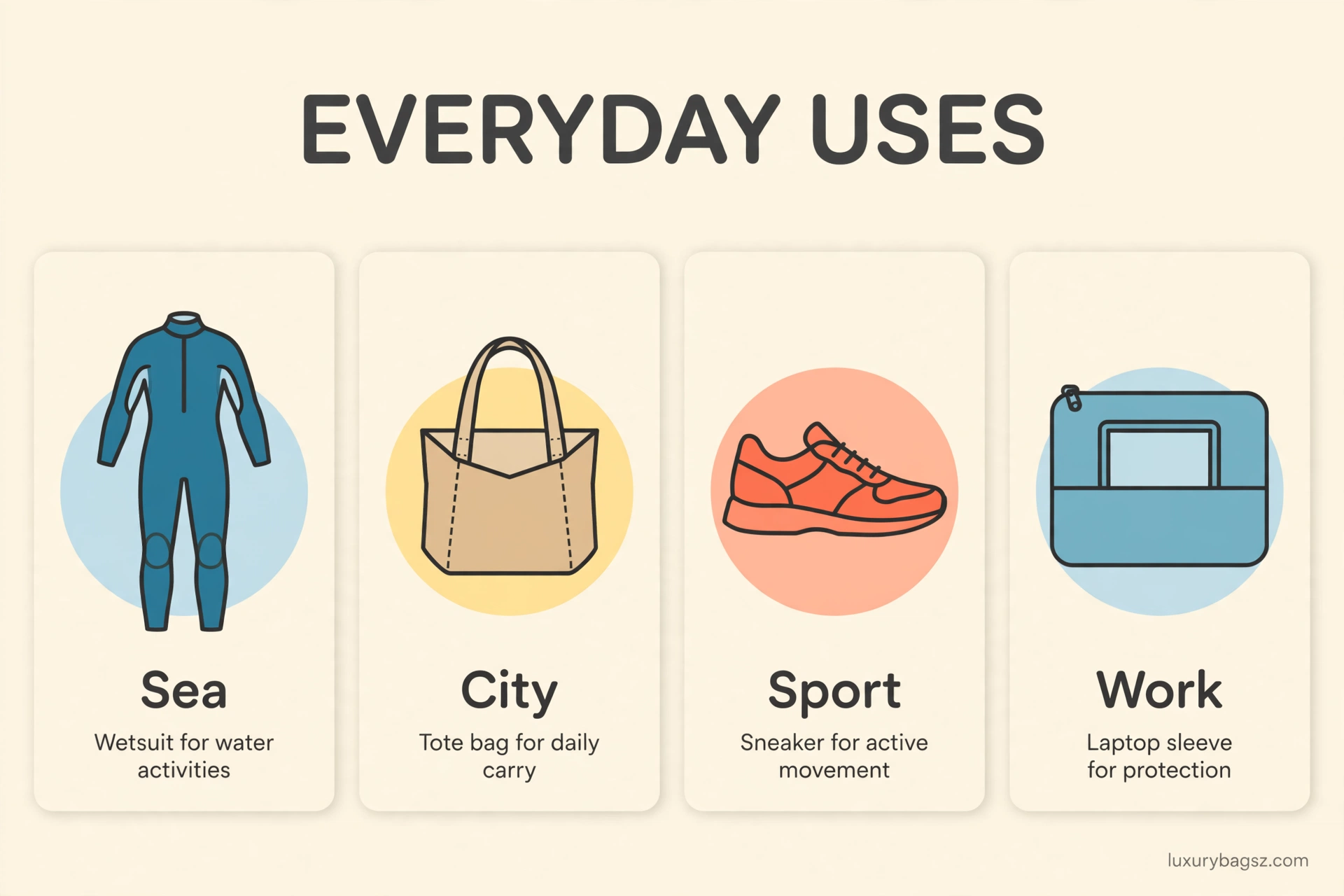
Designers fell for neoprene because it sculpts. Dresses and coats in the 2010s used its body to hold bell skirts, sharp shoulders and cocoon shapes that ordinary cloth could not sustain. Bags are the other luxury home: structured totes and pouches that stand alone, protect contents and shrug off rain. Several houses still sell foam-core bags for exactly those practical virtues. Footwear uses it in sock-style sneakers and boot uppers, where stretch and a smooth fit matter. Watches, jewellery rolls and tech sleeves borrow its cushioning quietly. The most honest luxury use remains the wetsuit, where no substitute performs as well. Fashion borrows the material; the sea is where it is genuinely indispensable.

Thickness, Grades and What to Check
Thickness drives behaviour. Around 1 to 2 millimetres feels like a garment fabric; 3 to 5 millimetres suits bags, sleeves and wetsuits for mild water; thicker sheets are specialist kit. Check the faces as well as the foam. Tightly knitted, smooth faces resist pilling and snagging; loose jersey faces mark quickly and make a bag look tired within a season. Press the material and watch recovery. Good foam returns evenly; poor foam stays dented, a sign of weak cell structure that will age badly. Smell a new item before buying if you can. Strong chemical odours fade with airing, but a faint, stable rubber smell is normal and no cause for concern.
The Environmental Question, Stated Plainly
Standard neoprene is made from petroleum, is not biodegradable and is difficult to recycle. Those are facts, and any greener claim for the standard material should be read sceptically. Limestone-based versions replace part of the feedstock with calcium carbonate from limestone. They reduce oil use in production but remain non-biodegradable synthetic rubber. Plant-based alternatives for wetsuits exist, using natural rubber blends; they perform differently and sit outside the neoprene name properly used. Our survey of sustainable materials in luxury fashion sets neoprene among the wider trade-offs, where durability is its best defence: a long-lived item spreads its footprint over years.
Care: Rinse, Dry Flat, Store Loose
Wash neoprene by hand in cool water with a little mild detergent, then rinse thoroughly. Salt, chlorine and sunscreen all degrade the foam slowly if left sitting in it. Dry flat or on a wide hanger in shade. Heat and strong sun age the rubber, and hanging a wet, heavy garment by narrow points stretches the shoulders out of shape. Store flat or loosely rolled, never folded sharply under weight. Creases pressed in over months can become permanent lines in the foam. For bags, the routine in our guide on how to care for nylon bags is a close cousin: empty, wipe, dry fully and store stuffed lightly, away from radiators and sun.
Myths Worth Retiring
Myth one: neoprene is waterproof in all uses. The foam resists water, but sewn seams and zips leak; only taped or glued wetsuit construction approaches true waterproofing. Myth two: it makes you sweat out weight in a healthy way. Neoprene workout gear raises local heat and sweat; any quick scale change is water, and it returns when you drink. Myth three: all neoprene-look fashion pieces are rubber. Most are scuba knit, as covered above, and that is fine as long as the price matches the substance. Myth four: thicker is always better. For clothing, extra millimetres mostly add heat and stiffness. Buy the thickness the job needs, not the maximum on the shelf.
Frequently Asked Questions
Is neoprene a fabric or a rubber?
Both, in practice. It is a synthetic rubber made into a foam sheet, usually laminated with knitted fabric faces, so it handles like a thick fabric with a rubber core.
When was neoprene invented?
Around 1930, by scientists at DuPont, who commercialised polychloroprene as an oil-resistant alternative to natural rubber in the early 1930s.
Is neoprene waterproof?
The closed-cell foam itself resists water strongly. Finished items can still leak through stitched seams and zips, so treat fashion pieces as showerproof, not submersible.
Why is neoprene used in wetsuits?
Its closed cells trap gas and insulate, slowing heat loss in cold water, while the foam stays flexible. No common substitute matches that mix as cheaply or reliably.
What is the difference between neoprene and scuba knit?
Neoprene has a real foam rubber core. Scuba knit is a thick polyester-elastane double knit with no rubber; it imitates the look, weighs less and breathes a little better.
Is neoprene bad for the environment?
Standard neoprene is petroleum-based and not biodegradable, which is a genuine drawback. Long service life is its main mitigation; limestone-based versions reduce oil use only partly.
Can you machine wash neoprene?
Hand washing in cool water is the safe rule. Some sturdy items tolerate a gentle cool machine cycle in a bag, but heat and hard spinning shorten the foam's life.
Why did my neoprene bag crease?
Foam takes a set under a sharp, lasting fold. Store bags stuffed lightly or flat, and minor creases may relax over days; deep storage creases can be permanent.
Does neoprene stretch out over time?
It stretches and recovers well, but constant strain and heat age the cells. Wetsuits loosen with years of use; bags and dresses hold shape far longer under lighter loads.
Is neoprene safe to wear?
For normal use, yes; it is widely used against skin in sport and medicine. Anyone with a known rubber sensitivity should test a small area first, as with any synthetic.
Conclusion: A Clever Foam With Clear Limits
Neoprene is foam rubber with a talent for insulation, cushioning and sculpture, which is why luxury keeps returning to it for bags, dresses and sneakers. Respect its limits on breathability and the environment, store it flat, and it will serve for years.