

Bvlgari Facts: 12 Things to Know About the Founder, Serpenti, Jewellery and Watches
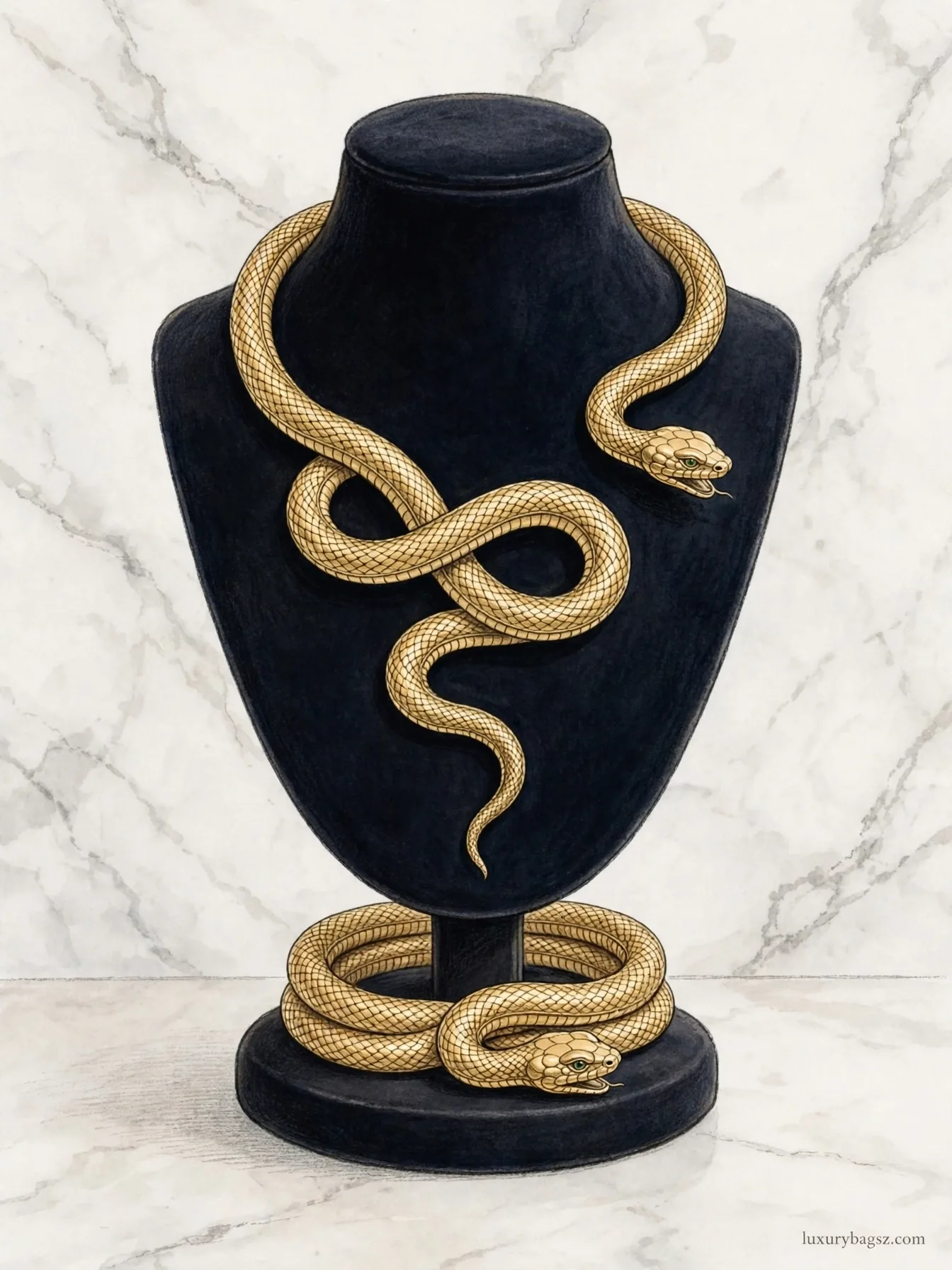
Bvlgari in Brief: The Roman Jeweller Built on Serpents and Colour
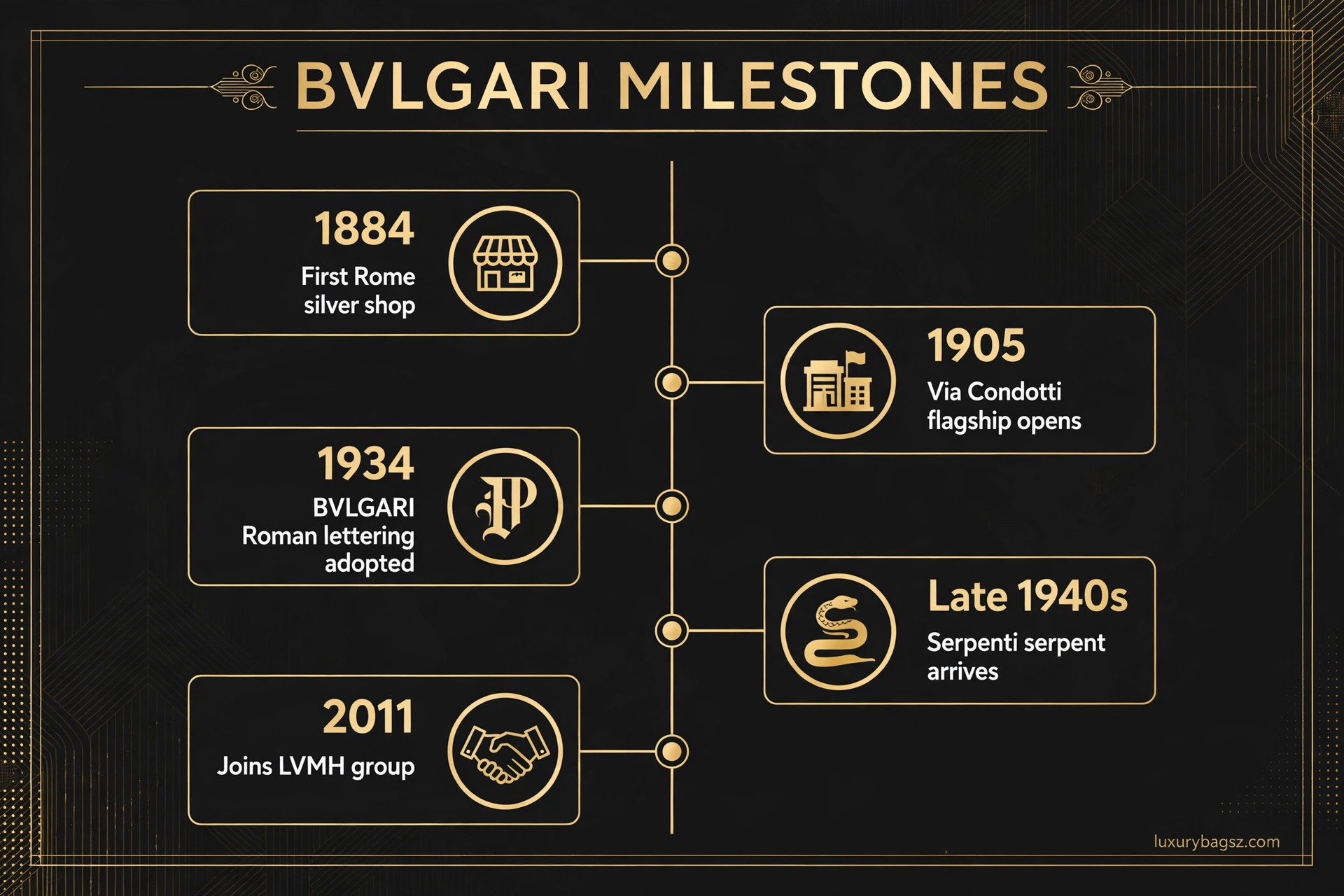
Bvlgari is a Roman luxury house founded in 1884 by Sotirio Bulgari, a Greek silversmith who settled in Rome. It is famous for the coiling Serpenti serpent, bold coloured gemstones, and watches that blur into jewellery. The quick facts are these: the name is written BVLGARI in classical Roman lettering, the serpent arrived in the late 1940s, and the house has been part of LVMH since 2011. Everything else flows from Rome, antiquity and colour.
Key Takeaways
- Bvlgari was founded in Rome in 1884 by Greek silversmith Sotirio Bulgari.
- The BVLGARI spelling uses the classical Latin alphabet and dates from 1934.
- Serpenti, the house's serpent emblem, began with Tubogas bracelet-watches in the late 1940s.
- Bold colour, cabochon stones and ancient coin motifs define Bvlgari jewellery.
- Watch landmarks include the Bvlgari Bvlgari of 1977 and the record-thin Octo Finissimo line.
- Bvlgari joined LVMH in 2011 and now spans jewellery, watches, bags, fragrance and hotels.
Fact One: A Greek Silversmith Founded It in Rome
Sotirio Bulgari was born Sotirios Voulgaris in Epirus, Greece, in 1857, into a family of silversmiths. He travelled via Corfu and Naples to Rome, arriving in 1881 with very little money. In 1884 he opened a shop on Via Sistina in Rome selling silverwork, antiques and jewellery. He later Italianised his surname to Bulgari, the name the house still carries today. Our what to know about Bvlgari guide covers the brand in wider depth. The short version is that Greek craft and Roman grandeur were mixed from the very first day. That double heritage matters. Greek classicism gave Bvlgari its reverence for antiquity, while Rome gave it scale, drama and a wealthy stream of visiting clients. The journey was not a rich man's relocation. Family accounts describe a craftsman who rebuilt his trade city by city, selling silverwork in Naples and Corfu before Rome gave him the clientele his ambition needed. His sons inherited more than a shop. Costantino assembled a serious library on historical goldsmithing, and that research habit is why Bvlgari revivals, from coins to Serpenti scales, tend to be historically literate rather than costume-like.
Fact Two: Via Condotti Became Its Home, and BVLGARI Its Signature
In 1905, Sotirio and his sons Costantino and Giorgio opened the flagship at 10 Via Condotti, near the Spanish Steps. That address remains the house's historic home in Rome. When the store was renovated in 1934, the family adopted the BVLGARI sign, written with a V in the classical Latin style. The lettering turned a surname into a Roman inscription. Sotirio died in 1932, and his sons shaped the modern house. Costantino was a scholar of goldsmithing history, and Giorgio drove the business, so scholarship and salesmanship grew together. The Roman influence is not decoration. Arches, marble, ancient coins and imperial motifs run through Bvlgari design because the founders treated the city itself as a design archive. That flagship still anchors the brand's image today. Bulgari presents its Roman flagship as a museum as much as a store, and heritage exhibitions regularly draw on the Via Condotti archive of jewels and documents.
Fact Three: The Serpent Arrived in the Late 1940s
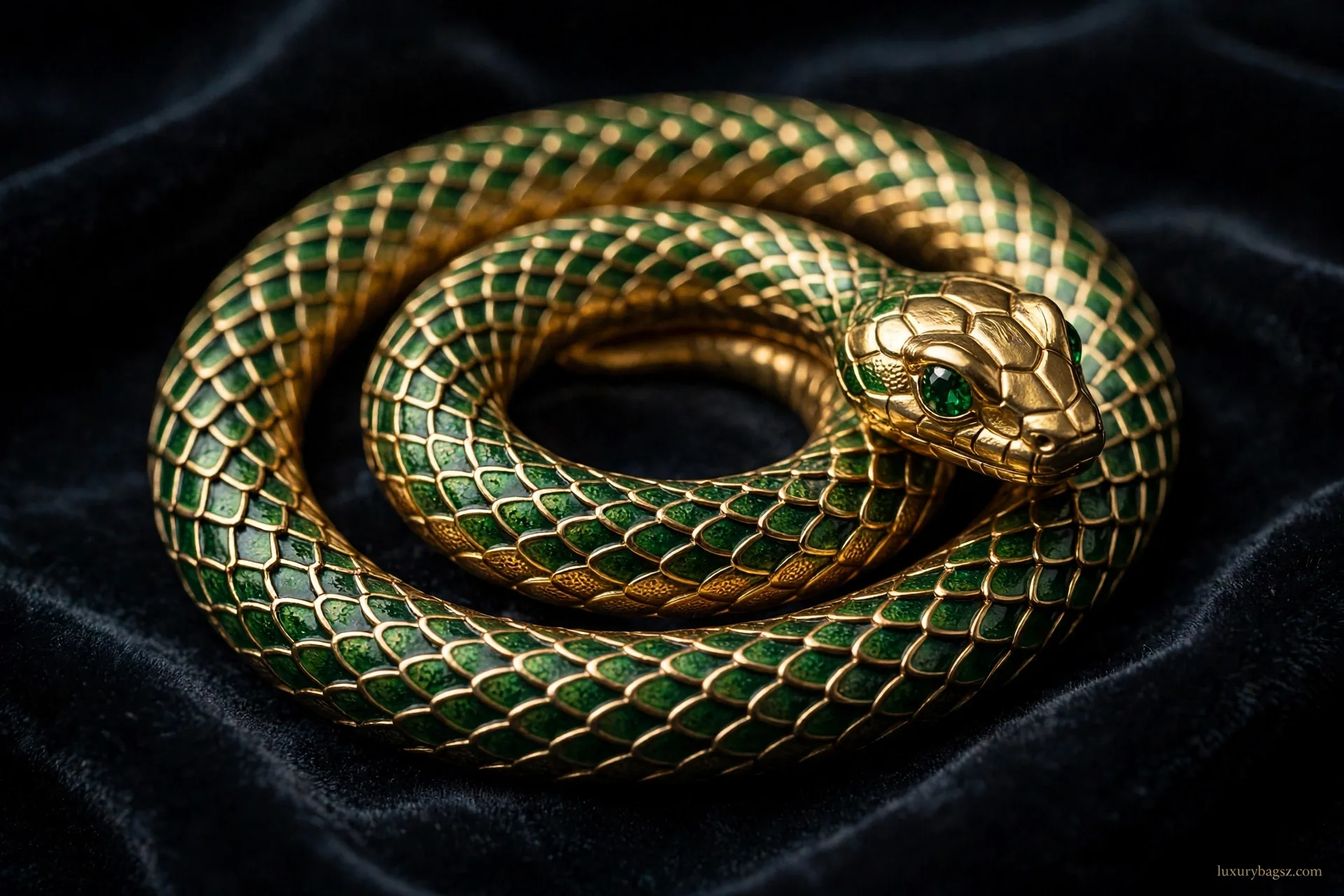
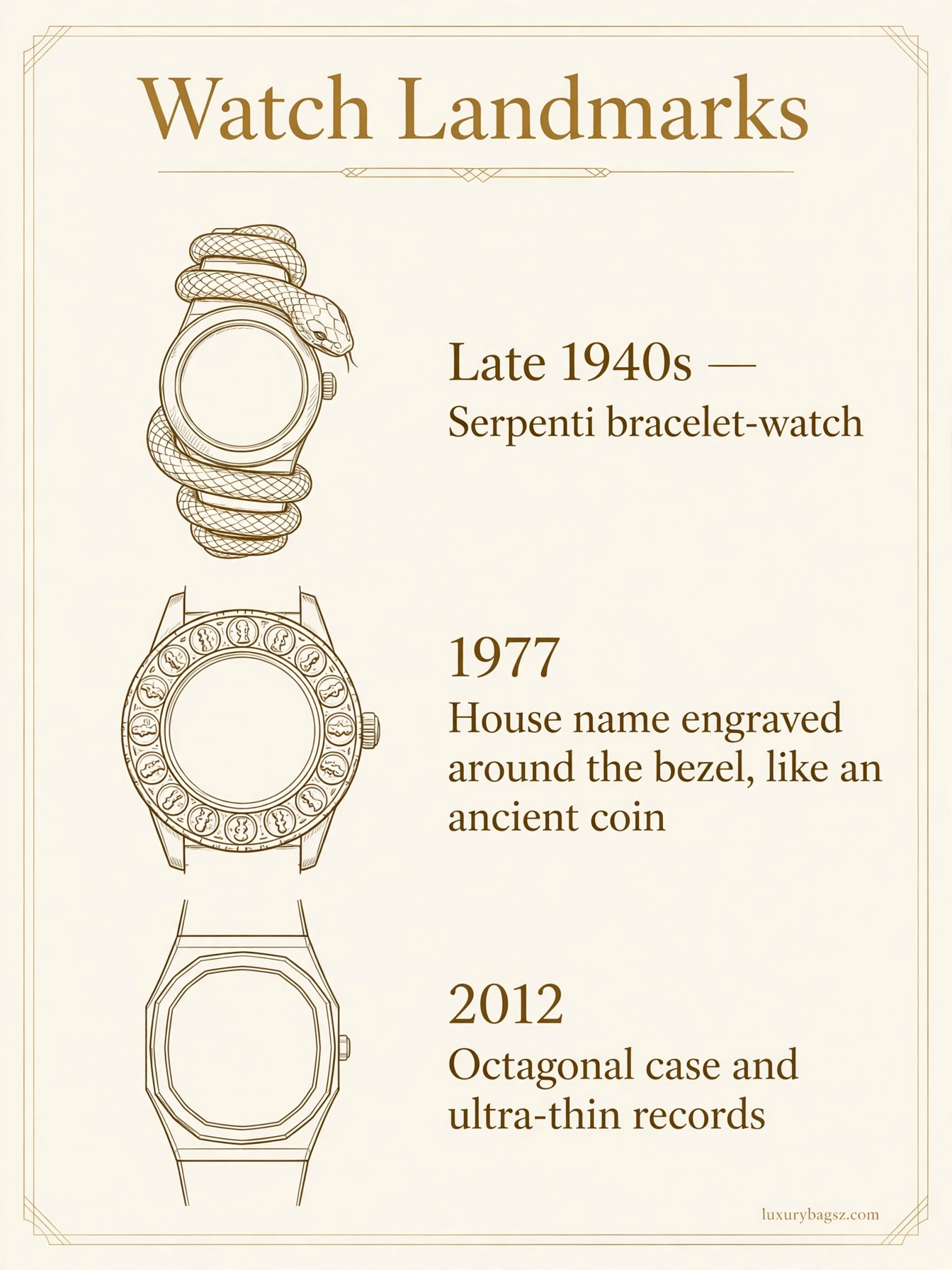
Bvlgari's serpent, Serpenti, first appeared in the late 1940s, with the first Tubogas bracelet-watch dated to around 1948. In ancient Greek, Roman and Egyptian culture, snakes stood for rebirth, wisdom and eternity. Tubogas is the technique behind the coil: strips of gold are wrapped and interlocked without solder, producing a flexible band that winds around the wrist like a living snake. Early Serpenti pieces were fairly abstract coils. During the 1950s and 1960s the snake gained scales, enamel colour and gem-set eyes, becoming recognisably lifelike and highly collectable. Serpenti now spans watches, bracelets, necklaces, rings and the Serpenti Forever bag line. Few house emblems cover so many categories while staying instantly recognisable. The serpent also carried a practical advantage: a coiled design has no clasp to fail and no fixed size. A Serpenti bracelet-watch wraps wrists of different sizes, which made the early pieces unusually easy to gift and to wear. Serpenti jewellery followed the watches. Necklaces, bracelets and rings adopted the coil and the scaled head, often with gem-set eyes, and high jewellery versions turned the snake into a canvas for emeralds, rubies and diamonds.
Fact Four: Colour Is the House Language
Where Parisian jewellers of the early twentieth century often favoured monochrome diamond work, Bvlgari built its name on colour. Sapphires, emeralds and rubies were combined boldly, sometimes in unexpected mixes. Cabochon cuts, smooth and domed rather than faceted, became a signature. The house reasoned that a generous cabochon shows a stone's colour at its richest, and it gives pieces a soft, sculptural feel. Our sculptural gold jewellery guide shows how that love of volume echoes across modern jewellery. Bvlgari's chunky gold settings were doing it decades earlier. Ancient coins are another recurring motif. The Monete pieces set genuine Roman, Greek or other antique coins into modern gold mounts, so the wearer literally carries antiquity. That colour confidence came from the stones themselves. Bvlgari bought fine cabochons that stricter houses overlooked because of small inclusions, judging that saturated colour, not perfection on paper, is what the eye actually enjoys.
Fact Five: The Watches Are Serious Watchmaking
Serpenti began as a watch, and watchmaking never left. In 1977 the house launched the Bvlgari Bvlgari, with the name engraved around the bezel like lettering on an ancient coin. That bezel engraving became one of the most copied ideas in watch design, and the model remains a core line in steel, gold and many complications. The Octo, introduced in 2012, took a different path: an octagonal case and, in the Finissimo versions, a run of ultra-thin world records through the 2010s and early 2020s. Those records moved Bvlgari from jeweller who makes watches to a manufacture rivals respect. It is the fact casual fans most often miss, and collectors most often cite. The Bvlgari Bvlgari also crossed into popular culture in a way few watches do. Its coin-like bezel was widely imitated by fashion brands, which spread the look far beyond the original's price point and cemented its fame. There is also a women's watch story beyond Serpenti. The Lvcea line, launched in 2014, links a round case to bracelet links inspired by Serpenti, showing how one motif keeps generating new families inside the watch range.

Fact Six: Film Stars Made It Famous Worldwide
Rome in the 1950s and 1960s was a film capital, and the Via Condotti store drew the stars of the Dolce Vita era. Elizabeth Taylor became the most famous client of all. While filming Cleopatra in Rome in the early 1960s, Taylor bought and wore Bvlgari, including a Serpenti bracelet-watch. Her association fixed the serpent in the public imagination. Richard Burton, her co-star and husband, famously joked that the only word of Italian Taylor knew was Bulgari. The line is repeated so often because it captures the store's pull on visiting stars. Celebrity links still matter to the brand, but the Taylor story endures because it was genuine collecting, not a modern ambassador contract arranged for a campaign. Other regulars of the era included Audrey Hepburn and Gina Lollobrigida, and the store's guest books became part of Rome's social history. Bulgari still trades on that golden-age glow in its advertising and exhibitions.
Fact Seven: It Is Now Part of LVMH, and Far More Than Jewellery
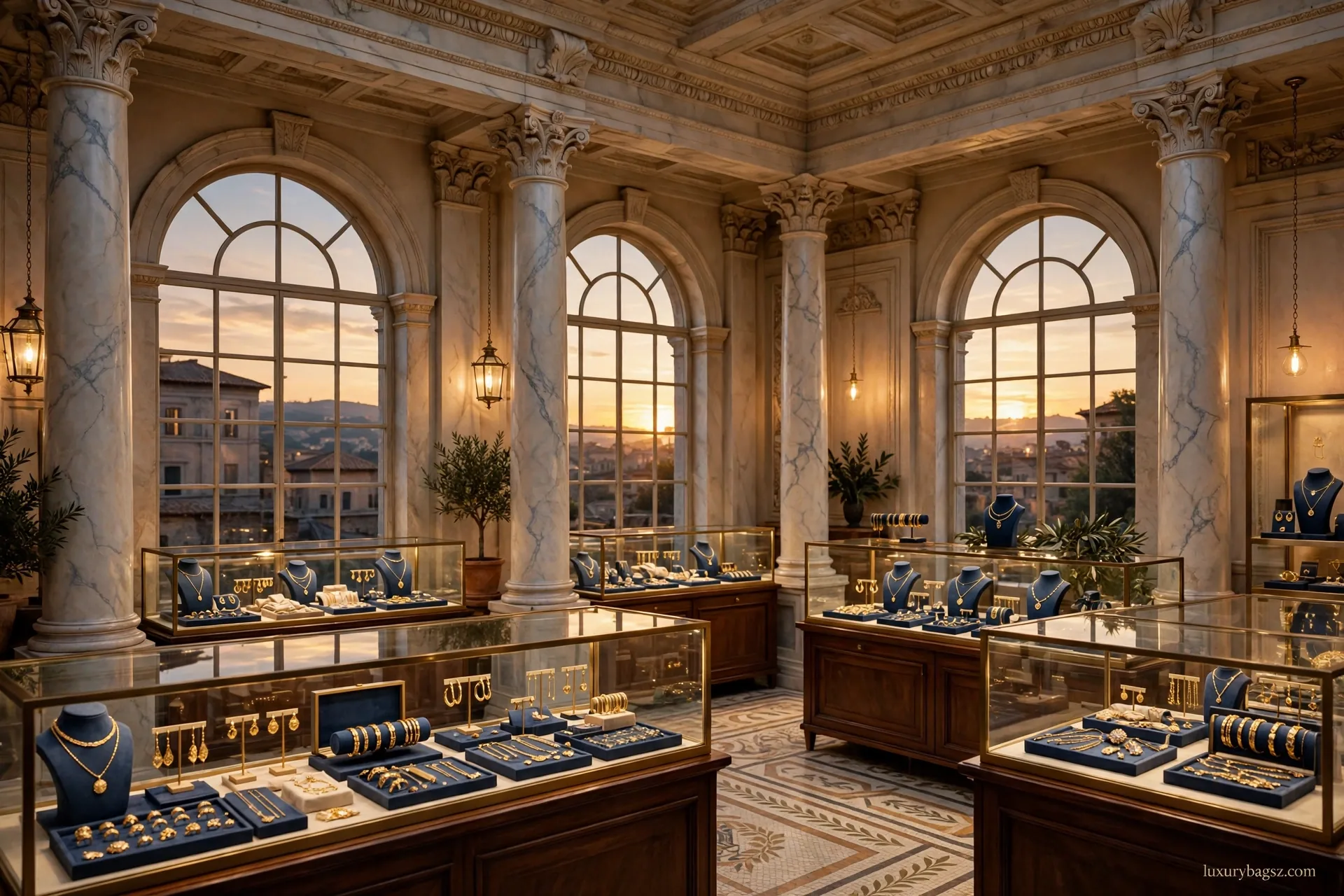
In 2011, LVMH acquired a controlling stake in Bvlgari, in a deal that also made the Bulgari family a significant LVMH shareholder. The house kept its Roman identity within the group. Today the business spans high jewellery, watches, leather goods such as the Serpenti Forever bag, fragrances including the Le Gemme line, and a chain of luxury hotels. Growth has not diluted the codes. New collections still return to the serpent, to colour, to coins and to Rome, which keeps even recent pieces easy to place in the family tree. Whatever the category, gentle care applies. Our watch cleaning guide covers safe cleaning habits that suit Serpenti and Octo watches alike. Fragrance became a quiet giant within the group. Lines such as the tea-inspired scents and the Le Gemme high perfumery range reach customers who may first meet the serpent on a bottle rather than a bracelet. Hotels deserve a line of their own: Bvlgari hotels and resorts, run with a hotel partner, carry the brand into hospitality in cities from Milan and London to Dubai and Tokyo, with Rome itself added in 2023.
Fact Eight: Pre-Owned Bvlgari Rewards Careful Checking
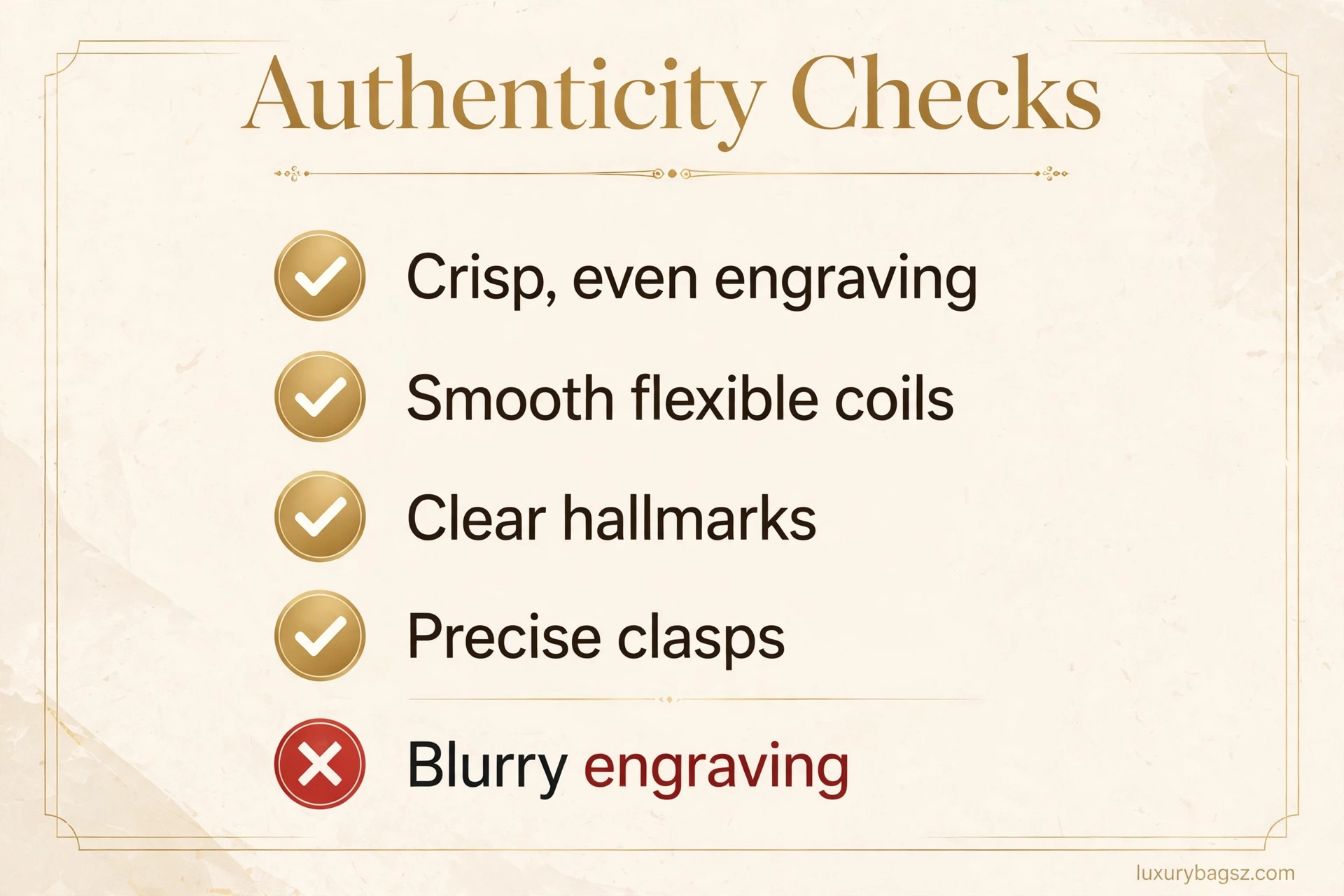
Vintage Serpenti and early Bvlgari Bvlgari watches are keenly collected, and prices vary widely with condition, materials and paperwork. Check current listings rather than relying on old figures. Start with engraving: genuine lettering is crisp and evenly spaced, while blurry or uneven engraving is a warning sign. Tubogas coils should flex smoothly and spring back without kinks. For jewellery, examine hallmarks, stone settings and the weight of the piece. Bvlgari work feels substantial, clasps close precisely, and enamel or scale work should be neat under magnification. Our Bvlgari resale value guide explains what holds value, and the luxury jewellery resale guide covers selling routes. Independent authentication is money well spent on major pieces. Paperwork matters more as prices rise. Original boxes, certificates and service records support value, and for high jewellery, archive confirmation from the house can separate a good buy from an expensive mistake.
Frequently Asked Questions
When was Bvlgari founded?
Bvlgari was founded in Rome in 1884, when Sotirio Bulgari opened a shop on Via Sistina selling silverwork, antiques and jewellery.
Who founded Bvlgari?
The founder was Sotirios Voulgaris, a Greek silversmith from Epirus who Italianised his name to Sotirio Bulgari after settling in Rome.
Why is it spelled BVLGARI?
The spelling uses the classical Latin alphabet, in which V stands where U now sits. The family adopted the BVLGARI sign in 1934 for the renovated Via Condotti flagship.
What is Serpenti?
Serpenti is Bvlgari's serpent collection, begun in the late 1940s with Tubogas bracelet-watches. It now covers watches, jewellery and bags, symbolising rebirth and eternity.
What is Tubogas?
Tubogas is a technique in which strips of metal are coiled and interlocked without solder, creating a flexible band. It gives Serpenti pieces their smooth, wrapping movement.
What is Bvlgari most famous for?
The house is most famous for Serpenti, for bold coloured gemstone jewellery with cabochon cuts, and for watches such as the Bvlgari Bvlgari and the Octo Finissimo.
What does the serpent symbolise?
In the ancient cultures Bvlgari draws on, the serpent symbolised wisdom, rebirth, protection and eternal life, which is why the house chose it as an emblem.
Who owns Bvlgari now?
Bvlgari has been part of the LVMH group since 2011, when LVMH took a controlling stake and the Bulgari family became a significant LVMH shareholder.
Did Elizabeth Taylor really wear Bvlgari?
Yes. Taylor bought and wore Bvlgari while filming Cleopatra in Rome in the early 1960s, including a Serpenti bracelet-watch, and she remained a devoted client.
Is vintage Bvlgari a good buy?
Good-condition vintage Serpenti and early watches are keenly collected, but values vary with condition and paperwork. Buy the best example you can, and authenticate major pieces.
Summary: A Greek Founder, a Roman City and a Golden Snake
Strip Bvlgari back and three facts explain the whole house: a Greek silversmith's craft, Rome's classical grandeur, and a serpent that turned both into jewellery people recognise across a room. From the 1884 silver shop to Serpenti, colourful cabochons and record-thin Octo watches, the story stays consistent. That consistency, more than any single piece, is the real Bvlgari fact.






