How to Wear Fall Layers: The Technique Guide to Warmth Without Bulk
Layers That Work: The Fall Technique in Brief
Good fall layering is a technique, not a pile-up. Wear thin, smooth pieces closest to the skin, add one warm middle layer, then finish with a longer, structured outer layer, and you stay warm without looking padded. Keep one layer easy to remove, keep hems stepping down in length, and let only two textures shout at once. Follow that order and almost every autumn outfit in your wardrobe starts working harder.
Key Takeaways
- Layer thin to thick: fine base, warm middle, structured outer coat or jacket.
- Step hems down in length so each layer shows a clean edge, never a tangle.
- One removable layer is the trick for changeable autumn days and warm rooms.
- Mix textures, not bulk: silk under knit, knit under wool, leather over both.
- A belt or a long coat line restores shape when layers start to soften it.
- Buy layering pieces in a tight colour family and they will combine endlessly.
The Thin-to-Thick Rule That Runs Everything
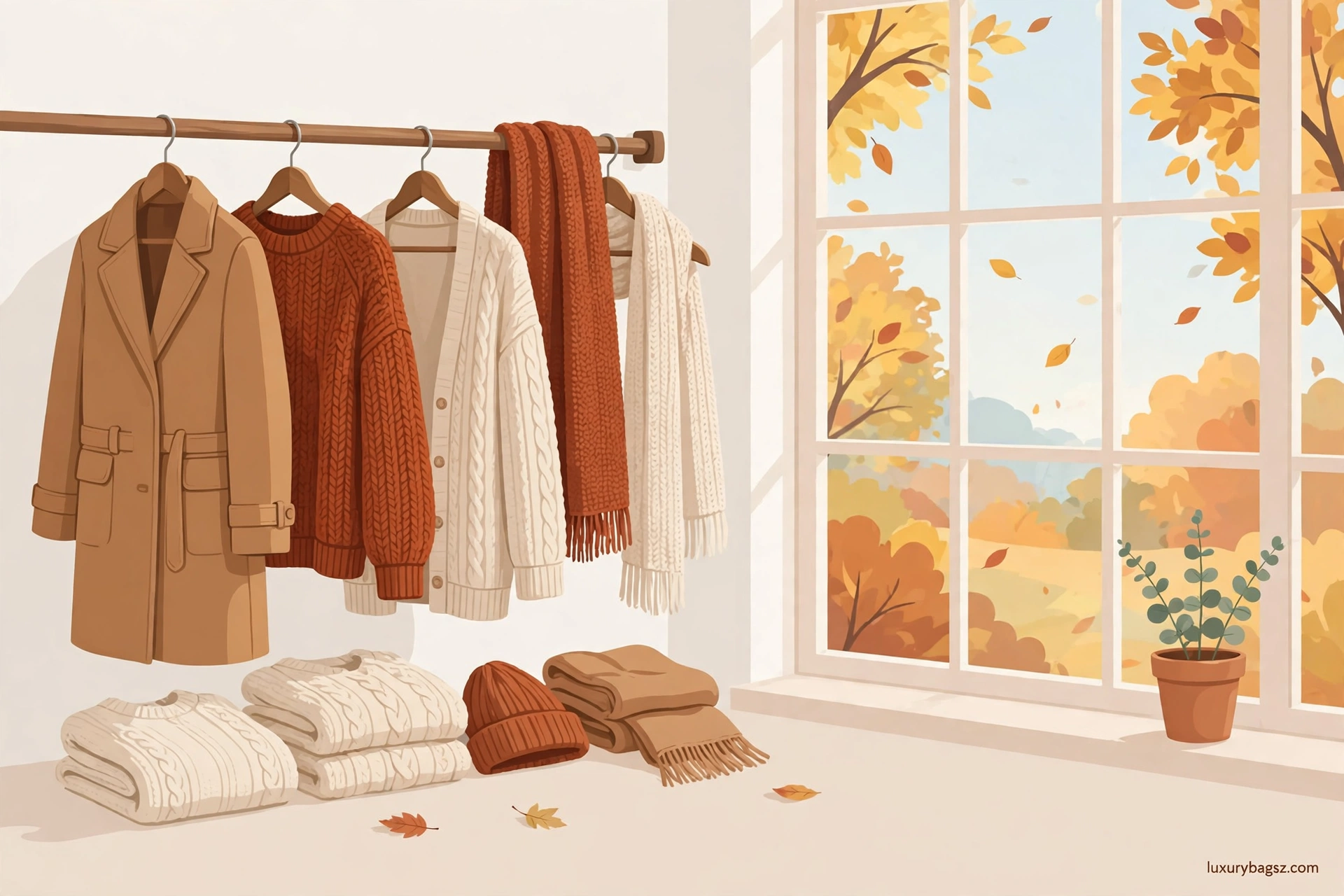
Start with the thinnest thing you own: a fine merino roll-neck, a silk camisole or a smooth cotton tee. It should sit close, with no bunching at the waist or sleeves. Next comes warmth: a cardigan, a crew knit or a light quilted gilet. This layer does the insulating, so it can be softer and loftier than the base. Finish with structure: a blazer, a trench or a long wool coat. The outer layer gives the outfit its line, which is why it should be the longest and the firmest piece. Reverse the order and it fails. A chunky knit under a slim coat strains the seams, while a thick base under a fine knit shows every lump through the surface.
Think in outfits, not garments, before you shop. Lay one full layered look on the bed, base to coat, and photograph it. A phone album of six proven combinations ends most morning layering mistakes before they start.
Bases That Behave Under Everything
The best bases are boring on purpose. Fine-gauge merino, silk jersey and smooth long-sleeved tees slide under knits instead of gripping them. Choose a neckline that suits the layers above: a roll-neck under a blazer, a scoop under a cardigan, a shirt collar left open over a crew knit. Keep base colours quiet: cream, grey, navy and black layer under almost anything. One striped Breton base earns its place too, because the stripe peeking out adds interest for free. Avoid thick cotton sweatshirts as bases. They hold moisture, bunch at the elbow and make every layer above them look heavier than it is.
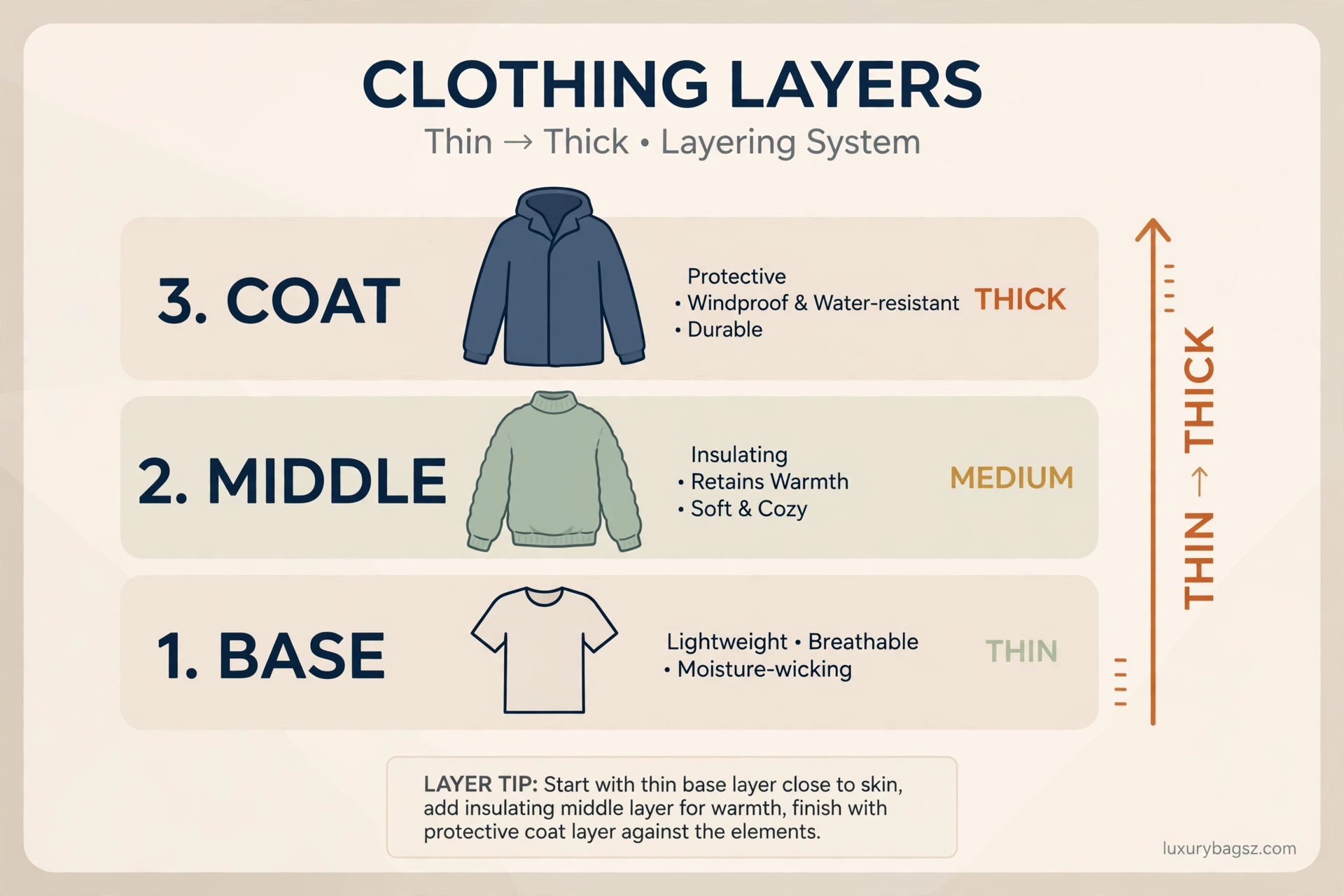
Sleeve length is the base layer's secret test. A base sleeve should end at the wrist bone exactly, so its cuff can show as a clean band under knits. Too long, and it bunches; too short, and it vanishes.
The Middle Layer Does the Warm Work
Your middle layer is the engine room. A cashmere or lambswool knit traps air, and trapped air is what actually keeps you warm outdoors. Cardigans beat jumpers for changeable days because they open at the front. You can shed heat in a warm shop without pulling anything over your head. A sleeveless gilet or knitted tank is the stylist's favourite middle: it warms the core, adds a visible band of colour or texture, and never fights coat sleeves. If you run cold, double the middle with a thin knit plus a gilet. Two light layers trap more air, and feel less bulky, than one very thick jumper.
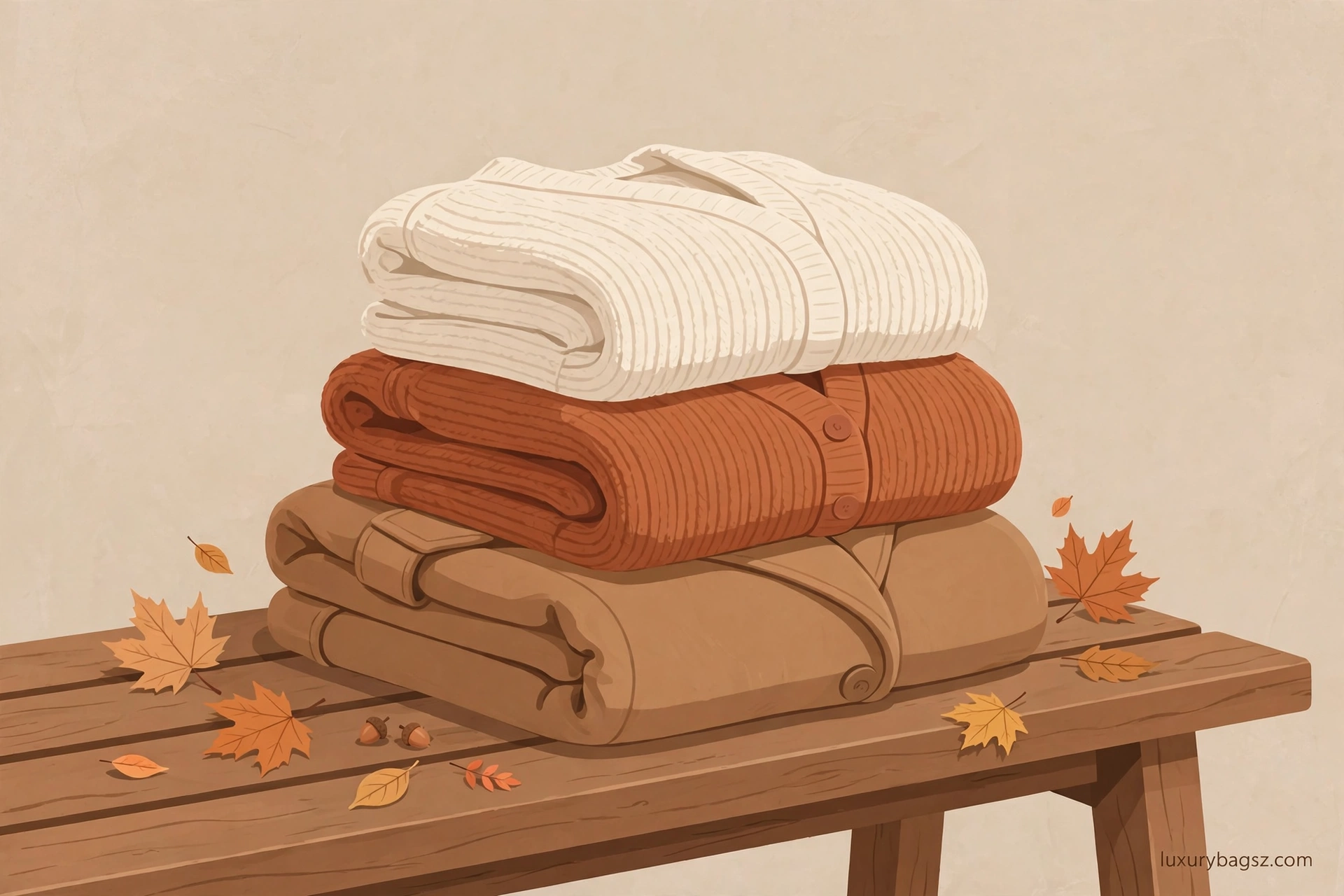
Roll-necks deserve a special mention as middles. A fine roll-neck under an open shirt or a slip dress adds warmth at the throat, the spot where autumn wind actually enters, without adding any bulk at the waist.
Outer Layers That Finish the Line
The outer layer should skim, not squeeze. If you cannot hug yourself comfortably in your coat over a knit, the coat is a summer fit, not a fall one. Length does the styling. A coat that ends below the knee pulls layered hems into one clean column and makes even jeans and a knit look deliberate. Trenches suit milder, wet days; wool coats suit dry cold; a leather jacket suits in-between days and sharpens soft knits underneath. A bag that sits cleanly over layers matters too, and our guide to fall handbag trends and styling shows the crossbody and shoulder shapes that sit flat over coats.
Shoulder fit decides whether a coat layers or fights. The coat's shoulder seam should sit a fraction beyond your own shoulder when a knit is underneath. If it sits exactly on the bone over bare skin, it is a size too small for fall.
Three Formulas That Never Miss
Formula one, for work: silk shirt, fine crew knit worn over it with collar showing, tailored trousers, long coat. Smart, warm and fully removable indoors. Formula two, for weekends: Breton tee, open cardigan, straight jeans, trench and loafers. Our sweater-weather style guide builds more cold-day knit outfits on the same base. Formula three, for evenings: slip dress, cropped knit worn on top, heeled boots and a slim coat. The dress becomes a skirt, and the knit keeps it autumn-appropriate. Write your three down once you find them. Layering gets fast when you stop inventing outfits at 7 a.m. and start repeating proven ones.
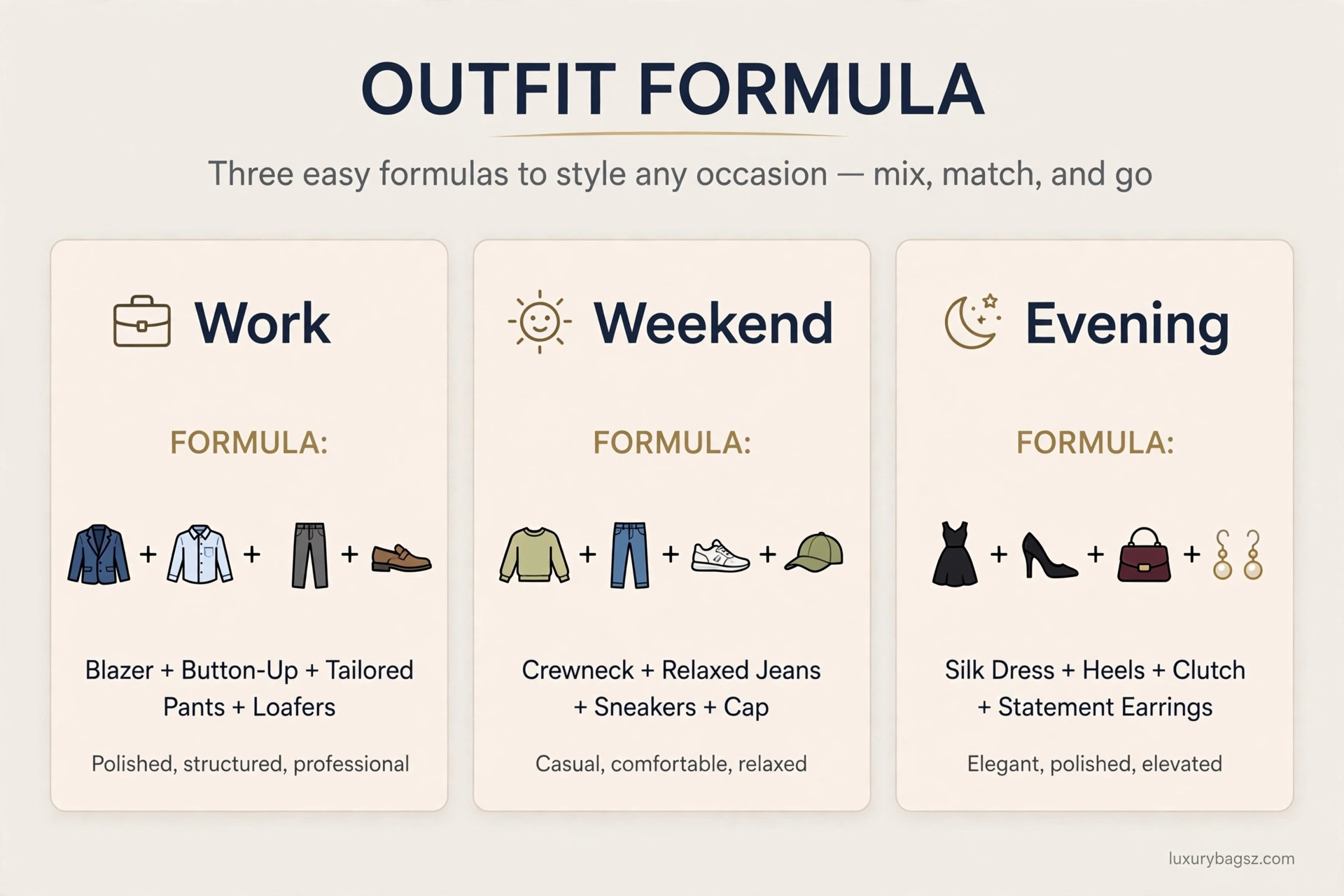
Keep one wildcard layer in each formula: a silk scarf, a leather belt or a long pendant. Wildcards stop repeated formulas looking repeated, because the eye reads the new detail and assumes a new outfit.

Texture, Colour and Proportion Fixes
Mix one rough texture with one smooth one: a nubby knit over a silk shirt, a leather jacket over a fine dress. Two rough textures together read as heavy. Keep the colour family tight. Three shades of camel, cream and chocolate layer more elegantly than five unrelated brights fighting for attention. Watch proportions at the hem. Skirt, knit and coat hems should step apart by a hand's width or more, or align exactly; near-misses look like mistakes. Boots anchor layered skirts and dresses, and the fall footwear boot camp guide matches boot heights to hem lengths so legs never look cut in half.
If a layered outfit feels wide, shorten one element before removing one. A knit tucked at the front, or a coat left open over a belted middle, restores the waist faster than shedding warmth you actually need.
Designer Pieces That Layer Best
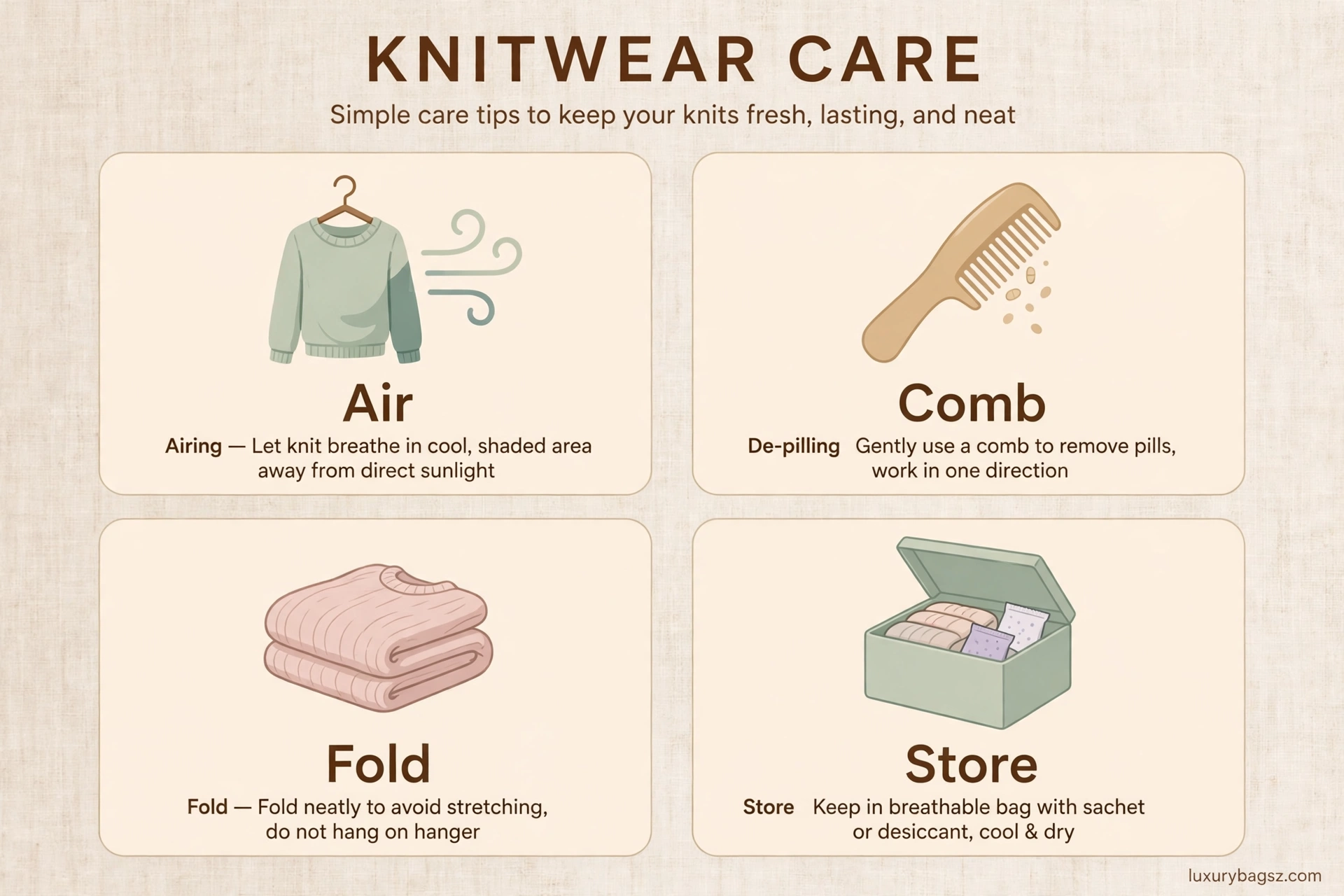
A fine cashmere roll-neck from a heritage knit house is the hardest-working luxury layer you can buy; it goes under blazers, dresses and coats alike. A well-cut wool coat in camel or navy outlasts trends and forgives everything under it. Buy the best coat your budget allows before any statement knit. Silk shirts from classic houses layer without bulk and wash the whole outfit up a level. Pre-owned silk and cashmere are strong value, as both launder well. Whatever you buy, follow the care basics in our guide on how to care for designer clothing so fine knits survive the season un-pilled.
Pre-owned cashmere deserves a moth check before it joins your layers. Hold knits to the light, inspect underarms and cuffs, and freeze new arrivals for two days as a precaution before they meet the rest of the drawer.
Mistakes That Make Layers Look Messy
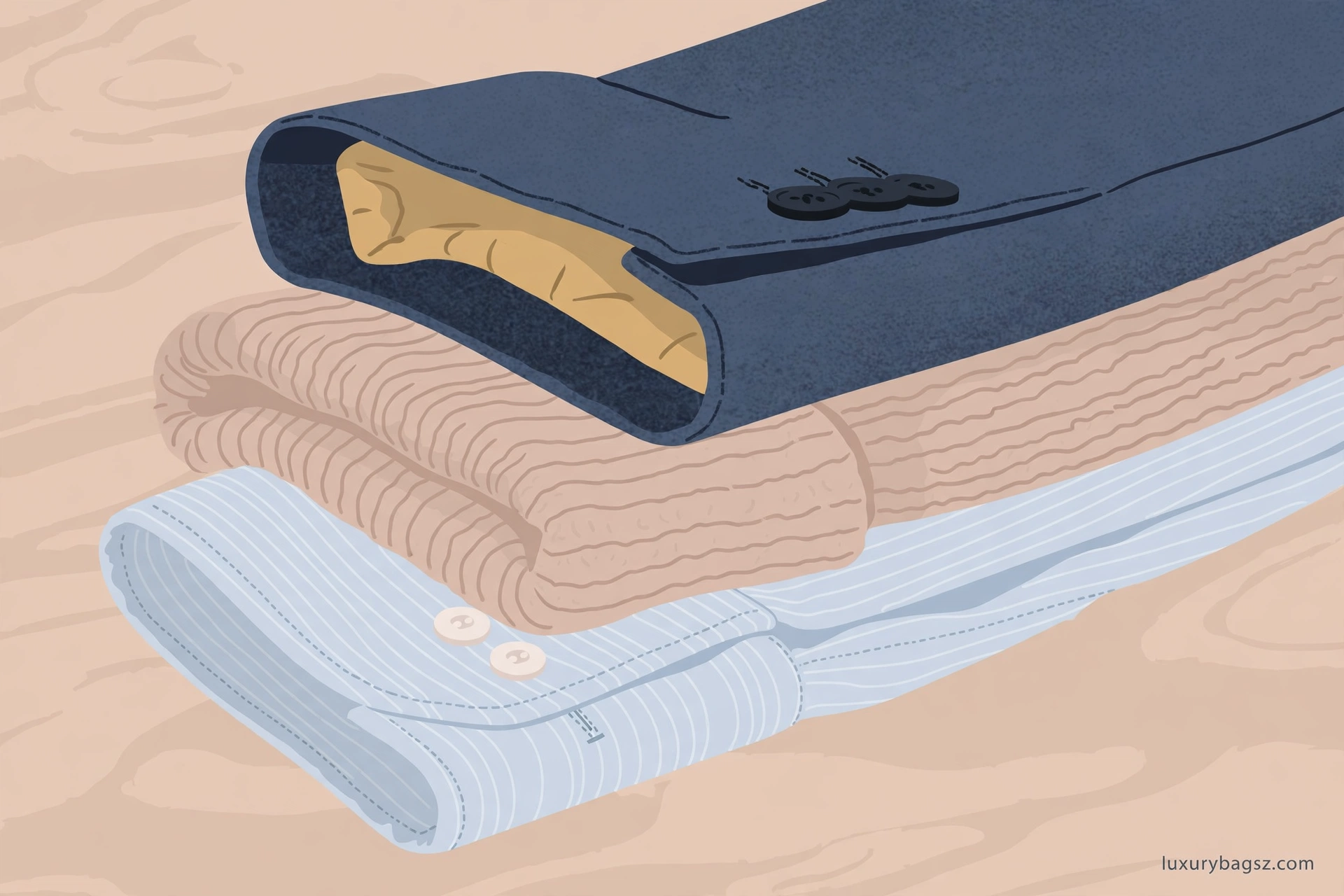
Too many visible layers is the classic error. Three is the working maximum for most outfits; a fourth usually adds width, not warmth. Sleeves are the second giveaway. Cuffs should show in neat bands: a centimetre of shirt, then knit, then coat. Pushed-up tangles undo the whole effect. Skipping the mirror check at the side view is the third. Layers that look fine from the front often bulk at the back, where coat vents and knit hems collide. Finally, do not layer over creased bases. A rumpled shirt under a fine knit prints its wrinkles through, and steaming the base first takes two minutes.
Weather apps make better stylists than habit. A three-degree swing changes the right middle layer entirely, so check the morning temperature before dressing, not the season written on the calendar.
Frequently Asked Questions
How many layers should I wear in fall?
Two to three is the working range: a fine base, a warm middle and an outer layer on cold days. Add or remove the middle as the day changes.
How do I layer without looking bulky?
Keep the base thin and close, let only the middle layer be lofty, and finish with a longer structured coat. A clean outer line hides the warmth inside.
What is the best base layer for fall?
Fine merino or silk jersey. Both regulate temperature, slide under knits without gripping, and stay smooth enough not to show through fine sweaters.
Can I layer a dress in fall?
Yes. Wear a fine roll-neck under a sleeveless dress, or a cropped knit over a slip dress so it reads as a skirt. Add boots and a coat to finish.
Which coat layers best over knits?
A relaxed, longer wool coat with room in the armhole. If you can hug yourself comfortably while wearing a jumper underneath, the fit is right.
How do I layer for the office?
Silk shirt, fine knit over it with the collar showing, tailored trousers and a long coat. Remove the knit indoors and the shirt still looks complete.
Do belts work over layers?
Yes, over a cardigan or a coat, a belt restores the waist that layers soften. Keep it slim and wear it at the natural waist, not on the hips.
What colours layer most easily?
A tight family: camel, cream, chocolate and navy, or grey, black and white. Pieces in one family combine without planning, which speeds up mornings.
How do I stop knit layers pilling where they rub?
Rest knits between wears, de-pill gently with a fabric comb, and avoid rough bag straps over soft shoulders. Friction, not washing, causes most pilling.
Can I layer in mild autumn weather?
Yes, just lighten each step: a tee instead of merino, an open cardigan instead of a jumper, and a trench instead of a wool coat. The technique stays the same.
Final Verdict: Order First, Outfit Second
Fall layering stops being guesswork the moment you fix the order: thin base, warm middle, long structured outer, one layer always removable. Build three formulas from pieces you own, keep colours in one family, and let texture do the talking. Warmth follows technique, and so does polish.