Fall Footwear Boot Camp: The Only Autumn Boots Guide You Need
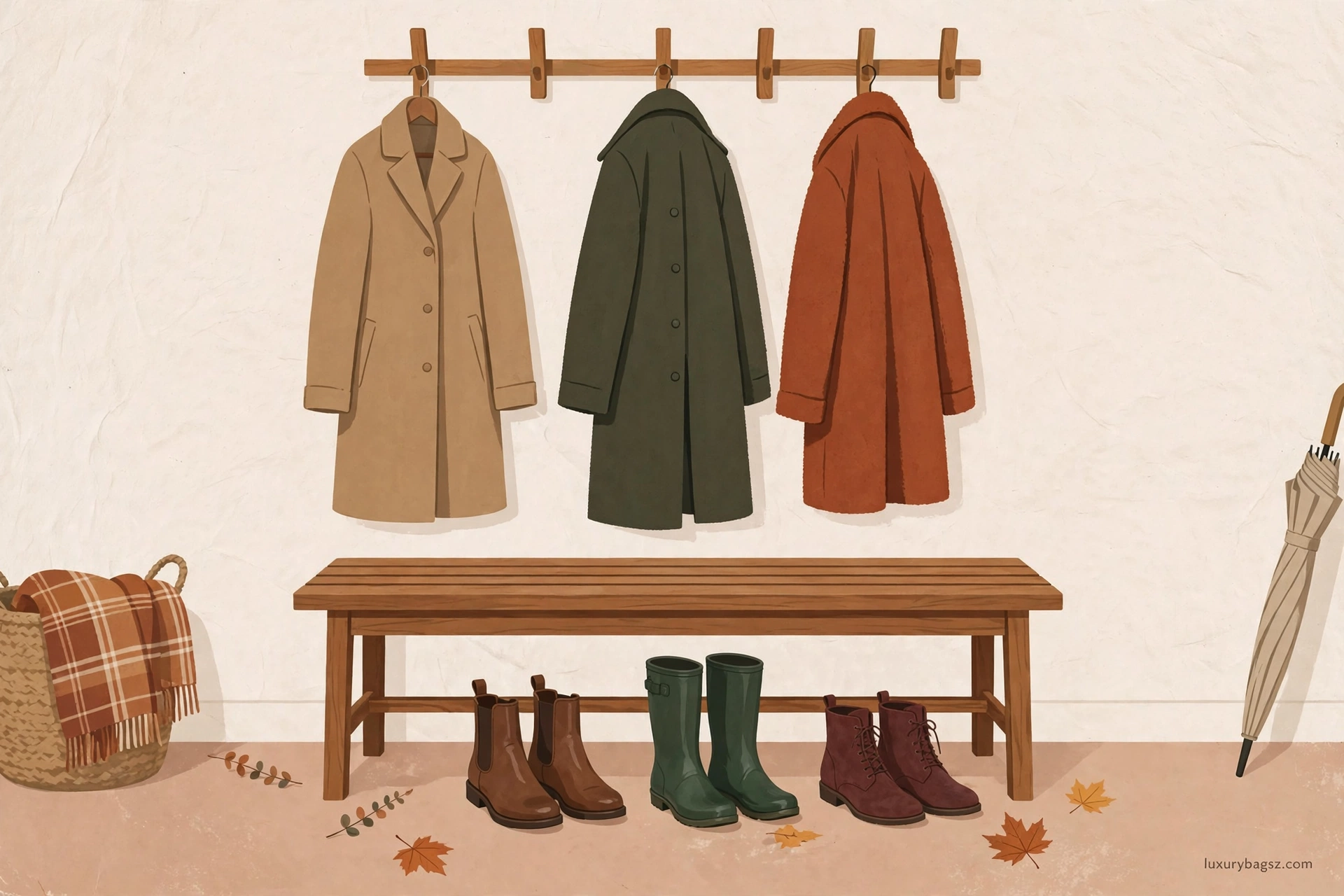
Boot Camp Basics: Start With Height and Fit
The right autumn boot does two jobs: it suits the hemlines you actually wear, and it fits well enough to walk in all day. Choose by shaft height first, then by fit, and the styling almost takes care of itself.
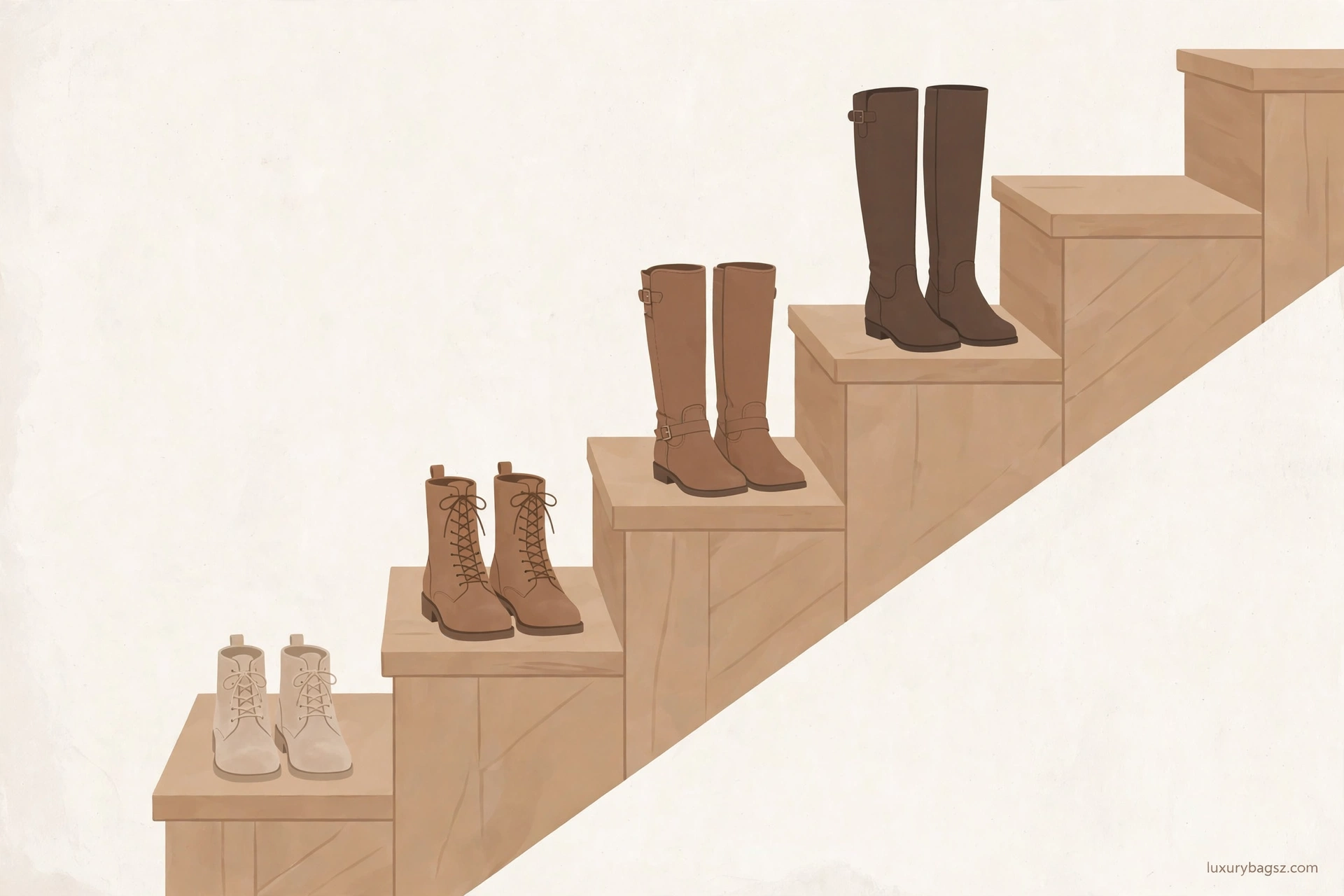
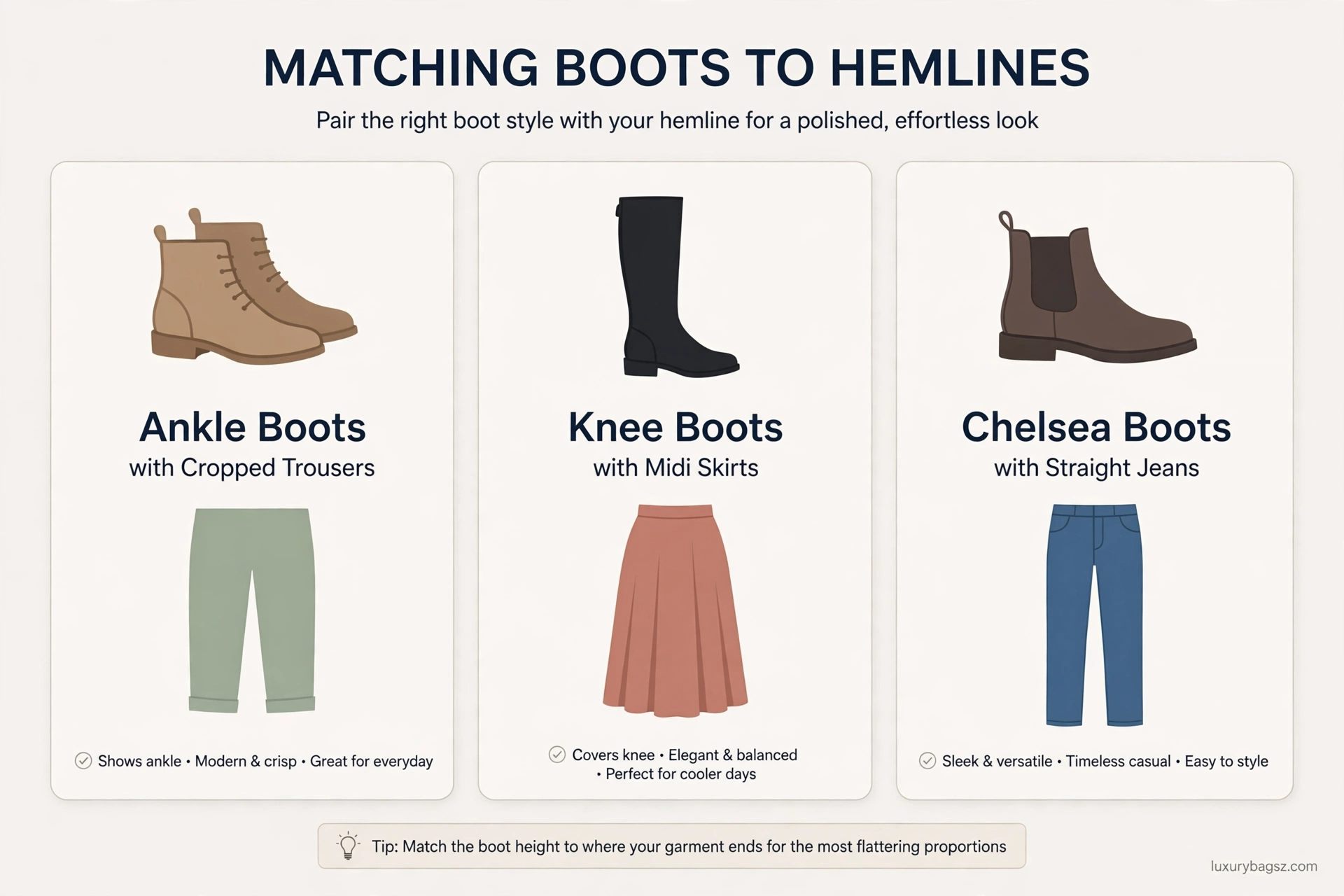
Ankle boots handle cropped trousers and jeans, knee boots belong with midi skirts and dresses, and Chelsea boots bridge smart and casual. Everything in this boot camp builds on those three decisions.
Key Takeaways
- Match shaft height to hemline: ankle for crops, knee for midis, Chelsea for everything between.
- Fit the calf and the widest part of the foot, not just the shoe size on the box.
- Break boots in at home over several short wears before a full day out.
- One black pair and one brown or tan pair cover nearly every autumn outfit.
- Spray, brush, stuff and rest: four habits keep boots looking new for years.
The Three Heights That Cover Autumn
Ankle boots are the default for a reason. They work with jeans, trousers and shorter skirts, and they slip under most coat lengths without a proportion fight. Our wider guide to boots every woman needs shows how they anchor a full shoe wardrobe.
Knee boots earn their place once hemlines drop. Under a midi skirt they close the gap that tights alone leave cold, and over skinny trousers they give a clean, unbroken line.
Chelsea boots are the quiet all-rounders. The elastic panel means no laces or zips to fuss with, and the plain front reads smart with tailoring and relaxed with denim.
Heel height is the second decision. A low stacked heel suits all-day walking, a flat sole reads most casual, and anything above a mid heel belongs to evenings and short distances.
Reading the Shaft: A Quick Height Guide
Ankle boots end at or just above the ankle bone. They show a sliver of skin or sock with cropped trousers, which keeps the leg line long rather than chopped.
Mid-calf boots are the awkward middle child: they cut the leg at its widest point and fight most hemlines. Most people look better going shorter or taller instead.
Knee boots should end just below the kneecap, close to the leg without gripping it. A finger's width of ease at the top stops the shaft from digging in when you sit.
Measure your calf at its widest point before ordering tall boots online. Compare the number with the shaft measurement in the size guide rather than trusting the shoe size alone.
Fit Checks Before You Commit
Try boots on late in the day, when feet are at their largest, and wear the socks you plan to live in. A boot that fits at 9 a.m. in thin tights may punish you by 5 p.m. in wool socks.
Walk, do not just stand. Your heel should lift only slightly, your toes should never press the front, and the widest part of your foot should sit in the widest part of the boot.
Check the calf with your real trousers tucked in or your usual skirt on. Many returns happen because a boot fitted the foot perfectly and the calf not at all.
Also check the ankle. A shaft that collapses into folds at the ankle on day one will crease deeper every week, so choose leather firm enough to stand when empty.

Breaking In Without the Blisters
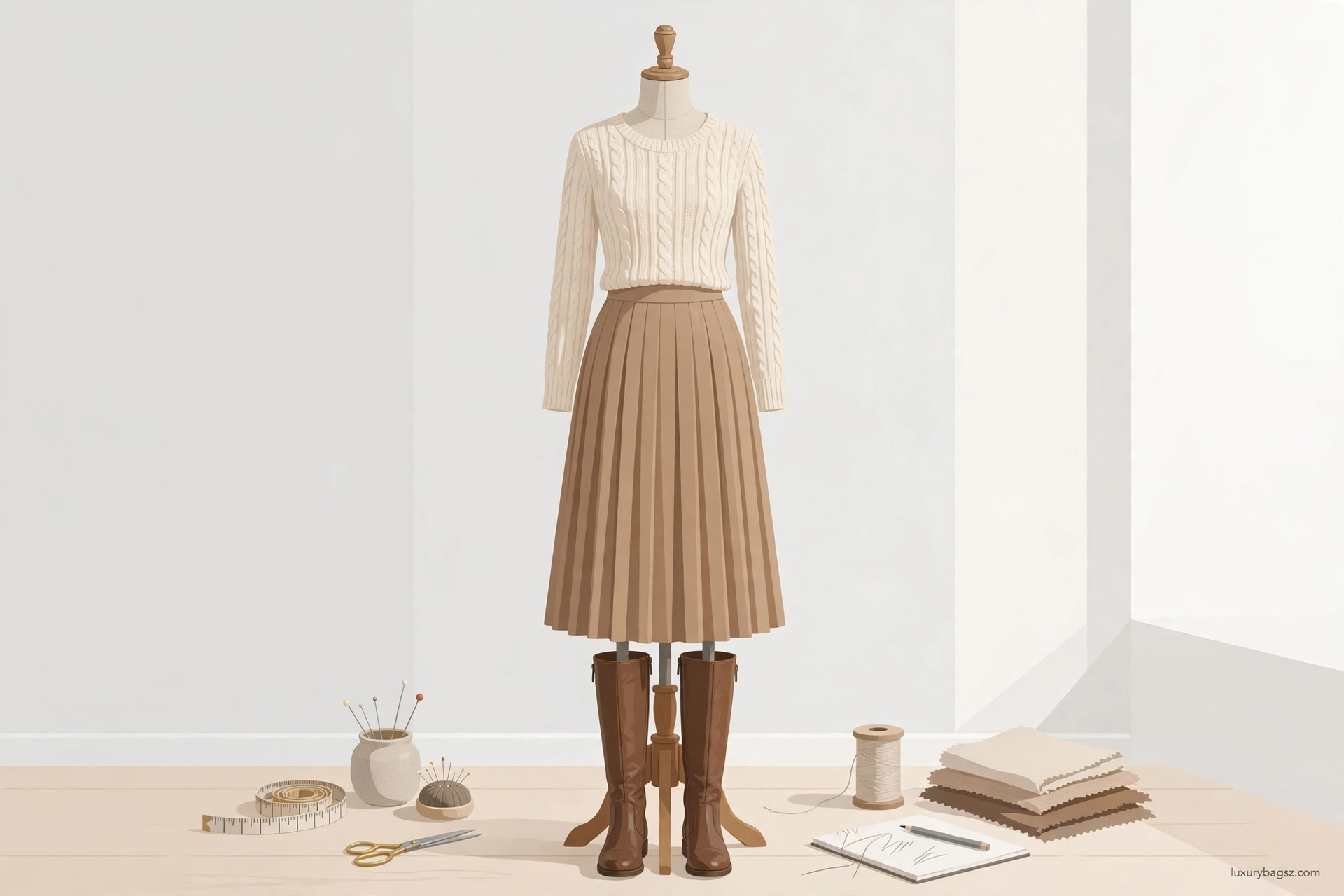
New leather needs short, kind introductions. Follow the routine in our guide on how to break in boots: an hour at home, then a short walk, building up over a week.
Thick socks and a little leather conditioner at the flex points speed things along. Plasters on the heel and the side of the big toe protect the two classic rub spots while the leather softens.
Never debut new boots on a day of heavy walking or travel. A blister on day one can take the joy out of a pair for the whole season.
If one spot still rubs after a week, a cobbler can stretch that exact area. Targeted stretching beats weeks of plasters and costs little compared with the boots themselves.
Styling Formulas by Hemline
Cropped trousers want ankle boots with a close shaft, so there is no gap of bunched fabric. The pairing rules in our piece on stylish ways to wear boots cover the tuck, cuff and bare-ankle options in detail.
Midi skirts and dresses want knee boots whose top disappears under the hem. That overlap is what makes the outfit look finished rather than assembled.
On top, knitwear carries the autumn mood: the coats and jumpers in our sweater weather style guide are cut to sit cleanly over both boot heights.
Straight-leg jeans sit over ankle boots without a decision, while skinny styles tuck into tall shafts. Keep both pairings ready and the morning choice takes seconds.
Leather, Suede and the Rain Question
Smooth leather shrugs off drizzle and wipes clean, which makes it the practical default for wet climates. A quick brush and an occasional feed keep it supple through the season.
Suede looks richer and softer, but it marks in rain and needs a protector spray before its first outing. Save suede for dry days and it will reward you with the best texture in the wardrobe.
For genuinely wet weather, a rubber or treated-leather boot is no defeat. Modern shapes look close to standard boots and spare your good leather entirely.
Colour care differs too. Black leather hides salt and scuffs best, tan shows water marks until it dries, and suede in any colour needs its spray renewed through the season.
Care That Keeps Boots Alive
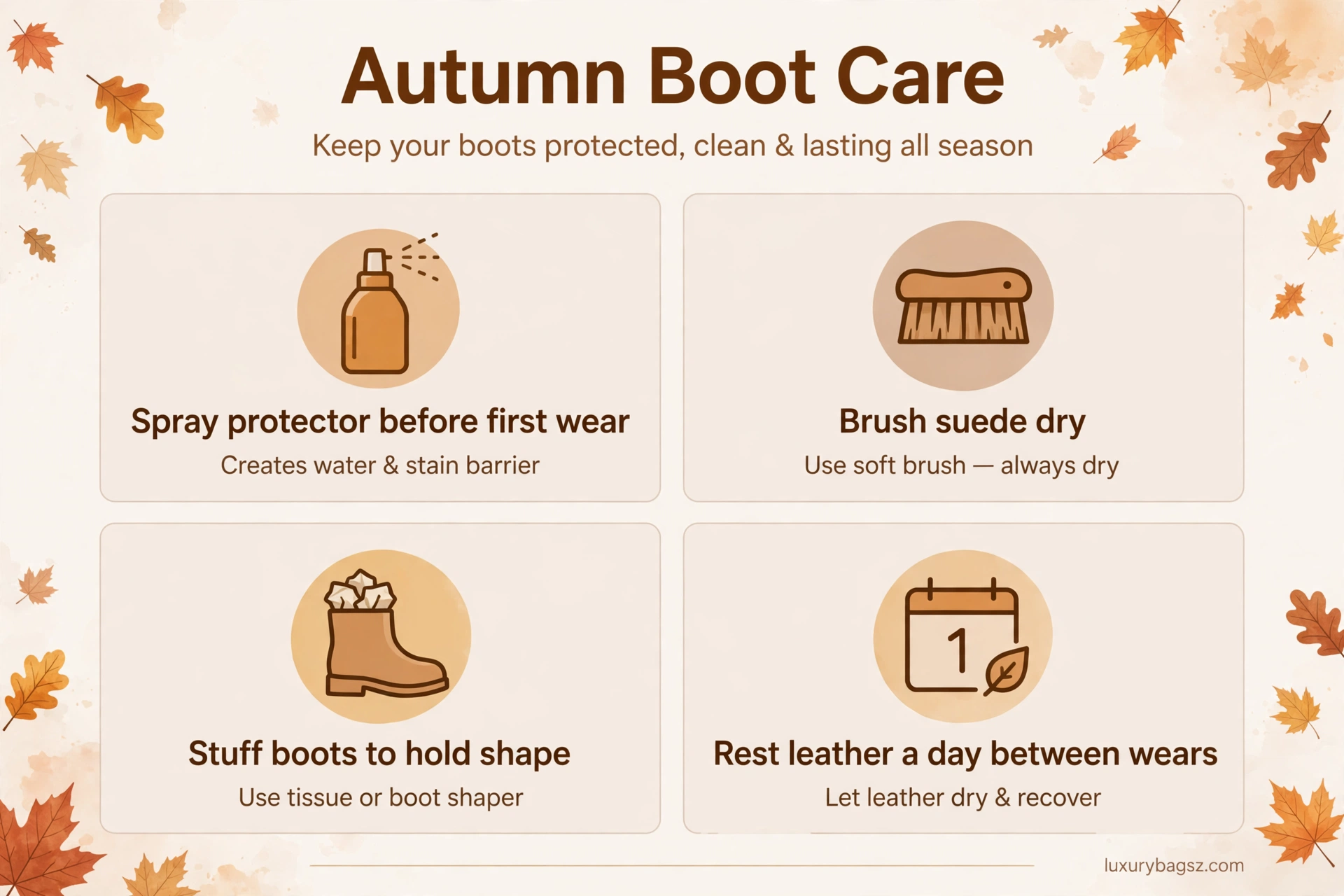
Spray new boots with protector before the first wear, and brush suede only when it is fully dry. Mud brushed wet just grinds deeper into the nap.
Stuff boots with tissue or shapers when they come off, so the shaft stands and the toe holds its line. Rest leather a full day between wears so it can dry out properly.
Salt marks from gritted pavements wipe away with a barely damp cloth. Deal with them the same evening; left overnight, salt dries the leather and leaves a tide line.
Building a Two-Pair Autumn Rotation
Most wardrobes need only two pairs in heavy rotation: one black, one in brown, tan or burgundy. Black covers evenings and tailoring; the warmer colour carries denim, knits and daytime coats.
Choose one ankle height and one taller shaft so every hemline has a partner. Add a third pair only for a real gap, such as heavy rain or countryside walking.
Buy the best leather your budget allows and spend the savings from skipping a fourth pair on care products. Well-kept boots outlast trends by years.
Rotate the two pairs rather than living in one. A rest day lets leather dry fully, which doubles the life of the lining and keeps the shape honest for longer.
Frequently Asked Questions
What boot height suits cropped trousers best?
Ankle boots with a slim shaft. The boot top should meet or slightly overlap the trouser hem so there is no awkward gap of skin or bunched fabric.
How tight should knee boots be around the calf?
Close but not gripping. You should be able to slip one finger between the shaft and your leg at the top, and sit down without the edge digging in.
Can I wear suede boots in the rain?
Light drizzle after a protector spray is fine, but steady rain will mark suede. Keep a smooth-leather or rubber pair for wet days and save suede for dry ones.
How long does breaking in new boots take?
Usually a week of short wears: an hour at home, then brief walks, building up daily. Thick socks and conditioner at the flex points make the process gentler.
Do Chelsea boots work with dresses?
Yes. A slim leather Chelsea boot with a midi or knee-length dress looks neat and modern, especially in black with black tights for one unbroken line.
What colour boots go with everything?
Black is the safest single choice, but a deep brown or burgundy pair often works harder with autumn colours like camel, rust and cream knitwear.
How do I stop boots rubbing my heels?
Wear them in gradually with thick socks, add a plaster or heel grip at the rub point, and soften stiff leather with conditioner. A slight heel lift in the shop is normal.
Should boots be stored standing or lying down?
Standing, stuffed with tissue or boot shapers, so the shaft keeps its shape. Lying down for a whole summer can crease the ankle beyond repair.
Are chunky soles practical or just a trend?
Both. A lugged sole grips wet pavements and adds comfort on long walks, and it has stayed in wardrobes long enough to count as a modern classic.
How many pairs of autumn boots do I really need?
Two in regular rotation cover most lives: one ankle height and one taller, in two different colours. A third pair only makes sense for heavy rain or rough ground.
Conclusion: Height, Fit, Care — In That Order
Pick the shaft height that matches your hemlines, fit the calf as carefully as the foot, and keep up the simple spray-brush-stuff routine. Boot camp passed: your autumn footwear is sorted.