The Ruffles Trend Guide: One Detail, Every Dosage
Ruffles: A Small Detail With an Adjustable Volume
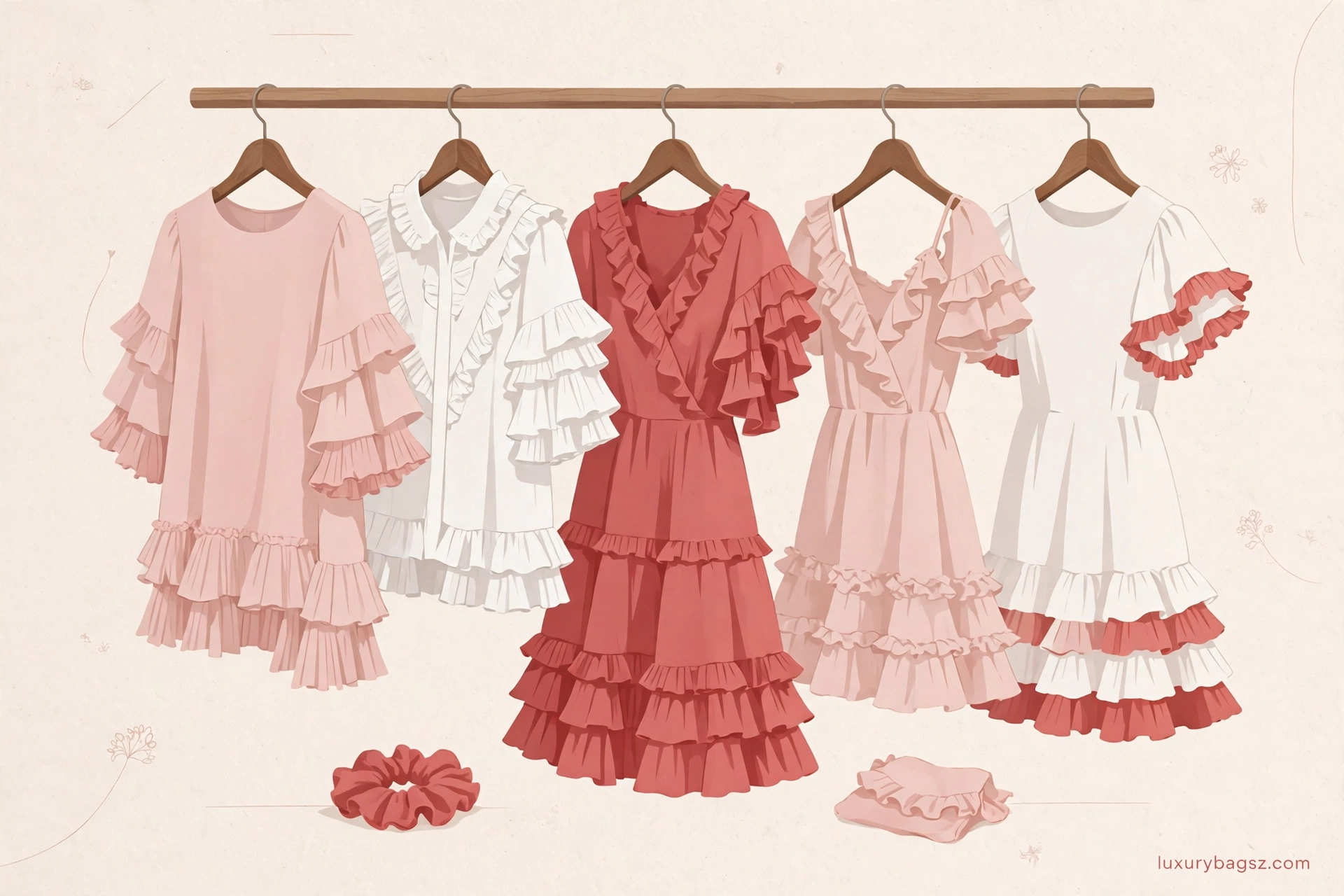
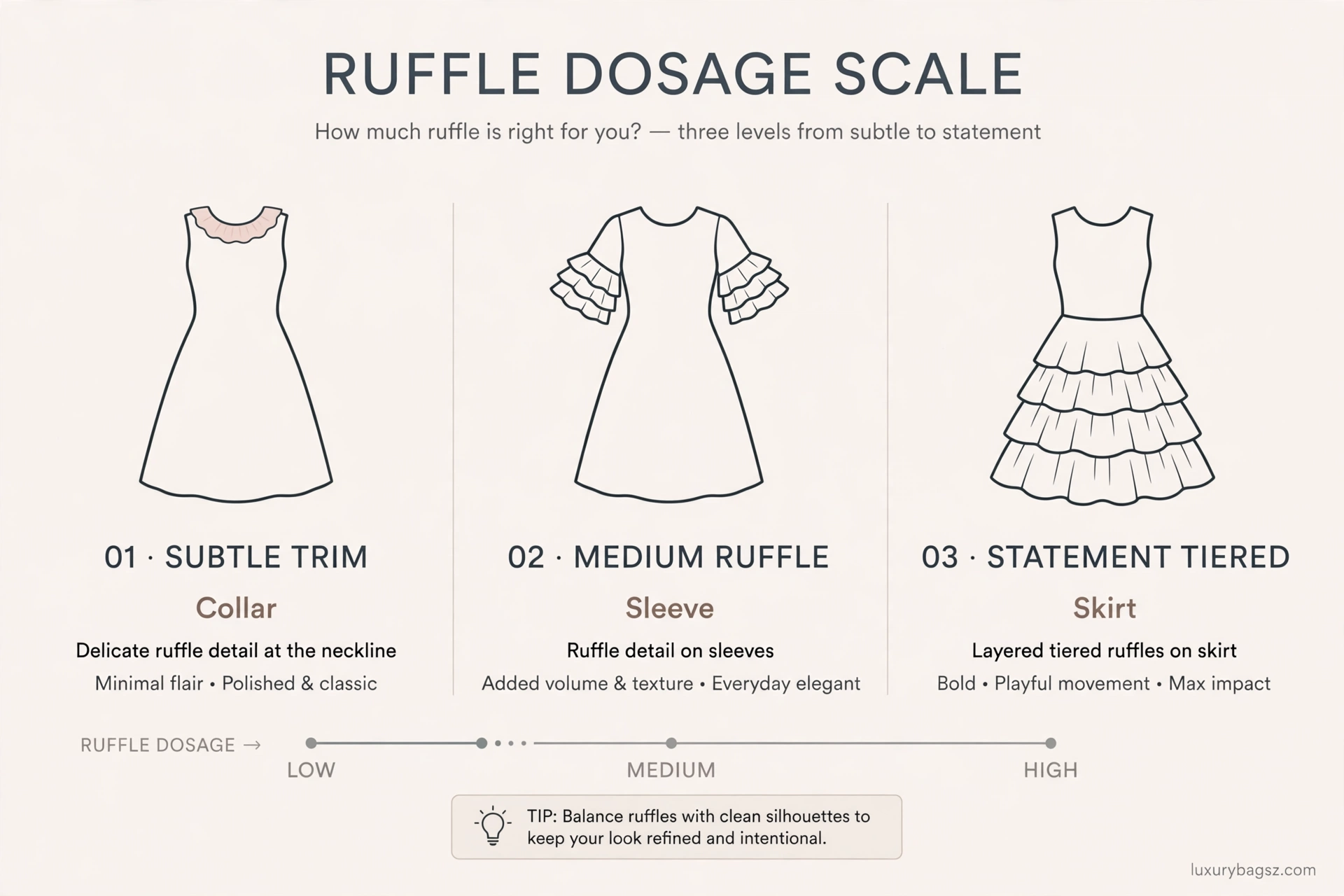
A ruffle is gathered fabric that falls in soft waves, and its whole power lies in dosage. One ruffled collar is a whisper; a tiered ruffle skirt is a statement; the trend guide below shows where to place the frill and how much of it to use.
The modern rule keeps everything else plain. Ruffles plus jeans, ruffles plus tailoring, ruffles plus a sleek bag — the detail shines because the rest of the outfit stays quiet.
Key Takeaways
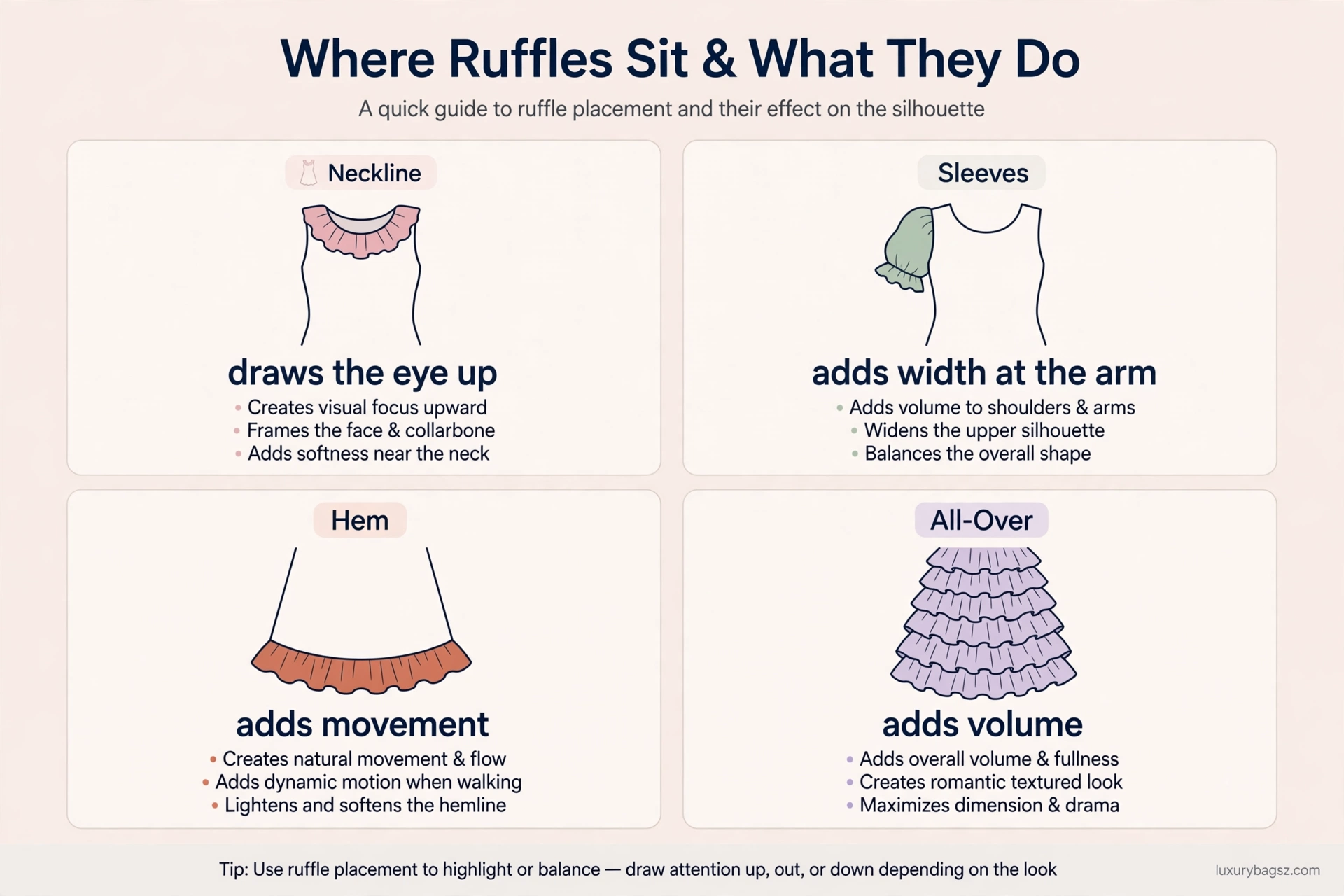
- Placement decides the effect: neckline ruffles lift the eye, hem ruffles add movement, sleeve ruffles add width.
- Dosage runs subtle, medium, statement — pick one level per outfit and keep the rest plain.
- One ruffled piece per outfit is the modern rule; two is a costume risk.
- Stiff fabrics hold sculptural ruffles; soft fabrics give falling, romantic ones.
- Care is simple: steam, do not crush, and store ruffles with room to breathe.
Why Ruffles Keep Coming Back
Few details cycle as reliably as the ruffle. It softens minimal seasons, romanticises plain fabrics and gives movement to photographs, which is why designers reach for it whenever fashion turns severe.
The ruffle also belongs to the wider romantic mood traced in our piece on the bohemian fashion trend, though the current version is cleaner: fewer layers, better fabric, plainer partners.
What changes each return is the placement in fashion. One era puts frills at the neck, another at the hem; learning to read placement is learning the trend itself.
Placement: What Each Frill Does
A neckline ruffle frames the face and draws the eye upward, flattering on camera and over video calls. It adds width at the shoulders, so balance it with a clean, narrow bottom half.
Sleeve ruffles widen the arm and the shoulder line. They suit straight or narrow frames and need a plain torso beside them; a frilled sleeve over a frilled bodice is where outfits tip over.
Hem ruffles add movement rather than width, swinging as you walk. All-over ruffles add true volume everywhere and belong to confident, deliberate occasion dressing.
Back ruffles are the overlooked placement: a flounce down a spine or across a skirt's back adds interest exactly where plain dresses go dull, and surprises as you leave a room.
The Subtle Dose: Trims and Collars
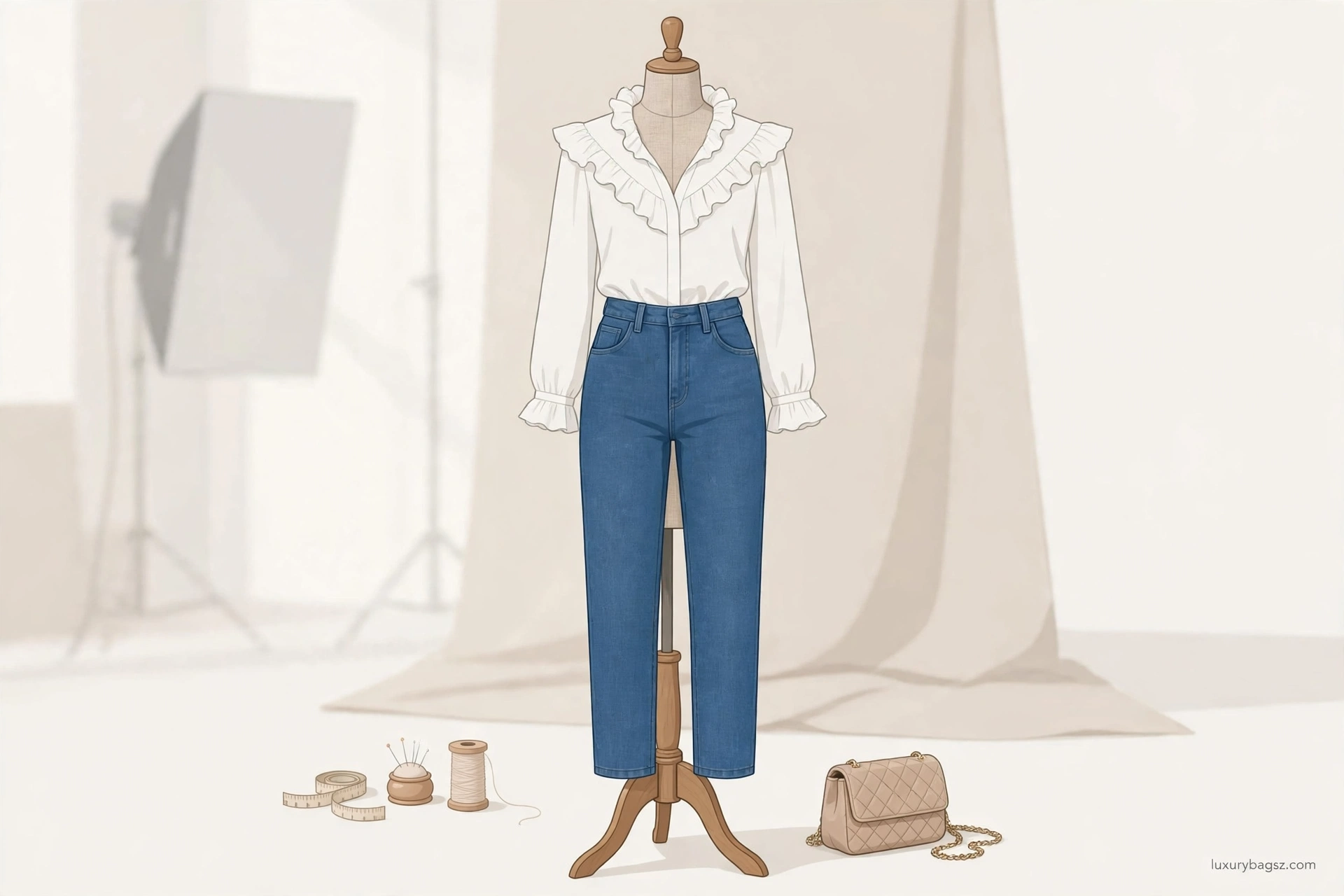
The entry level is a trim: a ruffled collar on a plain blouse, a frilled cuff, a single flounce at a neckline. Worn with straight jeans or tailored trousers, it reads fresh rather than girlish.
This is the work-safe dose. A white ruffle-neck blouse under a blazer gives a boardroom outfit one soft note, and the blazer can close over it when formality is required.
Subtle ruffles are also the cheapest way into the trend: one blouse updates every plain bottom you own, from denim to the pencil skirt that needed a reason to live.
Colour decides how subtle the dose feels. A white or black ruffled collar reads as texture; the same collar in bright pink reads as the outfit's main event.
The Medium Dose: Sleeves, Hems and One Good Dress
Medium means one clear ruffle feature: a dress with a ruffled hem, a blouse with statement sleeves, a skirt with a single asymmetric flounce. The piece is the outfit; shoes and bag go quiet.
Fabric decides its character. Our note on why a satin dress is a wardrobe staple applies here too: smooth fabrics make ruffles look sculptural and evening-ready, while cotton keeps them daytime-casual.
Keep jewellery minimal at this dose. The ruffle is already doing the ornament's job, and a competing necklace or chandelier earring splits the viewer's attention.

The Statement Dose: Tiers and Occasions
The full dose is the tiered ruffle dress or skirt: layer upon layer, worn to be noticed. It belongs at weddings, parties and photographs, and it needs confidence more than accessories.
Balance the volume with discipline elsewhere — sleek hair, a small structured bag from the world of designer party bags, and a plain shoe. Nothing else should swirl.
Choose the tier count by height and frame honestly. More tiers mean more volume; a shorter frame often looks best with finer, closer tiers rather than wide ones.
Length matters as much as tier count. A ruffled skirt that ends at the slimmest point of the leg flatters; one ending mid-calf with its widest tier does the opposite.
Fabric and Construction: Reading Quality
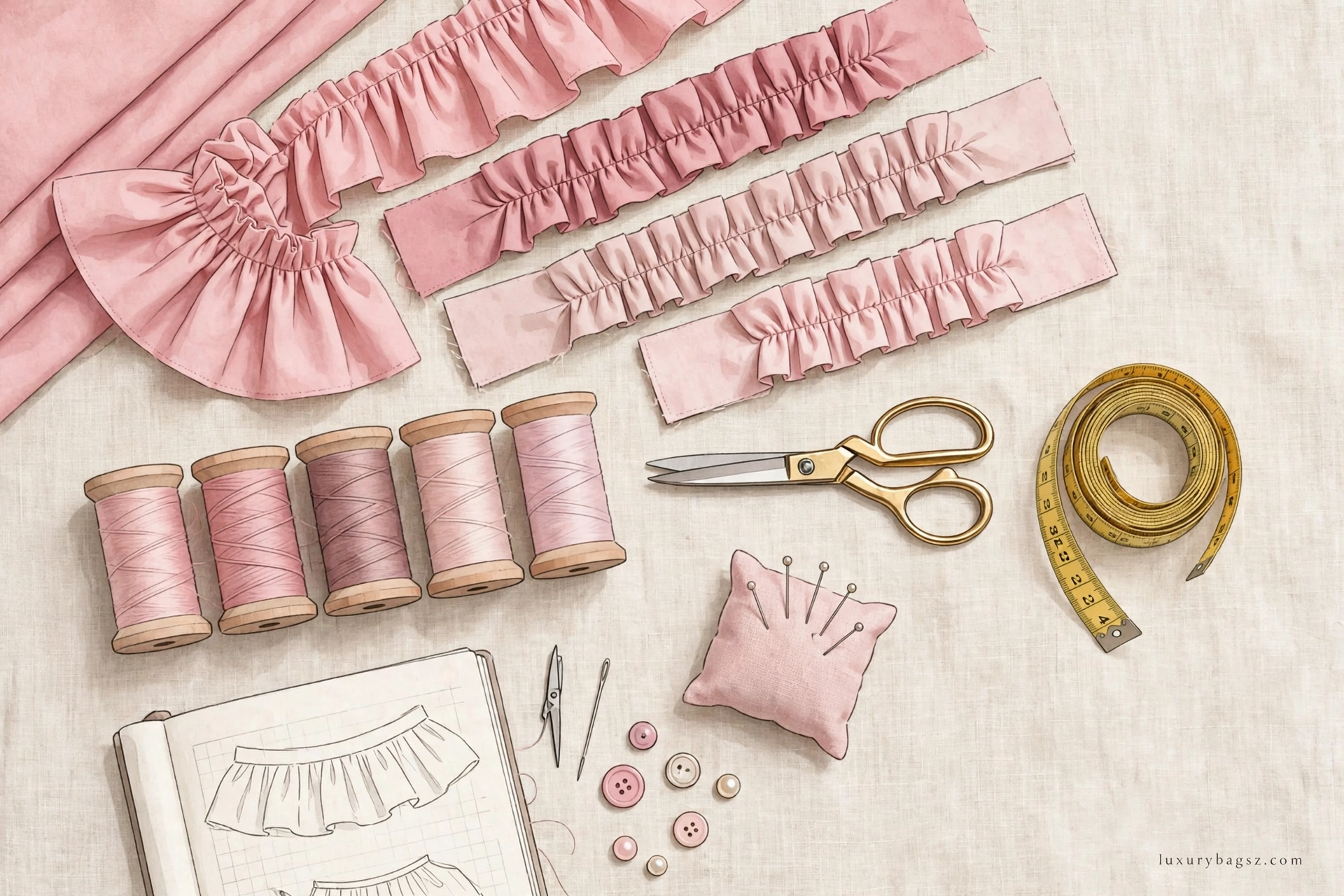
A good ruffle is cut on the bias or gathered evenly, so the waves fall in a rhythm rather than clumping. Cheap ruffles bunch, twist and collapse after one wash; the flounce should spring back when pressed gently.
Stiffer cloth — organza, taffeta, crisp cotton — holds a sculpted wave. Chiffon, georgette and soft crepe give falling ruffles that move with the body. Neither is better; they are different moods.
Check the edge finish. Rolled or finely hemmed edges keep their shape; raw or overlocked edges fray into tiredness quickly, especially on hems that brush against shoes and chairs.
Try the sit test before buying. Ruffles at the waist or hip crush flat after one dinner; if the flounce cannot spring back afterwards, it will not survive the season.
Care: Steam, Space and Patience
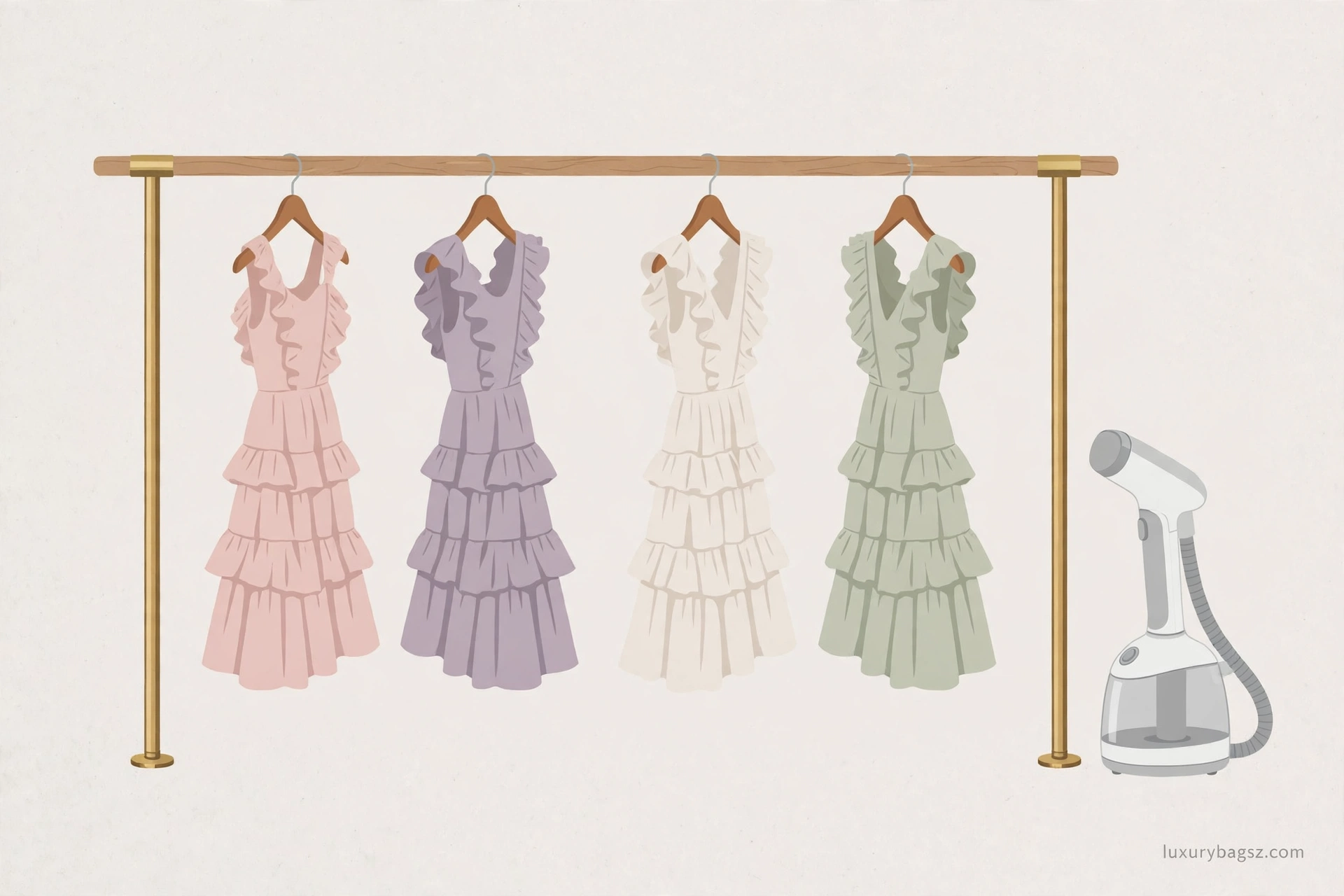
Ruffles hate two things: crushing and hard ironing. A garment steamer revives the waves without flattening them; if you must iron, use the lowest heat and work from the underside.
Store ruffled pieces with space around them, hung rather than folded where possible, and never vacuum-packed. Compressed ruffles lose the air that makes them ruffles.
Wash gently and reshape the flounces while damp, teasing the waves back into rhythm with your fingers. Two minutes of this saves the garment's whole effect.
Who Should Wear What
Fuller busts usually suit ruffles below the waist — hems and skirts — keeping the upper body sleek. Narrow shoulders gain from neckline and sleeve frills that build the line outward.
Petite frames do best with small-scale ruffles: fine trims, narrow flounces, single tiers. Tall frames can carry the wide tiers and long ruffled hems that overwhelm shorter proportions.
None of this is law. The mirror test is simpler: if the ruffle is the first thing you see and your face the second, the balance is right. If you see only frill, reduce the dose.
Alterations can rescue a near miss. A tailor can remove one tier or narrow an over-wide flounce, turning a costume piece into the dress you actually reach for.
Frequently Asked Questions
Are ruffles in fashion at the moment?
Ruffles are one of fashion's most reliable returning details, present in current collections at every level from a trimmed collar to tiered occasion dresses. The modern way to wear them is one piece at a time.
Do ruffles make you look bigger?
They add volume where they sit, which is a tool rather than a problem. Place them where you want width or movement — shoulders, hem — and keep the areas you prefer sleek completely plain.
Can I wear ruffles to the office?
Yes, at the subtle dose: a ruffled collar or cuff on an otherwise plain blouse, worn with tailoring. Statement tiers and all-over frills are better saved for events.
What do I wear with a ruffled top?
Plain, structured partners: straight jeans, tailored trousers, a pencil skirt. The ruffle supplies all the softness and movement; everything else should be calm and clean-lined.
Which fabric is best for ruffles?
For sculptural waves, organza, taffeta or crisp cotton. For soft, falling ruffles, chiffon, georgette or crepe. The fabric decides whether the look reads formal or romantic.
How do I stop ruffles looking childish?
Scale and partners do it: smaller, finer ruffles, worn with grown-up pieces — tailoring, denim, leather shoes — and minimal jewellery. Avoid pairing ruffles with pastels head to toe.
Can petite women wear ruffles?
Yes, in fine scale: narrow trims, small flounces, a single tier. Wide, heavy tiers add bulk that can swamp a small frame, so keep the waves light and close.
How should ruffled clothes be ironed?
Prefer a steamer, which restores the waves without flattening them. If ironing, use low heat on the reverse side and never press the ruffle flat under the iron.
Are ruffles suitable for weddings?
Very. A medium or statement ruffle dress is a classic guest choice. Keep accessories sleek and small so the dress carries the look, and avoid white or ivory unless the couple invites it.
How many ruffled pieces should I own?
One or two well-chosen pieces cover the trend for most wardrobes: a blouse for the subtle dose and a dress for occasions. Ruffles date less by style than by overexposure in one wardrobe.
Conclusion: One Frill, Well Placed, Beats a Wardrobe of Them
Choose the placement for the effect you want, set the dose for the occasion, and let plain partners do the supporting work. That restraint is what makes ruffles look current instead of costume — season after season.