

Sweater Weather Style Guide: Knits, Layers and Colours That Work
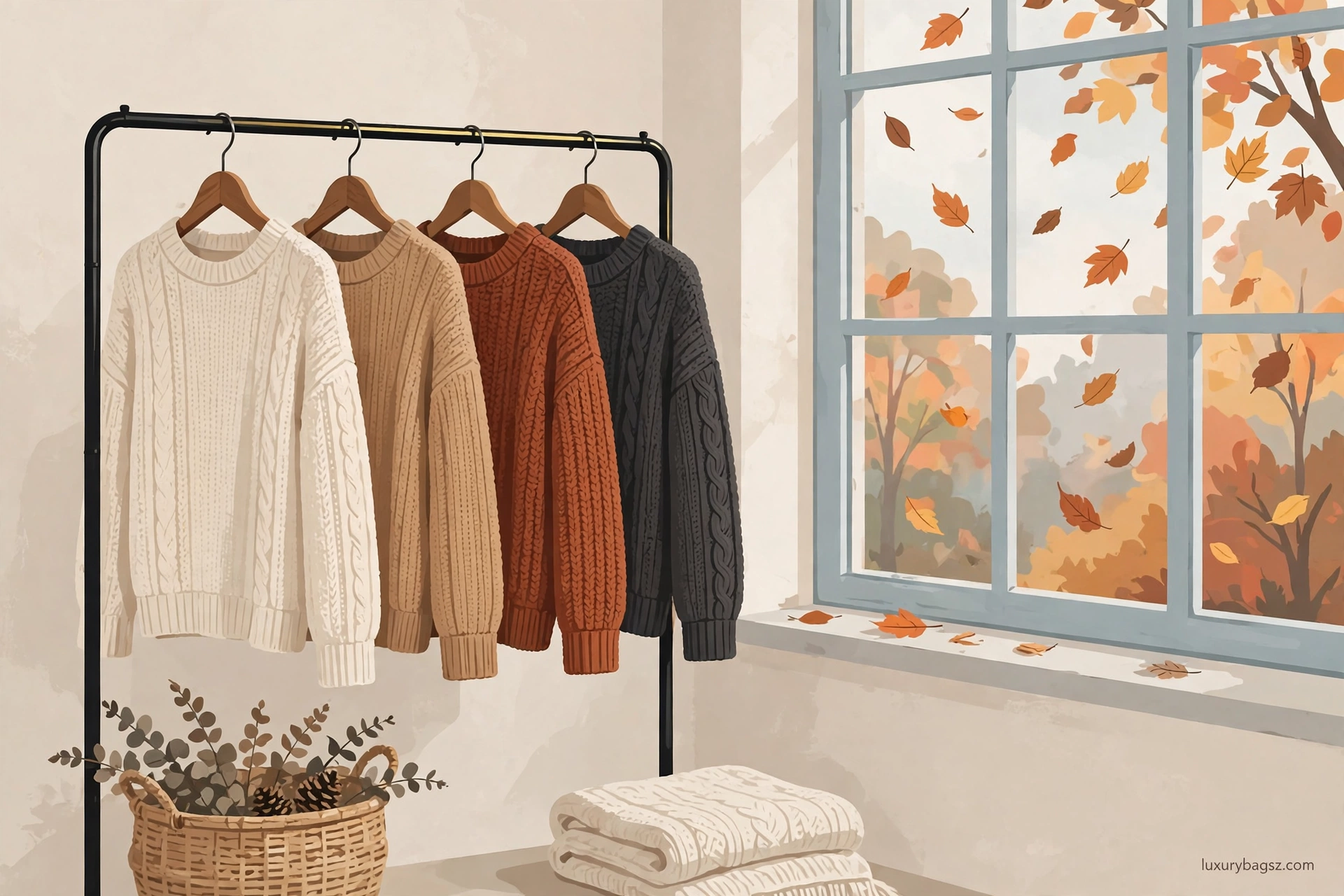
Sweater Weather, Sorted: The Short Answer
Sweater weather dressing works when you build around three things: a warm fibre, a layer underneath, and a colour family that mixes without thought. Get those right and one good jumper carries jeans, skirts and tailoring all season.
Start with wool or a wool blend for real warmth, add a fine cotton or silk vest top beneath, and keep to creams, greys, camels and one deep colour. That is the whole formula, and everything below simply fills in the details.
Key Takeaways
- Wool and wool blends give the most warmth per layer; cotton knits suit mild days only.
- A thin base layer under a jumper adds warmth without bulk and protects the knit.
- Three outfit formulas cover work, weekends and evenings with the same five jumpers.
- Cream, grey, camel and burgundy mix freely, so a small knit wardrobe feels bigger.
- Fold knits, never hang them, and de-pill gently to keep them looking new.
When Sweater Weather Actually Starts
Sweater weather begins when a jacket alone stops being enough, usually once daytime temperatures sit in the low teens. That first cold snap catches many wardrobes out, so the jumpers should be washed, de-pilled and ready before it arrives.
Think in stages rather than one big switch. A fine knit over a shirt handles the first stage, a chunky knit with a coat handles the last, and the weeks between need both weights in rotation.
A quick wardrobe check in early autumn pays off. Try each jumper on with the coat you wear most, because sleeve bulk that feels fine alone can bunch badly under a fitted coat arm.
The Fibres That Earn Their Drawer Space
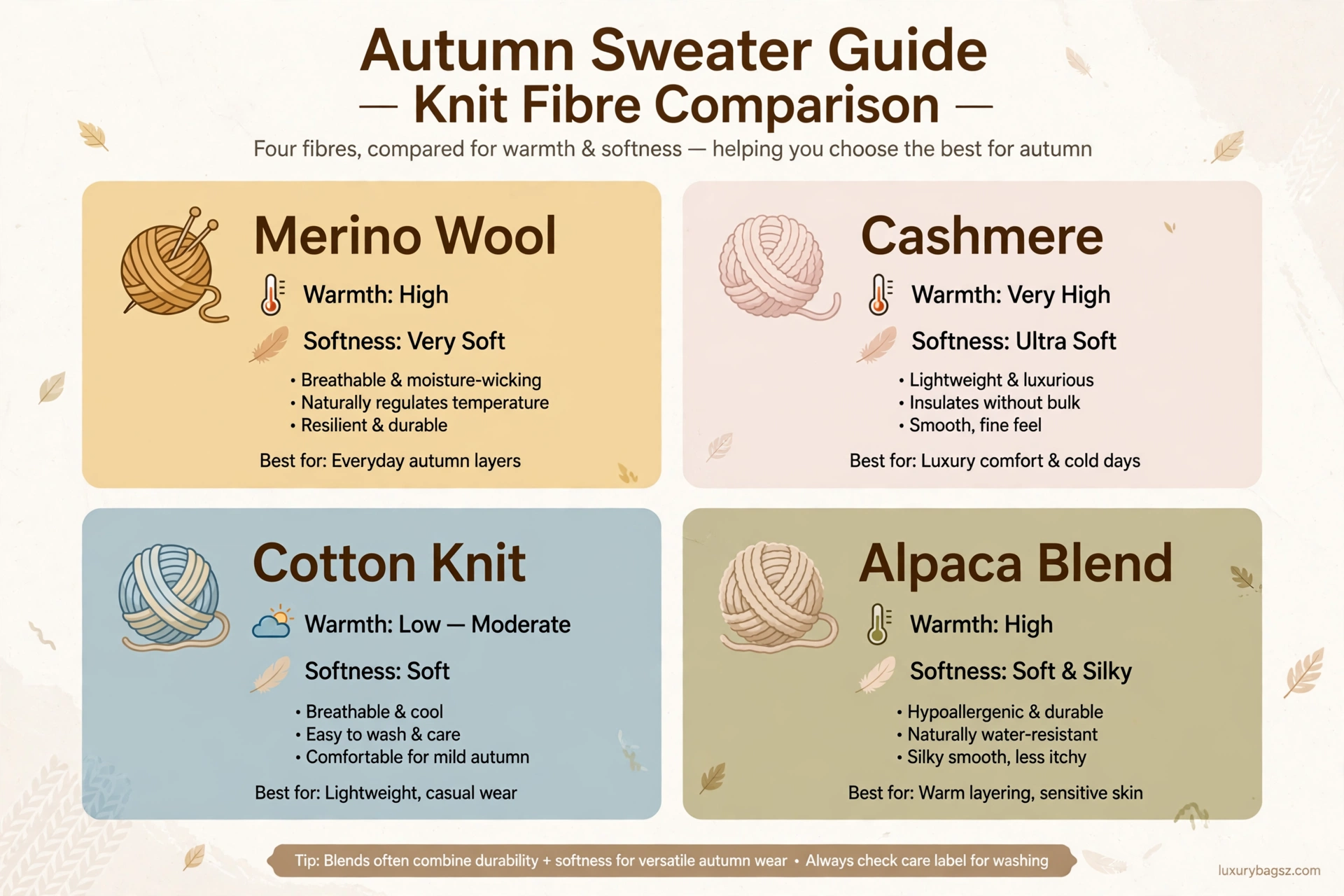
Wool is the benchmark: it traps warm air, resists odour and copes with a full day of wear. Lambswool feels rustic and lasts for years, while merino is finer, smoother and easier to wear next to the skin.
Cashmere is lighter and softer, though it pills faster and costs more per wear if bought cheaply. Cotton knits breathe well but hold little warmth, so save them for mild days and heated rooms.
Blends can be the sweet spot. Wool with a little nylon wears harder at cuffs and elbows, and a wool-cotton mix softens the price while keeping most of the warmth.
Read the label in percentages before you judge the price. A jumper sold as a wool blend may hold as little as a fifth wool, and the warmth follows the wool share far more than the name on the tag.
Shapes That Layer Without Bulk
A crew neck in a medium weight is the hardest-working shape you can own. It sits over shirts, under blazers and alone with jeans, and it never fights with a coat collar.
Roll necks add warmth at the throat, which means a lighter coat can stay in play for longer. Keep the knit fine rather than chunky if you plan to layer a jacket over it.
Cardigans earn their place as the adjustable layer. Worn open over a dress or buttoned as a top, one cardigan covers the in-between days when a jumper alone feels like too much or too little.
V-necks still earn a mention for layering over collared shirts, where the open front shows the shirt properly. Keep one in a fine knit if shirts are a weekday habit.
Layering, in the Right Order
Layer thin to thick. A vest top or fine long-sleeved tee goes against the skin, the jumper sits in the middle, and a coat, blazer or padded jacket finishes the stack.
The base layer does quiet, useful work. It absorbs moisture, stops wool itching, and means the jumper itself needs washing far less often, which keeps it in good shape for years.
Watch the neckline stack. A shirt collar over a crew neck looks deliberate, a roll neck under a blazer looks polished, and three competing collars at once just look busy.
Proportion matters as much as warmth. A half-tuck at the front of a chunky knit stops it swamping your frame, and pushing sleeves to the forearm lightens a heavy jumper instantly.

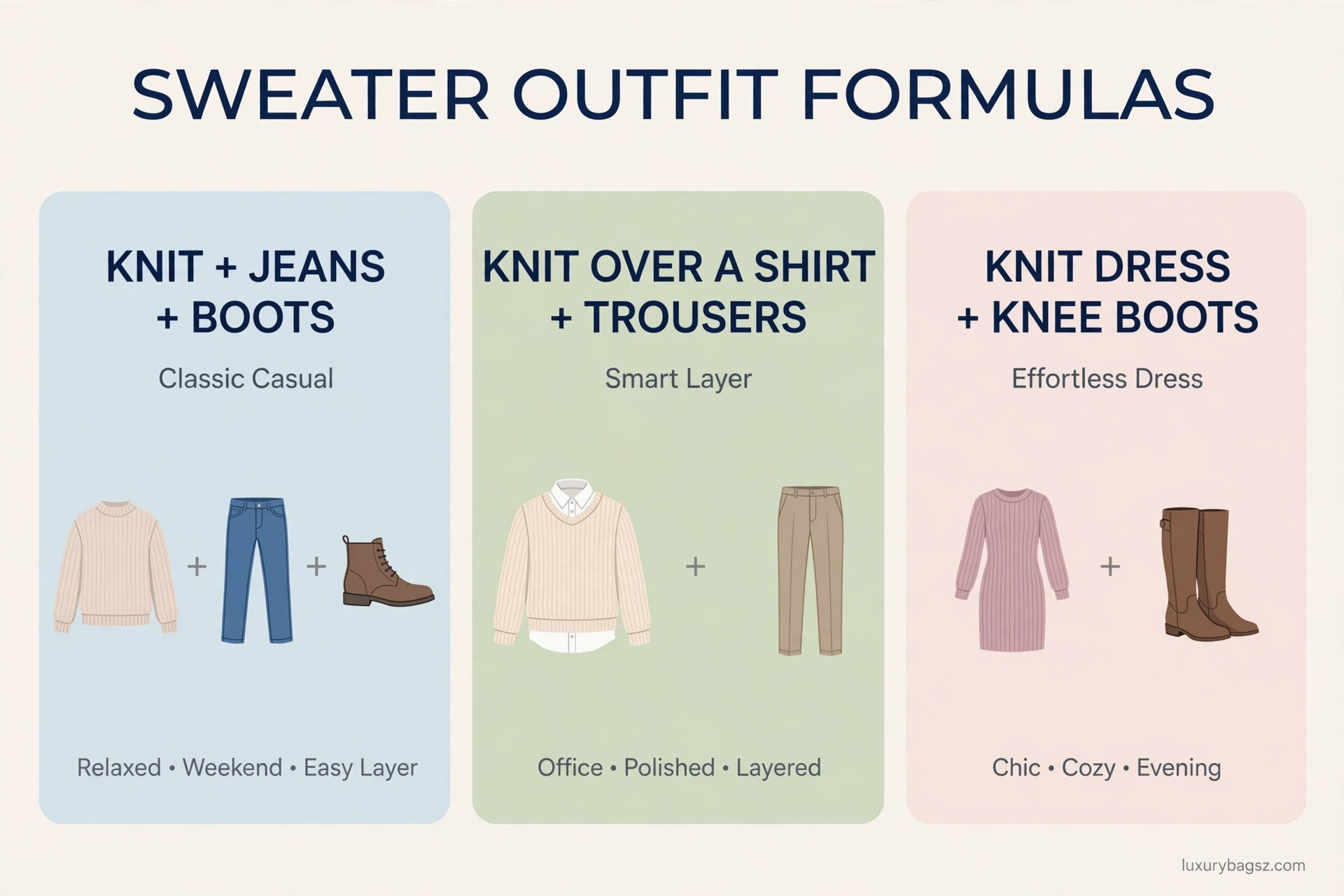
Three Formulas That Cover the Week
For work, pair a fine merino crew with tailored trousers and loafers, then add the coat you would wear anyway. Our round-up of fall handbag trends shows the structured bags that finish this look neatly.
For weekends, a chunky knit with straight jeans and the styles from our guide to boots every woman needs is warm, simple and hard to get wrong.
For evenings, swap the base: a silk camisole under a soft cardigan, worn with a midi skirt and heeled boots, reads dressed-up while keeping the comfort of knitwear.
Coats finish all three formulas, so check the pairing once at home. A chunky knit under a slim coat needs the coat to still close comfortably, or the whole outfit loses its ease.
Colours That Mix Without Thinking
Build the core in cream, grey and camel. Those three sit happily together in one outfit and pair with almost every coat, trouser and skirt already in a wardrobe.
Add one deep colour for interest: burgundy, forest green or navy. A single deep shade repeated across a jumper, a scarf and a bag makes separate pieces look planned.
Keep patterns small and sparse. A fair-isle yoke or a fine stripe is plenty; loud patterns shrink the number of things a jumper can be worn with.
Test new colours against your coat before buying. Hold the jumper beside it in daylight: if the two look calm together, the colour will earn its place in the rotation.
Care That Stops the Decline
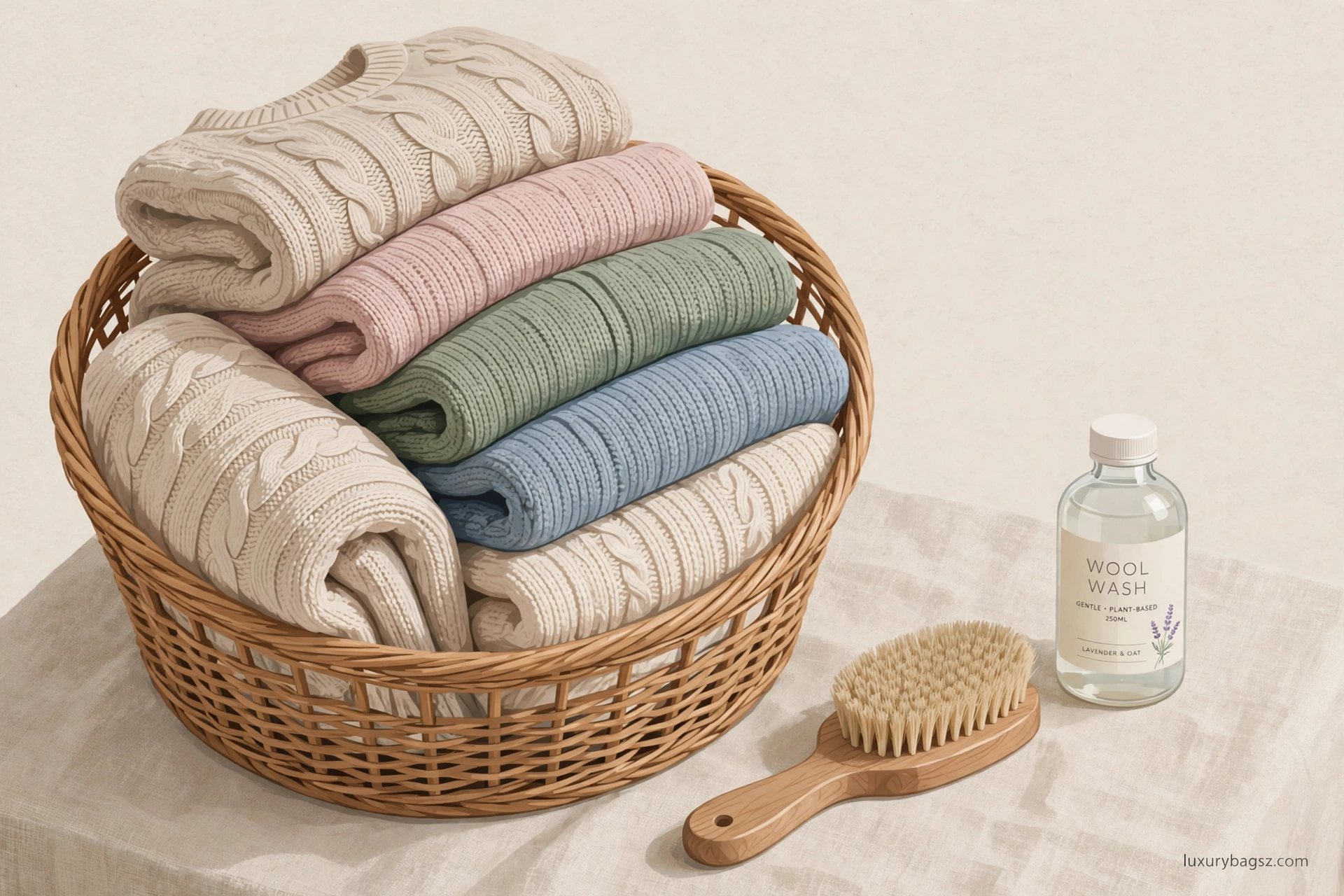
Wash knits rarely and gently. Most jumpers need airing more than washing; when you do wash, use cool water and a wool detergent, then dry flat so the weight of the water cannot stretch the shape.
The same gentle approach in our guide to how to clean cotton, linen and silk works for mixed knit wardrobes, since the softest garment should set the washing rules.
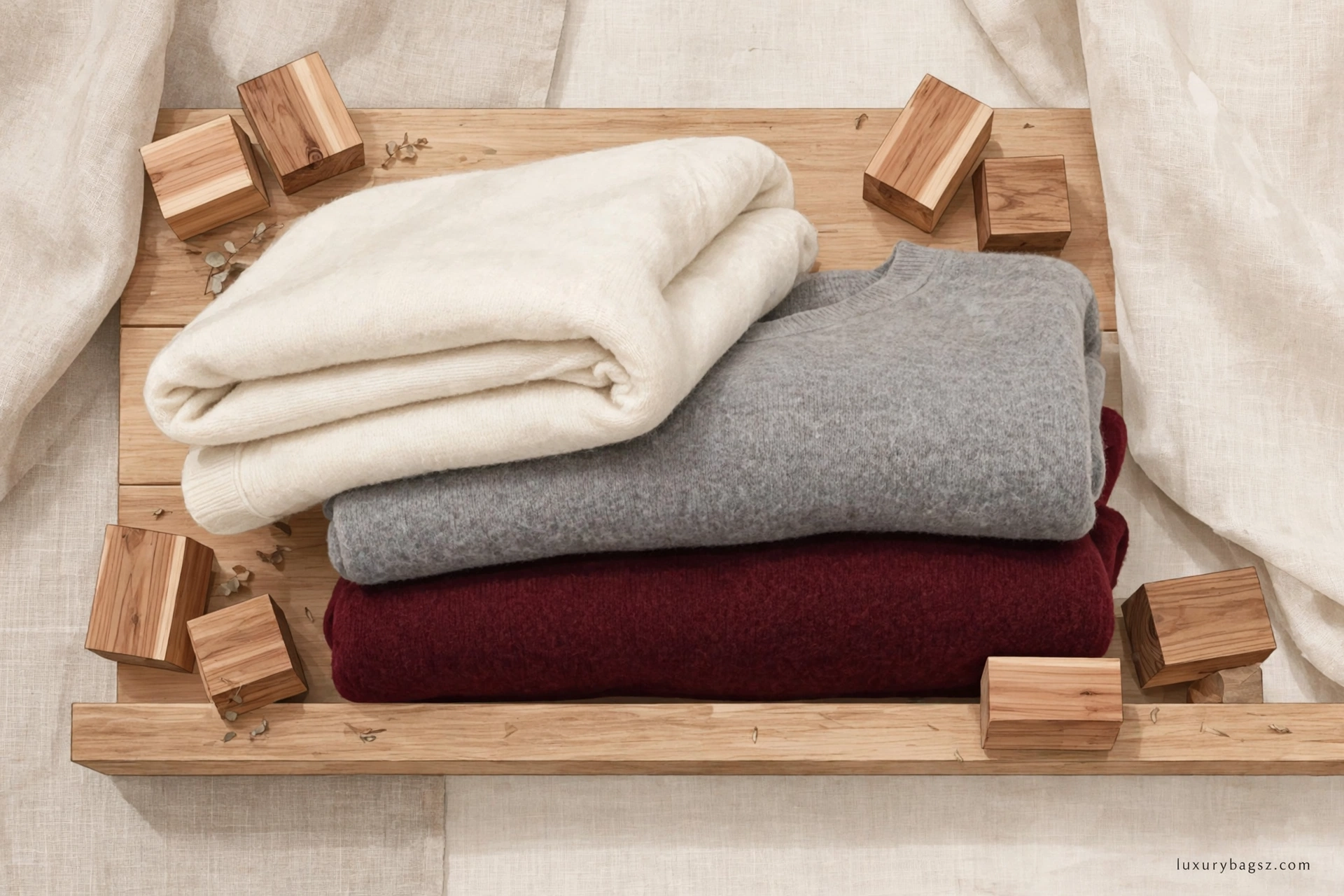
Fold everything. Hangers pull shoulders into points that never quite recover, while a folded stack with cedar nearby keeps moths away and shapes intact.
De-pill little and often rather than in one harsh session. A gentle pass after every few wears keeps the surface smooth and takes far less fibre with it than a rescue job.
The Five-Jumper Wardrobe
If you buy nothing else, own these five: a cream crew, a grey roll neck, a camel cardigan, one deep-coloured chunky knit and one fine black layer for evenings.
Five jumpers in a tight colour family make roughly fifteen outfits with two bottoms and two coats. That is the quiet maths behind looking well dressed all through sweater weather.
Buy the best fibre you can at each step. One good wool jumper outlasts three cheap acrylic ones, costs less per wear and looks better in every single photograph.
If the budget only stretches to one upgrade, make it the cream crew. It is worn most, photographed most and paired with everything, so quality shows there first.
Frequently Asked Questions
What temperature counts as sweater weather?
Most people reach for a jumper once daytime temperatures fall into the low teens Celsius. Below about 10 degrees, add a coat over the knit rather than a thicker jumper alone.
Which knit fibre is warmest for its weight?
Wool, especially lambswool and merino, gives the most warmth for its weight. Cashmere feels softer and lighter but usually needs a base layer sooner in cold wind.
How do I stop jumpers itching?
Wear a fine cotton or silk layer underneath so the wool never touches your skin directly. Choosing merino or a wool blend also reduces the prickle for most people.
Can I wear a jumper to the office?
Yes. A fine crew or roll neck in a plain colour with tailored trousers and loafers reads as smart as a shirt and blazer, and it is warmer on a cold commute.
How many jumpers does a winter wardrobe need?
Five well-chosen jumpers in a shared colour family cover most people. They mix into around fifteen outfits with two trousers or skirts and two coats.
Should knitwear be hung or folded?
Always folded. Hanging stretches shoulders and pulls the knit out of shape under its own weight, while folding keeps the neckline and shoulders true.
How often should I wash a jumper?
Only when it is marked or smells stale, often after five or more wears. Airing overnight handles most freshness, and every wash shortens a knit's life a little.
What shoes work best with chunky knits?
Ankle boots, loafers and clean trainers all work. Chunky knits carry visual weight, so a shoe with some substance balances the outfit better than a delicate sandal.
How do I remove pilling from a sweater?
Use a fabric shaver or a knit comb on a flat surface, working gently in one direction. Wash inside out afterwards and avoid wearing the same knit two days running.
Can I wear knitwear in the evening?
Yes. A fine cardigan over a silk camisole, or a soft roll neck with a midi skirt and heeled boots, looks dressed-up while staying warm and comfortable.
Final Verdict: Fibre First, Then Everything Falls Into Place
Choose wool or a good blend, layer thin underneath, and hold your colours to one family. Do that and sweater weather stops being a wardrobe problem and becomes the easiest dressing of the year.






