How to Choose the Right Brown Shoe Polish: Shades, Neutral vs Coloured, and a Clean Shine
The Right Brown, in Brief
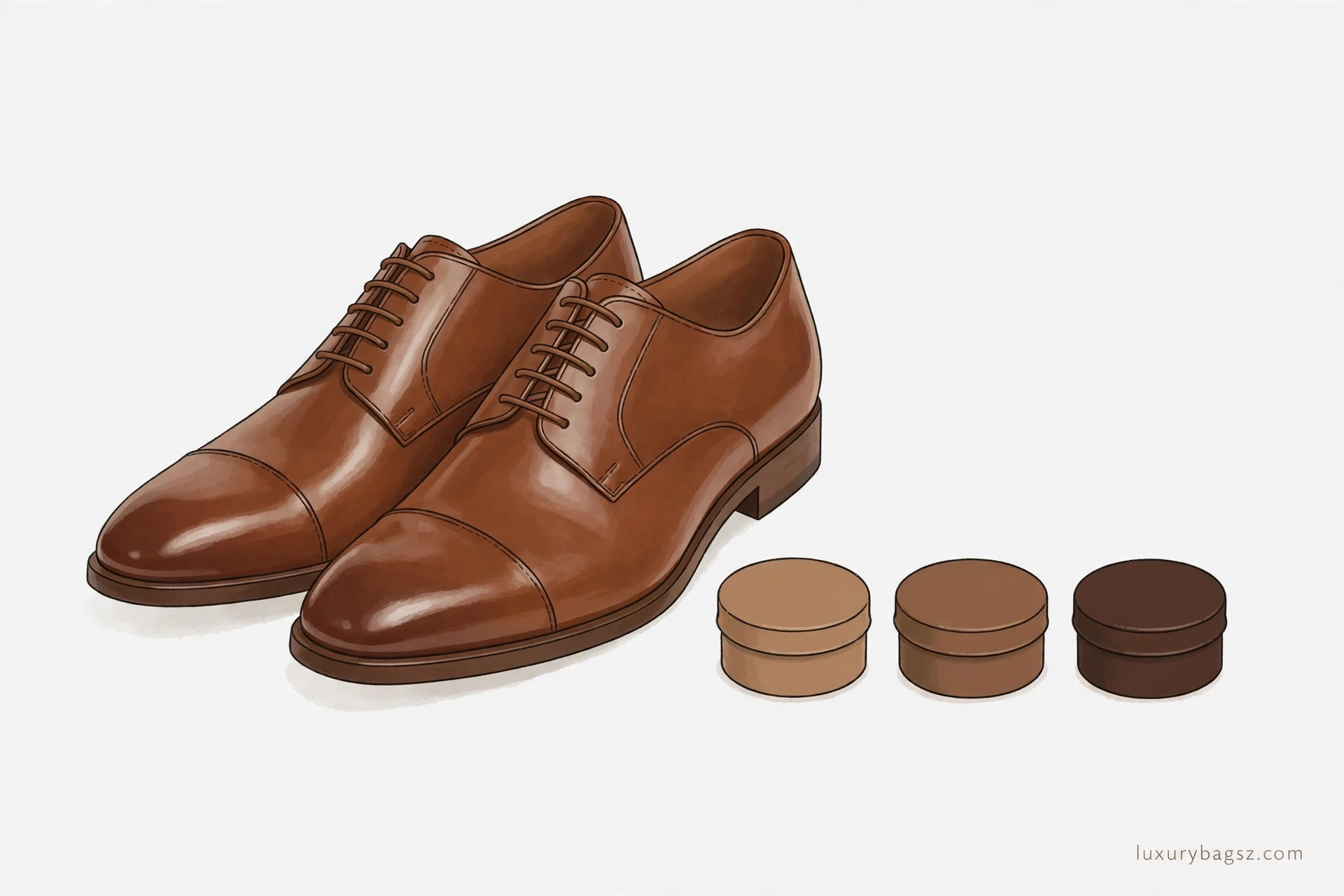
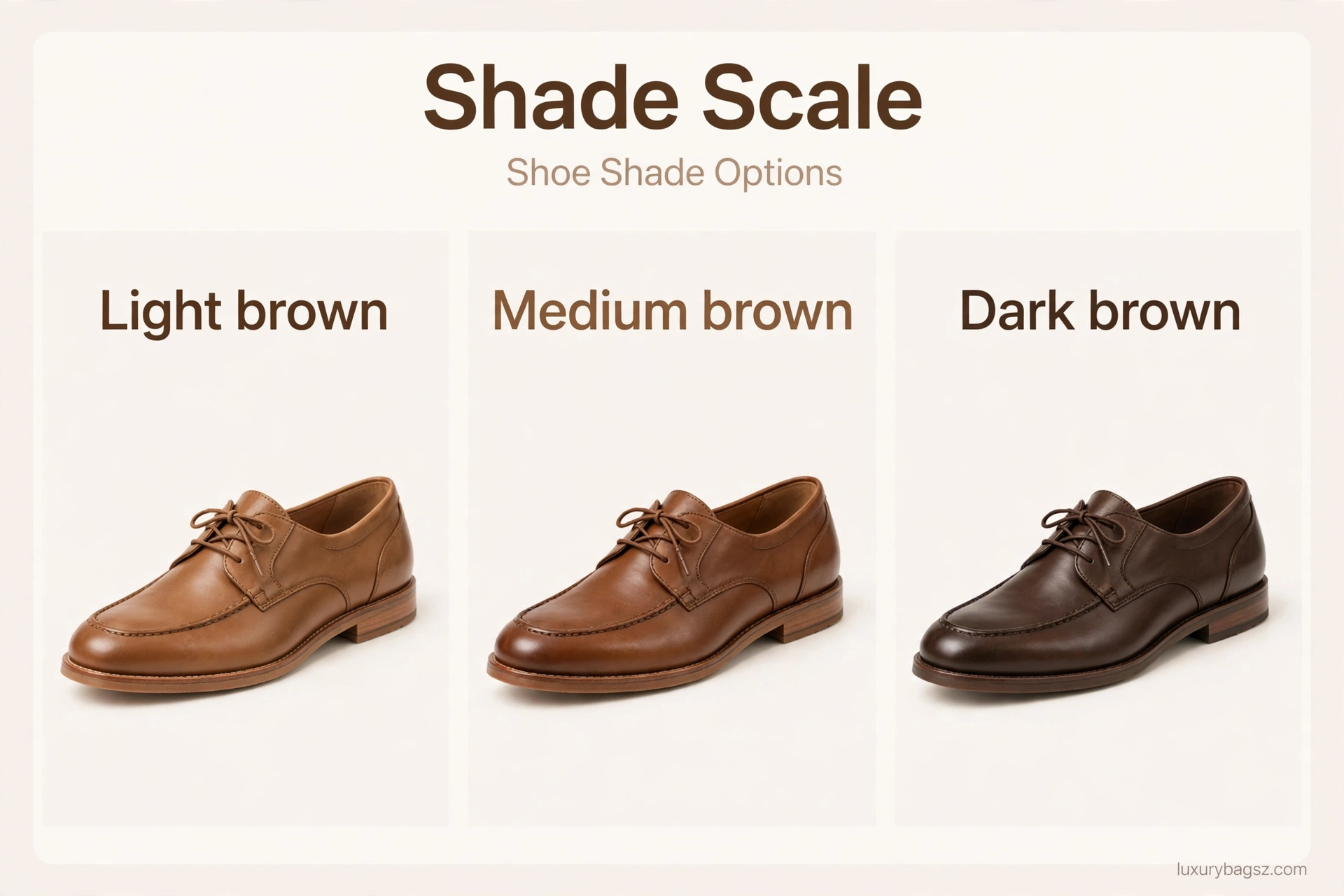
Choose a brown polish that matches your shoe's shade as closely as you can, or sits a touch darker if you are torn between two. Light brown polish suits tan and pale brown shoes, medium brown suits classic chocolate-brown shoes, and dark brown suits deep, espresso-toned shoes.
If you are unsure, or your shoes are burnished, multicoloured or an unusual brown, neutral polish is the safe buy. It conditions and shines without adding colour, so it cannot push your shoes a shade darker by accident.
Test every coloured polish on a hidden spot first, apply it in thin coats, and judge the colour in daylight once dry. Polish is a tint, not a repaint: it enriches and evens the colour you already have, and it will not turn a light shoe dark in one coat.
Key Takeaways
- Match the polish to the shoe: light brown for tan and pale browns, medium for classic browns, dark for deep browns.
- Torn between two shades? Go slightly darker to hide scuffs, or slightly lighter if you fear darkening the shoe.
- Neutral polish adds shine and care with no colour change, and it is the safest choice for burnished or unusual browns.
- Cream polish nourishes and colours; wax polish shines and protects. Many shoes benefit from cream first, then a light wax.
- Always test on a hidden spot and check the result in daylight after drying.
- Never use smooth-leather polish on suede or nubuck, and never use black polish on brown shoes.
- Thin coats, buffed between layers, beat one thick coat every time.
Learn the Brown Shade Scale First
Brown is not one colour, and that is where most polish mistakes begin. Shoe browns run from pale tan through honey and cognac to chocolate, espresso and near-black, and polish makers name their shades just as loosely. Your job is to place your shoe on that scale before you buy anything.
Light brown polish is a soft, buttery brown, darker than tan but well short of chocolate. It suits pale brown and tan shoes, and it freshens faded light leather without dragging it darker. On a mid-brown shoe, it will add only a whisper of colour.
Medium brown is the true chocolate brown of the polish world, the workhorse shade for classic brown dress shoes and boots. If your shoes are the brown most people picture when they hear the word, medium brown is almost certainly your match.
Dark brown is much darker than its name suggests. Kirby Allison's guide notes that dark brown cream polish is almost black when smeared on paper, and that surprises many buyers. Reserve it for deep brown and espresso shoes, or you will darken a mid-brown shoe fast.
Beyond the big three, expect names like cognac, tobacco or havana, chestnut, walnut and mahogany. Cognac sits between light and medium brown with extra warmth, tobacco or havana sits between medium and dark, and mahogany carries a red tint. Treat these as in-between shades, not separate rules.
Match the Polish to Your Actual Shoe
Start in daylight, not under shop lights or a warm bedroom lamp. Artificial light warms browns and hides red or yellow undertones, which is why a polish that looked perfect in the shop can look wrong at home. Hold the shoe near a window and look at its main panels, not just the toe.
Find the shoe's dominant tone, not its darkest crease or its lightest worn edge. Creases darken with age and wear, while toes and heels lighten, so neither is a fair guide. The vamp and quarters, the broad flat areas, show the true colour best.
Compare the polish to the shoe, not to another tin. Smearing a little polish on white paper, as Kirby Allison demonstrates, shows the polish's true pigment far better than peering into the tin, where polish always looks darker. Some makers publish paper swatches for exactly this reason.
If the shoe is a single even brown, pick the closest shade. If it is burnished, with darker toes and lighter middles, do not chase one shade for the whole shoe: neutral polish preserves that hand-finished variation, while a coloured polish flattens it towards one flat tone.
Check the label or box for the shoe's colour name too. Makers often print names like cognac, espresso or dark brown inside the shoe, and that name is a useful starting point, even though two makers' cognacs can still differ.
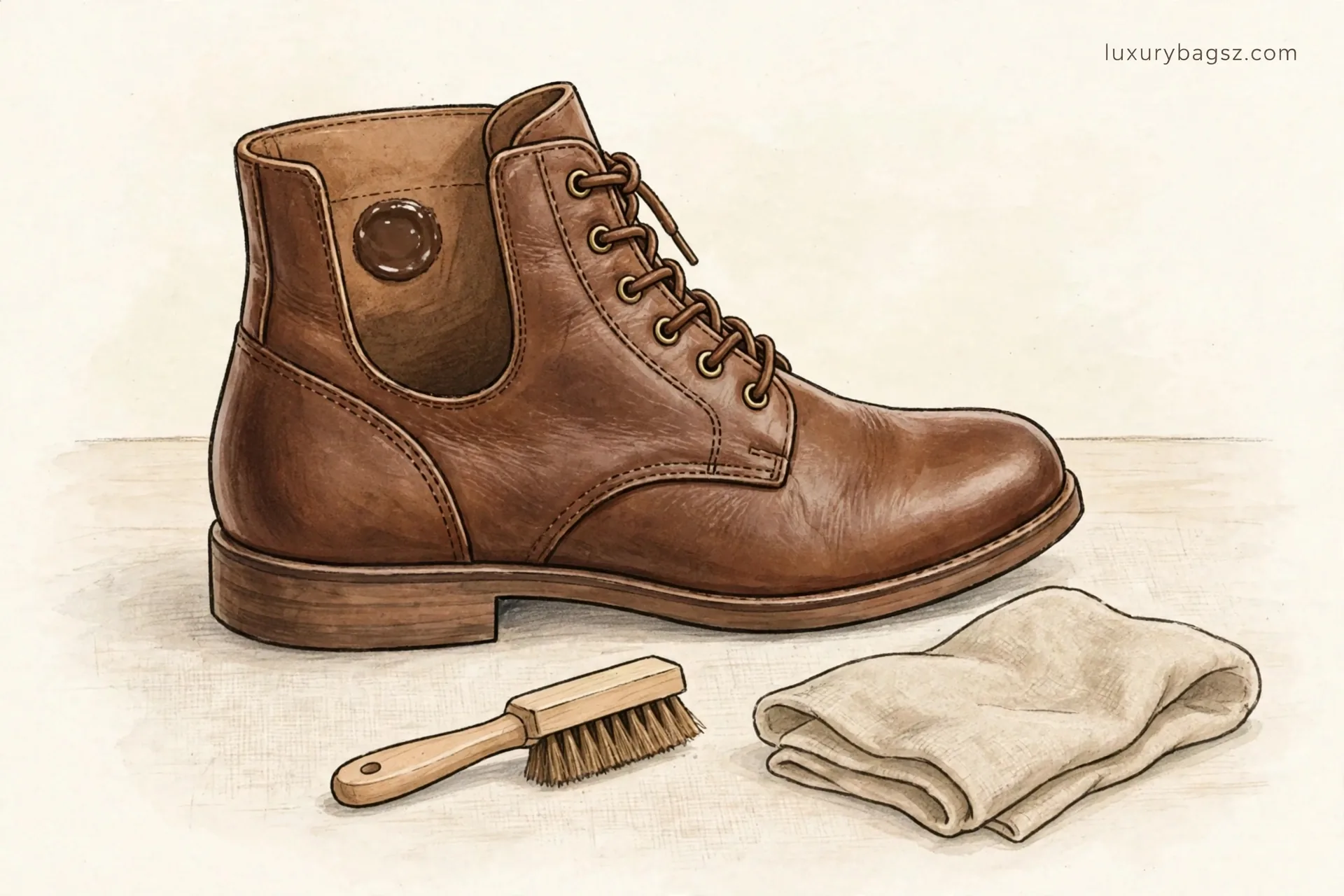
Neutral vs Coloured Polish: When Each Wins
Neutral, also called colourless or clear polish, adds shine, nourishment and a protective layer without changing the shoe's colour. It is the right choice when you like the colour exactly as it is and only want it cleaner, softer and shinier.
Reach for neutral first if your shoes are burnished, antiqued or multicoloured, or if the brown is unusual and no tin matches it well. Several guides agree on this point: on a burnished shoe, coloured polish risks painting over the variation that makes the shoe attractive.
Neutral also suits a mixed shoe collection, since one tin serves every colour. If you own one pair of brown shoes and polish rarely, neutral avoids buying a shade you may never finish. It will not hide scuffs as well as a coloured polish, but it will never make a colour mistake.
Coloured polish earns its place when the shoe has faded, scuffed or lost colour. Its pigment fills small marks, evens patchy areas and brings back depth, which neutral cannot do. Use it when the shoe needs colour help, not just shine.
One caution from long-term care guides: using only neutral for years can let colour fade gradually, since nothing replaces lost pigment. Alternating neutral and a matching coloured polish keeps both shine and colour in good shape over time.
Cream vs Wax for Browns: A Short Explanation
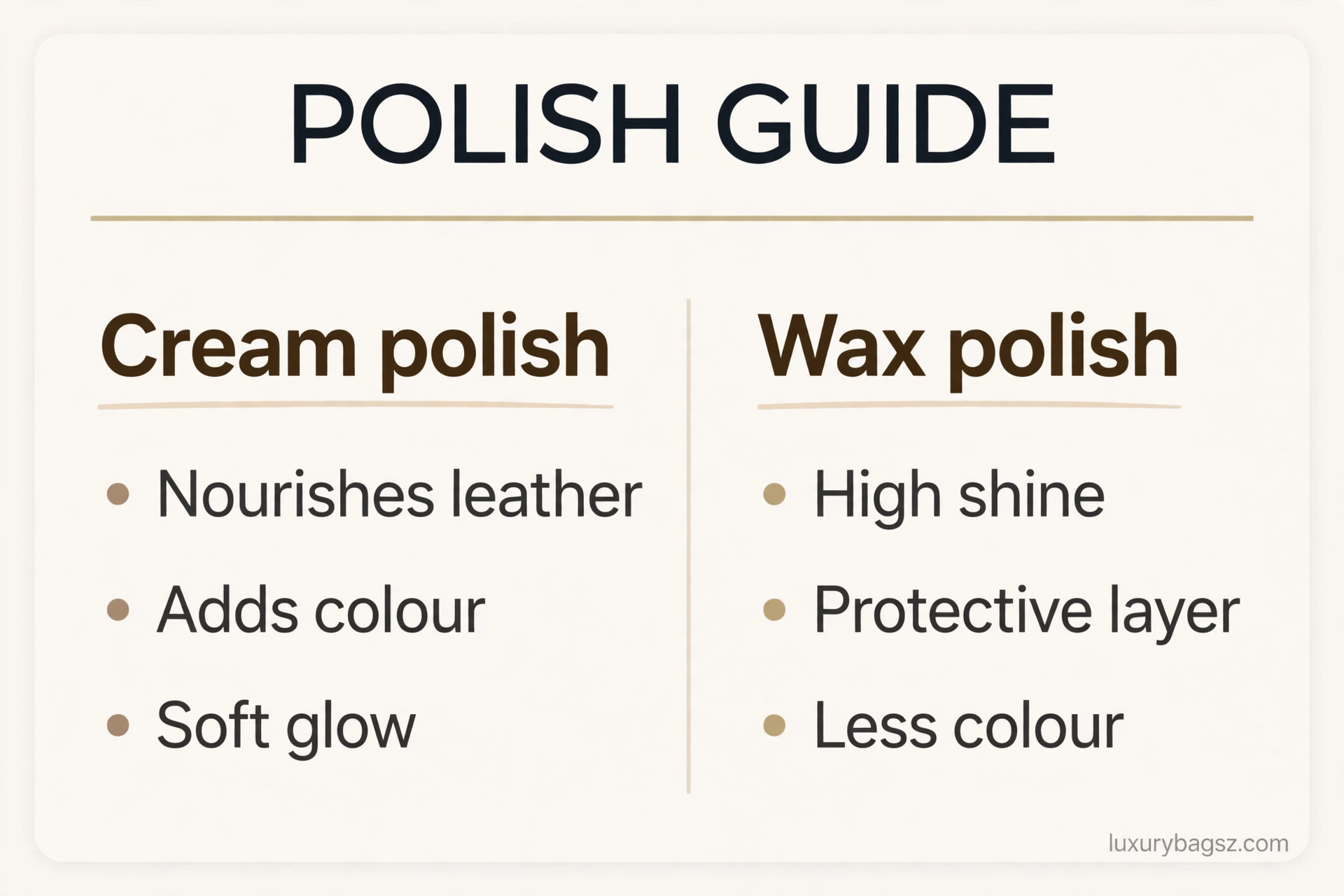
Cream polish and wax polish do different jobs, and browns benefit from knowing which is which. Cream is soft, penetrates the leather, nourishes it and carries the most colour. It is the polish that actually revives a faded brown.
Wax polish is harder, sits more on the surface, and gives the higher shine plus a protective layer against water and dirt. It carries less colour than cream, so it is better at finishing a shoe than at restoring its colour.
For most brown shoes, the practical routine is cream first, then wax. Apply a thin coat of matching cream, let it dry, buff it, and then add a thin wax coat if you want more shine and protection. The cream does the colour work, and the wax seals and shines it.
Wax alone suits shoes that already have good colour and just need a shine, such as a well-kept pair before an event. Cream alone suits shoes that need feeding and colour but not a mirror shine, such as everyday boots. Neither is wrong; they are simply different tools.
Liquid polish, the quick bottle with a sponge top, is a third option for fast touch-ups. It is convenient on the go, but it gives less control over colour and build-up than cream or wax, so keep it for emergencies rather than routine care.
Apply It Right: Thin Coats and Daylight Checks
Clean the shoe before any polish touches it. Brush off dust, wipe with a barely damp cloth, and let the shoe dry fully. Polishing over dirt traps grit under the coat, and the finish looks dull and uneven no matter how good the shade match is.
Test first on a hidden spot, such as the inside ankle or under the tongue. Apply a little polish, let it dry, and look at it in daylight beside the untreated leather. Polish darkens leather slightly while wet and lightens back as it dries, so a wet test tells you almost nothing.
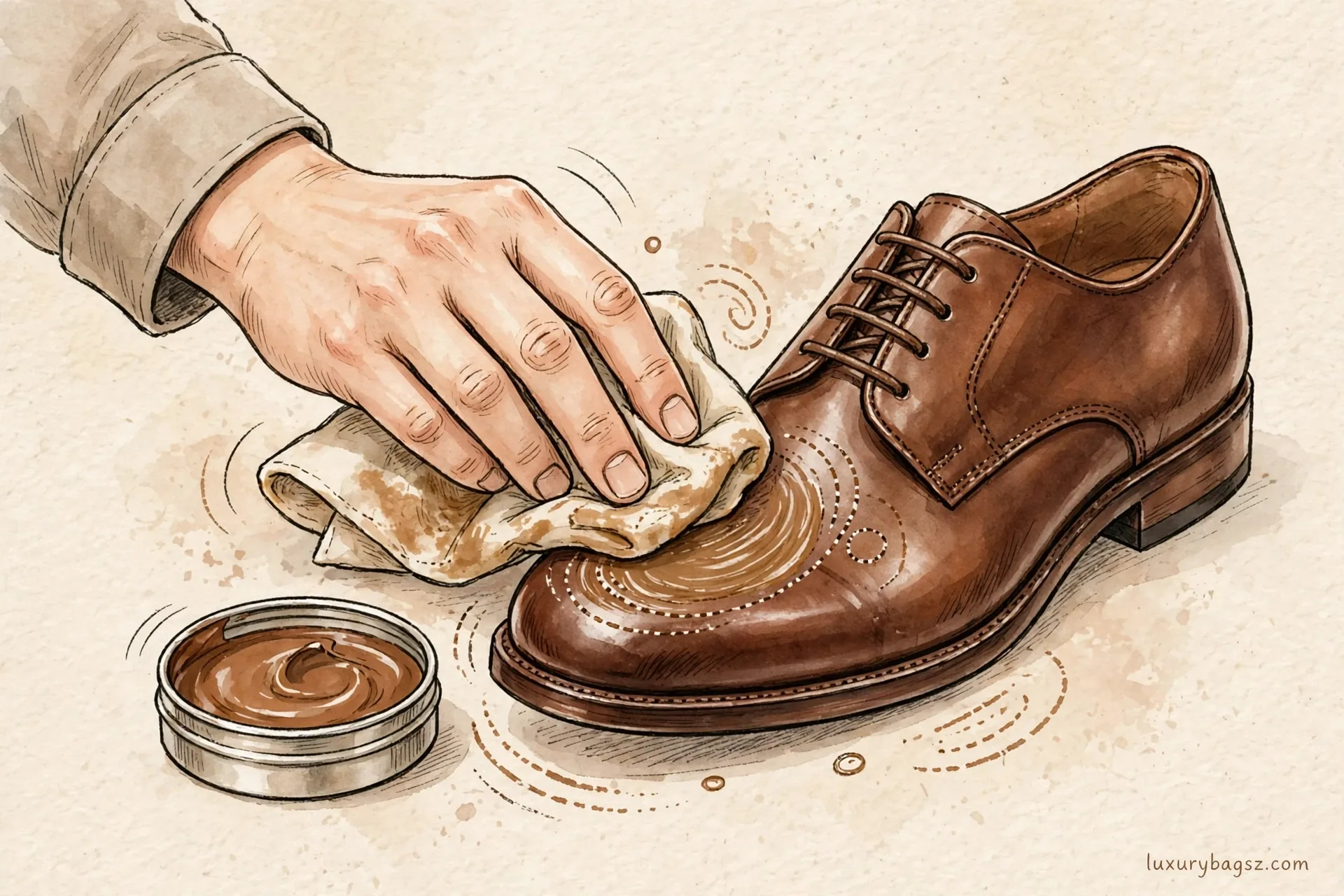
Apply coloured polish with a cloth or applicator brush in small circles, covering one panel at a time in a thin coat. Let it haze for a few minutes, then buff with a clean horsehair brush or cloth. A second thin coat deepens the colour further if you need it.
Keep polish off light stitching, welt edges and any pale trim you want to keep pale, since coloured polish tints thread quickly. A little care around the edges now saves a stained welt later, and a separate brush for brown polish stops colour transferring to other shoes.
Finish by brushing the whole shoe once more and checking it in daylight. If the colour is right but the shine is not, add a thin neutral wax coat rather than more coloured polish, which would keep darkening the shoe.
Special Cases: Boots, Suede, Patent and Darkening on Purpose
Brown boots follow the same shade rules, but they face harder wear, so protection matters more. A cream coat for colour followed by wax for weather resistance suits work and everyday boots, and darker boots hide scuffs better with a slightly darker polish. For everyday boot cleaning before polishing, a dedicated guide to cowboy boots covers leather and suede routines worth following first.
Suede and nubuck are the hard exception: never use smooth-leather cream or wax polish on them. Polish flattens the nap, stains unevenly and is very difficult to remove. Suede browns need a suede-specific spray or renovator, plus brushing, not a tin of polish.
Patent leather also skips polish. Its glossy coating does not absorb cream or wax, so polish sits on the surface and smears. Wipe patent clean with a soft, damp cloth and leave it at that, rather than forcing a product it cannot use.
If you actually want darker shoes, not just a matched shine, that is a different job with its own methods. A darker cream polish can deepen brown gradually, but oils, dyes and polish each darken differently, and the full comparison lives in our guide to darken leather boots. Do not treat a routine polish as a dye job.
Finally, remember that two shoes in a pair can age differently. The shoe that faces the sun or gets more wear may be lighter, and matching polish to the darker shoe can leave its partner looking muddy. Match to the lighter shoe, or polish each shoe to its own best shade.
Common Mistakes That Ruin a Good Match
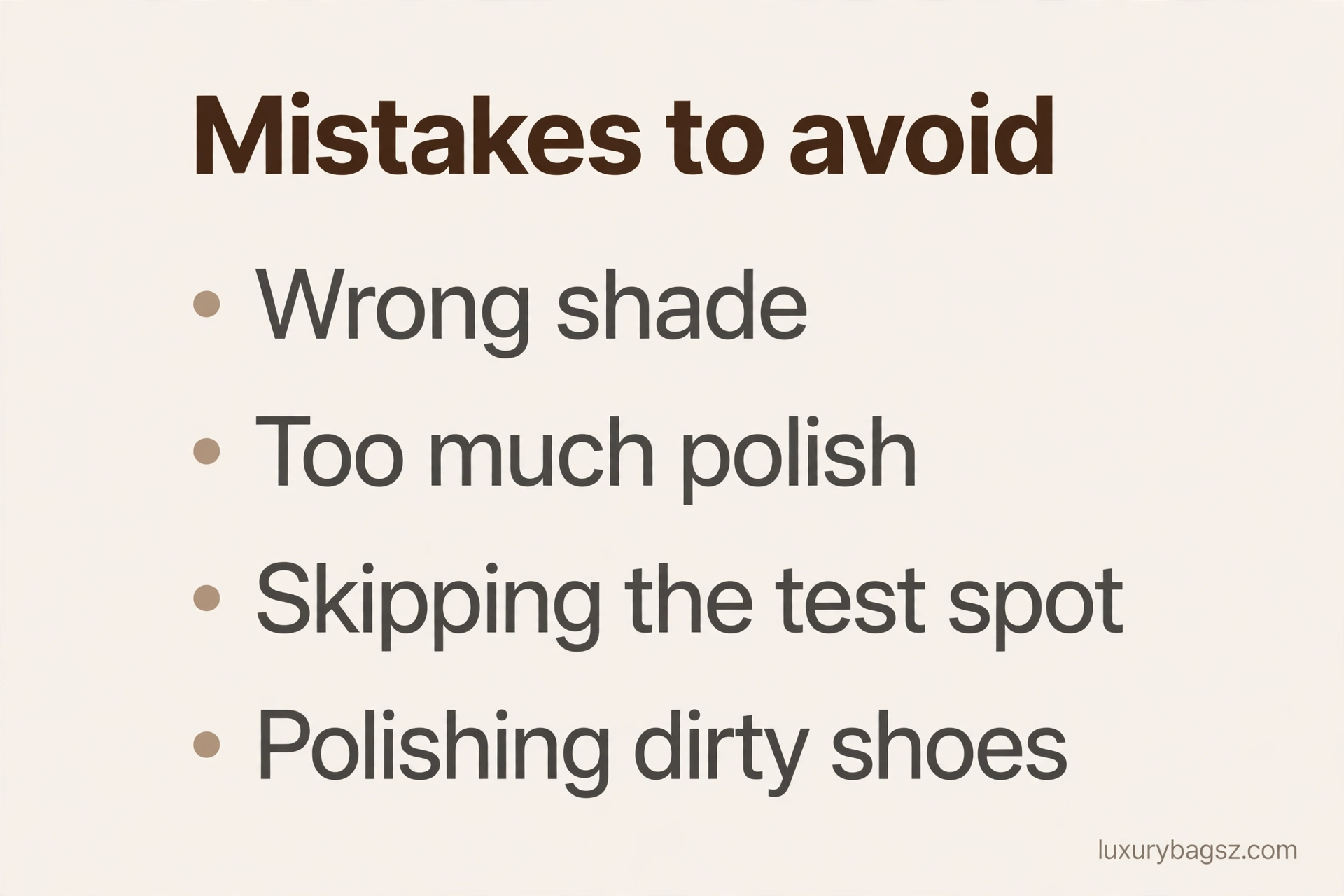
The most common mistake is buying dark brown for a mid-brown shoe. Dark brown polish is nearly black in the tin, and one coat can push a classic brown shoe towards espresso. When in doubt between medium and dark, start with medium and build up.
The second mistake is skipping the test spot. Colours shift as polish dries, brands differ in pigment, and a shoe's finish changes how polish takes. A two-minute test on a hidden area prevents a whole shoe in the wrong shade.
The third mistake is using too much polish. Thick coats build up in creases, crack at flex points and attract dust, and they darken the shoe far more than the shade on the tin suggests. Thin coats, buffed between layers, give control and a cleaner finish.
The fourth mistake is polishing a dirty shoe, or polishing with a brush already loaded with another colour. Dirt under polish looks grey and patchy, and a brush shared with black polish will smear dark marks across brown leather. Keep one brush per colour family.
The fifth mistake is expecting a perfect match. Guides agree that polish almost never matches a shoe exactly, because makers' browns vary and polish is translucent. A close match that enhances the shoe beats an endless hunt for an exact one.
Aftercare, Storage and When to Repolish
After polishing, let shoes rest before wearing them, so the coat sets fully and does not transfer to socks or trousers. A quick final brush before you put them on lifts any loose polish and evens the shine.
How often to polish depends on wear. Daily-worn brown shoes benefit from a light polish every few weeks, while occasional shoes may need it only a few times a year. Watch the leather, not the calendar: dullness, dryness and visible scuffs are the real signals.
Between polishes, brush shoes after each wear and wipe off dust and water marks promptly. Brushing alone revives shine between full polishes and stops dirt from grinding into the leather, which means each polish works on a cleaner surface.
Conditioning matters alongside polishing, especially for dry leather. A light conditioner such as Saphir Renovateur feeds the leather before polishing, and it is a good step when shoes feel stiff or look parched rather than merely dull.
Store brown shoes with shoe trees, away from direct sunlight and radiators, and away from black shoes whose polish could transfer. Sunlight fades browns unevenly, heat dries leather, and contact with dark polish is a quiet way to stain a light brown pair.

Frequently Asked Questions
What colour polish should I use on light brown shoes?
Use light brown or tan polish for a close match. Medium brown can work on slightly darker light-brown shoes, but dark brown will change their colour, so avoid it unless you want them darker.
What colour polish matches medium brown shoes?
Medium brown polish is the natural match for classic chocolate-brown shoes. It enhances the existing colour and hides small scuffs without pushing the shoe noticeably darker or lighter.
Should I use dark brown polish on dark brown shoes?
Yes, dark brown is made for deep, espresso-toned shoes. Just remember it is very dark, almost black in the tin, so test it first and avoid it on mid-brown shoes you do not want to darken.
Is neutral polish better than coloured polish for brown shoes?
Neither is always better. Neutral shines and conditions without changing colour, which suits burnished or unusual browns. Coloured polish restores faded colour and hides scuffs, which neutral cannot do.
Should I choose a lighter or darker shade if I am unsure?
Guides disagree slightly here, so go by your goal. Slightly darker hides scuffs and revives faded colour, while slightly lighter is safer if you fear darkening the shoe. When truly torn, neutral removes the risk entirely.
Can I use brown polish on suede shoes?
No. Smooth-leather cream and wax polish flatten suede's nap and stain it unevenly. Brown suede needs a suede-specific spray or renovator, plus brushing, never a tin of ordinary polish.
What is the difference between cream and wax polish?
Cream polish penetrates, nourishes and carries the most colour, so it revives faded leather. Wax polish sits on the surface, gives a higher shine and protects against water and dirt, but adds less colour.
How do I test a brown polish shade?
Apply a little polish to a hidden spot, such as the inside ankle, let it dry fully, and check it in daylight beside the untreated leather. Wet polish looks darker, so only a dry test shows the true result.
Can brown polish darken my shoes permanently?
Polish darkens leather slightly and builds up with repeated coats, but it is not a dye. Regular cleaning and, if needed, a leather cleaner can strip polish back, unlike dye, which is far more permanent.
How often should I polish brown shoes?
Polish when the leather looks dull, dry or scuffed, not on a fixed schedule. Daily-worn shoes may need a light polish every few weeks, while occasional shoes may need it only a few times a year.
Summary
Choosing brown shoe polish comes down to three decisions, made in order: find your shoe's place on the brown scale, decide whether neutral or coloured polish serves it better, and pick cream for colour or wax for shine.
Test on a hidden spot, work in thin coats, and judge the result in daylight. Do that, and your brown shoes will look richer and better kept, not repainted, which is exactly what good polish should do.