How to Spot a Fake Raymond Weil Watch: Dial, Caseback and Movement Checks
Fake Raymond Weil, Spotted Calmly: Start With the Dial
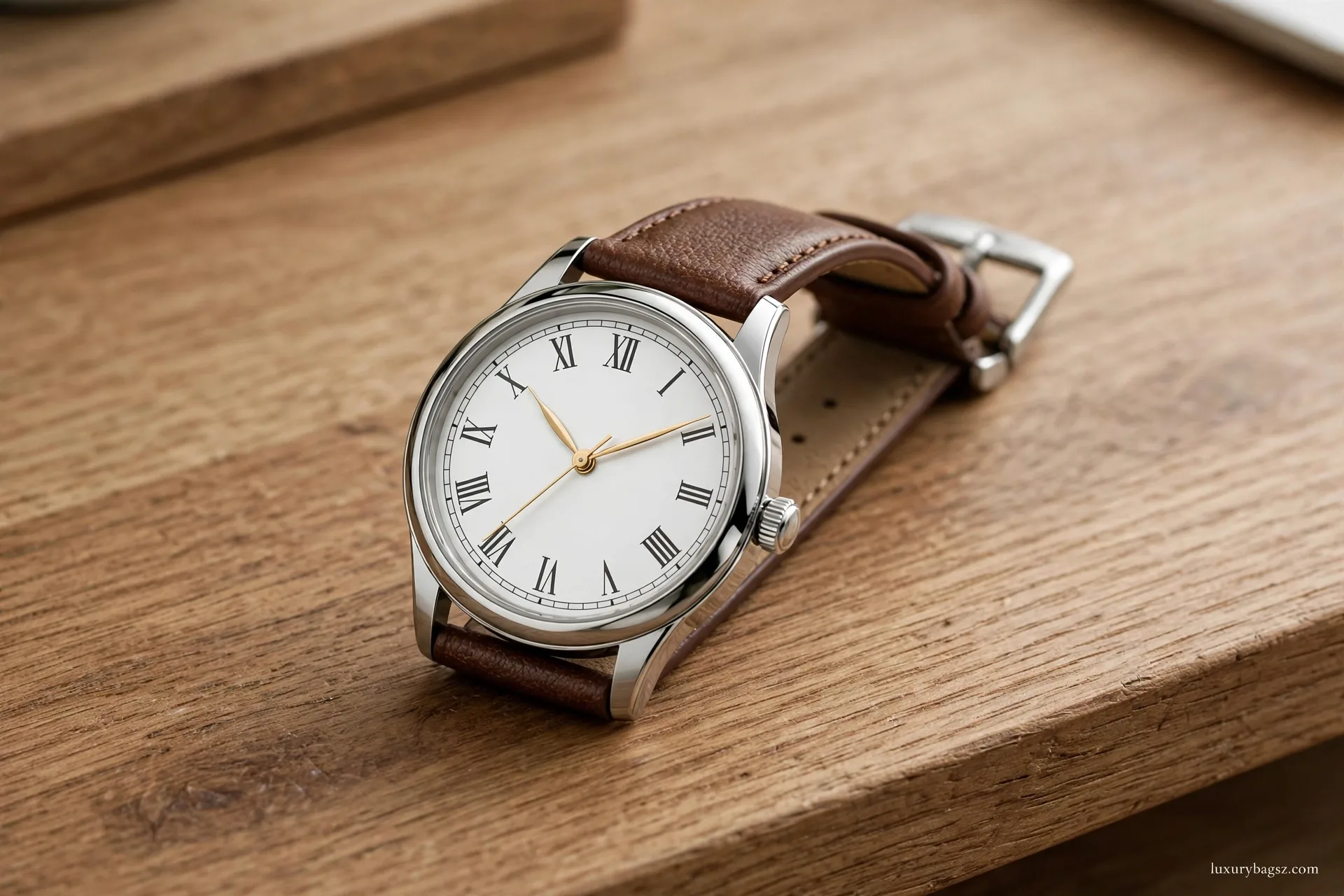
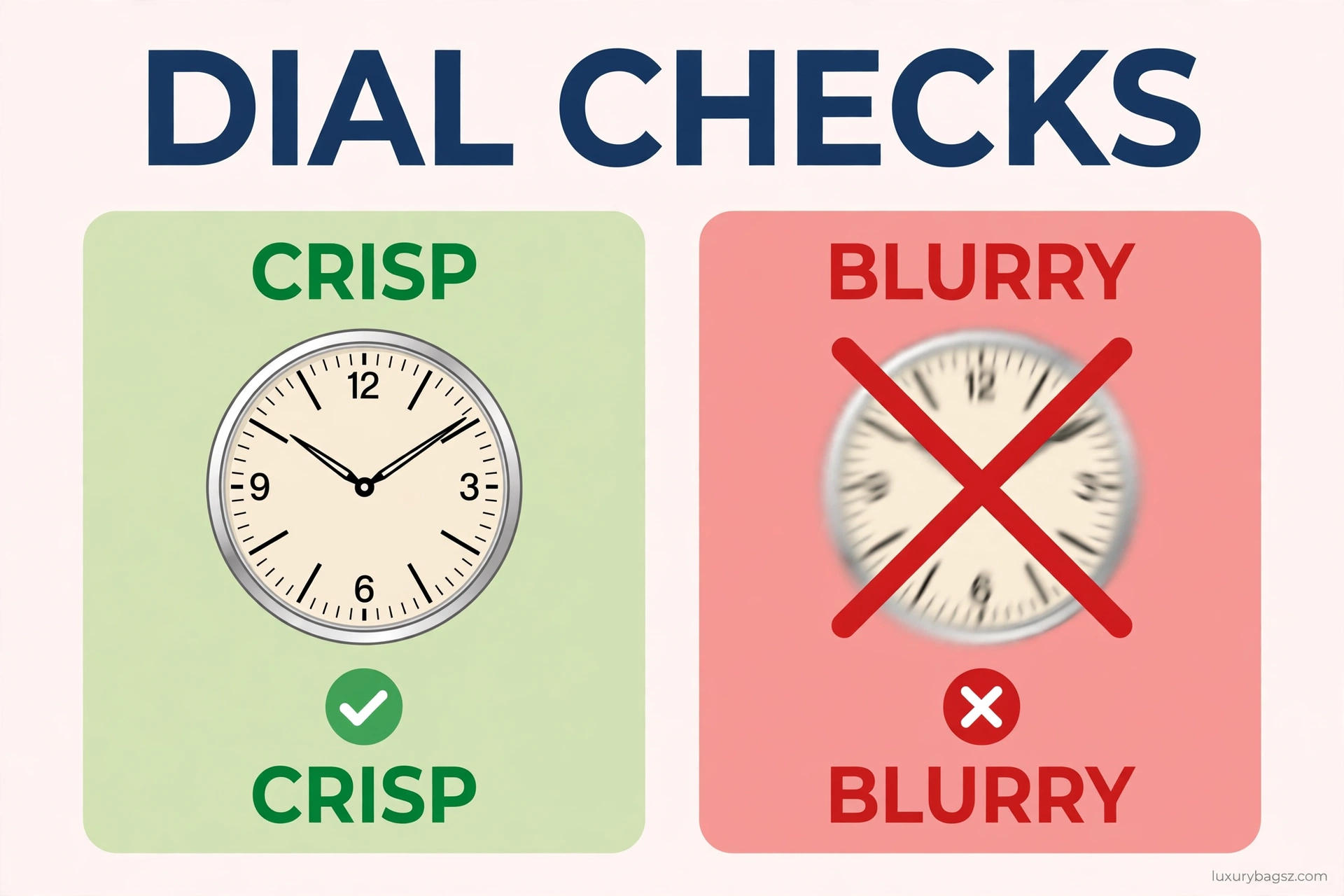
The quickest tell on a fake Raymond Weil is the dial printing. Genuine dials carry crisp, evenly spaced lettering, a clean Genève line and markers that sit perfectly true. Fakes blur the small print, crowd the logo or misalign the date. If the dial looks slightly drunk under a loupe, the watch is unlikely to be genuine. Work on through the caseback numbers, the movement and the papers. Raymond Weil prices sit in the accessible Swiss tier, so fakes are cruder than high-end copies.
Key Takeaways
- Dial printing is the fastest check: crisp, spaced and perfectly aligned.
- Genuine models use sapphire crystal with a cool, clear reflection.
- Caseback reference and serial numbers should be cleanly engraved.
- Display backs on real models show a finished, signed movement.
- Papers, box and watch references should all agree with each other.
- Prices far below the normal pre-owned range are a warning sign.
Know the Real Range Before You Judge
Raymond Weil is a family-run Geneva house founded in the 1970s. Its core lines include Freelancer, Maestro, Tango, Toccata and the newer Millesime range. Each line has a clear look. Freelancer leans sporty, Maestro is the classic dress line, and Toccata is slim and rectangular or round with Roman numerals. The same homework applies across Swiss brands. Our how to spot a fake IWC watch guide shows how knowing one range exposes wrong details fast. Find official photographs of the exact model before you inspect a listing. Fakes often mix a dial from one line with a case from another.
Dial Printing and the Genève Wording
Read every word on the dial under good light. The brand name should be sharp, with even letter spacing and no fuzzy edges or doubled print. Most genuine dials pair the name with Genève wording and a Swiss Made line at the base. Missing, misspelt or oddly placed wording is a serious warning. Check the applied markers and hands next. On a real watch they sit flat, true and evenly finished, with lume plots placed neatly where the design calls for them. Date windows deserve a close look. The numeral should sit centred in the window and change crisply, not drift half-hidden at the edge of the frame.
Case Finishing and Sapphire Crystal
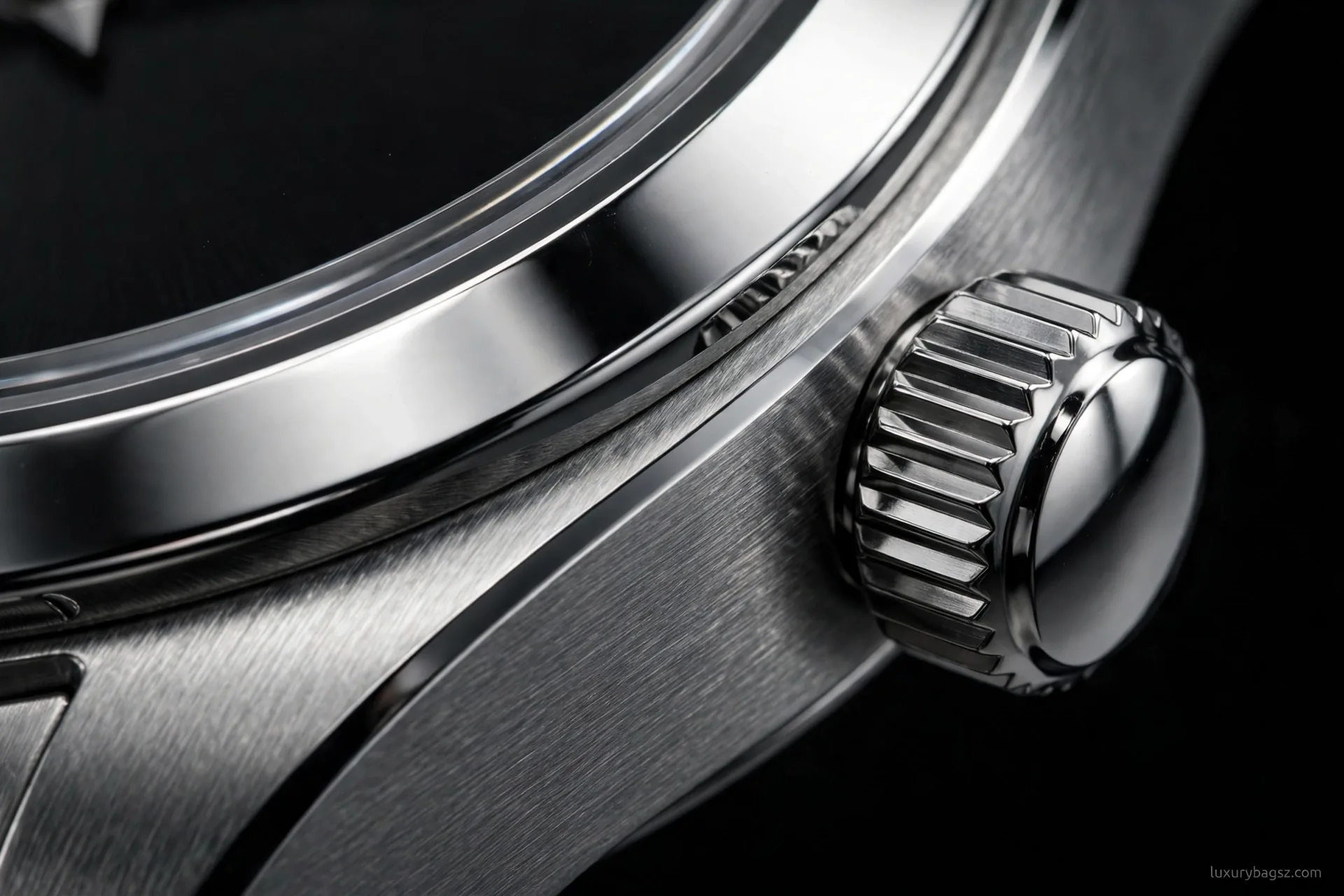
Genuine cases are properly finished stainless steel. Brushed and polished faces meet at clean, deliberate edges, with no casting pits or rough seams. The crystal on most models is sapphire. It gives a clear, cool reflection and resists the fine scratching that soft mineral glass picks up quickly. Fakes often feel light and tinny. Cases can show uneven polishing, sharp inner lugs and bezels that sit slightly off true against the dial. Turn the watch in your hand and weigh it. A genuine steel model on a bracelet has a calm heft. A hollow, rattly feel points the wrong way.
Caseback References and Serial Numbers
Turn the watch over. Genuine casebacks carry the brand name, model reference, water resistance and a serial number, engraved cleanly and evenly. Compare the reference with the model in the listing. Our pre-owned luxury watches buyer's guide shows how to cross-check numbers against papers and photos. Fakes may use shallow laser marks that look grey rather than cut, repeat one serial across many watches, or print numbers that match no real model. Photograph the caseback before paying. If a seller will not show it clearly, treat that refusal as part of your verdict, not a small inconvenience.

Movement and the Display Back Test
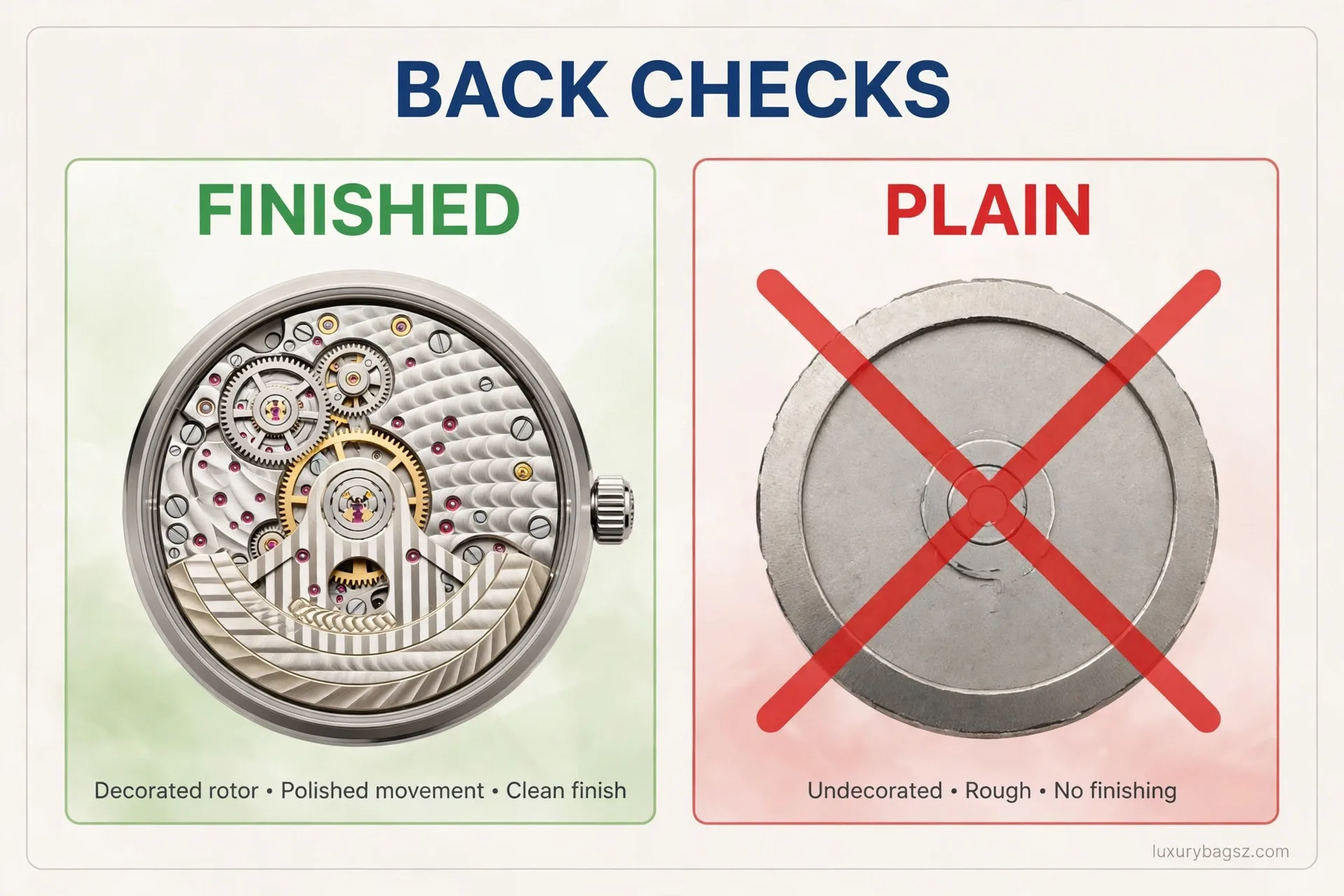
Many genuine automatic models have a display back. Through it you should see a tidy Swiss movement with a signed rotor and clean, even finishing. The rotor wording should be crisp. Blurry engraving, a plain undecorated rotor or visible rough machining does not match genuine production. Quartz models will not show a movement, so judge them by the caseback marks, dial and papers instead. Do not let a seller open a sealed watch casually. If a watchmaker is available, a quick movement check settles doubts. That is money well spent on any automatic bought without papers.
Crown, Bracelet, Clasp and Strap
The crown should turn smoothly and sit properly against the case. Wobble, grinding or a crown that pulls out loosely suggests poor making. Bracelets on genuine models have solid-feeling links, even gaps and a clasp that closes with a positive, aligned click. The clasp engraving should be neat. Leather straps should be cleanly stitched with a tidy lining stamp. Keep any genuine strap healthy with our how to clean a watch guide once the watch passes. Fakes cut corners here first: hollow end links, painted logos, clasps that twist and straps that smell of chemicals rather than leather.
Box, Papers and Warranty Details
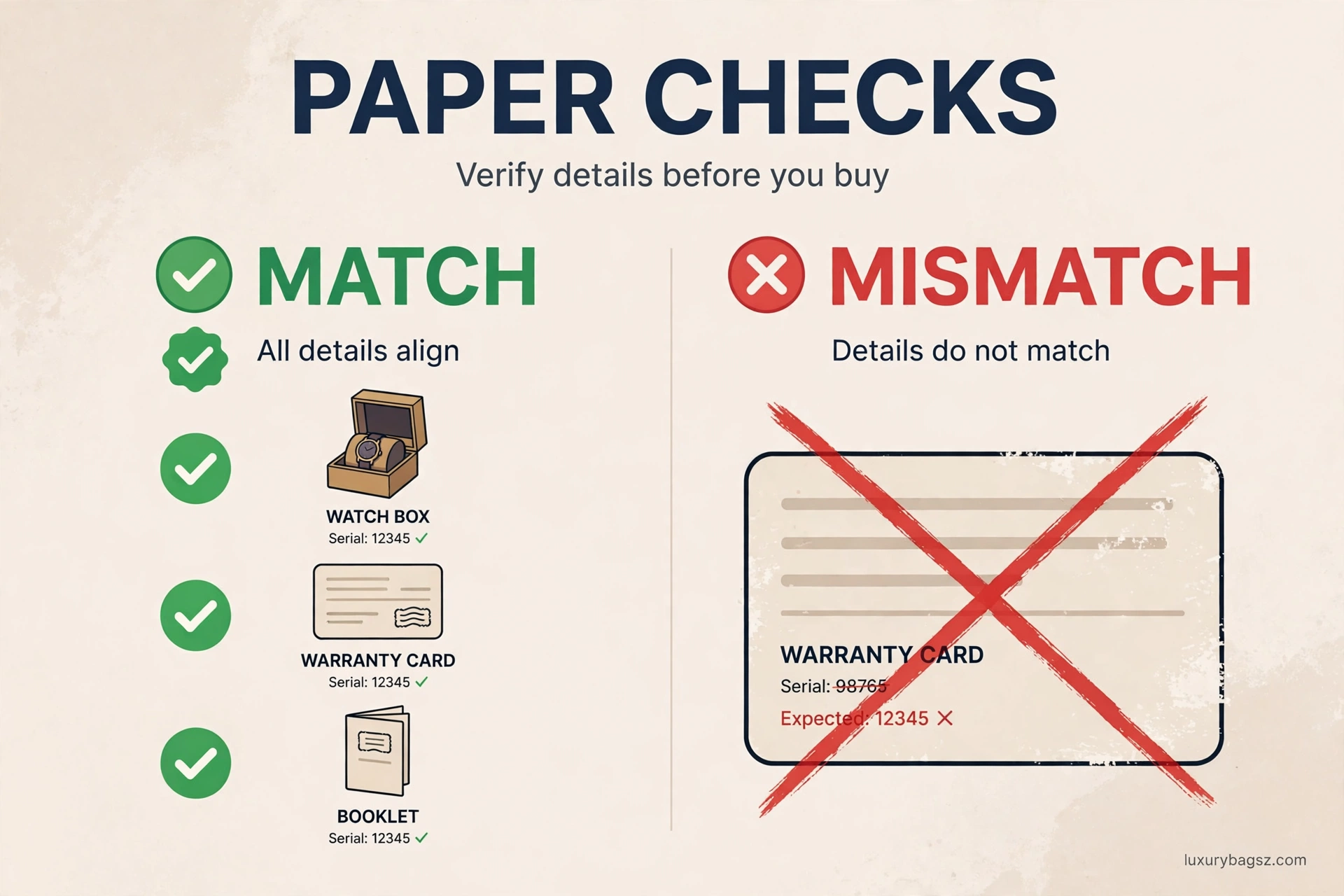
A full set helps, but only when it agrees with the watch. The box, warranty card and booklet should name the same reference as the caseback. Cards should be printed cleanly with a plausible date and dealer mark. Smudged cards, wrong model names or blank cards sold as proof are warnings. Remember that boxes can be bought separately and swapped. Papers support the physical checks; they never replace them. An older watch without papers is not automatically fake. At this level many genuine pieces have lost their sets, so judge the watch itself first.
Price Red Flags and Buying Safely
Know the normal money. New Raymond Weil watches sit in the accessible Swiss band, and sound pre-owned pieces trade at a sensible share of that. Our designer watches under 500 guide helps place the brand against other entry Swiss and fashion options. Be wary of a current model offered new at a tiny price from an unknown seller. Fakes cluster where a famous Swiss name meets a bargain story. Finally, read our investing in luxury watches guide before paying a premium for any so-called rare variant.
The Serial Number: Format, Registration and Its Limits
The brand states its serial format plainly: the number is engraved on the caseback and normally runs to one letter followed by six digits. A number in that format, cleanly engraved, is a good start; a number in a wild format, stamped crookedly or repeated identically across many listings is the copy trade showing its hand.
Owners can register a watch with the brand, and sellers sometimes present registration as proof. Treat it as the brand itself does: a screening signal, not authentication. A plausible number registers because it is plausible, and counterfeiters copy plausible numbers from real watches.
The reverse warning matters just as much. The brand acknowledges that an unrecognised number does not prove a fake, because some older models carry no serial at all, and older records can be incomplete. When a number cannot be found or recognised, the brand’s own advice is to send customer service a clear photograph of the caseback or guarantee card and ask.
Use the serial the way this guide has used every check: as one consistent voice in a chorus. Serial, reference, dial, movement and papers agreeing together is what genuine looks like; any single voice singing alone proves very little.
The Brand’s Certificate: A Paid Verdict That Exists
Uniquely helpful at this price level, Raymond Weil offers a formal route when doubt remains: a paid Certificate of Authenticity issued after its own watchmakers examine the watch at the Geneva headquarters. The brand listed the examination fee at CHF 250 in late 2026; check the current figure before relying on it, but the existence of the service is the point.
The certificate route suits specific situations: a high-value automatic bought without papers, an inherited watch you intend to insure or sell, or a purchase where the seller will split the fee as a condition of the deal. A seller who refuses any examination arrangement has answered the question the certificate would have asked.
Note what the certificate examines: the watch as a whole object, movement included, by the people who made it. That is categorically stronger than photograph opinions, online checkers or a loupe at the kitchen table, and it is priced accordingly.
For most pre-owned purchases at this level, the checks in this guide plus a reputable seller suffice. Keep the certificate in reserve for the pieces whose value, or whose story, genuinely requires certainty.
Diamonds, Not Crystals: The Decorative Stone Rule
One of the fastest brand-specific tells concerns sparkle. Raymond Weil decorates its diamond models with diamonds: the stones set into its bezels, dials and cases are the real material, a policy the brand states openly.
That makes glittering models set with crystals or imitation stones immediately suspect. A supposedly diamond-set Raymond Weil whose stones look glassy, unevenly set or too good for the asking price deserves the hardest version of every check in this guide before any money moves.
Judge set stones as you judged printing: genuine settings are even, secure and consistent, with stones of matched size sitting at matched heights in properly made seats. Wobbly stones, glue traces and mismatched sparkle belong to the copy bench.
The rule cuts the other way too, as a value note: genuine diamond-set models in this range are among the brand’s best pre-owned buys, because the second market prices the whole watch modestly while the stones remain what they are. Authenticated carefully, they are a quiet bargain; bought carelessly, they are the range’s most faked temptation.
How the Watch Behaves: Hands, Lume and Functions
A watch testifies by behaving, so finish by watching it work. An automatic model should sweep its second hand smoothly around the dial; a quartz ticks once per second. A watch sold as automatic that ticks, or whose second hand stutters and jumps several seconds at a time outside a low-battery warning, has the wrong heart or a dying one.
Set the time and date. The crown’s positions should engage positively, the hands should move without slack or wobble, and the date should change crisply at midnight rather than drifting across the evening. On chronograph models, start, stop and reset the timer: genuine pushers act firmly and the chronograph hands snap back to zero exactly, not near it.
Lume is a small-print check with the lights off: genuine luminous material charges evenly and glows consistently across hands and markers. Patchy, weak or oddly coloured lume, especially beside a bright dial photograph in the listing, suggests a dial that has been replaced or never belonged.
Behaviour checks catch what photographs hide, which is why in-person or video-verified purchases beat still images for any watch without papers. Ask for a short video of the watch being set and the chronograph running; genuine sellers film it without fuss.
Frequently Asked Questions
What is the quickest fake Raymond Weil check?
Look at the dial printing with a loupe or phone zoom. Crisp, even lettering is genuine behaviour. Blurry small print and a misaligned date are classic fake signs.
Are all Raymond Weil watches Swiss made?
The brand is a Geneva house and its watches are Swiss made, with Swiss Made wording on genuine dials. Wording that is missing or misspelt is a warning.
Where is the serial number on a Raymond Weil?
On the caseback, alongside the model reference and water resistance marks. It should be cleanly engraved and should match any papers supplied with the watch.
Do fakes copy the display caseback?
Some try, but the movement gives them away. A genuine display back shows a finished movement with a crisply signed rotor, not a plain, rough mechanism.
Is a Raymond Weil without papers fake?
Not necessarily. Many older genuine watches have lost their box and cards. Judge the dial, caseback and movement first, and price the missing set fairly.
Should the crystal be sapphire?
On most genuine models, yes. Sapphire gives a clear, cool reflection and resists scratching. A soft, easily marked crystal on a claimed current model is suspect.
Can I check a serial number online?
There is no simple public lookup that proves a watch genuine. Use the number to cross-check the model and papers, and let the physical checks decide.
Why are fake Raymond Weil watches less refined?
The brand sits at accessible Swiss prices, so counterfeiters spend less per copy. Printing, finishing and clasp quality usually fail before clever details do.
What photographs should I request from a seller?
Ask for the dial straight on, the caseback, the clasp, the crown side and any papers. Clear shots in plain light reveal the faults listings try to hide.
Where is the safest place to buy pre-owned?
From established dealers or marketplaces with buyer protection, clear photographs and returns. A slightly higher price from a known seller is money well spent.
Conclusion: Let the Small Print Speak
A fake Raymond Weil usually fails in the small print first: dial lettering, caseback engraving and clasp finishing. Check those three before anything else. Add the movement, papers and price to the picture. When every detail agrees calmly, you are likely holding the real Swiss article.