

How to Spot a Fake Burberry Bag: Check Pattern, Plaque and Lettering Checks
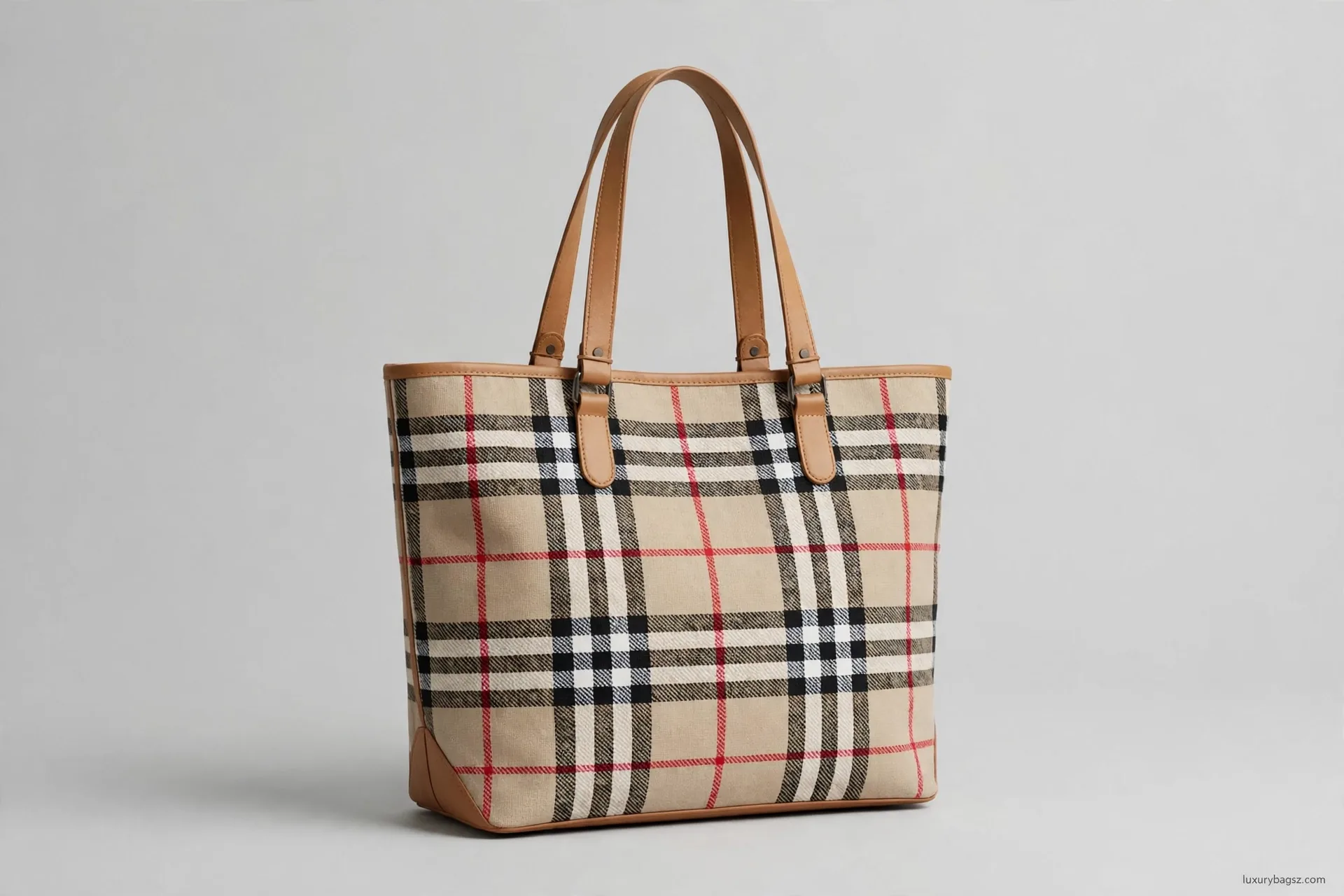
Fake Burberry, Spotted Early: Start With the Check
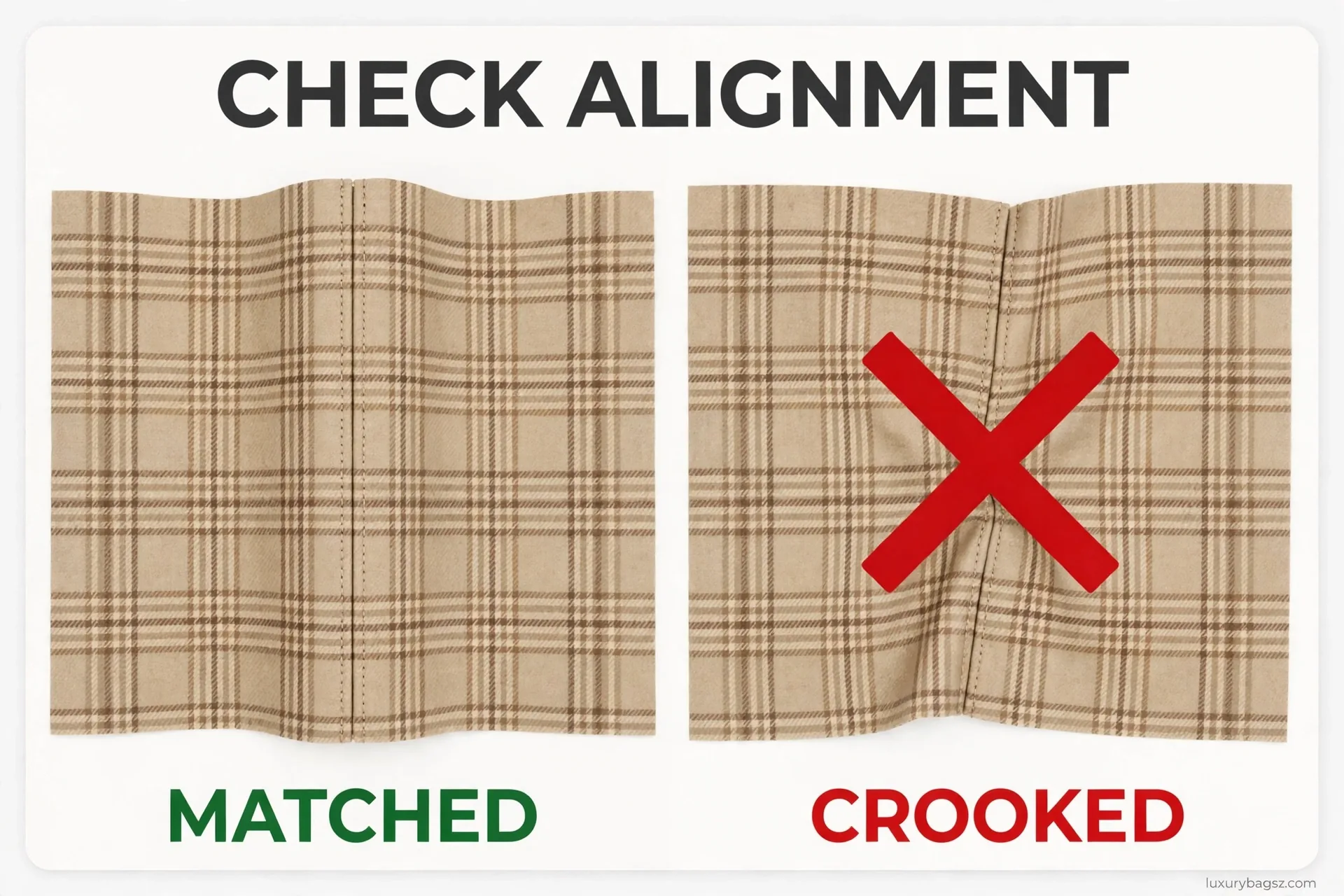
The fastest Burberry check is the check itself. On a genuine bag the pattern is sharp, evenly spaced and matched with care where panels meet. On fakes the lines drift, the colours look dull or dirty, and the pattern restarts clumsily at seams. A check that will not sit straight is a loud warning. Then confirm with the plaque, lettering and materials. Burberry covers more than a century of styles, so judge each detail against the bag's own era. For the method behind the checks, see how we check bags.
Key Takeaways
- The check should be sharp, balanced and carefully matched at seams.
- Lettering changed across eras, so date the bag before judging the logo.
- Every genuine bag has a neat metal plaque or a leather interior label.
- Materials should feel substantial: firm coated canvas or supple leather.
- Codes and tags support a verdict but never prove one alone.
- Buy through sellers who show close-ups and accept returns.
With Burberry I start at the seams, check pattern in hand. On a genuine bag the check runs sharp and evenly spaced, and — the part fakers find expensive — it is matched with care where panels meet. When the lines drift, the colours turn dull or dirty, or the pattern restarts clumsily at a join, I am looking at a copy until proven otherwise. Only then do I date the lettering by era and read the interior plaque. I have checked bags for more than ten years, and an unmatched check remains the fastest honest warning Burberry offers.
Start With the Check Pattern
Lay the bag flat and follow the lines. On a genuine check bag the stripes run true in both directions and the spacing stays even across the whole panel. Our Burberry check evolution guide walks through the main check families, from the classic house check to newer archive styles. Where panels join, a well-made bag keeps the pattern composed. Perfect matching at every seam is not guaranteed, but chaos at the joins is a fake habit. Colour is a clue too. The classic ground is a warm tan with black, white and red lines. Grey, washed-out or oddly orange checks deserve suspicion.
Logo Lettering Through the Eras
Do not judge lettering until you know the bag's era. Older bags may read Burberrys, with the final s, because the house used that form for much of its history. Our what to know about Burberry guide sets out the brand timeline that explains these changes. The knight device appears on many older pieces, lance raised, and should be drawn crisply. A blob-like knight with missing detail is a poor sign. From 2018 the house moved to a cleaner, wider-spaced wordmark. Whatever the era, genuine lettering is even and deliberate. Wobbly, uneven print is not.
The Interior Plaque and Leather Tag
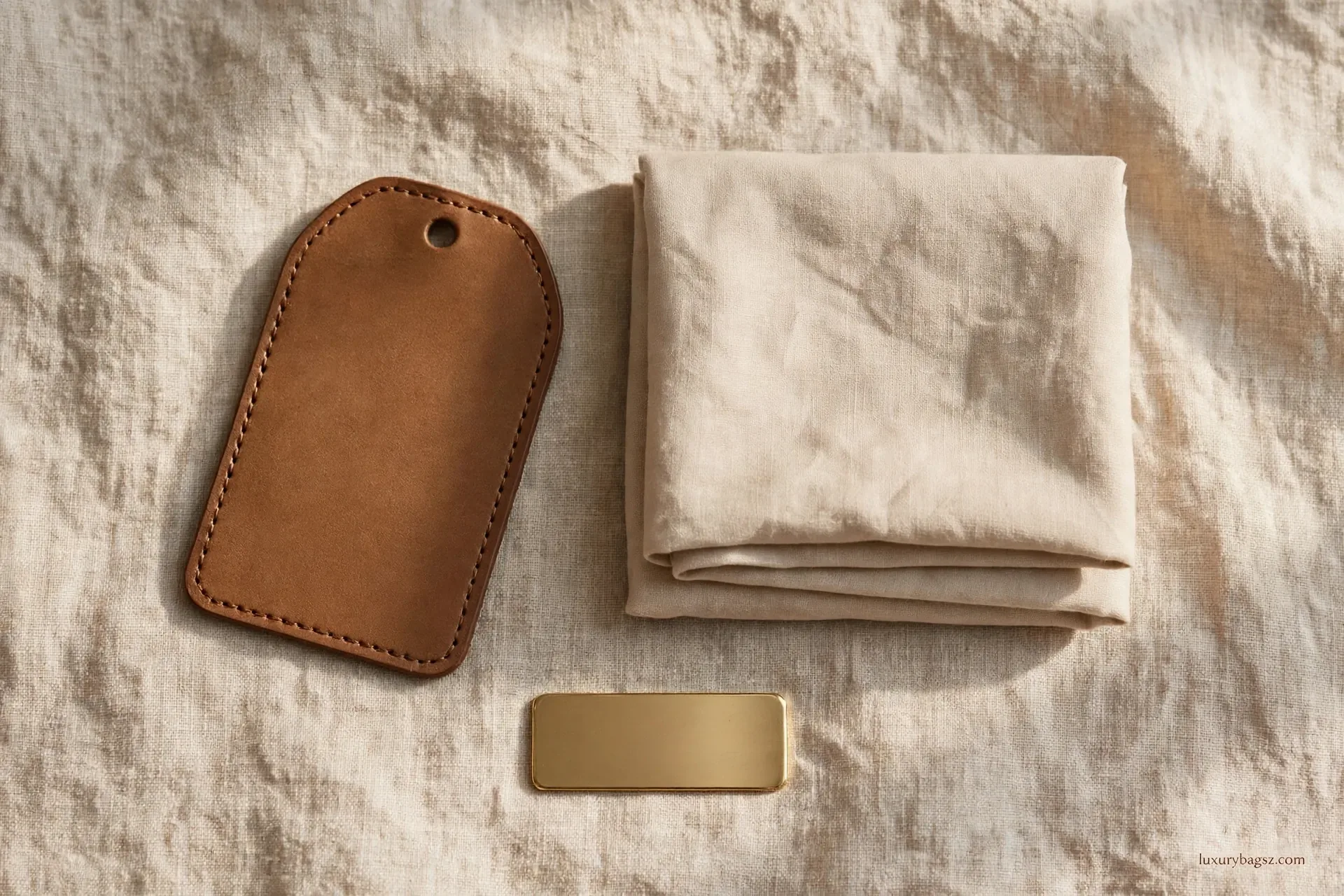
Look inside. A genuine bag carries either a metal plaque or a leather label, placed straight and finished neatly, never glued in crooked. On metal plaques the engraving should match the tone of the bag's hardware and read cleanly, with centred lettering and no blur at the edges. Leather tags are stitched, not stuck, and many carry a made-in stamp on the reverse. Italy is common, but genuine bags were also made elsewhere by era. A missing plaque is a serious problem. A plaque that is crooked, peeling or printed rather than engraved is worse. Both point firmly to a copy.

Materials: Canvas, Leather and Lining
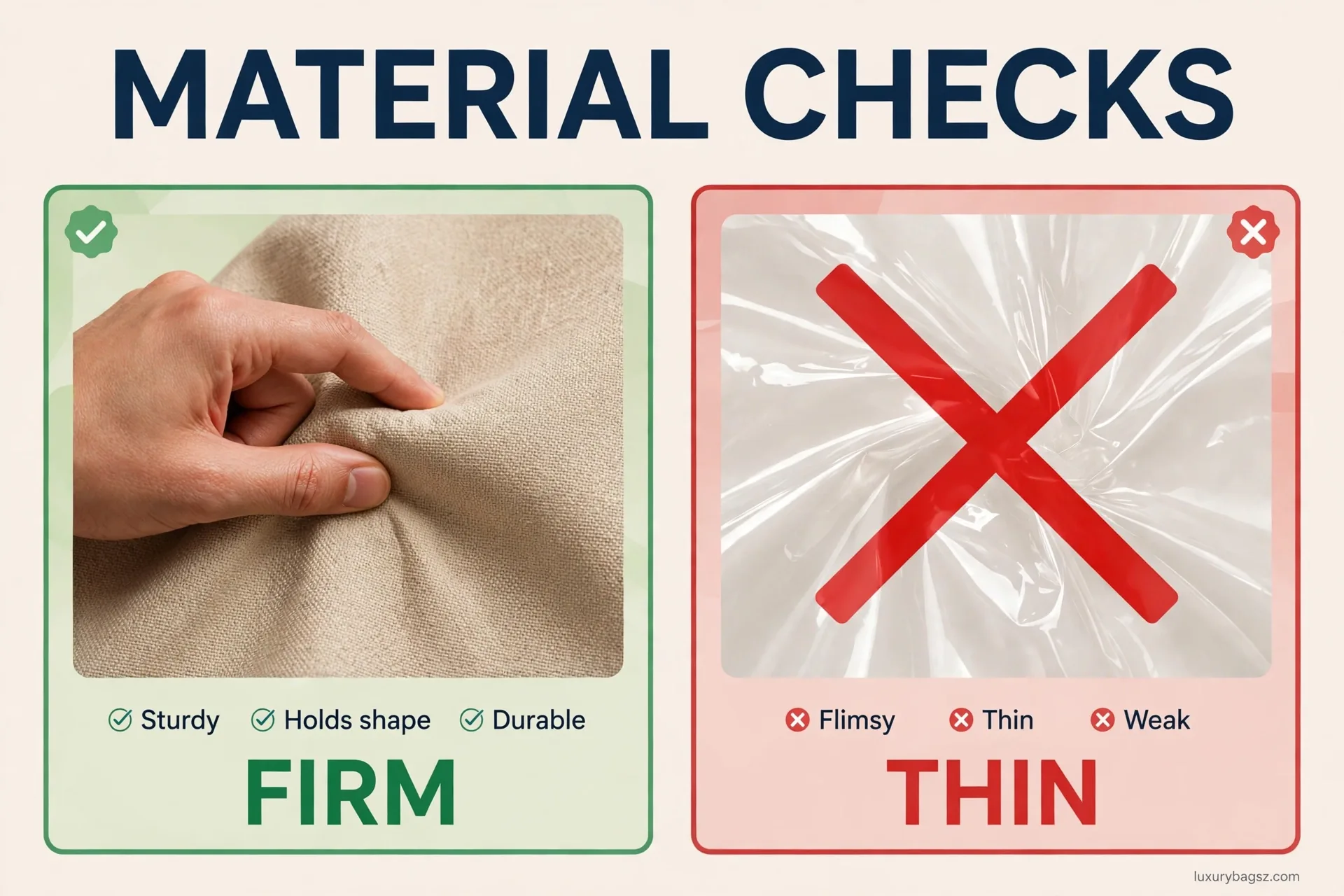
Feel the body of the bag. Genuine coated canvas is firm and smooth with a fine grain, and genuine leather is supple with a natural, uneven surface. The Burberry Lola bag guide shows the soft quilted leather the house uses on modern lines, a useful touchstone for quality. Fakes often feel thin or plasticky, crackle when flexed, or carry a strong chemical smell. Overly shiny leather with a printed-on grain is another tell. Check the lining as well. It should be properly fitted, neatly sewn and made from a fabric that suits the model, not loose, shiny and badly cut.
Stitching and Edge Finishing
Run your eye along every seam. Genuine stitching is straight, even and secure, following the line of the bag whether that line is straight or curved. Count roughly as you go. Wildly changing stitch lengths, skipped stitches and loose ends do not belong on a bag at this level. Edge paint should be smooth and complete, without drips, gaps or peeling. Handles and straps take wear, but the making should still look deliberate. Inside seams matter just as much. Fakers spend on the outside view and rush the interior, so a messy inside often settles the question.
Hardware, Zips and Engraving
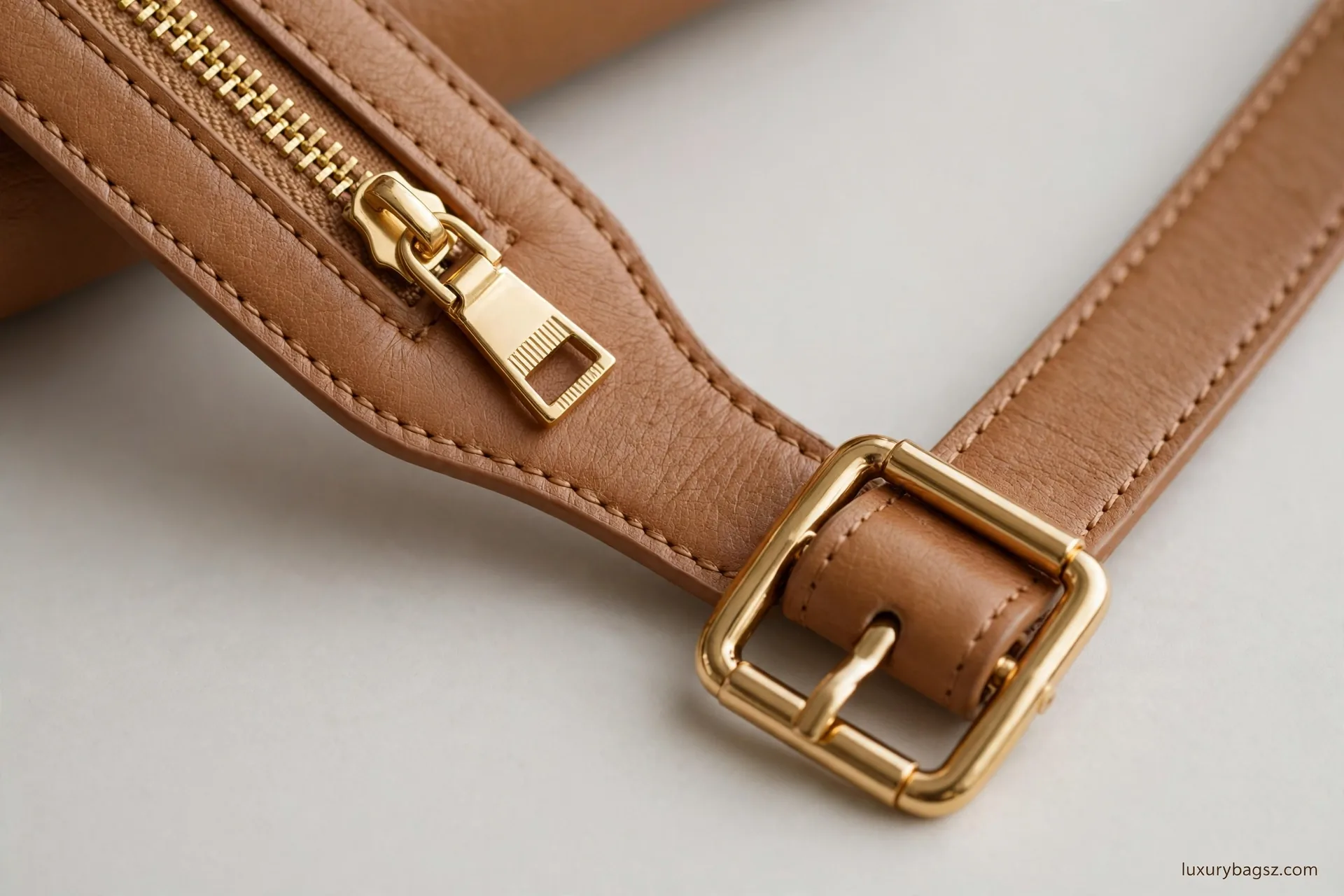
Pick the bag up by its hardware. Genuine buckles, rings and clasps feel solid, close smoothly and carry a consistent finish that matches across the bag. The Burberry monogram TB bag guide shows the crisp TB clasp engraving standard on current designs. Zips should glide without catching, and pulls should feel weighted rather than tinny. Sticky travel and rough edges suggest cheap fittings. Engraving on hardware should be clean and correctly spelt. Shallow, fuzzy or uneven lettering on a clasp is a detail genuine production rarely ships.
Codes, Tags and Packaging
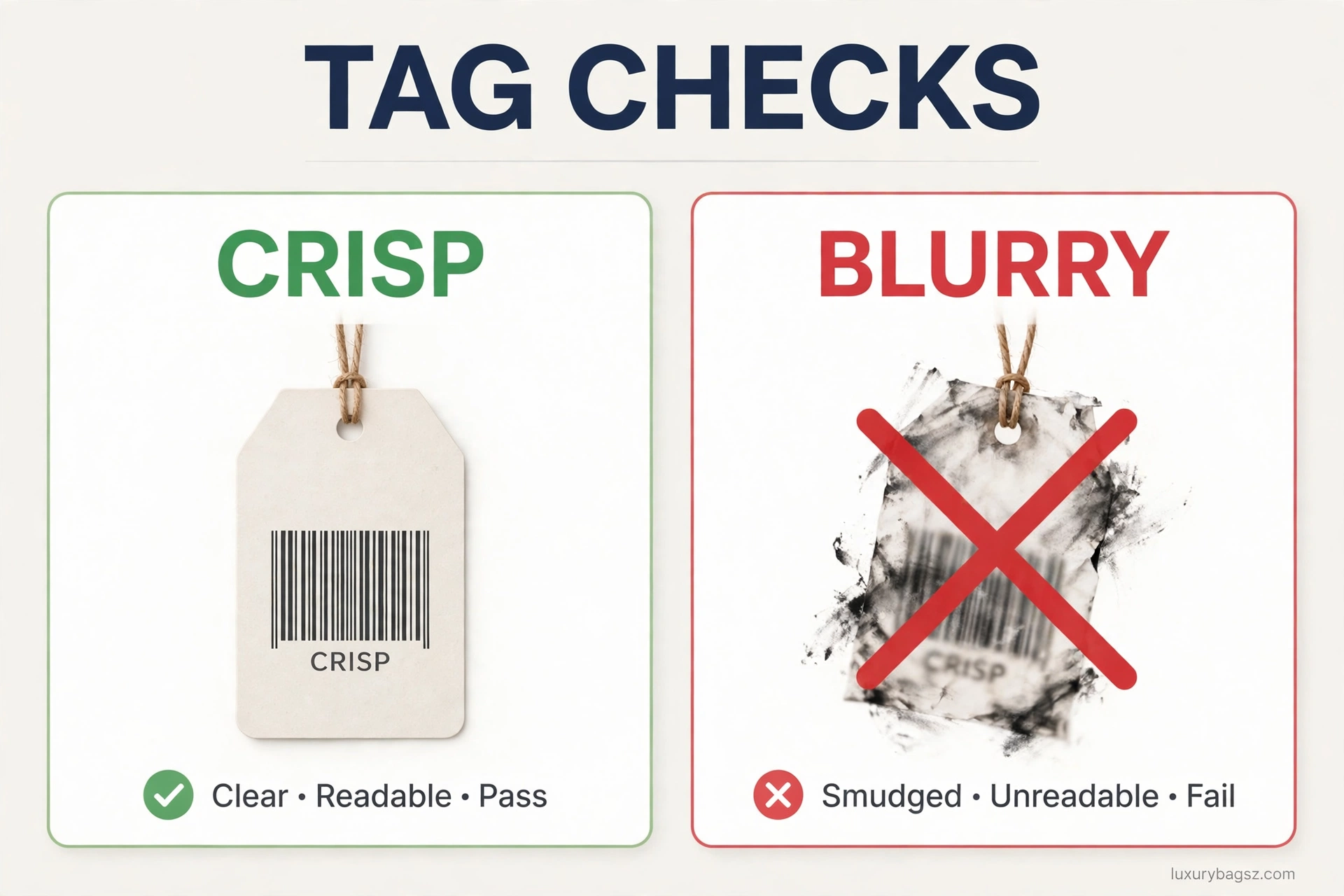
Modern bags may carry a style or product code on an interior tab or label. Treat it as supporting detail: it should be cleanly printed and plausible for the model. There is no public database that proves a Burberry bag genuine from a code alone. Any seller claiming a quick code check settles it is overselling. Paper tags should match the bag in style name, colour and barcode details. A tag describing a different bag is a common and careless fake error. Dust bags and boxes help complete a set, but they are easily swapped. Judge the bag in front of you, not the packaging around it.
Price, Sellers and Buying Safely
Price the model before you shop. A current Burberry bag at a small share of its retail or normal resale price needs a very good explanation. Work through our how to authenticate a pre-owned designer bag guide for a calm order of checks that suits any house. Ask for straight-on photographs of the check, plaque, label reverse, hardware and base. Blurry lifestyle shots hide exactly the details you need. Finish with our how to buy a pre-owned designer bag safely guide, and favour sellers with returns and buyer protection.
The Article Number, Honestly Explained
Clear up the most misunderstood detail on the label: the long number is an article or item number, not a unique serial. On modern bags it typically runs seven or eight digits, many beginning with 80, and it names a style in one colour, which means thousands of genuine bags share the same number.
Two consequences follow. First, the number carries no date and unlocks no database, so any tool or seller claiming to verify a Burberry by its number alone is overselling, a point this guide’s codes chapter made and worth repeating plainly. Second, an identical number on another listing is not evidence of copying; it is how style numbers work.
What the number can do is corroborate. It should correspond to the model and colourway in your hands, be printed or stamped cleanly with even spacing, and sit on a tab that is stitched in, not glued. A flimsy, blurry or crooked number tab fails as a piece of making, whatever digits it shows.
Older bags may carry no such number at all, which is correct for their era. Judge every bag against its own period’s paperwork habits before treating a missing or present number as evidence either way.
Know Your Checks: House, Haymarket, Nova and Vintage
Fake-spotting improves when you can name the check in front of you, because each family has its own scale and ground colour. The House or Classic check sits on a warm camel ground with black, white and red stripes, the pattern most people picture first.
The Haymarket check is the House check carrying the equestrian knight, printed where the red lines intersect. The Nova check runs larger, on a paler cream ground, with the red lines taking a slightly pinkish cast; it appears widely on bags and accessories, sometimes cut on the diagonal. The Vintage check revived the archive beige pattern in recent years, and newer collections have refreshed the check again under the house’s latest creative direction.
The authentication value is precision: a bag described as one check but wearing another, a Nova-scale pattern on a camel ground, or knight figures scattered at random rather than at the red-line crossings, has failed a test most buyers never think to run. Learn the four families and the check stops being wallpaper and becomes testimony.
Era matters as much as family. A 2005 bag cannot wear a check arrangement introduced in 2019, and a current bag in a long-retired arrangement deserves the same question in reverse.
The Knight, Up Close
Where the equestrian knight appears, in the Haymarket print or as a device on hardware and linings, examine him like a miniature portrait. Genuine knights are drawn crisply: horse, rider, lance and the banner are all legible at small size, with clean edges against the check.
Copies degrade him first. The figure blurs into a horseman-shaped blob, the lance vanishes or bends, and the banner loses its lettering entirely. On print fakes he sometimes appears upside down relative to the bag, a production error no genuine run ships.
Orientation is its own check: knights in the pattern should sit upright in the bag’s wearing position, placed at the red-line crossings as the Haymarket chapter described. A knight field rotated, mirrored or wandering off the crossings means the print was copied without understanding it.
Hardware versions of the device deserve the same scrutiny. A stamped or engraved knight should hold its detail under magnification; a soft, melted impression on a clasp or plaque belongs to the same family of shortcuts as the blurry print.
Made-In Myths: Italy, China and the Era Question
Few myths waste more buyers’ time than the country stamp. Italy is the most common origin on Burberry bags, and finding it is reassuring, but it is not the only genuine origin: production has varied by line and era, and smaller bags in particular have genuinely been made in China, carrying the stamp honestly.
So a made in China tag is not, by itself, a verdict, whatever older advice claims. The stamp must be judged as a piece of making: cleanly printed or stamped, evenly spaced, on a properly stitched label, and consistent with what is known of that model’s production.
The reverse error exists too. A made in Italy stamp on a line that was never produced there is a copied detail, and it appears precisely because buyers treat Italy as proof. Origin is corroboration, never a certificate: it must agree with the model, the era and the quality of everything around it.
What should actually alarm you is a sloppy origin stamp, blurry, crooked or on a glued tab, in a bag whose other details wobble. Country tells you where to look; the making tells you what you found.
Size and Weight: Measure the Bag Against Its Model
Every named model has published dimensions, and genuine bags match them closely. Measure height, width and depth with the bag empty and standing naturally, and compare against the model’s specification rather than a listing’s improvised numbers.
Replicas drift: a centimetre taller, a shade narrower, handles a touch longer than designed, because the copy is built from photographs and memory rather than the pattern. One soft measurement proves little in a slouchy design, but systematic drift across every dimension is the copy’s geometry confessing.
Weight corroborates in the same way. A genuine bag in coated canvas or leather has an expected heft for its hardware load; a notably light example, with tinny fittings at the ends of its straps, is usually light because its materials are.
Combine measurements with the check and plaque work above and most verdicts settle. Fakes are built to be photographed at listing distance; they are rarely built to be measured.
Vintage Burberry and the Burberrys Era: Different Rules
A large share of pre-owned Burberry predates the modern rules, and judging it by them produces false verdicts in both directions. Bags from before the late 1990s often read Burberrys, with the final s, in the serif lettering of the period, and many carry the knight generously across plaques, linings and hardware.
Expect period paperwork habits, not modern ones: no eight-digit article number, simpler tags, and origins that reflect the production of the day. Absence of a modern code on a genuinely old bag is correct behaviour, and its presence, crisp and modern, on a supposedly 1980s piece is the anachronism to catch.
Wear needs separating from fakery. Vintage genuine bags show cracked edge paint, softened canvas and tarnish that age explains; what they should not show is wrongness in the fundamentals: a misdrawn knight, a check that never existed, lettering misspelt in any era. Age damages condition, never accuracy.
Fakes of vintage styles exist and lean on buyers assuming old means unreproducible. Date the bag by its lettering era first, then apply every other check in this guide within that era’s rules.
The Base and the Inside Bottom: Where Copies Relax
Turn the bag over and open it fully, because copies relax where listings rarely photograph. On a genuine check bag the pattern’s behaviour at the base is deliberate: continued, matched or cleanly finished according to the design, never chopped at a random point with the stripes ending mid-thought.
The interior bottom tells the same story. Genuine construction finishes the inside floor neatly, with the lining fitted and secured and any base structure feeling intentional when you press it. Loose lining pooling in the corners, raw edges and a base that flexes like cardboard are interior economies.
Corners take the wear on any used bag, so judge them for making rather than freshness: edge paint and stitching should be the same standard as the rest of the bag, repaired wear included. A bag immaculate on its face and chaotic underneath was built for the photograph, and the photograph is where its quality ends.
Zips Under the Slider: The Maker’s Mark
Turn the zip slider over. Genuine bags use quality zip systems, and on many eras and lines the slider’s underside carries a maker’s mark from a recognised zip manufacturer, or the brand’s own clean stamping. Either way the metalwork is smooth, the pull attaches firmly and the teeth mesh evenly along the whole run.
Replica zips announce themselves by feel first: gritty travel, teeth that separate behind the slider, pulls that wobble on thin rings. Look underneath and the story completes itself, with rough casting, no maker’s discipline and edges that catch a fingertip.
Run every zip on the bag, including interior pockets, because copies sometimes fit one decent zip where buyers look and cheap ones where they do not. Consistency of hardware quality across the whole bag is a genuine habit; a single good zip among poor ones is staging.
Frequently Asked Questions
What is the quickest way to spot a fake Burberry bag, and is the knight logo on every genuine one?
Study the check. Genuine checks are sharp, evenly spaced and composed at the seams. Drifting lines, dull colours and a pattern that restarts clumsily are classic fake signs.
No. The knight appears on many older pieces but not on every model or era. Its absence is not proof of a fake; judge it only when the design should carry it.
Where should the interior plaque or label be?
Inside the bag, placed straight and finished neatly. It may be a metal plaque matching the hardware tone or a stitched leather tag, often with a made-in stamp behind it.
Are all genuine Burberry bags made in Italy?
No. Italy is common, but genuine production has also taken place in other countries across different eras. Judge the stamp's quality and fit with the bag's age, not the country alone.
Can a code prove my Burberry bag is real?
No. Codes and tags are supporting details only, and there is no public lookup that proves a bag genuine. The check, plaque, materials and stitching must agree too.
What should genuine Burberry canvas feel like?
Firm, smooth and substantial, with a fine, even grain. Thin, plasticky canvas that crackles when flexed or smells strongly of chemicals points to a copy.
How can I tell the era of a Burberry bag, and does ‘Burberrys’ with an s mean fake?
Lettering, check style, plaque form and lining all help date a piece. Compare the bag against era references before judging any single detail.
No. The house used the Burberrys form for much of its history, so older genuine bags can carry it. It only becomes a warning on a bag claimed to be recent.
What photographs should I ask a seller for, and where is the safest place to buy?
Ask for the full check front, interior plaque, label reverse, hardware close-ups, base and corners. Ask for plain daylight shots rather than filtered listing images.
From the brand, authorised retailers, or pre-owned sellers who authenticate, show close-ups and accept returns. Buyer protection is worth a modest premium.
Final Verdict: The Check First, Then the Details
Start with the check, because fakers fail there fastest. Then let the plaque, lettering, materials and hardware confirm or overturn your first impression. When the era fits, the making is neat and the price makes sense, you are likely looking at a genuine Burberry. When details argue with each other, walk away.






