

How to Spot a Fake Marc by Marc Jacobs Watch: Checks for a Discontinued Line
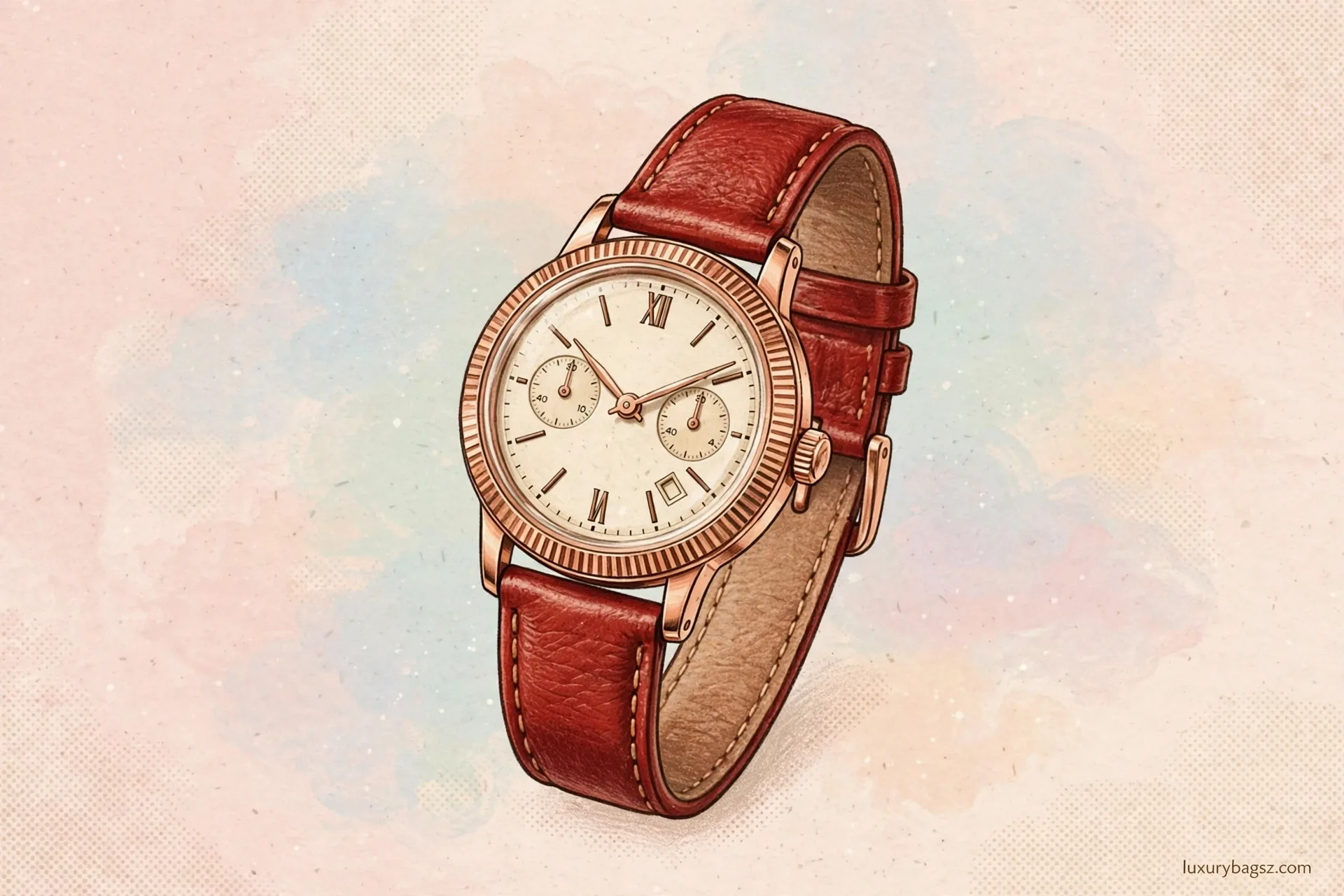
Fake Marc by Marc Jacobs Watches: Judge Them as Vintage
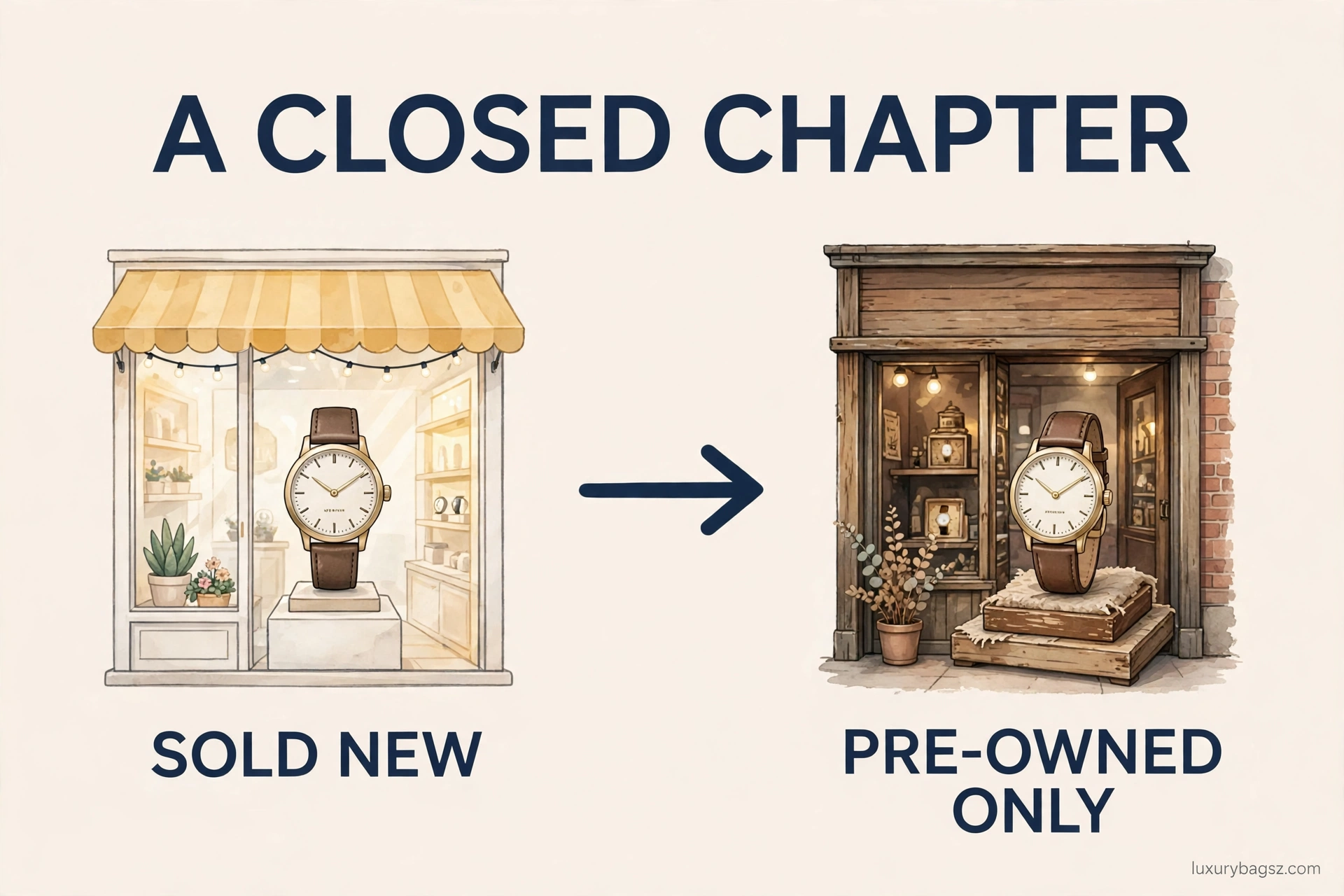
Start with one honest fact: Marc by Marc Jacobs was a discontinued diffusion line, folded away in the mid-2010s when the brand unified under one name. That means every watch offered today is old stock or pre-owned. Anyone selling one as a fresh new release with a current warranty is already failing the first check. Judge these watches as vintage fashion pieces. Lettering, caseback numbers and era paperwork matter more than shine, because a genuine example should show its age honestly.
Key Takeaways

- The Marc by Marc Jacobs line is discontinued, so all stock is old or used.
- Genuine dials use crisp lettering, sometimes with letters as hour markers.
- Caseback model numbers should match real models from the line's era.
- Era boxes and booklets help, but fresh-looking paperwork is a warning.
- Fair prices today are modest pre-owned prices, not launch prices.
- Battery, strap and seal condition matter as much as authenticity.
A Discontinued Line Changes the Rules
Marc by Marc Jacobs was the younger, playful line beneath the main brand. Its watches were fashion pieces, made under licence, and sold widely in department stores. The line closed in the mid-2010s. Our Marc Jacobs The Tote Bag guide covers the unified brand that replaced the two-tier structure. Because of that, condition is part of authenticity. A supposedly unworn watch with a dead battery and perished strap may be honest old stock, or may be a copy. Ask sellers direct questions about age and storage. Vague answers about a line that ended years ago should lower your confidence quickly.
Know the Real Models From the Era
Learn a few genuine names before you shop. Lines such as Henry, Amy, Baker and Blade appeared across the range, in sizes from small dress styles to bold chronographs. The Henry was a classic round watch, often on leather, while some models played with colour, oversized cases or letter markers around the dial. Prices at launch were fashion-watch prices, typically in the low hundreds of dollars. Anyone framing these as high horology is selling you a story. Search archived department store listings for the model you are offered. If the name, size and dial never existed together, the watch in front of you is wrong.
Dial Lettering and Letter Indices
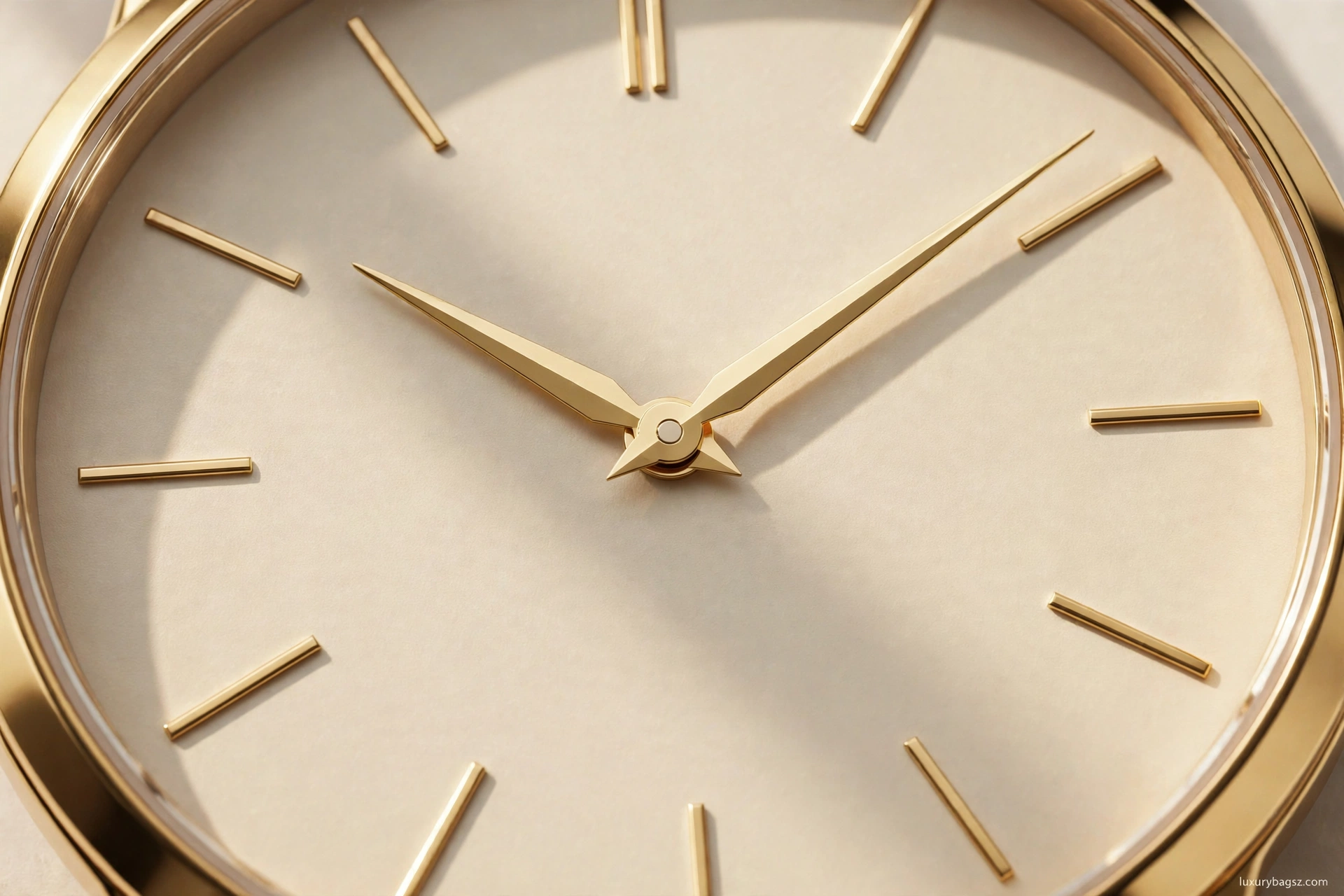
Read the dial wording closely. Genuine pieces carry the full line name in fine, even print, often with the main brand line in tiny type at the centre. Our Marc Jacobs Snapshot bag guide shows how carefully the house handles lettering on its modern accessories too. Some genuine models use the letters of the designer's name as hour markers. Each letter should be cleanly formed, evenly spaced and correctly ordered. Fakes stumble here: letters lean, spacing crowds, or the tiny centre print blurs. A dial that looks fine from a metre away but messy up close is telling on itself.
Caseback Numbers and Licence-Era Making
Turn the watch over. Genuine casebacks carry the brand name, a model number, material wording and water resistance marks, engraved or stamped evenly. Cross-check the number using our pre-owned luxury watches buyer's guide, which shows how to match numbers to archived listings. These watches were licence-made fashion pieces, so expect competent, standard quartz making rather than fine Swiss finishing. Judge neatness, not luxury. Shallow, crooked or misspelt caseback text is still a failure. So is a model number that no archived listing has ever carried.
Crown, Case and Coatings
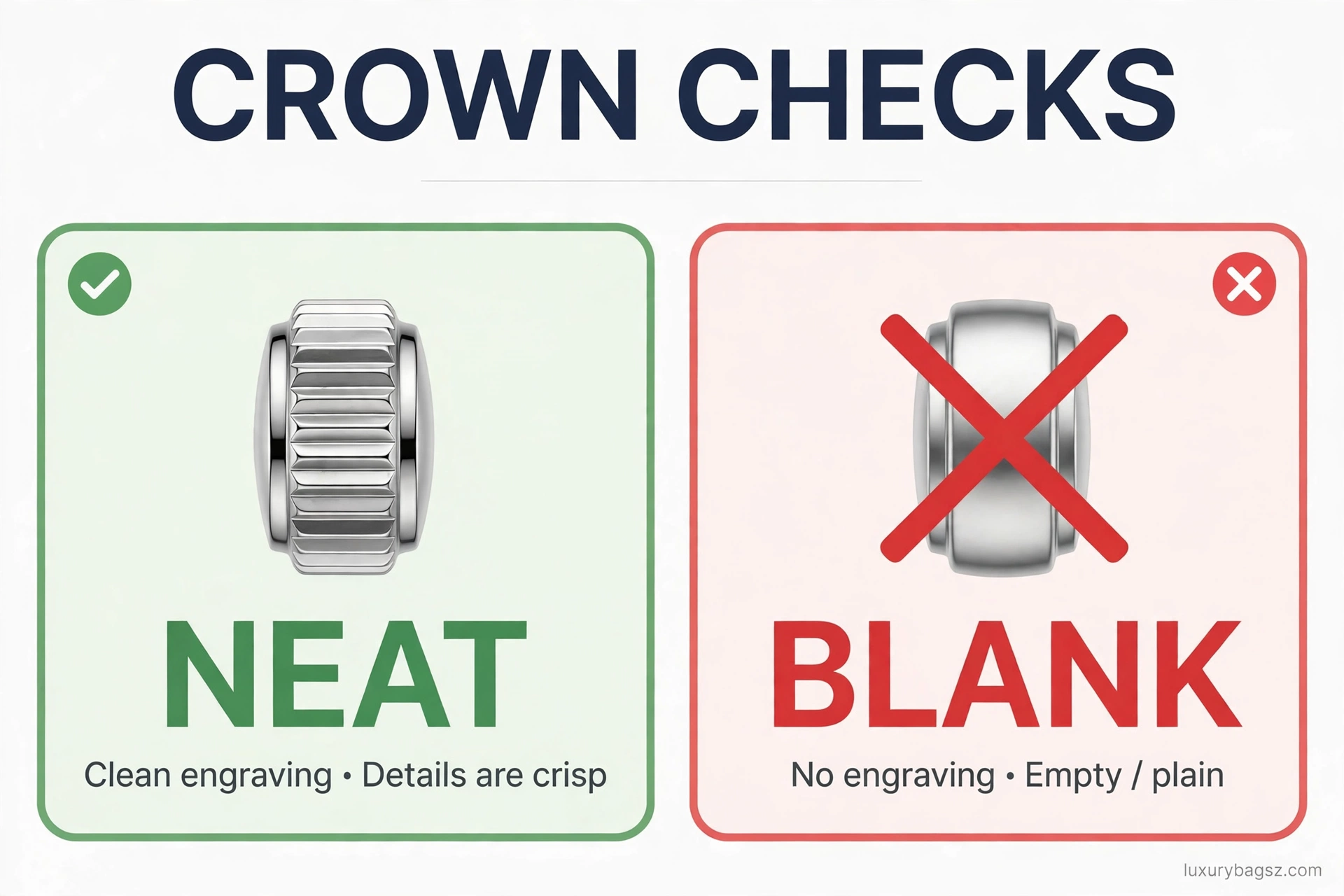
Check the crown for clean branding or a neat plain finish that matches the model. A wobbly crown or one that grinds when setting the time suggests poor making or hard wear. Case coatings were a big part of the line's look: gold tone, rose tone and coloured finishes over steel or alloy cases, depending on the model. On a genuine older watch, coating wear should be honest and gradual, worst at the edges. Peeling in large flakes on a supposedly unworn watch is suspicious. Crystal condition matters too. Light marks suit an old watch. A seller describing a scratched piece as new old stock in perfect order is contradicting themselves.
Straps, Bracelets and Clasps
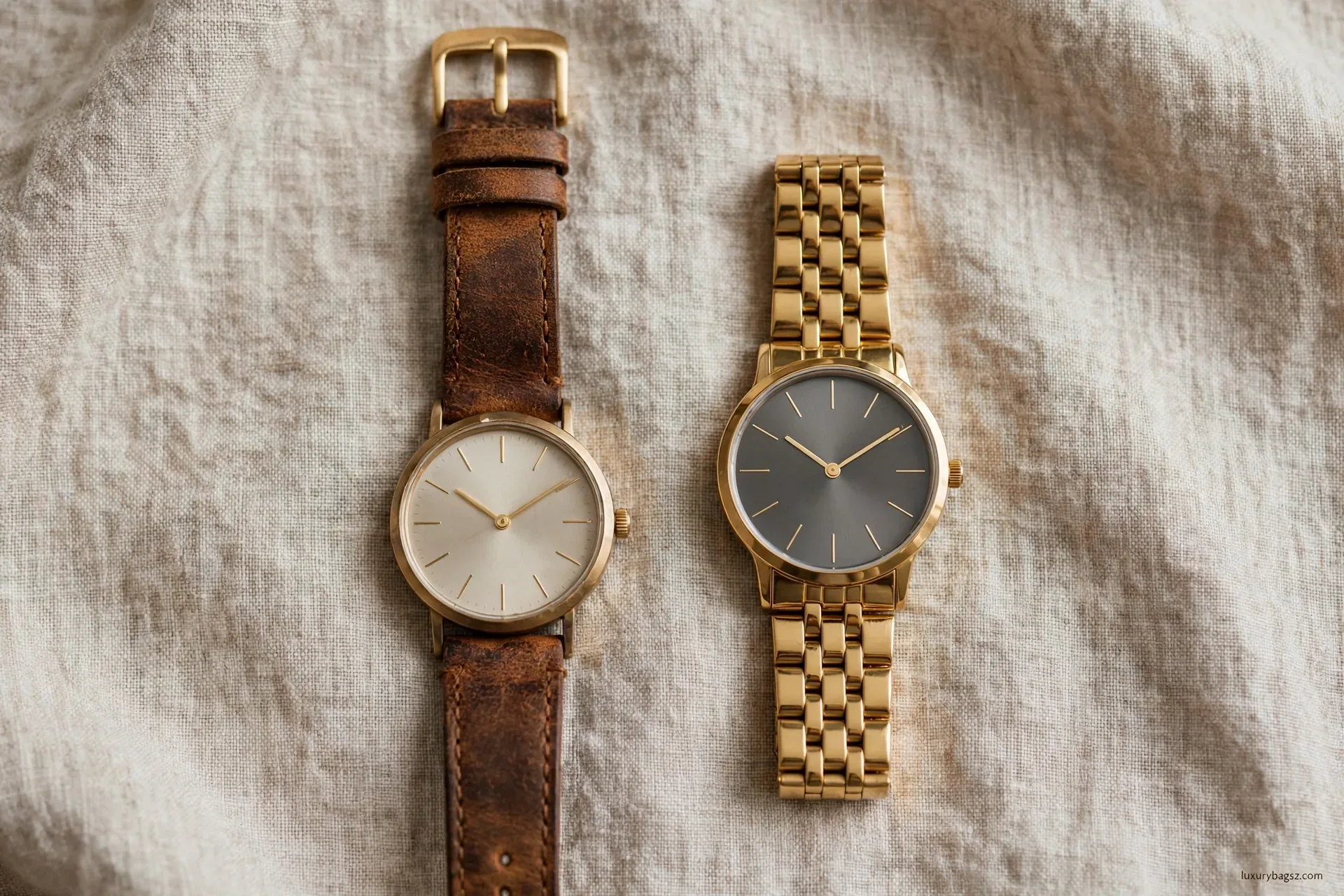
Leather straps were central to the line's look. Genuine straps are neatly stitched, lined and stamped, and they age by softening and darkening, not by cracking apart. Keep a genuine strap alive with our how to clean a watch guide, and budget for a replacement if the original is perished. Bracelets should feel smooth, with even links and a clasp that closes positively. Stiff, rattly links with sharp edges suggest a copy or a very tired watch. Remember the strap may not be original after a decade or more. A declared replacement strap is honest; a fake watch on a good strap is still a fake watch.
Boxes, Booklets and Old Receipts
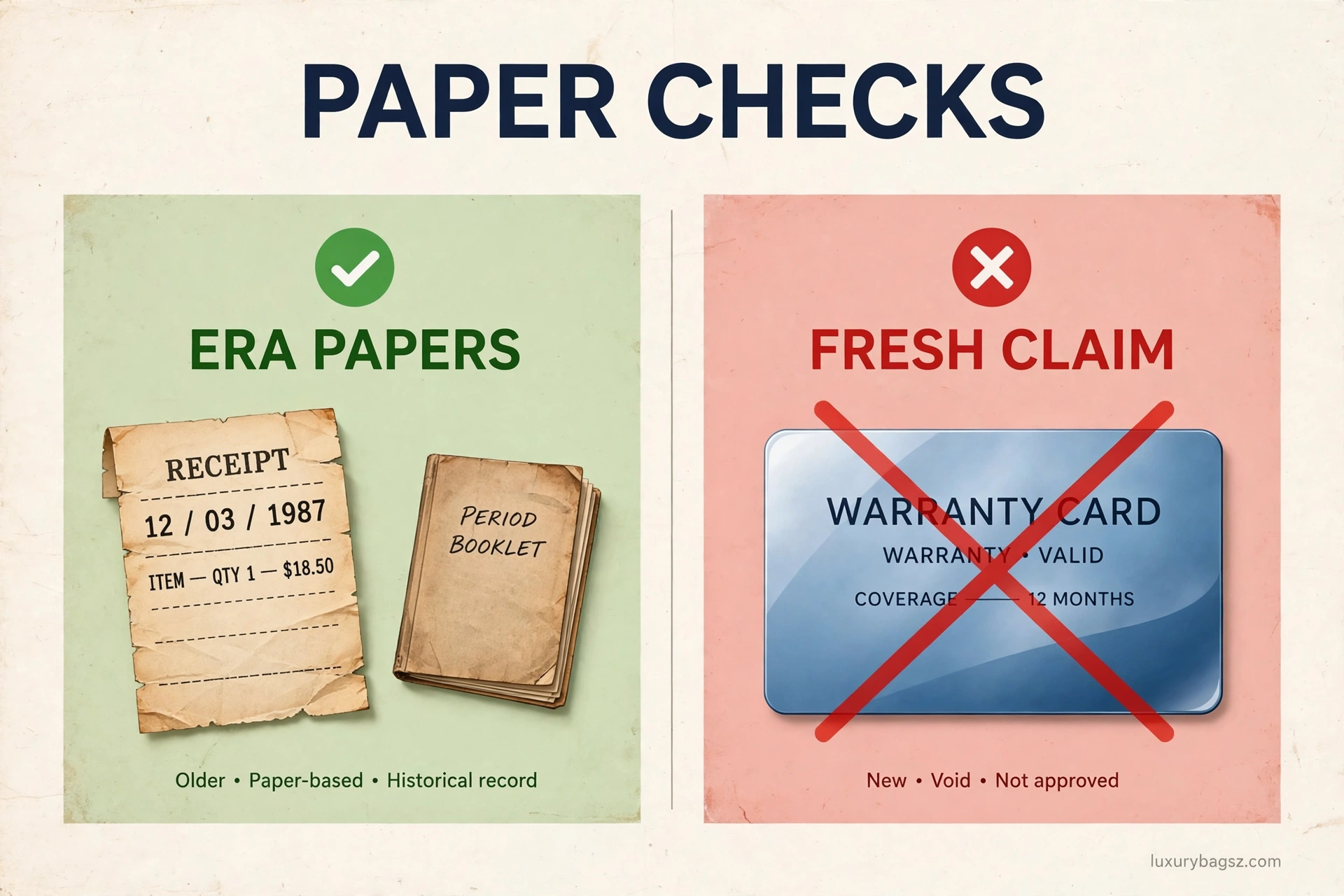
Era packaging helps when it fits the story: a period box, a booklet in several languages and, ideally, an old receipt or department store tag. What should worry you is freshness. A crisp new warranty promising current cover for a line closed years ago does not add up. Many genuine watches have lost their boxes over the years, especially fashion pieces that were worn rather than collected. Missing packaging is normal at this level. Weigh paperwork as a supporting actor. The watch, its numbers and its lettering must carry the verdict; the box can only agree with them.
Fair Prices Today and Safe Buying
Set your expectations honestly. These are discontinued fashion watches, and our designer watches under 500 guide shows the band they always lived in. Sound pre-owned examples usually trade at modest prices that reflect age, battery needs and strap condition. Launch prices are history, not a guide. Budget for a battery change and a pressure check if you plan to wear the watch near water. Old seals on any vintage fashion watch should be assumed tired. Buy from sellers who show the caseback, state the battery position plainly and accept returns. Nostalgia is a fine reason to buy, but it is no reason to skip checks.
Inside the Caseback: What a Watchmaker Sees
If the stakes justify it, a watchmaker’s two-minute look inside settles questions the outside cannot. These were licence-made fashion watches, produced for the brand by a specialist watch group, and inside sits a competent quartz movement of the era, very often Japanese-made.
That last point defeats a common false alarm: a movement stamped by a movement maker rather than by Marc Jacobs is normal and expected. Licence-era fashion watches almost never contain in-house movements, and authentication services make the same point about their sister brands. Judge the movement for period correctness and tidy fitting, not for a logo it was never meant to carry.
The inside also reveals honesty about condition: correct battery fitted cleanly, no corrosion blooms from a long-dead cell, no tool scars from clumsy openings. A watch claimed as unworn old stock whose caseback shows three generations of battery changes has a biography its seller skipped.
Ask for this inspection before paying serious money for a rare model, and accept a refusal as information. On modest examples the cost of opening may exceed the risk, which is itself a fair calculation at this level.
Not the Same Watch: Mainline Marc Jacobs Pieces
Keep the eras separate in your head. After unification, watches appeared under the single MARC JACOBS name, including smartwatch-era pieces, and they are not Marc by Marc Jacobs watches, however similar the surnames make them sound.
Mainline pieces follow their own models, packaging and, in the smartwatch case, software checks: pairing, charging and system behaviour, the same functional tests this site applies to other fashion smartwatches. A listing that mixes the names, selling a mainline watch as the discontinued line or the reverse, has failed the era test before any detail is examined.
Collectors pay for the Marc by Marc Jacobs name specifically, for the nostalgia of that label, so the misdescription matters commercially as well as factually. Confirm which brand line the dial actually carries, then apply that line’s rules and that line’s prices.
Married Watches: Genuine Parts, Wrong Watch
A decade-plus-old fashion line creates a subtler risk than copies: the married watch, assembled from genuine parts that never left a factory together. A correct case with a later replacement movement, a period dial in the wrong case size, a bracelet borrowed from a sibling model.
Marriages happen innocently through repairs as well as dishonestly for sale, and the checks are coherence checks. Model number against dial layout, case size against the model’s documented size, coating tone consistent across case, crown and clasp, wear patterns that agree between parts. A pristine dial inside a heavily worn case asks a question someone should answer.
Price a married watch as what it is: genuine material, compromised originality. Sellers who disclose a replaced movement or strap are showing the honesty this market runs on; sellers who present an assembly as all-original are the risk, whatever the parts are made of.
Working the Chronograph and Subdials
Era chronographs reward a full functional test. On genuine licence-made models the subdials do real work: they track elapsed time, a 24-hour reading or the date, according to the movement fitted, and the pushers start, stop and reset with a clean, definite action.
Run the complete cycle twice. Hands should return exactly to zero on reset, pushers should feel consistent between runs, and the central seconds should behave as the model documents. A subdial that never moves, or hands that reset to different positions each time, betray either a decorative fake layout or a movement too tired to buy blind.
Decorative subdials existed on the cheapest fashion watches of the period, which is exactly why the check matters: establish from archived listings whether the model you are offered was a working chronograph. If it was, non-working dials end the conversation.
Function is also condition evidence. A decade-old watch whose chronograph still runs true has usually been stored kindly, and kindly stored watches are the ones worth their asking price in this line.
Frequently Asked Questions
Is Marc by Marc Jacobs still making watches?
No. The diffusion line was closed in the mid-2010s when the brand unified. Any watch offered today is old stock or pre-owned, whatever the listing claims.
What is the fastest fake check for these watches?
Read the dial lettering up close, then the caseback number. Blurry fine print, leaning letters or a model number found in no archived listing are strong warnings.
Why do some dials use letters as hour markers?
It was a playful house idea, spelling the designer's name around the dial. On genuine pieces the letters are crisp, evenly spaced and correctly ordered.
Should the watch come with a current warranty?
No. A fresh warranty promising current cover for a line closed years ago is a warning sign. Era booklets and old receipts are the paperwork that makes sense.
How much should a genuine one cost today?
Usually a modest pre-owned price reflecting age and condition, well below original launch money. Very high asking prices need a rare model and superb condition to justify them.
Does a dead battery mean the watch is fake?
No. Old stock and stored pre-owned watches commonly need a battery. It does mean you should factor a battery change and a basic check into the price.
Were these watches Swiss made?
They were licence-made fashion watches with standard quartz movements, sold through department stores. Judge them on neat making and correct details, not Swiss finishing.
Can the strap tell me anything?
Yes. Genuine straps are neatly stitched, lined and stamped, and age by softening. Cracked, raw-edged straps suggest a copy, though honest replacements are common on old watches.
What photographs should I ask for?
Ask for the dial straight on, the caseback, the crown side, the clasp and any paperwork. For a discontinued line, the caseback number shot matters most.
Is it worth buying one at all?
Yes, if you like the design and the price is honest. Buy it as a vintage fashion piece in checked condition, not as an investment or a current model.
Conclusion: Honest Age Is the Whole Test
A genuine Marc by Marc Jacobs watch should look like what it is: a well-kept fashion watch from a line that closed years ago. Crisp lettering, a traceable caseback number and paperwork from the right era make the case. Fresh warranties and impossible prices break it. Buy the honest survivor.






