How to Size Jimmy Choo Shoes: The Complete Sizing and Fit Guide
Jimmy Choo Sizing at a Glance
Jimmy Choo sizing confuses many buyers, because the house uses Italian manufacturing and European sizing as its base, with UK and US conversions that vary slightly by retailer and style. The short answer is: measure your feet, use the official Jimmy Choo size chart for the style you want, and try in store where possible, because fit varies by heel height, toe shape, and last.
Most buyers find Jimmy Choo shoes run true to size, with pointed pumps and high heels feeling smaller than sandals and boots in the same size. That variation is normal across luxury shoes, and it is why a single size rule, such as always size up, fails for many buyers.
This guide covers measuring, conversion charts, fit by style, wide and narrow feet, heel heights, buying online, and fixing fit problems, so you can choose a Jimmy Choo size with confidence, whether you are buying your first pair or your tenth.
Key Takeaways
- Jimmy Choo shoes are made in Italy and sized primarily in European sizes, with UK and US conversions.
- Most styles run true to size, but pointed pumps and very high heels often feel smaller.
- Measure both feet in the evening, standing, and use your larger foot as your size guide.
- Fit varies by style, last, and heel height, so do not assume one Jimmy Choo size fits every style.
- Half sizes matter for heels: a half size can decide between pinching and slipping.
- Wide feet need wide lasts, rounded toes, or a half size up, not just a longer size.
- Try shoes on hard floors, walk for several minutes, and check toe room, heel security, and arch feel.
- Online buyers should confirm return terms, because fit surprises are common even with careful measuring.
A Short History: Why Jimmy Choo Sizing Is Italian
Jimmy Choo was founded in London in 1996 by Malaysian-born cobbler Jimmy Choo and British entrepreneur Tamara Mellon, who had been an accessories editor at Vogue. Choo had made handmade shoes in London's East End, and Mellon saw an opportunity to turn his craft into a global luxury brand.
The house quickly became famous for red-carpet heels, worn by celebrities and royalty, and for a glamorous, feminine aesthetic that balanced elegance with wearability. Shoes, not bags, were the original core, though handbags and accessories later grew into a major business.
Manufacturing in Italy shaped sizing. Italian factories use European sizing as standard, with lasts, the foot-shaped forms shoes are built on, designed for Italian and European feet. UK and US sizes are conversions from those European bases, and conversions vary slightly by brand and retailer.
That Italian base explains why Jimmy Choo sizing feels different from American or British high-street sizing. A Jimmy Choo EU 38 is not identical to every other brand's EU 38, because lasts differ, and a conversion chart is a guide, not a guarantee. Fit must be checked in person where possible.
Measure Your Feet Correctly First
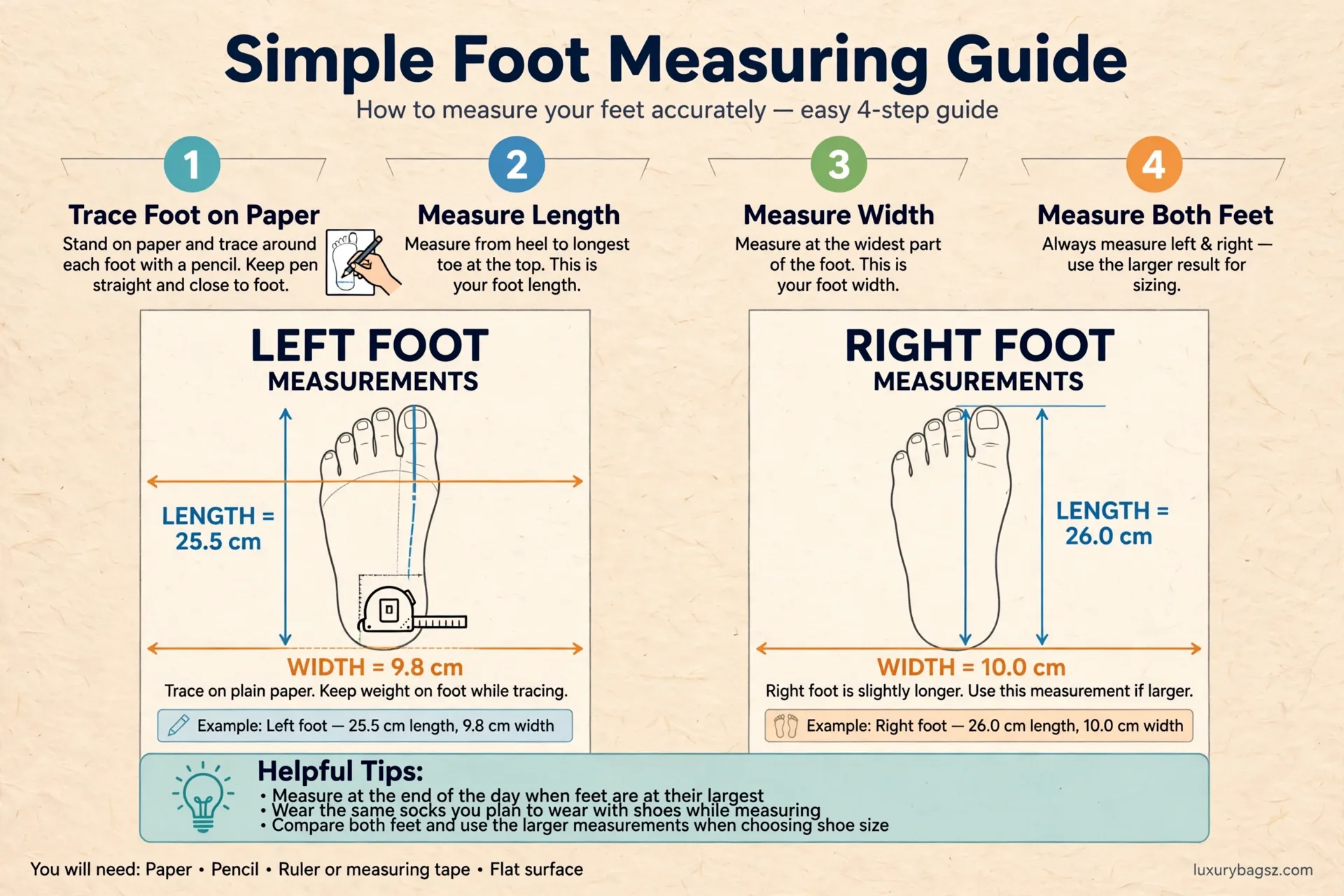
Measuring correctly is the foundation of Jimmy Choo sizing, and it takes five minutes with paper, a pen, and a ruler. Stand on paper in the socks or hosiery you will wear with the shoes, trace around each foot, and measure the longest distance from heel to toe in centimetres.
Measure both feet, because most people have one foot slightly larger than the other, and use the larger foot's measurement as your size guide. Measure in the evening, when feet are slightly swollen from daily use, because morning measurements can underestimate size and lead to tight shoes later in the day.
Measure width too, across the widest part of the foot, because length alone does not capture fit for wide or narrow feet. A foot that is long but narrow needs a different last from a foot that is shorter but wide, even if both measure the same length.
Record your measurements in centimetres, and compare them with Jimmy Choo's official size chart for the style you want, not with a generic conversion chart alone. Official charts, where available for a style, reflect that style's last and are more accurate than general tables.
Understanding EU, UK, and US Sizes
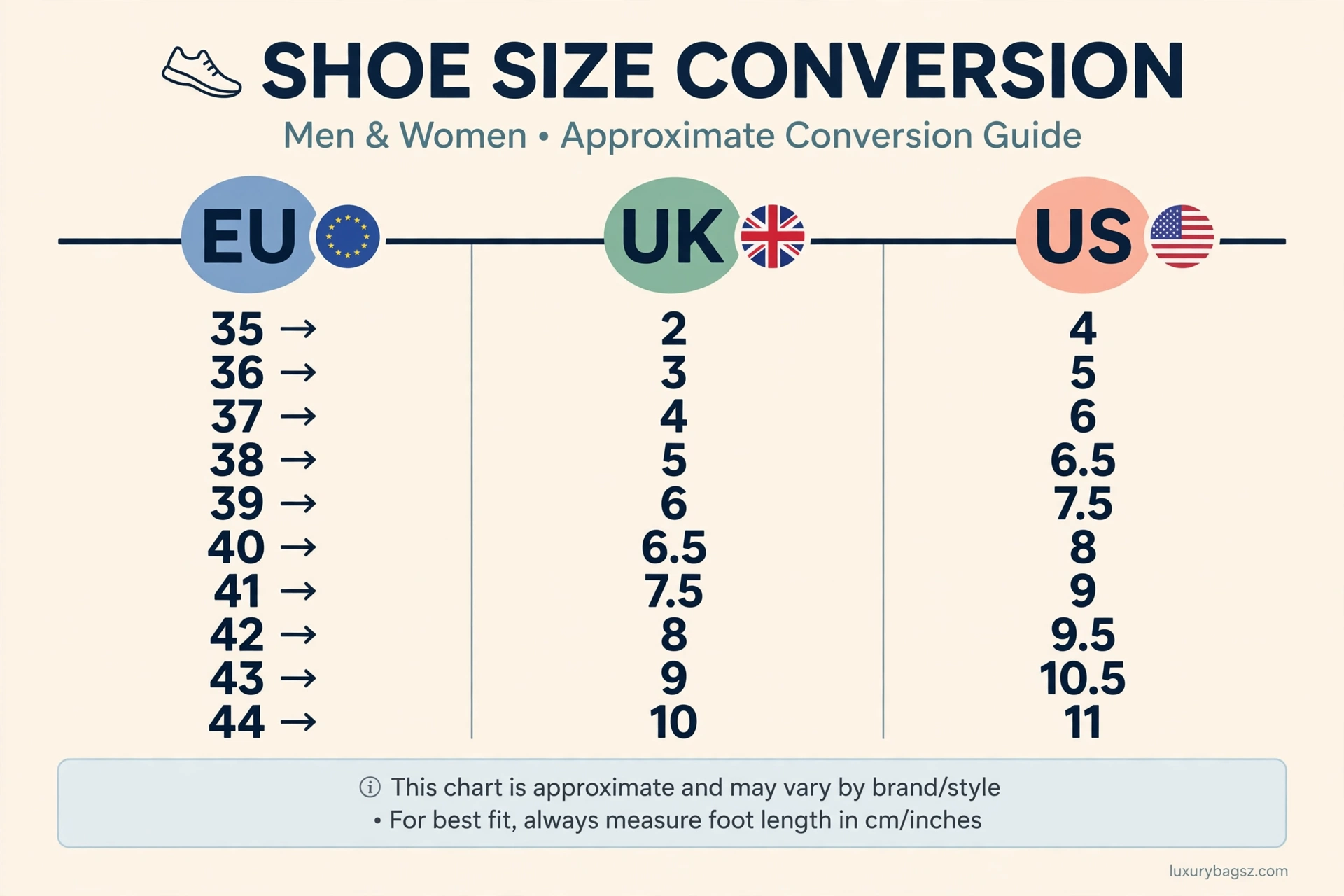
Jimmy Choo shoes are labelled primarily in European sizes, such as 36, 37, 38, 39, 40, and 41, with UK and US equivalents given by retailers. European sizing increments are smaller than UK or US increments, which is why half sizes matter and why conversions are approximate.
UK sizing differs from US sizing, and women's US sizes are typically one to one-and-a-half sizes larger than UK sizes for the same foot. For example, a UK 5 often corresponds to a US 7 in women's shoes, though the exact conversion varies by brand and style, so always check the brand's chart.
Half sizes exist in European sizing as well, though availability varies by style and retailer. A half size can be decisive for heels, where a full size jump may go from pinching to slipping, while a half size offers a middle path. If your measurement falls between sizes, the style's toe shape and heel height should decide whether you size up or down.
Retailer charts sometimes differ by a half size for the same Jimmy Choo style, because retailers convert independently. When charts disagree, trust Jimmy Choo's own chart first, then the retailer's chart for that specific product, and confirm return terms before ordering.

Conversion Guide: From Your Measurement to a Size
Start with your foot length in centimetres, measured as described above, and find the closest European size on Jimmy Choo's chart. As a rough guide, a foot of about 22.5 centimetres often corresponds to EU 36, 23 centimetres to EU 37, 23.5 to EU 38, 24 to EU 39, and 24.5 to EU 40, though these figures vary by last and should be checked against the official chart.
UK equivalents, as a rough guide, run about one size below the US equivalent: EU 36 often maps to UK 3 and US 5, EU 37 to UK 4 and US 6, EU 38 to UK 5 and US 7, EU 39 to UK 6 and US 8, and EU 40 to UK 7 and US 9. These are approximations, not guarantees, and they vary by style.
For wider feet, length conversion alone misleads, because a wide foot may need a larger size for width, even if length suggests a smaller size. In that case, try the larger size, a wide-fit option if available, or a rounded toe style that offers more room.
For narrow feet, the opposite applies: a smaller size or a style with straps, ankle support, or a narrower last may fit better than sizing down in length alone. Straps and buckles help secure narrow feet in sandals and pumps that would otherwise slip.
How Jimmy Choo Shoes Generally Fit
Most Jimmy Choo styles run true to size for buyers with medium-width feet and standard arches, especially sandals, boots, and sneakers, where construction is more forgiving. That true-to-size tendency is a useful starting point, but it is not a rule for every style.
Pointed pumps often feel smaller than the same size in a rounded style, because the pointed toe compresses toes and reduces usable length. Buyers with longer toes, wide feet, or bunions frequently size up a half size in pointed pumps, even if they wear their usual size in sandals.
High heels, especially above 85 millimetres, feel tighter than lower heels in the same size, because the foot slides forward and toes press into the toe box. A heel grip, a half size up, or a platform style that reduces the effective heel height can help, though none fully replaces trying the shoe.
Boots and sneakers, with more structure and room, often fit more generously, and some buyers size down a half size in boots if they feel loose. As always, try the specific style, because last, lining, and construction vary even within the same category.
Fit by Style: Pumps, Sandals, Boots, and Sneakers
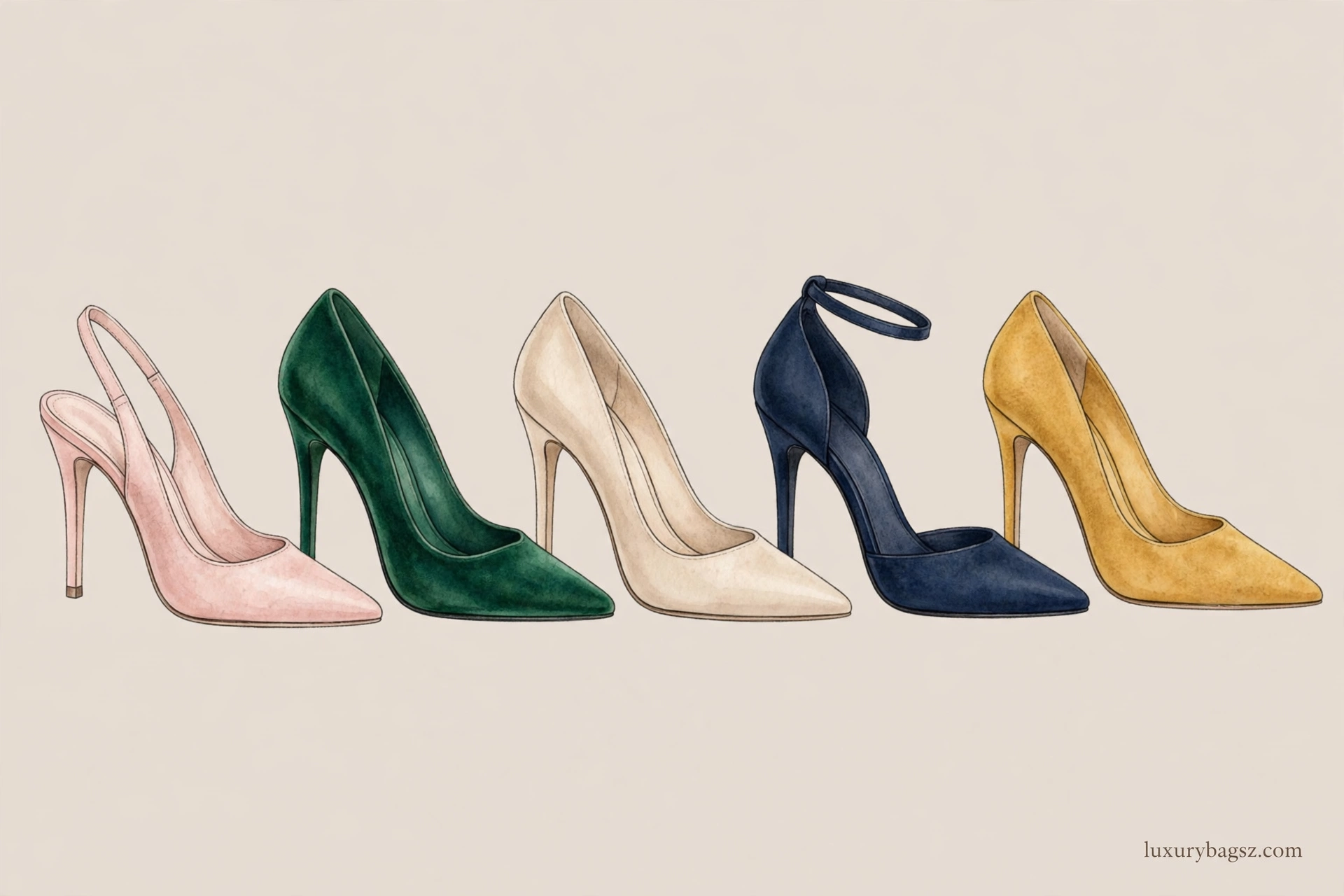
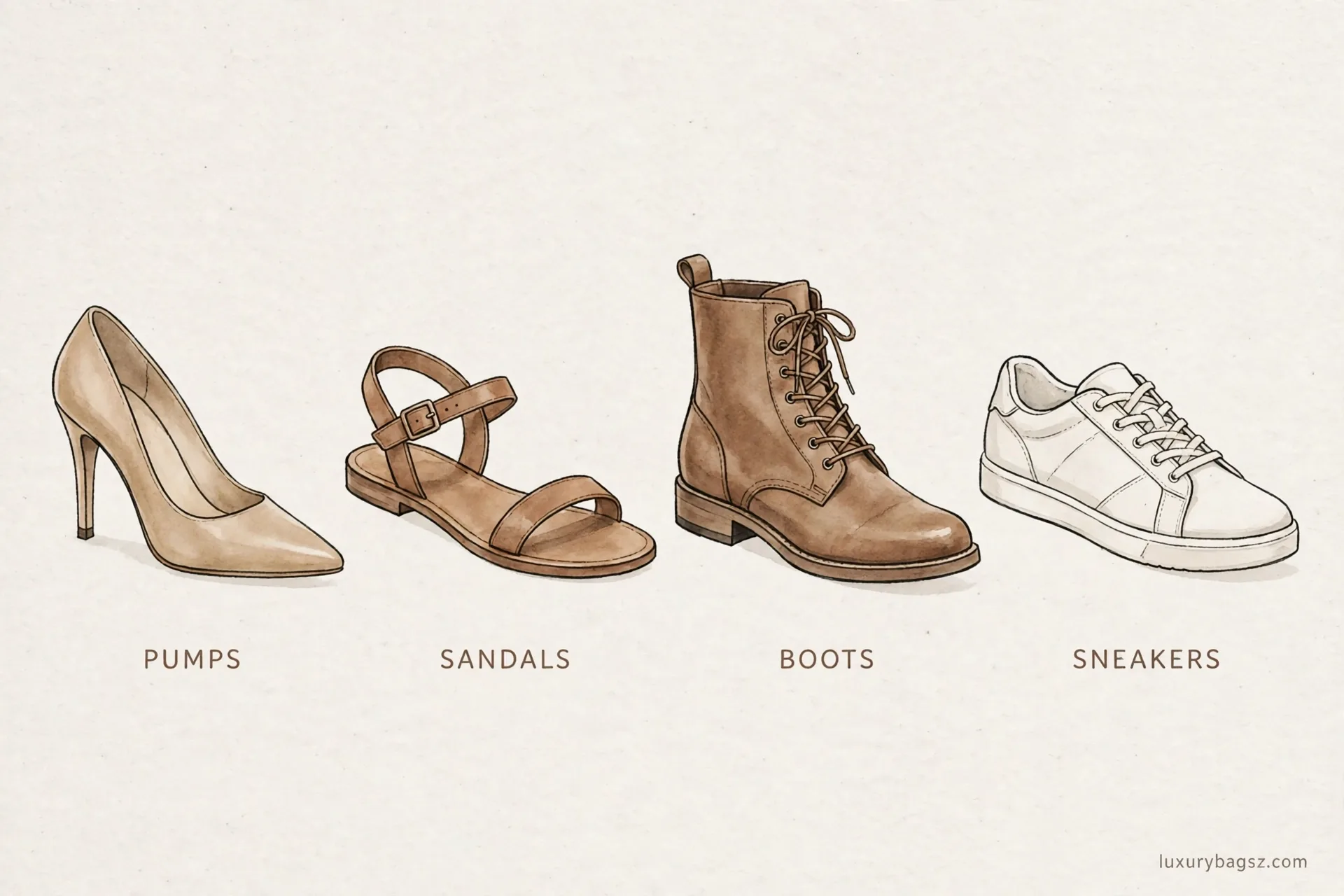
Pumps, including the classic Romy and Love styles, are the most size-sensitive Jimmy Choo shoes, because their pointed or almond toes and high heels amplify fit issues. Try pumps on hard floors, walk for several minutes, and check toe room, heel slipping, and arch pressure before deciding.
Sandals, with open toes and straps, are more forgiving on toe length, but strap fit matters: straps should secure without digging, and the foot should not slide forward off the footbed. Adjustable straps help, while fixed straps demand a more precise size.
Boots, including ankle boots and knee boots, need calf and ankle checks as well as foot size. Shaft height, calf circumference, and zip closure all affect fit, and a boot that fits the foot but not the calf will not be worn. Try boots with the trousers or tights you will wear them with.
Sneakers, including Jimmy Choo's casual and crystal-embellished styles, generally run true to size with more cushioning and room than heels. They suit buyers who want Jimmy Choo design without heel fit challenges, and they are a good first pair for buyers unsure of their Jimmy Choo size.
Heel Height, and How It Changes Fit
Heel height changes fit because it shifts weight forward onto the balls of the feet and pushes toes into the toe box. A shoe that fits perfectly at 50 millimetres may feel tight at 100 millimetres, even in the same size and style, because the foot's position changes.
Lower heels, up to about 50 millimetres, generally fit most true to size and suit longer wear, because weight distributes more evenly and toes press less. They are a good starting point for buyers new to Jimmy Choo or to heels generally.
Mid heels, around 70 to 85 millimetres, balance elegance and comfort for many buyers, though they still demand careful toe and arch checks. A half size up, a cushioned insole, or a ball-of-foot pad can improve comfort at this height.
High heels, above 85 millimetres, demand the most careful fitting, with toe room, heel security, and arch support all critical. Platforms reduce the effective heel height and help, but they add weight and change gait. For high heels, in-store fitting is strongly recommended over online guessing.
Fit Checks: Toes, Heels, Arches, and Width
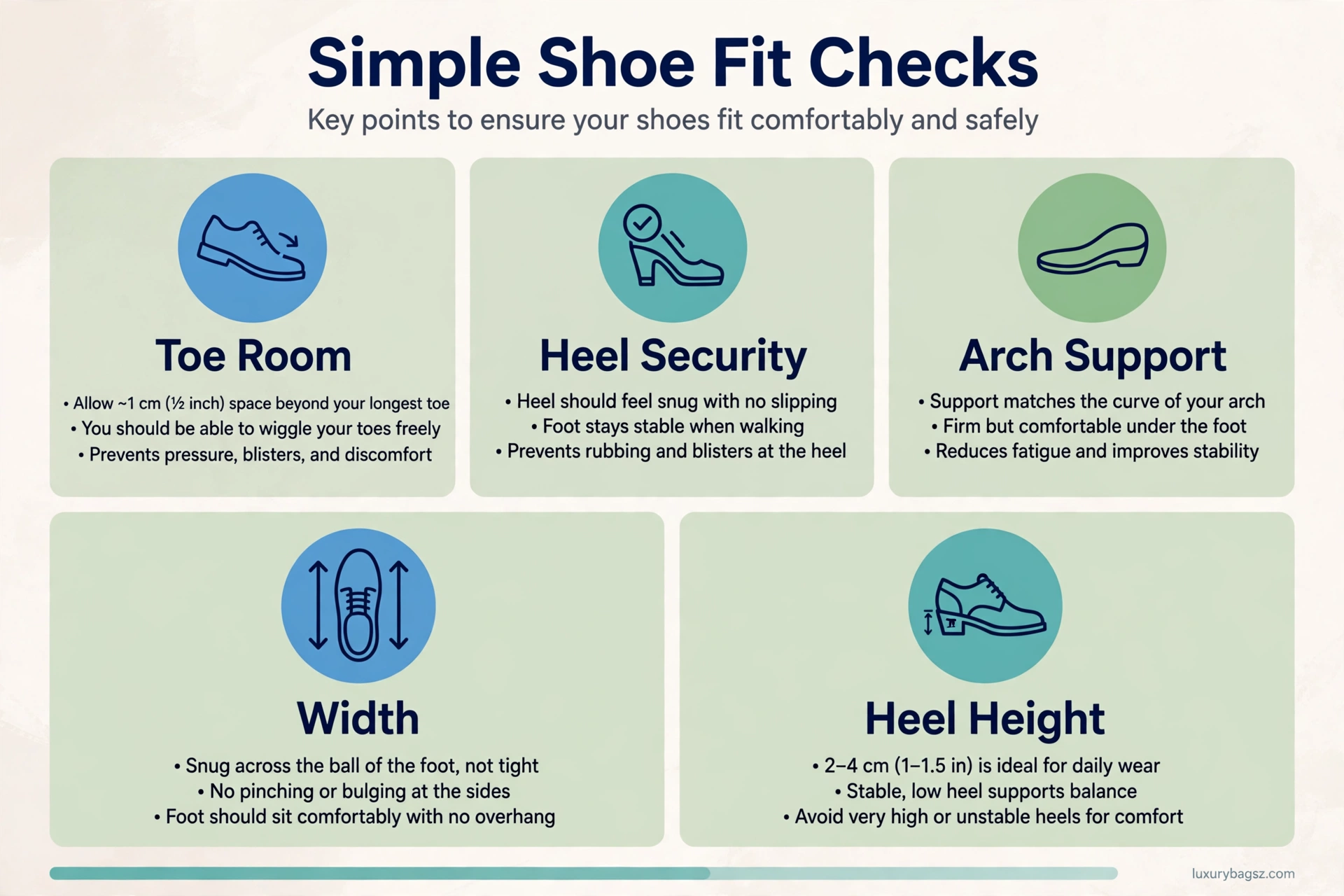
Toe room is the first check: toes should lie flat without overlapping, pressing against the front, or feeling squeezed at the sides. In pointed pumps, some toe compression is expected, but pain, numbness, or red marks after a few minutes signal a size or style problem.
Heel security is the second check: heels should stay in place without slipping or lifting excessively when walking. A little heel movement is normal in slip-on pumps, but constant slipping causes blisters and an unstable gait. Heel grips can help minor slipping, not major size errors.
Arch feel is the third check: the shoe's arch should support, not press painfully into, your arch, and the ball of the foot should sit at the shoe's widest point. If the ball sits too far forward or back, the size or last is wrong, even if length seems right.
Width is the fourth check: the shoe should not bulge at the sides, pinch at the widest point, or leave deep red marks after walking. Our general guides on how loafers should fit and on dress shoes cover fit principles that apply to heels too, because toe, heel, arch, and width checks are universal.
Wide Feet, Narrow Feet, and Half Sizes
Wide feet need room, not just length. Seek rounded or almond toes over pointed toes, soft leather that stretches, and wide-fit options where available. Sizing up a half size often helps width, though it may make length too long, in which case a different last or style is better.
Narrow feet need security, not just a smaller size. Straps, ankle buckles, and narrower lasts help, as do heel grips and insoles that fill volume. A pump that slips at the heel, even in a smaller size, may suit a different style with more coverage.
Half sizes are valuable for heels, where a full size jump is large. If you are between sizes, let toe shape decide: pointed toes usually need the larger half size, rounded toes often suit the smaller, and sandals with adjustable straps suit either, depending on strap fit.
If Jimmy Choo does not offer your half size in a style, consider a different style with a more forgiving last, rather than forcing a full size that does not fit. A shoe that does not fit will not be worn, however beautiful, and a better-fitting style is a smarter purchase.
Breaking In Jimmy Choo Shoes
Leather Jimmy Choo shoes need gradual break-in, especially pumps and boots with structured uppers. Wear new shoes indoors for short periods first, increasing time over days, and stop if pain develops. That gradual approach lets leather mould without causing blisters.
Thick socks during break-in can stretch leather gently, while a shoe stretcher or a cobbler's stretching service can target tight spots such as the toe box or sides. Do not force break-in by wearing new heels for a long event on day one, which is the fastest route to blisters and pain.
Heel grips, moleskin, and anti-blister balm help during break-in, protecting hotspots while leather softens. Carry plasters on early outings, and keep a pair of comfortable flats as a backup for longer days until break-in is complete.
Satin, suede, and embellished styles need more careful break-in than plain leather, because their materials mark and damage more easily. Handle them gently, avoid stretching methods that could damage embellishment, and accept that some styles will always feel more delicate than leather.
Buying Jimmy Choo Shoes Online
Online buying works well when you know your Jimmy Choo size in a similar style, have measured your feet, and have checked the official size chart for the specific product. Order from retailers with clear, free or low-cost returns, because fit surprises happen even with careful measuring.
Read product details carefully, including heel height, toe shape, materials, and last information where given. A pump and a sandal in the same size can fit differently, and a product description that notes a style runs small or large is valuable information, not marketing.
Order two sizes if returns allow and you are between sizes, especially for an important occasion or a first pair in a new style. Trying both sizes side by side at home, on hard floors, with the outfit you will wear, beats guessing from a chart alone.
Inspect on arrival promptly, keep packaging and dust bags until you are sure, and do not wear shoes outdoors until fit is confirmed. Outdoor wear usually voids returns, so indoor trying is essential for online purchases.
Jimmy Choo Sizing for Special Occasions
Wedding shoes demand extra care, because they will be worn for many hours, often on hard floors, with dancing and standing. Choose a heel height you can walk in comfortably, break in shoes well before the day, and carry a pair of flats for dancing or late hours.
Red-carpet and event shoes prioritise looks, but comfort still matters for a long evening. A slightly lower heel, a platform, or a cushioned insole can make an event shoe wearable for hours, while a beautiful shoe that hurts after thirty minutes will ruin an evening.
Work shoes, including lower heels and loafers from Jimmy Choo, suit daily wear better than very high heels, because they offer more support and less fatigue. Choose a heel height and style that matches your daily walking distance, not just your outfit.
Travel shoes should be versatile, packable, and comfortable for moderate walking, with lower heels and cushioned soles. Save very high heels for evenings at your destination, and pack a comfortable walking shoe for daytime sightseeing.
Children, Gifting, and Buying for Someone Else
Jimmy Choo does not focus on children's shoes, and adult sizing guidance does not apply to children, whose feet grow rapidly and need specialist fitting. For young wearers, consult a children's shoe specialist rather than converting adult sizes.
Gifting Jimmy Choo shoes is risky without knowing the recipient's size in that style, because fit varies by last and heel height. A gift card, a boutique appointment, or a joint shopping trip is safer than guessing a size, especially for heels.
If you must gift shoes, use the recipient's measured foot length and their size in a similar luxury heel as guides, and choose a retailer with easy exchanges. Include the receipt and keep packaging, so an exchange is simple if fit is wrong.
For bridesmaids or groups, order the same style in different sizes, and allow time for exchanges and break-in before the event. Group orders with a single size for all recipients rarely fit everyone, and they cause last-minute stress.
Caring for Jimmy Choo Shoes So Fit Lasts
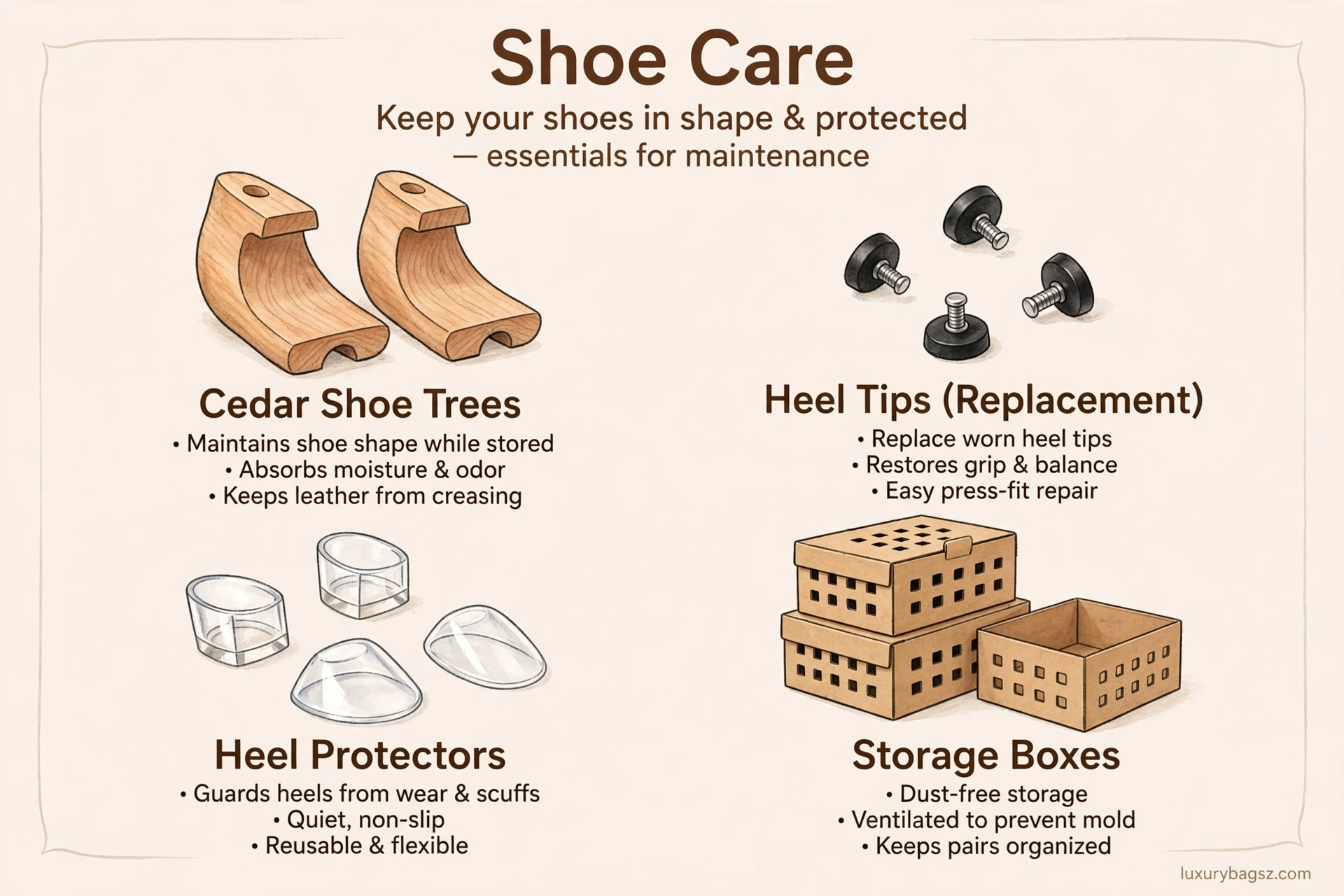
Shoe trees maintain shape and fit, especially for leather pumps and boots, by preventing creasing and collapsing when stored. Use trees that match the shoe's shape, and insert them after each wear, once shoes have aired.
Heel tips wear down with walking, changing gait and comfort, so replace them promptly when worn. A cobbler can replace tips, resole shoes, and repair stitching, extending the life and fit of Jimmy Choo shoes far beyond a cheap pair's lifespan.
Protectors, including sole protectors and weatherproofing sprays, help leather and suede shoes resist water and wear, though they should be tested on a hidden spot first. Protectors do not fix fit, but they preserve the materials that maintain fit over time.
Storage affects fit: store shoes stuffed lightly, in dust bags, in a cool, dry place, away from heat and damp, and do not stack heavy items on top, which crushes toe boxes and distorts shape. Rotating pairs also extends life, by letting each pair dry and recover between wears.
Common Sizing Mistakes, and How to Avoid Them
The first mistake is assuming your high-street size equals your Jimmy Choo size. Italian lasts and conversions differ, so a high-street UK 5 may not match a Jimmy Choo UK 5 in every style. Measure and check the official chart, rather than assuming.
The second mistake is buying pointed pumps in your usual size without trying, because pointed toes compress toes and often need a half size up. Try pointed styles in store, walk on hard floors, and check toe pain after several minutes, not just seconds.
The third mistake is ignoring width, especially for wide feet, and sizing up in length alone to gain width. That approach makes shoes too long and causes heel slipping, while a wider last or rounded toe would fit better. Prioritise width-appropriate styles over longer sizes.
The fourth mistake is buying online without checking returns, then wearing shoes outdoors before confirming fit. Outdoor wear voids most returns, turning a sizing error into an expensive mistake. Try indoors first, keep packaging, and confirm returns before ordering.
The fifth mistake is skipping break-in for an important event, wearing new heels for hours on day one. Gradual indoor break-in, heel grips, and a backup pair of flats prevent blisters and pain that can ruin an occasion.
Jimmy Choo Versus Other Designer Shoe Sizing
Compared with other Italian designer houses, Jimmy Choo sizing is broadly similar, with European bases and true-to-size tendencies for most styles, though each house's lasts differ. A size that fits in one Italian house may not fit identically in Jimmy Choo, so do not transfer sizes blindly.
Compared with French houses, Jimmy Choo heels often feel slightly more generous in width, though this varies by style and last. French pointed pumps can feel narrower, while Jimmy Choo's glamorous, red-carpet lasts balance elegance with wearability for many buyers.
Compared with British and American houses, Jimmy Choo's European sizing requires conversion, while British and American houses may use UK or US bases directly. Conversion errors are common, so always measure in centimetres and use the brand's chart, rather than converting from memory.
The lesson is universal: brand size is a starting point, not a guarantee. Measure, try, and check fit by style, regardless of house, and you will avoid most sizing mistakes across designer shoes.
When to Seek Professional Fitting Help
Boutique fitting is the best professional help, because staff know Jimmy Choo lasts, styles, and size quirks, and they can compare sizes side by side. Book an appointment for important purchases, such as wedding shoes, and bring the outfit and hosiery you will wear.
A cobbler can help with stretching, heel grips, insoles, and repairs that improve fit after purchase. Stretching a tight toe box, adding a heel grip, or fitting a cushioned insole can transform a slightly tight shoe, though cobblers cannot fix a fundamentally wrong size.
A podiatrist can help if you have ongoing foot pain, flat feet, high arches, bunions, or other conditions that affect shoe fit. Custom orthotics, fitted by a podiatrist, can improve comfort in Jimmy Choo shoes, provided the shoe has room for them.
For complex cases, such as significant size differences between feet, combine professional help: a boutique for size, a cobbler for adjustments, and a podiatrist for foot health. That team approach solves fit problems that a single purchase cannot.
Jimmy Choo Size Chart: A Practical Summary
As a practical summary, use your foot length in centimetres as the anchor, compare it with Jimmy Choo's official chart for the style, and adjust for toe shape and heel height. Pointed toes and high heels usually need a half size up from your measured size, while sandals and lower heels often suit your measured size.
For UK and US buyers, remember that conversions are approximate: a Jimmy Choo EU 38 roughly maps to UK 5 and US 7, EU 39 to UK 6 and US 8, and EU 40 to UK 7 and US 9, with half sizes and style variations shifting these by a half size. Always confirm with the official chart for the product.
For wide feet, prioritise width-appropriate styles and rounded toes, and consider a half size up if width is the main issue. For narrow feet, prioritise straps, buckles, and narrower lasts, and consider heel grips or insoles to fill volume.
Keep a personal size record: your foot measurements, your Jimmy Choo sizes by style, and notes on fit, such as which styles ran small or large. That record saves time and mistakes on future purchases, and it helps when buying online or gifting.
Jimmy Choo in 2026: Sizing, Availability, and What to Expect
Jimmy Choo continues to offer a wide range of heels, flats, boots, and sneakers, with sizing availability varying by style and retailer. Popular sizes sell out quickly for iconic pumps, so early ordering and return-friendly retailers matter for sought-after styles.
Online size guides and virtual fitting tools are improving, with more retailers offering measurement guides and fit notes by style. These tools help, but they do not replace in-store trying for heels, where fit is most sensitive.
Sustainability and repair services are growing, with cobbler partnerships and care guidance helping shoes last longer. A well-fitted Jimmy Choo shoe, cared for and repaired, offers better value than a poorly fitted pair worn rarely, regardless of price.
For buyers, the message is steady: measure, use official charts, try in store where possible, and buy from return-friendly retailers online. Jimmy Choo sizing is learnable, and a personal size record makes each purchase easier than the last.
Your Jimmy Choo Sizing Checklist
Measure both feet in the evening, standing, in the hosiery you will wear, and record length and width in centimetres. Use your larger foot as your size guide, and compare with Jimmy Choo's official chart for the specific style.
Try shoes on hard floors, walk for several minutes, and check toe room, heel security, arch feel, and width. If any check fails after a few minutes, try another size or style, rather than hoping break-in will fix a poor fit.
Break in new shoes indoors gradually, add insoles or heel grips where they help, and carry a backup pair for long events until break-in is complete. That preparation prevents most sizing pain before it starts.
Finally, keep your size record, care for shoes with trees and protectors, and repair heel tips promptly. A Jimmy Choo shoe that fits well, is broken in properly, and is cared for, will serve you beautifully for many occasions.
Frequently Asked Questions
How do Jimmy Choo shoes run?
Most Jimmy Choo shoes run true to size, but pointed pumps and very high heels often feel smaller, while sandals and boots can feel more generous. Fit varies by style and last, so try before buying where possible.
Do Jimmy Choo shoes use UK or EU sizes?
Jimmy Choo shoes are made in Italy and sized primarily in European sizes, with UK and US conversions given by retailers. Always check Jimmy Choo's official chart for the specific style.
Should I size up in Jimmy Choo heels?
Many buyers size up a half size in pointed pumps and very high heels, because toes press forward and toe boxes compress. Rounded toes and lower heels often suit your usual size.
What is a Jimmy Choo EU 38 in UK and US?
As a rough guide, EU 38 often maps to UK 5 and US 7 in women's shoes, though conversions vary by style and retailer. Confirm with the official chart for the product you want.
Are Jimmy Choo shoes true to size for wide feet?
Wide feet may find Jimmy Choo pointed styles narrow, and may need a half size up, a rounded toe, or a wide-fit option where available. Sizing up in length alone does not always fix width issues.
How do I measure my feet for Jimmy Choo?
Stand on paper in the hosiery you will wear, trace both feet, measure heel-to-toe length in centimetres, and use your larger foot. Measure in the evening, when feet are slightly swollen.
Can Jimmy Choo shoes be stretched?
Leather Jimmy Choo shoes can be stretched gently, by wearing with thick socks indoors or by a cobbler, for minor tightness. Stretching cannot fix a fundamentally wrong size or a pointed toe that compresses toes severely.
Should I buy Jimmy Choo shoes online?
Yes, if you know your size in a similar style, have measured your feet, and buy from a retailer with easy returns. Try indoors first, keep packaging, and order two sizes if you are between sizes and returns allow.
What heel height is most comfortable in Jimmy Choo?
Lower heels up to about 50 millimetres are generally most comfortable for longer wear, while mid heels around 70 to 85 millimetres balance elegance and comfort. Very high heels demand careful fitting and shorter wear.
Do Jimmy Choo shoes need breaking in?
Leather Jimmy Choo shoes need gradual indoor break-in to soften and mould, especially pumps and boots. Do not wear new heels for a long event on day one, which causes blisters.
Final Verdict
Sizing Jimmy Choo shoes well comes down to measuring, not guessing: measure both feet in centimetres, use Jimmy Choo's official chart for the specific style, and try in store where possible, especially for pointed pumps and high heels. Most styles run true to size, but toe shape, heel height, and last change fit, so a half size up for pointed heels and a careful width check for wide feet will prevent most mistakes.
Buy online only from return-friendly retailers, break in gradually indoors, and keep a personal size record by style. Done right, a Jimmy Choo shoe that fits perfectly is a pleasure to wear, from a wedding to a workday, and it will earn its price many times over.