

Designer Belts for Women: Buckles, Widths, Sizing and Styling Guide
Women's Designer Belts in Brief: Width and Fit Come First
A designer belt earns its price when its width suits your outfits, its length fits both waist and hips, and its buckle finishes a look rather than shouting over it. For most women, a 2 to 3 cm black or tan leather belt is the hardest-working first buy. Size carefully: measure where you will actually wear it, waist or hips, over real clothing. A belt bought by dress size alone is the most common, and most avoidable, designer belt mistake.
Key Takeaways
- Slim belts, around 2 cm, suit dresses and waist wear best.
- Medium belts, around 3 to 4 cm, suit jeans and trousers best.
- Reversible straps, such as the Hermès format, give two belts in one.
- Measure your waist or hips over clothing, never guess from dress size.
- Buckle weight and clean finishing separate genuine designer belts from copies.
- Store belts rolled loosely or hanging, never folded tightly.
Why a Designer Belt Changes Outfits
A belt does three jobs at once: it holds, it defines a waist and it adds a deliberate finishing point. On simple dresses, trousers and blazers, that point often carries the whole outfit. Designer belts justify their price through leather that does not crack at the holes, buckles with real weight and stitching that survives daily threading through loops. They are also among the most cost-effective luxury buys. One good belt worn three times a week transforms basics you already own, from white shirts to plain knit dresses. Start with versatility, not logos. A quiet buckle in black or tan will be worn constantly, while a huge statement buckle may wait for specific outfits that rarely come.
Widths, Lengths and Proper Sizing
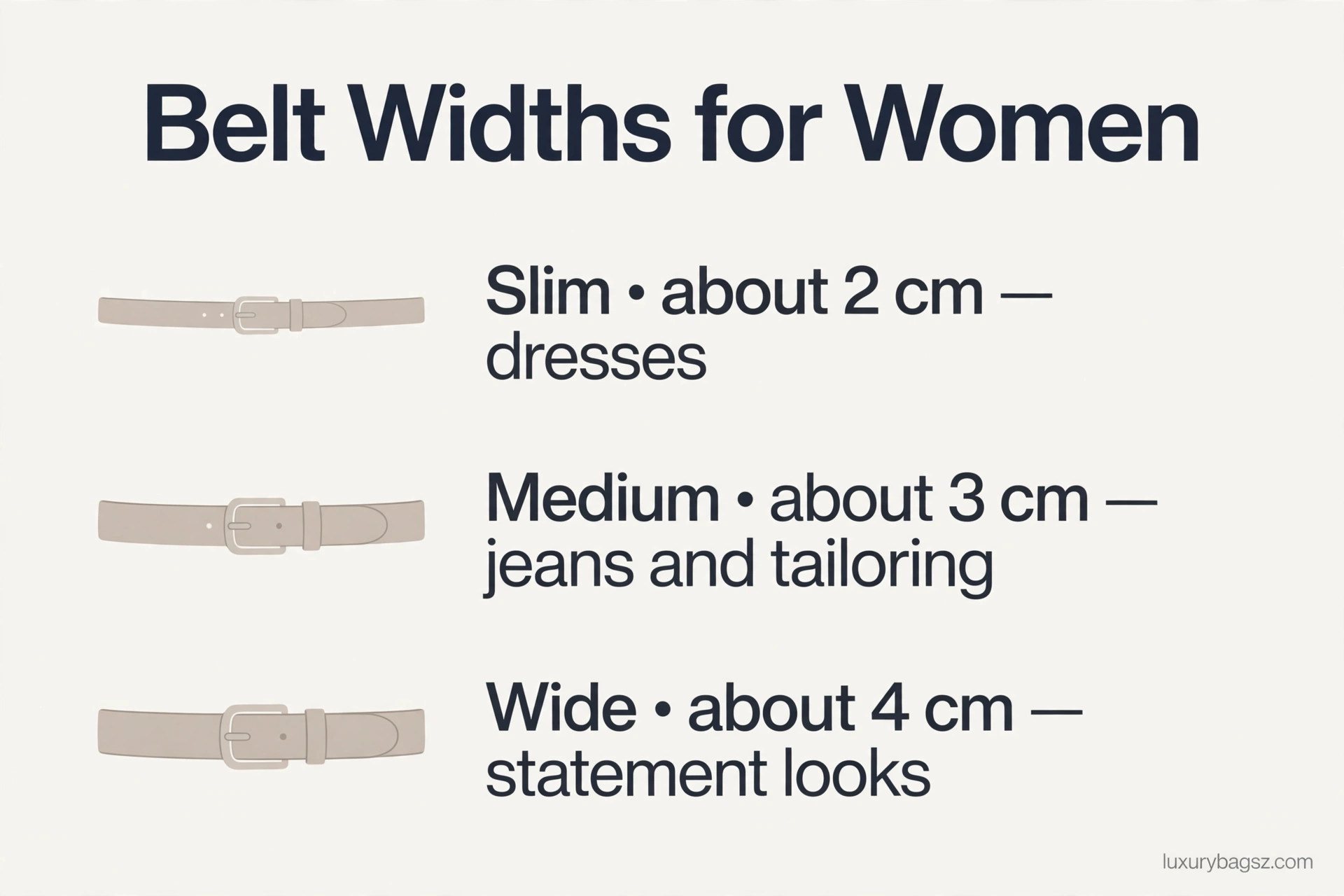
Slim belts, around 1.5 to 2.5 cm wide, thread through dress loops and sit neatly at the waist. They define shape without bulk and suit lighter fabrics best. Medium to wide belts, around 3 to 4 cm, suit jeans and tailored trousers, filling standard loops properly. A slim belt in wide loops twists and looks lost by comparison. Our Hermès belt buckle and strap sizes guide explains how strap widths pair with buckle sizes, a principle that applies across designer brands. Our Hermès belt sizing guide gives the measuring method in full: measure over the clothes you will wear, at the exact point the belt will sit.
The Buckles and Houses Worth Knowing
The double-G buckle made Gucci belts the recognisable default, in widths from slim to wide. Gold suits warm wardrobes, while aged or silver finishes read cooler and quieter. Hermès sells buckles and straps separately, so one buckle serves several colours. Our Hermès reversible belt guide shows how the two-sided strap system works in practice. Celine's Triomphe buckle and Saint Laurent's slim logo belts offer a more minimal Parisian look. They pair especially well with tailoring, where a large buckle can feel out of place. Ferragamo's Gancini and Loewe's anagram buckles sit between statement and subtle. Choose the buckle family that matches the jewellery tones you already wear most often.
Styling Belts With Dresses, Denim and Tailoring
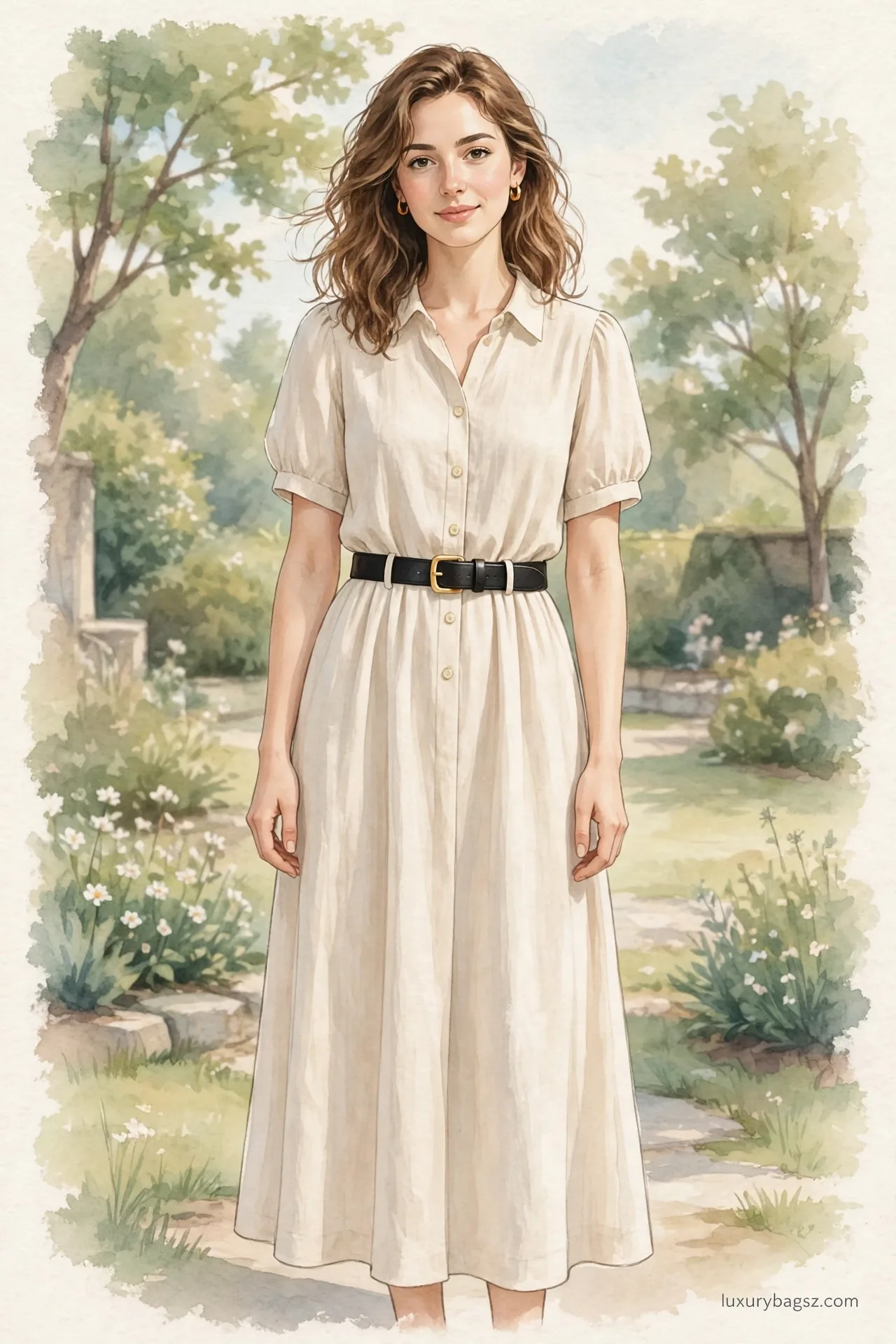
Over a dress, a slim belt at the natural waist creates shape from loose fabric. Match the belt colour to your shoes or bag for a deliberate, pulled-together effect. With jeans, a medium belt in tan or black is the daily classic. Our Hermès Kelly belt guide covers the adjustable, hole-free design that many women prefer over dresses and knitwear. Over an oversized blazer or coat, a medium belt worn outside creates a modern silhouette. Choose a length sized for outerwear, since your usual jeans length may not close. Avoid mixing a very large buckle with heavy jewellery and a statement bag at once. The belt should be the single punctuation mark, not one of three competing ones.
Leather, Reversible Straps and Finishes
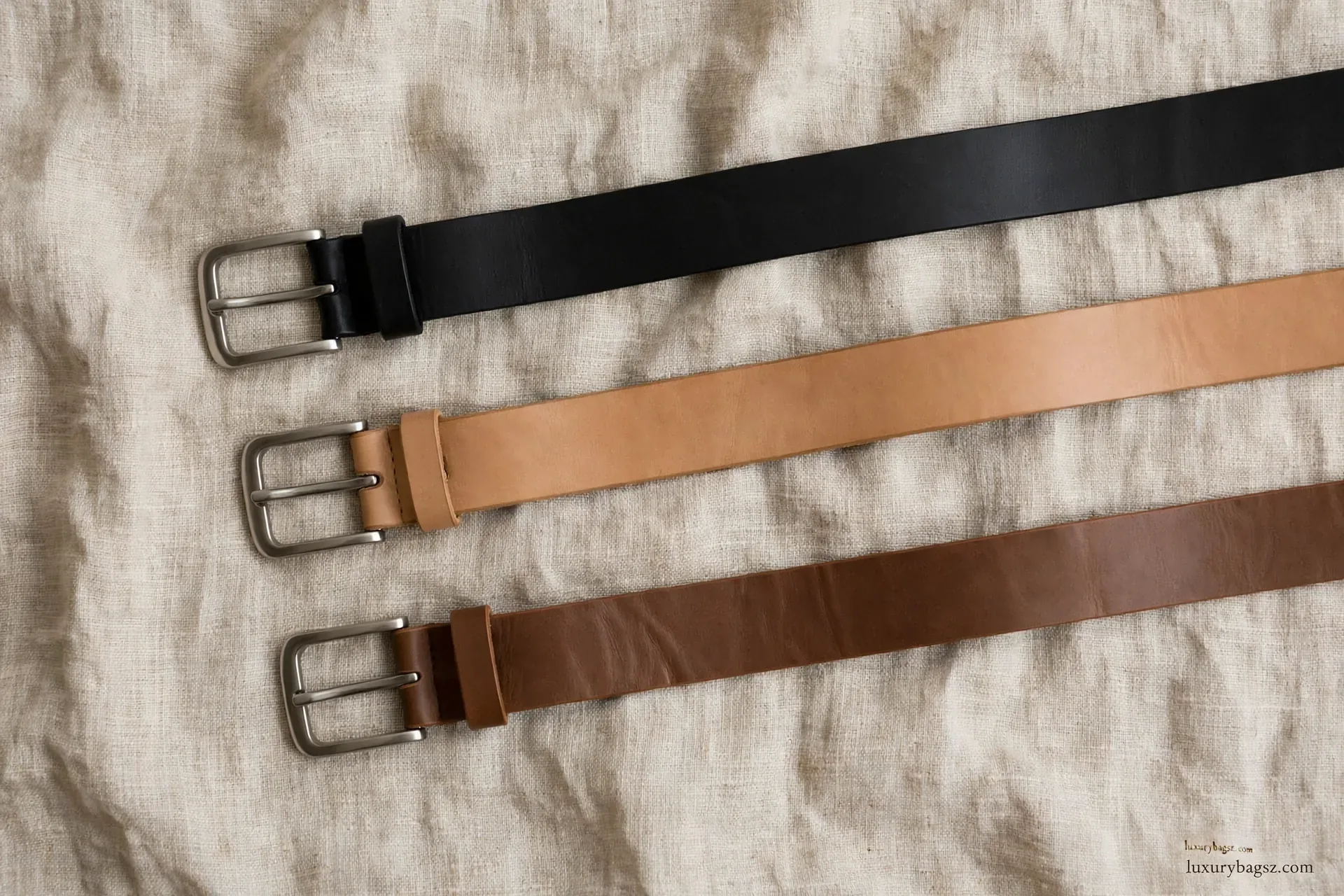
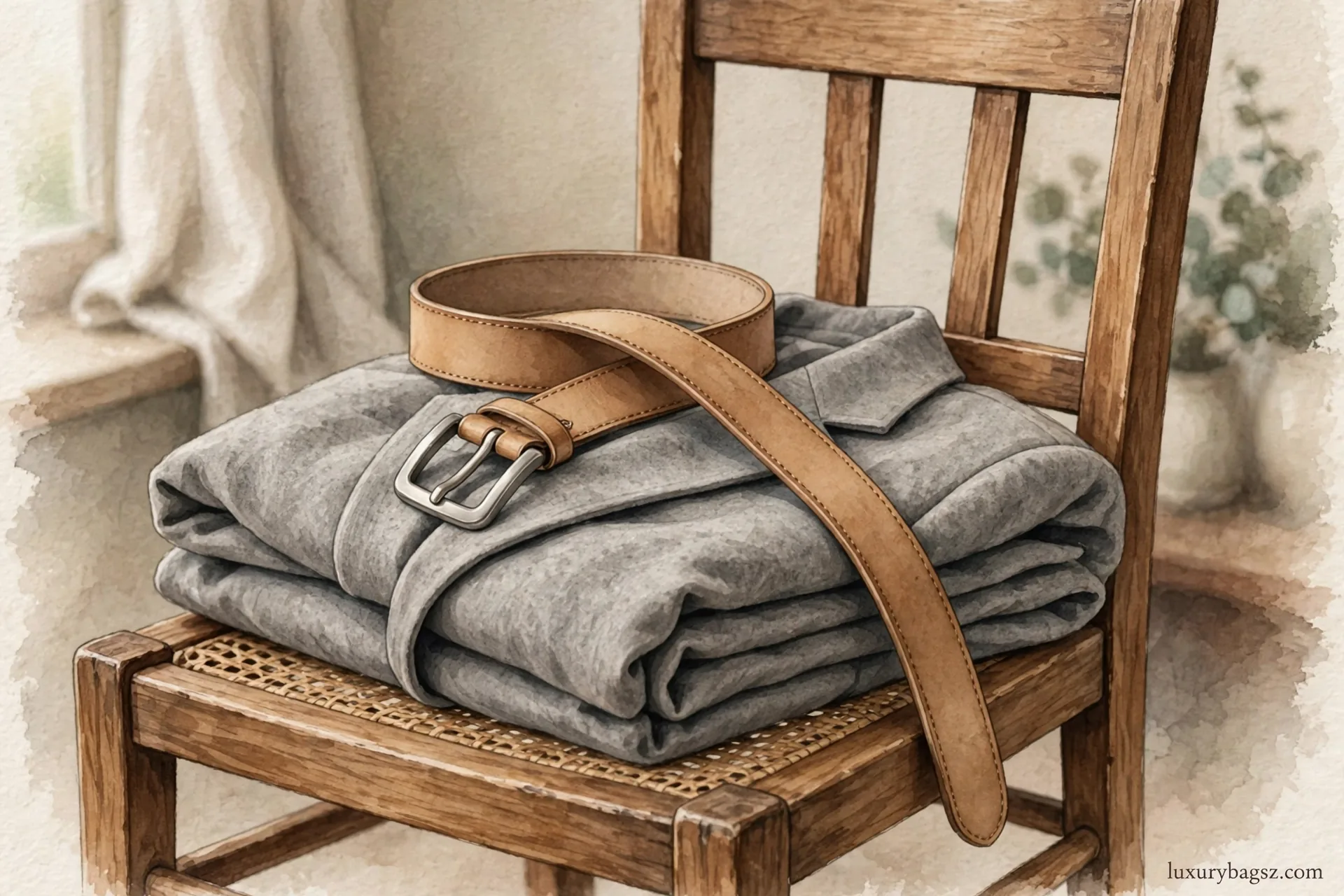
Smooth leather looks smartest and suits formal wear, but it shows scratches around the buckle and holes. Grained leather forgives daily threading and is the safer everyday choice. Reversible straps double your options: black one side, tan or a colour the other. Their weakness is edge wear, since both sides face friction, so rotate them gently. The video with this guide compares leading designer belts, including which to buy and which to avoid. Watch the close-ups of hole finishing and buckle weight before choosing your own. Suede belts add soft texture for autumn outfits, but they mark with rain and rub. Keep suede for dry days and store it away from darker leathers that can transfer dye.

Prices and Spotting Fakes
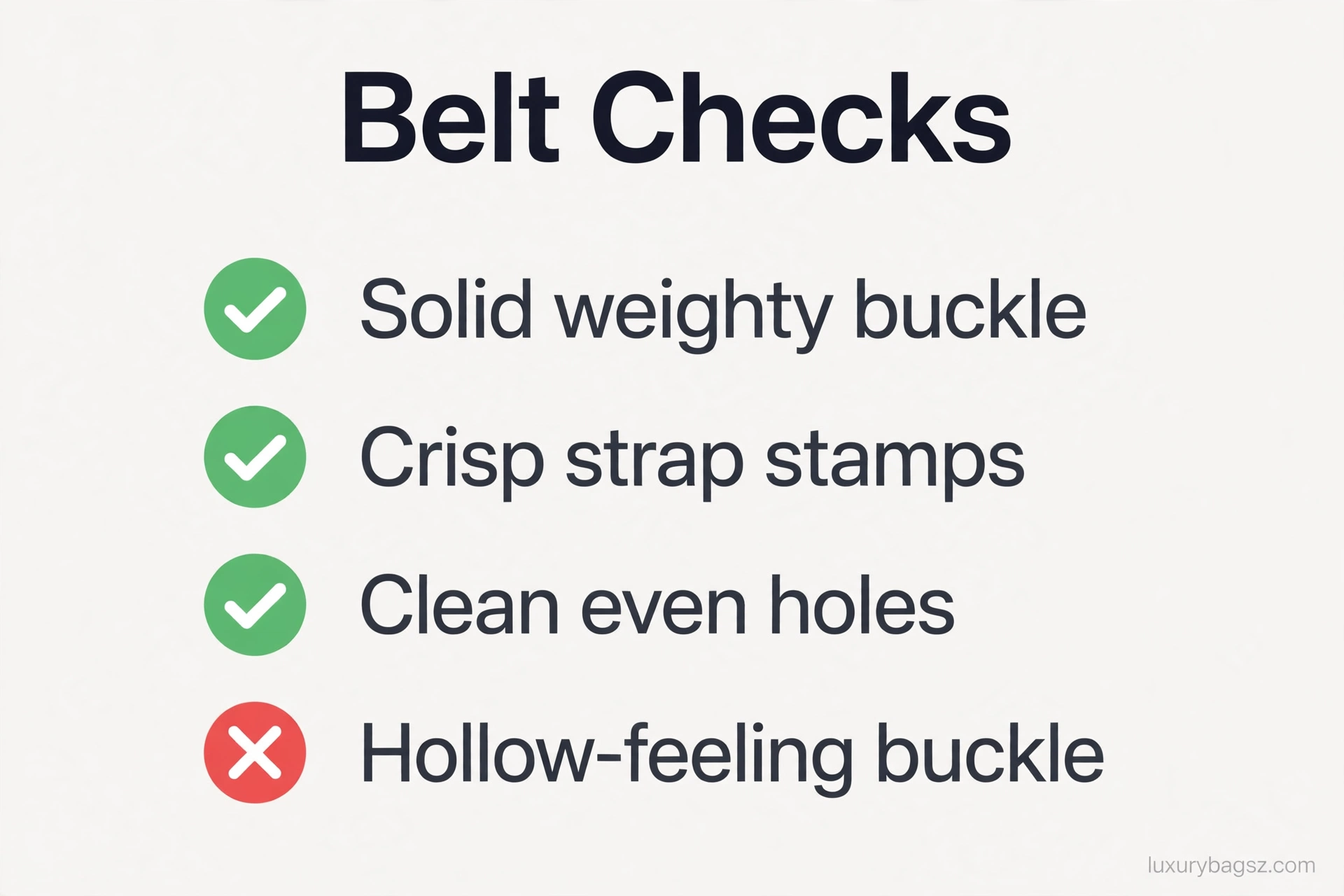
New designer belts for women typically range from around £250 for contemporary leather to £800 and above for major-house buckle and strap sets. Reversible systems cost more but cover two looks. Pre-owned belts are plentiful, yet fakes are plentiful too, especially of famous buckles. Our fake Hermès belt checks detail the stamps, stitching and hardware to inspect. A genuine buckle feels solid and weighty, with clean edges and even finishing. Hollow, sharp-edged or flaking buckles are warning signs on any designer belt. Check hole punching and strap stamps: holes should be clean and evenly spaced, and size and maker stamps should be crisp, straight and correctly spelled on the strap's reverse.
Care and Storage That Prevent Cracking
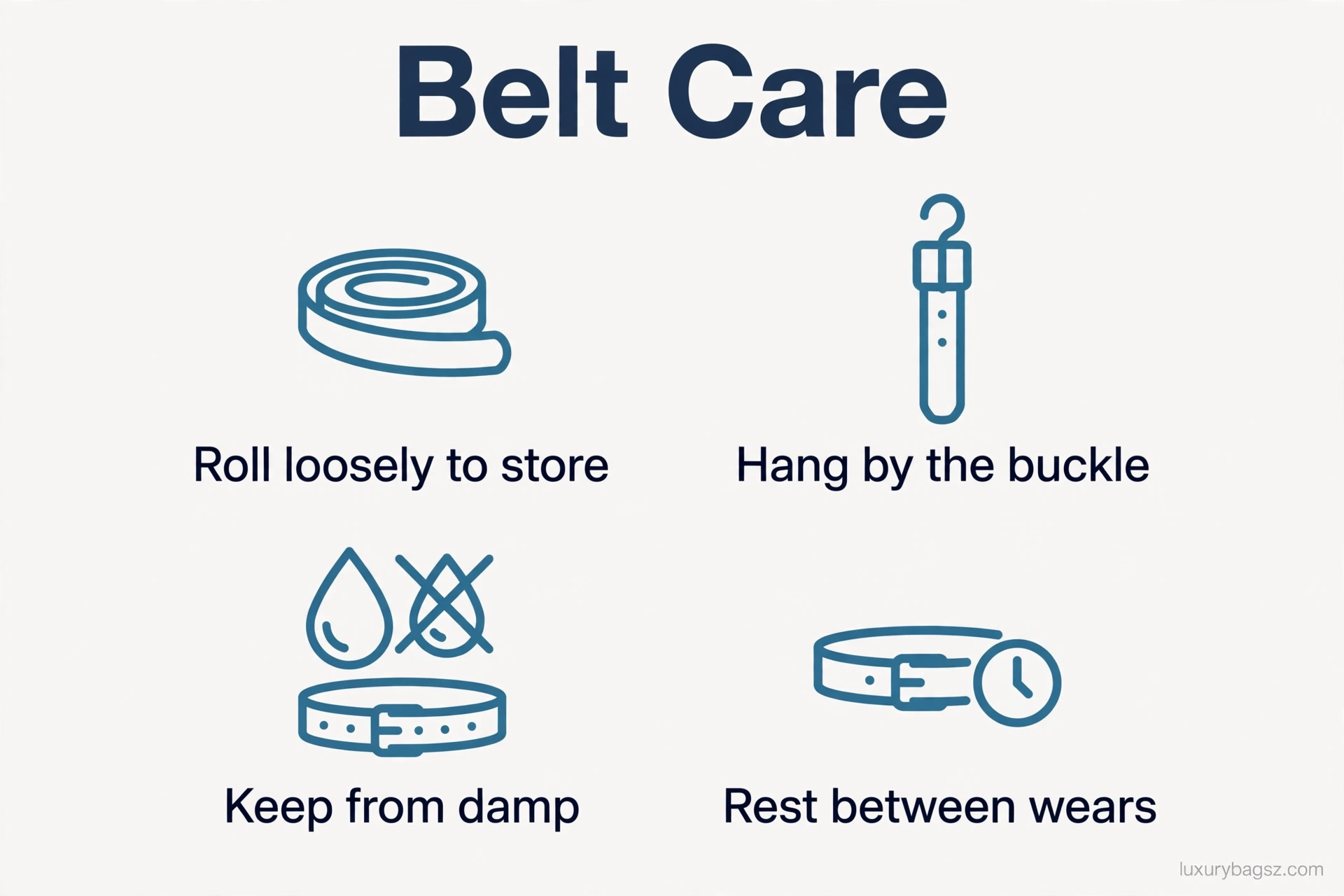
Roll belts loosely, buckle outward, or hang them from their buckles. Tight folding cracks leather at the fold, and storing them buckled stresses the most-used hole. Keep belts from damp wardrobes and direct heat, which dry leather and fade colour. A soft, dry cloth after wear removes the dust that dulls buckles and grains. Rest your most-used belt between wears when you can. The hole you favour stretches slowly, and rotating belts spreads that wear across your collection. Condition plain leather sparingly with a suitable product, keeping conditioner away from suede and fabric straps. Always test on the reverse side first, near the tip.
Building a Small, Hard-Working Belt Collection
Start with one medium black belt with a quiet-to-medium buckle. It will serve jeans, trousers, dresses and blazers, and it will teach you your true sizes at waist and hips. Add a slim tan or brown belt for lighter outfits and summer dresses. Warm leather against white, cream and denim is the combination most wardrobes lack. Add a reversible or colour option third, once you know which widths you actually wear. By then, your size, finish and buckle taste are proven rather than guessed. Skip trend buckles until the basics exist. A novelty buckle on poor leather is the worst value in this category, while plain quality quietly improves dozens of outfits a year. When you try a belt in a shop, thread it through your own loops and sit down in it. Belts that pinch when seated or twist when you stand will annoy you daily, however beautiful their buckle looked on the shelf that day.
Frequently Asked Questions
What width designer belt should a woman buy first?
A medium belt around 3 cm wide in black leather suits jeans, trousers and most dresses. Add a slim 2 cm belt later for waist wear over dresses and knitwear.
How do I size a designer belt?
Measure around your waist or hips, over the clothing you will wear, at the point the belt will sit. Buy the length that closes on its middle hole at that measurement.
Are reversible designer belts worth it?
Yes, for travellers and small wardrobes, since one strap gives two colours. They cost more and their edges work harder, so rotate gently and store them rolled loosely.
Which designer belt is most recognisable?
Gucci's double-G is the most widely recognised, while Hermès's H buckle is the classic luxury default. Celine and Saint Laurent offer quieter, more minimal alternatives.
Can I wear a designer belt over a dress?
Yes. A slim belt at the natural waist shapes loose dresses beautifully. Match its colour to your shoes or bag, and size it for wear over fabric, not for jeans.
How much do women's designer belts cost?
Typically around £250 to £800 and above, depending on house, leather and buckle system. Contemporary brands sit at the lower end, and major-house reversible sets at the higher.
How can I tell a fake designer belt?
Feel the buckle: genuine buckles are solid, cleanly finished and evenly plated. Check crisp strap stamps, clean evenly spaced holes and even stitching, and buy with returns offered.
Do belt holes stretch over time?
The most-used hole stretches slowly, which is normal. Rotating belts, avoiding over-tightening and storing them unbuckled all slow that wear considerably.
What colour belt goes with everything?
Black suits the widest range, followed by tan or dark brown for lighter wardrobes. If you can own only one, black leather with a medium gold or silver buckle is safest.
How should I store designer belts?
Hang them by their buckles or roll them loosely with the buckle outward. Never fold them tightly, and keep them from damp, heat and direct sun to prevent cracking and fading.
Summary: One Good Belt, Dozens of Outfits
A designer belt is a small purchase with an outsized effect, provided width, length and leather are chosen with care. Measure honestly, start with medium black, and let buckles stay in proportion to your outfits. Build slowly from there, and every belt you own will earn regular wear instead of waiting for an outfit that never comes.






