Goyard Serial and Date Codes: What the Numbers Inside Mean
What the Stamp Inside a Goyard Actually Tells You
A recent Goyard usually carries a small serial stamped inside: three letters, then six digits, heat-pressed into leather. It is not a public date code. Goyard publishes no decoder, so any date read from it is a working reading, not a promise from the house.
That honesty matters. The stamp can support an opinion, and a bad stamp can end one, but the canvas, paint and build decide far more. This guide shows where to find it, how authenticators read it, and what to check alongside it.
Key Takeaways
- Recent pieces usually show three letters and six digits, stamped, never printed.
- Saint Louis codes sit on the pouch strap or inside the pouch, by era.
- The observed reading takes the month from the outer digits, the year from the middle four.
- Goyard publishes nothing: there is no official decoder, database or lookup.
- A correct code never proves a bag. Canvas, paint and stitching carry more weight.

Where to Find the Serial on Each Model
Placement moves by model and by era, which is why a quick look in one place proves nothing. Angle the leather under bright light. A genuine stamp is shallow and fine, and it often shows only in raking light.
| Model | Where to look |
|---|---|
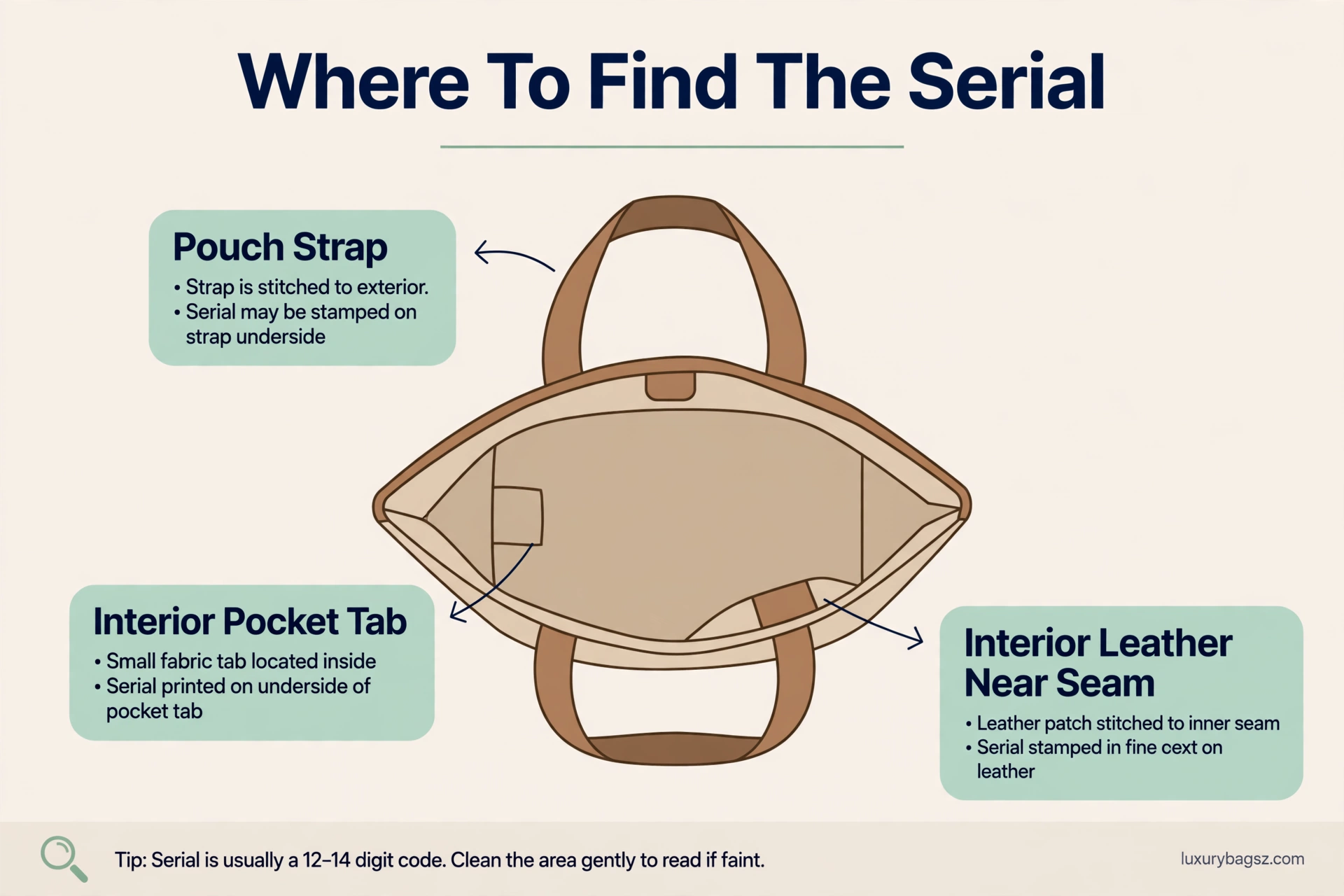
| Saint Louis PM and GM | On the end of the leather strap joining the pouch to the tote on newer bags; inside the pouch on older bags |
| Artois | On a leather tab at the back of the interior pocket |
| Saigon | On the interior leather, in the small pocket or near a seam or edge |
| Anjou | On the pouch strap, as on the Saint Louis; inside the bag if there is no pouch |
| Wallets and card holders | Inside the front pocket, along the side seam |
On a Saint Louis, start with the pouch. Unfold it fully, then follow its strap to the end tab. On older totes the stamp sits inside the pouch itself, so an empty strap on an older bag is not, on its own, a problem.
The Saigon needs patience. Its stamp hides on interior leather, often inside the small pocket or close to a seam, and shallow impressions fade with use. Work slowly around the lining rather than deciding the bag has no code at all.
Not every genuine piece carries one. Consistent stamping is a recent habit, and many older and vintage pieces have none. A missing code is weak evidence on this house, far weaker than it would be on a brand that numbers everything.
How the Code Is Built
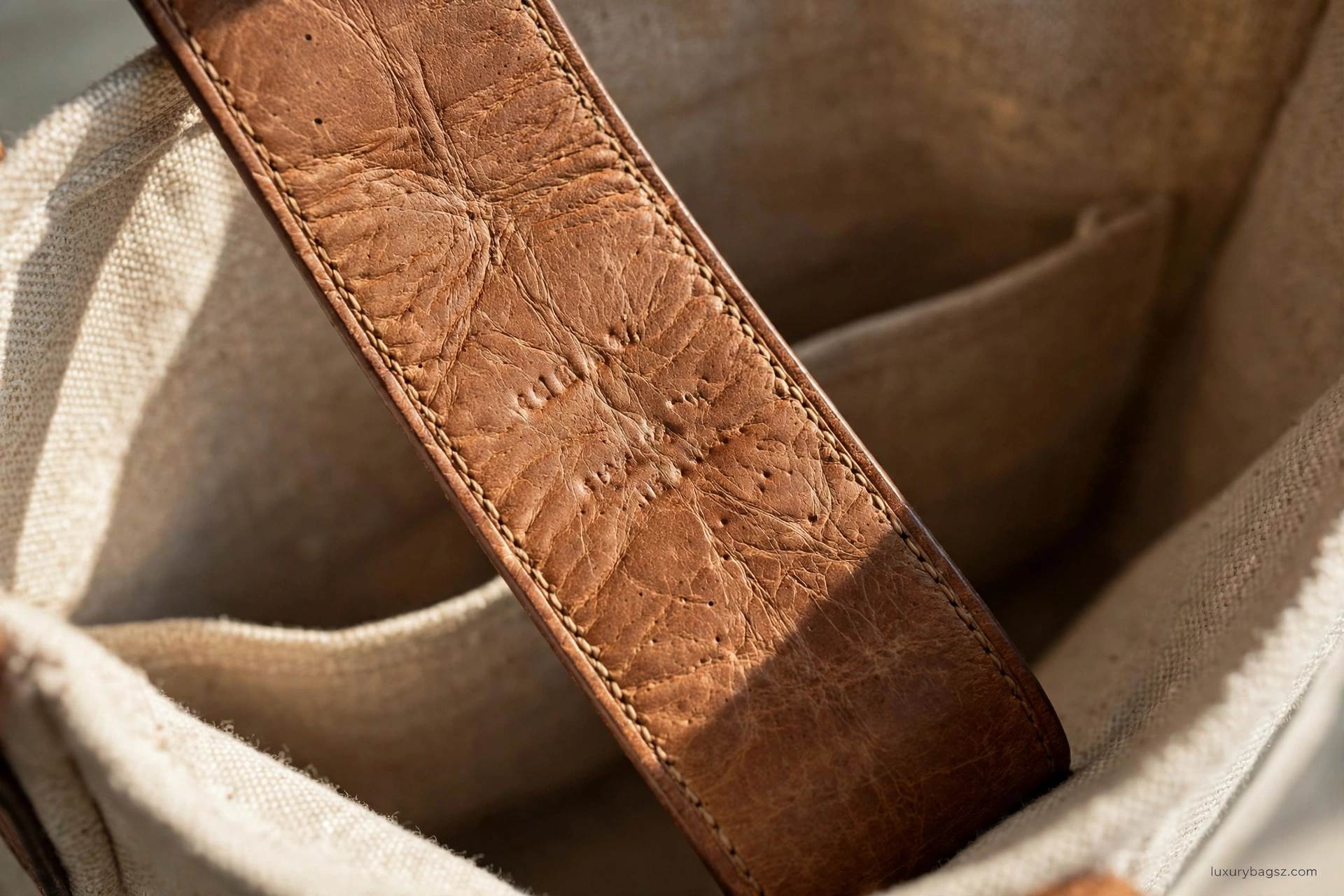
Every source I trust describes the same shape: three letters, a small gap, then six digits, in a thin, discreet sans-serif. The characters sit in one line, evenly spaced.
The Three Letters at the Front
The letters are an internal Goyard code. Prefixes seen on genuine pieces include BAE, MAE, PIR, AAS, ARO, BAL, ABA, ADM, SUT, VAE and SAL. Authenticators guess they mark a workshop or place of making, but the house confirms nothing.
Treat an unfamiliar prefix with care, not panic. The published lists come from observed pieces, not from Goyard, so they may not be complete. A listed prefix on a poor bag also proves nothing, because copiers use the same lists.
The Six Digits and the Date Reading
The best-tested reading folds the date inside out. The first and last digits, read together, give the month. The middle four give the year in full. So SUT 120162 reads as December 2016: the outer 1 and 2 make 12, and 2016 sits in the middle.
Try a second example to fix the pattern. A stamp reading 020109 under that rule gives month 09 from the outer 0 and 9, and year 2010 from the middle four, so September 2010. Neat, plausible, and still only a reading.
Two professional handbooks state that same rule, and testers have tried it against real serials without breaking it. Other references read the digits more simply, or treat them as a sequence, so sources do not fully agree.

That disagreement is the point to hold on to. Unlike Louis Vuitton date codes, which follow a documented pattern the house later replaced with microchips, a Goyard date is an inference. If the outer digits give a number above 12, a digit is likely misread, or the format does not apply.
Always set the reading against the bag itself. A year from before the colourway existed, or a new-looking tote whose stamp sits in the older inside-pouch place, is a contradiction worth pausing on, even when the digits themselves read cleanly.
Why Goyard Keeps the System Closed
Goyard is a deliberately private house. It barely advertises, sells through few boutiques, and issues no authenticity cards or certificates. Its numbering follows the same habit: internal, unpublished, and not offered as a service to the resale market.
There is no public database to search and no official checker to run a number through. A seller who claims Goyard verified a code online is telling you something the house itself does not do.
The effect is practical, not just mysterious. With no lookup to lean on, buyers must judge the object in front of them. That is slower, but it is also harder to fool than a code check that a good copy can pass in seconds.
It also explains the model’s lasting pull. Scarcity and privacy support the resale strength covered in my guide to investment-worthy Goyard bags, but they place the full burden of proof on physical checks when a piece changes hands privately.
Apply the same scepticism to the buying story. Goyard sells only in its boutiques, never online, so a bag described as bought new online from the house cannot be true. A dust bag should agree too: mustard-yellow cotton twill on current pieces, chocolate brown on older ones.
The Checks That Carry More Weight Than the Code
In more than ten years in the bag industry, I have examined over 500 bags, and Goyard is the house where I trust the code least. I personally check the canvas, paint and build first, and let any serial agree with them afterwards.
Visiting leather factories in Spain and France taught me how much of that evidence sits in materials. Good leather, honest canvas and careful edge work feel different in the hand long before any stamp comes into view.
The Chevron Canvas Up Close
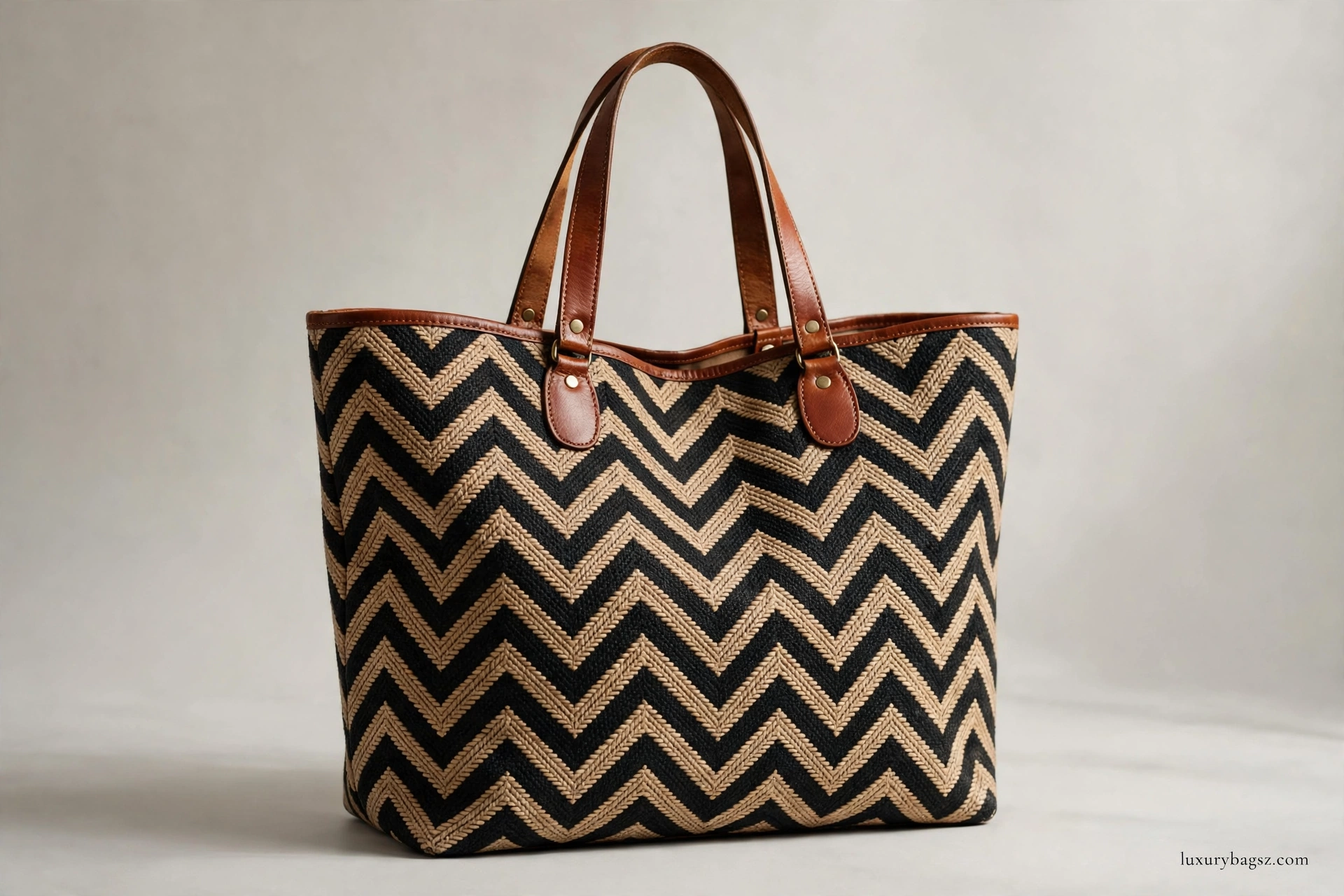
Genuine Goyardine is coated linen and cotton with a slightly raised, textured hand. Its chevrons are built from small painted dots in layered tones, so the pattern has depth in daylight and the dots vary a little, as hand work does.
Look where panels meet. The Y shapes should flow across seams, and the dots at the ends should meet the next motif. Flat, vinyl-feeling canvas, perfect machine uniformity, gaps between motifs and breaks at seams all point the wrong way.
Count the dots in a few motifs as well. On genuine canvas the dots are oval, not round, the white dotted rows run straight up, and a motif holds 14 dots on one pass and 16 on the next. A uniform count everywhere, round dots and rows that drift are the printed shortcut showing through.
Painted Stripes and Initials
Personalisation is hand-painted for the house, and it deserves the same close look as the canvas. Genuine paint sits on top of the dots, with faint brush texture, straight edges that are not machine-perfect, and no bleeding into the pattern.
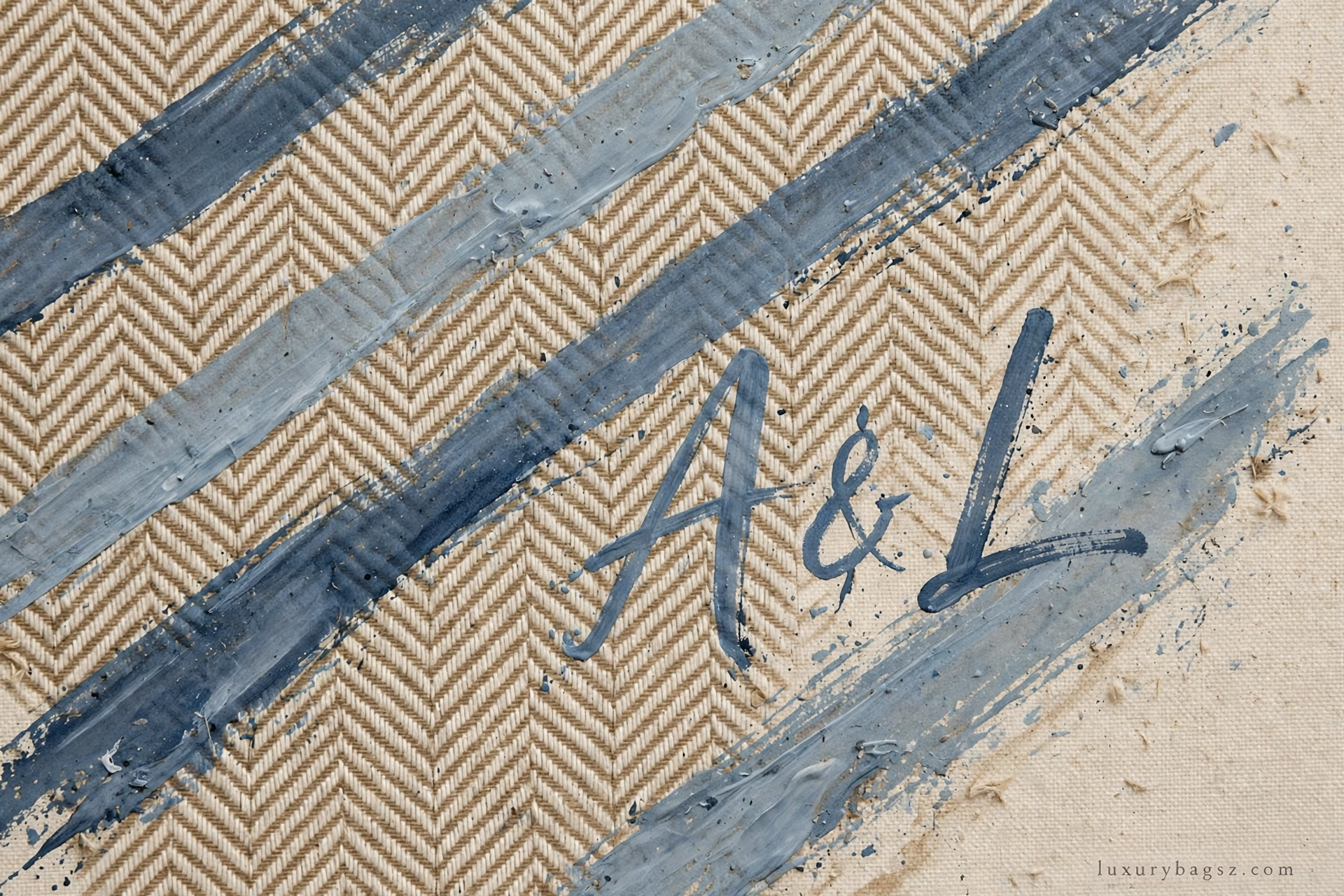
Printed-looking stripes, stickers, cracked transfer or paint that bleeds are warnings. So is the opposite mistake: personalisation alone never authenticates a bag, because paint can be added later, and another person’s initials can also narrow your resale audience.
Heat Stamp, Stitching and Weight
The interior heat stamp should read GOYARD, PARIS and MADE IN FRANCE in thin, even, shallow lettering. Deep, thick or crowded stamping is a common fake tell, as is any other country of origin named in that stamp.
Stitching should be fine, long and even, with no wandering lines or loose ends. A Saint Louis should also feel surprisingly light for its size. Heavy, stiff totes usually owe that weight to the vinyl materials copiers rely on.
Use the stitch colour as a quick cross-check. Black and brown canvas takes a black seam, while coloured canvas takes a white one, and each handle end carries a neat vertical seam through its middle. A seam colour that breaks that rule needs a very good explanation.
Give the pouch its own minute. Genuine corners read squarish rather than rounded, the silver button is large with a crisp, clear G, and the logo debossed inside is slender, closely spaced and cleanly cut in. A small, blurry button or messy, shallow lettering on shiny leather points the wrong way.
For a high-value piece, get the whole bag read, not just its code. My authentication process sets out how I check a bag in person, and I use Entrupy too, including for microchip checks on the brands that carry them.
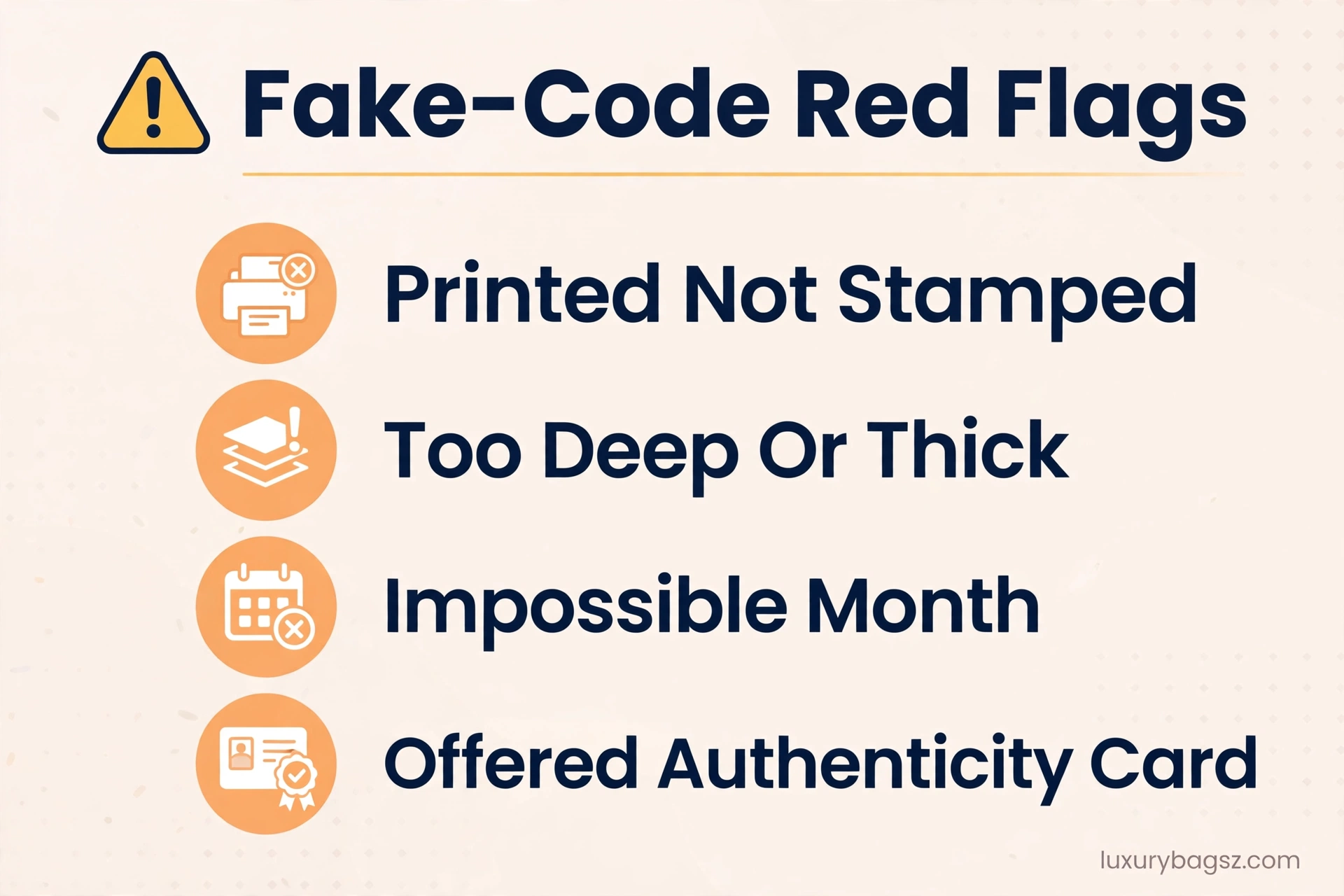
Fake-Code Warning Signs
A code earns suspicion for how it is made, not just what it says. These are the patterns that make me stop and look much harder at everything else on the bag.
- Printed or inked characters: a genuine serial is stamped into leather, never printed on.
- Deep, thick or bulky lettering, or a stamp that shouts instead of sitting discreetly.
- Wrong shape: no letters, extra characters, uneven spacing, or digits of mixed depth.
- An impossible reading: outer digits giving a month above 12 on a bag sold with a firm date.
- A code copied from a listing photo: plausible numbers appear on many copies at once.
- An offered authenticity card or online verification: Goyard provides neither.
One sign rarely settles it alone. A Saint Louis pouch snap sitting crooked, a zip that snags on an Artois, or canvas that fails up close will usually confirm what a poor stamp first suggested. Judge the pattern of evidence, not one detail.
Frequently Asked Questions
Where is the serial number on a Saint Louis?
On newer totes, look at the end of the leather strap joining the pouch to the bag. On older totes, look inside the pouch itself. Unfold the pouch fully and use bright, angled light, because the impression is shallow.
Can I check a Goyard serial number online?
No. Goyard runs no public lookup, database or official checker. Sites that read a code for you are applying an observed pattern from genuine pieces. That can be useful, but it is not confirmation from the house, and it never authenticates a bag.
What do the three letters in a Goyard code mean?
Nobody outside the house knows for certain. The prefixes seen on genuine pieces are thought to mark a workshop or place of making. Goyard has never published a key, so any source claiming an exact meaning for each prefix is guessing.
Does a correct serial number prove my bag is real?
No. Copiers copy real formats, and sometimes real numbers, exactly. A correct code only agrees with a bag that already passes on canvas, paint, stamp and stitching. If those fail, a neat code should not rescue the piece.
My Goyard has no serial number. Is it fake?
Not necessarily. Consistent stamping is recent, and many older and vintage pieces carry none, or one too worn to read. Judge those bags on the canvas, heat stamp, leather and construction, ideally with an experienced authenticator looking in person.
Do Goyard bags have microchips or authenticity cards?
No. Goyard issues no authenticity cards, and its classic bags carry no microchip to scan. A card offered as house proof was made by a seller, not the maison. The physical bag, its stamp and its paperwork from a boutique are what count.
Final Verdict
Read a Goyard serial as a supporting detail: three letters, six digits, a possible month and year, and no official key behind any of it. Find it in the right place for the model, note how cleanly it is stamped, then move on quickly.
The verdict on any Goyard rests on the object itself: raised chevron canvas that lines up, hand-painted detail, a thin and shallow stamp, even stitching and that unexpected lightness. When those agree, the code adds confidence. When they do not, it adds nothing.