Fendi Serial Numbers: How to Read the Code Inside Your Bag
Your Fendi Serial Number, Explained in Brief
Almost every Fendi bag made since the 1980s carries a serial number: a long alphanumeric code of 15 to 17 characters, split by dashes and embossed into leather inside the bag.
You will usually find it on the back of the interior leather tag, or on a narrow leather tag sewn into a seam, corner or pocket. On a genuine bag, it matches the number on the authenticity card exactly.
I am Jessica, founder of Luxury Bagsz and a handbag specialist with more than 10 years in the bag industry. I personally check bags like these, and the serial is always one of my first stops.
Key Takeaways
- Bags made after the 1980s carry a 15 to 17 character code, split by dashes; earlier bags normally have no serial at all.
- The code sits on leather, never fabric: the tag reverse, a seam, a corner or an inside pocket.
- Hologram stickers belong to roughly 2004 to 2010, and RFID chips replaced them from the early 2010s.
- The code must match the authenticity card, yet a matching code on its own never proves a bag is genuine.
- Fendi has published no date key, so any tool that promises a year from the code alone is guessing.

Where to Look, Model by Model
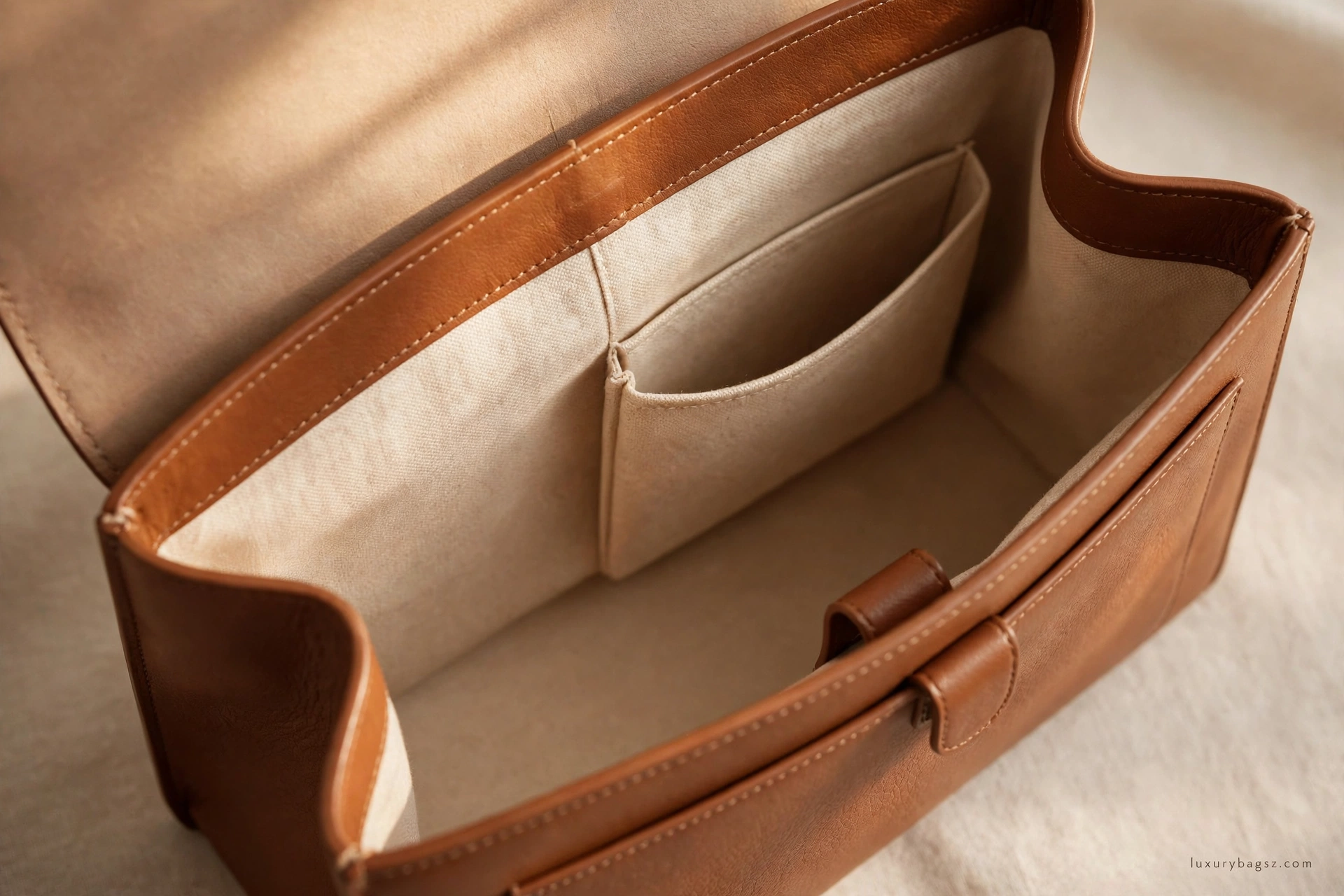
Start with the main interior leather tag and turn it over, because the code is most often embossed on its reverse. If it is not there, run a fingertip along the seams, corners and inside pockets for a narrow leather tag.
On a Baguette, the tag is commonly tucked inside the main compartment or a pocket. On a Peekaboo, check around the central divider and the interior pockets, where the tag can hide against the lining.
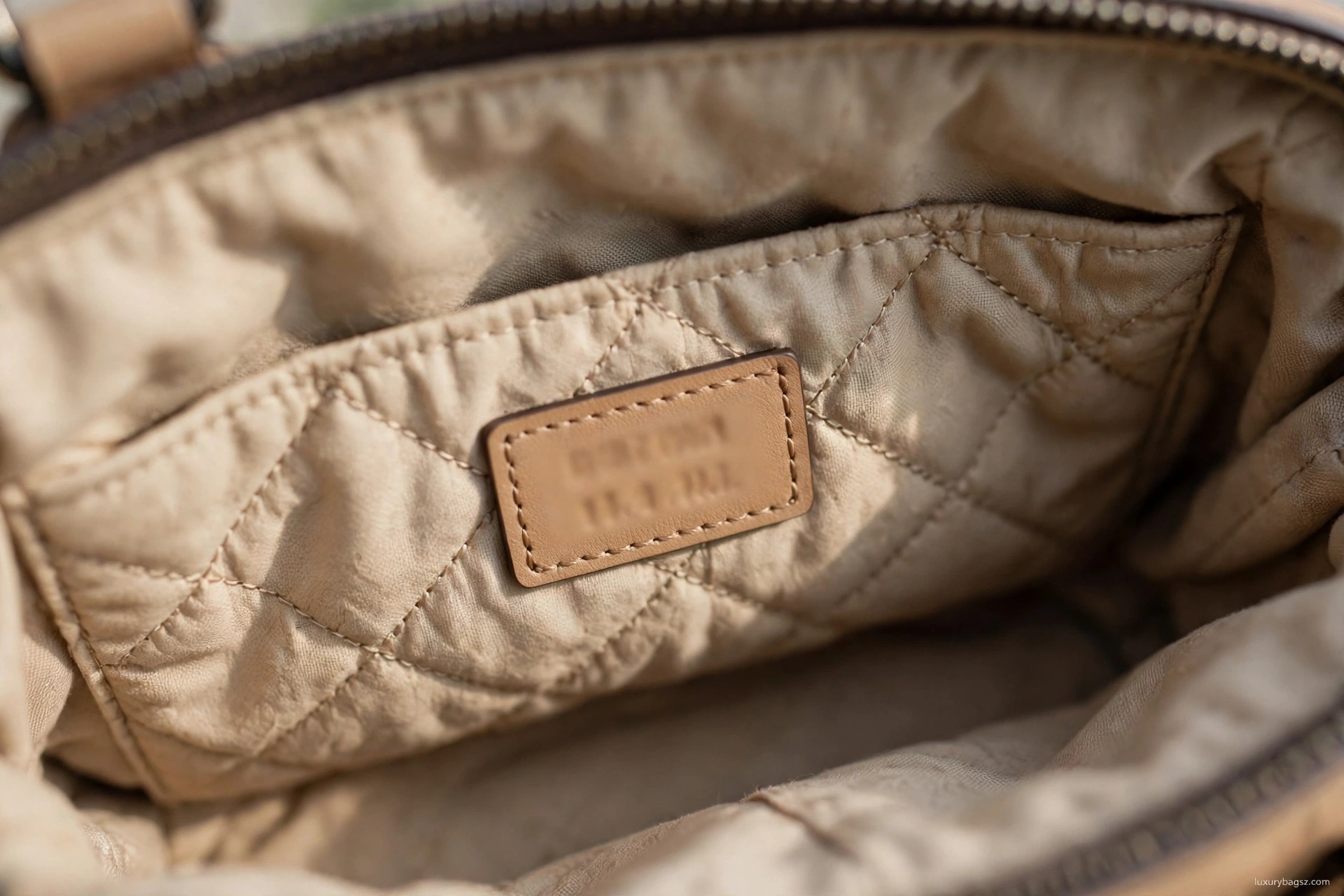
The interior label itself should read FENDI with Made in Italy, and it should be sewn in, never glued. A loose, glued or oddly shiny tag deserves a much closer look before you trust any number on it.
How to Read the Code Inside Your Bag
Fendi has never published an official key to its serials, so read the code as an identity string rather than a date stamp. Reputable authentication sources describe three dash-separated blocks with distinct jobs.
| Part of the code | What sources link it to |
|---|---|
| Opening block | The style or model reference for the bag |
| Middle block | The art number, tying the code to the exact design |
| Closing block | Material, colour or production lot details |
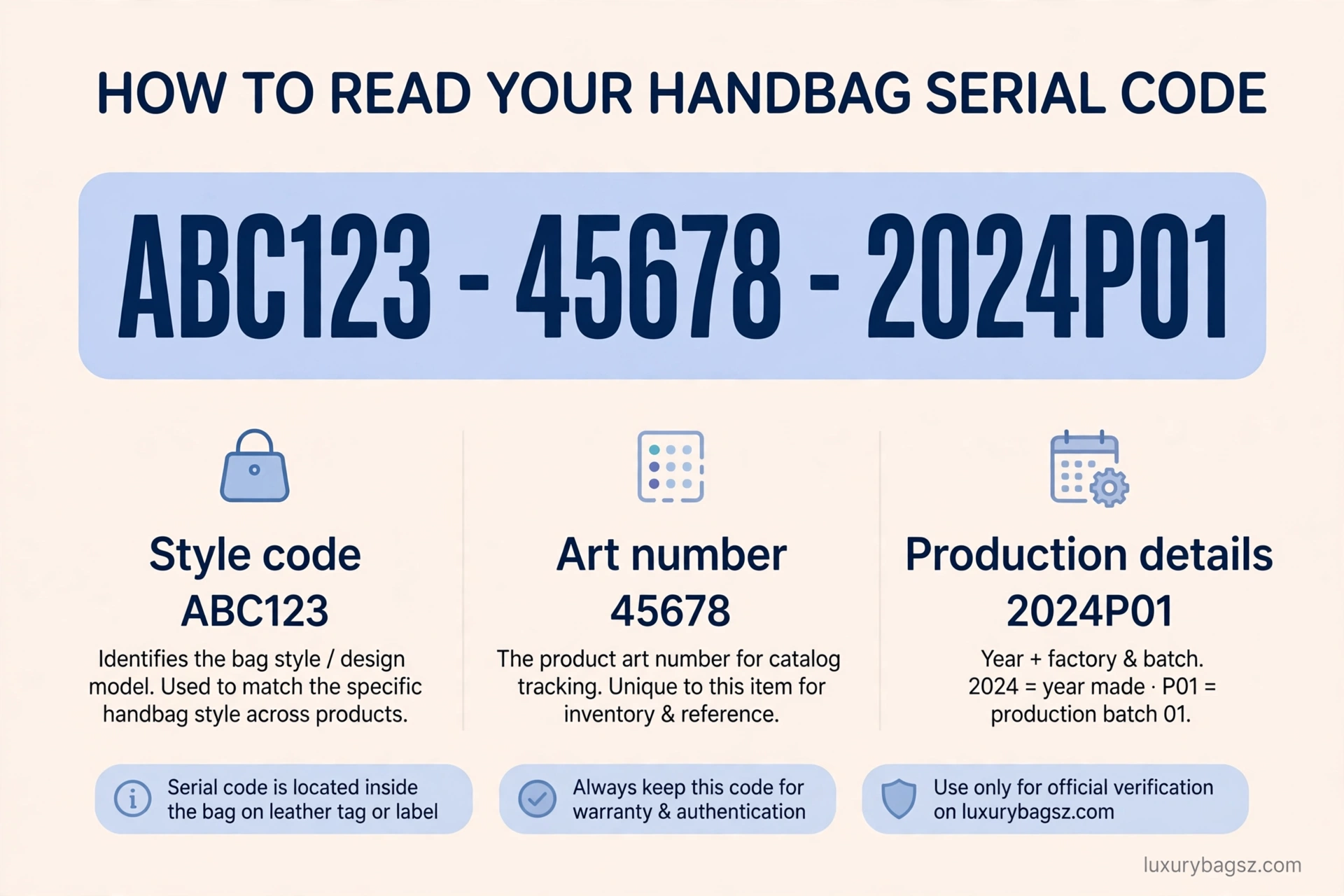
If you already know Gucci serial numbers, Fendi will feel familiar but looser. Both houses use long dash-separated codes, yet Fendi buyers get no published pattern to lean on.
Treat claims that the opening digits give the year and month with real care. No reputable source supports a reliable date reading, and a code that fits the right length and shape is only a starting point.
A Worked Example, Step by Step
Take a sample code in the usual shape, 8BR608-A72V-1098, used here only as an illustration. First, count the characters: sixteen, including the dashes, which sits inside the normal 15 to 17 range for a modern bag.
Next, split it at the dashes. The opening block, 8BR608, is read as the style reference, and the middle block, A72V, as the art number for that exact design. Neither block gives you a year or a month of production.
Finally, read the closing block, 1098, as material, colour or production lot detail, then check the whole string against the authenticity card, character for character. If one character differs, the match fails.
The Hologram Sticker Years
From 2004, Fendi added a holographic foil sticker alongside the serial number, attached to the fabric label inside the bag. Tilted under light, a genuine sticker shifts and shimmers rather than sitting flat and dull.
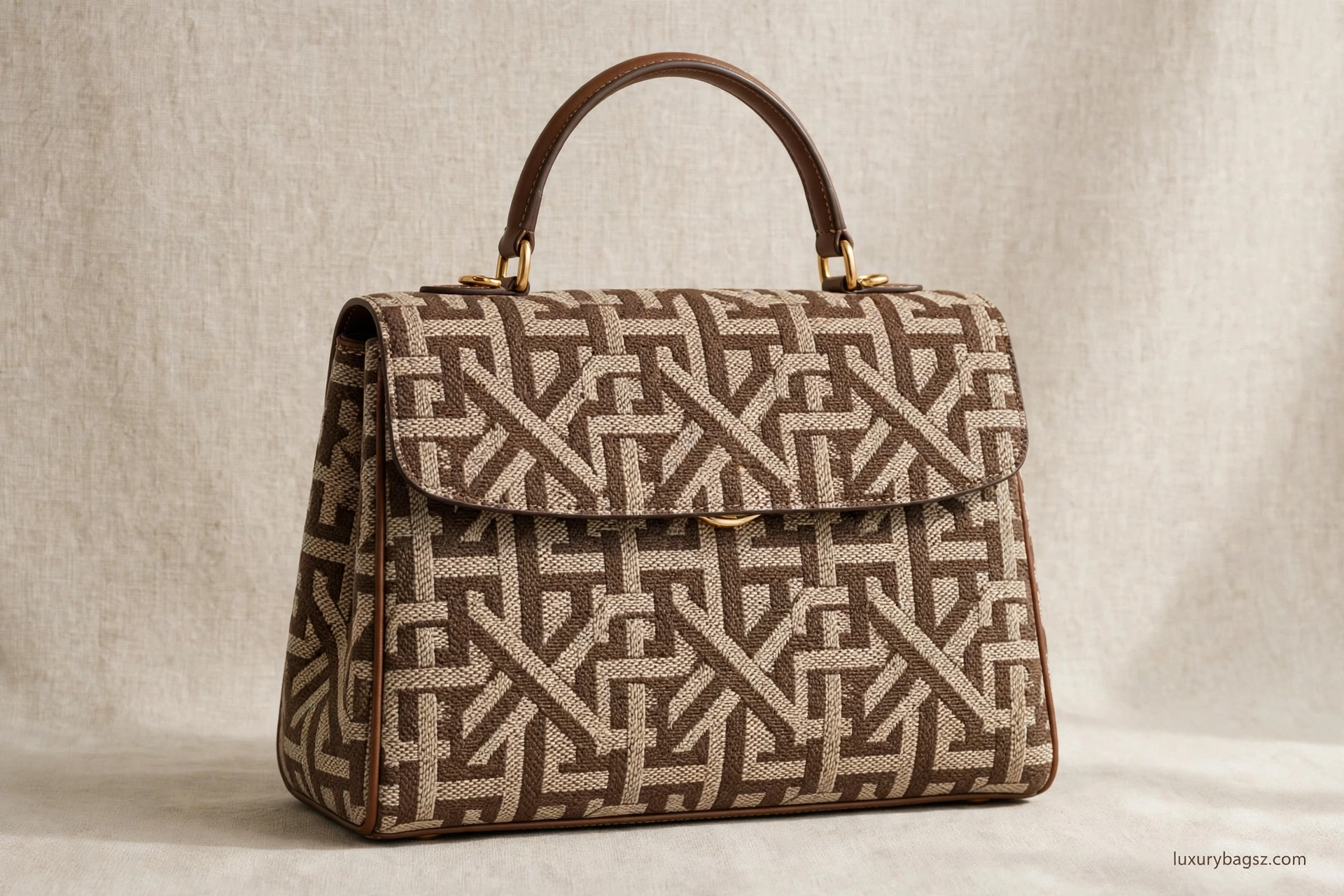
The hologram era ended around 2010, as stickers could be copied, peeled and swapped between bags. Exact changeover dates were never published, so a hologram on a bag claimed to predate 2004 should always prompt questions.
The same applies to a modern bag carrying both a hologram and a chip, since the two systems were not normally fitted together outside a brief overlap.
A missing hologram needs care, too. On a well-used bag from those years, the sticker can peel, lift or fall away entirely, so its absence alone does not prove a bag is fake, and a loose sticker can also have been moved.
Look instead for the fabric label itself, any faint outline where a sticker sat, and whether the leather serial still matches the card. Judge the bag on that wider evidence, not on the sticker alone.
RFID Chips and the Microchip Era
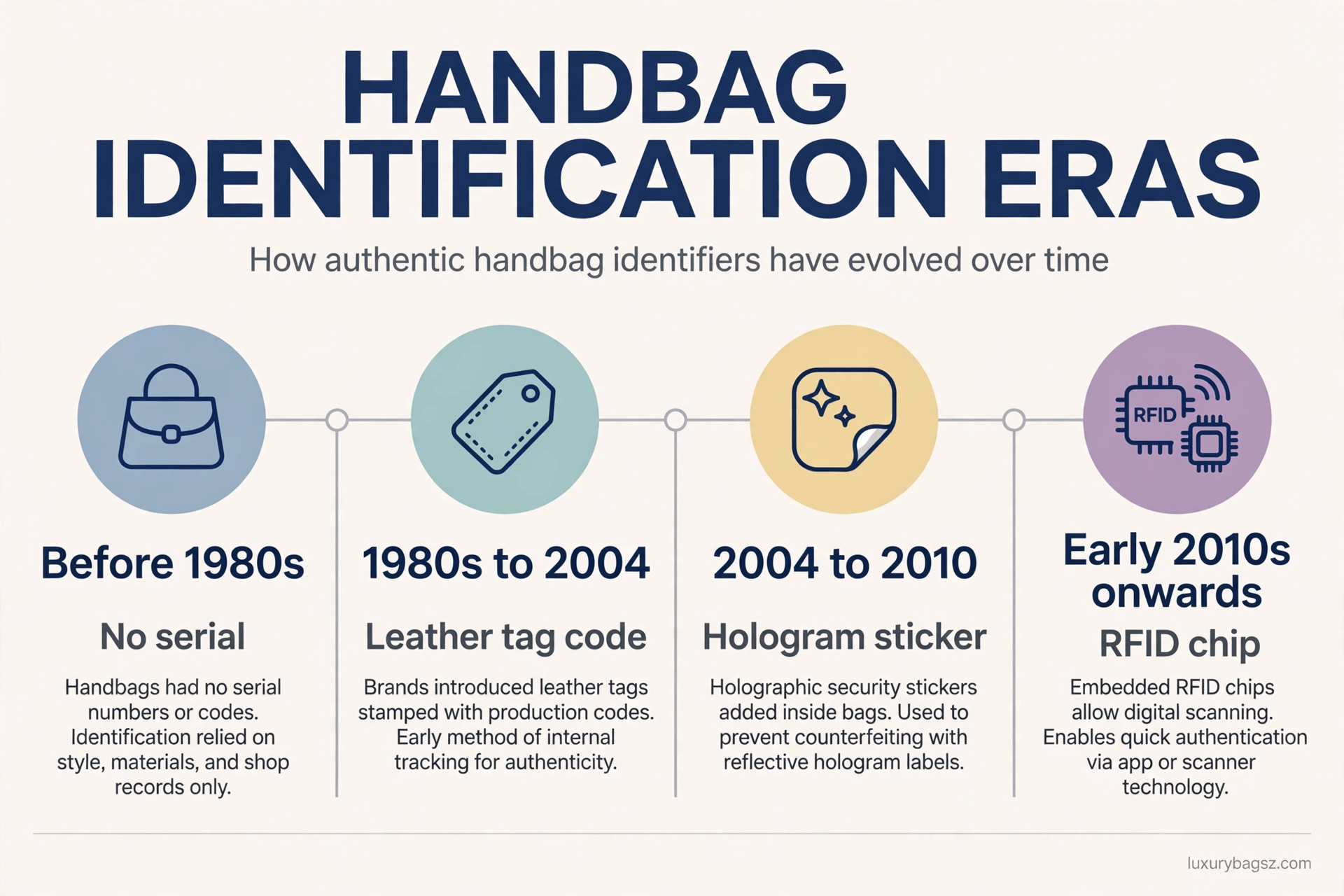
From the early 2010s, Fendi replaced the hologram with an RFID chip sewn into the fabric label inside the bag. Sources describe the label as carrying an eight-digit code alongside the chip itself.
The chip holds production and origin information, but it can only be read with specialist equipment of the kind held in boutiques. You cannot scan it with a phone and get a verdict at home.
Chanel made a similar move away from cards and stickers, as my guide to Chanel serial numbers and microchips explains. When I check a modern bag, I use Entrupy, including its microchip checks, beside the serial.
Authenticity Cards and the Matching Rule
A new Fendi bag comes with a paper authenticity card carrying the same serial number hidden inside the bag. The card also lists the model, the colour and a barcode for the exact piece.
The matching rule is strict: card and bag must agree character for character. A card that does not match is a serious red flag, because it may have been borrowed from another bag entirely.
A missing card is different. Cards are easily lost from preloved bags, and easily copied too, so a card can support a verdict but never carry one alone.
When the Code Is Hard to Read
Embossing on a well-used leather tag can fade until some characters are almost invisible. Tilt the tag under a lamp and photograph it at an angle, which often reveals shallow letters that a straight-on view misses.
Write down exactly what you can see and leave a gap for any character you cannot read. Never guess a letter, clean the leather to sharpen it, or press the stamp deeper, as each can harm the bag and the evidence.
If the code stays unreadable, or the RFID chip cannot be checked at home, ask a boutique or a professional authenticator to read it with the right equipment. An honest unreadable code is a reason to pause, not to fill in the blanks.
Fake-Number Red Flags
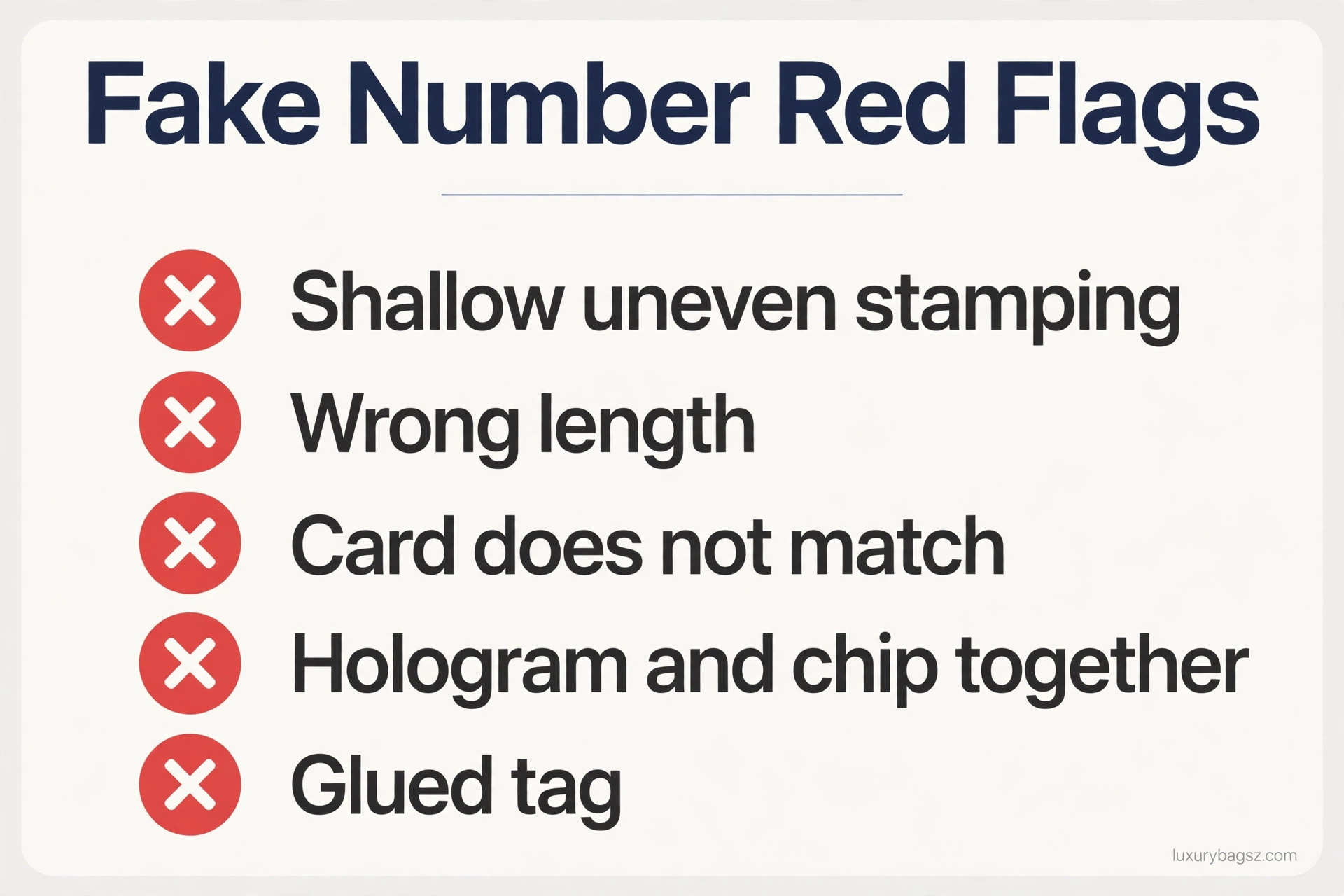
Having examined more than 500 bags, and having visited leather factories in Spain and France, I find the serial is where copies most often trip up. Watch for these warning signs on the number itself.
- Shallow, uneven or wobbly stamping, with characters at different depths or in a generic font.
- A code that is far shorter or longer than 15 to 17 characters on a modern bag.
- A serial printed on fabric or card rather than embossed into leather.
- A number that disagrees with the authenticity card, even by one character.
- A hologram and an RFID chip fitted together on a recent bag.
- No serial at all on a bag presented as modern production.
A serial is one clue among many, and leather, stitching, hardware and lining all have to agree with it. That wider check is the heart of the authentication process I follow for every bag.
Frequently Asked Questions
Where is the serial number on a Fendi Baguette?
Look inside the main compartment first. The code is usually embossed on the back of the interior leather tag, or on a narrow leather tag sewn into a pocket or seam, and it can take a patient search to find.
Can I check a Fendi serial number online?
No. Fendi offers no public lookup where you type in a number and receive a verdict. Sites promising that check are not official, and a plausible result from one of them proves nothing about your bag.
What if my vintage Fendi has no serial number?
That can be entirely normal. Bags made before the 1980s predate the serial system, so judge a true vintage piece on its materials, stitching, hardware and stamps rather than on a number it never carried.
Does a matching authenticity card prove my bag is real?
No. A matching card is reassuring and a mismatched card is a genuine problem, but cards are printed paper and are copied. The card supports the leather, stitching and hardware evidence; it never replaces it.
Should my bag have a hologram or a chip?
It depends on age. Bags from roughly 2004 to 2010 carry a hologram sticker, while bags from the early 2010s onward carry an RFID chip instead. Earlier bags have neither, and having both together needs explaining.
Can the serial number tell me the year my bag was made?
Not reliably. Fendi has never published a way to read a date from the code, and the blocks point to style, art number and production details. Anyone promising an exact year from the number alone is guessing.
Final Verdict
A Fendi serial number is best read as an identity check, not a certificate. Find it on leather inside the bag, confirm its length and shape, place it in the right era, and make sure it matches the card.
When the number, the era marker and the craftsmanship all tell the same story, you can buy with confidence. When any one of them disagrees, pause and have the bag checked properly before you pay.