How to Dress for Your Body Shape: Silhouettes for Pear, Apple, Hourglass and More
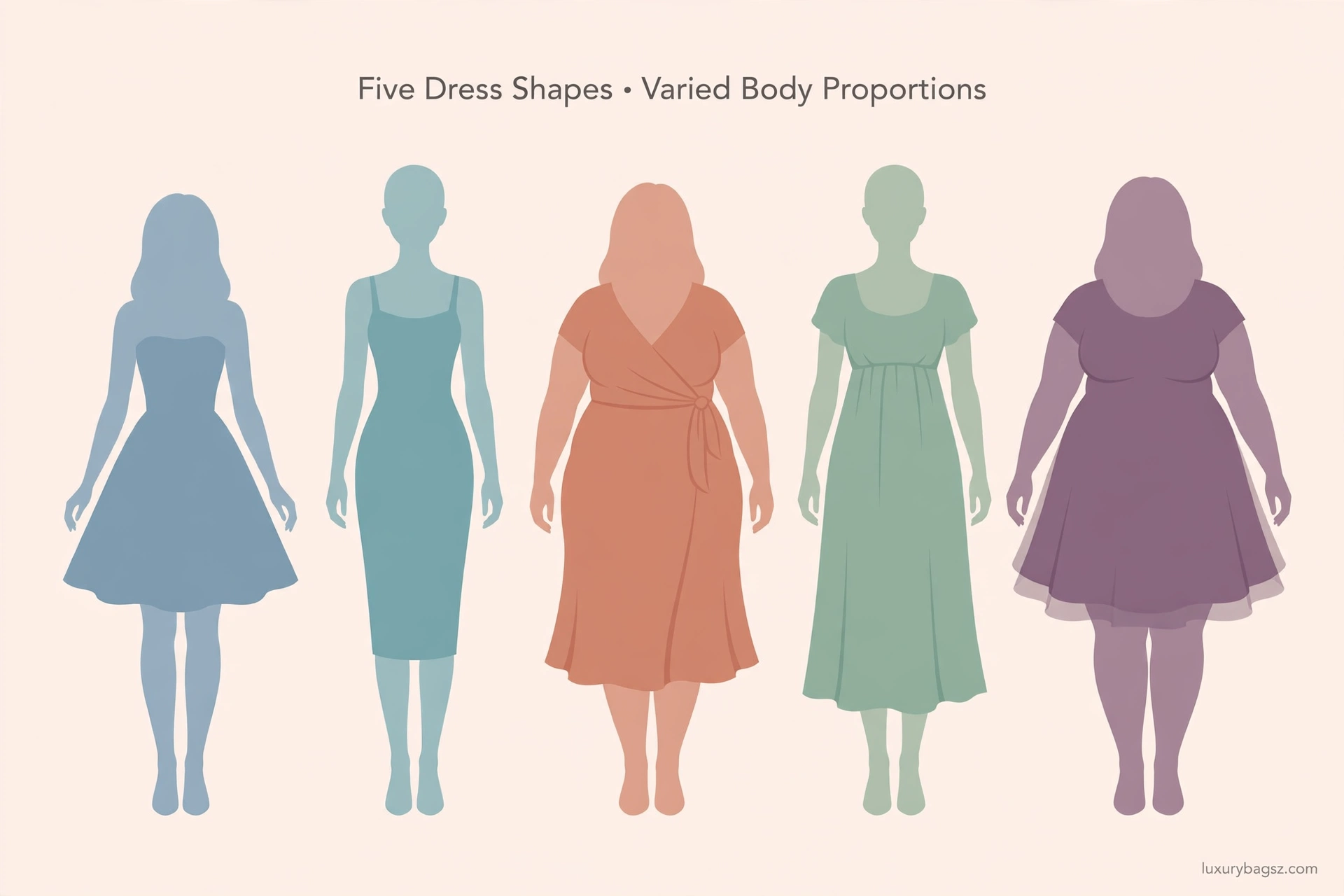
Dressing Your Shape: Balance Is the Whole Trick
To dress well for your body shape, balance your proportions: add interest where you are narrower, keep lines smooth where you are fuller, and mark your waist if you have one — or create one if you do not.
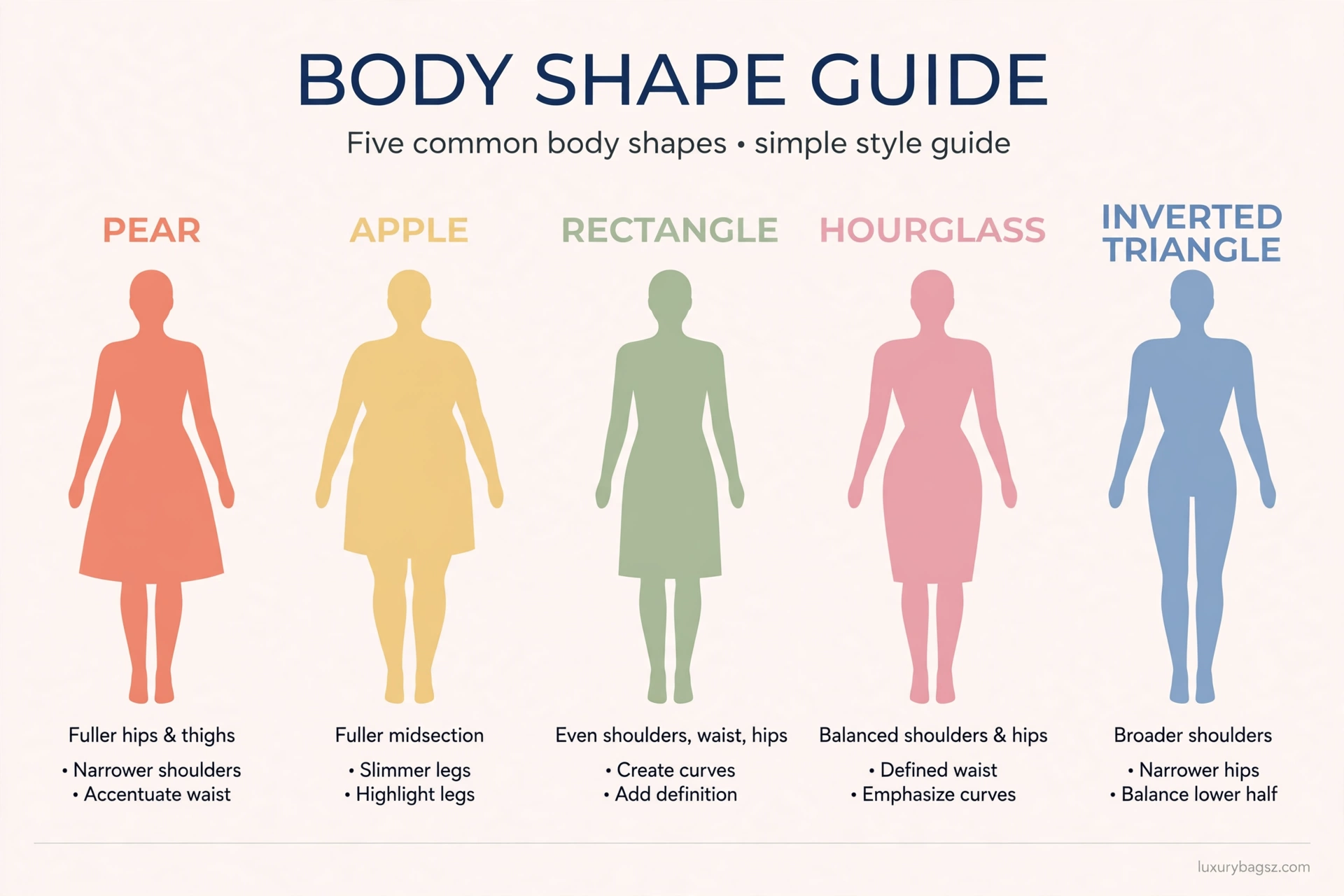
The five common shapes — pear, apple, rectangle, hourglass and inverted triangle — are just starting points. Most people sit between two, and the advice blends with them.
Use this guide shape by shape, then take the shared rules on necklines, rises and fabrics that apply to everyone.
Key Takeaways
- Work out your shape from shoulders, waist and hips in a mirror, in fitted clothes.
- Balance, not hiding, is the aim: echo your wider half on the narrower one.
- Waist placement changes everything; high rises lengthen legs on most shapes.
- Necklines steer the eye: V shapes lengthen, wide necks broaden shoulders.
- Fabric drape matters as much as cut; stiff cloth adds volume wherever it sits.
- Fit beats shape rules: a well-fitted plain dress outranks any formula.
Finding Your Shape in Two Minutes
Stand in fitted clothing in good light and compare three widths: shoulders, waist and hips. Note which is widest and whether your waist is clearly defined.
Hips widest means pear. Shoulders widest means inverted triangle. A fuller middle with slimmer legs suggests apple.
Shoulders and hips balanced with a defined waist is hourglass. Balanced with a straighter waist is rectangle.
Photographs judge proportions more honestly than mirrors. Take one straight-on photo and read the outline, not the details.
Body shape also shifts over a lifetime — after pregnancy, training, illness or menopause, re-run the mirror check rather than dressing a remembered shape.
Height overlays shape: the same pear proportions read differently on a petite and a tall frame, which is why lengths appear beside every shape below.
Write your three measurements down. Numbers end arguments that mirrors start, and they make online shopping far more accurate.
Seated proportions count too: waistbands and rises should be judged sitting down, since that is where most of the day is spent.
Pear: Balance Hips With Shoulder Interest
Pear shapes carry width at the hips with a narrower top half. The styling job is to add presence at the shoulders and show the waist.
Choose tops with structure, detail or lighter colours, and keep bottoms darker, smoother and free of hip pockets and embellishment.
A-line skirts and wide or bootcut trousers skim the hip and balance the line. Avoid tapered trousers that end at the widest point.
Necklines that widen the shoulder line — boat, square and off-shoulder — are your friends, as are cropped jackets ending above the hip.
Jackets deserve a special note for pear shapes: a cropped jacket ending at the waist is your single most balancing purchase.
For skirts, the A-line should flare from the waist, not the hip. Flaring from the hip adds width exactly where the pear shape already has it.
Prints belong on your top half. A printed blouse with plain dark trousers is the pear formula in one sentence.
A short, structured jacket over an A-line dress is the pear shape's most reliable formal formula.
Evening dressing follows the same balance at higher stakes: put the detail, shine and lighter colour on your narrower half and keep the fuller half smooth and dark.
Apple: Lengthen the Middle, Show the Legs
Apple shapes carry fullness around the middle with often slimmer legs and arms. The aim is a longer torso line and attention on legs and neckline.
Empire lines, wrap tops that sit high, and fluid tunics that skim rather than cling all work. Avoid belts and seams that cut across the widest point.
Straight and slim trousers show your legs well. Skirts that end at the knee keep the focus where you want it.
Long necklaces and open necklines draw the eye up and down, lengthening the middle. Keep prints larger and lower contrast at the torso.
Tops with a gentle A-line from the bust — trapeze and swing cuts — skim the middle without clinging or tenting.
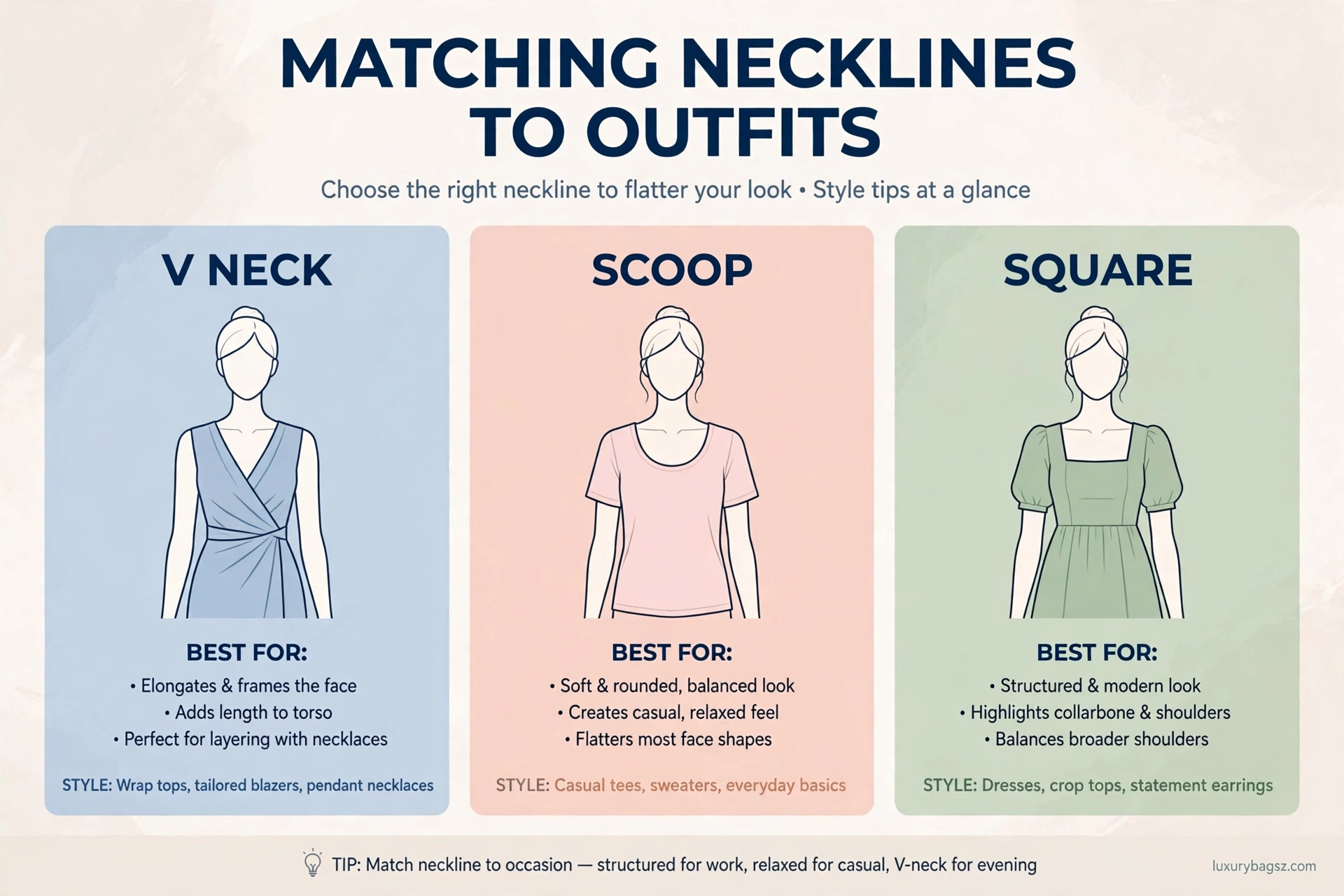
Avoid high necklines that shorten the torso. Scoop and V shapes open the chest and pull the eye lengthwise.
Trouser fronts should be flat and plain. Pleats, cargo pockets and drawstrings all add bulk at the apple shape's fullest point.
A long pendant necklace is the apple shape's cheapest styling tool: it draws one vertical line through the middle.
Rectangle: Create a Waist With Cut and Belts
Rectangle shapes have balanced shoulders and hips with little waist definition. Styling creates curves with shaped seams, belts and volume contrasts.
Fit-and-flare dresses, belted shirts and peplum tops all draw a waist where the body is straight. Our designer skirts guide shows the flared cuts that build this line from the waist down.
Layering helps: a cropped layer over a longer one marks the middle. Colour blocking at the waist works the same way.
Soft, draping fabrics follow the lines you create. Very stiff, boxy cuts will simply repeat the rectangle.
Layering in threes flatters rectangles: a fitted base, a belted middle layer and an open outer layer draw a waist from three directions at once.
Dresses with seam detail — princess seams, contrast panels, a defined yoke — draw curves onto a straight frame more convincingly than belts alone.
Footwear can help: a heeled shoe under a flared skirt completes the curve story that the outfit is telling.
Cropped cardigans buttoned at the top only create the same waist signal as a belt, with more comfort.

Hourglass: Follow the Waist You Have
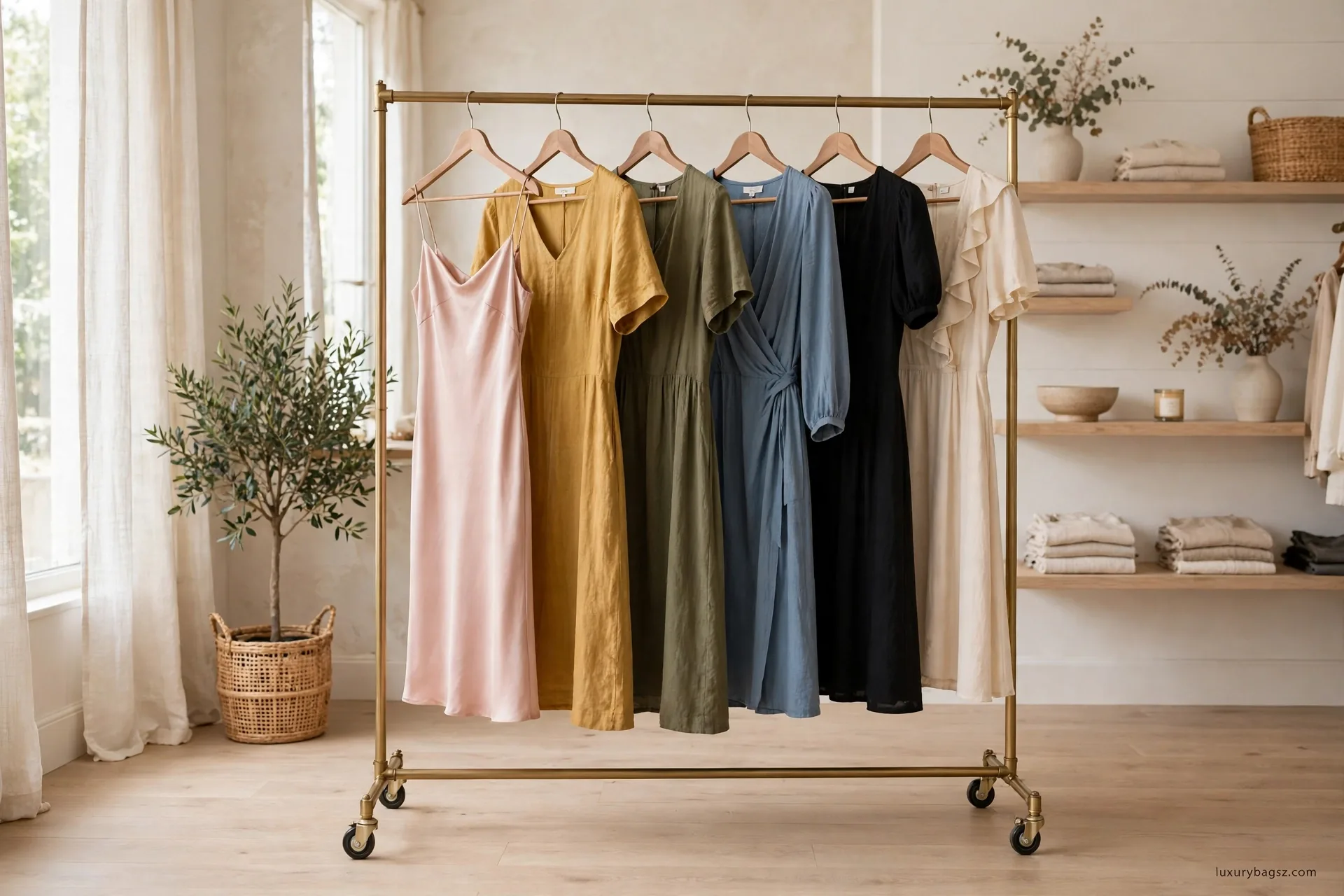
Hourglass shapes are balanced with a defined waist. The rule is simple: keep the balance and show the waist rather than hiding it.
Wrap dresses, fitted shirts and belted coats are the natural staples. The enduring appeal is covered in our piece on why a satin dress is a wardrobe staple, where drape does the work.
Oversized, shapeless pieces are the main trap; they add bulk at both halves and erase your best line.
Stretch fabrics with some body flatter most. Very thin, clinging cloth shows every underlayer line, so choose smooth underpinnings.
Necklines for hourglass shapes should follow the body's curves: sweetheart, scoop and wrap fronts all echo the balanced outline.
Skirts should sit at the natural waist and follow the hip without gripping it. A pencil skirt in a firm fabric is the classic choice.
One warning: empire lines sit oddly on hourglass frames, cutting across the bust and hiding the waist the shape is known for.
Twinsets and matching top-and-cardigan pairs flatter hourglass frames because both layers follow the same waist.
Inverted Triangle: Soften Shoulders, Add Hip Volume
Inverted triangle shapes carry width at the shoulders with narrower hips. Styling softens the shoulder line and adds interest below the waist.
Choose simple, unpadded tops in darker colours, with V and scoop necks that break up the shoulder line. Avoid shoulder detail and wide necklines.
A-line skirts, printed trousers and lighter colours on the bottom half add the missing volume where you want it.
For dress hunting specifically, the retro cuts in our how to find the perfect 70s dress guide include many hip-friendly flared shapes.
Jackets for inverted triangles should button low or stay open, with hems that flare slightly over the hips.
Skirts with pleats, prints and pockets are assets here — everything the pear shape avoids becomes your balancing toolkit.
Avoid halter and racer necklines, which expose and widen the shoulder line further. Straps should be wide and set inward.
Straight-leg trousers in a firm fabric hold the added lower-half line better than soft, clinging jersey.
Necklines, Rises and Proportions for Every Shape
V necks lengthen the torso and narrow the shoulder line visually. Square and boat necks do the opposite, widening the top half.
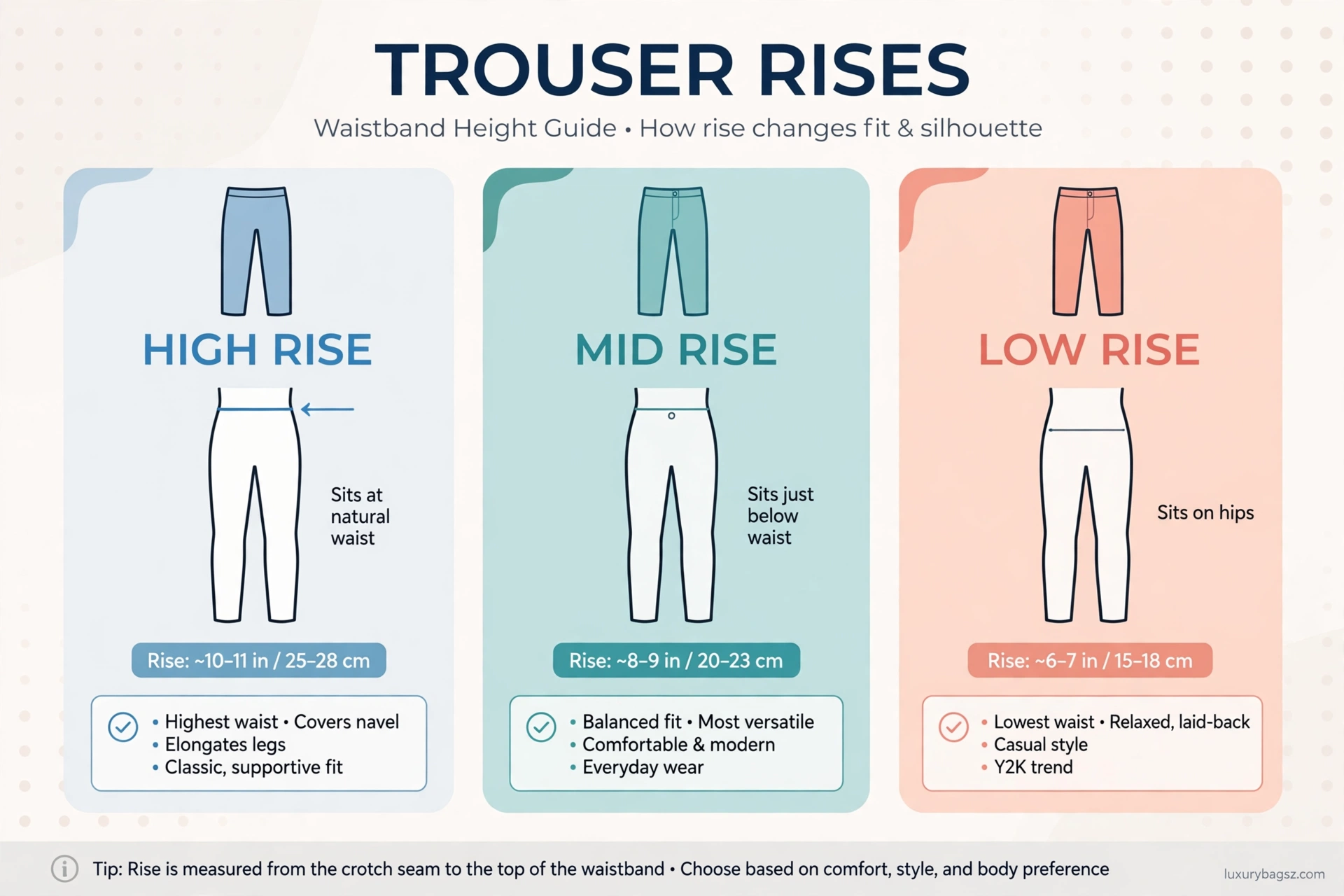
High rises lengthen legs and mark the waist on most shapes. Low rises shorten the leg line and suit very few outfits now.
The thirds rule keeps outfits balanced: roughly one third top to two thirds bottom, or the reverse, reads better than half and half.
Sleeve length counts. End sleeves at a slim point of the arm, and avoid hems that stop exactly at your widest point anywhere.
Hem placement is a quiet proportion tool: end skirts and trousers at slim points — below the knee, at the ankle — never at the widest point of the calf or thigh.
Monochrome outfits lengthen every shape. A single colour from shoulder to shoe removes horizontal breaks and lets cut do all the work.
Belts deserve precision: place them at the narrowest point you have, which is not always the natural waist, and match their width to your scale.
Shoe colour extends or cuts the leg line: a shoe that matches your trousers lengthens every shape's bottom half.
Accessories follow proportion as well: a wide belt on a small waist overwhelms, a skinny belt on a fuller frame disappears — match the accessory scale to the body scale.
Fabric, Print Scale and Fit Checks
Fluid fabrics skim; stiff fabrics build. Place each deliberately: structure where you want shape, drape where you want softness.
Print scale should match your scale. Small frames carry small prints easily, while larger frames hold bold prints in better proportion.
Fit checks beat shape charts: sit, reach and walk in a garment before judging it. Pulling and riding cannot be styled away.
Tailoring closes the gap between a good buy and a perfect one. Shortening, waist nips and strap moves are cheap, fast alterations.
Underpinnings change the outline before clothes touch it. A well-fitted bra lifts the bust line and can move the apparent waist by centimetres.
When shopping online, filter by your shape's key words — wrap, A-line, empire, belted — rather than browsing whole categories.
Keep a phone photo of your best-fitting outfit. Comparing new candidates against a proven silhouette is faster than re-deriving the rules in every changing room.
Keep one honest friend or one tripod: feedback beats guesswork when a new silhouette is unfamiliar on your body.
Frequently Asked Questions
How do I work out my body shape?
Compare shoulders, waist and hips in fitted clothes or a straight-on photo. The widest point and how defined your waist is will place you in one shape, or between two.
What if I am between two shapes?
Very common. Blend the advice: take the balancing tips for your wider area and the waist tips for your straighter area, and judge results in the mirror.
Do these rules apply at every size?
Yes. Shape is about proportion, not size. The same balancing logic works across the full size range.
What is the single most flattering dress style?
A wrap or fit-and-flare dress suits more shapes than any other cut, because it marks the waist and skims both halves. Fit still decides the final result.
Should pear shapes avoid skinny trousers?
Not necessarily. A dark, plain skinny trouser with a longer, structured top can balance well. The pairing matters more than the trouser alone.
How can apple shapes wear belts?
Place belts high, under the bust, or use them on coats worn open as a vertical detail. Avoid belting across the widest point of the middle.
Are high-waisted trousers good for everyone?
For most shapes, yes: they lengthen the leg and define the waist. Apple shapes should choose a smooth, flat front with no pleats or bulky pockets.
Does colour really change proportions?
Yes. Light and bright colours advance, dark colours recede. Placing light on your narrower half and dark on your fuller half balances the outline.
What neckline suits broad shoulders?
V, scoop and halter shapes that cut into the shoulder line. Avoid boat necks and off-shoulder cuts, which extend the width.
Is tailoring worth it for everyday clothes?
Usually, yes. A small waist nip or hem change costs little and makes mid-range clothes fit like made-to-measure pieces.
Conclusion: Dress the Outline, Not the Label
Learn your outline, balance it with cut, colour and neckline, and let fit have the final word over any shape chart.
The goal is not to look like a different shape. It is to wear the shape you have with its proportions working for you.