

Hat Styling Tips: How to Wear Fedoras, Berets and Wide Brims Well
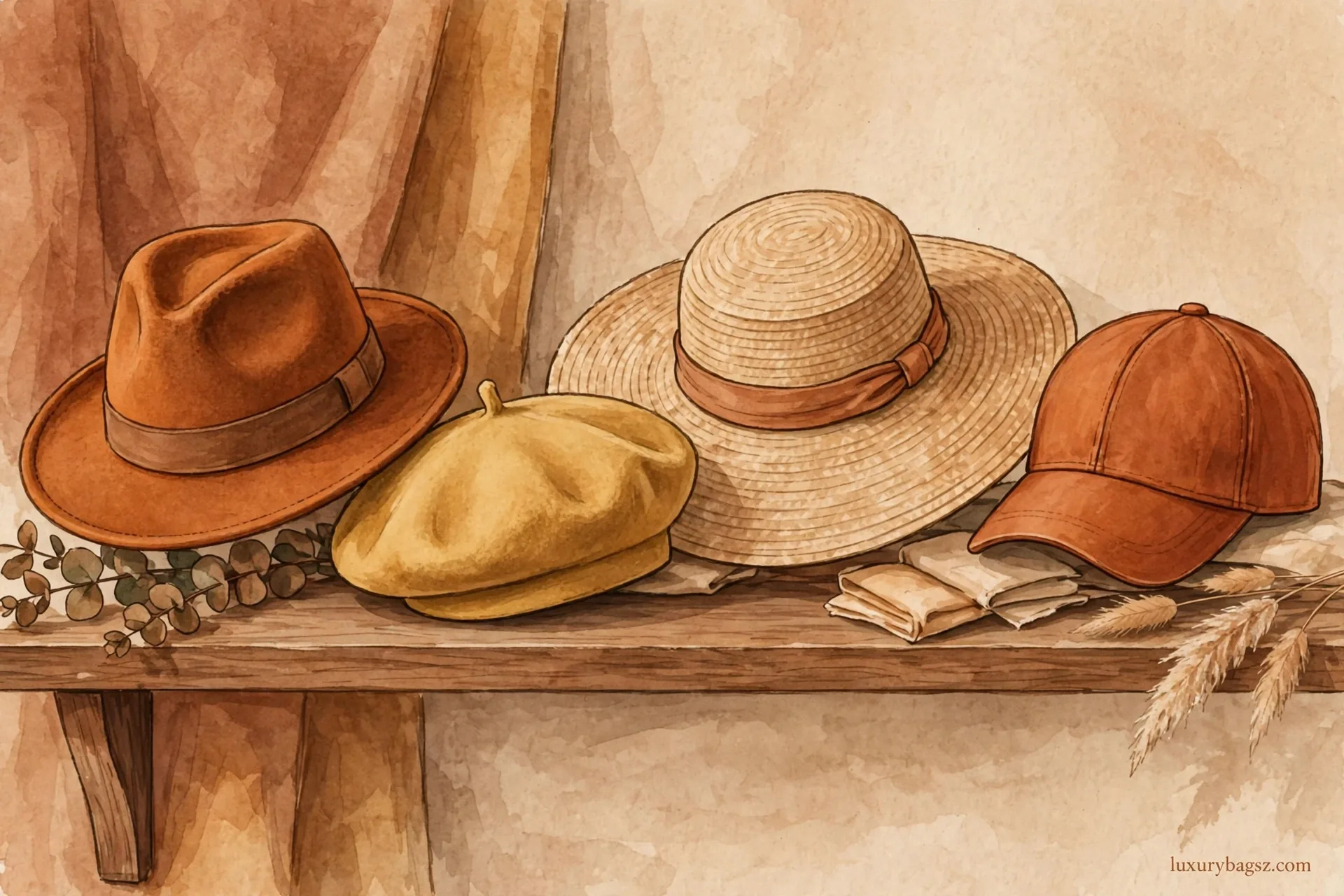
Hats, Styled Simply: Fit First, Then the Outfit
A hat looks stylish when two things are right: it fits your head without squeezing, and its brim suits your face and outfit scale. Get those right and even a simple cap or beret looks deliberate.
Start with one versatile shape — a felt fedora or wide brim in a neutral — and learn its pairings before collecting more. Most hat mistakes are pairing mistakes, not hat mistakes.
This guide is styling-led: shapes, faces, outfits, hair, occasions and the care that keeps a good hat looking good.
Key Takeaways
- Fit is the first styling choice: snug enough to stay, loose enough to leave no mark.
- Brim width should echo face width; very wide brims swamp small faces and frames.
- Match hat formality to the outfit — felt with tailoring, straw with summer dresses.
- Hair worn low and loose survives hats best; a low pony is the safe updo.
- Neutral colours earn the most wears; buy colour after the basics.
- Store hats on a stand or stuffed, never crushed under other items.
Fit and Sizing: The Style Foundation
Measure around your head just above the ears and brows, and shop by that number. A hat that rides up or tilts is the wrong size, however good it looks.
A correct hat stays on in a light breeze when you tilt your head, yet lifts off without pulling your hair.
Inner drawstrings and foam tape can fine-tune a slightly large hat. Nothing fixes a too-small one, so size up when between sizes.
Try hats with the hairstyle you will wear. Volume under the crown changes fit more than most people expect.
Hat sizing varies by maker, so treat the size chart of each brand as its own language. A medium in one label can equal a large in another.
If you plan hats over winter hairstyles or wigs, size for the volume you will actually wear. Fit changes with what sits beneath the crown.
Matching Hat Shapes to Face Shapes
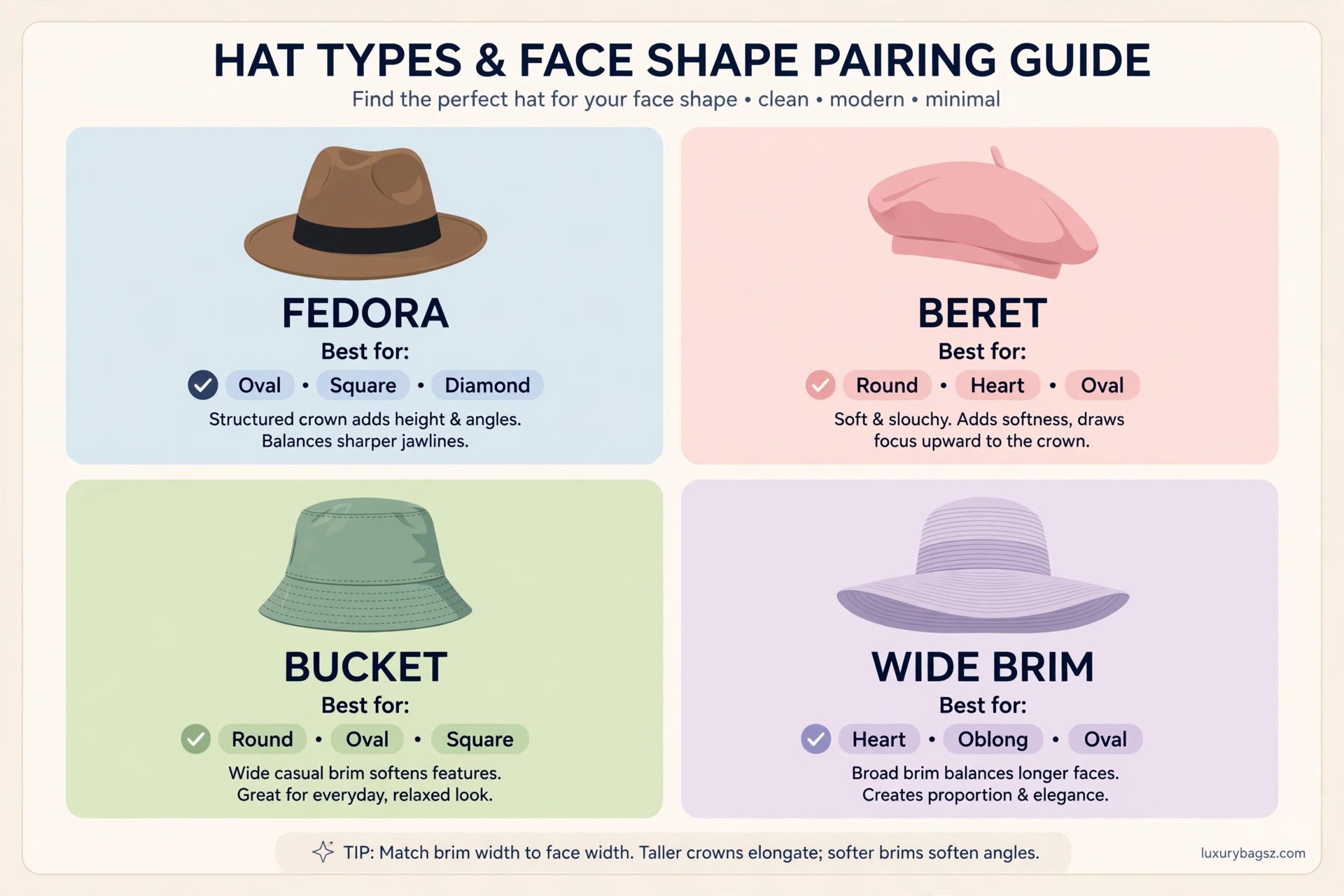
Oval faces suit almost everything, so choose by outfit instead. Round faces gain angles from fedoras and structured crowns.
Square faces soften with floppy wide brims and berets worn at a tilt. Long faces balance with wider brims and lower crowns.
Heart-shaped faces look best with medium brims that add width near the jaw, such as cloches and angled fedoras.
Treat these as starting points, not laws. Confidence and outfit balance outweigh any chart in the mirror.
Glasses change hat maths. Frames add width at the temple, so brims that swoop low at the sides can clash with your frames — try them together.
Shorter wearers should watch crown height as well as brim width. A very tall crown on a small frame tips the proportions.
The Fedora and the Wide Brim
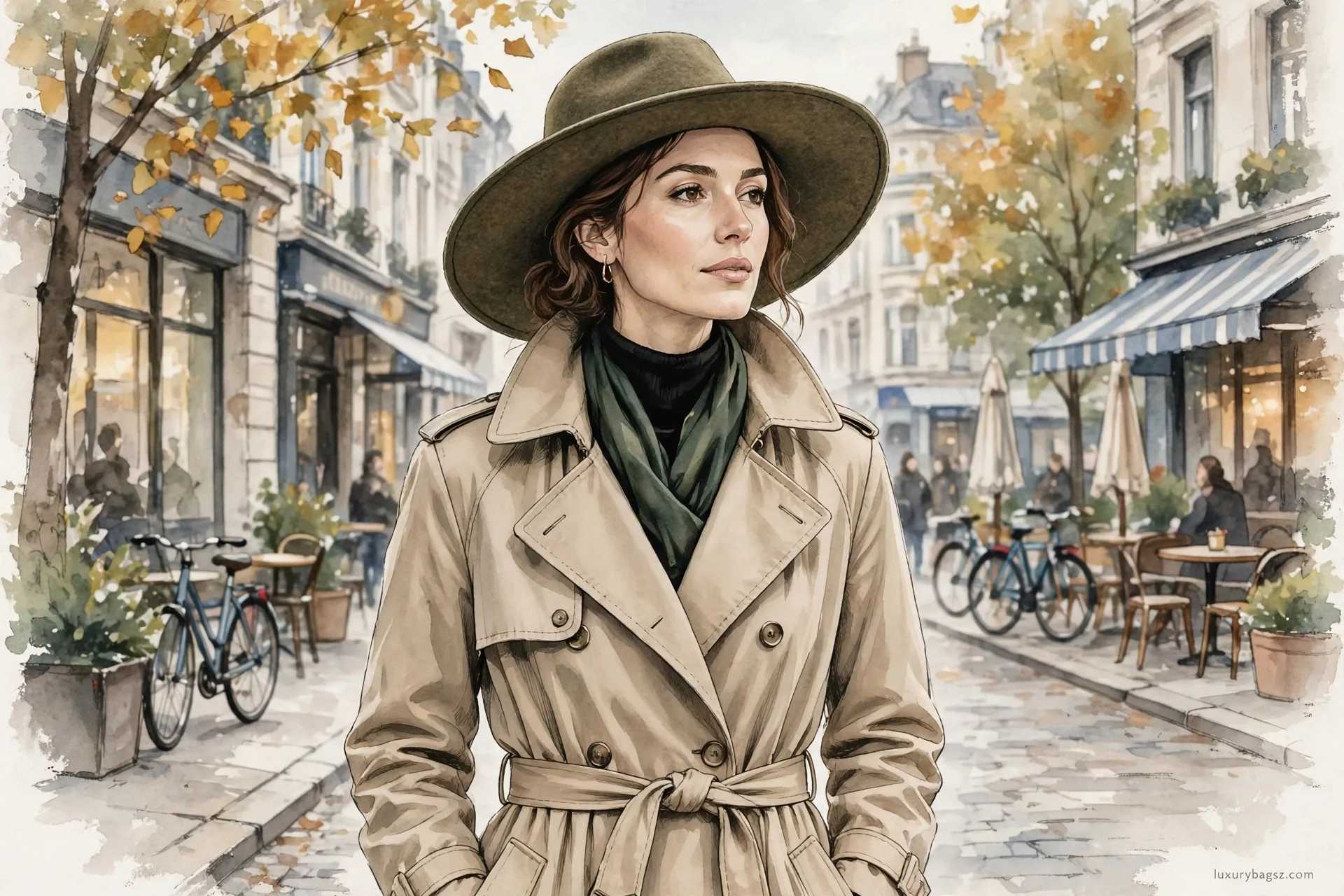
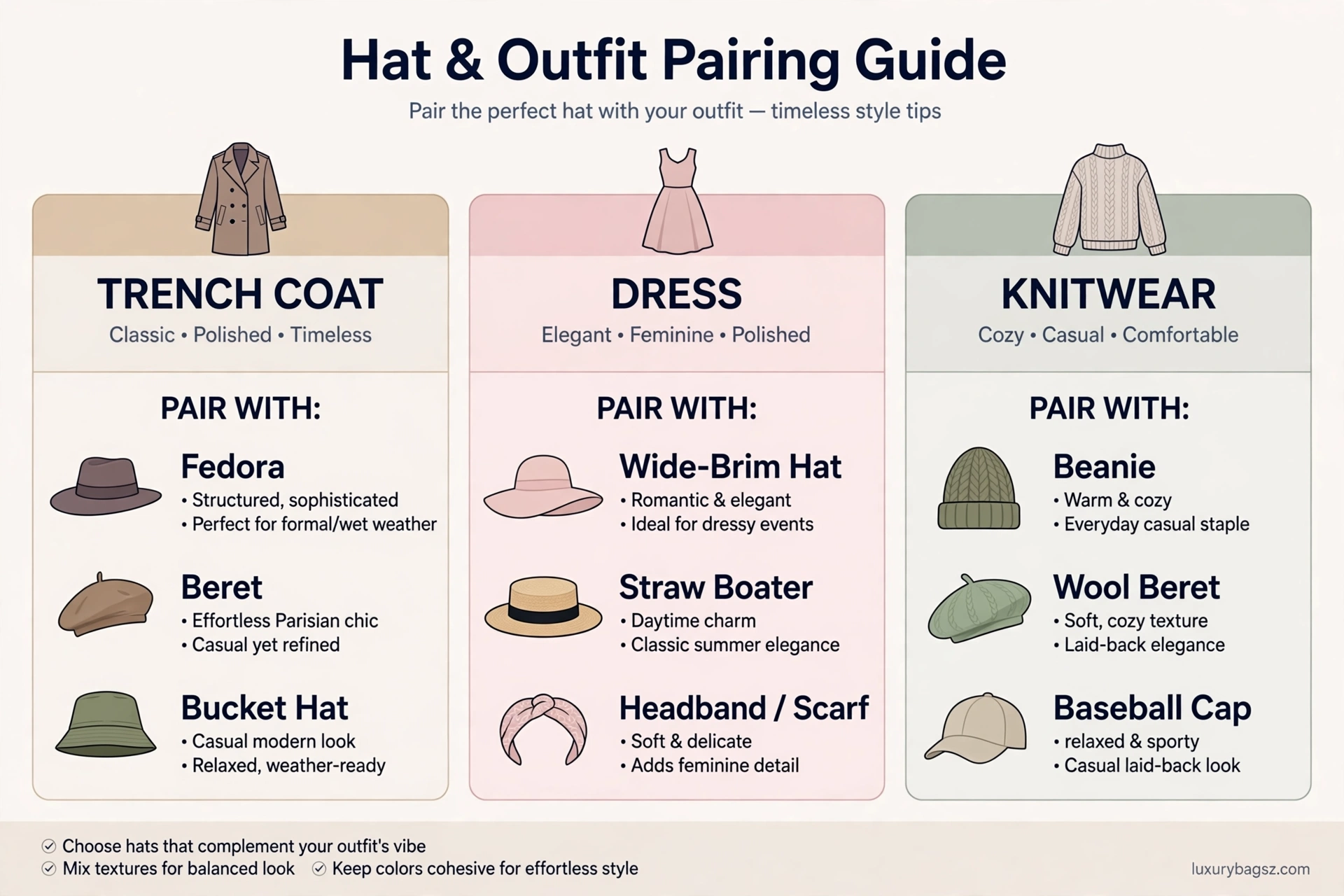
A felt fedora in black, camel or grey is the hardest-working smart hat. It pairs with trench coats, blazers and knit dresses without effort.
Wear it level for a classic look or tilted slightly for softness. Match the band colour to your coat or shoes to tie the outfit together.
Wide-brim felt hats suit coats and boots in autumn and winter. Keep the rest of the outfit simple; the brim is the statement.
For sun, the same shapes in straw take over. Our guide on how to wear a visor covers the sportiest end of warm-weather headwear.
A fedora's band is a styling tool. Swap a plain band for a grosgrain ribbon in a coat colour and the hat looks bespoke.
Straw wide brims suit dresses; felt wide brims suit coats. Wearing the summer version in winter fabric weather is the pairing error to avoid.
Berets, Caps and Beanies: The Casual Set
A wool beret worn tilted to one side, pulled slightly back, is the easiest soft hat to style. It suits coats, dresses and knitwear equally.
Baseball caps in leather, wool or plain cotton dress down blazers and dresses well. Keep logos minimal for a polished result.
Beanies should sit back on the head with the rim above the brows, not pulled low. A slouchy fit in a fine knit reads styled, not sleepy.
Casual hats carry casual outfits. Pairing a beanie with a tailored suit coat rarely works; swap the coat or the hat.
The beret tilt carries meaning in styling terms: pulled forward reads classic, pushed back reads relaxed, and dead centre reads like a costume.
Caps with dresses work when the dress is simple. A plain slip or shirt dress plus a clean cap is a proven warm-weather formula.

Occasion Hats: Weddings, Races and Garden Parties
Formal events call for structured shapes: fascinators, pillboxes and neat wide brims in straw or sinamay for summer, felt for winter.
Keep the hat's scale in proportion to your outfit and height. A huge brim with a slim dress overwhelms a petite frame.
Historic royal dressing offers a masterclass here; our look at Queen Elizabeth II style shows decades of matched hat and coat pairings.
Secure occasion hats with the built-in band or elastic plus two grips. Test with a head shake before you leave home.
For races and formal garden events, check the invitation's level before the millinery. Some events expect hats; others read them as over-dressed.
Coordinate the hat with the shoes or bag, not with the dress colour exactly. A perfect colour match across everything looks staged.

Hair Under Hats: Avoiding Hat Hair
Loose hair worn down survives hats best. If you wear it up, choose a low ponytail or low bun that sits below the crown line.
Part your hair on the opposite side before putting a hat on. Flipping it back afterwards restores volume instantly.
A silk or satin lining, or a scarf worn under the hat, reduces friction and flattening. Our designer scarves for fall guide includes the light silk squares that work well for this.
Carry a mini brush and revive roots with fingertips on removal. Avoid re-wetting hair, which sets the flatness in.
Sunscreen and makeup mark hatbands. A removable inner band or a makeup shield strip inside the front keeps a good hat clean through summer.
Wind is the honest test of any styling. If you must hold your hat at every gust, add a discreet elastic or grips before the event, not during it.
Colour, Texture and Outfit Pairings
Start in black, camel, navy or grey. These four pair with nearly every coat colour and make a first hat easy to reach for.
Match texture to season: felt and wool with autumn coats, straw and cotton with summer dresses and linen.
One statement is enough. A bold hat wants a plain outfit; a bold outfit wants a quiet hat in a shared colour.
Echo one element — band to bag, felt tone to boots — and the hat looks chosen rather than added as an afterthought.
Daylight reveals hat colours truthfully. Camel felts can turn orange under shop lights, so check a first hat purchase at a window.
One hat in a strong colour — red, cobalt, emerald — can anchor a wardrobe of plain coats more cheaply than a new coat can.
Care: Brushing, Storing and Rescuing Shapes
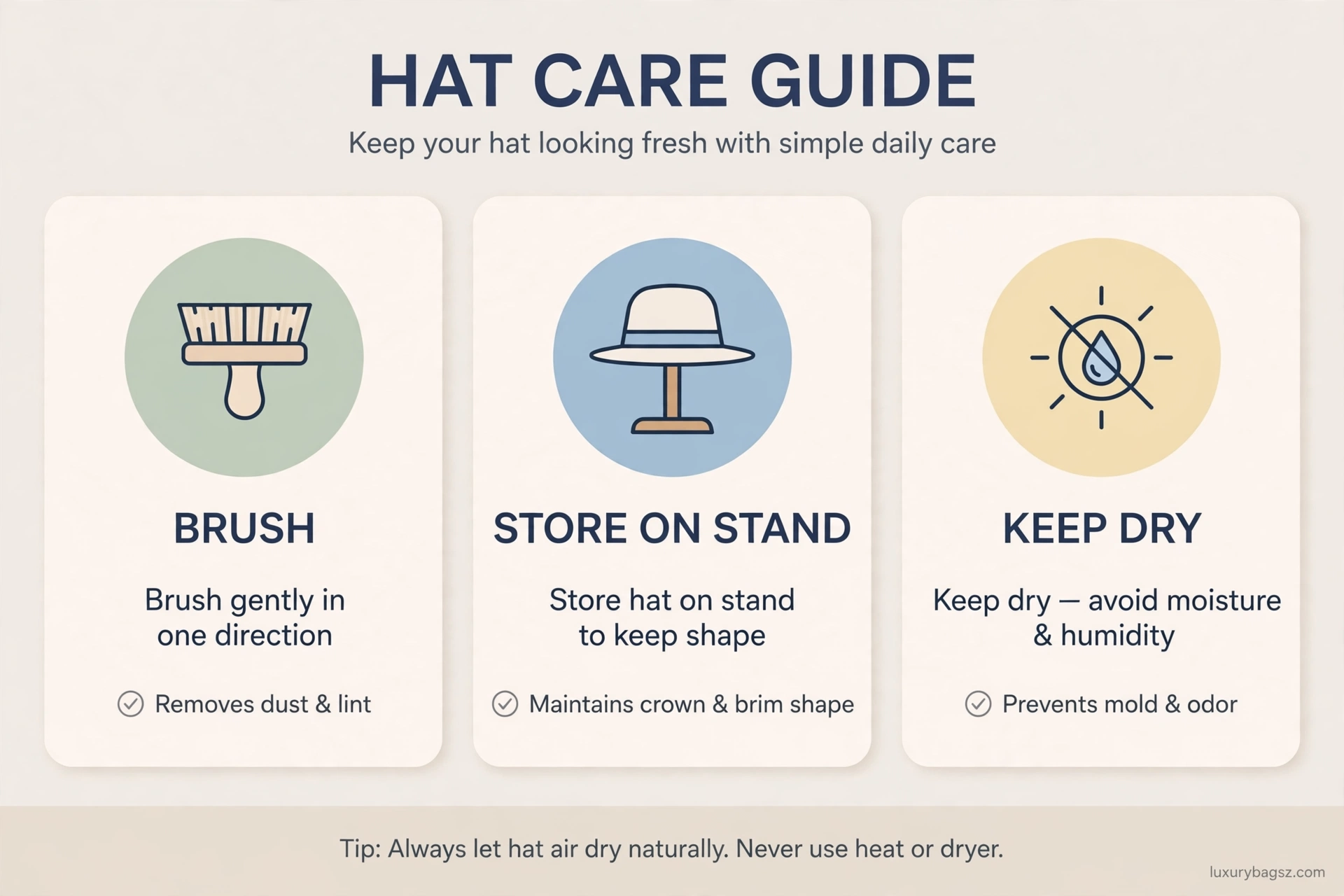
Brush felt hats gently in one direction with a soft brush to lift dust. Hold straw over steam briefly to refresh the shape, never soak it.
Store hats on a stand, on a shelf crown-down on tissue, or stuffed with tissue in a box. Never hang felt by its brim on a hook for weeks.
Rain spots on felt usually brush out once fully dry. Dry hats naturally, away from radiators, which warp crowns.
A hat that has lost its shape can often be steamed and reblocked by a milliner. Ask before discarding a good felt piece.
Travel with the hat you can pack or wear on the plane. Crushable felts and packable straws exist precisely because good hats die in suitcases.
At home, keep hats away from radiators and damp bathrooms. Heat warps felt and humidity invites mildew on straw.
Frequently Asked Questions
How do you know if a hat suits you?
Check three things in a full mirror: the brim roughly matches your face width, the crown is in proportion to your height, and the colour sits happily with your coat and hair.
What hat suits a round face?
Structured shapes with angles: fedoras, trilbies and squared crowns. Avoid round, close shapes like tight beanies pulled low, which echo the face shape.
Can petite women wear wide-brim hats?
Yes, with the brim kept moderate and the outfit simple. A brim wider than your shoulders will swamp a small frame; just below that width works well.
How tight should a hat be?
Snug enough to stay on when you tilt your head, loose enough to remove without pulling hair or leaving a deep mark on your forehead.
What is the most versatile hat colour?
Camel or black for felt, natural straw for summer. Camel flatters most coat colours; black is sharpest with tailored outfits.
How do you stop hat hair?
Wear hair down or in a low ponytail, flip your part before putting the hat on, and revive roots with fingertips after removing it.
Can you wear a hat indoors?
Casual hats usually come off indoors; fashion and occasion hats are often kept on at events. Follow the setting: restaurants and theatres favour removal, parties allow keeping them.
How do you clean a felt hat?
Brush gently in one direction when dry. For marks, use a barely damp cloth on the spot only, then dry naturally and brush again.
Beret or fedora for a first smart hat?
A fedora if your wardrobe leans tailored, a beret if it leans soft and casual. Both are forgiving; choose by the coats you wear most.
How should hats be stored long term?
Clean, stuffed with tissue to hold the crown, in a box or on a stand away from direct light and damp. Never store crushed under bags or coats.
Final Verdict: One Good Hat, Worn Often
Buy one well-fitting neutral hat in the shape that suits your face and your coats, learn its three best pairings, and wear it until it feels like yours.
Fit, proportion and care do the real work. Once those are right, styling a hat stops being a puzzle and becomes a habit.






