Why a Satin Dress Is a Wardrobe Staple: One Dress, Every Occasion
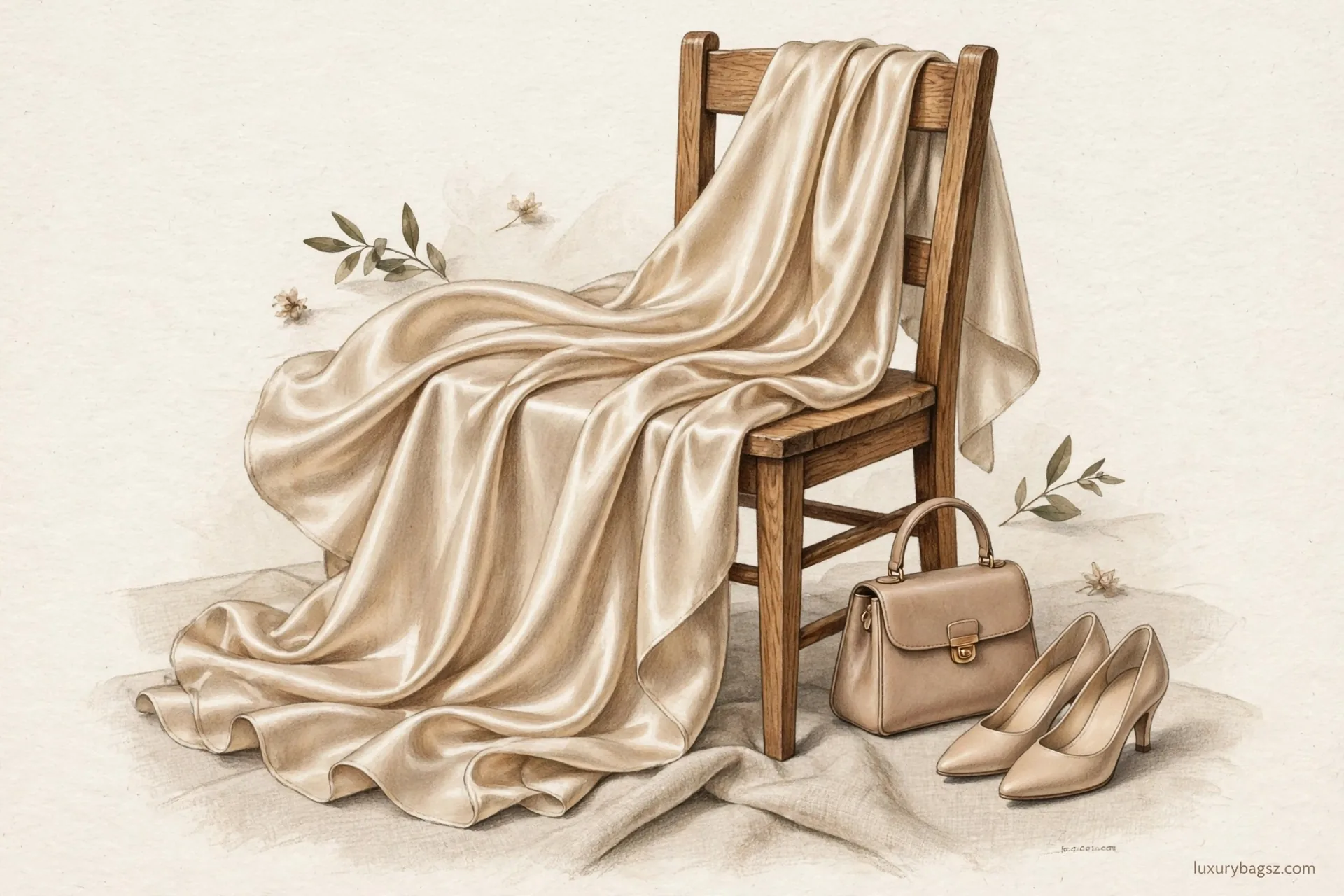
The Dress That Does the Work of Three
A satin dress earns staple status for a simple reason: the fabric does the dressing up for you. Its sheen catches light, its drape falls cleanly, and a plain cut in satin looks considered without embellishment, jewellery, or a complicated outfit around it.
That is why one satin dress can cover a wedding guest outfit, a dinner out, and a dressed-down weekend look with only shoes and layers changed. The dress stays the same; the styling shifts the occasion. Few fabrics offer that range without looking like a compromise in one of the roles.
The trick is choosing the right first satin dress and learning its limits. Satin shows water marks, creases under tight layers, and cling if the fit is too close. Get the cut, length, and care right, and the dress becomes the hardest-working piece in the wardrobe.
Key Takeaways

- Satin looks polished with minimal styling because the fabric's sheen and drape do the visual work.
- A midi slip or bias-cut satin dress is the most versatile first buy, covering day, office, and evening.
- Dress satin down with trainers, denim, or knit, and dress it up with heels, a clutch, and simple jewellery.
- Choose a weight that drapes rather than clings, and check the lining before you buy.
- Care matters: wash cold, hang dry, and steam rather than ironing hot, to keep the sheen intact.
What Makes Satin Different From Other Dress Fabrics
Satin is a weave, not a fibre, which surprises many buyers. Silk satin, polyester satin, and acetate satin all share the same smooth, light-catching surface, but they behave differently in wear, washing, and price. Silk satin drapes beautifully and breathes, while polyester satin is cheaper, tougher, and more prone to static.
The weave is what gives satin its signature look. Long threads float on the surface, creating a glossy face and a duller reverse, so the fabric catches light as you move. That movement is why satin photographs so well and why even a simple slip shape looks special.
Satin also has honest drawbacks. It shows water spots, so rain can leave marks until the dress dries evenly. It creases under tight belts and bag straps, and it clings in dry weather when static builds. None of these are deal-breakers, but they explain why fit and care matter more with satin than with cotton or linen.
Weight is the quality clue most shoppers miss. Light satin can look flimsy and cling, while a medium weight with a clean drape falls smoothly and hides lines. Hold the fabric up, let it fall, and watch whether it settles or grips; the settle is what you want.
Choosing Your First Satin Dress: Cut, Length, and Colour
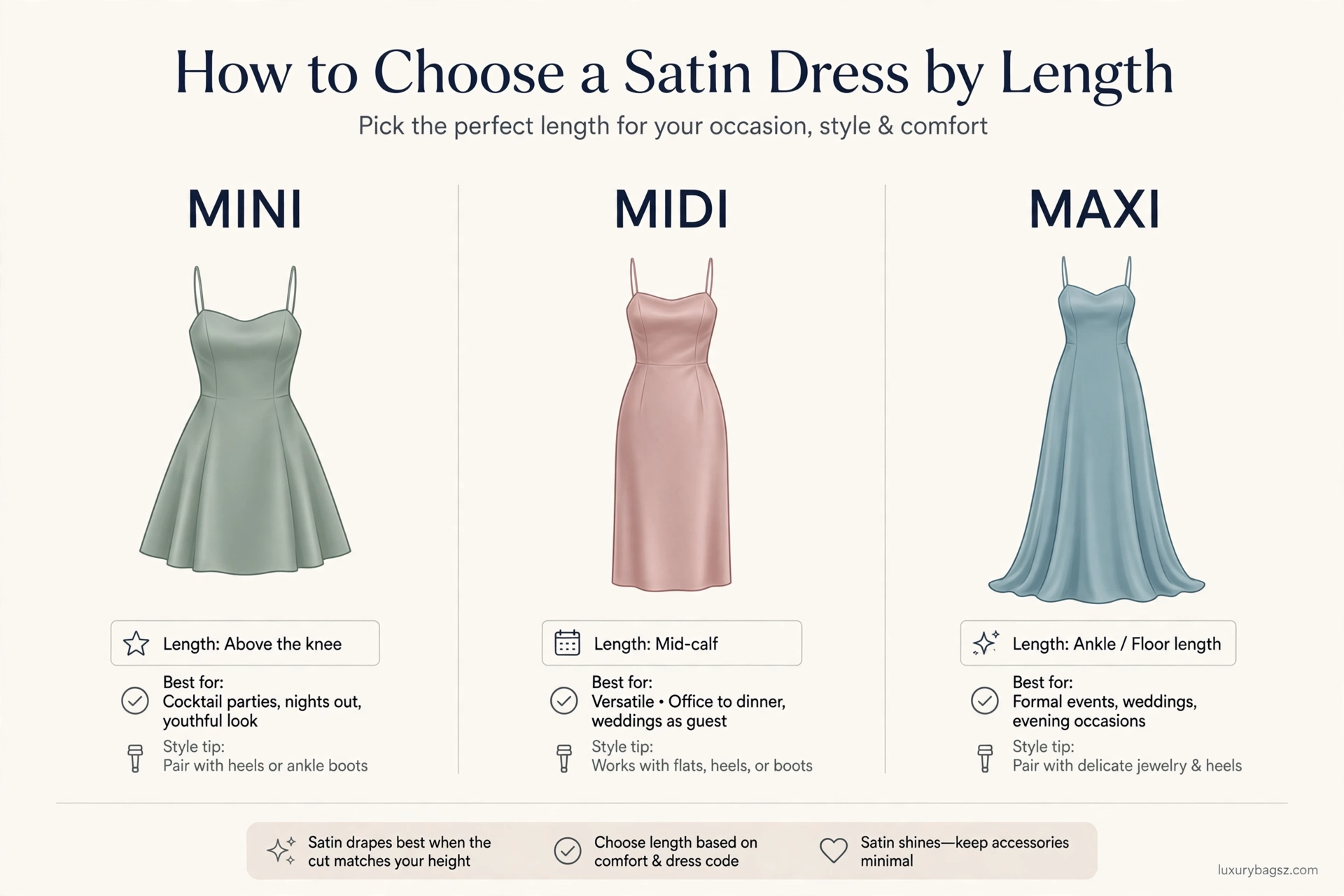
Start with a midi slip or bias-cut dress. The midi length suits weddings, dinners, offices, and evenings without needing a change of shoes, and the bias cut skims rather than grips. A-line satin dresses suit those who prefer more structure and more coverage around the hips.
Mini satin dresses read younger and more party-focused, while maxi satin dresses read formal and dramatic. Both are lovely second purchases, but neither covers as many occasions as a midi. If you buy only one, buy the midi and let the styling do the rest.
Colour decides how often you will reach for it. Black is the safest first choice, working for evenings, weddings, and smart days. Champagne, navy, and deep green follow, each offering a softer or richer alternative that still pairs with neutral shoes and bags.
Prints deserve caution with satin. The sheen already adds visual interest, so a loud print can overwhelm the drape and date quickly. If you love print, choose a small, muted pattern and keep accessories plain, so the fabric, not the pattern, leads the outfit.
Styling Satin for Daytime Without Looking Overdressed
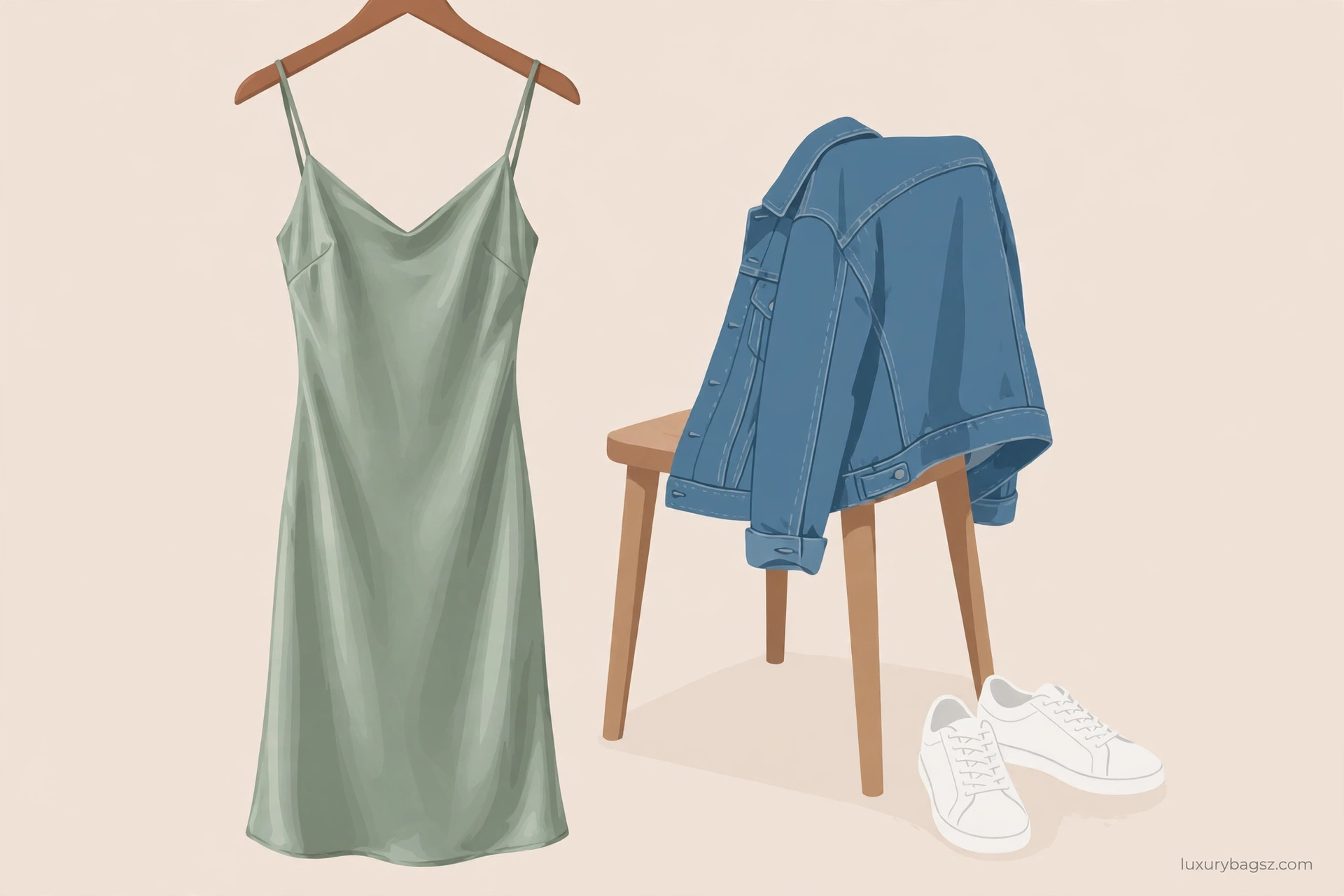
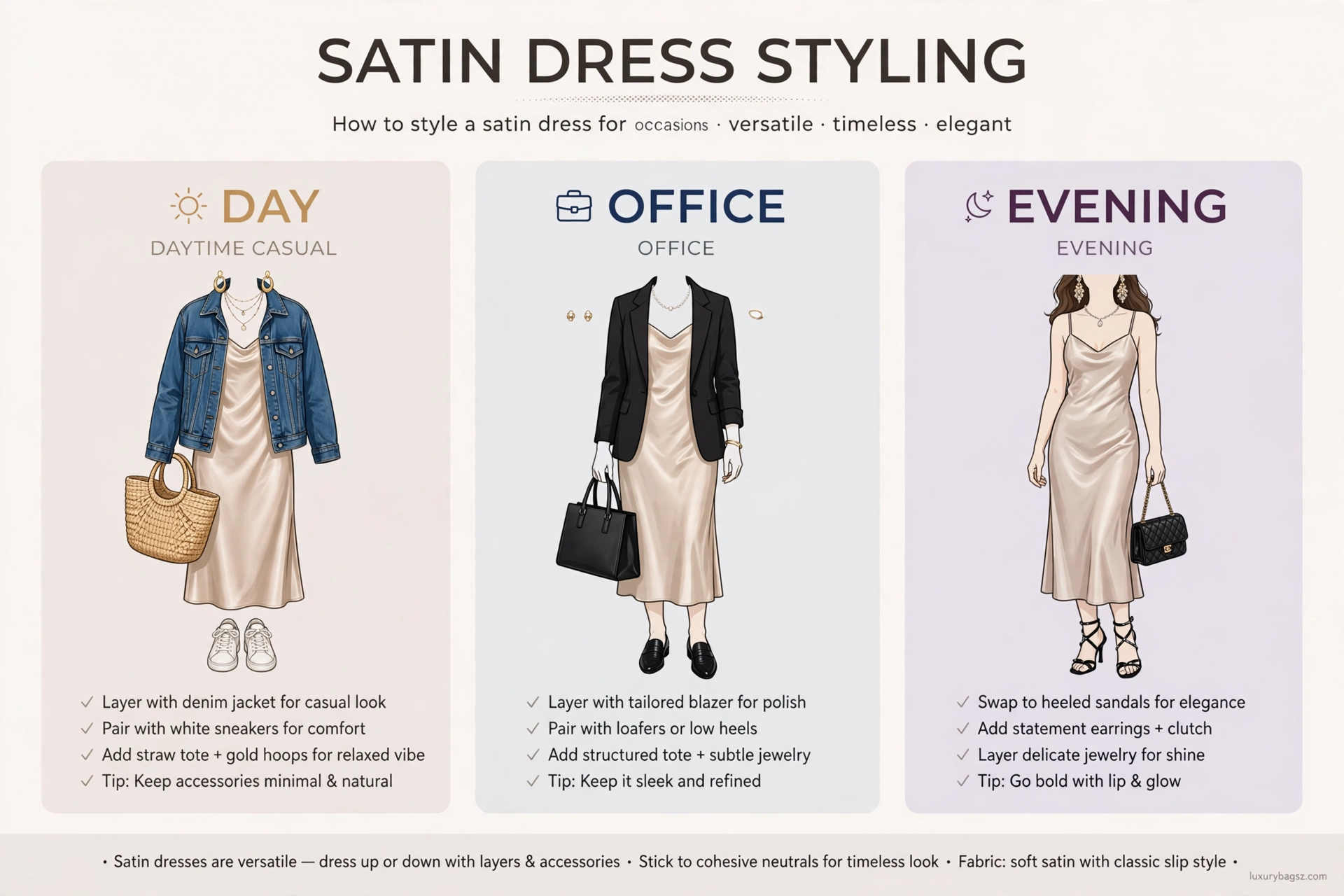
The daytime rule is texture contrast: break up the shine with something matte and casual. Trainers and a denim jacket turn a satin slip dress into a weekend outfit, while a chunky knit over the top makes it work for cooler days and coffee runs.
Footwear sets the tone fastest. White trainers, flat sandals, or simple loafers pull satin towards casual, while heels push it towards evening. If the outfit still feels too dressed up, swap the shoes first before changing anything else, since shoes carry the occasion signal.
Layers need the same thinking. An oversized blazer, a linen shirt worn open, or a light knit all soften satin without hiding it. Avoid bulky, stiff layers underneath, which bunch and crease the fabric, and avoid shiny layers on top, which double the gloss and look costume-like.
Keep jewellery light in the daytime. Small hoops, a fine chain, or a simple bracelet suit satin at this level, while statement pieces wait for evening. The fabric already catches the eye, so daytime accessories should support it, not compete with it.
Evening, Weddings, and Dressier Occasions
For evening, let the satin lead. Strappy heels, a structured clutch, and one considered jewellery piece are enough, and the dress will look complete without a jacket. A tailored coat or a fine wrap covers the journey without crushing the fabric the way a heavy coat can.
Wedding guest dressing follows the same logic with one extra check: the dress code and the colour rules of the day. A midi or floor-length satin dress in a muted or rich tone suits most weddings, but white, ivory, and anything close to the bridal party's colour should be avoided unless the invitation says otherwise.
Bag choice matters more with satin than with matte fabrics, since a soft, slouchy bag can drag the outfit down. A structured clutch or a small top-handle bag keeps the look polished, and our guide to designer handbag styles helps narrow the shape that suits the dress length and occasion.
For formal dinners and celebrations, deeper colours earn their keep. Emerald, burgundy, and navy satin read luxurious under evening light, while pale champagne and blush suit summer evenings and outdoor events. Match metal tones to the dress: gold warms champagne and burgundy, silver suits navy and cool greys.
Office, Travel, and Making One Dress Work Harder
Satin can work in the office if the styling stays restrained. A midi satin dress under a tailored blazer, with closed-toe shoes and minimal jewellery, reads polished rather than party-ready. Keep the neckline modest and the colour muted, and the sheen becomes an asset rather than a distraction.
Travel is where satin quietly wins. It packs small, resists deep wrinkling better than linen, and shakes out well on arrival if hung promptly. Roll rather than fold where possible, hang the dress as soon as you arrive, and let bathroom steam ease out any light creases before you wear it.
Cost per wear is the real argument for staple status. A satin dress worn to a wedding, three dinners, two office days, and a weekend lunch costs far less per outing than an occasion-only gown worn once. That maths only works if the dress is versatile, which is why the first buy should be a plain midi in a neutral or deep colour.
Pre-owned shopping stretches the value further, especially for silk satin, which can be costly new. Check seams, straps, and lining, ask for photos in natural light, and remember that satin shows wear honestly. Our guide to buying secondhand designer pieces covers the checks that matter most for special fabrics.
Fit, Underwear, and Care Checks That Save the Dress
Fit with satin is unforgiving, so try before you buy where possible. The dress should skim, not grip, across the hips and waist, and the straps should stay put without digging. If you need to size up for comfort, do so: a slightly looser satin dress drapes better than a tight one that pulls.
Underwear makes or breaks a satin outfit. Seamless, nude-toned pieces disappear under the fabric, while dark or textured underwear shows through lighter satins. For bias-cut styles, a smooth slip or shapewear layer can help the dress fall cleanly, but avoid anything bulky that creates lines of its own.
Static is the most common complaint, and it is fixable. A light fabric spray, natural-fibre layers such as cotton or linen, and avoiding synthetic tights all reduce cling. In dry weather, a quick pass with a damp hand over the skirt can settle the fabric before you head out.
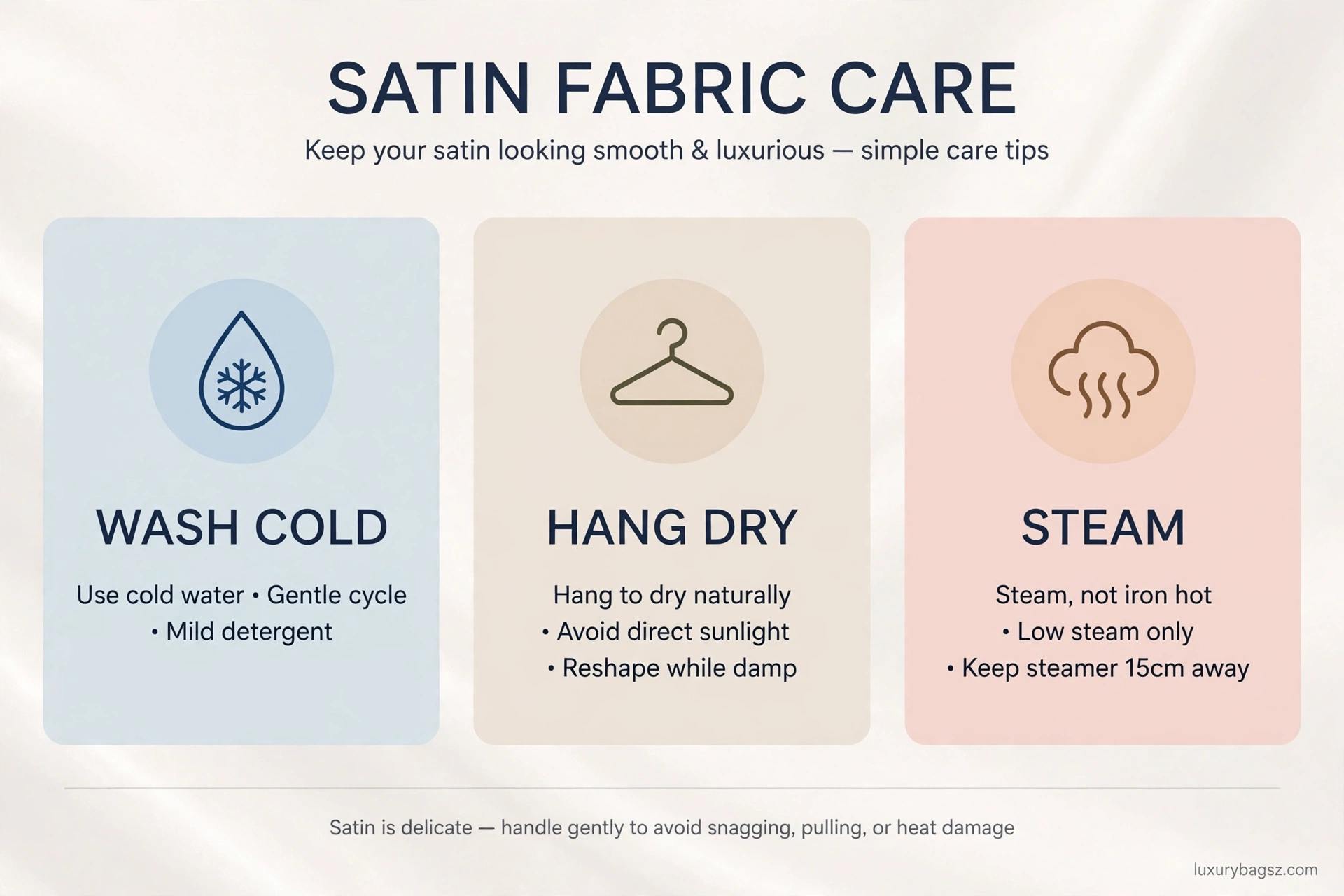
Care keeps the sheen alive. Wash cold on a gentle cycle or hand-wash, hang dry away from direct heat, and steam rather than ironing hot, since high heat can mark satin permanently. Store the dress hanging, not folded under heavy items, and keep it away from sharp jewellery that can snag the weave.
Mistakes to Avoid, and When Satin Is the Wrong Choice
The biggest mistake is buying satin that is too tight, too light, or too shiny for the occasion. Cheap, very shiny polyester satin can look costume-like in daylight, while a well-weighted satin in a muted colour looks expensive at any price. Fabric weight and colour matter more than the label.
Rainy days without cover are another trap. Satin spots in rain, so carry a coat or umbrella if showers are forecast, and let the dress dry evenly rather than dabbing one spot, which can leave a ring. For a full day outdoors in uncertain weather, a matte fabric is the safer pick.
Satin is also the wrong choice for very physical days. Hiking, long market walks with a heavy bag, and days spent sitting on rough surfaces will crease and stress the fabric. Save satin for days where the dress can move freely and the bag strap will not grind the same spot for hours.
Finally, do not over-accessorise. Satin plus statement earrings plus a bold necklace plus a bright bag plus patterned shoes is too many focal points at once. Pick one hero besides the dress, keep the rest quiet, and let the fabric carry the outfit.
Frequently Asked Questions
Can you wear a satin dress casually?
Yes. Pair it with trainers and a denim jacket, or layer a chunky knit over it, and the matte textures pull the sheen down to daytime level. Keep jewellery small and shoes simple.
Can you wear a satin dress to a wedding?
Yes, in most cases. Choose a midi or floor-length style in a muted or rich colour, respect the dress code, and avoid white, ivory, or the bridal party's colour unless the invitation says otherwise.
Is satin hard to care for?
It needs a little attention but is not difficult. Wash cold, hang dry, steam rather than ironing hot, and store it hanging. High heat and rough handling are the main risks to the sheen.
Does satin suit all body types?
Satin suits many shapes when the cut is right. Bias-cut and A-line styles skim rather than grip, and a medium fabric weight drapes better than a very light one. Fit matters more than body type.
What shoes go with a satin dress?
Strappy heels for evening, pointed flats or loafers for smart days, and white trainers or flat sandals for casual days. Shoes set the occasion faster than any other styling choice.
How do you stop static on a satin dress?
Use a light fabric spray, pair satin with natural fibres such as cotton or linen, and avoid synthetic tights. A quick pass with a damp hand can also settle cling before you go out.
Can you wear a satin dress in winter?
Yes. Layer it over a light turtleneck, add tights and ankle boots, and top it with a tailored coat. Darker satin colours suit winter best, and the coat protects the fabric outdoors.
Is silk satin better than polyester satin?
Silk satin drapes and breathes better and usually looks more refined, but it costs more and needs gentler care. Polyester satin is cheaper and tougher, though it can build static and look shinier.
What bag goes with a satin dress?
A structured clutch or small top-handle bag suits evening and weddings, while a neat crossbody works for daytime. Avoid soft, slouchy bags for dressier occasions, since they drag the outfit down.
Can you machine wash a satin dress?
Many polyester satin dresses can be machine washed cold on a gentle cycle, but silk satin is safer hand-washed. Always check the care label first, and hang dry rather than tumble drying.
Final Verdict
A satin dress is a staple because it multiplies outfits instead of adding a single occasion look. Choose a plain midi in a versatile colour, learn the daytime trick of matte texture contrast, keep evening styling simple, and care for the fabric properly. Do that, and one dress will cover weddings, dinners, office days, and weekends with nothing more than a change of shoes and layers.