Best Jacket for Your Body Type: Blazers, Trenches and Bikers by Shape
Jackets by Shape: Length First, Style Second
The jacket that fits your body type best is decided by length and shoulder line first, style second: cropped lengths lift shorter and straighter frames, belted lengths define a waist, and open long lines slim a fuller middle.
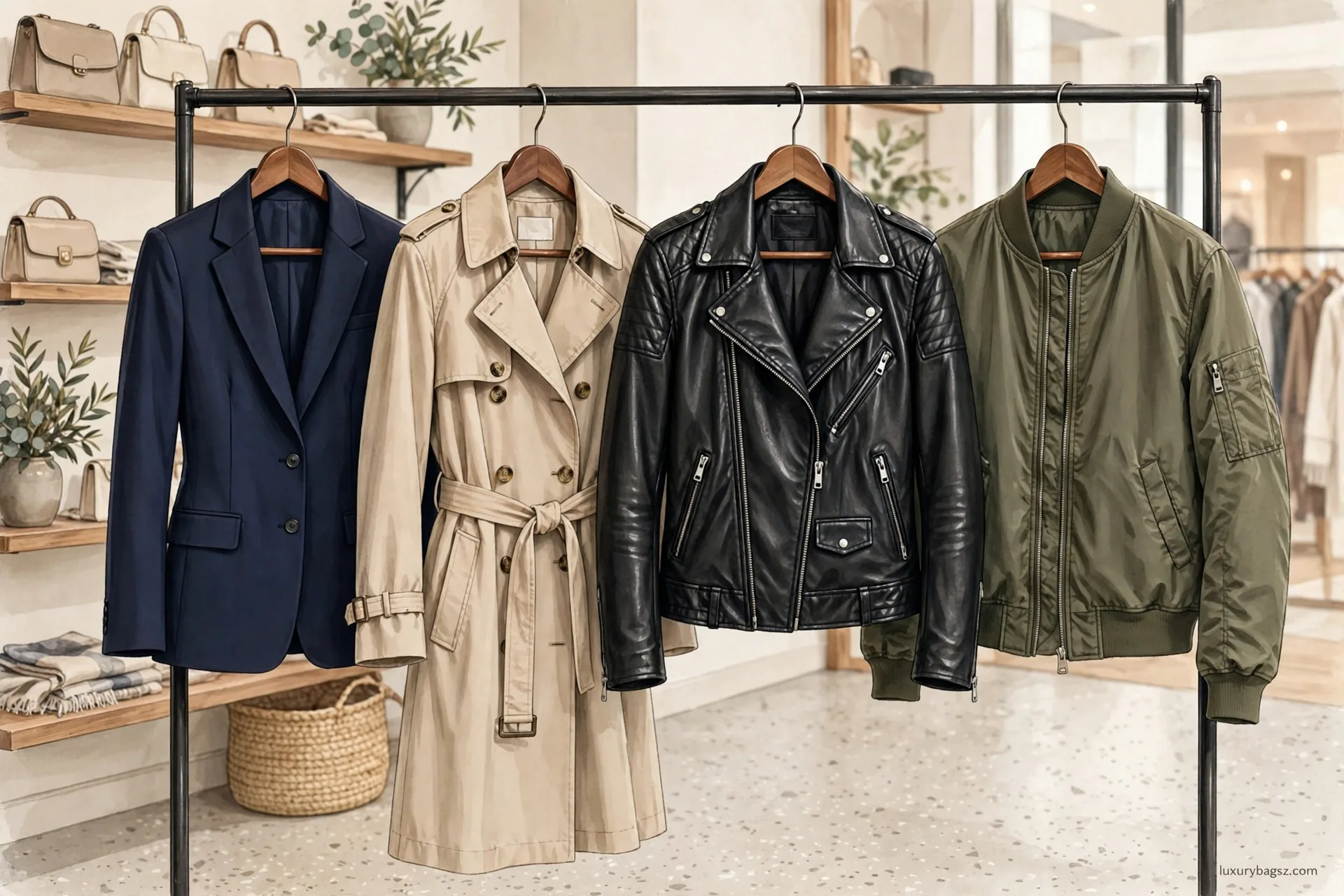
Blazer, trench, biker, bomber and denim jackets each have a natural shape partner. Match the jacket's built-in lines to yours and most styles will work.
This guide stays jacket-specific. For the full wardrobe picture, it builds on the general shape guide linked in the first part below.
Key Takeaways
- Decide length before style: cropped, waist, hip or long each flatter different shapes.
- Pear shapes: shoulder structure and hems above the hip. Apple shapes: open, straight lines.
- Rectangle shapes need a belted or peplum waist; hourglass shapes need a waist that follows theirs.
- Inverted triangles want slim shoulders and no shoulder detail; petites want cropped, neat fits.
- Shoulder seams must sit on your shoulder bone — no styling fixes a wrong shoulder.
- Try jackets buttoned and moving, not just posed in the mirror.
Start From Your Shape, Then Pick the Jacket
Jackets impose their own outline on yours, more than almost any other garment. That is why the match matters so much here.
If you have not placed your shape yet, our how to dress for your body shape guide gives the two-minute mirror method and the five shapes used below.
Note your waist as well as your widths. Whether a jacket should belt, skim or hang open depends mostly on that one feature.
Height counts too. The same trench that elongates a tall frame can drown a petite one, whatever the shape match says.
Budget follows the same logic. Spend on the jacket shape you will wear weekly, in the best cloth you can, rather than splitting the money across novelties.
Climate counts as well: a perfect shape in a cloth that is wrong for your weather will still stay in the wardrobe.
Pear Shapes: Structure on Top, Hem Above the Hip
Your jacket should add presence at the shoulders and stop above your widest point. Cropped blazers, bikers and short trenches do this naturally.
Shoulder seams with slight structure, neat lapels and chest-level detail all widen the top half visually to balance the hips.
Avoid hems that end mid-hip and pockets that flap at hip level. Both underline exactly the area you are balancing.
Worn open, a waist-length jacket creates two vertical lines that slim the whole outline. It is the easiest pear-shape formula.
Denim jackets in a short cut are a pear-shape staple, provided the hem stops at the waist and the fit is neat, not boxy.
Prints and light colours belong on your jacket rather than your trousers. The eye goes to the jacket first, which is exactly the balance you want.
A structured shoulder does not need padding: a well-cut seam and a firm cloth achieve the same widening line.
Apple Shapes: Open Lines and Length Past the Middle
Straight, single-breasted jackets worn open are your strongest style. The open front draws a long vertical line through the middle.
Choose lengths that clear the fullest point — just below the hip, or a longer duster line that skims past it entirely.
Skip belts, tight buttoning and cropped cuts that end at the middle. A jacket buttoned under strain helps no shape, and yours least of all.
Fluid fabrics with some weight drape best. Very stiff cloth tents away from the body and adds visual width.
Longline blazers worn open are the polished version of this formula for work. The lapels draw two straight lines past the middle.
Knit jackets and soft, unlined cuts skim kindly where stiff tailoring would stand away from the body and add width.
Rectangle and Hourglass: The Waist Decides
Rectangle shapes should look for jackets that draw a waist: belted trenches, peplum blazers and wrap jackets all build the curve in.
The video pick for this article shows exactly this logic on a blazer cut for a straighter frame, with the waist shaped rather than hidden.
Hourglass shapes need the opposite discipline: the waist must follow yours. Belted and fitted jackets flatter; boxy cuts waste your best line.
Both shapes should avoid shapeless oversized jackets worn closed. Worn open as a layer, the same jacket can still work.
For hourglass shapes, watch the button stance: a single button at the natural waist flatters most; buttons placed high or low fight the curve.
Rectangle shapes can also borrow the shirt-jacket trick — a belted overshirt worn as a jacket draws the same waist line in a casual register.
Wrap jackets deserve a fitting note: tie them at the true waist, not where the ties happen to fall on a taller cut.

Inverted Triangle and Petite Frames
Inverted triangle shapes need slim, clean shoulders: raglan sleeves, no epaulettes, no padding, and darker colours on top.
A-line and slightly flared hems add the hip volume that balances your shoulders. Single-breasted, low-buttoning cuts lengthen the torso line.
Petite frames of every shape want cropped or waist lengths, narrow lapels and sleeves that end at the wrist without bunching.
Scale down details as well as length: small buttons, slim belts and neat collars keep a jacket in proportion to a smaller frame.
Petite shoppers should check where a standard jacket's waist falls on them. If it lands at the hip, the jacket is cut for a taller torso.
Inverted triangle shapes suit wrap jackets worn tied, because the diagonal line breaks the shoulder width the way a V neck does.
For petites, bracelet sleeves that show the wrist make standard jackets look intentionally cropped rather than too long.
The Five Jackets, Matched
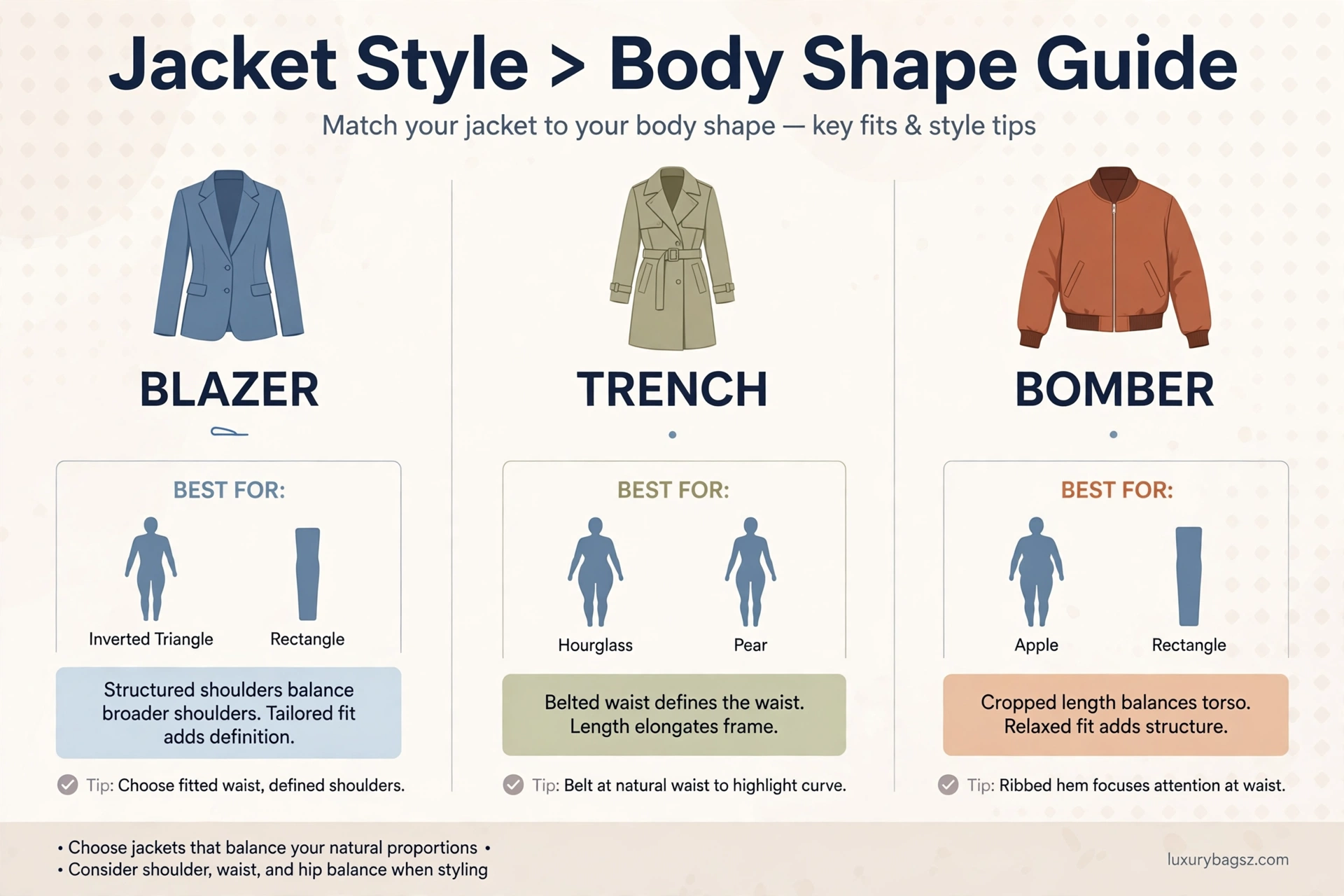
Blazers: best for rectangle and inverted triangle shapes when tailored, and for pear shapes when cropped. The shoulder line does the work.
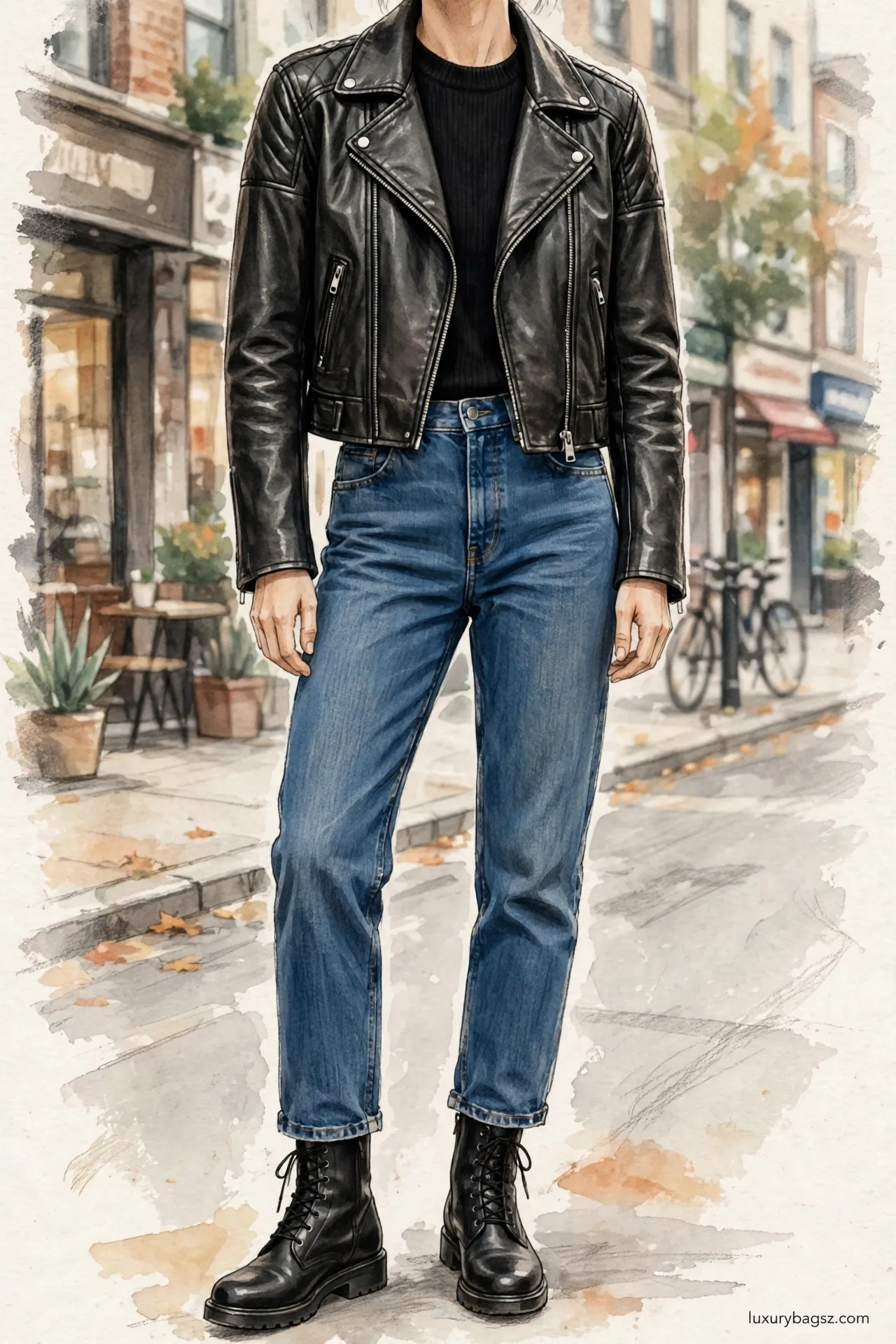
Our dedicated edits go deeper on two staples: designer denim jackets for the cropped, structured end, and designer leather jackets for biker and moto cuts.
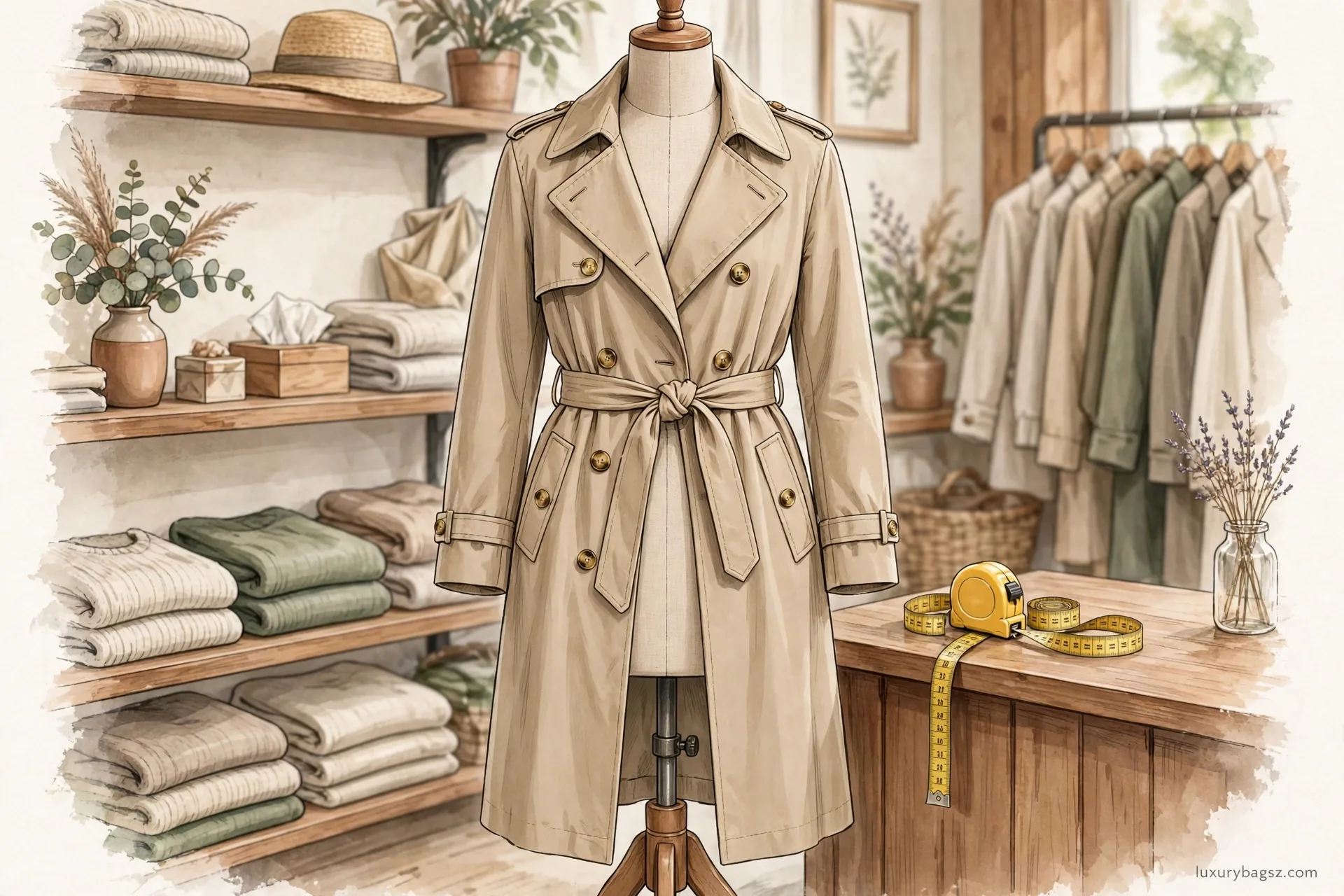
Trenches: the universal belted option, kindest to rectangle and hourglass shapes. Bombers add top volume, suiting pear and rectangle shapes best.
Denim jackets crop naturally at the waist, which lifts petite and pear shapes. Long duster jackets flatter tall and apple shapes worn open.
Utility and field jackets sit between blazer and bomber: belt them for rectangle shapes, wear them open and long for apple shapes.
Padded and quilted jackets add volume everywhere. Pear and rectangle shapes can use that volume up top; apple and inverted triangle shapes should choose slimmer quilting.
Length Guide: Cropped, Waist, Hip and Long
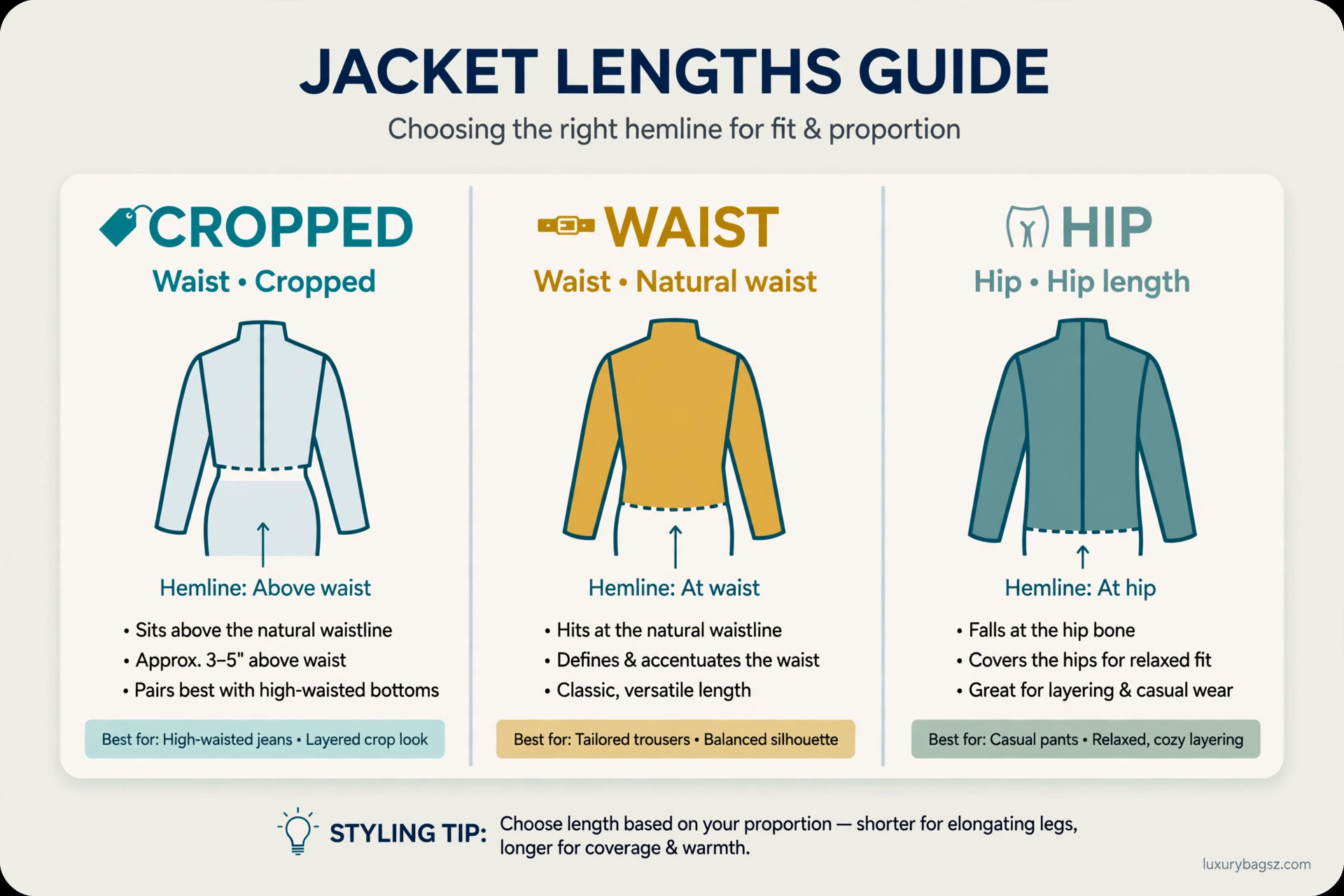
Cropped jackets end above the waist and raise the leg line. They flatter petite, pear and rectangle shapes and high-waisted outfits.
Waist-length jackets are the classic balance point and suit most shapes, especially with a shaped or belted front.
Hip-length jackets add coverage and suit apple and inverted triangle shapes best, provided the hem clears or fully passes the hip.
Long jackets and dusters create one vertical sweep. Tall frames carry them closed; shorter frames should wear them open over a defined waist.
The hem test is simple: stand sideways in a mirror. The most flattering length either clearly shows your waist or clearly passes your fullest point — the muddle is in between.
Sleeve length can cheat proportion too: a slightly cropped sleeve with a high-waisted bottom lengthens the whole look.
Double-breasted cuts widen the torso visually; single-breasted cuts lengthen it. Choose by what your shape needs.
Fit Checks Before You Buy
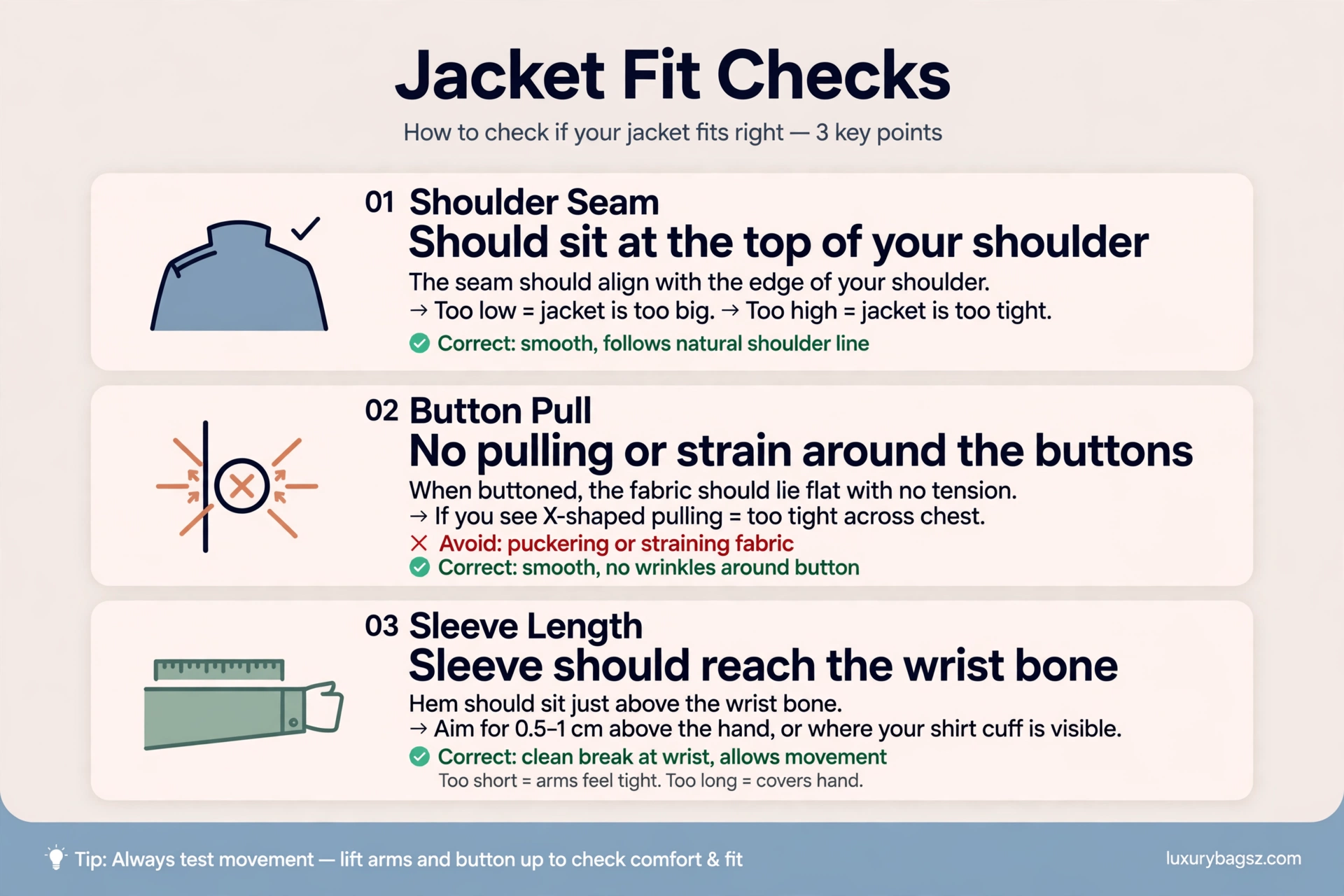
Shoulder seam on the shoulder bone, sleeves to the wrist bone, and buttons that close without pulling: these three checks decide fit.
Sit, drive and reach overhead in the jacket. A blazer that only works standing still will live in the wardrobe, not on you.
Warmth is part of fit for winter styles; our answers on are leather jackets warm explain lining and layering room for the coldest months.
Allow alteration budget for sleeves and waist. Jackets respond well to tailoring, and a nipped waist can convert a near miss into your best piece.
Check the back view. A jacket that fits the front but pulls across the shoulder blades or rides up at the back hem will annoy you daily.
Linings matter for layering: a smooth lining slides over knitwear, while a brushed lining grips it. Match the lining to what you wear beneath.
Photograph the jacket from the side as well: many fit faults — a swinging hem, a collapsing collar — only show in profile.
Frequently Asked Questions
What jacket suits a pear shape best?
A cropped or waist-length jacket with some shoulder structure, ending above the hip. Worn open, it balances the hips and shows the waist.
Are belted jackets good for apple shapes?
Generally no. Belts and tight buttoning cut across the fullest point. Straight, single-breasted jackets worn open flatter an apple shape far more.
Which jacket creates a waist on a rectangle shape?
Belted trenches, wrap jackets and peplum blazers. Anything with a drawn-in or shaped waist builds the curve a straight frame needs.
Can petite women wear long jackets?
Yes, worn open over a defined waist, with the rest of the outfit in one colour family. Closed and belted long coats are the harder version to carry.
What jacket length is most universal?
Waist length. It balances most shapes, pairs with dresses and trousers, and avoids both the cropped and long extremes.
Should an hourglass shape wear oversized jackets?
Worn open as a loose layer, yes. Worn closed, oversized cuts hide the waist and add bulk at both halves, wasting the shape's natural balance.
How should jacket shoulders fit?
The seam should sit on the edge of your own shoulder. Dropping below it looks sloppy; sitting inside it pulls and restricts movement.
Are bomber jackets flattering?
On pear and rectangle shapes, yes: the cropped length and top volume balance hips and add shape. Apple shapes usually do better with straighter, open styles.
What colour jacket goes with everything?
Black for tailoring, tan or stone for trenches, and dark denim for casual wear. Choose by the bottoms you wear most, not by the jacket alone.
Is a trench coat a jacket for all shapes?
Nearly. Belted for rectangle and hourglass shapes, open for apple shapes, cropped for petites and pear shapes. The cut variations make it the most adaptable style.
Summary: Match the Lines, Then the Style
Pick length by shape, keep the shoulder seam honest, and let belts appear only where a waist wants marking. With those three calls made, blazer, trench, biker or bomber becomes a matter of taste.
Try every candidate buttoned, seated and moving. The right jacket feels easy in all three, and that ease is what flattering really looks like.