

Designer Skirts: Lengths, Shapes, Fabrics and How to Wear Them Well
The Skirt Shortlist: Length First, Then Shape
The right designer skirt is decided by two things: where the hem lands and how the cloth moves. Get the length right for your height and your day, then pick a shape — pencil for polish, pleats for movement, satin for evening, A-line for ease. A midi in a good fabric is the safest first buy. It works with flats, boots and heels, in the office and out of it, and it is the length least likely to date while trends spin around it.
Key Takeaways
- Length first: midi flatters most heights; mini needs confidence; maxi needs a shoe plan.
- Pencil skirts are for polish, pleats for movement, satin for evening, A-line for comfort.
- The waistband decides comfort — sit down in every skirt before you pay for it.
- Fabric weight matters: a skirt should fall, not cling, unless it is cut to cling.
- Designer prices buy cut and finishing: linings, clean hems and pleats that stay pleated.
- One great midi plus one satin skirt covers most wardrobes' real needs.
The Four Shapes Worth Owning
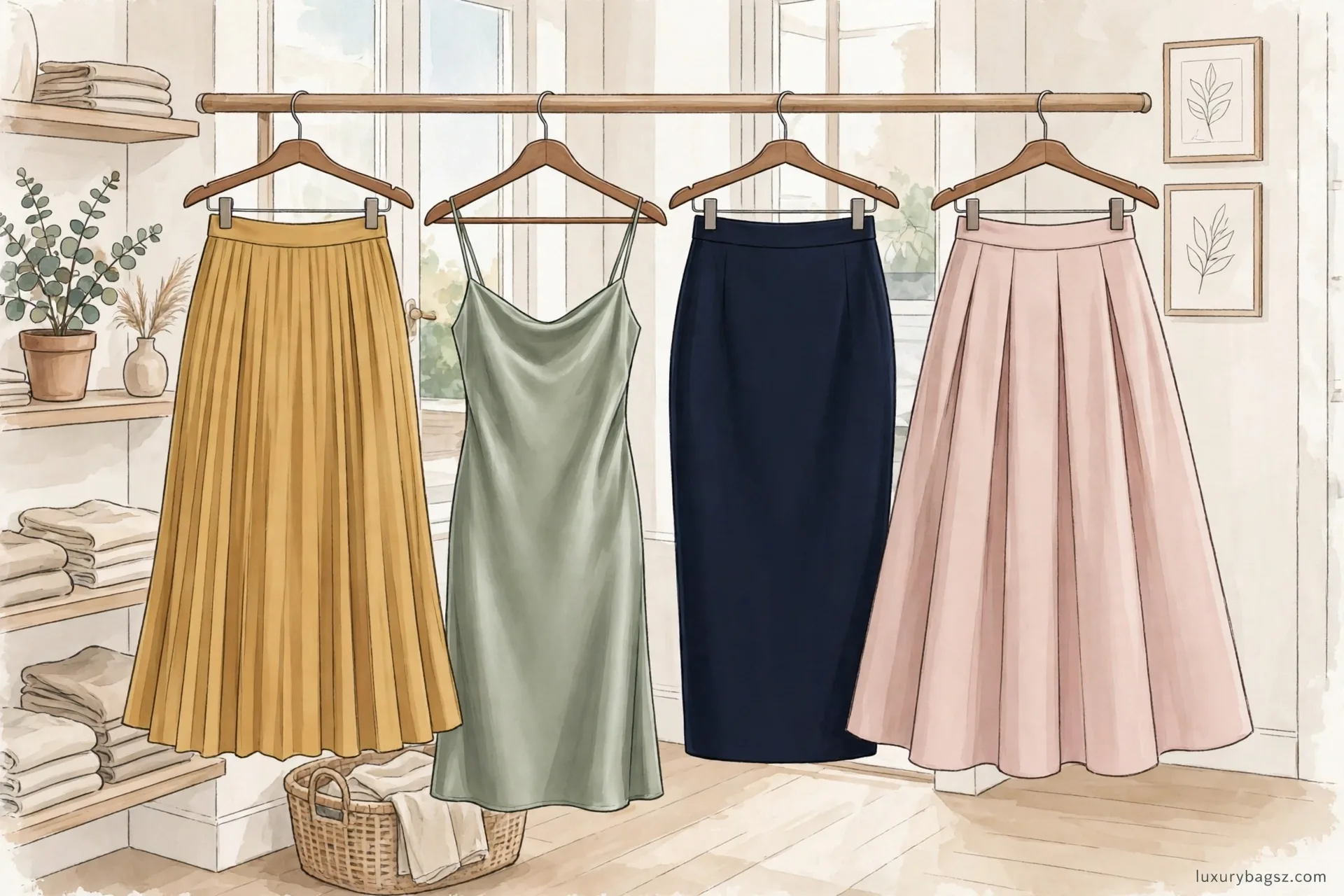
The pencil skirt is the tailored one: straight, close and calm. It is the office standard and the shape that shows fit faults fastest, so the cloth must have body and the seams must be straight. The pleated skirt is the mover. Knife pleats in a light fabric swing when you walk and forgive a long day of sitting, eating and standing better than any fitted shape. The satin slip skirt is the evening convert: a bias-cut column that dresses up a knit and dresses down a blazer. The A-line is the diplomat, skimming hips and suiting almost everyone. Wrap skirts deserve a mention for anyone whose waist changes across the month. A true wrap adjusts with you, which is why it survives in wardrobes long after fixed-waist styles have been given away.
Lengths: Mini, Midi, Maxi
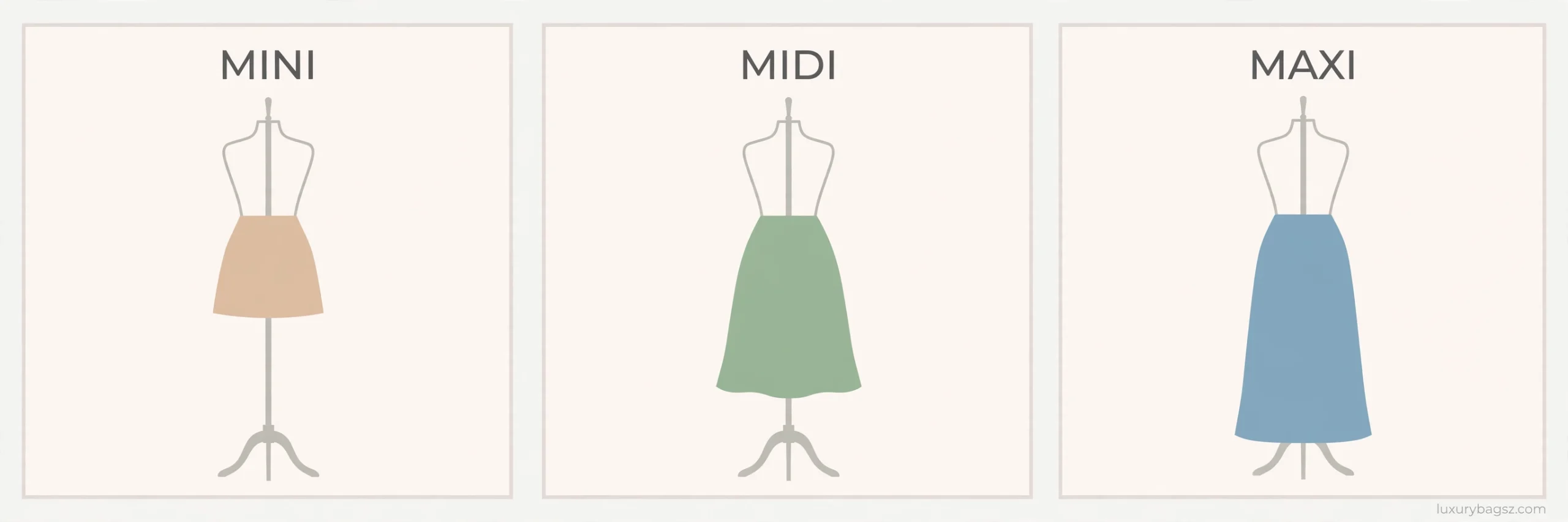
Mini means above the knee, typically by a hand's width or more. It works best in structured fabrics that hold their own line, and it asks for flatter shoes to stay elegant. Midi runs from just below the knee to mid-calf and is the most useful length ever cut. It is also the length that pairs with every fabric in designer cotton clothing for summer when the weather turns warm. Maxi reaches the ankle and needs intent: a shoe with some height or a deliberate flat sandal, and enough fabric weight that the hem sweeps rather than tangles. Knee-length sits in its own quieter category: formal, safe and due a revival. In a good fabric it is the length that never needs explaining in a conservative office or at a family event.
Matching Length to Height and Day
Petite frames usually suit a midi that ends just below the knee or a maxi with a high waist; a mid-calf hem can cut the leg line in the wrong place and shorten the whole look. Taller frames carry mid-calf and true maxi lengths easily, and can wear lower waists without losing proportion. Everyone should photograph a new length from the side before keeping it. Think about the day, too. A desk day wants a skirt you can sit in for six hours; a standing, walking day forgives almost any shape you love.
Fabrics: What Falls, What Clings
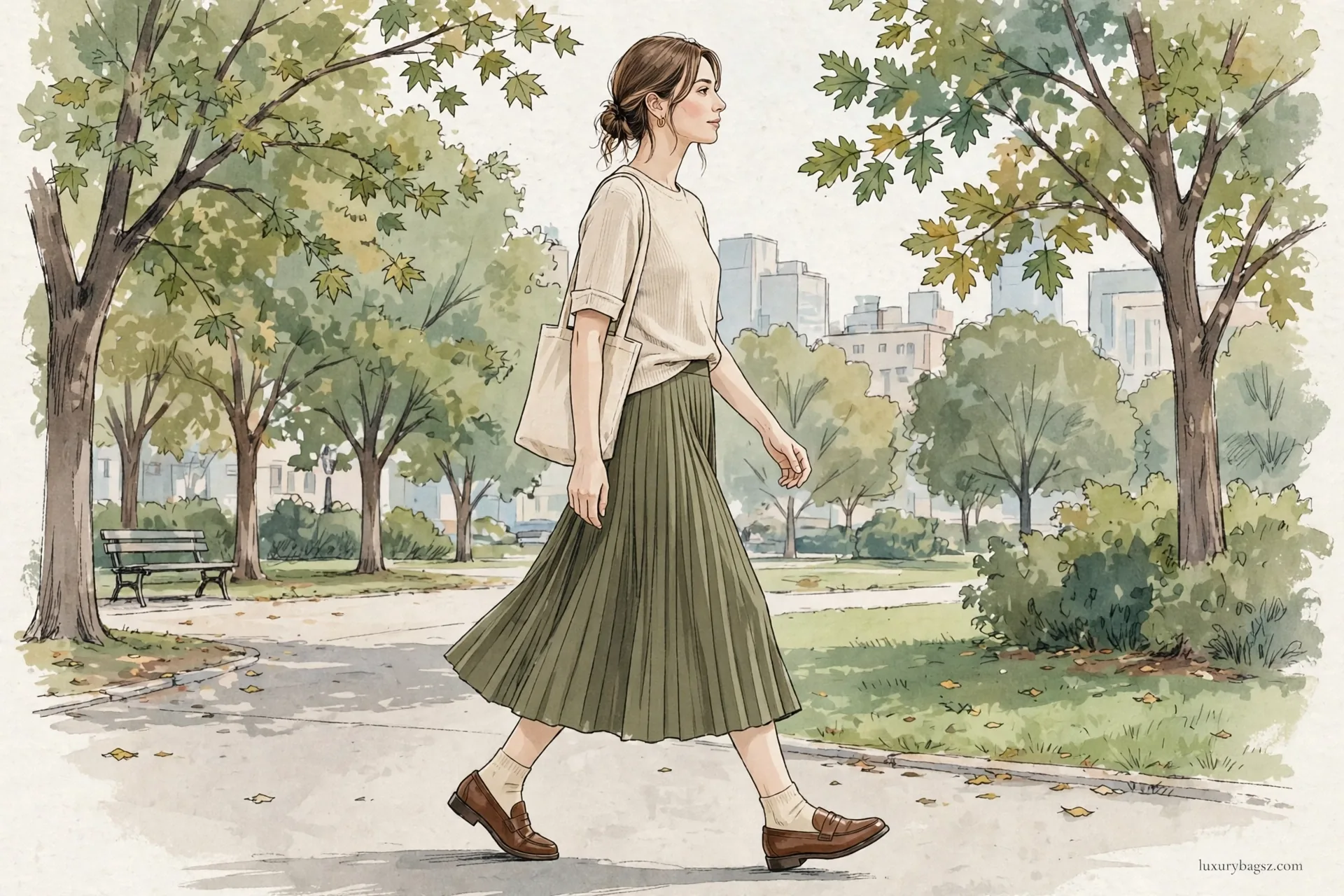
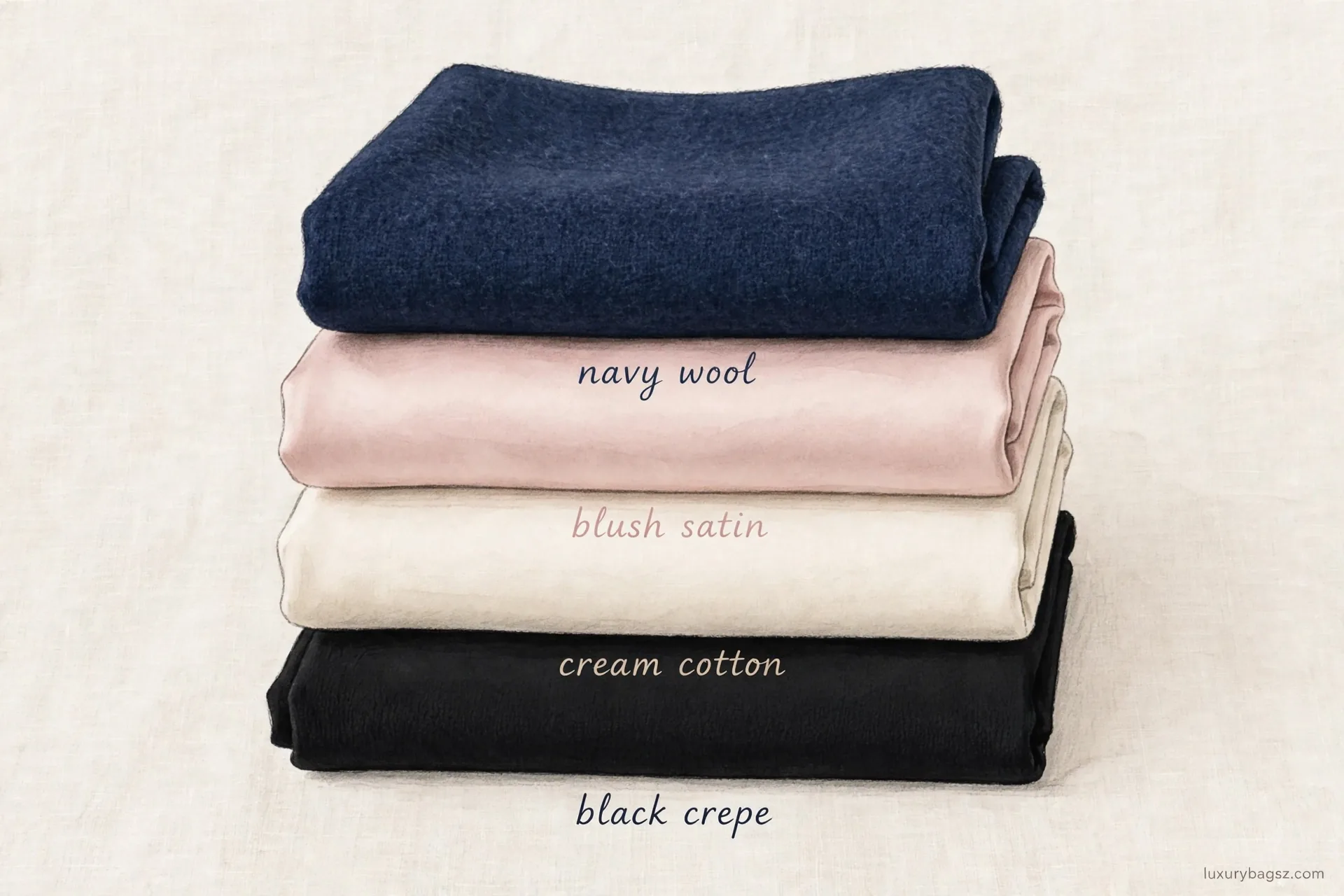
Wool crepe and mid-weight twill fall cleanly and hold a pencil or A-line shape all day. They are the workhorses, and they travel without creasing into a map of your suitcase. Satin and silk blends pour rather than fall. On the bias they skim; cut straight, they show every line beneath, so the lining and your underwear both become styling decisions. Cotton and linen skirts breathe in summer but crease honestly. Pleated synthetics hold their pleats forever and shrug off rain, at the cost of a slightly less rich hand-feel. Leather and suede skirts sit at the investment end. They hold a pencil shape beautifully, age with character and demand specialist cleaning, so buy them only in colours you already reach for weekly.

Styling: Three Formulas That Never Fail
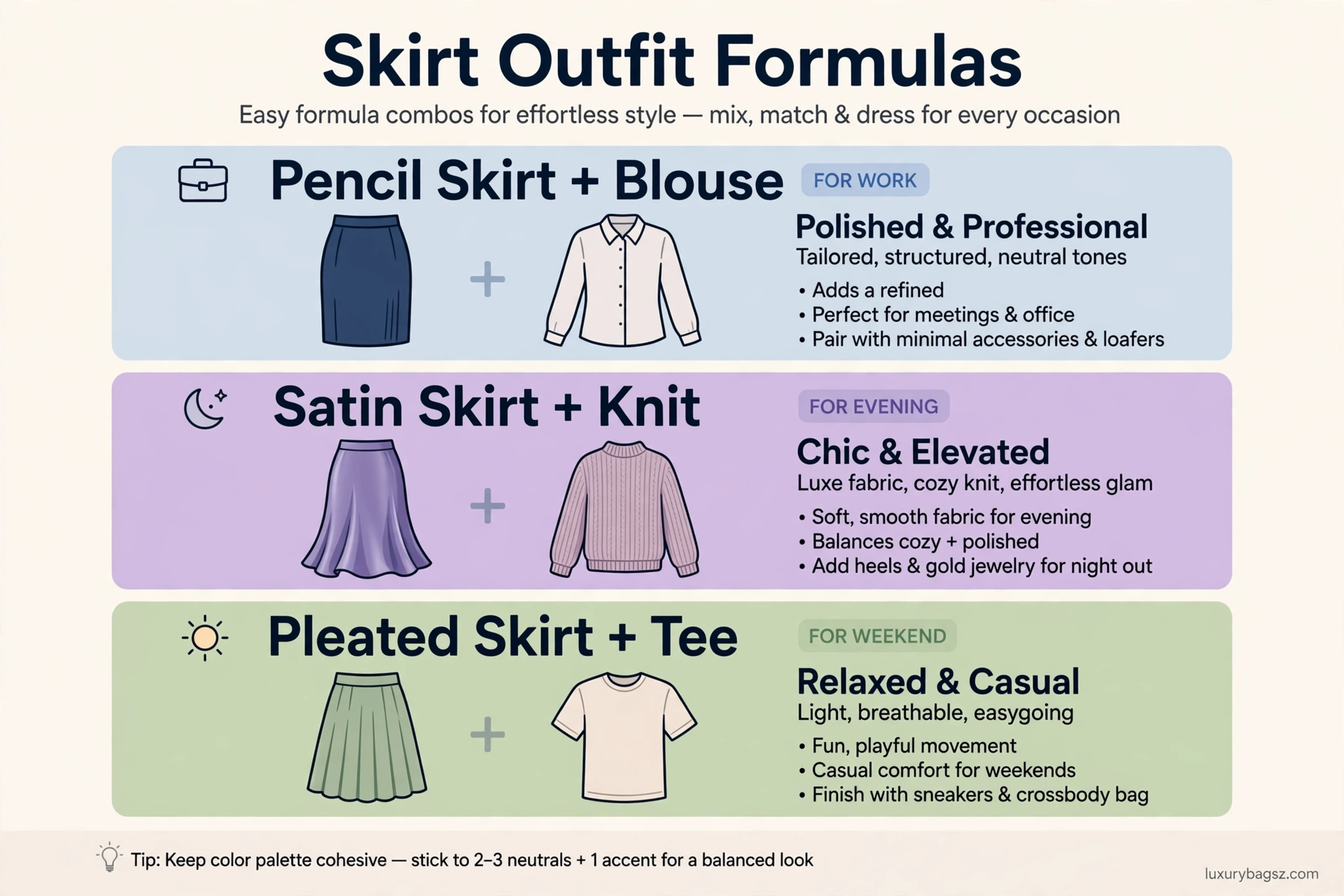
Work: pencil skirt, tucked blouse, loafers or a low heel. The tuck is the whole trick — it gives the skirt a waist and you a shape, and it takes four seconds. Evening: satin skirt, fine knit, heeled sandal. The story behind that pairing runs through why the slip dress became a 90s favourite, and the skirt version is its most wearable heir. Weekend: pleated skirt, plain tee, trainers or flat sandals. Keep the tee plain and the skirt the only pattern in the outfit, and the look stays grown-up. One more formula earns its keep in winter: midi skirt, fine roll-neck, tall boots. The boot fills the gap the hem leaves, so the outfit works in weather that defeats most dresses.
Fit Checks Before You Pay
Sit, climb an imaginary stair and bend to a low shelf in the fitting room. A skirt that passes all three without pulling, riding or flashing is a skirt you will actually wear. Check the waistband after a deep breath out. It should hold on the exhale, not only when you are standing tall and holding everything in for the mirror. Look at the hem from behind in a second mirror. Hems rise at the back on many bodies; a good tailor can level one, but you should know before the tags come off. Finally, check the zip and the lining together. The zip should run without a fight, and the lining should hang slightly shorter than the skirt so it never peeks below the hem when you sit.
Prices and Care
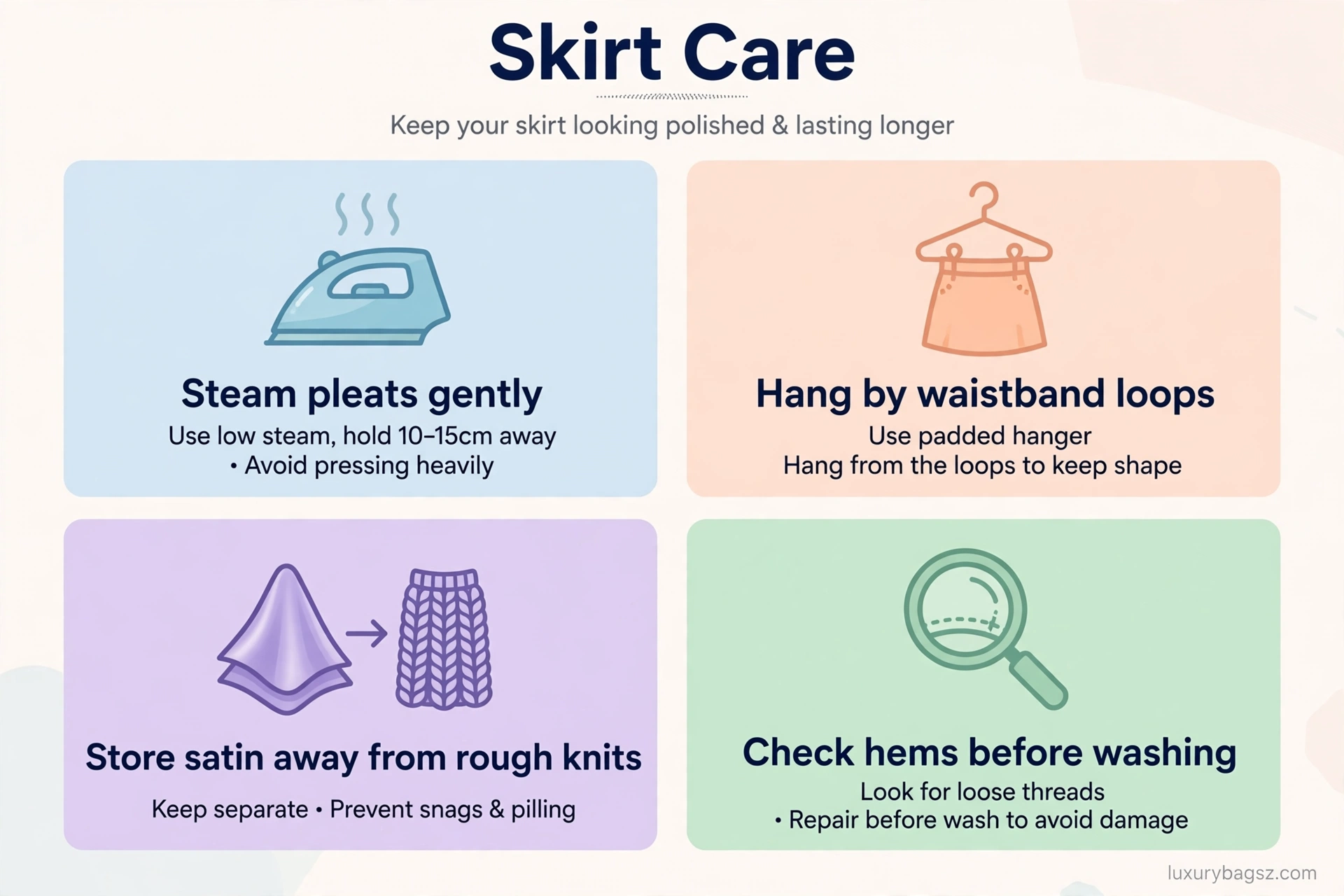
Expect typical designer skirts from around £130 to £450, with satin and silk at the top of that band and cotton or pleated styles lower. The money shows in lining, hemming and pleat setting. Steam pleats rather than ironing them flat, and hang skirts by their waistband loops so the weight hangs evenly. Satin should live away from rough knits that snag it. The fuller routine in how to care for designer clothing covers storage and stain first aid for every fabric named here.
Building a Small Skirt Rotation
Two skirts cover most lives: a midi in a dark, season-spanning fabric, and one lighter or brighter piece for evenings and summer. Add a third only when a real gap appears. Choose the dark one first and make it the best you can afford, because it will be worn weekly. Navy and charcoal beat black for daytime softness, though black wins after dark. Rotate tops, shoes and bags around the same two skirts and nobody will notice the repetition. Skirts are the quietest repeat offenders in a wardrobe — use that. Buy in the order of wear, not the order of excitement. The plain midi will clock up a hundred outings while the dramatic print is still waiting for its third, so it deserves the bigger share of the budget.
Frequently Asked Questions
Which skirt length suits most people?
Midi, ending just below the knee or at mid-calf. It balances most heights, works with most shoes and reads as intentional in almost every setting.
Are pleated skirts still in style?
Yes, in the way that matters: they return every few seasons and never fully leave. A mid-weight pleated midi in a plain colour is a safe long-term buy.
How do I stop a satin skirt clinging?
Wear smooth, seamless underwear, check the lining, and give the skirt a light steam before wearing. Static spray or a slip solves the worst cases on dry days.
What shoes go with a midi skirt?
Loafers, ballet flats, ankle boots and heeled sandals all work. The rule is proportion: the longer the skirt, the more a little height or a clean flat line helps.
Can I wear a mini skirt to work?
In most offices, no — or only with opaque tights, flat shoes and a covered top, in creative workplaces. A knee-length pencil is the safer professional bet.
Why do designer skirts cost so much more?
Cut, cloth and finishing. Linings, hand-levelled hems, pleats set to survive washing and waistbands built to sit properly all cost money to do well.
How should pleats be stored?
Hung by the waistband loops, uncrushed, with space around them. Never fold pleats into a drawer; the fold lines fight the pleat lines and both lose.
Which fabric is best for travel?
Pleated synthetic or wool crepe. Both resist creasing, pack small and recover with a bathroom steam rather than a hotel iron.
How do I know my skirt size across brands?
Measure your natural waist and hips and shop by centimetres, not dress sizes, which vary wildly between labels. The waistband measurement on the product page is the honest number.
Can a skirt be tailored?
Usually yes: hems, waistbands taken in and linings replaced are routine. Taking a skirt out is rarely possible, so buy for the largest measurement and tailor the rest.
Summary: Two Skirts, Well Chosen
Pick the length for your height and your day, the shape for the job, and the fabric for how it falls. A dark midi plus a satin or pleated second skirt, fitted at the waist and steamed rather than ironed, will out-dress a rail of impulse buys — and keep doing it for years.






