How to Clean Jewellery at Home: Gold, Silver, Diamonds, Pearls and Gemstones Done Safely
The Safe Method in Brief: Warm Water, Mild Soap, Soft Brush
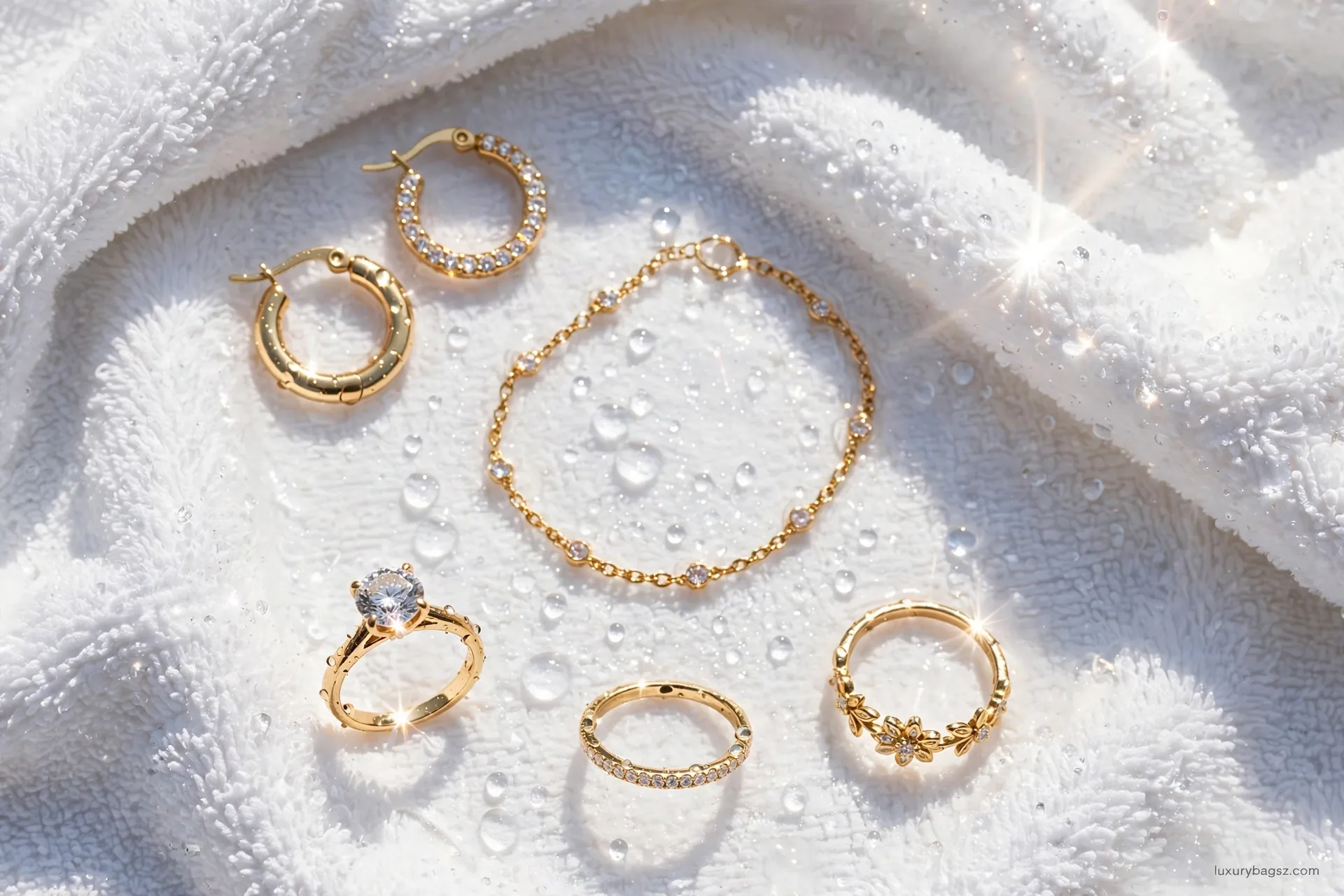
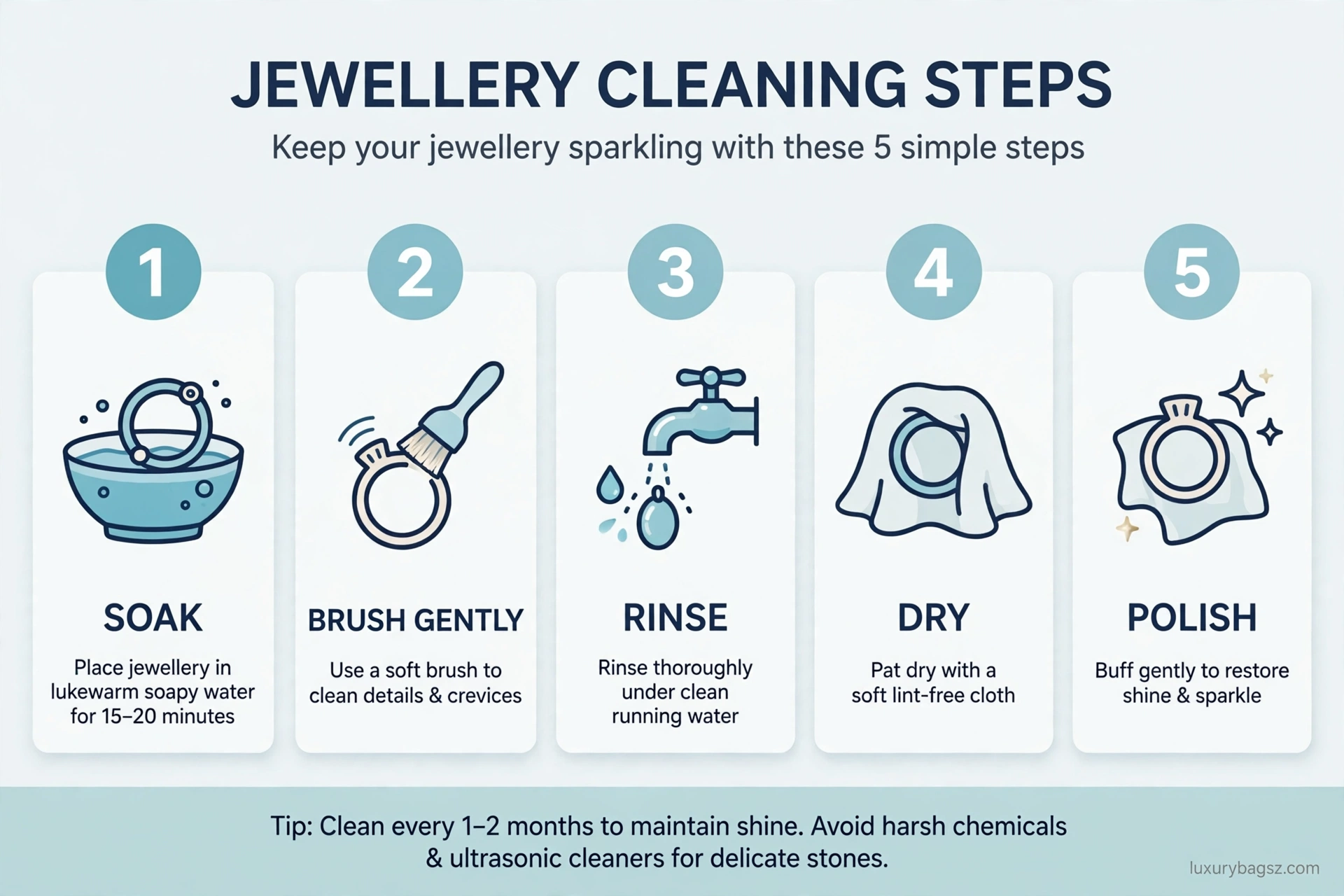
Most jewellery cleans beautifully at home with warm water, a drop of mild washing-up liquid, a soft brush and patience — no chemicals, no gadgets, no risk. Soak for fifteen to twenty minutes, brush gently, rinse, and dry with a soft lint-free cloth. That routine suits gold, platinum, diamonds and hard stones. The exceptions matter as much as the method: pearls, opals, emeralds and plated pieces need wiping, not soaking. The stones section sorts every common stone.
Key Takeaways
- Warm soapy water and a soft brush clean most gold and diamond jewellery safely.
- Work over a bowl, never an open sink, and close the plughole if you must rinse at a tap.
- Silver needs a polishing cloth for tarnish; soaking alone will not remove it.
- Pearls, opals and emeralds should be wiped, never soaked or ultrasonically cleaned.
- Toothpaste, boiling water and harsh chemicals damage more jewellery than dirt does.
- Clean jewellery sparkles more and wears longer: dirt is mildly abrasive in settings.
Why Jewellery Goes Dull
Skin oils, hand cream, soap film and dust settle into settings and under stones, where they block light long before any real damage occurs. Diamond jewellery dulls fastest because diamonds attract grease, which is why a ring worn daily can look cloudy within a fortnight. Silver dulls differently, through tarnish: a surface reaction with air that polishing removes and soaking does not. Knowing which dullness you face chooses the method. Grease wants the soak; tarnish wants the cloth; both want gentleness.
The Core Method, Step by Step
Fill a bowl with warm — never hot — water and a drop or two of mild washing-up liquid, then soak pieces for fifteen to twenty minutes. Brush softly with a baby toothbrush, working under stones and around claws where film hides, keeping pressure light at all times. Rinse in a second bowl of clean water, pat dry with a lint-free cloth, and finish with a gentle polish using a clean, dry part of the cloth. Inspect as you dry: a clean piece is the moment to notice a loose stone or a tired clasp, while there is time to act.
Gold and Diamond Jewellery
Gold in 14k and 18k and well-set diamonds take the core method perfectly, including a slightly longer soak for heavy build-up. Our dedicated how to clean gold and diamond rings guide covers ring-specific detail, including under-gallery cleaning. White gold's rhodium surface dislikes abrasives, so keep brushes soft and skip any scouring product, however gentle it claims to be. Dry diamond pieces thoroughly before wearing. Water spots on a freshly cleaned stone undo the sparkle you just restored.

Silver: The Tarnish Routine
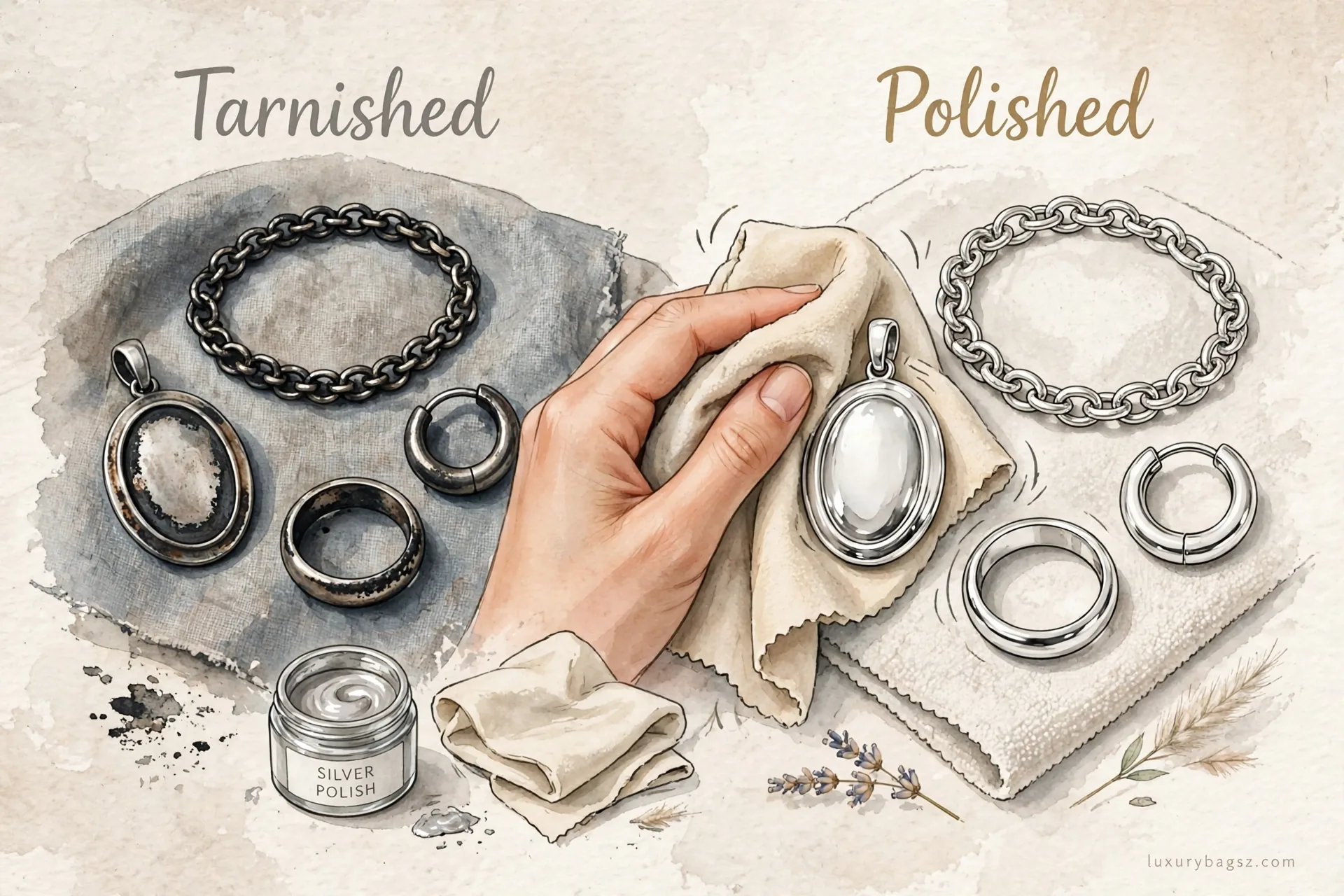
For light tarnish, a silver polishing cloth is the whole answer: firm, patient strokes until the cloth blackens and the metal brightens. Heavier tarnish on plain silver responds to specialist silver foam or dip used exactly as directed, then rinsed and dried at once. Never dip oxidised or antiqued silver, stones, pearls or anything glued. The finish you remove may be the design itself. Store cleaned silver airtight and dry, and it will stay bright for months. The storage section covers the storage habits that make cleaning rare.
Stones That Need Different Rules
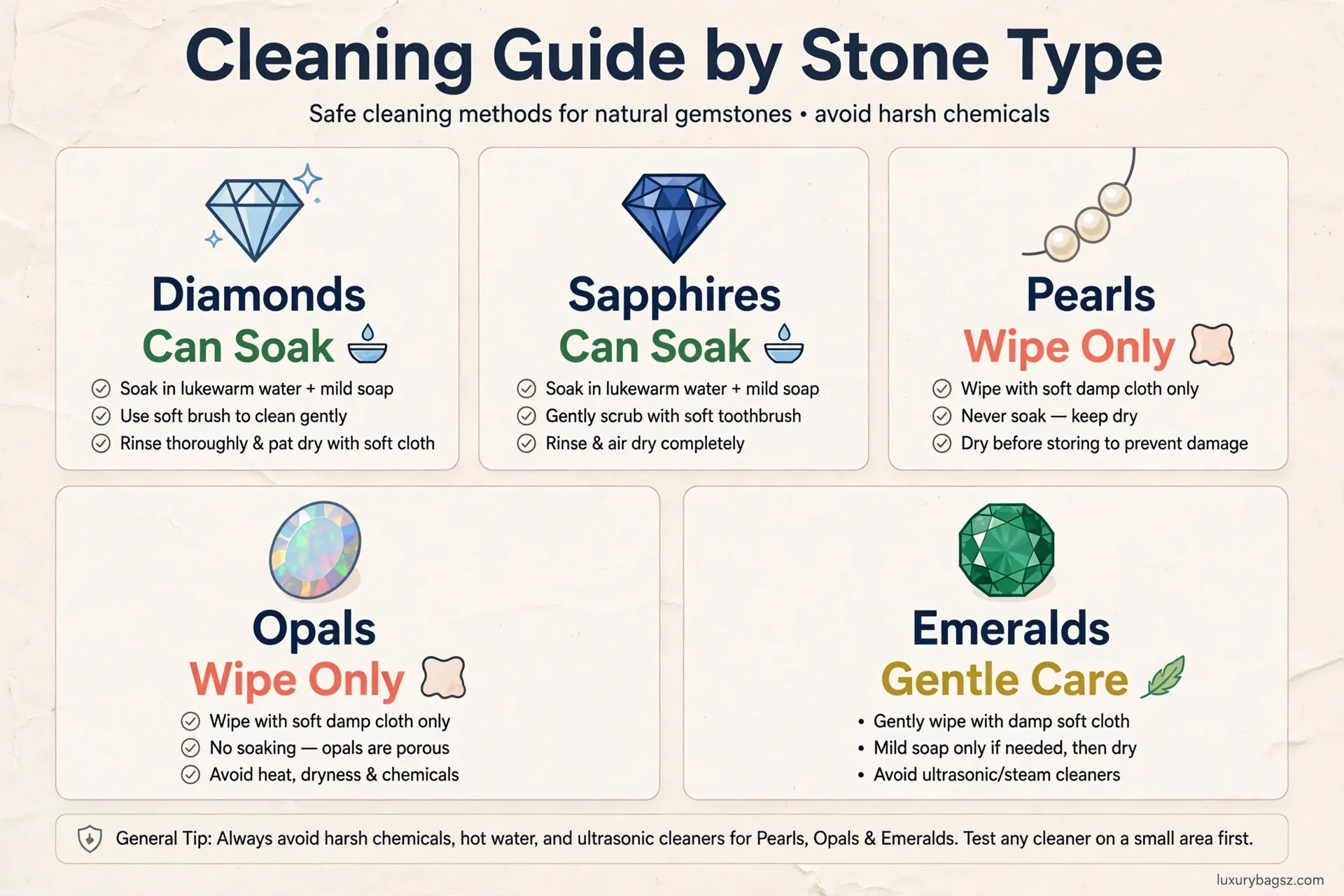
Hard stones — diamond, sapphire, ruby, spinel — accept the core soak happily, which is why they anchor most everyday jewellery. Emeralds are usually oil-treated and can be brittle: lukewarm water, the softest brush, and no ultrasonic machine, ever. Pearls and opals should only be wiped with a damp, soft cloth and dried flat; soaking attacks pearl stringing and opal stability. The full stone-by-stone picture sits in our how to care for gemstone jewellery guide.
Tools Worth Owning
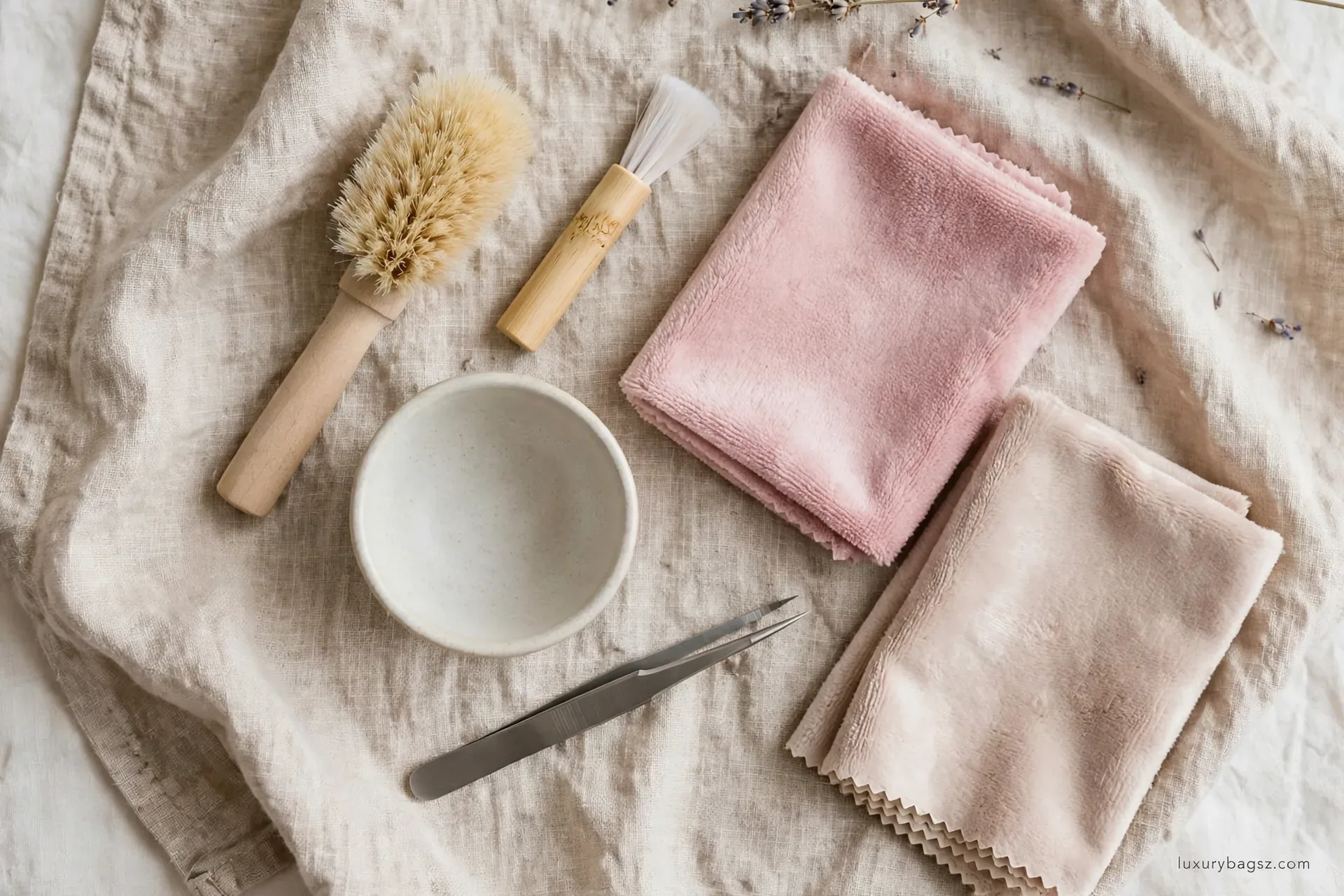
A baby-soft toothbrush, two lint-free cloths, a silver polishing cloth and a small bowl are the complete home kit for most jewellery. Tweezers help lift pieces from soak water without fingers slipping, and a soft towel under everything protects against drops and scratches. Ultrasonic cleaners suit robust diamond and plain gold pieces only, and even then, loose stones can vibrate free. Use them knowingly or not at all. Steam and specialist machines belong to jewellers, who check settings before and after — one reason an annual professional clean is worth having.
Mistakes That Do Real Damage
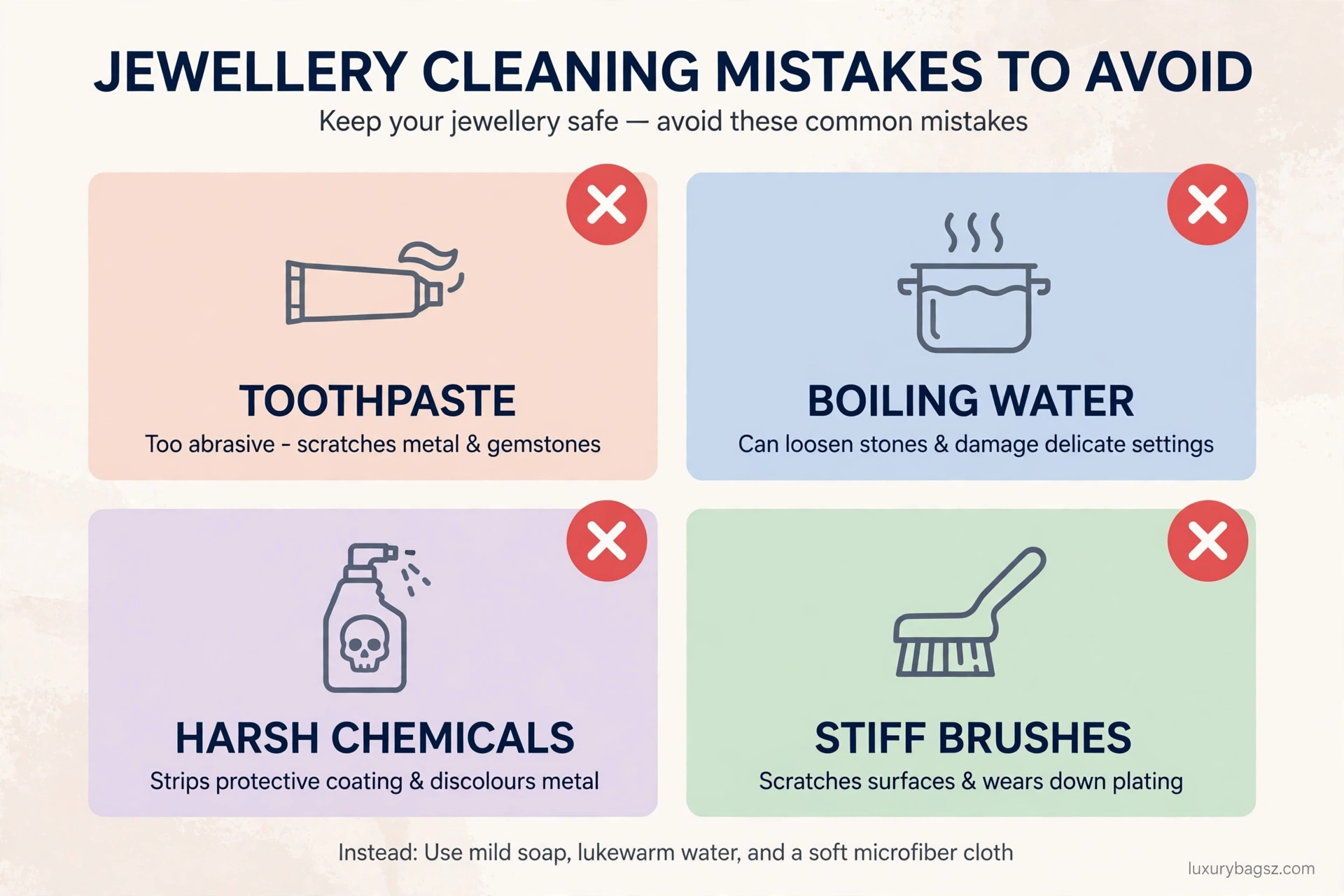
Toothpaste is an abrasive wearing metal and stone surfaces microscopically with every scrub, whatever the internet promises. Boiling water can crack heat-sensitive stones and loosen settings through sudden expansion, and it endangers glued pieces entirely. Bleach and harsh chemicals attack gold alloys, destroy pearl surfaces and strip rhodium and plating in a single soak. Stiff brushes scratch gold and can lever at claws. If a piece needs force to look clean, it needs a jeweller, not a harder brush.
Storage and the Yearly Rhythm
Store pieces separately in soft pouches or lined compartments; diamonds scratch almost everything, including other diamonds at the wrong angle. Keep silver airtight, pearls unsealed and breathing, and everything away from bathroom steam, which is a tarnish accelerator. Watches live by their own rules, set out in our how to clean a watch guide, since water and movements change everything. Once a year, let a jeweller clean and inspect your important pieces. It is also the natural moment to confirm all is genuine, as our how to authenticate luxury jewellery guide explains.
Heavy Silver Tarnish: The Foil and Bicarbonate Method
When a polishing cloth is losing to deep tarnish on plain silver, the classic rescue is electrochemical. Line a bowl with aluminium foil, add hot water and a spoonful of bicarbonate of soda, and rest the silver on the foil for a few minutes; the tarnish transfers to the foil and the piece comes out bright.
The limits matter as much as the trick. Never use it on silver set with stones, on pearls, or on oxidised and antiqued pieces whose dark recesses are the design. The bath removes those deliberately darkened details as happily as it removes tarnish.
Rinse and dry thoroughly afterwards, and polish lightly with the cloth to restore the surface the bath leaves slightly matte. Pieces that need this rescue often were stored in air; the storage habits later in this guide are what stop you needing it twice.
Reserve the method for plain, sturdy silver, candlestick-grade pieces and cutlery-style jewellery. Delicate chains and filigree can come to harm in any bath strong enough to strip heavy tarnish.
Ultrasonic Cleaners: The Honest Safe and Unsafe Lists
Ultrasonic machines clean by vibration: tiny bubbles collapse against the surface and shift dirt a brush cannot reach. On the right pieces the result is excellent; on the wrong ones the same energy loosens stones and stresses fragile gems.
Generally safe, in secure settings: plain gold and platinum, and hard untreated stones such as diamond, sapphire and ruby, provided the settings were sound before the cycle. Check every stone with a fingertip tap afterwards; a stone that moved was already loose and the machine has done you a favour by revealing it early.
Never ultrasonic: pearls, opals, emeralds, turquoise, coral and other soft or porous stones; fracture-filled or heavily treated stones; glued pieces; plated jewellery; and anything with a stone you already suspect. Tanzanite and other heat- and shock-sensitive gems belong on the cautious list too.
Steam cleaners sit in the same category of effective but unforgiving. Both machines reward owners who check settings first and punish everyone else impartially, which is why jewellers inspect before they clean and you should too.
Chains, Tennis Bracelets and Other Awkward Shapes
Chains tangle in soak bowls and knot at clasps, so clean them laid flat: soak in a shallow dish, lift them out draped over a finger rather than scooped, and brush along the links while the chain rests on a soft towel.
Fine chains kink permanently when crushed or yanked, and a kink is a weak point that breaks later. If a chain comes out of cleaning knotted, tease the knot open with two pins on the towel, never with fingernails and force.
Tennis bracelets and other articulated pieces need their hinges and clasps worked gently during cleaning, because grit lodges in the joints and wears them. Flex each link as you rinse, and check the clasp’s click at the end; a gritty clasp is a cleaning that is not finished.
Brooches hide dirt behind their pins and settings, and earrings hide it in their posts and butterfly backs, which also makes those parts a hygiene matter. Give backs and posts their own brush strokes, and replace bent butterflies rather than cleaning around them forever.
Chlorine, Salt Water and the Chemical Enemies
Chlorine is gold’s quiet enemy. Repeated exposure, in pools and hot tubs, can make some gold alloys brittle over time, attacking the alloy metals in the mix; jewellers see the results as cracked claws and snapped shanks on rings that swam daily. Rings off before swimming is structural advice, not fussiness.
Salt water adds grit and corrosion risk for mechanisms and springs, in clasps and brooch pins especially. Rinse any piece that has met the sea in fresh water the same day and dry it fully.
Perfume, hairspray and sunscreen are the everyday chemicals: apply them first, let them dry, and put jewellery on last. That order, boring as it sounds, prevents more dullness than any cleaning method in this guide restores.
Hand sanitiser and household sprays belong on the same list. A ring worn through a day of cleaning chores collects more chemical exposure than a year of ordinary wear, and rubber gloves are jewellery care equipment as much as skin care.
Plated, Vermeil and Costume Pieces: The Fragile End
Plated jewellery cleans by wiping only. Every soak, dip and polish spends a little of the surface, because the gold layer is measured in microns and the cleaning cannot tell the difference between dirt and finish.
Vermeil, the thick end of plating over silver, tolerates a gentle soapy wipe and a soft dry, but not silver dips, which attack its surface, and not polishing cloths made for bare silver used with enthusiasm. Store vermeil separately and dry; moisture is its slow enemy.
Costume pieces add glued stones and mystery alloys to the risk list: water loosens glue, and unknown metals react unpredictably to products. A barely damp cloth, immediate drying, and acceptance that some costume pieces are cleaned by dusting alone is the professional position.
When cleaning reveals plating worn through at edges, the piece is not dirty; it is finished. Re-plating is a jeweller’s job and is worth it only for pieces with real sentimental or design value. Cleaning cannot restore what wear has removed, and scrubbing harder only enlarges the bare patch.
How Often: A Cleaning Calendar That Works
Rings worn daily earn a fortnightly soak, because their settings collect the most and their stones are the ones you look at all day. A cloudy engagement ring is almost always a cleaning problem, not a stone problem.
Earrings and pendants worn often settle for a monthly clean, with posts and backs checked at the same sitting. Occasion pieces should be cleaned after each wear, before storage, because perfume and skin film do their slow work in the box between outings.
Silver asks by appearance rather than calendar: polish at the first grey shadow and storage does the rest. Pearl strands want a wipe after every wear and nothing more, ever.
Once a year, gather the important pieces for the professional clean and inspection this guide recommends at the end. Home care keeps jewellery bright; the annual check keeps it safe, and the two together are the complete routine.
Enamel, Cameos and the Unusual Materials
Enamel is glass fused to metal, and it cleans like glass with enemies: wipe with a soft damp cloth, never soak for long, never use ultrasonic machines, whose vibration can crack enamel at its edges, and never let a brush’s bristles work at chipped borders.
Cameos, carved from shell or layered stone, are porous and personal; they collect skin oil in their carving, which a barely damp cotton bud can lift from the recesses. Keep cameos away from perfume and hair dye, both of which stain shell permanently.
Jewellery that mixes materials, leather cords, silk threads, wood or resin elements beside metal and stones, must be cleaned by its most fragile ingredient. In practice that means spot-cleaning the metal and stones and keeping the organic parts dry.
Antique pieces deserve their own caution on top of all of this: old foiling behind stones, closed-back settings and aged cement all hate water. When a piece is genuinely old, the jeweller’s clean stops being the annual luxury and becomes the only method.
Cleaning on the Road: Travel Rules
Hotel sinks are where rings go to be lost, so travel cleaning follows one rule: pieces are cleaned in a glass of soapy water on the dressing table, never over a basin, and dried on the hand towel you brought for the purpose.
A travel kit needs almost nothing: a polishing cloth, a soft brush and a small zip pouch per piece. Cleaning wipes made for jewellery are the aeroplane-friendly version of the same kit and handle a week’s dullness well enough until you are home.
Sunscreen is the travelling collection’s chief enemy, filming stones within a day at the beach. The after-every-wear wipe, recommended in this guide for pearls, is worth extending to every piece you travel with; it takes twenty seconds and postpones all deeper cleaning until the home routine can do it properly.
Photograph your travel pieces before the trip, on your wrist and in their pouches. If anything is lost or a claim is ever needed, those photographs, and the discipline of one pouch per piece, are the difference between a story and a recovery.
The Two-Minute Habit That Prevents Deep Cleans
Every method in this guide gets rarer if one habit holds: wipe each piece with a soft dry cloth as you take it off, before it goes into its pouch or box. Twenty seconds removes the day’s film while it is still soft enough to leave politely.
Keep the cloth where the jewellery comes off, not where the cleaning kit lives; habits obey geography. A cloth in the jewellery drawer outperforms a perfect kit in a distant cupboard.
The wipe is also an inspection you perform without deciding to: a snagging claw, a loosening stone and a tired clasp all announce themselves to a cloth before they announce themselves to a pavement.
Gentle, regular and stone-aware, the summary this guide began with, turns out to be mostly this: little and often, with the deep cleans as backup rather than routine.
Frequently Asked Questions
What is the safest way to clean jewellery at home?
Warm water with a drop of mild washing-up liquid, a fifteen-minute soak, a baby-soft brush, a rinse and a lint-free cloth. It suits most gold and diamond pieces.
Can I clean jewellery with toothpaste?
No. Toothpaste is abrasive and gradually wears gold, silver and softer stones. Its reputation is a myth that has quietly damaged a great deal of jewellery.
How often should I clean my jewellery?
Pieces worn daily benefit from a gentle clean every few weeks, and rings every fortnight in heavy use. Silver worn regularly needs polishing far less often.
Can pearls go in soapy water?
No. Wipe pearls with a soft, slightly damp cloth after wear and dry them flat. Soaking weakens their silk thread and dulls their surface.
Is an ultrasonic cleaner safe?
For plain gold and well-set diamonds, usually yes. Never for pearls, opals, emeralds, glued stones, plated pieces or anything with a loose setting.
How do I remove silver tarnish?
With a silver polishing cloth and patience. Specialist foams help heavy tarnish on plain silver, but keep dips away from stones and oxidised finishes.
Can I clean gold-plated jewellery the same way?
No. Wipe plated and vermeil pieces gently with a damp cloth and dry at once. Soaking and polishing wear the thin gold layer away at edges.
Why does my diamond ring still look cloudy after cleaning?
Film under the stone is usually the cause. Soak longer and brush from beneath the setting, or ask a jeweller to check for a loose or damaged stone.
Should I clean jewellery before storing it?
Yes. Skin oils and products left on pieces work on surfaces in storage. A wipe — or a full clean for worn pieces — makes storage a rest, not a slow harm.
When should a jeweller clean my jewellery instead?
Annually for important pieces, immediately for loose stones, damaged clasps or pieces that stay dull after gentle home cleaning. Professionals also inspect as they clean.
Summary: Gentle, Regular, Stone-Aware
Home cleaning succeeds on three habits: the mild soapy soak for robust pieces, wiping for the delicate ones, and never reaching for abrasives or chemicals. Add separate, dry storage and a yearly professional inspection, and your jewellery will spend its life bright rather than slowly dulling in a drawer.