

How to Authenticate Luxury Jewellery: Hallmarks, Signatures, Stones and Papers Checked Step by Step
The Quick Method: Marks, Weight, Finish, Papers, Then an Expert
Copies usually give themselves away before paperwork is even reached. The stamps are soft, the weight is light in the hand, the finishing is rough, or the stones sit wrong — which is why the order of checking matters: read the hallmarks and signature first, weigh the piece, study its finish and stone settings, check its papers, and only then decide what needs an expert.
Confidence, when it comes, looks like agreement: five consistent checks, each in line with the others and with the design's known details. Anything doubtful after that sequence goes to an expert rather than to a guess.
Key Takeaways
- Hallmarks state the metal: 750 is 18k gold, 585 is 14k, 925 is sterling silver, 950 is platinum.
- Signatures and serials should be crisp, correctly placed and right for the era.
- Genuine luxury pieces feel substantial and finish smoothly everywhere, including underneath.
- Stones in real pieces are set securely and evenly, never glued or lopsided.
- Papers support a piece; they never prove it alone, because papers are copied too.
- For valuable pieces, a paid professional opinion is cheap insurance.
Know What You Are Checking
Authentication compares a piece against what the maker actually produced: the design, materials, marks and making of a specific model in a specific period. Signed pieces carry the highest copy risk and the highest stakes, which is why what makes signed jewellery valuable is the right background read. Unsigned fine jewellery still needs material verification: the question shifts from brand to whether gold, platinum and stones are what they are sold as. Start by naming the exact claim — maker, model, metal, stones — because each part of the claim gets its own check below.
Hallmarks and Signatures
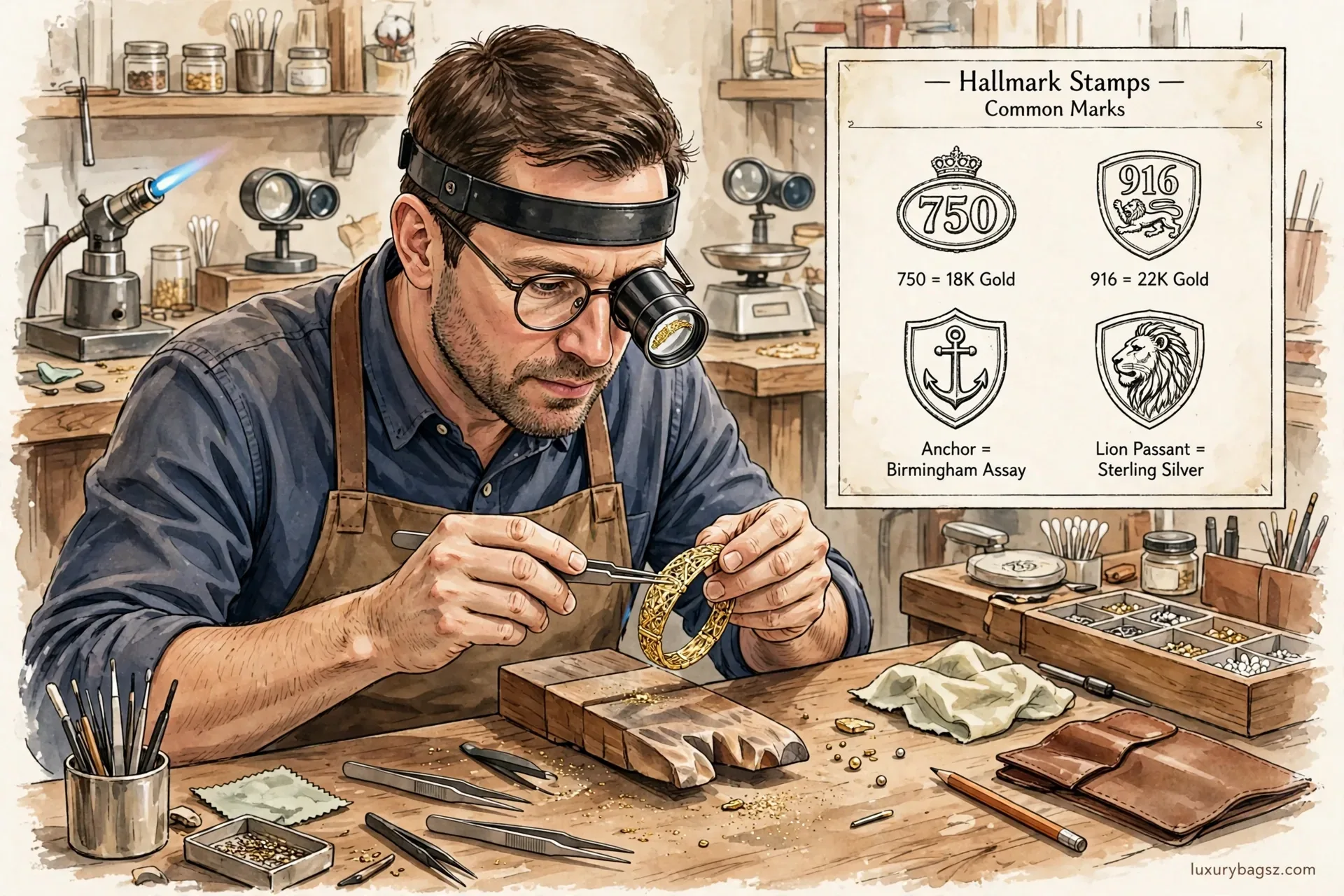
Find the stamps with a loupe. Metal marks are small and usually hide on clasps, inside rings, on earring posts or beside bracelet hinges. Read them against the standard: 750 for 18k gold, 585 for 14k, 375 for 9k, 925 for sterling silver and 950 or PT950 for platinum. Brand signatures should be sharp and evenly spaced. Our how to authenticate Tiffany and Co jewellery guide shows one house's marks in detail. Soft, crooked, misspelt or oddly deep stamps are warnings. Copyists stamp last and care least, and the marks usually show it.
Weight, Feel and Finish
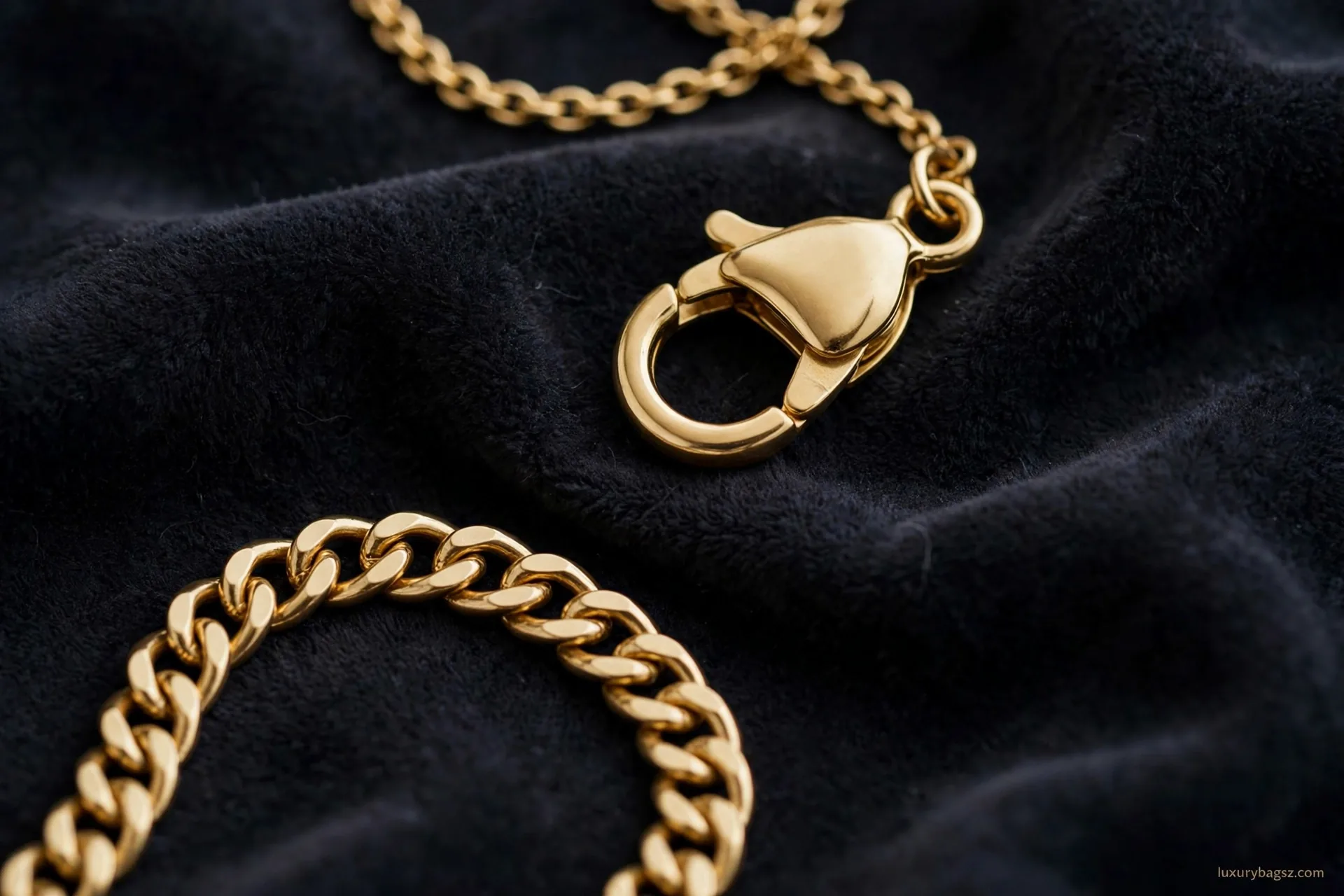
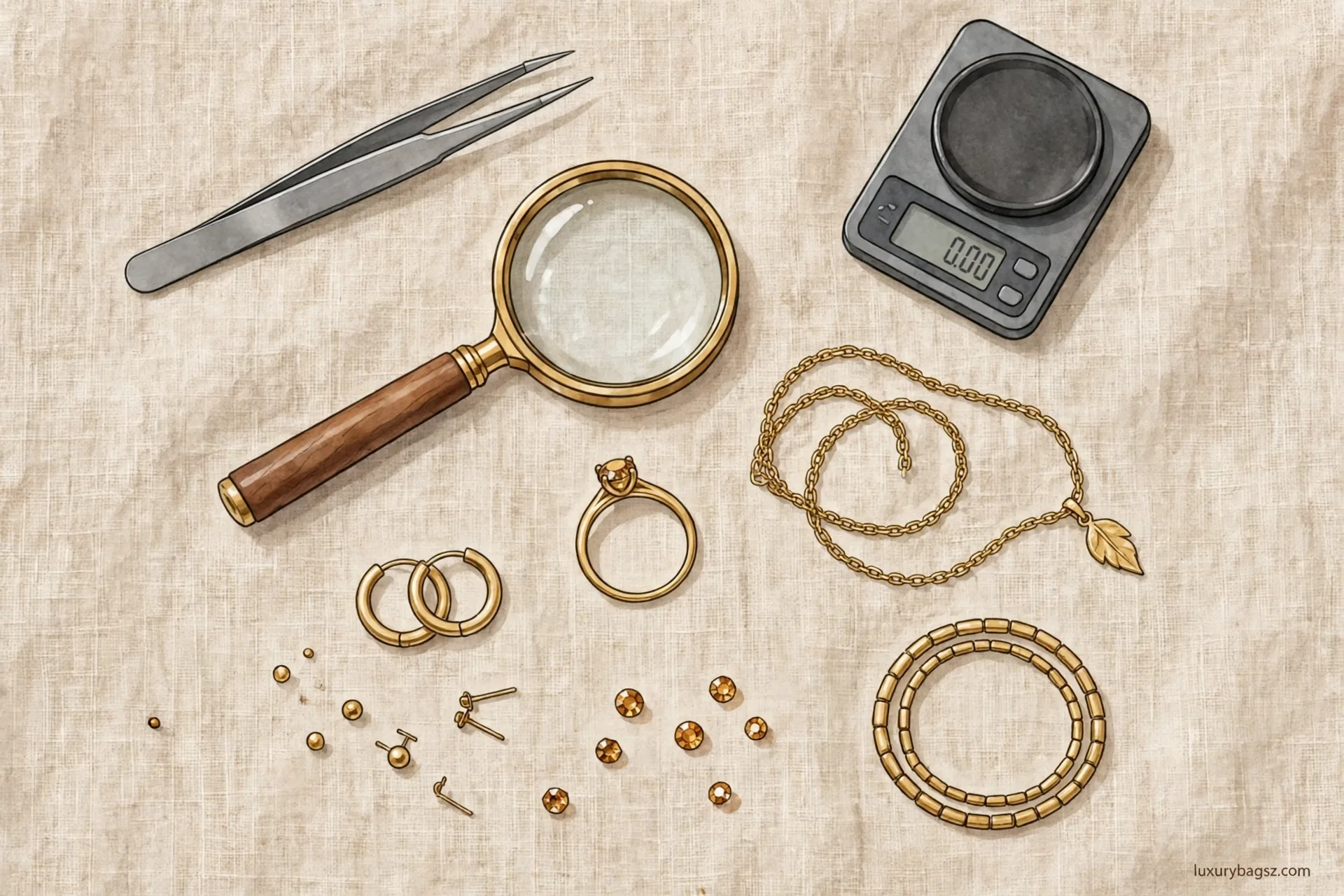
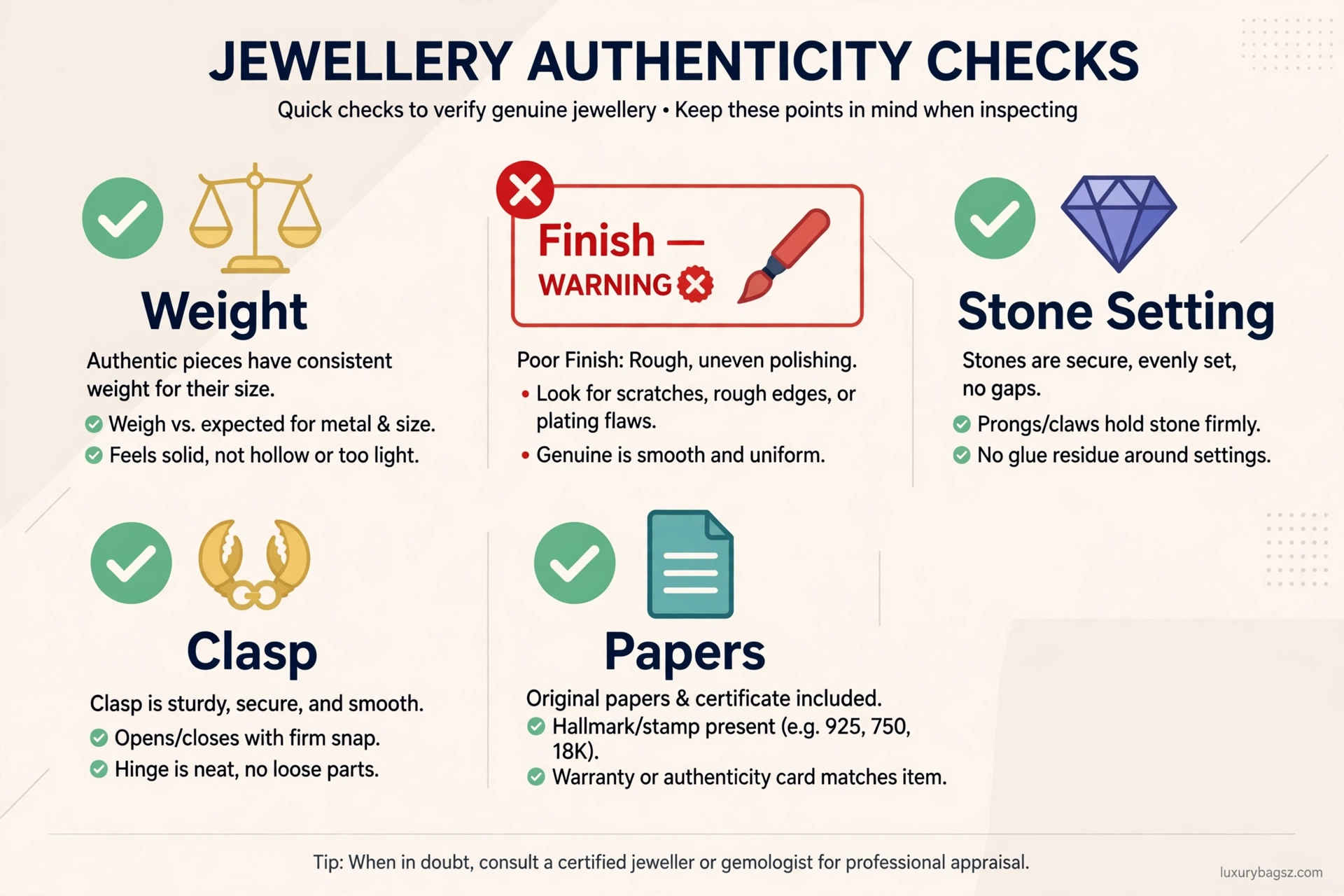
Pick the piece up. Solid gold and platinum have a density that plated copies and hollow fakes rarely match, and experience makes the difference obvious. Run a fingertip over every edge. Luxury finishing is smooth everywhere, including the back, the inside and the places no photograph shows. Check symmetry: links should match, patterns should meet cleanly, and moving parts should feel engineered rather than loose. Weigh the piece on a jeweller's scale and compare it with verified examples of the same model. A meaningful gap needs an explanation.
Model-Specific Checks
Every famous design has known details — screw motifs, cable twists, stone patterns, clasp shapes — and the copies reliably get some of them wrong. Study the dedicated guides before judging a piece, such as our how to spot a fake Cartier Love bracelet walkthrough. Cable and woven designs have their own tells, covered in our how to spot a fake David Yurman bracelet guide. Serial numbers, where a house uses them, should sit in the right place, in the right font style, and match any papers exactly.

Stones and Settings
Look at the stones under the loupe. In genuine pieces they sit level, evenly spaced and held by shaped claws or clean bezels, never by visible glue. Check that stones match their description: a certified diamond should match its certificate's measurements and grade when tested. Mixed quality is a warning. One cloudy, badly cut stone among fine ones suggests replacement, repair or an assembled piece. Settings also reveal age honestly. Gentle wear on claws and edges fits an old piece; a supposedly vintage piece with perfect, sharp everything does not.
Papers, Boxes and Receipts
Certificates, receipts and boxes build a story around a piece, and a consistent story is valuable evidence. Check that serials, model names, dates and seller details agree across every document, and that papers describe this stone and this metal. Remember the limit: papers can be copied, borrowed or paired with the wrong piece, which is why they come sixth in this method, not first. A piece with no papers is not automatically suspect. Older and inherited jewellery often has none; it simply needs stronger physical checks.
The Sequence, Start to Finish
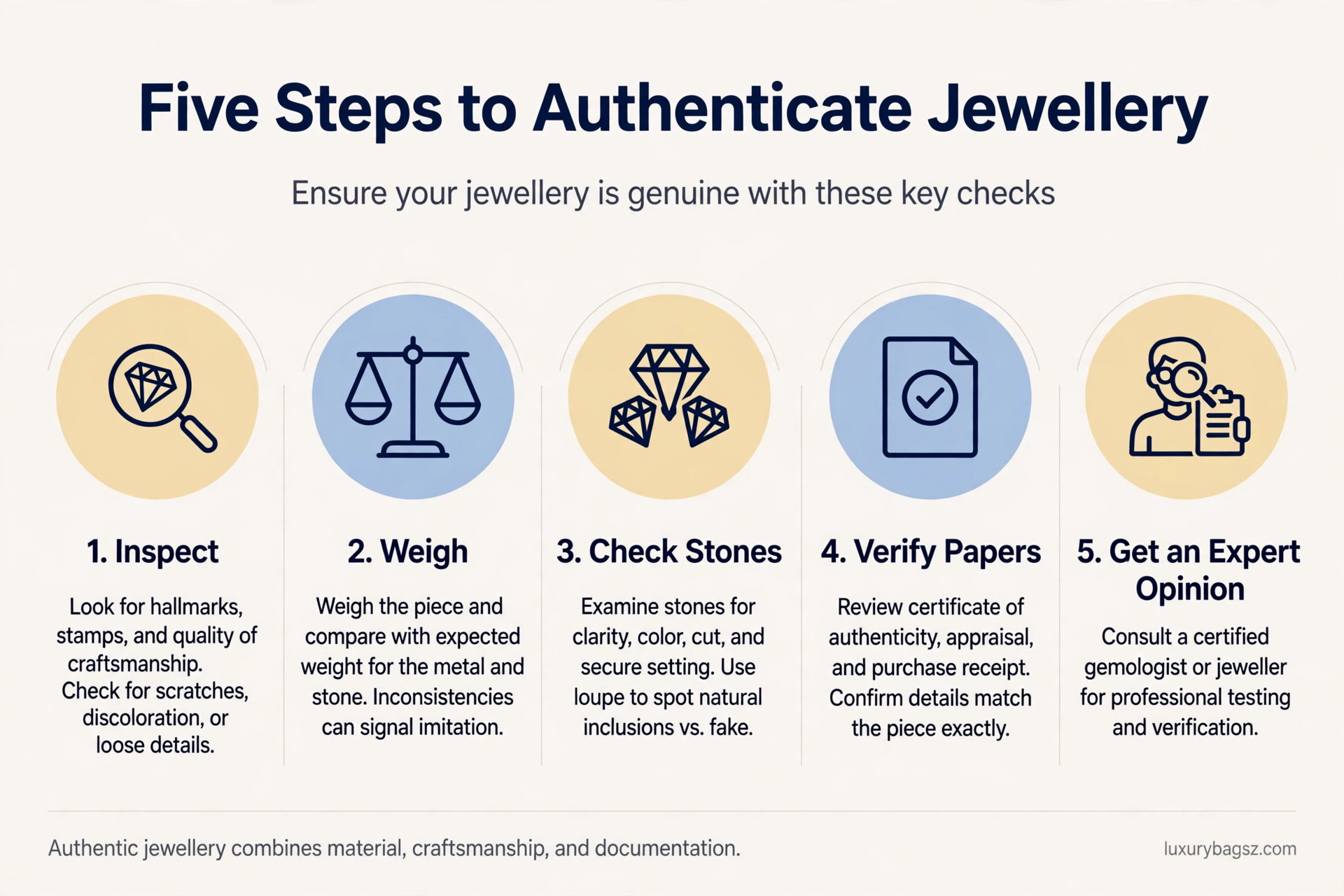
Inspect with the loupe, read every mark, then weigh and measure the piece against verified references for the model. Examine stones and settings, test clasps and moving parts, and only then weigh up the papers and the seller's story. Write down anything that disagrees. One small oddity can be wear or repair; a pattern of oddities is a verdict. Stop the purchase at any stage if the seller resists checks. Genuine sellers expect inspection and usually welcome it.
When to Pay for an Expert
Above a few hundred pounds, or whenever a signature carries the price, pay for a professional authentication or valuation before money becomes final. Independent jewellers, gemmologists and specialist authenticators test metal, stones and marks with tools home checks cannot match. Newer methods keep arriving, as our explainer on how luxury authentication technology works describes. Buy through channels with returns and guarantees wherever possible. The right to hand a piece back is the strongest authentication tool of all.
National Hallmark Systems: The Marks Behind the Marks
Beyond fineness numbers, many countries run official hallmarking systems whose marks a faker must also imitate, and usually imitates worst. France is the famous case: an eagle’s head mark guarantees 18-karat gold, a dog’s head marks platinum, and the maker’s lozenge-shaped mark names the workshop that submitted the piece.
Those French control marks appear on the great Paris houses’ pieces, and their crispness is a working check. A genuine eagle’s head is tiny and precise; a copyist’s version blurs under the same loupe that read it.
British hallmarks tell a different story in a row: the maker’s mark, the fineness, the assay office symbol and a date letter, which can place a piece in its exact year. Italian pieces carry a numbered maker’s mark identifying the registered workshop.
Learn the system of the country your piece claims to come from. A Paris house’s jewel with no French control marks, or a London piece with marks in the wrong order, is a story that disagrees with itself, and disagreement is what authentication hunts.
Home Tests, and Where They Stop Working
The magnet test is the one home test worth doing: gold, platinum and silver are not magnetic, so a piece that pulls towards a magnet contains ferrous metal and is not solid precious metal. A piece that ignores the magnet has passed exactly one test and no more.
Acid testing, sold in home kits, scratches metal onto a stone and reacts it with acids to estimate purity. It works in experienced hands, damages the piece slightly, and reads plated surfaces as solid, which is precisely the fraud it is meant to catch. Leave it to jewellers.
Professional X-ray fluorescence testing reads metal composition without damage and is the standard your expert from this guide’s final steps will use. Knowing it exists is the point for a home buyer: when the money is serious, that ten-minute test settles arguments no loupe can.
Treat every home test as a screen, in the order this guide sets out, and let the failures stop the purchase early and cheaply. The tests that pass prove nothing alone; they merely earn the piece its expert appointment.
Matching a Diamond to Its Paper
A certified stone can be checked against its own document in ways a faker rarely survives. Major laboratories let you enter a report number on their websites and see the full grading report; the first test is simply that the number exists and describes a stone like yours.
Many certified diamonds carry that report number laser-inscribed on the girdle, readable under magnification. Match inscription, certificate and stone, and substitution becomes very difficult to hide.
Measurements complete the triangle: the certificate’s dimensions in millimetres should match the stone in the setting, checked with callipers by a jeweller. A stone a fraction smaller than its paper is usually a different, cheaper stone wearing the paper as a costume.
Remember the boundary stated in collector guidance everywhere: a report authenticates the stone, not the signature on the setting. A genuine certified diamond can sit in a copied mounting, and each half of the piece still needs its own verdict.
Buying Online: The Photographs to Demand
Distance buying changes the method, not the standard. Demand straight-on macro photographs of every mark: signature, fineness, serial and control marks, taken square to the surface rather than at a flattering angle. A seller who cannot or will not photograph marks is answering your question.
Ask for the piece on a scale, in the seller’s own photograph, and for measurements against a ruler for rings and bracelets where size defines the model. Verified weights and dimensions from the house’s specifications are the remote version of the weight check in this guide.
Pay through channels with buyer protection, insist on a written returns window long enough for an expert check on arrival, and treat pressure to pay by transfer as the final red flag. Every safeguard in this guide assumes you can hand the piece back; protect that right before anything else.
On arrival, repeat the full sequence in daylight before the returns window starts closing. Photograph your own set of marks the day the piece arrives; if a dispute comes, your photographs are the record.
Era Checks: Right Marks, Wrong Decade
Marks have histories of their own. Houses change signature fonts, stamp layouts, serial formats and country markings across the decades, so a mark that is correct for a 1990s piece can be wrong for a 1970s one, and the mismatch is a classic tell.
Authenticate against the claimed era, not against the current boutique version. Reference photographs should come from verified pieces of the same period; comparing a vintage jewel only with today’s production will produce false alarms and missed fakes in equal measure.
Wear should agree with the era too. Stamps soften with the piece’s life: a fifty-year-old ring with razor-sharp marks and unworn edges has either lived in a safe or was made last year, and the seller’s story should explain which.
Discontinued models and retired designs are worth extra care, because references are scarcer and prices often higher. For those, the expert step at the end of this guide stops being optional insurance and becomes the purchase itself.
Frequently Asked Questions
What do jewellery hallmarks mean?
They state metal purity: 750 is 18k gold, 585 is 14k gold, 375 is 9k gold, 925 is sterling silver and 950 usually marks platinum. Maker marks sit beside them.
Can I authenticate jewellery at home?
You can screen most pieces at home with a loupe, a scale and model references. Home checks catch most copies, but valuable pieces deserve a professional verdict.
Does a magnet test prove gold is real?
No. Gold and platinum are not magnetic, so a strong pull is a warning, but passing the magnet test only rules out some base-metal copies, nothing more.
Are certificates proof of authenticity?
Not alone. Certificates can be copied or matched to the wrong stone. They count when their details agree with the tested piece in front of you.
What is the biggest red flag in a luxury piece?
A pattern: soft hallmarks, light weight, rough hidden finishing and a vague story together. Any one issue can be explained; four together cannot.
Do all luxury brands use serial numbers?
No. Some houses number many pieces, others few, and vintage pieces often carry none. Judge a serial against the model's known practice, not a general rule.
How much does professional authentication cost?
Varies by piece and region, from a modest jeweller's fee to specialist service pricing. Against a four-figure purchase, it is a small percentage for certainty.
Can a jeweller test metal without damaging a piece?
Yes. Modern XRF testing reads metal composition without marks or filings, and jewellers use it routinely on gold and platinum pieces.
Is pre-owned jewellery riskier to buy?
It carries more authentication work, but established resellers test pieces and offer returns. The savings usually justify the checks this guide describes.
What if a piece fails one check?
Pause and investigate that point specifically; wear, repair and resizing explain some oddities. If the explanation does not satisfy you, walk away — another piece exists.
Final Verdict: Trust Agreement, Not Any Single Sign
Real luxury jewellery passes every check in the same direction: marks, weight, finish, stones and story all agreeing with the maker's known work. Work the sequence patiently, pay for expertise when the money is serious, and you will rarely need the returns policy that remains your final protection.






