

How to Clean Chanel Tweed and Fabric Bags, Including the Deauville
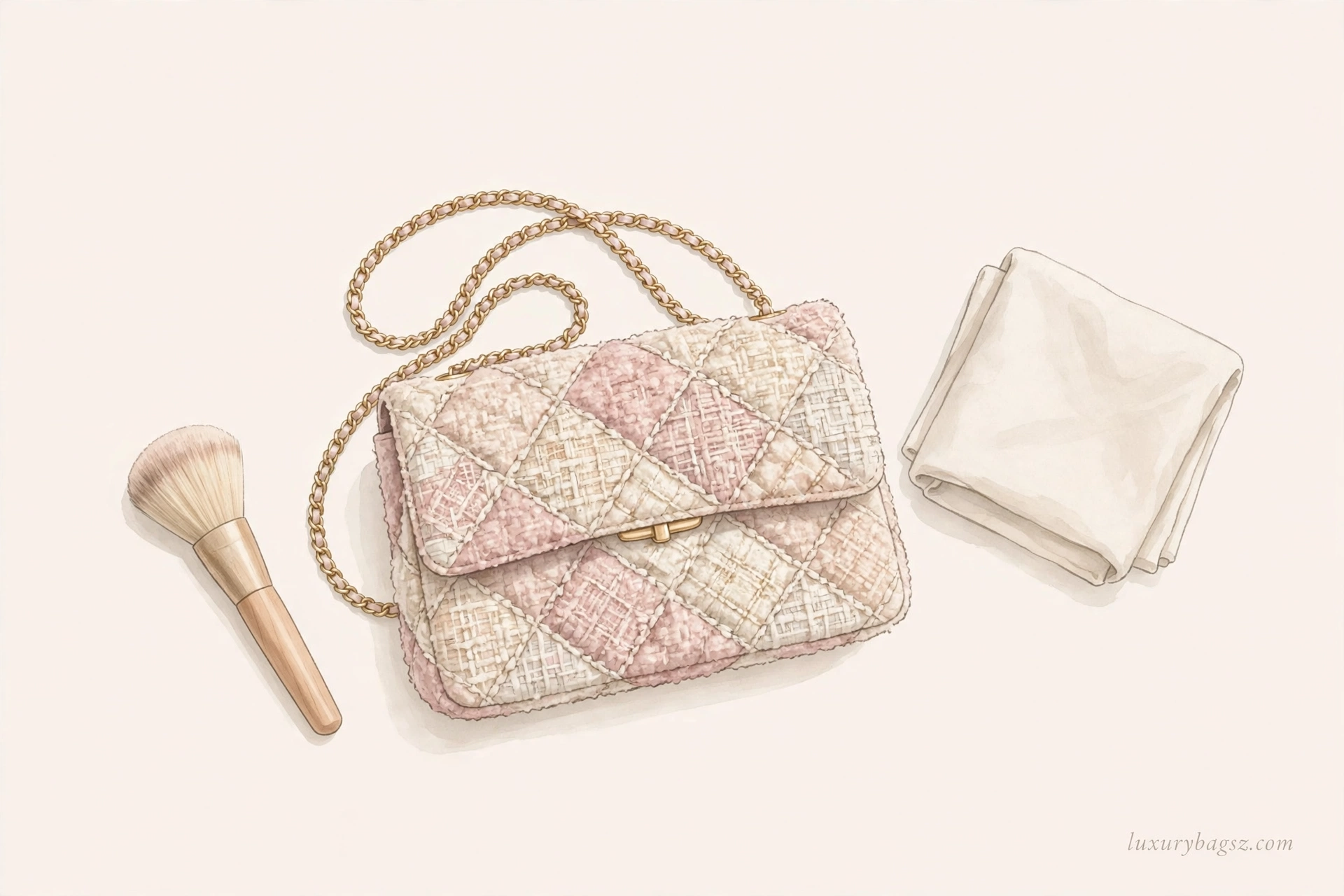
Cleaning Chanel Tweed Bags in Brief: Dry First, Gentle Always
Chanel tweed and fabric bags need a gentler touch than leather. The safest routine is dry care first: brush lightly, blot rather than rub, and hand stains to a professional cleaner rather than scrubbing. Water, harsh cleaners and soaking are the fastest ways to damage woven fabric.
Chanel's own guidance supports this caution. The house advises a soft cloth, no care products that might alter the finish, and professional cleaning for stains rather than home remedies. For tweed specifically, it warns that threads can pull and advises asking a boutique for advice.
Sources disagree on wet cleaning, and this guide says so plainly. Some third-party blogs advise warm water and mild soap for canvas totes, which conflicts with the dry-first advice for tweed. Follow the conservative line here: dry methods for tweed, a barely damp wipe at most for canvas, and never soak or machine wash either.

Tweed is the material I refuse to rush. A woven fabric bag can look sturdy and still be one hard scrub from pulled threads and a ruined face, so my routine is the dry one this guide insists on: a light brush, blotting rather than rubbing, and stains handed to a professional before they are handed a home remedy. I have examined fabric bags that survived a decade of careful wear and leather bags destroyed in one wash; the difference is never the material’s price, it is the owner’s patience. With Chanel tweed, dry first and gentle always is not caution. It is the whole method.
Know Your Fabric Before You Clean It
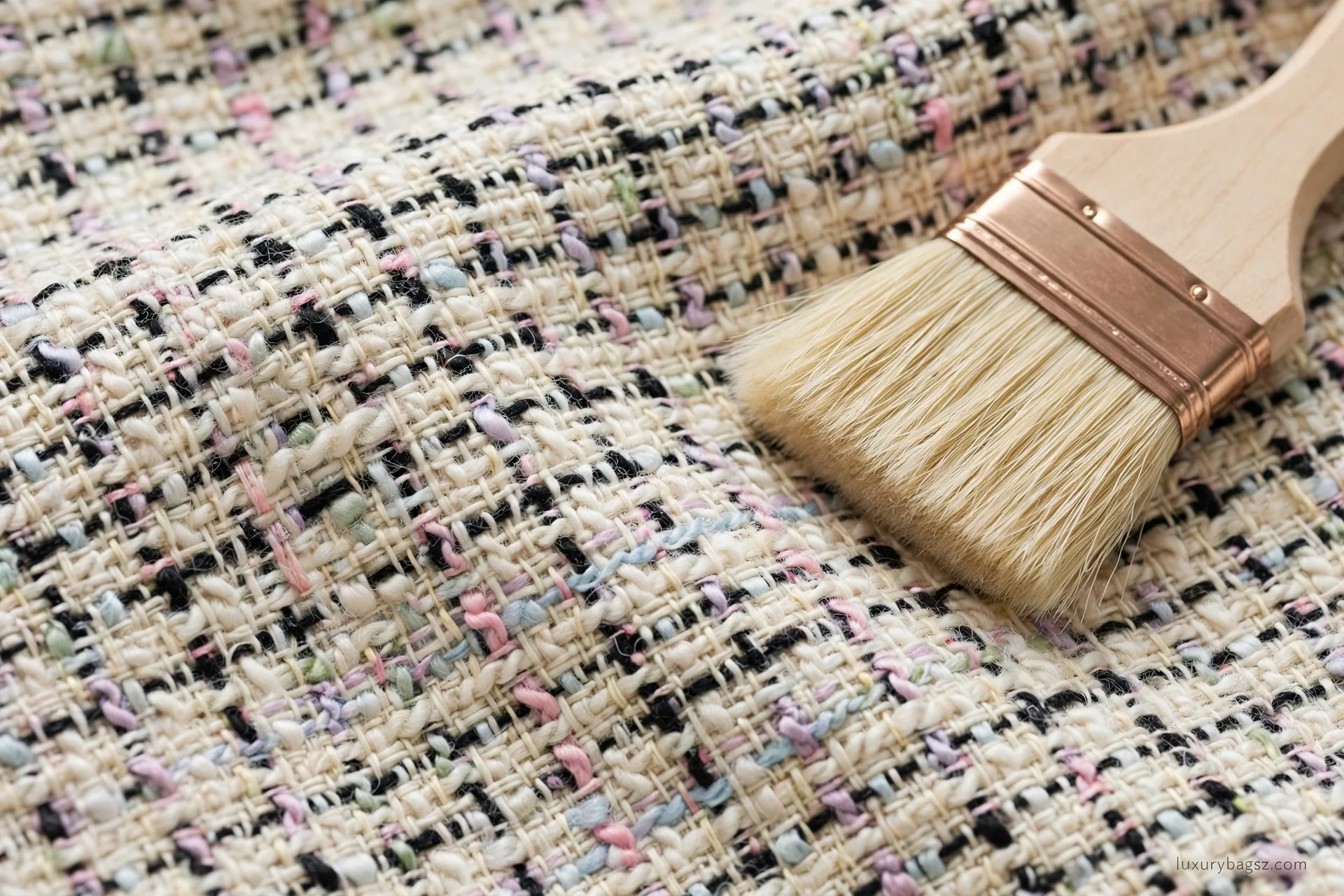
Tweed is woven from multiple coloured threads, which gives it depth and texture but also fragility. A pulled thread can unravel a visible line, and heavy brushing can flatten the weave. Tweed bags, including tweed flap bags, need the lightest touch of all Chanel fabrics.
Canvas is sturdier and more forgiving. The Deauville tote pairs a printed canvas body with leather trim, and it handles light wiping better than tweed. Even so, canvas can water-ring, stain and lose shape when soaked, so "sturdier" does not mean washable.
Other fabrics appear too: denim, velvet, silk brocade and mesh each have their own risks. Velvet crushes under pressure, silk spots easily, and denim transfers colour. If your bag mixes fabrics, clean to the standard of the most delicate material present.
Leather trim needs its own care. Wipe gold-tone hardware with a soft dry cloth, and keep creams and cleaners off leather handles and edges. Our guide to cleaning Chanel bags covers leather principles that pair well with the fabric advice here.
Daily Care and Prevention
Prevention beats cleaning for fabric bags. Brush lightly with a soft clothes brush or a gentle suede brush after wear, working in one direction. This lifts dust before it settles into the weave, and it costs less than a minute.
Keep fabric bags away from rain, perfume, hand cream and oils. Spray perfume before dressing, and let it dry before picking up the bag. Dark raw denim and rough textiles can transfer colour or snag threads, so avoid resting a tweed bag against them.
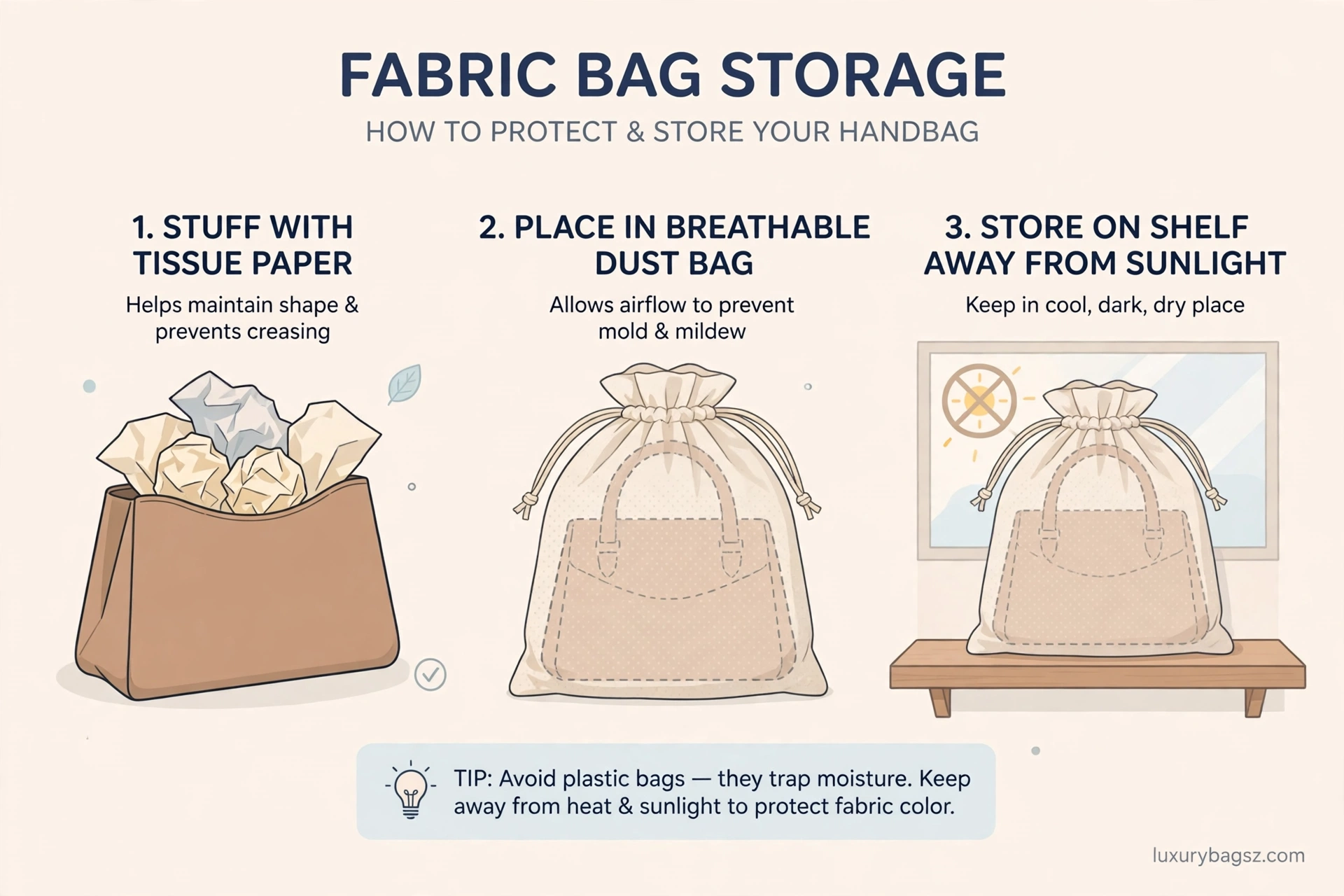
Sunlight fades tweed and canvas over time. Store bags away from windows and strong artificial light, and rotate which side faces out if a bag sits on display. Humidity matters too: damp rooms invite mould, while very dry heat can stiffen fabric.
Empty the bag after each use and wipe the hardware dry. Small habits like these keep a fabric bag looking fresh for years, while neglect turns minor dust into ground-in marks that need professional help.
Gentle Cleaning Steps for Tweed and Fabric
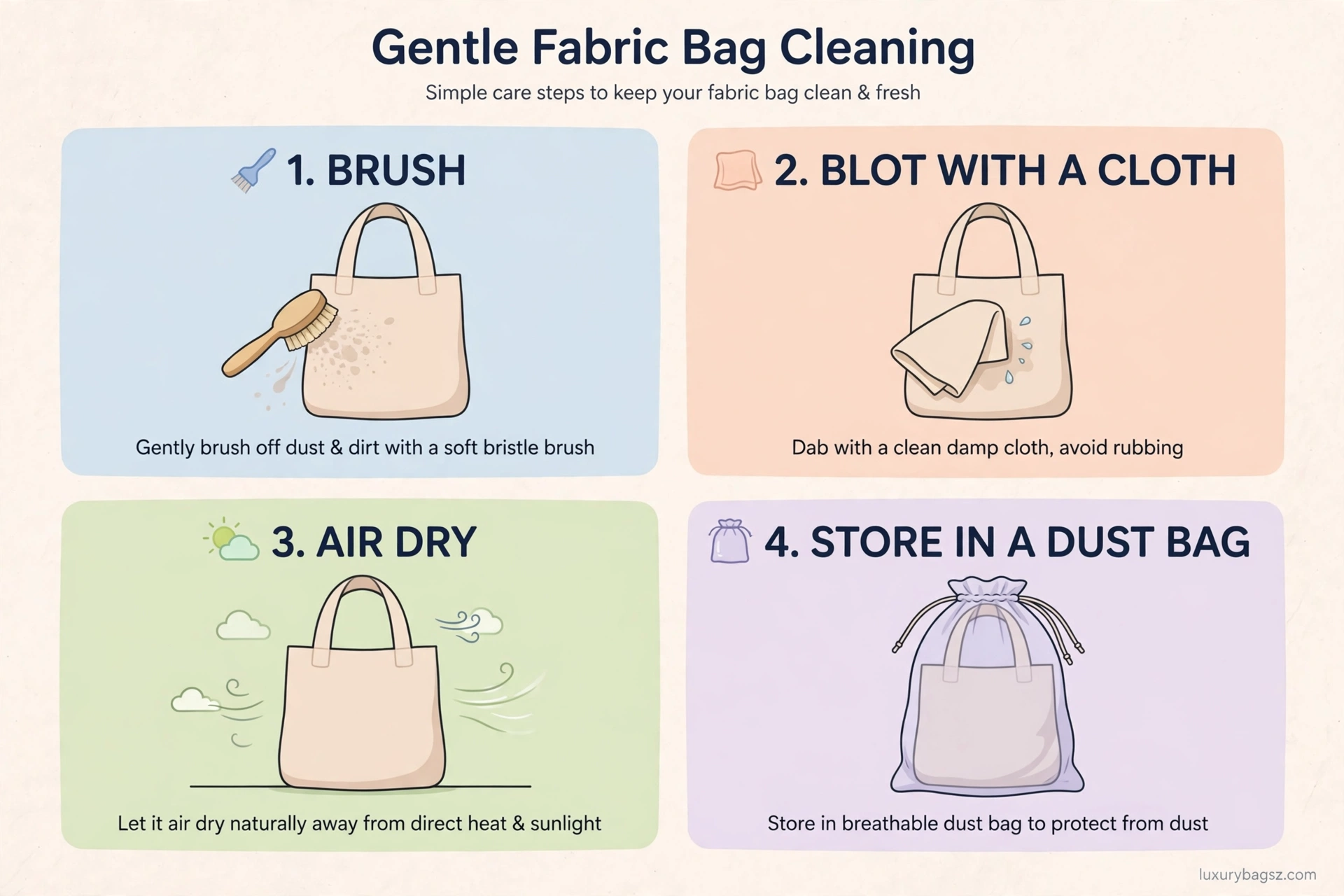
Start by emptying the bag and shaking it gently upside down over a clean surface. Brush the outside lightly with a soft brush, and use a textile roller for lint. Work slowly around seams and corners, where dust gathers, and never pull at loose threads.
For light surface marks on tweed, use a dry microfibre cloth with gentle blotting motions. If a barely damp wipe is truly needed, use a white cloth wrung almost dry, test a hidden spot first, and blot once. Stop immediately if colour transfers to the cloth.
Leather trim and chain straps should be wiped separately with a soft dry cloth. Keep any dampness away from leather, since water can leave lines on it, and dry hardware at once. The leather behaviour described in our guide to caviar versus lambskin leather is a reminder that soft leathers mark easily.
Air dry the bag fully before storage, stuffed lightly with tissue so it holds its shape. Never use a hairdryer, radiator or direct sun to speed drying. Patience is the whole method: slow drying protects weave, colour and shape at once.
Deauville Canvas Care: What Changes for a Tote
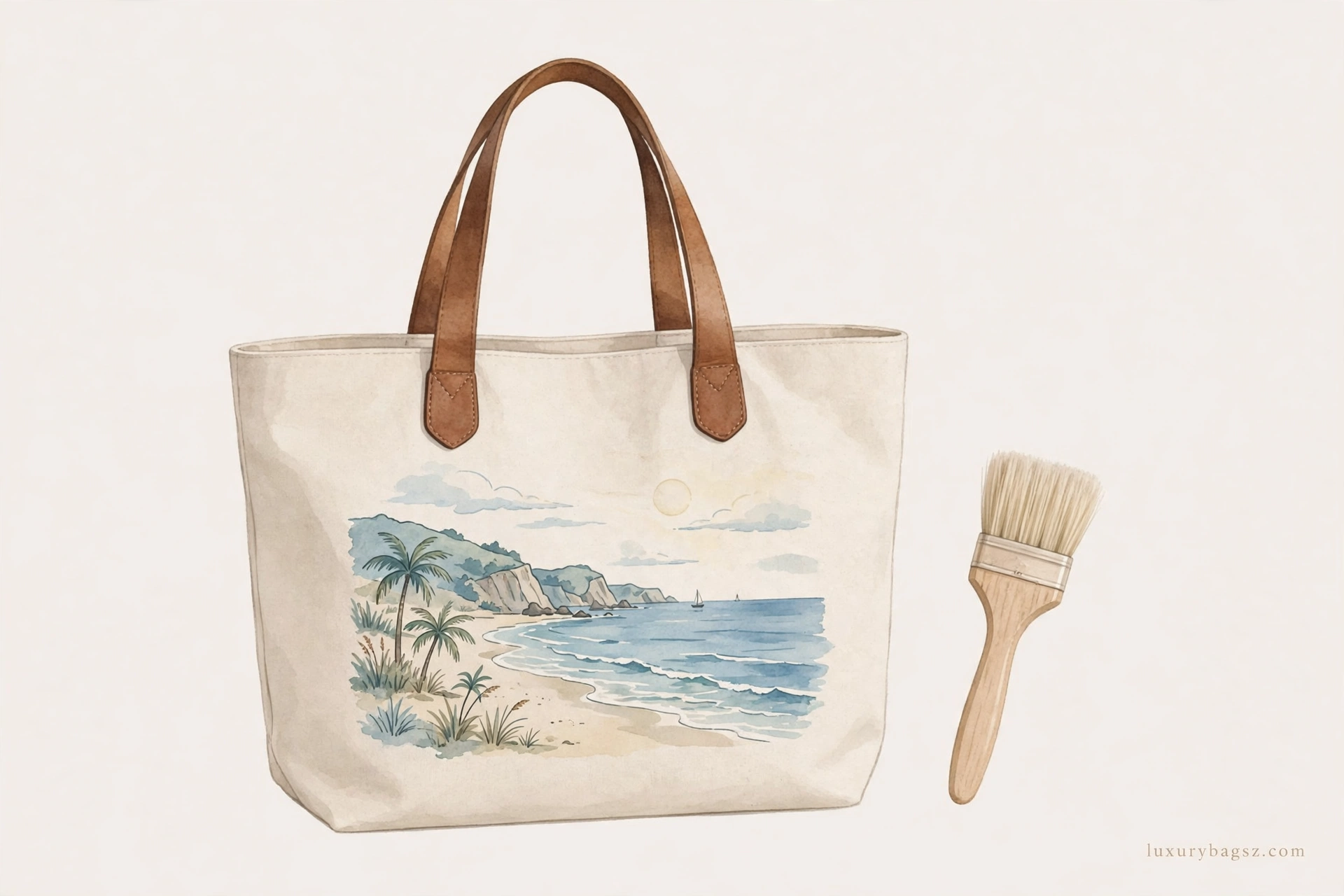
The Deauville is the friendliest Chanel fabric bag to care for. Its canvas body handles everyday use well, and its leather handles and trim add structure. Beach prints and bright designs hide light dust better than plain tweed, which helps on holiday.
Even so, the same rules apply in softer form. Brush the canvas after beach days, since sand works into the weave and abrades it. Wipe the canvas with a barely damp white cloth for surface marks, test a hidden spot first, and never soak the tote or put it in a washing machine.
Some blogs advise warm water and mild soap scrubbing for the Deauville. That advice conflicts with Chanel's own no-products line and risks water rings and shape change. A barely damp wipe is the furthest this guide recommends at home, and a professional cleaner is the safer route for real stains.
Tote owners often forget the interior. Empty it fully, shake out sand and crumbs, and wipe the lining gently where the material allows. Other large totes face the same habits, as shown in our guides to the Chanel Medallion Tote and the Chanel Grand Shopping Tote.
Stains: What to Do in the First Minutes
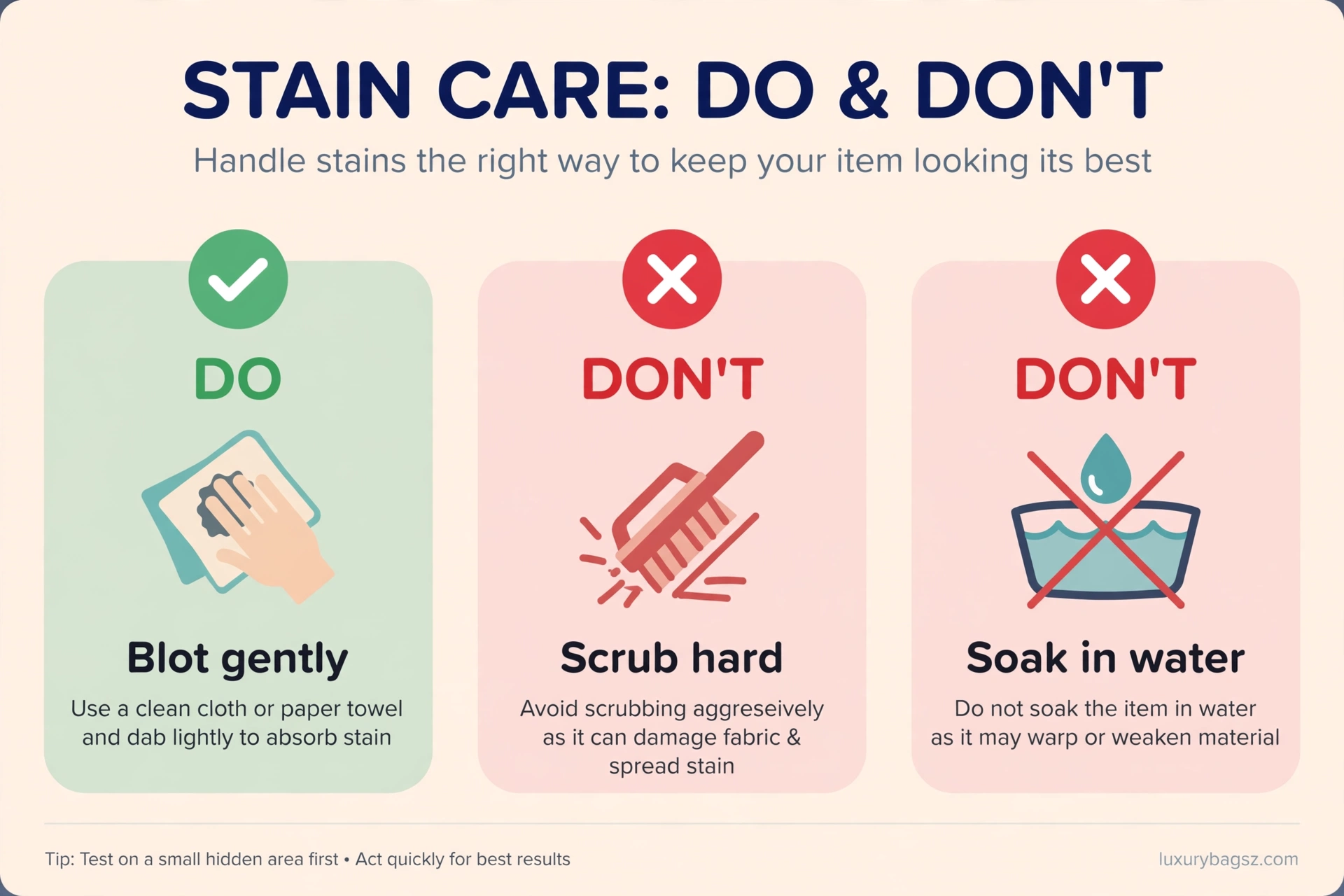
Speed matters more than strength with stains. Blot a fresh mark at once with a clean, dry, white cloth, pressing gently without rubbing. Rubbing spreads the stain and damages the weave, while blotting lifts liquid before it sets.
For dry marks such as dust or powder, brush gently and use a textile roller before trying anything damp. For water spots, blot and air dry slowly, since heat can set a ring. For food or drink, blot, then stop and seek professional advice rather than experimenting with home remedies.
Never use bleach, acetone, harsh stain removers or coloured cloths on tweed or canvas. These can strip colour, weaken threads or transfer dye. Perfume, oils and alcohol-based products also belong nowhere near fabric bags, since they alter finishes.
If the stain is large, dark or on a light-coloured bag, go straight to a professional bag spa. Tell them the fabric, the stain and what you have already tried. Honest information helps them choose a safe method, while hidden home attempts can make their work harder.
Professional Cleaning and Storage
A professional bag spa every one to two years keeps fabric bags in good health. Specialists clean, condition trims and check stitching, hardware and corners before small wear becomes damage. For tweed, they also handle pulled threads safely, which home fixes rarely do.
Between visits, store fabric bags upright in their breathable dust bags, stuffed lightly with acid-free tissue. Never use plastic bags, which trap moisture and encourage mould. Keep the dust bag out of sunlight and away from damp rooms, attics and bathrooms.
Separate light and dark bags in storage, since prolonged contact between fabrics can transfer colour. Wrap chain straps in tissue so metal cannot press into woven fabric or leather. Small separations like these prevent most storage damage.
Check stored bags every few months for damp, odour or thread pulls. Catching a problem early makes professional repair cheaper and simpler, while a bag left unchecked for a year can develop issues that need far more work.
Keeping a Fabric Bag Looking New for Years
The long game is simple: dry care often, wet care almost never, and professional help promptly. Rotate fabric bags with leather ones so no single bag takes every outing, and give each bag a rest between wears. Fabric recovers its shape better when it is not used daily.
Seasonal checks help too. At the start of summer, inspect beach totes for sand and salt. At the start of winter, check tweed bags for moth damage and damp before storing them. A few minutes of inspection twice a year catches most slow problems.
Finally, accept the limits of home care. A well-kept tweed bag will still show gentle wear over time, and that is normal for woven fabric. What home care prevents is the avoidable damage: water rings, pulled threads, stains set by scrubbing, and colour loss from sun.
Frequently Asked Questions
1. Can I wash a Chanel tweed bag? No. Never machine wash or soak a tweed bag. Brush gently, blot marks with a dry cloth, and use a professional cleaner for anything beyond light dust.
2. Can I wash a Chanel Deauville tote? No. Do not soak or machine wash it. Brush off sand, wipe canvas with a barely damp white cloth for surface marks, and use a professional cleaner for stains.
3. What should I do if my tweed bag gets wet? Blot gently with an absorbent, non-pilling cloth, stuff lightly with tissue, and air dry slowly away from heat and sun. Never use a hairdryer or radiator.
4. How do I remove a stain from a Chanel fabric bag? Blot at once with a clean dry white cloth, without rubbing. For large or dark stains, or light-coloured bags, go to a professional bag spa rather than trying home remedies.
5. Can I use soap on Chanel tweed? This guide advises against it. Some blogs recommend mild soap, but that conflicts with Chanel's no-products guidance and risks water rings and weave damage. Dry methods come first.
6. How do I fix a pulled thread on tweed? Do not pull or cut it at home. Ask a Chanel boutique or a professional bag spa for advice, since a wrong fix can unravel a visible line in the weave.
7. How should I store a Chanel tweed bag? Store it upright in its breathable dust bag, stuffed lightly with acid-free tissue, away from sunlight and damp. Never use plastic bags, which trap moisture.
8. How often should I have a fabric bag professionally cleaned? Every one to two years is a common guide, plus promptly after stains or damage. Regular professional care keeps stitching, trim and weave in good health.
9. Does sunlight damage Chanel fabric bags? Yes. Prolonged direct sunlight and strong artificial light fade tweed and canvas. Store bags away from windows and rotate displayed bags so one side does not fade.
10. Can I use a lint roller on tweed? Yes, a gentle textile roller suits light lint removal. Use it lightly and avoid aggressive rolling over loose threads, seams or embellished areas.
Final Verdict: Gentle, Dry and Patient Wins
Tweed and fabric bags reward restraint. Brush lightly, blot rather than scrub, keep them dry, and hand real stains to a professional. Follow that routine and your Deauville, tweed flap or canvas tote will stay beautiful far longer than any shortcut would allow.






