

Hermès Niloticus Crocodile Lindy 26: The Small Exotic That Still Works Every Day
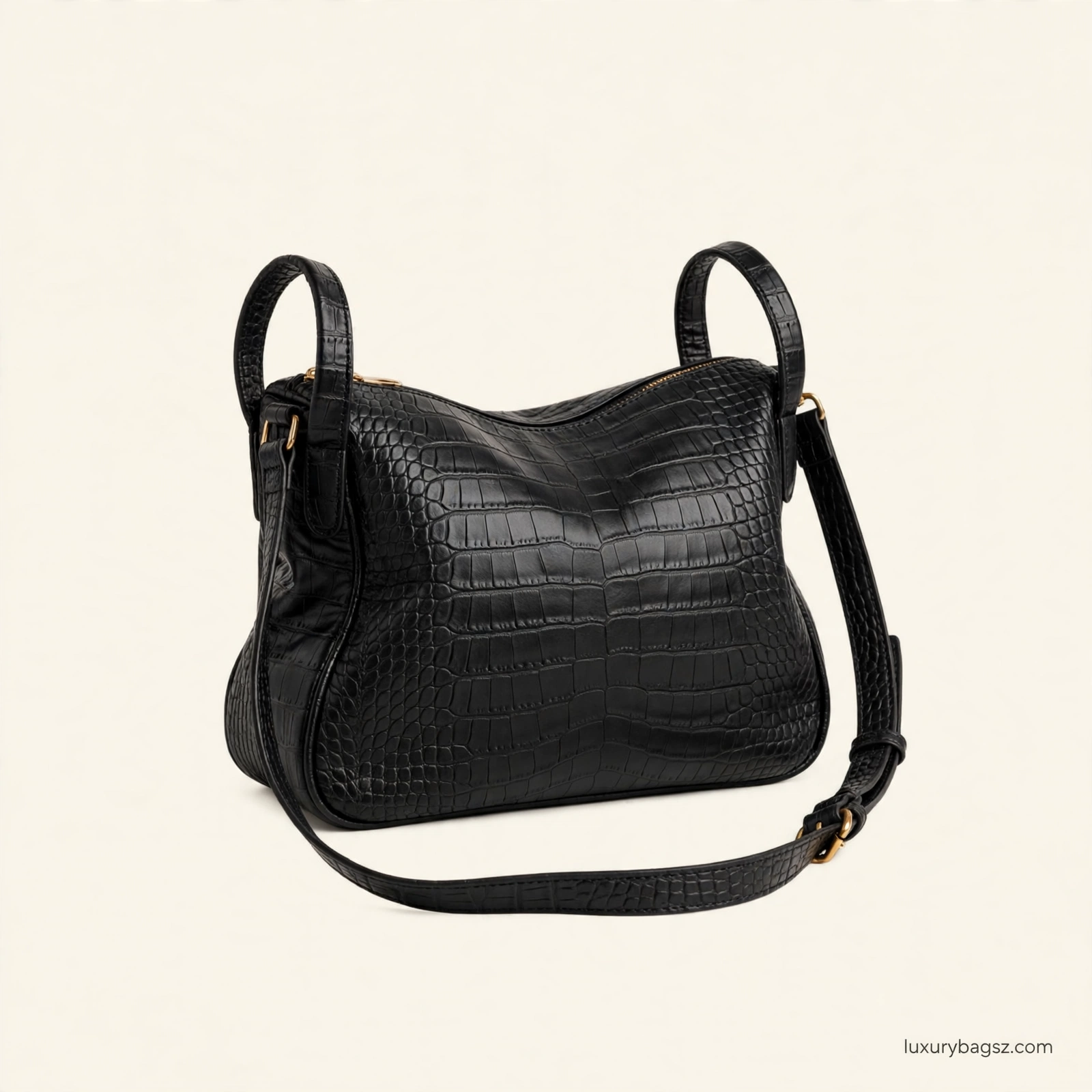
The Lindy 26 in Crocodile, in Brief: Rare Skin, Easy Shape
The Hermès Niloticus crocodile Lindy 26 is a small, soft shoulder bag in Nile crocodile skin. It pairs the Lindy's relaxed, everyday shape with one of the house's scarcest materials, so it is far harder to find than the same bag in calfskin. If you want an exotic bag you can actually carry, this is one of the most wearable combinations Hermès makes.
That wearability is the point. The Lindy was designed to sit close to the body, with handles at each end and a strap that frees your hands. In crocodile, the same shape gains a harder, more polished surface, but it keeps the easy carry that makes the Lindy a daily bag rather than a vault piece.
Prices move too much to quote a single figure with confidence. Past listings show a very wide range, and current availability is thin, so treat any one asking price as a snapshot of that seller's bag, not a fixed value for the model. The buying checks in this guide matter more than any headline price.
Key Takeaways
- Niloticus is Nile crocodile, with a somewhat larger scale pattern than Porosus crocodile.
- The Lindy 26 is about 26 cm wide, making it a compact everyday size, not a travel bag.
- Side handles plus a shoulder strap give two carries: hand-held and hands-free.
- Crocodile Lindy bags are scarce, and colour, finish and condition drive the price.
- Check scale pattern, stitching, hardware engraving and blind stamp before paying.
- Exotic skin needs gentle, dry care and professional help for anything beyond dust.
- The pictures in this guide are generic illustrations, not photographs of a real bag.
What Niloticus Crocodile Actually Means
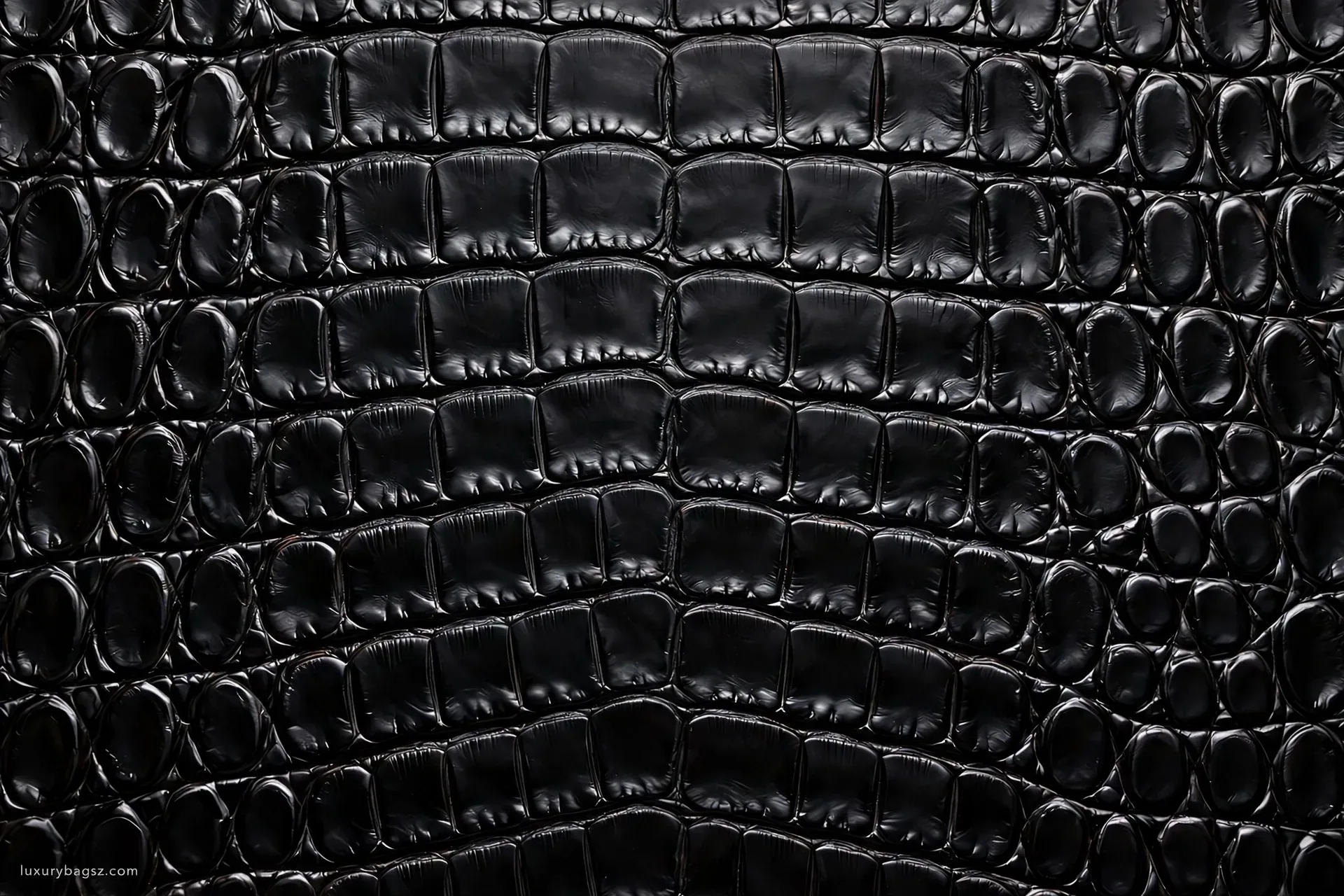
Niloticus is the name Hermès uses for Nile crocodile skin. It sits alongside Porosus, or saltwater crocodile, in the house's exotic range, and the two are told apart partly by scale. Niloticus has a somewhat larger scale pattern than Porosus, which gives it a bolder, more graphic look on a small bag.
That scale difference is worth learning by eye. On the Lindy 26, the scales run across a curved, slouchy body, so the pattern bends and catches light differently from a flat, structured bag. A genuine skin shows natural variation from scale to scale, while a printed imitation often repeats too neatly. If the pattern looks stamped on rather than grown, step back.
Finish changes the look just as much as colour. Crocodile Lindy bags appear in matte and shiny finishes, and the same colour can read as two different bags depending on which finish it wears. Matte reads quieter and more daytime; shiny reads dressier and shows marks more readily. Neither is better in itself, so choose by how you will wear it.
The house's Hermès history helps explain why exotics cost so much more than calfskin. Exotic skins are rarer, harder to work, and offered far less often than everyday leathers. Our guide to crocodile versus alligator leather is a useful companion if you are comparing skins, since the pore and scale marks differ between species.
The Lindy 26 Shape and Size
The Lindy is a soft, rounded bag with its handles set at either end rather than on top. You thread an arm through the handles and the body sits flat against the hip, or you attach the longer strap and wear it on the shoulder. That handle placement is the design's signature, and it is why the bag feels so different from a structured top-handle bag.
The 26 measures about 26 cm wide and roughly 18 cm tall, with a depth of around 12 to 14 cm depending on how the individual bag is measured. Listings vary slightly on depth, so treat those figures as a guide rather than a factory promise. What matters in practice is that the 26 holds a phone, wallet, keys, card holder and a small pouch without bulging.
Inside, the Lindy is a single open cavity with slip pockets, plus two pockets on the outside for quick access. The top closes with two zips that meet under a central flap, secured by a turn-lock. That double closure is reassuring in a crowd, though it is slower to open than a single magnetic flap.
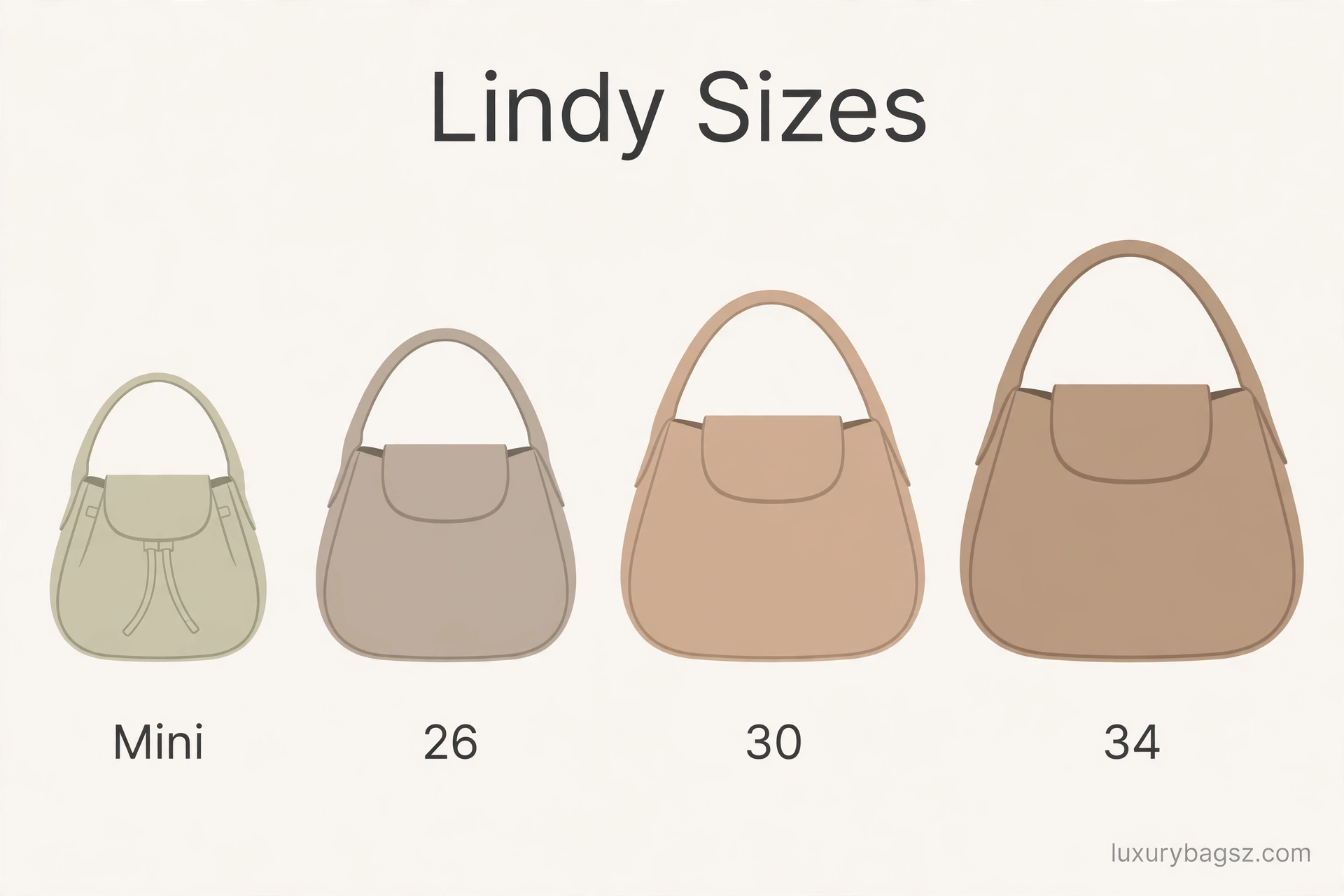
Size choice comes down to load, not height alone. The Mini suits a truly minimal carry, while the 30 suits a fuller daily load. The 26 sits between them, and it is the size many buyers pick when they want a Lindy that still looks small. Read the Lindy sizes guide before deciding, since the same bag can look very different on different frames.
Where the Lindy Comes From
The Lindy was created under Jean-Paul Gaultier, who led Hermès design in the 2000s, and it reached the Spring-Summer 2007 collection. It was a deliberate break from the house's structured icons: softer, more casual, and built around movement rather than formality. That origin still shows in every version, including the crocodile one.
Early Lindy bags were made in calfskin leathers such as Clemence, Swift and Evercolor. Exotic versions came as rarer expressions of the same shape, not as a separate model. That is why a crocodile Lindy 26 is best understood as a familiar bag in an unfamiliar material, rather than a new design altogether.
The video below shows a Lindy from the wider family, not this exact crocodile 26. It is included because good footage of the specific exotic 26 is scarce, and the carry and closure shown are the same. Watch it for how the bag sits on the body, not for colour or skin detail.
Crocodile versions have stayed scarce because exotics are offered selectively. A boutique may carry leather Lindy bags regularly while only rarely offering a crocodile one, and the colour and hardware on offer may not match your wish list. Patience, and a clear brief on colour and finish, helps more than urgency.

Colours, Finishes and Hardware
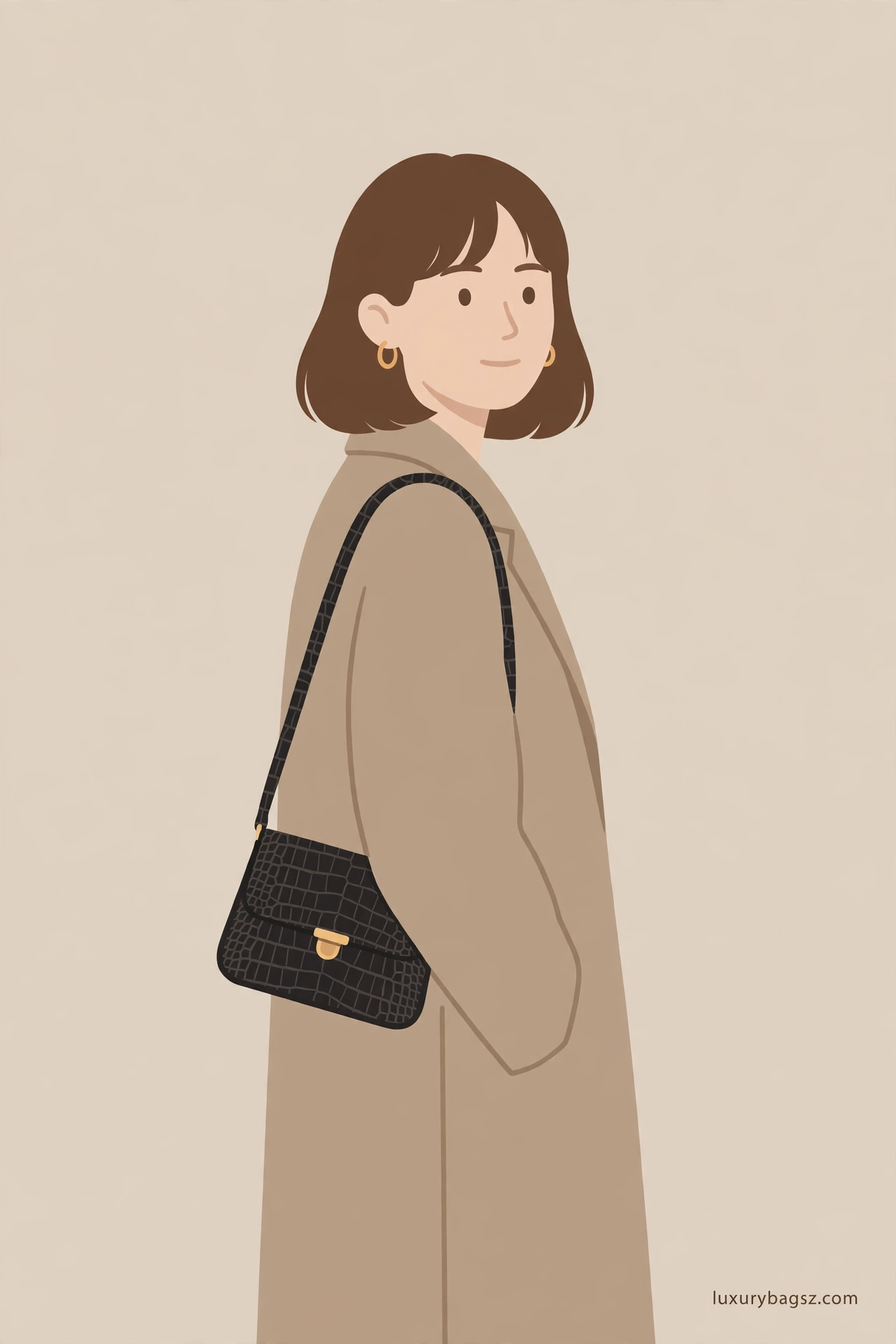
Black is the most familiar crocodile Lindy colour, and it is the easiest to wear daily. Dark neutrals hide wear well and suit both gold and palladium hardware. Lighter and brighter crocodile colours exist, but they show handling marks sooner and ask for more careful storage.
Hardware on Lindy bags is typically gold or palladium, and the choice changes the bag's temperature. Gold warms a dark crocodile and suits classic styling, while palladium cools it and suits a more modern wardrobe. Neither finish is more authentic than the other, so buy the one you already wear in jewellery and belts.
Matte crocodile is often the safer daily choice. It scuffs less visibly than a high shine and keeps a lower profile in daylight. Shiny crocodile is striking at evening events, but it needs a dust bag, a soft cloth and a habit of checking for rubs at the corners and strap joins.
When you compare two crocodile Lindy bags, compare like with like. A matte black 26 with palladium hardware and a shiny coloured 26 with gold hardware are different propositions, and their prices should not be expected to match. Condition, completeness and colour rarity explain most of the gap between them.
Buying Pre-Owned: Checks That Matter
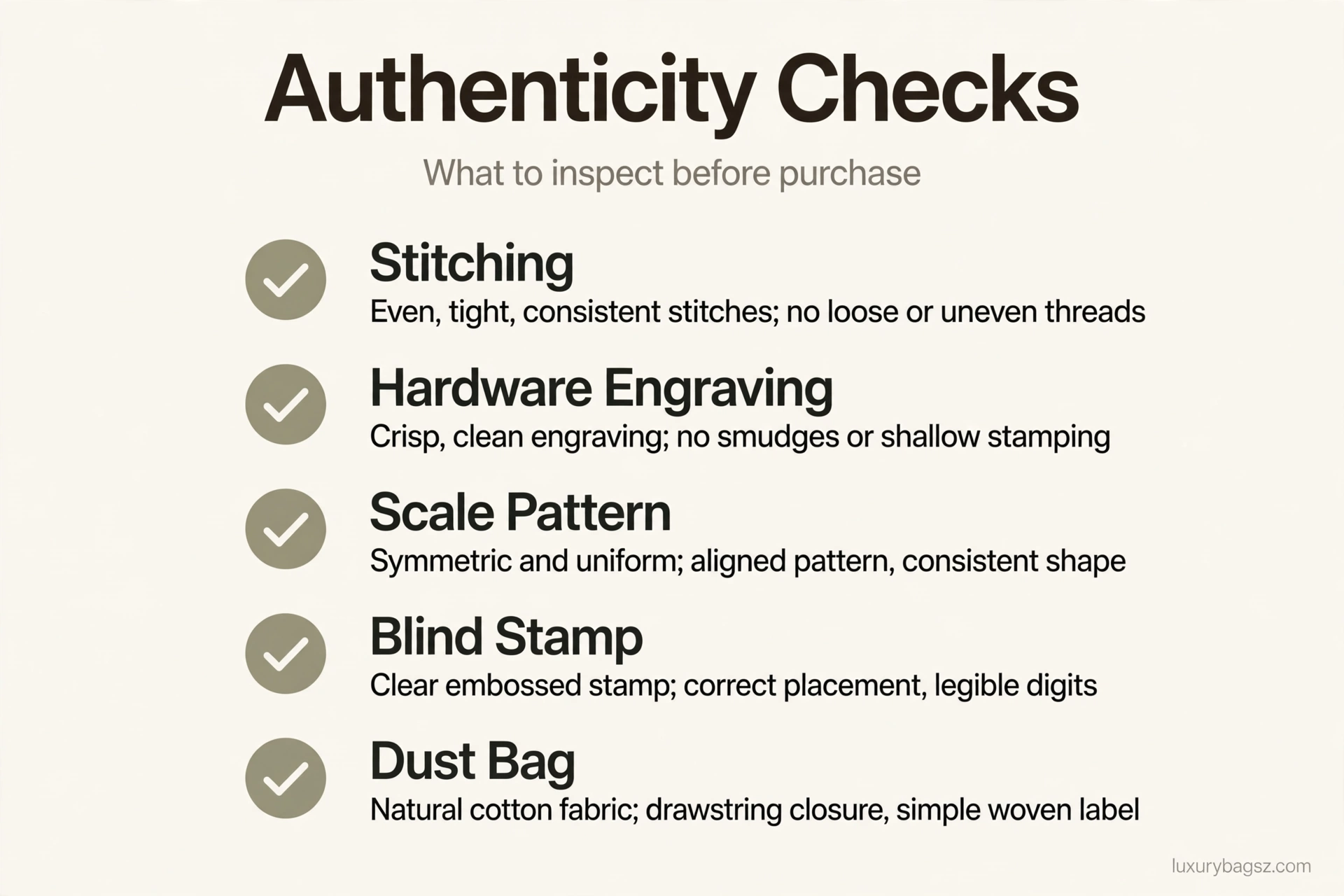
Start with the skin itself. Look at the scale pattern in strong, even light and check that it flows naturally around curves and joins. Scales should vary slightly in size and shape, and the surface should feel like skin, not plastic. A pattern that repeats perfectly, or looks printed over a seam, is a warning sign.
Next, check stitching, hardware and the blind stamp. Stitching on a genuine Hermès bag is even, tight and slightly angled, with no loose threads at stress points. Hardware should be weighty, cleanly engraved and consistent in tone, and the blind stamp should match the claimed year. Our fake Lindy checks walk through these points in detail.
Ask for the full set and for clear photographs of the interior, the zips, the flap underside and the strap attachments. A dust bag, lock, keys and clochette add confidence, though their absence does not prove a bag is fake. What matters more is whether the seller can explain the bag's history and show consistent, detailed images.
Buy from a seller who authenticates in-house or offers a clear returns route. If a price looks far below every comparable listing, treat that as a reason to slow down, not to hurry. A crocodile Lindy 26 at a bargain price is usually a story that does not add up.
Caring for Crocodile Skin
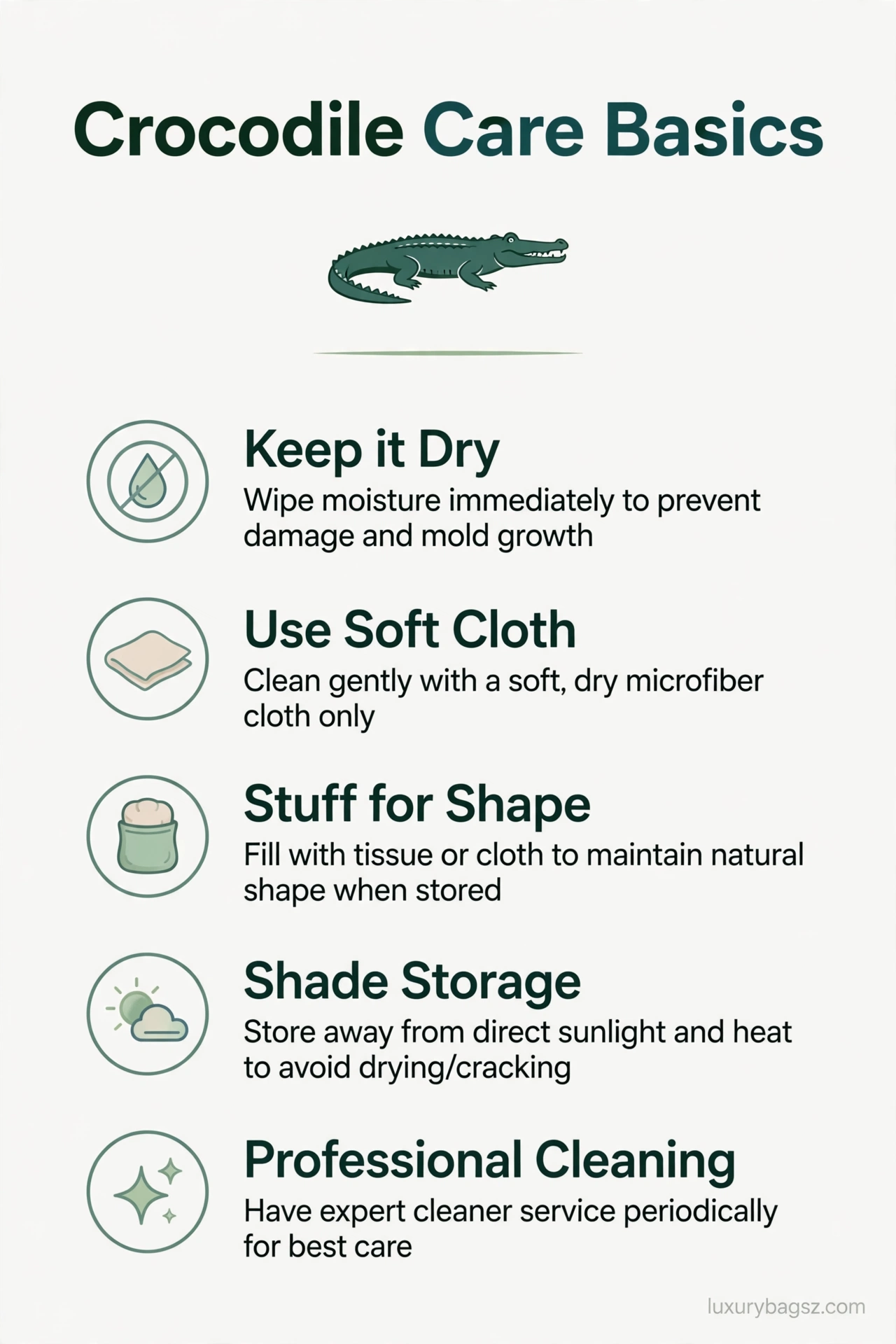
Crocodile skin likes dry, gentle care. Wipe it with a soft, dry cloth, keep it out of direct sun and rain, and store it stuffed, upright, in its dust bag. Do not use creams, oils or household cleaners on exotic skin, since the wrong product can stain or dull the scales permanently.
Water is the main everyday risk. Blot any drops at once with a dry cloth and let the bag air-dry away from heat; never rub, and never use a hairdryer. For anything beyond dust — a stain, a scuffed corner or a stiff zip — take the bag to Hermès or a specialist exotic-skin restorer rather than experimenting at home.
Storage matters more for crocodile than for calfskin. Keep the bag stuffed so the soft body holds its shape, and keep the strap from pressing a crease into the scales. Check the corners and the strap joins now and then, since those are the first places wear shows on a carried bag.
Our guide to reptile leather care covers these habits in more depth. The rule throughout is simple: little and often, dry and gentle, and professional help early rather than late.
Who Should Buy It, and Who Should Skip It
Buy the Niloticus Lindy 26 if you already love the Lindy shape and want it in the most striking material available. It suits a buyer who carries light, dresses the bag up and down, and will store it properly between wears. In that life, it earns its price by being worn often.
Skip it if you need a hard-wearing work bag, carry a laptop, or want a bag you can set down anywhere without a thought. Crocodile rewards care, and a buyer who resents that care will enjoy a calfskin Lindy more. The leather 26 gives the same shape with far less anxiety.
Also skip it if the only example you can find is in a colour or finish you do not love. Scarcity can push buyers into compromises they later regret, and a crocodile bag is too costly a place to settle. Wait for the right combination, or buy the leather version now and keep watching.
For collectors, the 26 in crocodile is a sweet spot: small enough to display well, practical enough to wear, and scarce enough to hold interest. For a first Hermès bag, though, a leather Lindy is usually the wiser start, with crocodile as a later, deliberate step.
Frequently Asked Questions
What does Niloticus mean on a Hermès bag?
Niloticus means the skin is Nile crocodile. It has a somewhat larger scale pattern than Porosus, or saltwater crocodile, and it is one of the exotic skins Hermès uses for bags such as the Lindy.
How big is the Lindy 26?
The Lindy 26 is about 26 cm wide and roughly 18 cm tall, with a depth of around 12 to 14 cm depending on measurement. It fits a phone, wallet, keys, card holder and a small pouch comfortably.
Is the Lindy 26 a quota bag?
The Lindy is generally more accessible than a Birkin or Kelly, but crocodile versions are offered far less often than calfskin ones. Availability still varies by boutique, colour and finish, so a specific crocodile 26 may take time to find.
What is the difference between matte and shiny crocodile?
Matte crocodile has a soft, low-shine surface that hides small marks well and suits daily wear. Shiny crocodile has a polished, reflective surface that looks dressier but shows rubs and fingerprints more readily.
How much does a Niloticus Lindy 26 cost?
No single current price can be verified, since listings are few and vary widely by colour, finish and condition. Past secondary-market guides put crocodile Lindy bags broadly in a five-figure dollar range, but treat any individual asking price as specific to that bag.
Can the Lindy 26 be worn crossbody?
The 26 is mainly a shoulder bag, worn with its longer strap on the shoulder or carried by its side handles. The smaller Mini Lindy is the version most often worn crossbody, since its strap is proportioned for that carry.
How do I spot a fake crocodile Lindy?
Check the scale pattern for natural variation, the stitching for even, angled work, the hardware for clean engraving, and the blind stamp for a plausible year. If anything looks printed, loose or inconsistent, get an independent authentication before paying.
Is crocodile hard to look after?
Crocodile needs gentle, dry care: a soft cloth, shade storage, stuffing for shape, and no creams or household cleaners. Water should be blotted at once, and stains or damage should go to a specialist rather than being treated at home.
What colours does the crocodile Lindy 26 come in?
Black is the most familiar, but crocodile Lindy bags have appeared in a range of dark, bright and pale colours over the years. Availability of any one colour is limited, so most buyers choose from what the pre-owned market offers at the time.
Is the Lindy 26 a good investment?
It is a scarce, wearable exotic, which helps it hold interest, but no bag should be bought purely as an investment. Condition, colour, finish and completeness matter more than the model name, and resale values move with the wider market.
Final Verdict: A Small Exotic Worth Waiting For
The Niloticus crocodile Lindy 26 works because it does not ask you to choose between beauty and use. The shape is easy, the size is honest, and the skin turns an everyday bag into something special without making it fragile in normal wear. That balance is rare, and it is why the bag keeps its appeal.
Buy it only after the checks in this guide, and only in a colour and finish you genuinely love. Stored well and carried with a little care, it is a bag that can be worn for years rather than admired from a shelf. For the right buyer, that is exactly the point.






