

How to Spot a Fake Chanel Tweed Jacket: Tweed, Buttons, Chain Hem and Label Checks
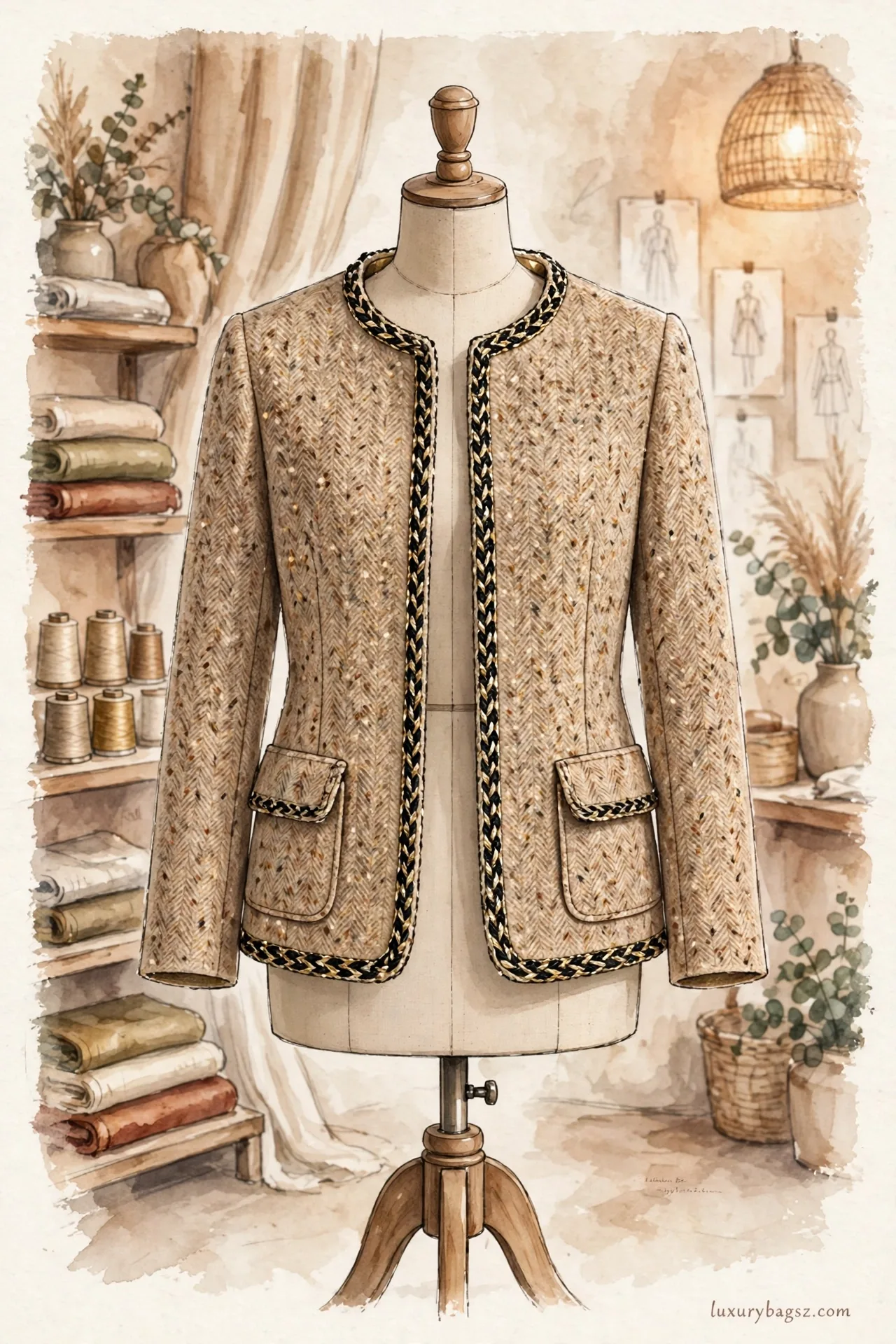
The Tweed Jacket Verdict in Brief: The Inside Decides
Start inside, not outside. A genuine Chanel tweed jacket pairs a rich, uneven weave with a silk lining, a weighted chain in the hem, even panels and themed buttons with weight. A fake usually fails on feel first. The tweed looks flat or shiny, the lining feels like cheap polyester, and there is no chain, or a light one that does nothing for the drape.
Key Takeaways

- Real tweed has depth: mixed yarns, flecks and a slightly irregular, springy hand.
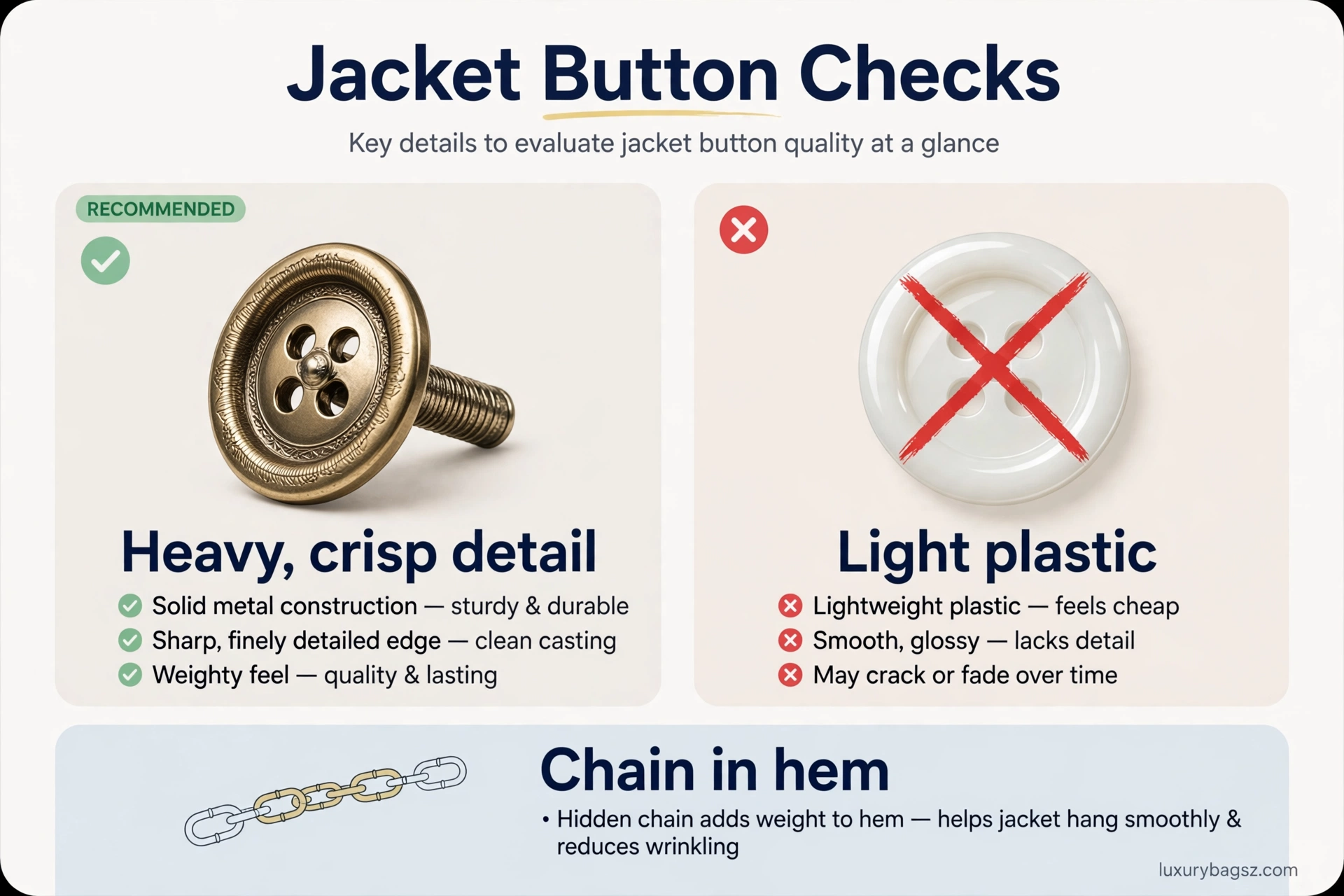
- Buttons are themed, weighty and crisply detailed, never light glossy plastic.
- The lining should be silk or a silk blend, cut to move with the outer cloth.
- A metal chain sewn into the hem helps a real jacket hang straight.
- Labels, size tags and reference details must suit the era of the jacket.
- Very low prices on a current-looking jacket are a warning, not a bargain.
Know the Real Jacket Before You Judge One
Learn the shape first. The classic jacket is collarless or lightly collared, with braided trim, patch pockets and a boxy cut that still drapes softly on the body. Our classic Chanel suit guide shows how the jacket sits in a full outfit, which helps you spot copies with stiff shoulders or odd lengths. Panels matter too. Genuine jackets are built from several panels, often four at the back, so the cloth can be tailored and still fall cleanly. A copy built from two flat back panels may look neat on a hanger. On a body it pulls, twists and refuses to settle the way the real cut does.
The Tweed Itself: Depth, Flecks and Spring
Run your fingers slowly over the cloth. Real Chanel tweed mixes wool with silk, cotton or fine metallic yarns, so the surface feels textured, warm and slightly springy. Hold it to daylight. Genuine tweed shows flecks of colour inside the weave and changes gently as the light moves, rather than glaring in one flat tone. Fake tweed often feels stiff, thin or plasticky, with a printed look. The pattern repeats too perfectly, and the cloth creases sharply instead of folding softly.
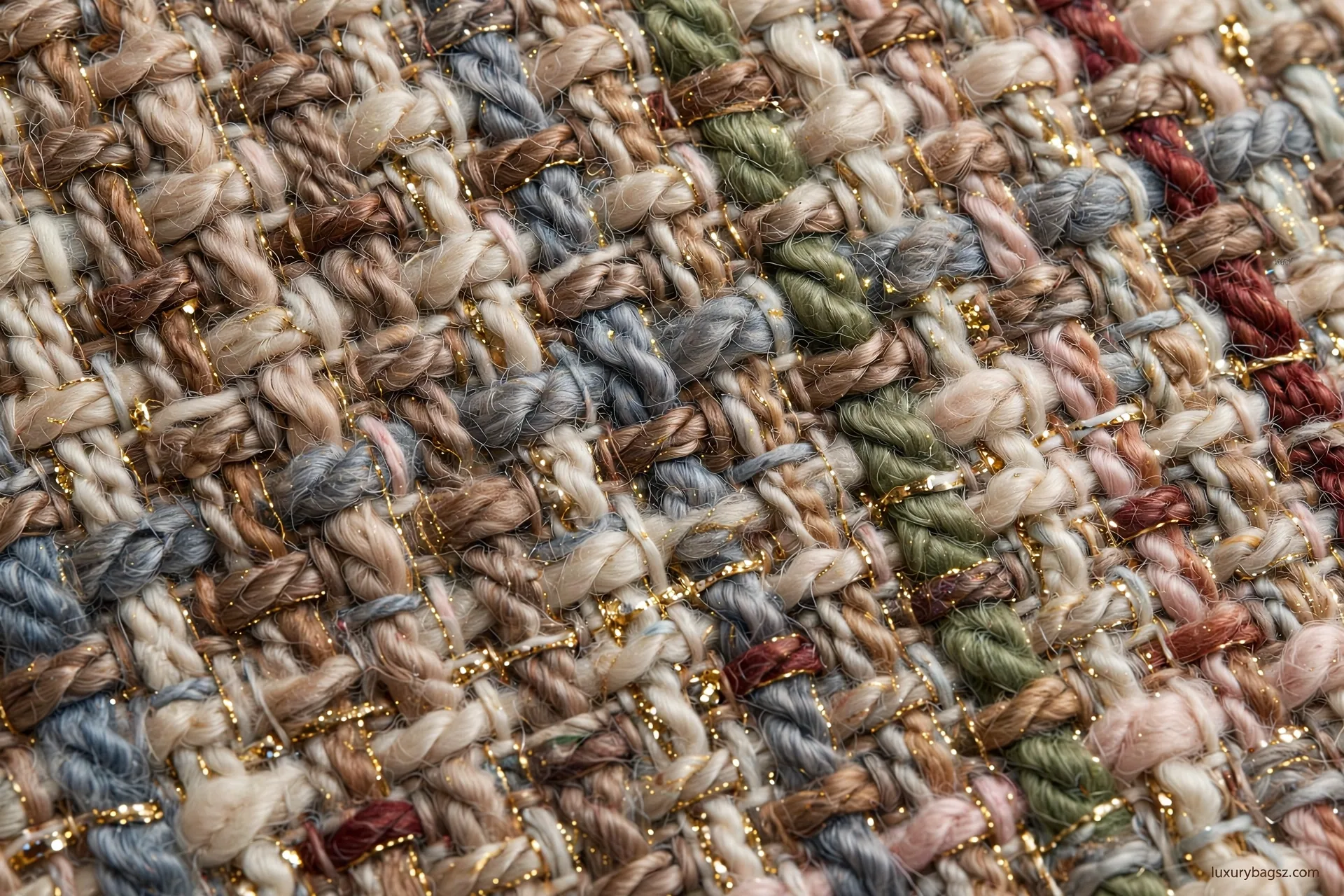
Weight helps as well. A real jacket feels substantial for its size because the cloth, lining and chain all add up. A suspiciously light jacket deserves a harder look.
Buttons: Themed, Weighty and Sharp
Buttons on a real jacket suit the theme of their range. Many carry the interlocking CC motif, a camellia or another house design, finished to a jeweller-like standard. Feel the weight in your palm. Genuine buttons feel solid and cool or warmly dense, with crisp edges. Light, glossy plastic buttons with shallow marks are a classic fake tell. Check the backs as well. Better buttons are neatly finished behind, and spares on vintage pieces were sometimes sewn inside. Replaced buttons happen, so judge the full set together.
Stitching, Trim and Pattern Matching
Follow the braided trim around the collar, cuffs and pockets. On a real jacket it is even, firmly attached and matched in tone, with no glue showing at the joins. Stitching should be small, regular and calm. Wandering lines, loose ends and puckered seams point to rushed making, however good the cloth looks in photographs. The same habits protect bag buyers, as our how to spot a fake Chanel flap bag guide shows. Chanel finishing is consistent across the house. Where the tweed has a clear check or stripe, it should meet sensibly at the seams. Perfect matching is not promised, but careless clashes at every join are a warning.
The Lining and the Famous Chain Hem
Open the jacket fully. A genuine lining is usually silk or a silk blend, smooth against the hand, and often patterned or toned to suit the outer cloth. The lining is cut to move a little independently, so the jacket glides rather than drags. Fakes often sew a thin synthetic lining tight to the shell, and it bunches. Now lift the hem. Many classic jackets hide a fine metal chain inside it, added so the jacket hangs straight. It should feel even and properly sewn in.
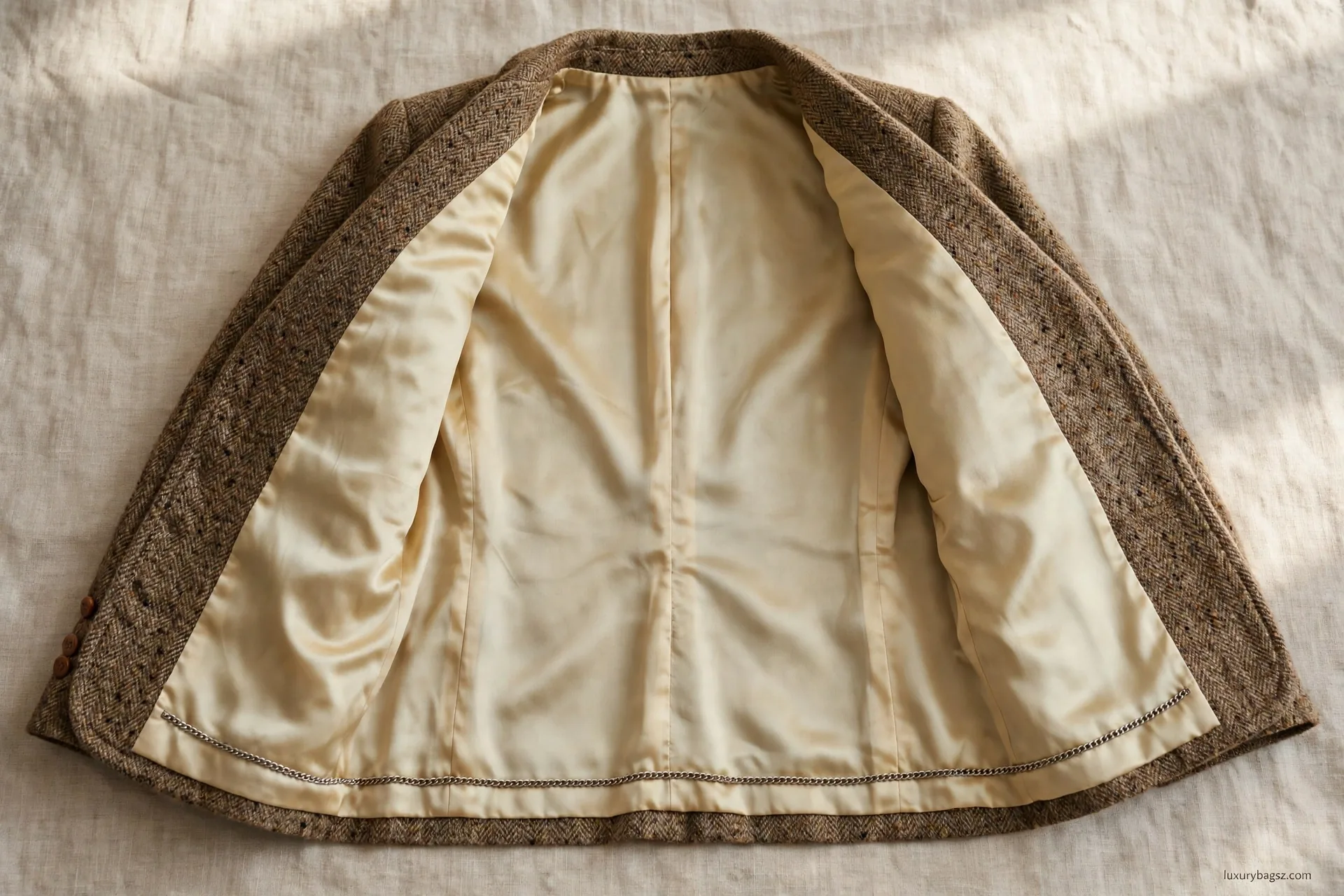
Not every genuine style carries the chain, so treat a missing chain as a question, not a verdict. A flimsy chain that rattles loosely is the stronger warning.
Labels, Size Tags and Reference Details
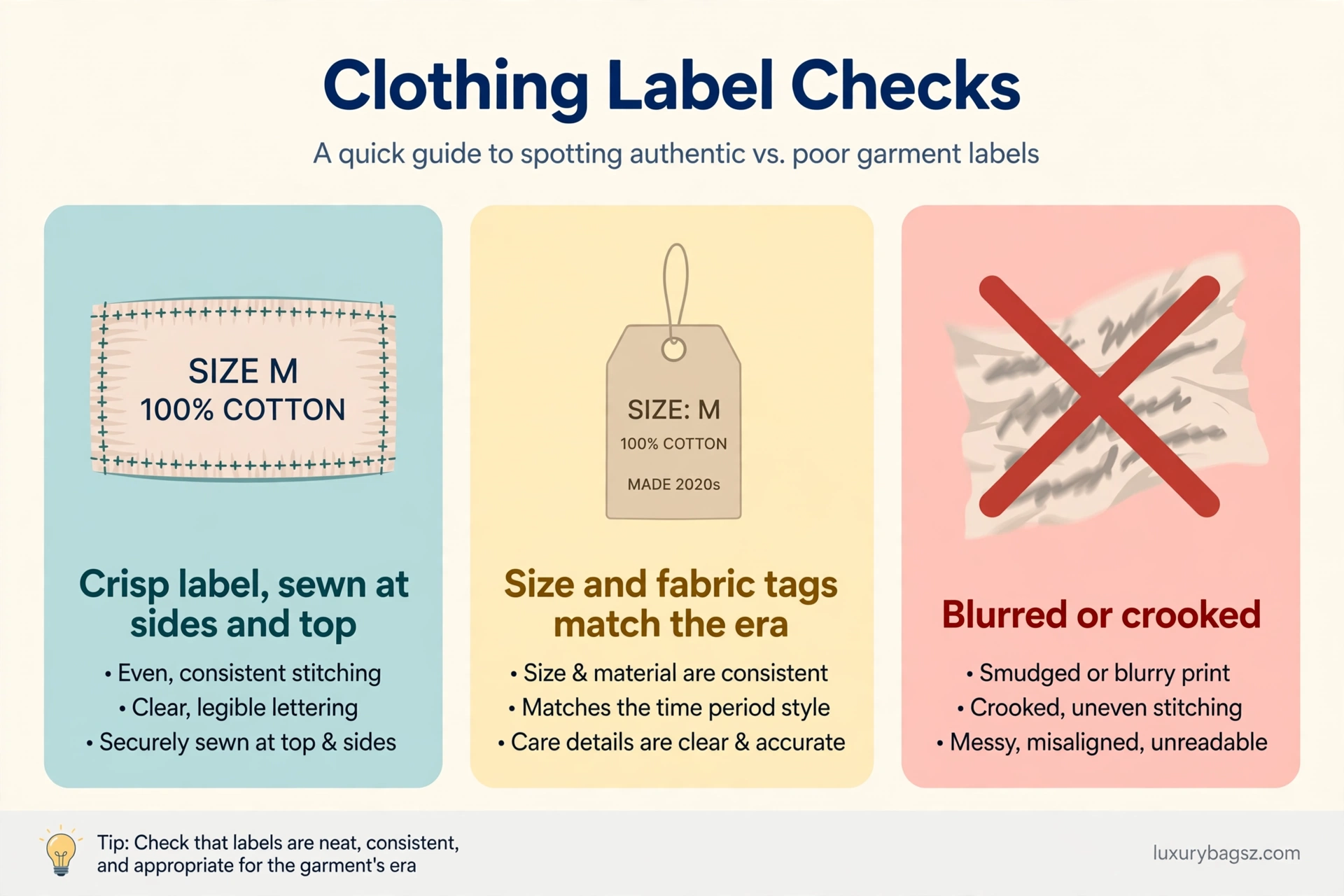
Find the main label at the neck. Lettering should be crisp, evenly spaced and neatly sewn, with stitching at the sides and top on many classic examples. Below it, size and fabric tags should read cleanly and suit the era. Older jackets often show the year and range on their tags; newer ones use reference numbers instead. Our quality craftsmanship in designer clothing guide explains why label quality matters. Houses that finish cloth this well rarely accept sloppy tags. A cut-out label is common on older pre-owned pieces and proves nothing alone. It does lower value, so the price should reflect the missing information honestly.
Price Flags and Where Jackets Surface
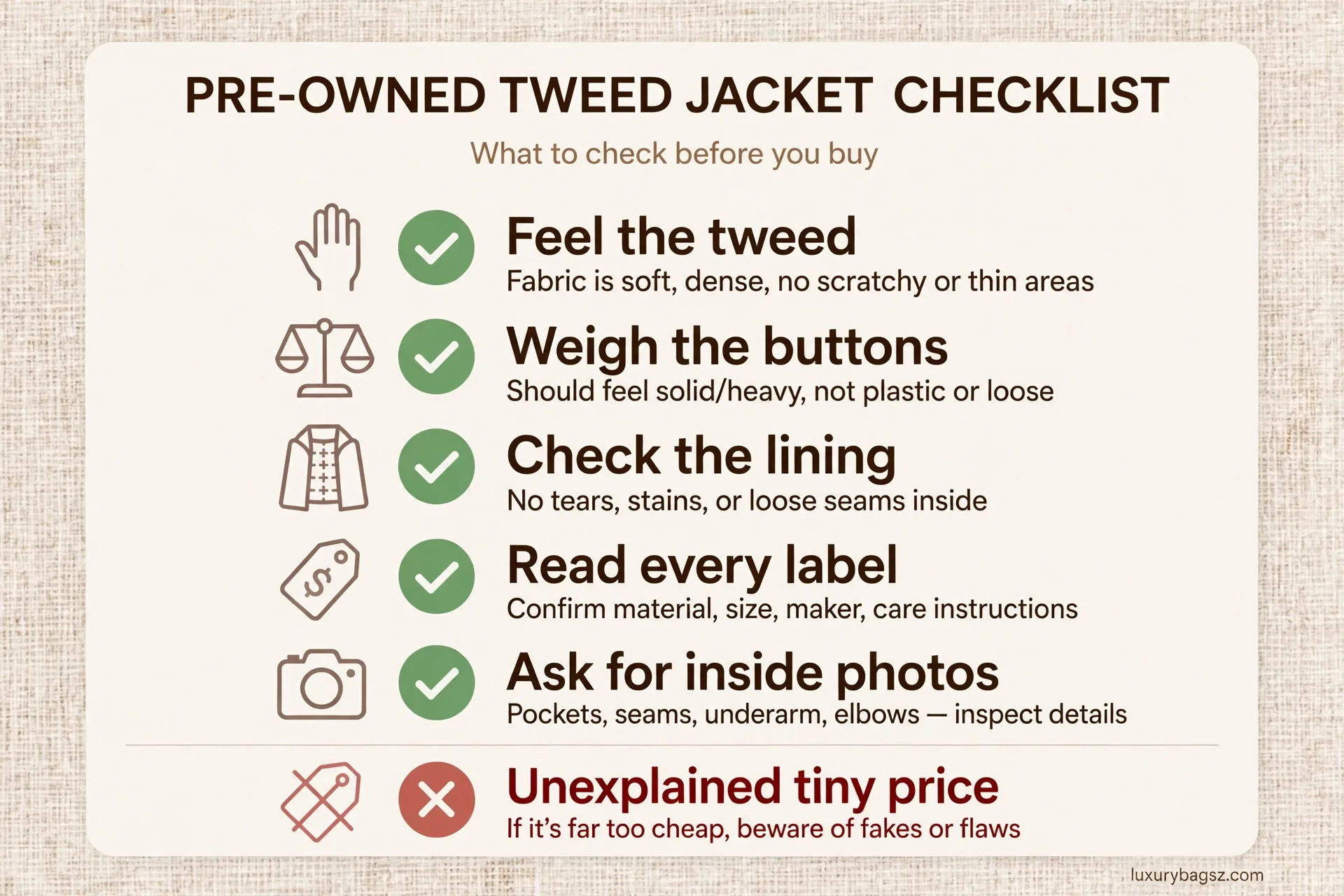
A real tweed jacket costs several thousand pounds new, and strong vintage pieces hold serious money. A current-looking jacket offered for a few hundred needs an explanation. Be wary of sellers who refuse inside photographs. The lining, labels, hem and button backs are exactly the views a buyer needs, and honest sellers know it. Ask for daylight photographs of the actual jacket, not range pictures. Our how to clean Chanel tweed fabric guide also helps you judge how tweed should look when cared for. Marketplace bargains do exist when a label is cut or a button is lost. Damage explains a discount; a perfect story at a tenth of value rarely does.
Buying Safely and Getting a Second Opinion
Buy from dealers who describe faults, show the inside and accept returns. A tweed jacket is a considered purchase, and pressure tactics have no place in it. For a valuable piece, pay for a professional opinion before the return window closes. Photograph the tweed, buttons, lining, chain and every label in clear light. Keep your checks in order: cloth, buttons, making, lining, labels, then price. A jacket that passes all six is a far safer buy than one that passes on looks alone. Finally, read our how to care for designer clothing guide before storing it. Real tweed rewards gentle handling and airy storage for decades.
Frequently Asked Questions
Does every real Chanel jacket have a chain in the hem?
No. Many classic styles do, but some genuine designs were made without one. Treat the chain as one check among several, and weigh its feel when it is present.
How should real Chanel tweed feel?
It should feel substantial, textured and slightly springy, with mixed yarns and flecks of colour. Stiff, shiny or paper-thin cloth with a flat printed look is a warning.
Can buttons prove a jacket is fake?
Light plastic buttons with shallow, blurry motifs are a strong tell. Remember that single buttons can be replaced on old jackets, so judge the whole set and its backs.
What lining should a real jacket have?
Silk or a silk blend that moves a little independently of the outer cloth. Thin synthetic lining sewn tight to the shell, which bunches when worn, points to a copy.
Where are the labels on a Chanel jacket?
The main label sits inside at the neck, with size and fabric tags below it. Lettering should be crisp and even, and the details should suit the era of the piece.
Do older jackets show the year on the tag?
Many pre-2010 jackets do show the year and range on their internal tags. Newer pieces tend to use reference numbers, which a boutique can read but buyers cannot check publicly.
Is a cut-out label a sign of a fake?
Not by itself. Labels are sometimes removed on older or sample pieces. It removes useful evidence, though, so expect a lower price and stronger checks elsewhere.
Why does panel count matter?
Real jackets use several panels so the cloth drapes and can be tailored. A back cut from just two flat panels often hangs stiffly and suggests cheaper making.
What price should make me suspicious?
A current-looking jacket at a small part of its boutique or strong resale value needs a clear, provable reason. Unexplained deep discounts are the oldest flag of all.
Who can confirm a jacket for me?
Use an established clothing authenticator or a trusted vintage dealer with returns. Send clear photographs of the tweed, buttons, lining, chain hem and all labels.
Final Verdict: Trust the Inside Story
A fake Chanel tweed jacket can copy a silhouette, but it rarely copies the inside: silk that moves, a chain that weights the hem, panels that drape and buttons with heft. Work through cloth, buttons, making, lining and labels in that order. If several checks fail together, walk away, however tempting the price or the photographs look.






