Hermès Barenia Leather: The Saddle Leather That Ages With You
Hermès Barenia Leather: The Saddle Leather That Ages With You
What Barenia Is, In Short
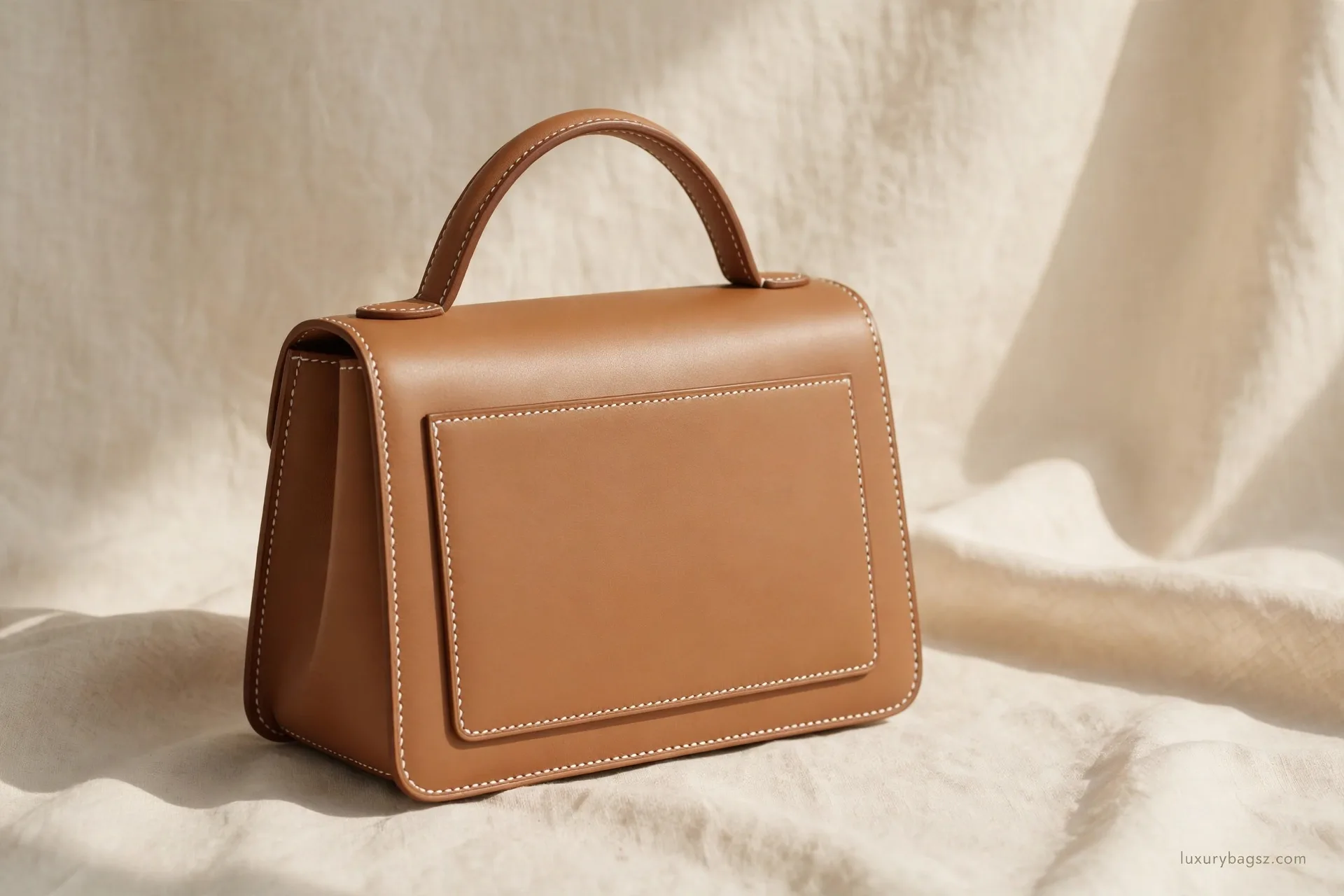
Hermès Barenia leather is a smooth, double-tanned calfskin first made for saddles. It is oily, warm and almost uncoated, so it darkens, softens and gains shine where your hands touch it most.
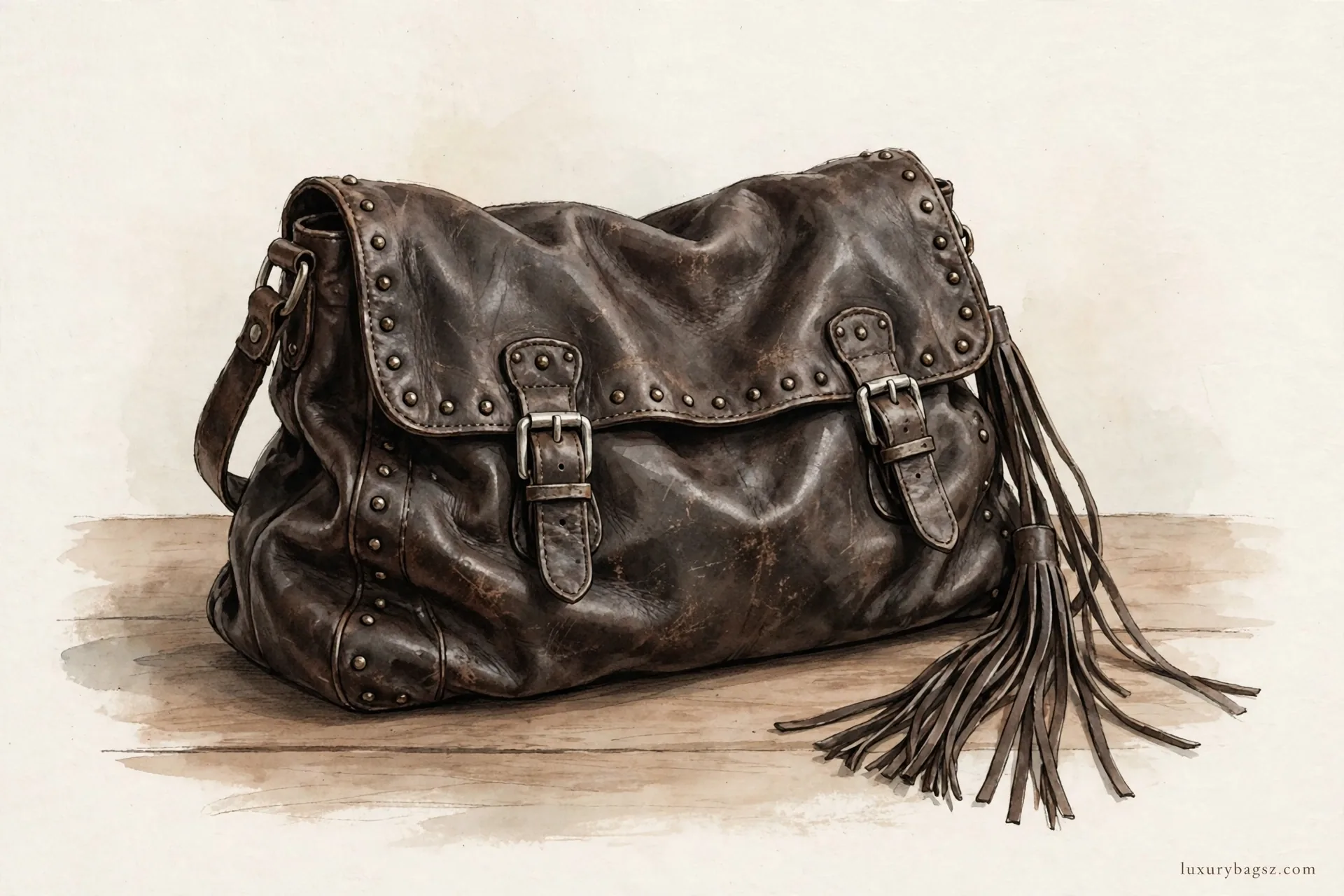
That change is the point. Barenia does not stay boutique-fresh. It records handling, light scratches and weather, then blends most of them into a deep, glossy patina no grained leather can copy.
If you want a bag that looks identical in five years, choose another leather. If you want one that looks better for having been carried, Barenia is the leather collectors love most.
Key Takeaways
- Barenia is veau Barenia: smooth calfskin, double-tanned, then soaked in oils for weeks.
- Barenia Faubourg is the grained version from 2016. It hides scratches better but still patinas.
- Light scratches often rub out with a fingertip. Water spots usually dry out, but soaking can stain it.
- Never use coloured polish, silicone sprays or heavy wax. Most care is a dry cloth and patience.
- It is scarce on Birkin and Kelly bags, so resale usually sits above comparable Togo.
- Skip it if you hate darkening, uneven colour or rain marks. It will do all three.
What Veau Barenia Actually Is
Barenia takes its name from Barr in Alsace, where the hide was first tanned. Hermès used it for saddles long before it reached handbags in the 1970s, and that working origin explains its feel.
A saddle leather must flex daily, resist sweat and rain, and survive scuffs without cracking. Barenia was built for that life, not for a shelf.
Double Tanning and the Oil Bath
The hide is double-tanned, first with chromium and then with vegetable tannins, then soaked for five to six weeks in a blend of nine oils. That bath is why Barenia feels slightly waxy and smells so rich.
The finish is transparent, not coated, so natural mottling, fine veins and tiny wrinkles stay visible. On Barenia those marks are proof of a real, full-grain skin, not flaws to hide.
Our wider Hermès leathers guide places Barenia among the heritage smooth leathers. This guide goes deeper on Barenia alone.
Barenia vs Barenia Faubourg
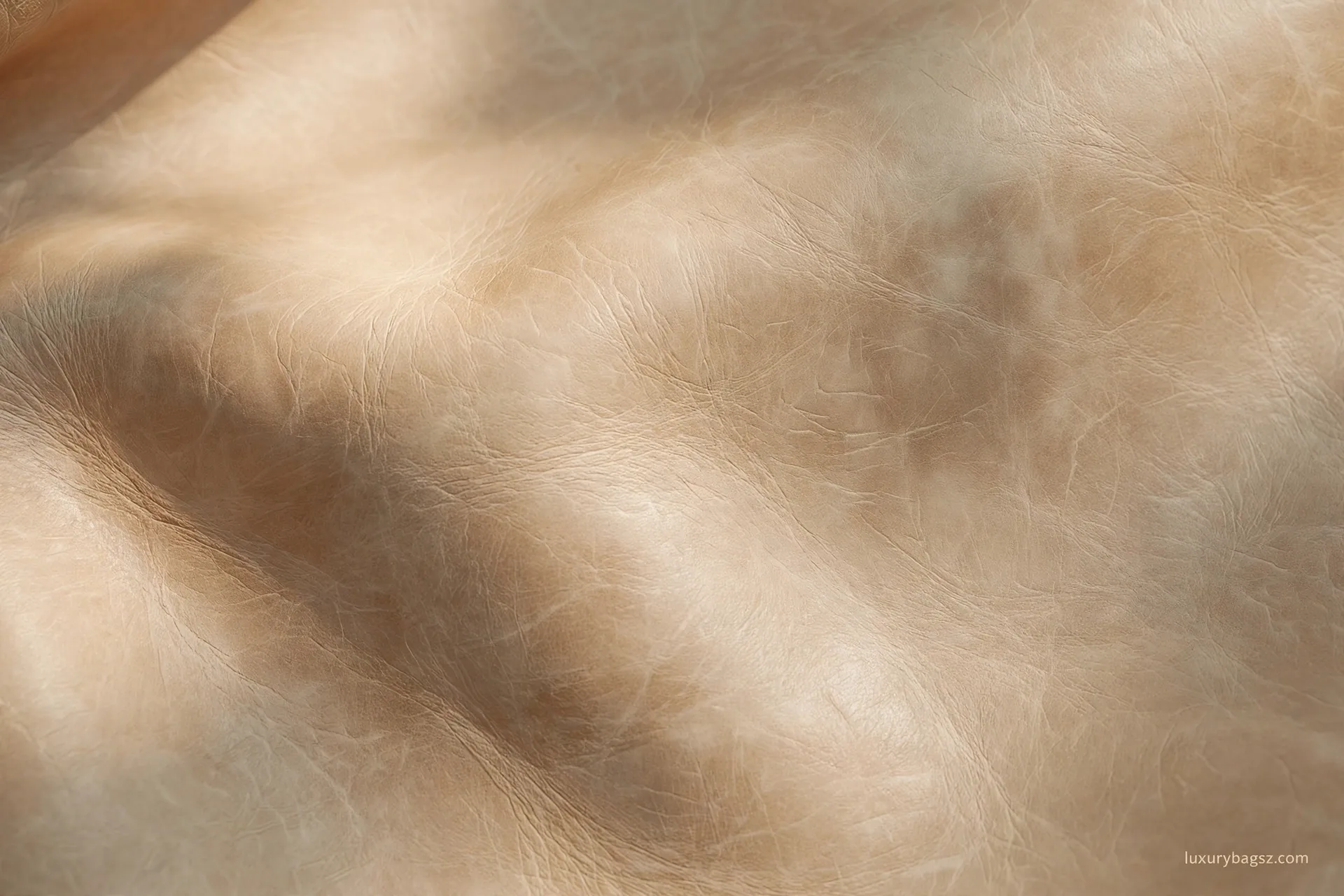
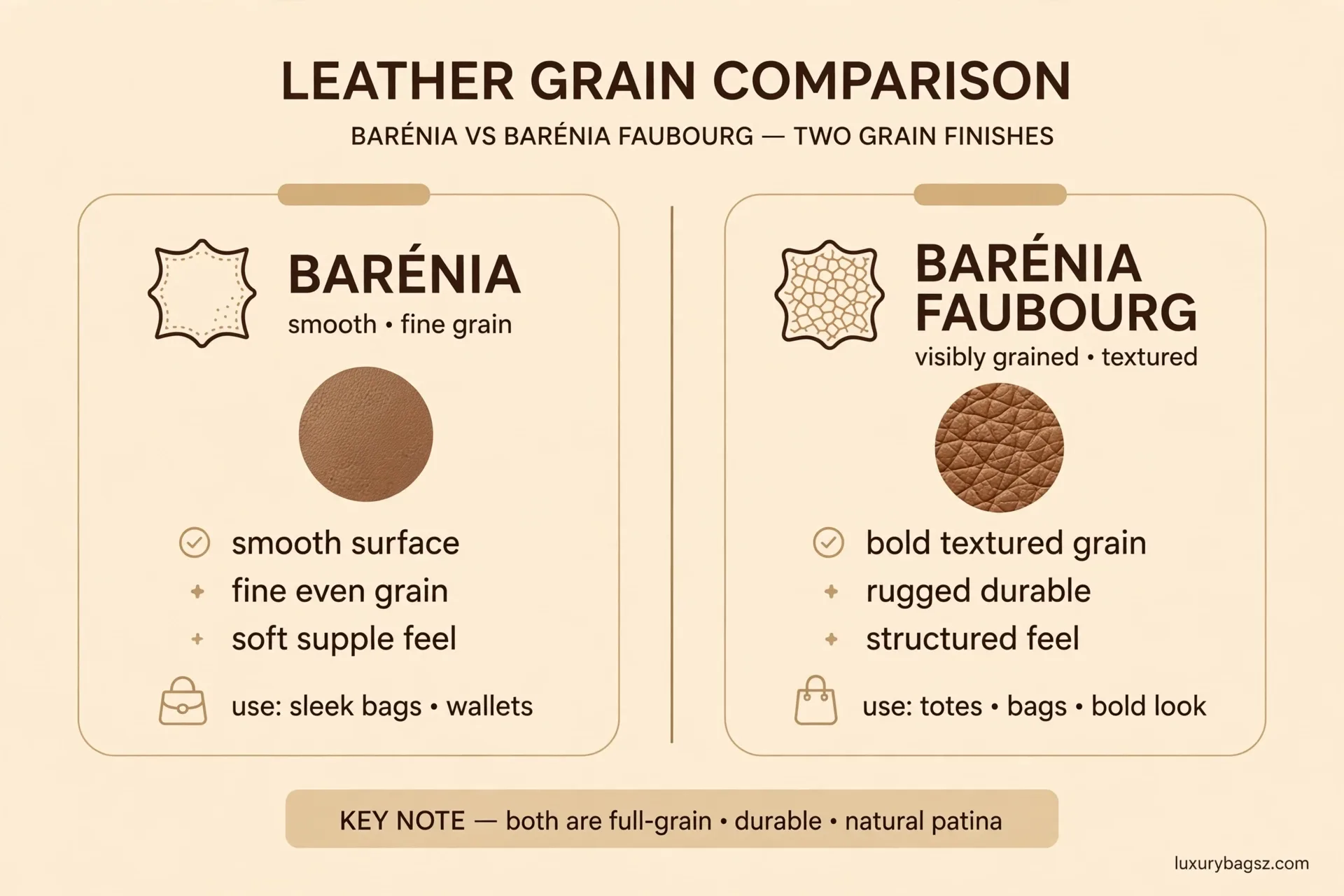
Smooth Barenia has no grain to hide behind. The surface is flat and matte at first, then glossier with use. Every touch shows, then settles. That honesty is what devotees want, and nervous owners fear.
Barenia Faubourg, introduced in 2016, keeps the same double-tanned, oil-soaked base but adds a very fine printed grain. The name nods to 24 Rue du Faubourg Saint-Honoré, the Paris flagship.
In the hand, Faubourg feels a fraction firmer. Light scratches disappear into the grain, and the bag holds its shape more crisply. It still patinas, darkening on handles and corners, just more slowly.
Choose smooth Barenia for the deepest, fastest patina and the classic saddle look. Choose Faubourg if you love the colour and smell but want first-year marks to be far less visible.

Barenia Is Also a Colour Name
Barenia is also a colour name on other materials, most often exotic skins such as matte alligator. There it describes a rich, deep brown, warmer and moodier than Gold.
So a listing saying Barenia may mean the leather, the colour, or both. Check the material line. A Birkin in Barenia colour alligator is not a smooth calfskin Barenia Birkin.
The Shades, and How Each One Ages
Starting colour decides how much darkening can show. Our Hermès colours guide covers the wider palette. Here is Barenia colour by colour.
Fauve: The Classic That Changes Most
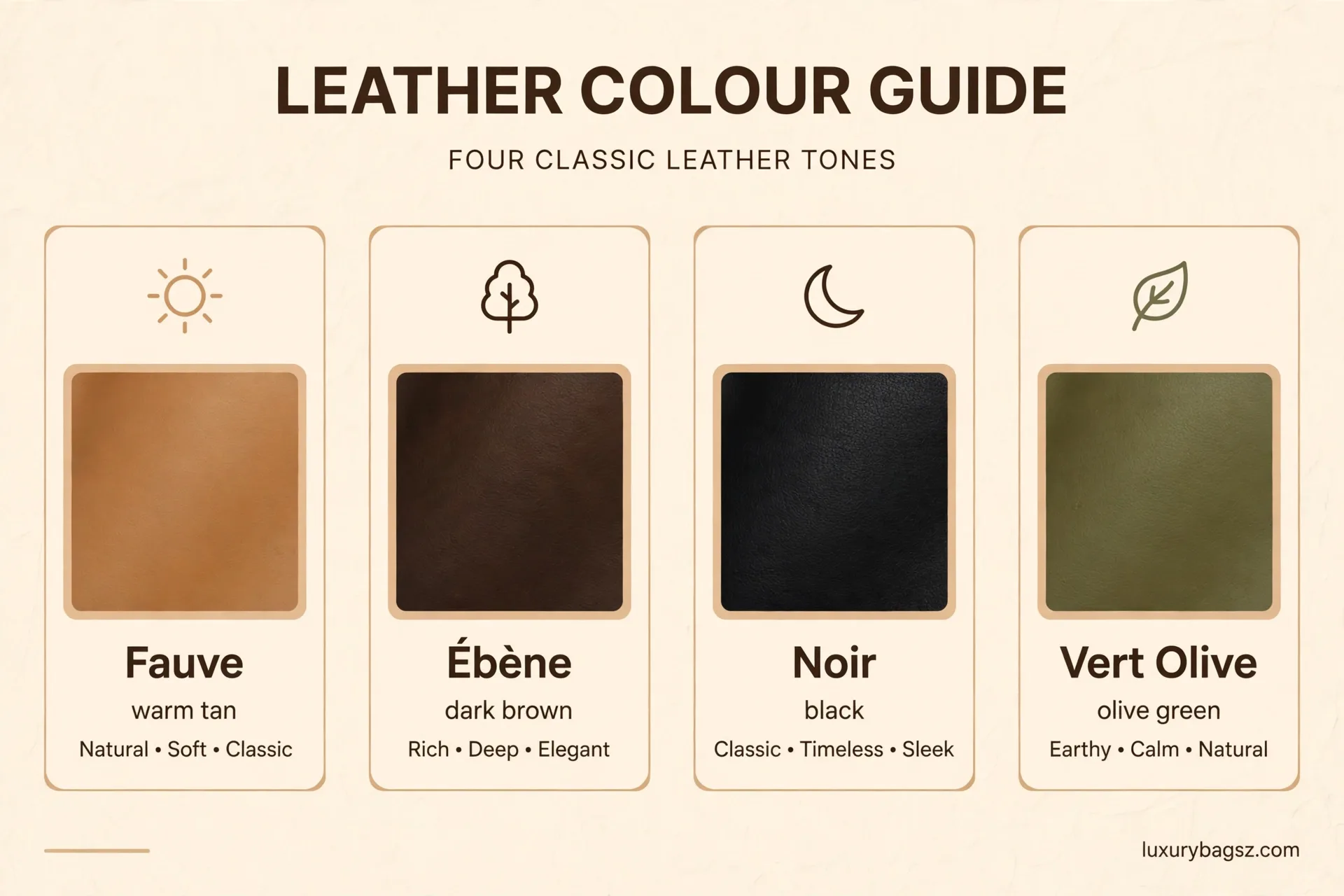
Fauve is the signature shade, a warm golden tan close to a new saddle. With sun and handling it deepens through caramel to rich chestnut, darkest on handles and flap edges.
Early marks show clearly before they blend. Gold hardware is the natural pairing, warming the tan in the traditional saddle look. Palladium gives a cooler, sharper contrast.
Natural: The Lightest, Least Forgiving Start
Natural starts lighter than Fauve, with an undyed honesty. It darkens most visibly, and early water or oil marks can look stark until the surrounding leather catches up. Persist, and the patina is superb.
Ebene: Deep Brown, Calmer Ageing
Ebene is a deep brown that starts close to where Fauve is heading. Darkening adds depth and shine rather than a clear colour shift, so handles and corners stay far more even.
Scratches and rain spots show less, making Ebene the practical smooth Barenia. Gold hardware softens it into classic warmth. Palladium keeps it crisp, suiting its near-black depth in low light.
Noir: Black That Gains Shine, Not Tan
Noir does not tan or caramelise. It gains gloss. A new bag is soft matte black. A carried one develops polished sheen on flap, handles and corners, while untouched areas stay quieter.
That contrast in shine is Noir patina, and it hides rain marks best of all. Palladium is the common pairing for a clean monochrome look. Gold hardware makes Noir feel dressier and rarer.
Vert Olive: The Rare Earthy Outlier
Vert Olive brings earthy green undertones and is seen far less often, which is why collectors chase it. Ageing deepens the green-brown mix and can make it look browner over time.
Which Bags Barenia Is Realistically Found On
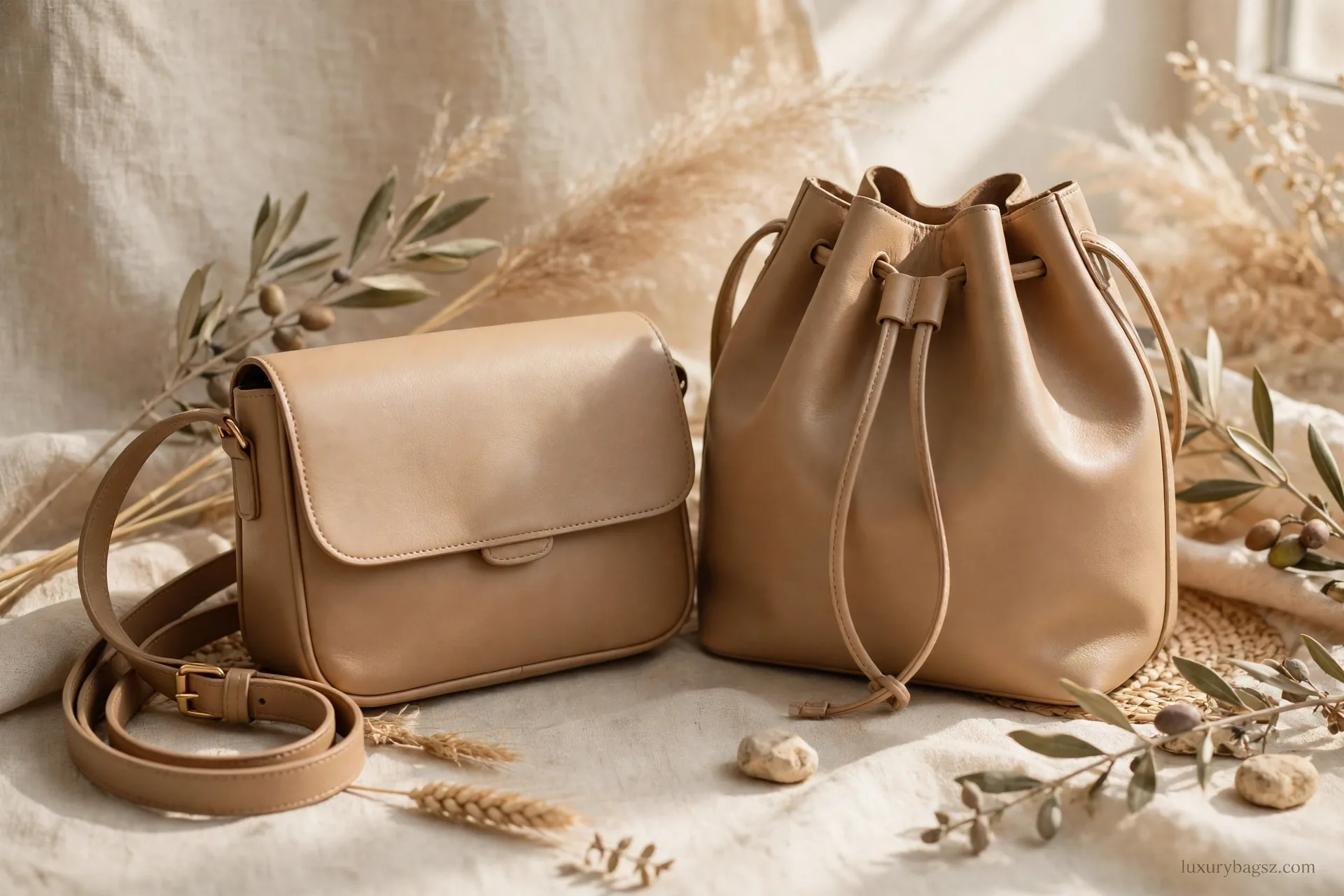
Barenia is not an always-available Birkin leather. Hermès offers it sparingly, in limited runs, special orders and selected releases. Listings implying every size is easy to find deserve care.
On Kelly and Birkin bags it appears most in Fauve and Ebene, in 25, 30 and 35 sizes, often with white contrast saddle stitching. Smaller releases, including Mini Kelly styles, appear in waves.
You will also meet it on the Evelyne, Picotin, 24/24, HAC and travel pieces, plus watch straps and small goods. The Evelyne and Picotin suit it, because their relaxed shapes welcome patina.
Contrast the slouch of a blue Clemence Birkin 30. Clemence hides wear in its grain. Barenia shows it, then transforms it.
How Patina Develops, and When
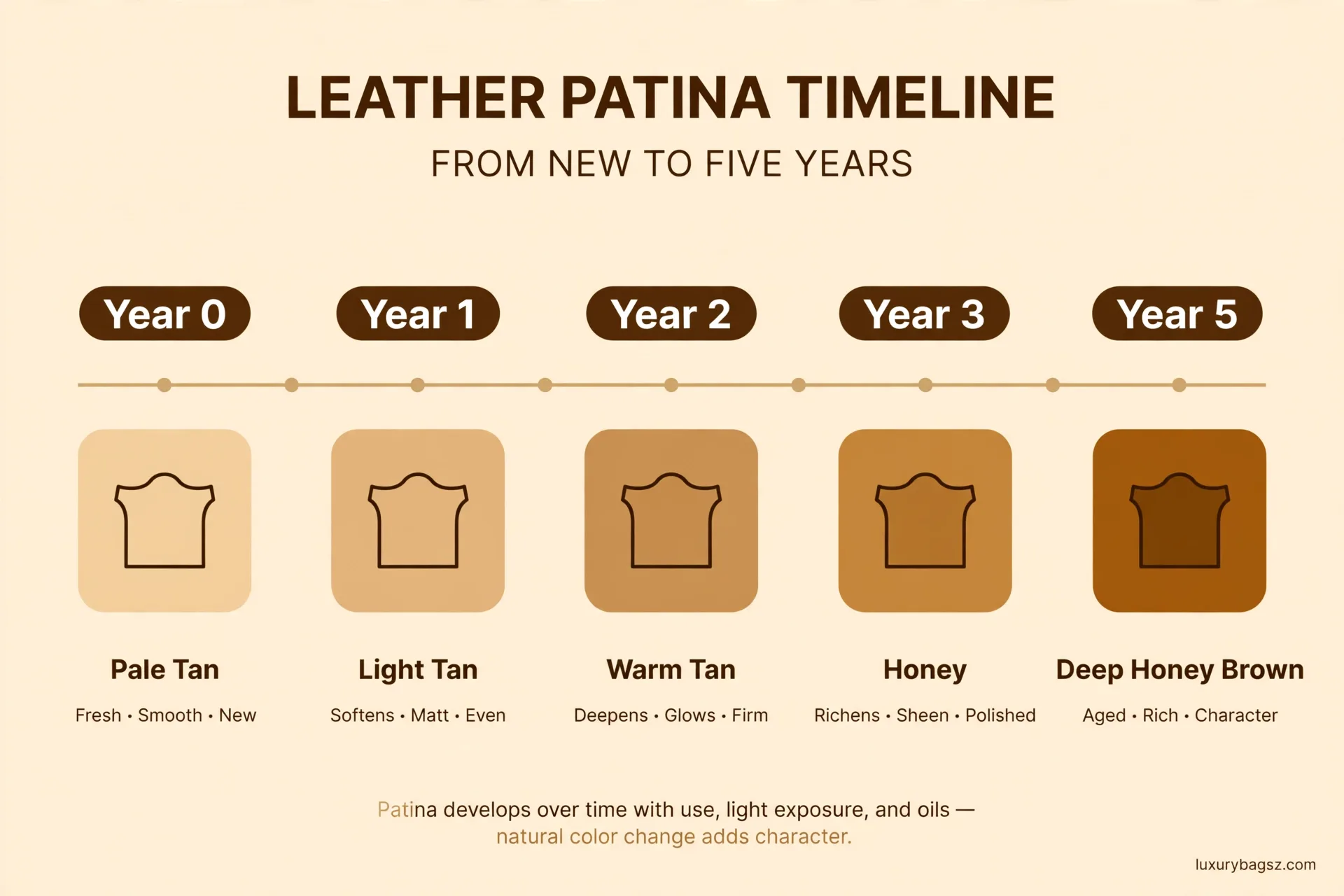
In the first weeks Barenia looks matte and even, but fingerprints and scuffs appear at once. Do not panic. Most fade as oils move in the hide. This early stage is the hardest to trust.
By three to six months, handles darken first, then flap and corners. The colour evens as the surface warms, and light scratches read as part of a developing sheen rather than damage.
After a year, a well-carried Fauve bag can be several shades deeper, softer and glossier where held. Ebene and Noir change more in shine than colour.
Care: What Helps, What Harms
Scratches That Rub Out
Rub a light scratch gently with a clean, dry fingertip in small circles. Warmth encourages the oils in the hide to move and darken the pale line. Many fresh marks fade within a minute.
For deeper marks, use a soft dry cloth or horsehair brush with light pressure. Deep cuts, ink and dye transfer will not rub out.
What Water Actually Does
Thanks to its oil content, Barenia copes with light rain better than most smooth leathers. Spots from a shower usually dry and fade over hours or days as the oils rebalance.
That is not waterproofing. Soaking can leave dark patches or tidelines. Wipe water off at once, air-dry away from heat, and never use a hairdryer or radiator. Faubourg marks from water more readily.
What Not to Condition With
Do not use coloured shoe polish, silicone waterproofing sprays, heavy waxes, olive oil or generic leather foods. They can darken Barenia unevenly, block its oil movement and leave residue on an uncoated hide.
Most Barenia needs no conditioner for long periods. Its own oils do the work. If it feels genuinely dry, take it to Hermès spa rather than experimenting. A wrong product cannot be undone.
Healthy Patina vs Real Damage
Healthy patina is even, deepening colour with a soft glow and supple feel, following handling patterns. A dark handle from clean hands is patina. It looks deep rather than dirty.
Damage stains, cracks, sticks or smells. Dark patches from hand cream, ink or drinks rarely blend out. Colour transfer, worn corners, cracked piping and musty damp smells all cut resale value.
The Honest Downsides
Barenia darkens whether you want it to or not. A Fauve bag will not stay the pale tan photographed when new. If you love that exact shade, you are buying a colour designed to leave.
Patina is rarely even. One handle may darken faster, one side may catch more sun, and rain marks may linger for weeks. It is also absorbent, so oils, creams and clothing dye can mark it.
Do not buy Barenia if you want a pristine bag, commute in heavy rain, or find marks spoil your enjoyment. Togo, Epsom or Faubourg will serve you better, with far less anxiety.
Buying Barenia Pre-Owned: Checks That Matter
Start with feel and smell. Genuine Barenia feels smooth, slightly waxy and substantial, never plasticky or thin. It keeps a rich leather smell for years. A chemical or flat smell is a warning.
Look for the transparent finish, with natural mottling and fine variation, not a uniform printed surface. Rub a pale scratch in a discreet area. On genuine smooth Barenia, fresh light marks often soften.
White saddle stitching is classic on Fauve Barenia and should be neat, even and slightly raised. But stitching alone proves nothing, as fakes copy it. Judge it alongside hide, hardware and stamps.
Do not confuse Barenia with Butler, a smooth calfskin that feels more uniform and slightly stiffer, with a different sheen and less dramatic patina. Swift and Jonathan are also smooth, but differ in softness and finish.
For Faubourg, check for a very fine, even grain and a rich, uncoated feel, with darkening on handles. Ask for daylight photos of handles, corners, flap and interior, plus stamp and service history.
Price and Resale: Barenia vs Togo and Box
At retail, Barenia sits at a premium to standard grained leathers when offered at all, reflecting weeks of tanning and limited production. Prices vary by model, size, year and market, so treat single figures cautiously.
On resale, scarcity does real work. A Birkin or Kelly in smooth Barenia, in a wanted shade and size, is usually listed above a comparable Togo example, because Hermès may not offer it again soon.
Condition splits the market. A richly, evenly patinated bag can hold that premium. A stained or badly rain-marked bag can fall below Togo, because the next buyer cannot reset the surface.
Against Box calf, Barenia is its closest patina rival. Box is glossier, more formal and shows scratches as fine lines. Barenia is warmer, more casual and more forgiving once oils blend a mark in.
Frequently Asked Questions
Does Barenia scratch easily?
It marks easily, which is different. Light scratches show at once, but many rub out with a warm fingertip. Deeper cuts remain, then soften into the patina over time.
Can Barenia get wet in the rain?
A light shower is usually survivable. Wipe it dry and let it air-dry away from heat, and most spots fade. Heavy rain or soaking can leave lasting marks.
Should I condition Barenia leather?
Usually, no. Barenia carries its own oils from tanning. Coloured polish, silicone sprays and heavy waxes can stain it unevenly. If it feels truly dry, use Hermès spa instead.
What is the difference between Barenia and Barenia Faubourg?
Smooth Barenia is flat and ungrained, and patinas fastest. Faubourg has a fine printed grain that hides scratches better and holds shape more crisply, while still darkening.
Why is Barenia more expensive on resale?
Because Hermès offers it sparingly and tanning takes weeks. Wanted models with even patina attract collector demand. Poorly kept examples lose the premium, as staining cannot be reversed.
Which Barenia colour is easiest to live with?
Ebene and Noir are easiest, because darkening shows as depth and shine. Fauve is most rewarding but changes most visibly. Natural is the least forgiving of all.
Final Verdict
Barenia is Hermès at its most honest. Carry the bag, accept the marks, and trust time to turn them into depth, shine and a colour that belongs to your bag alone.
Buy Fauve for the full saddle story, Ebene or Noir for an easier life, or Faubourg for the same spirit with grain to protect you. Buy it only if ageing with you sounds like a promise.