

How to Care for Nylon Bags: Cleaning, Stains, and Storage That Keep the Fabric Intact
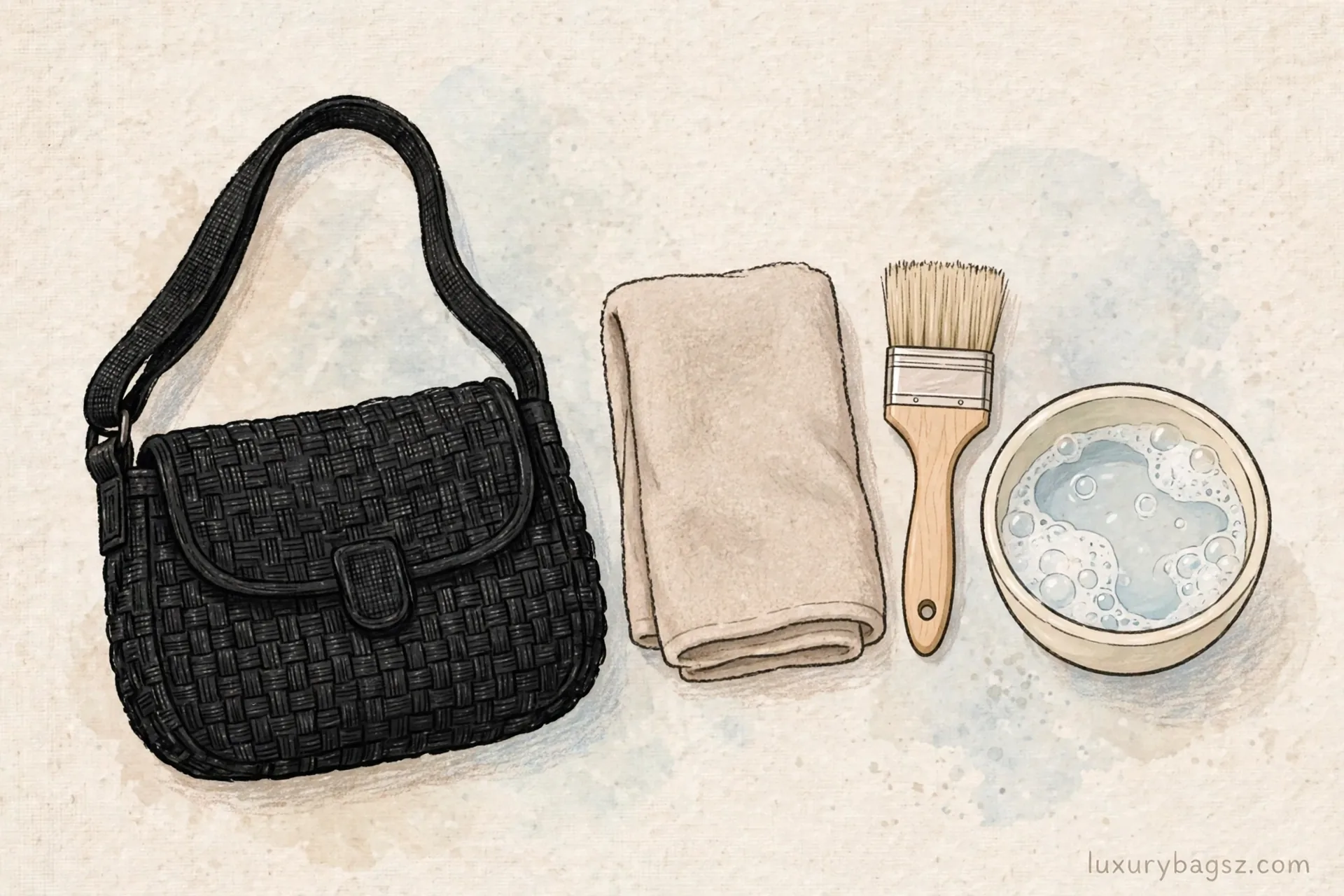
Nylon Bags: Tough Fabric, Gentle Care
Nylon bags are water resistant, lightweight, and easy to clean — but not indestructible. The fabric is tough, while leather trims, glued seams, logo plates, and structured panels are not. Care that suits plain nylon can still damage the bag as a whole.
The golden rule is hand cleaning only, with mild soap and lukewarm water. Never machine wash a designer nylon bag, never tumble dry it, and never reach for bleach or strong stain removers. Gentle, regular cleaning keeps the weave, colour, and shape intact for years.
This guide covers the full routine: protecting a new bag, hand washing, tackling stains, caring for trims and hardware, drying correctly, and storing the bag so it holds its shape. It applies to designer nylon and everyday nylon alike, with extra care where leather and metal are involved.
Key Takeaways

- Hand clean only: never machine wash or tumble dry a designer nylon bag.
- Use mild, colourless, fragrance-free soap in lukewarm water, and always test on a hidden spot first.
- Keep water and soap away from leather trims, logo plates, and hardware as much as possible.
- Blot stains, never scrub hard; hard scrubbing damages the weave and can fade colour.
- Air dry stuffed with paper at room temperature, away from sun and heaters.
- Protect a clean, dry bag with fabric protector spray, applied in two light coats.
- Store stuffed, in a dust bag, on a flat shelf — never hanging by its handles.
Know What Your Nylon Bag Is Made Of
Most designer nylon bags pair woven nylon with other materials. Prada's tessuto nylon, for example, is a dense, water-resistant weave often trimmed with saffiano leather and finished with a metal logo plate. Many everyday nylon bags use similar mixes.
That mix is why one method never fits the whole bag. Nylon tolerates damp wiping well, leather trims do not, and metal hardware spots if left wet. Before cleaning, note where each material sits, and plan to treat fabric, trims, and hardware in turn. Our overview of Prada explains how its nylon lines developed and why they reward careful ownership.
Condition also affects care choices. A well-kept nylon bag holds its appeal far better than a neglected one, which is part of why buyers ask how a bag was cleaned before they buy.
If resale matters, see whether Prada bags hold their value and what buyers weigh most. Our Re-Edition 2005 guide covers sizes and buying checks for a classic nylon model.
Hand Washing Step by Step
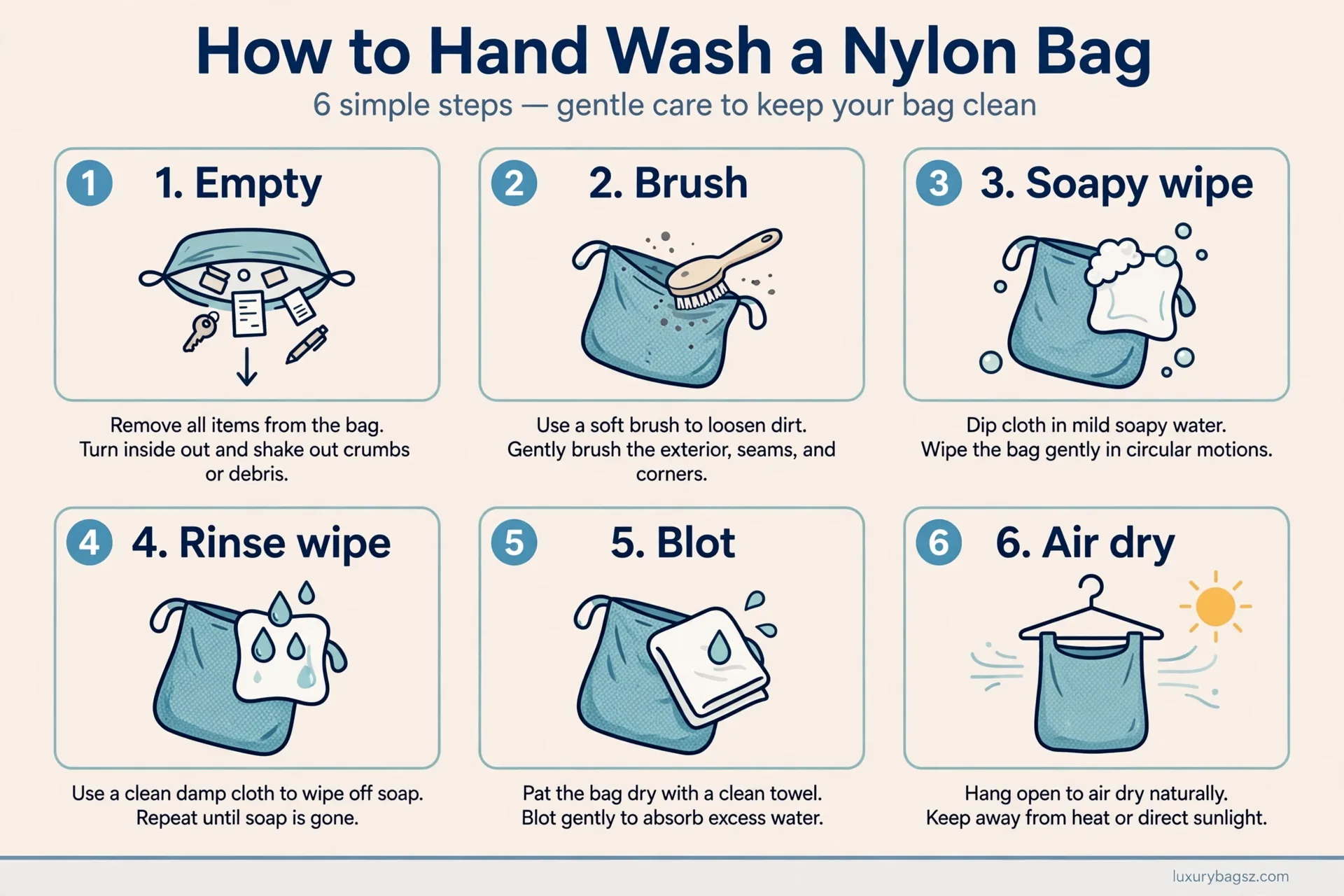
Empty the bag completely and shake out crumbs and dust. Turn the lining out if the design allows, and run a lint roller or soft brush over the interior, especially corners and seams. Dust the outside with a dry soft brush, working gently in the direction of the weave.
Mix a few drops of mild soap into a bowl of lukewarm water and stir until lightly sudsy. Dip a soft white cloth into the solution, wring it until only damp, and wipe the nylon in small circular motions, working in small areas at a time. For tougher dirt, use a soft toothbrush with a little solution, pressing lightly and never scrubbing hard.
Rinse with a plain damp cloth so no soap residue stays behind to attract dirt, then blot dry. The same logic applies to coated fabrics; see how to clean LV canvas bag safely.
Stains: Blot First, Treat Gently, Accept Limits
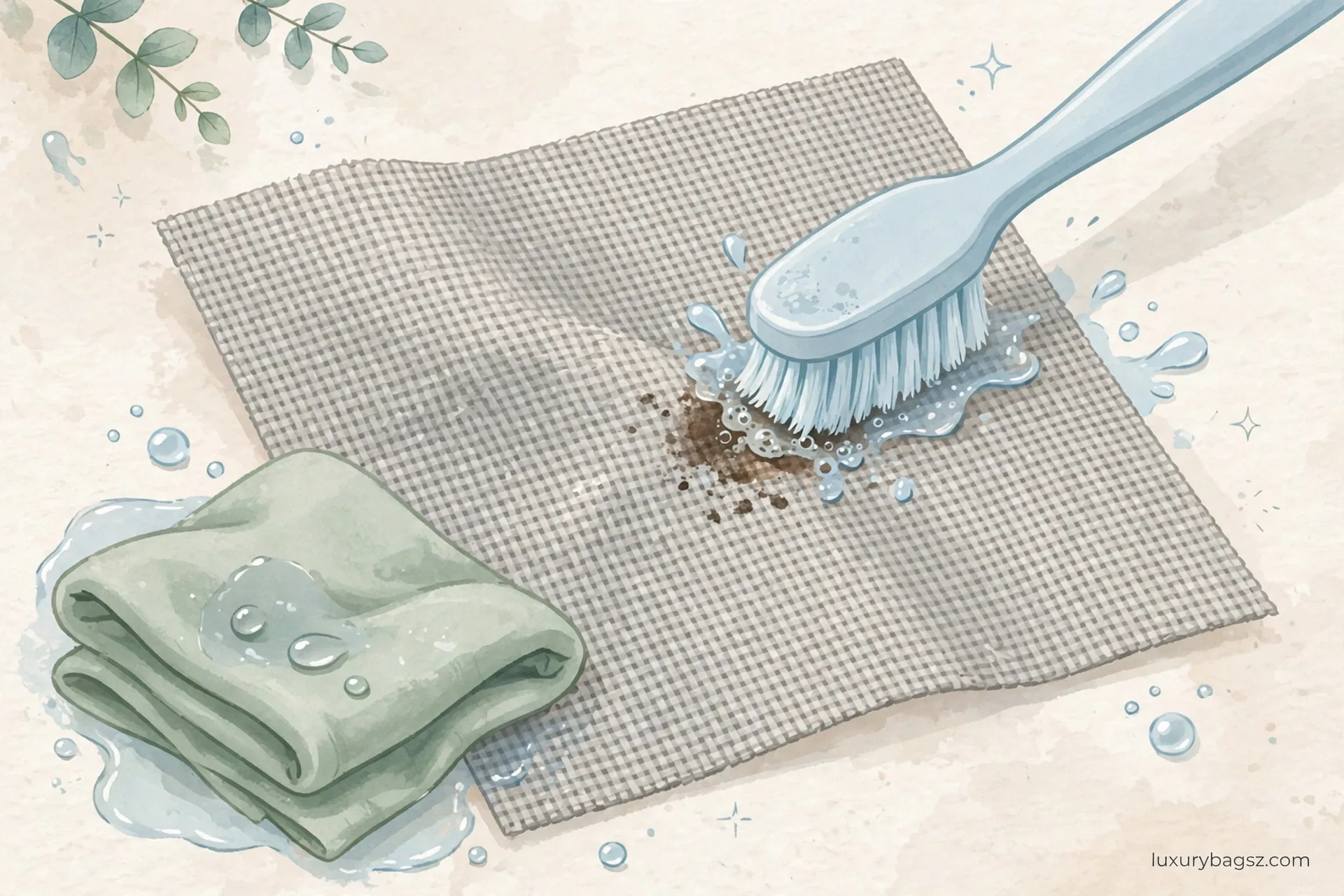
Treat stains as soon as you notice them, since set stains are far harder to lift from woven fabric. Blot — never rub — with a damp cloth and mild soapy water, working from the outside of the stain inward so it does not spread. Rinse the cloth often.
Makeup and oil marks usually respond to dabbing with a cotton swab dipped in soapy water, followed by blotting dry. For a stubborn spot, a paste of equal parts baking soda and water, left for a few minutes and brushed away very gently, is a commonly suggested next step — but test it on a hidden spot first, since it can lighten some colours.
Ink is the hardest common stain on nylon, and it may not come out fully. Dabbing fresh ink gently with a cotton ball lightly dampened with rubbing alcohol can fade it, but test first, since it can affect colour. A faint mark left after gentle treatment beats a bleached or thinned patch from an aggressive attempt.
Trims, Hardware, and the Logo Plate
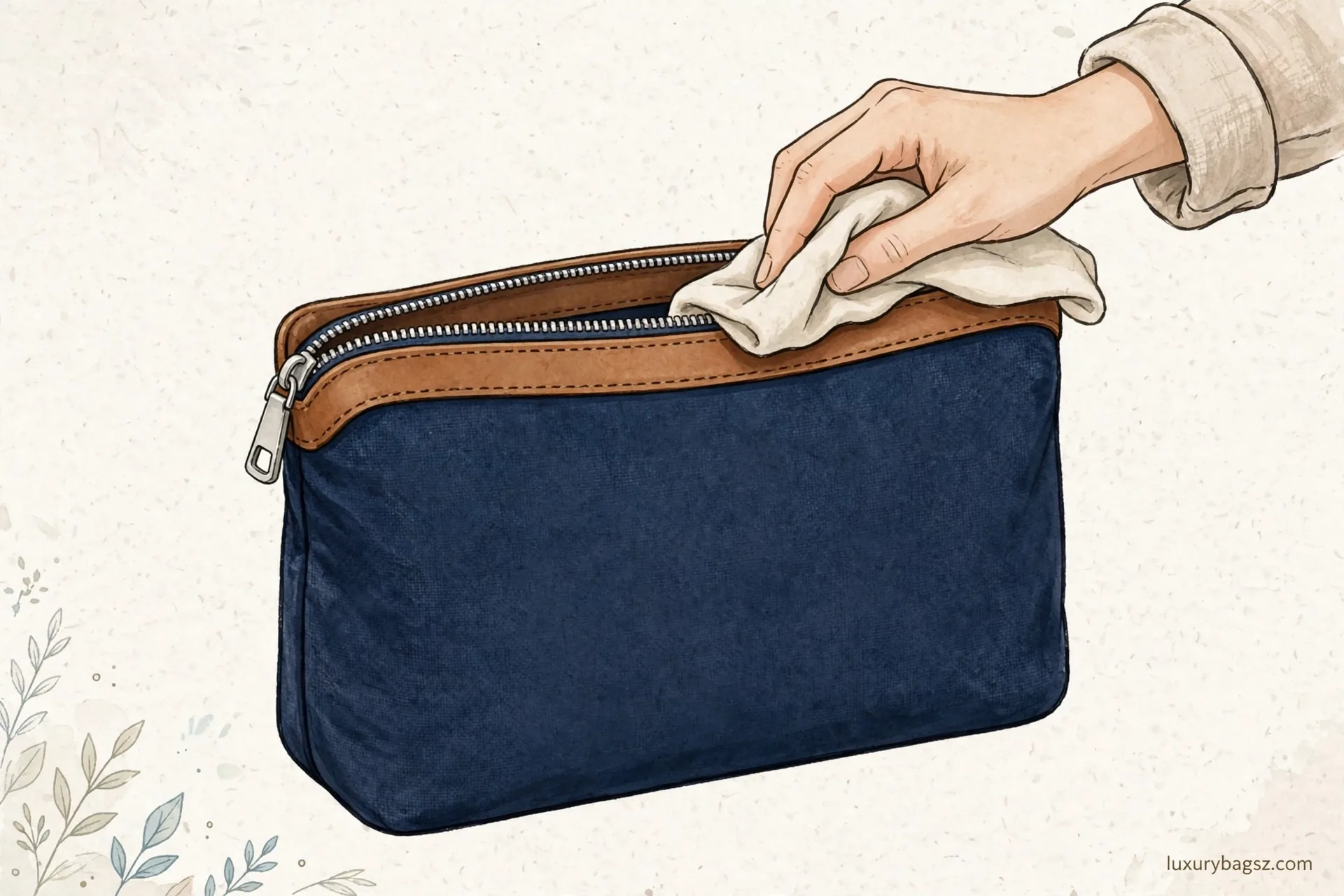
Leather trims need a different hand from the nylon around them. Wipe trims with a barely damp cloth, then a dry one, and condition occasionally with a conditioner suited to the leather type. Keep soapy water off trims during the main wash where you can, and never let trims stay wet. Our guide to care for leather bags covers conditioning in more detail.
Metal hardware and logo plates spot easily if left damp. Wipe them with a dry microfibre cloth after cleaning, and buff lightly to restore shine. Keep polish and soapy water off engraved plates, since residue settles into lettering and is hard to remove. If a plate is loose or a trim is peeling, stop and seek a repairer.
Zips deserve attention too. Brush grit from zip teeth with a dry soft brush before washing, and dry the zip area thoroughly afterwards. Grit left in a zip wears the teeth and tape, and a damp zip stored closed can develop musty smells.
Drying and Protecting: The Part Most People Rush
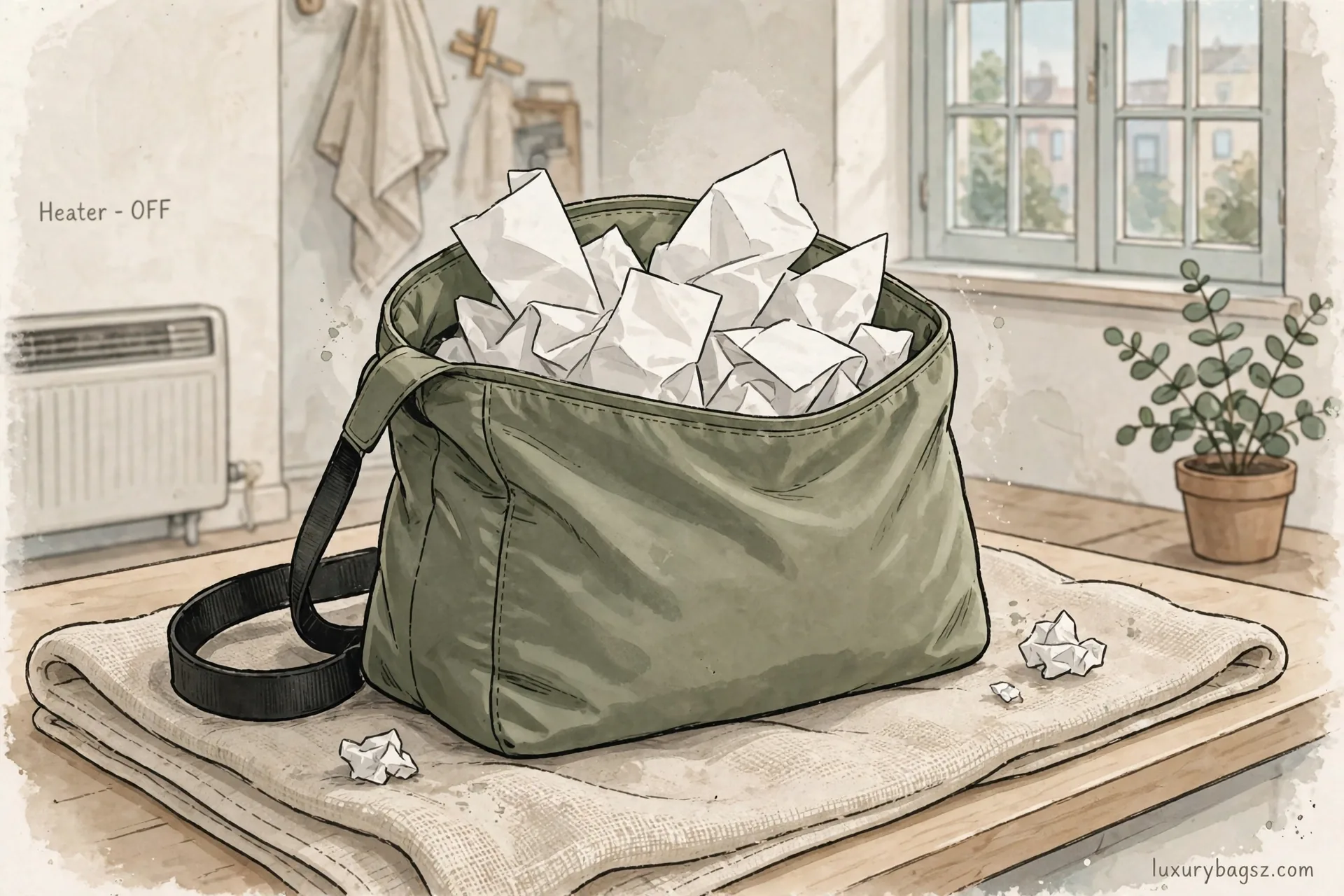
Stuff the bag with clean white paper or a towel to hold its shape, then let it air dry at room temperature in a well-ventilated spot. Keep it out of direct sunlight, which fades colour, and away from radiators and hairdryers, which can warp structure and damage glued seams. Let it dry fully before use or storage.
Once the bag is clean and completely dry, consider fabric protector. Spray a light, even coat suited to nylon, let it dry, then apply a second light coat and let it dry again before buffing lightly with a dry cloth. Test on a hidden spot first, and keep it off leather trims and hardware.
Reapply protector only when water stops beading on the fabric, not on a fixed schedule. Over-spraying builds up a film that attracts dust and dulls the weave. A quick weekly dust, plus spot cleaning when marks appear, is enough routine care, with a deeper clean every few months.
Storage That Keeps the Shape
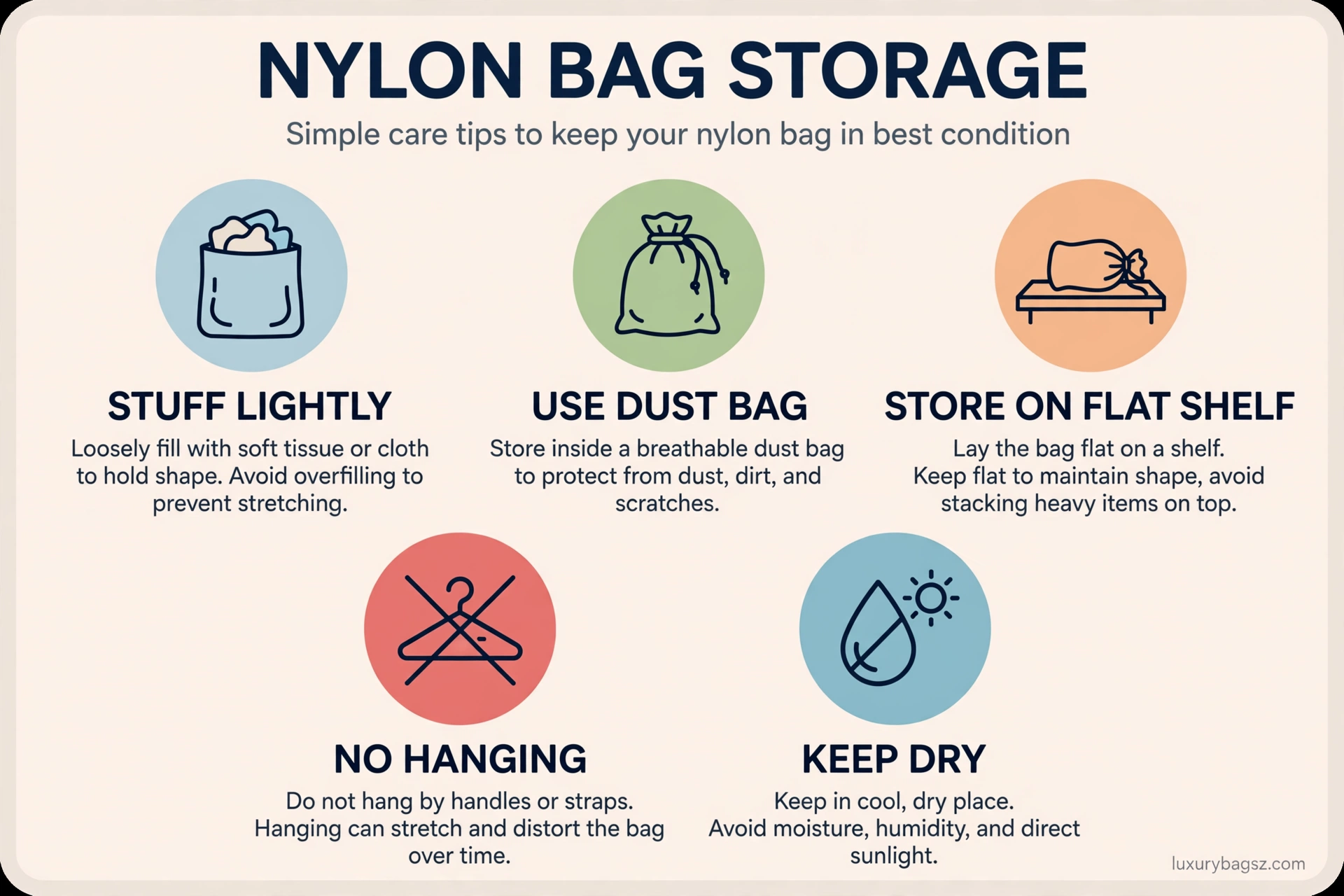
Do not hang a nylon bag by its handles: hanging stretches handles and pulls seams. Instead, stuff it lightly, place it in its dust bag, and store it on a flat shelf in a cool, dry place away from sunlight and damp.
Keep the bag out of sealed plastic, which traps moisture and invites musty smells. If you store several bags together, keep them from pressing against each other, since hardware from one bag can scratch or dent another.
Air stored bags occasionally, especially in humid climates. Take the bag out every few months, dust it, check for damp or smells, and let it breathe for a few hours before putting it away again.
Frequently Asked Questions
Can I machine wash a nylon bag?
For a designer nylon bag, no. Machine washing can warp the shape, loosen logo plates, damage leather trims, and strain glued seams. Hand cleaning is the safe method, even though plain nylon fabric alone is tough.
How do I clean a Prada nylon bag at home?
Empty and dust it, wipe with a barely damp cloth and mild soap, rinse with a plain damp cloth, blot dry, and air dry stuffed with paper. Keep water off trims and the logo plate.
Is nylon waterproof?
No, it is water resistant, not waterproof. Light rain is usually fine, but dry the bag promptly, and seams, zips, and trims can still let water in during heavy rain.
How often should I clean a nylon bag?
Dust weekly if you use it daily, spot clean marks as they appear, and give a deeper clean every few months. A bag used rarely needs a dust and airing every few months instead.
Can I use bleach on a nylon bag?
No. Bleach, ammonia, and strong stain removers can damage nylon fibres, fade colour, and harm trims and hardware. Mild soap and lukewarm water are enough for most cleaning.
How do I remove ink from a nylon bag?
Dab fresh ink gently with a cotton ball lightly dampened with rubbing alcohol, testing on a hidden spot first. Ink may not come out fully, and aggressive scrubbing can damage colour and weave.
Should I use fabric protector on a nylon bag?
Yes, on a clean, dry bag, in two light coats with drying between coats. Test first on a hidden spot, keep spray off leather and hardware, and reapply only when water stops beading.
Can I dry a nylon bag with a hairdryer?
No. Heat can warp structure, stiffen fabric, and damage glued seams. Air dry at room temperature, stuffed with paper, away from sunlight and heaters.
How should I store a nylon bag?
Stuffed lightly, in a dust bag, on a flat shelf in a cool, dry place. Do not hang it by its handles, and do not store it in sealed plastic, which traps moisture.
What if my nylon bag smells musty?
Air it well, clean the interior with a damp cloth and mild soap, and let it dry fully before storage. Persistent mustiness after cleaning may need professional attention, especially if damp storage caused it.
Summary
Nylon bags reward the gentlest effective care: hand wash with mild soap, blot stains, look after trims and hardware separately, air dry fully, and store stuffed on a shelf. That simple routine keeps fabric, colour, and shape looking good year after year.
Skip the machine, skip the bleach, and skip the hairdryer. A nylon bag treated kindly is a bag that stays in daily rotation instead of retiring early to the back of a cupboard.






