

How to Spot a Fake David Yurman Bracelet
The Yurman Test at a Glance
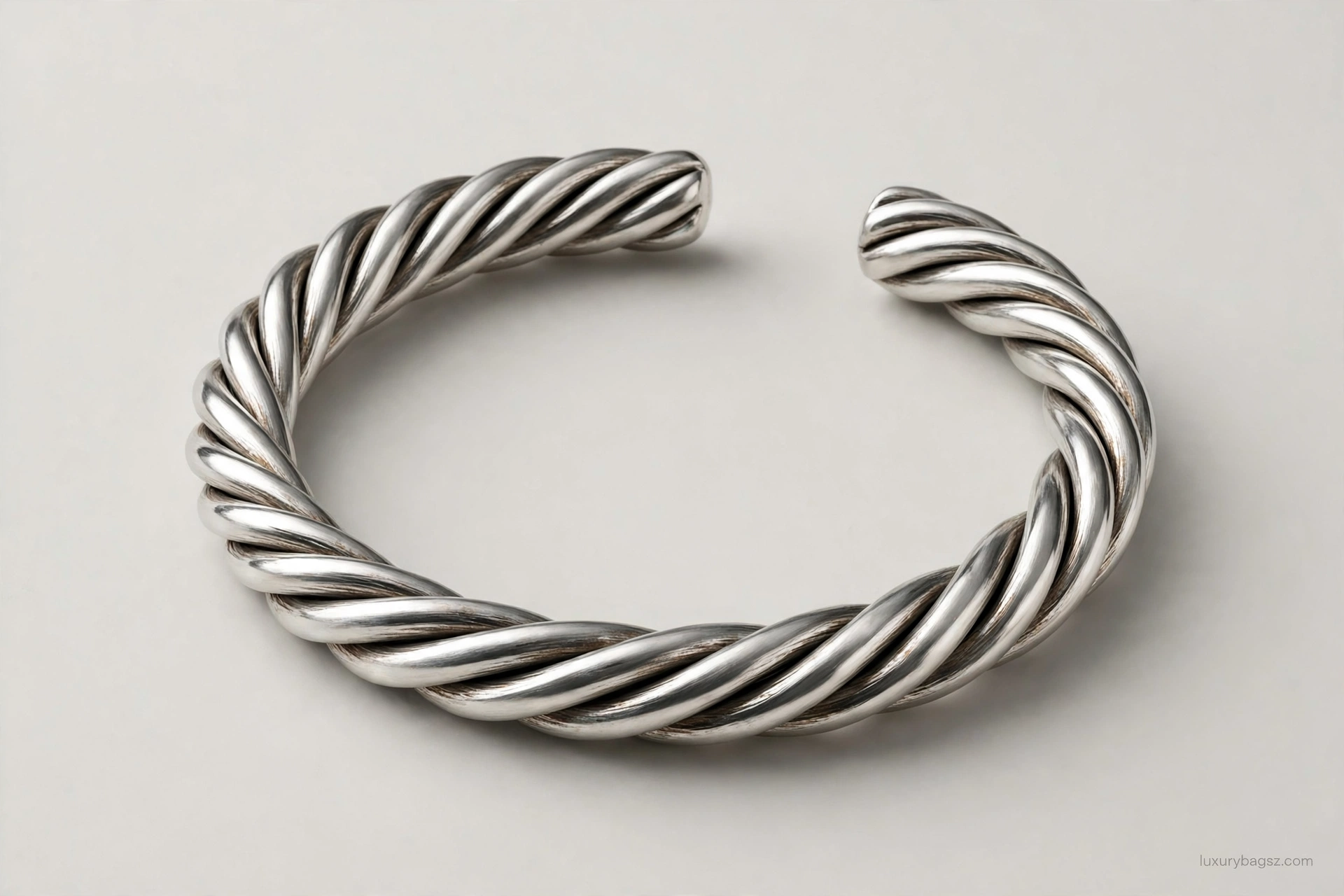
David Yurman bracelets are defined by one unmistakable feature: the twisted cable. From the classic Cable Classics cuff to the Cable Collectibles, Renaissance, and other collections, the cable motif runs through the brand, and it is also the brand's best authentication test, because genuine Yurman cable is precisely twisted, evenly finished, and consistent in a way that cheap copies rarely sustain.
A fake Yurman bracelet often looks right at a glance and fails the moment you examine its cable, its hallmarks, its clasp, and its stones together.
Yurman bracelets also vary widely: cuffs, bangles, chain bracelets, and beaded designs, in sterling silver, gold, two-tone combinations, and with diamonds or coloured gemstones. Each collection has its own cable thickness, end-cap design, clasp style, and hallmark format.
Reference discipline, in jewellery terms, means identifying the collection and design first, then judging the bracelet against verified examples of that design, not against Yurman in general.
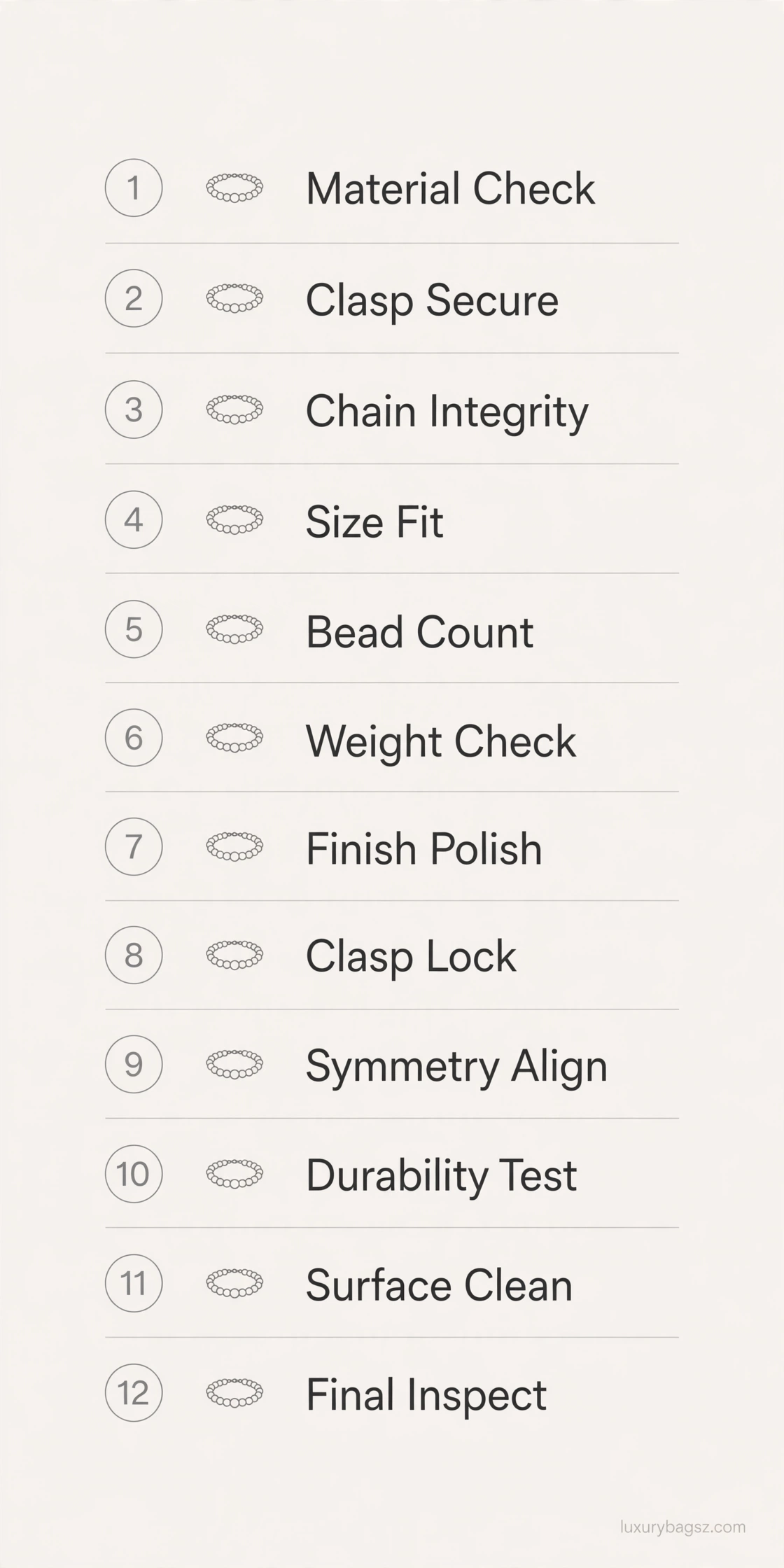
This guide gives you twelve checks that work across Yurman bracelets, with collection-specific notes where they matter. As ever, no single check authenticates a bracelet. The verdict comes from the whole piece, judged against its collection, and confirmed by a jeweller's inspection before a high-value purchase.
Key Takeaways

- Yurman authentication starts with the collection and design: Cable Classics, Cable Collectibles, Renaissance, and others differ in cable, end caps, clasps, and hallmarks.
- Genuine Yurman cable is precisely and evenly twisted, with a consistent pattern and smooth finish; uneven, rough, or loosely twisted cable is a major fake tell.
- Hallmarks should be crisply engraved, correctly spelled, and correctly formatted for the collection and era, including the Yurman name and metal marks.
- Clasps, hinges, and end caps should operate precisely and finish evenly on all surfaces, including interiors where fakes often economise.
- Stones, where fitted, should be evenly set, consistent in appearance, and securely held; uneven or loose stones are warnings.
- Boxes, pouches, and papers support but never prove genuineness: fake Yurman packaging is common, and genuine pieces frequently lose theirs.
Identify the Collection and Design First
Begin by naming the collection and design. A Cable Classics cuff with plain cable ends is a different bracelet from a Cable Collectibles cuff with gemstone ends, a Renaissance bracelet with its distinctive detailing, or a chain bracelet from another Yurman line. Each has a correct cable thickness, end-cap or terminal design, clasp or closure style, metal combination, and hallmark format.
Without the collection and design, you cannot know which specification to judge against.
Ask the seller for the collection name, the design details, and clear photographs of the cable, the end caps, the clasp or hinge, the hallmarks, and any stones. Compare those against Yurman materials and reputable dealer listings for the same design.
If the seller names a collection that does not exist, or describes a combination of features no genuine example carries, such as a gemstone end-cap design on a collection that never offered it, stop and demand clarification or a jeweller's opinion.
Retired Yurman designs deserve extra care. Retired designs are popular pre-owned, and counterfeiters target them because buyers are less certain what is correct. For any retired design, compare against auction records and specialist dealer archives, and treat any design claim without supporting photographs of genuine examples as unverified.
The Cable: Twist, Evenness, and Finish
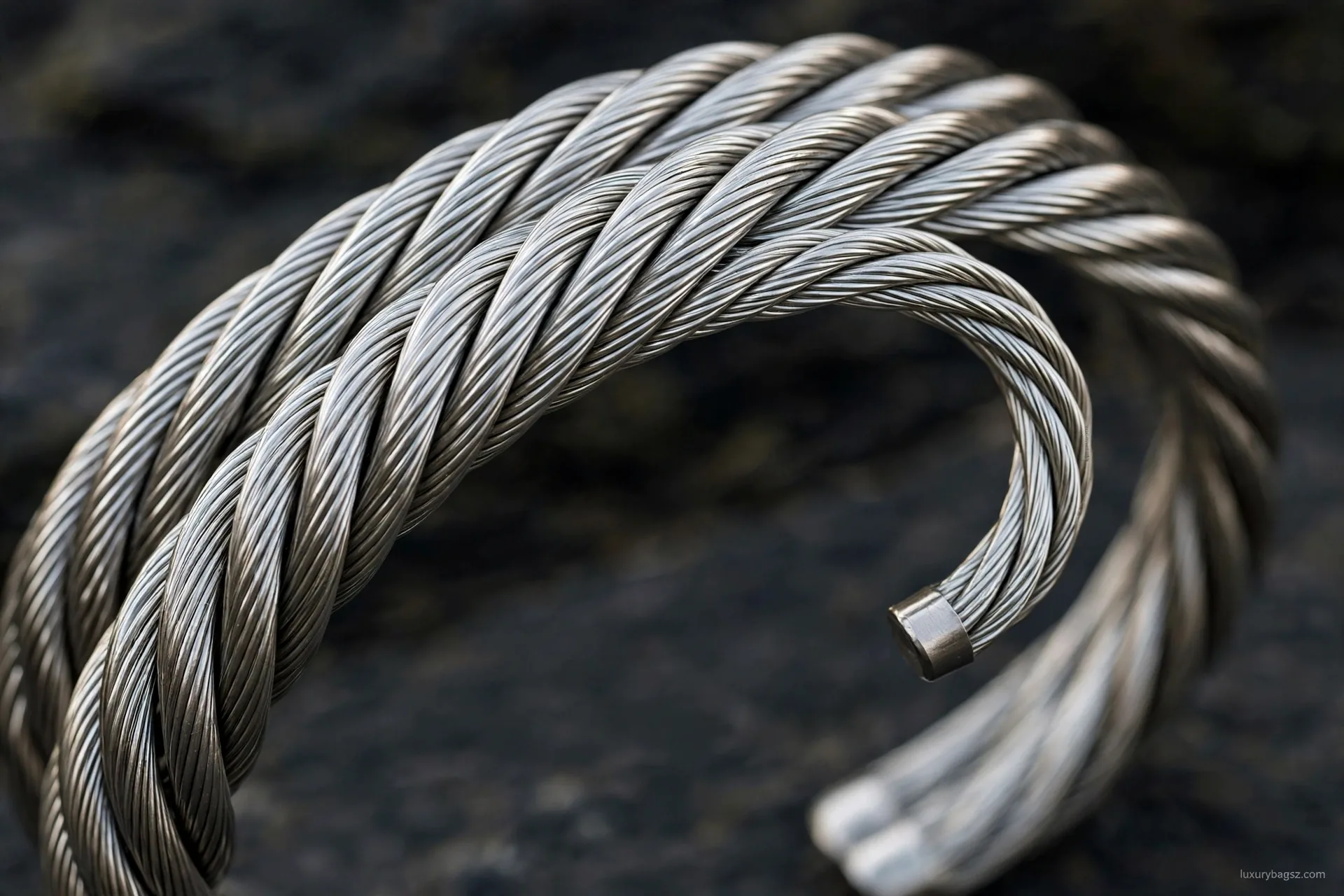
The cable is Yurman's signature and its best test. On a genuine Yurman bracelet, the cable consists of precisely twisted strands that form a consistent, even pattern along the full length of the bracelet. The twist should be uniform, with no areas that are tighter or looser than others, no gaps between strands, and no strands that stand proud of the surface.
The cable surface should be smooth and evenly finished, whether polished, as on classic silver cable, or finished as specified for the design.
Fakes commonly fail here in three ways. First, uneven twist: places where the twist tightens, loosens, or drifts out of alignment. Second, rough cable: strands with burrs, pitting, or uneven polishing that catch on fabric or skin. Third, loose cable: strands that feel springy or hollow, or a cable that flexes unevenly, suggesting thin or poorly constructed strands.
Run a fingertip gently along the cable, if the seller permits handling, and look at it under magnification and raking light: genuine cable shows a regular, architectural twist, while fake cable shows irregularity that becomes obvious once you look for it.
Also check the cable at its ends and at any joins. The cable should terminate cleanly into its end caps or terminals, with no gaps, no visible glue, and no strands that unravel or splay. A cable end that shows fraying, gaps, or glue is a warning, whether the cause is fakery or poor repair, and either way it needs a jeweller's assessment.
End Caps and Terminals: Design, Fit, and Finish
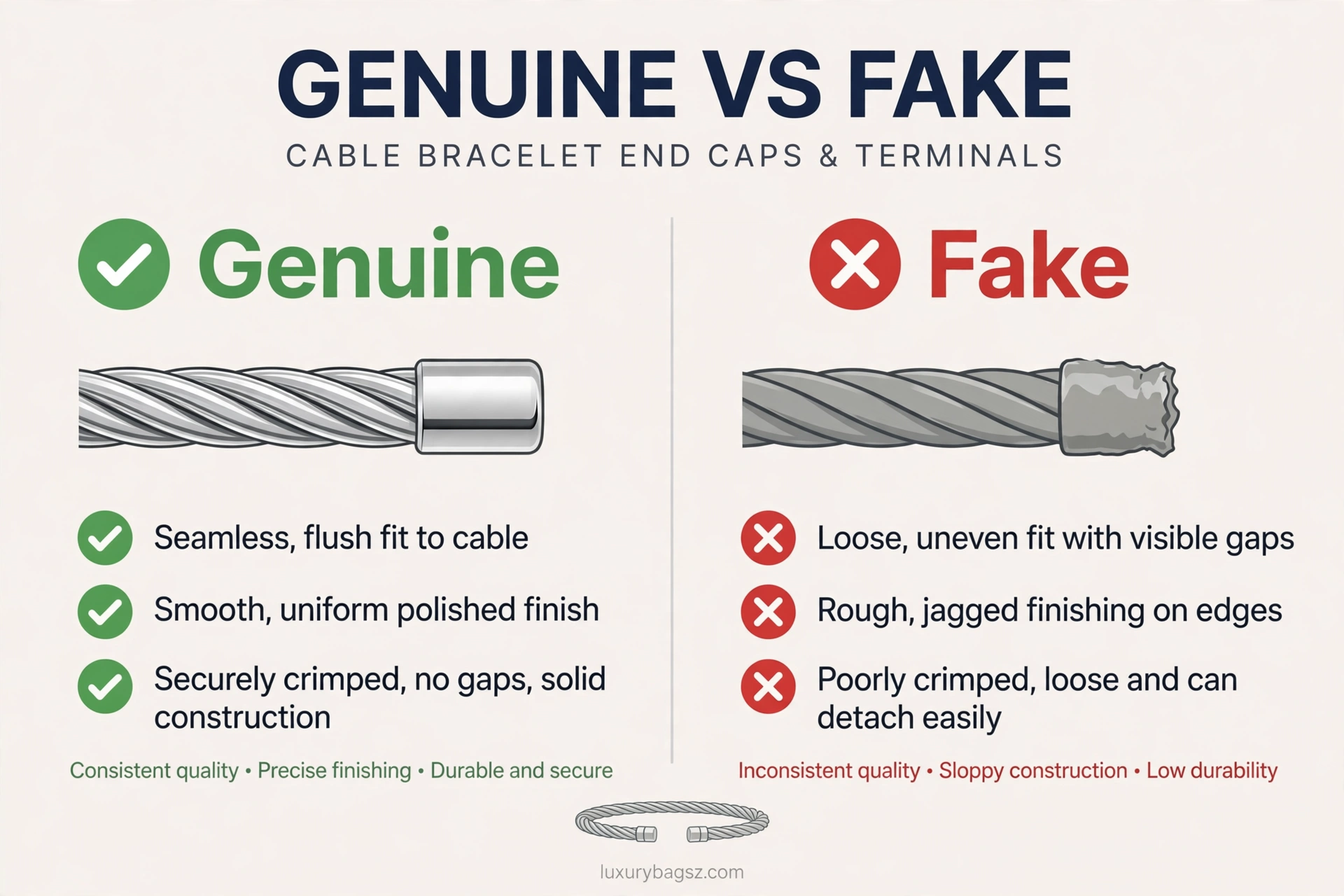
End caps and terminals are the jewellery elements that finish a Yurman cuff or bracelet, and their design is fixed by collection. Plain cable ends, gemstone ends, and other terminal styles each have a correct shape, size, and finishing for their design. Check that the end caps match the collection: a gemstone end cap on a design that should have plain ends, or plain ends on a design that should have gemstones, is a mismatch tell.
Fit and finish matter as much as design. Genuine Yurman end caps fit the cable precisely, with no gaps, no steps, and no uneven transitions between cable and cap. The cap surface should be smoothly finished, with any detailing, such as fluting or stone setting, executed cleanly and evenly. End caps that sit crooked, that leave gaps, that show rough edges, or whose detailing looks soft or muddy are warnings.
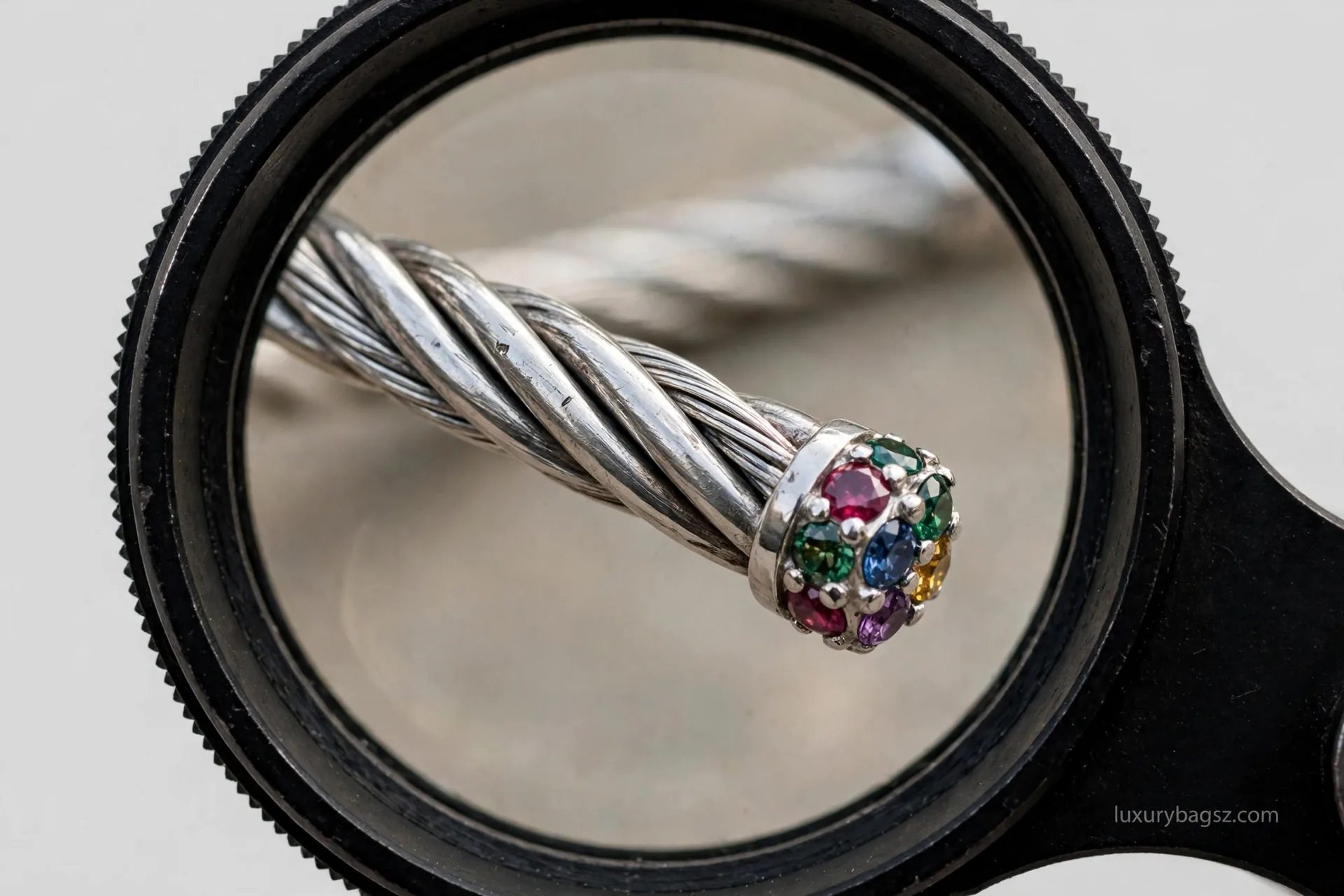
On gemstone end-cap designs, check the stones as well as the caps. Stones should be evenly set, securely held, and consistent in colour and appearance between the two ends. A stone that sits unevenly, that wobbles, or that differs obviously in colour from its pair suggests a replacement or a fake.
Stone checks are covered in more detail later in this guide, but the end-cap stones deserve attention here because they are so visible and so often copied poorly.
Clasps, Hinges, and Closures
Yurman bracelets use various closures depending on design: open cuffs that flex onto the wrist, hinged bangles, clasps on chain bracelets, and other mechanisms. Whatever the mechanism, it should operate precisely and feel substantial. Cuffs should flex with controlled springiness, returning to shape without feeling flimsy or overly stiff.
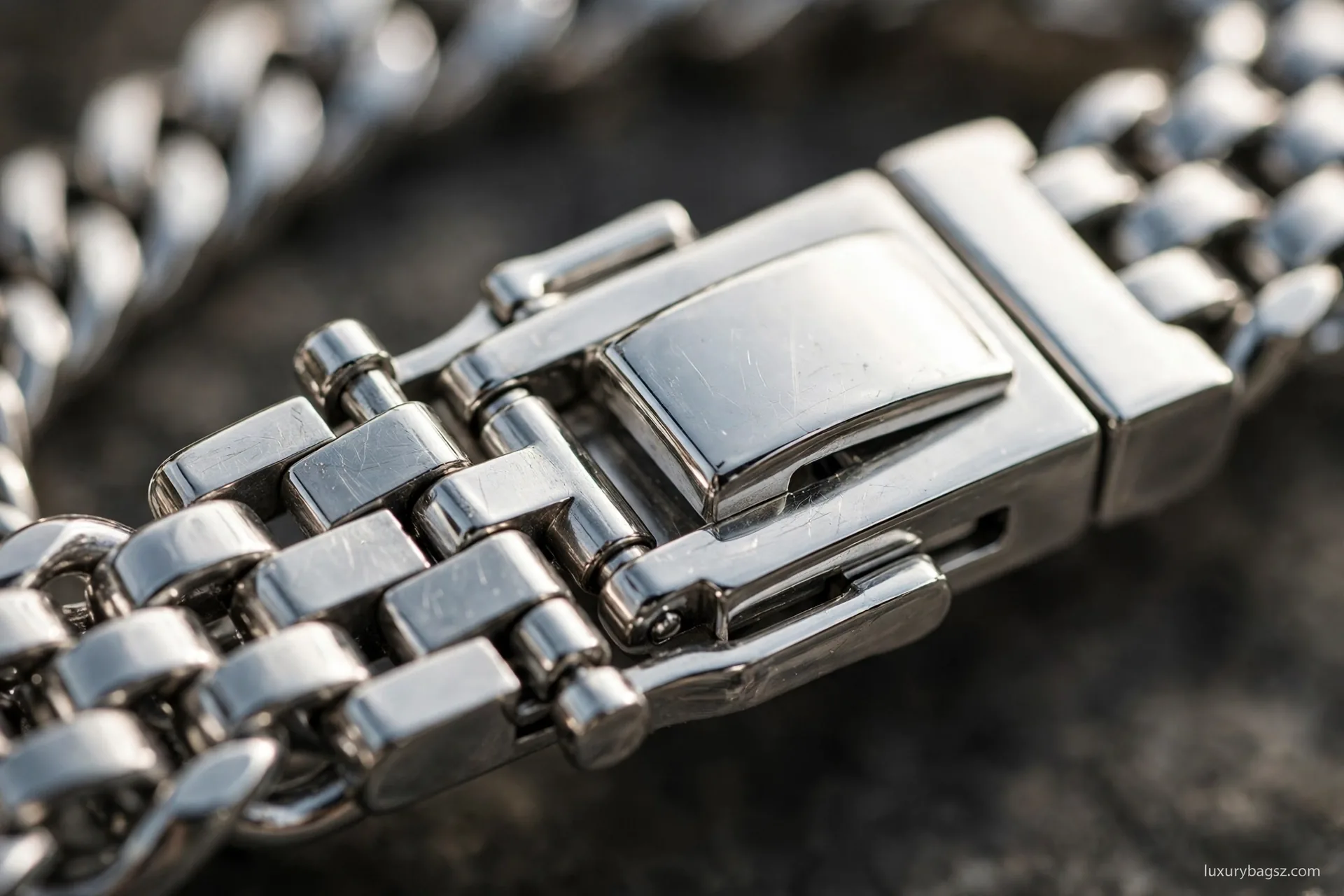
Hinged bangles should open and close with a firm, precise action, with hinges that move smoothly and without play. Clasps should close with a firm snap, sit flush, and show no gap when closed.
Examine hinges and clasps under magnification. Genuine Yurman hinges show clean construction, with pins that sit flush and even, and with no rough edges or excess play. Clasps carry clean, correctly rendered markings where specified, and their finishing matches the rest of the bracelet. A hinge that feels loose or gritty, a clasp that closes loosely or gaps, or markings that are shallow or misspelled are serious warnings.
Also check the interior of clasps and hinges, where fakes often economise on finishing. Genuine Yurman interiors are finished to the same standard as exteriors, while fake interiors often show rough casting, burrs, or uneven polishing. Those hidden surfaces are where careful buyers look first, and they frequently decide the verdict.
Hallmarks: Format, Spelling, and Engraving Quality
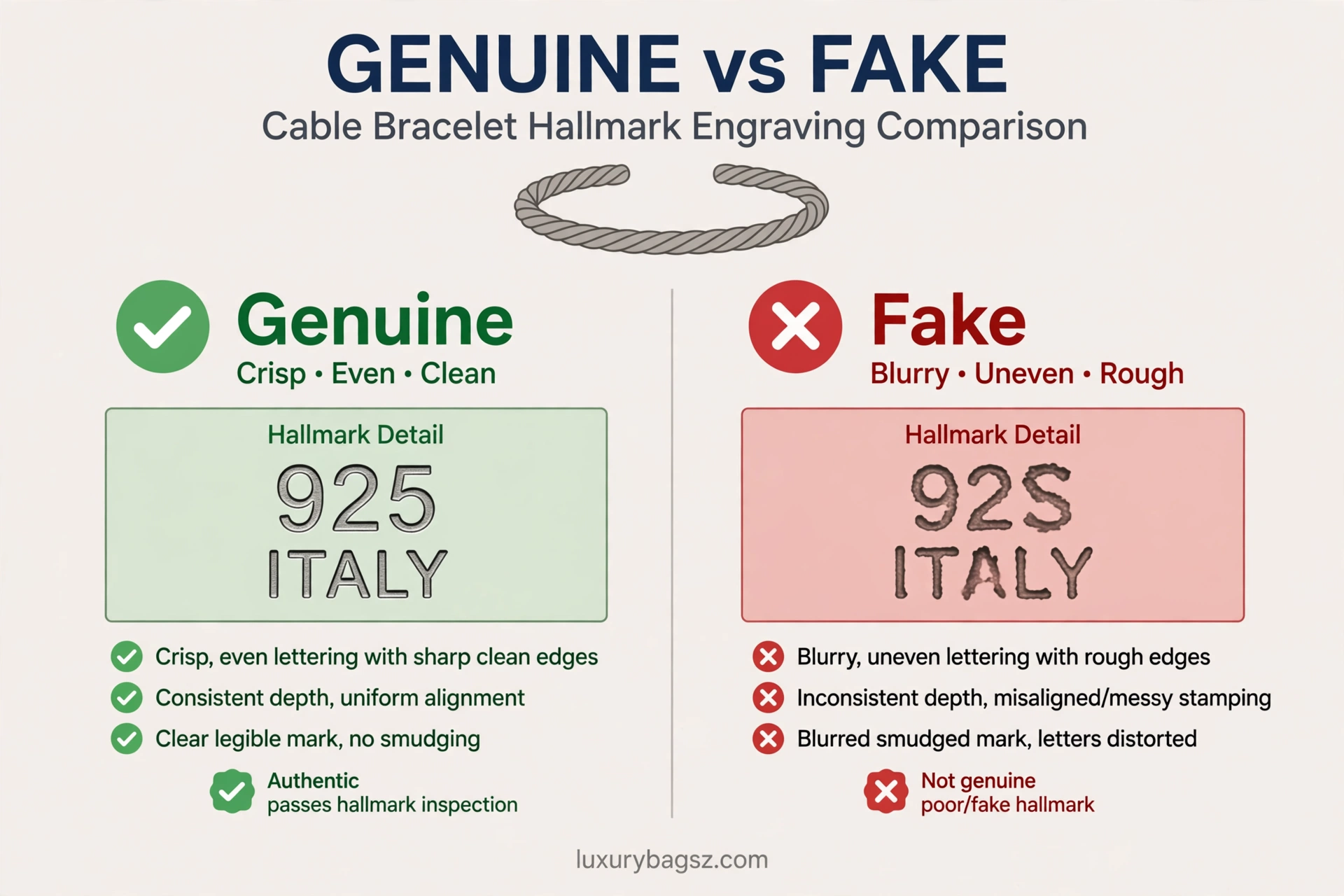
Hallmarks are a starting point for Yurman authentication, but quality matters more than presence. On a genuine Yurman bracelet, hallmarks are crisply and evenly engraved, with clean letterforms, consistent depth, and correct spelling.
Common marks include the David Yurman name, often in a distinctive script or block format depending on collection and era, together with metal marks such as 925 for sterling silver and 750 for 18 karat gold, and, on some pieces, additional marks for designer or origin. The exact combination varies by collection and era and must be checked against verified examples of the same design.
Fakes commonly fail on hallmark quality. Typical faults include shallow or uneven engraving, letters that are too bold or too thin, spacing that drifts, misspellings, and hallmark formats that do not belong to the collection or era. Photograph hallmarks under magnification and in raking light, which reveals uneven depth, and compare the font and layout directly against verified examples.
Hallmark location matters too. Genuine Yurman hallmarks sit where the collection specifies: on the interior of a cuff, on the clasp, on an end cap, or in another specified position. A hallmark in an unexpected location, or a bracelet with no hallmark at all where one is specified, is a warning.
Note that hallmarks can wear with use and polishing, but worn marks look smooth and even, while fake marks often look sharp in some letters and shallow in others.
Metal Quality, Weight, and Plating
Metal quality is a fundamental check. Sterling silver Yurman bracelets should be marked 925 and should feel substantial, with the density and lustre of solid sterling silver. Gold bracelets should be marked for their karat and should show the colour and density of that karat. Two-tone bracelets should show a clean, consistent contrast between silver and gold elements, with no bleeding of colour or uneven plating at the joins.
Weight is a useful screening test. Genuine Yurman cable bracelets feel solid and balanced, because the cable is solidly constructed and the metal is solid as specified. A bracelet that feels suspiciously light, hollow, or tinny, or that balances oddly on the wrist, deserves the full checklist. Weight alone never authenticates a bracelet, but a bracelet that feels wrong should not pass on its hallmarks alone.
Plating is a particular warning. Some fake Yurman bracelets are base metal plated with silver or gold, and plating wears differently from solid metal: it shows wear at edges and high points, revealing a different-coloured base metal beneath. A bracelet that shows base metal at worn cable ridges or end-cap edges, or that feels too light for its size and claimed metal, is a plating warning.
Genuine Yurman silver and gold bracelets are solid metal as specified, not plated base metal, except where a specific design specifies another construction, which should be verified against the collection. Home metal tests can damage a genuine piece; a jeweller's test, such as X-ray fluorescence testing, identifies composition without damage.
Diamonds and Gemstones: Setting and Consistency
Gemstone Yurman bracelets need stone checks in addition to metal and hallmark checks. Setting quality is the first test: genuine Yurman settings hold stones securely and evenly, with prongs or bezels that are uniform, smoothly finished, and correctly sized for the stones, and with stones that sit at a consistent height and orientation. Stones that sit unevenly, that wobble, that show glue, or that are held by rough, uneven prongs are warnings.
Stone consistency is the second test. In multi-stone bracelets, diamonds or coloured gemstones should be consistent in colour, clarity appearance, and cut quality as specified for the collection, with no single stone that looks obviously different from its neighbours. A single cloudy, off-colour, or poorly cut stone among otherwise fine stones suggests a replacement or a fake.
In gemstone end-cap designs, the two ends should match each other in stone colour, size, and setting quality; mismatched ends are a warning.
For high-value diamond Yurman bracelets, certification and jeweller verification matter. A certificate's details should match the stones and the bracelet exactly, and a jeweller should verify the stones independently rather than relying on paperwork alone. Certificates are faked and can be paired with different stones, and a missing certificate on a high-value piece sold as certified is a warning.
Craftsmanship on Every Surface
Yurman craftsmanship is consistent across the whole bracelet, not just the front. Examine every surface: the cable top, sides, and underside, the end caps, the clasp and hinge interiors, and the bracelet interior that sits against the wrist. Genuine Yurman pieces show smooth, even finishing throughout, with polished areas evenly polished, brushed areas evenly brushed, and clean transitions.
Edges are smooth, with no burrs, sharp spots, or rough casting marks.
Fakes often concentrate finishing on the visible cable top and neglect the underside and interiors. Common faults include rough undersides, unpolished interiors, end caps that are rough on their inner faces, and hinges that show casting roughness.
Run a fingertip over the bracelet interior, if the seller permits handling: a genuine Yurman bracelet feels smooth against the wrist, while a fake often feels rough in the places the buyer is least likely to check.
Also check the bracelet's overall symmetry. Cuffs should be symmetrical, with end caps that mirror each other in size, shape, and finishing. Bangles should be round and even, with no flat spots or asymmetry. A bracelet that is visibly asymmetrical, or whose two ends differ in size or finishing, is a warning, whether the cause is fakery or poor repair.
Size, Fit, and Wear Patterns
Yurman bracelets come in sizes, and size markings and fit should match the design. A cuff sold as a particular size should measure correctly for that size, and its flex and opening should suit its design: cuffs are designed to flex slightly onto the wrist and return to shape, not to bend freely or to resist flexing entirely.
A cuff that has lost its spring, that bends too easily, or that shows kinks or flat spots in its cable suggests damage, poor repair, or fake construction with incorrect metal temper.
Wear patterns should be consistent with the bracelet's age and stated history. Genuine sterling silver develops a natural patina, and that patina should be even across the bracelet. A bracelet with a suspiciously perfect surface and no patina, sold as vintage, may have been heavily polished or faked. A bracelet with heavy, uneven wear, or with wear concentrated in implausible places, deserves questioning.
Hallmarks may soften with wear and polishing, but they should remain legible and correctly formed.
Restoration complicates assessment. A genuine Yurman bracelet may have been re-polished, re-plated where applicable, or repaired, and those interventions are legitimate when disclosed. Undisclosed restoration, especially re-engraving of hallmarks, replacement of end caps, or re-setting of stones, is a different matter. Ask for restoration history and let a jeweller judge whether the wear pattern is honest.
Box, Pouch, and Papers
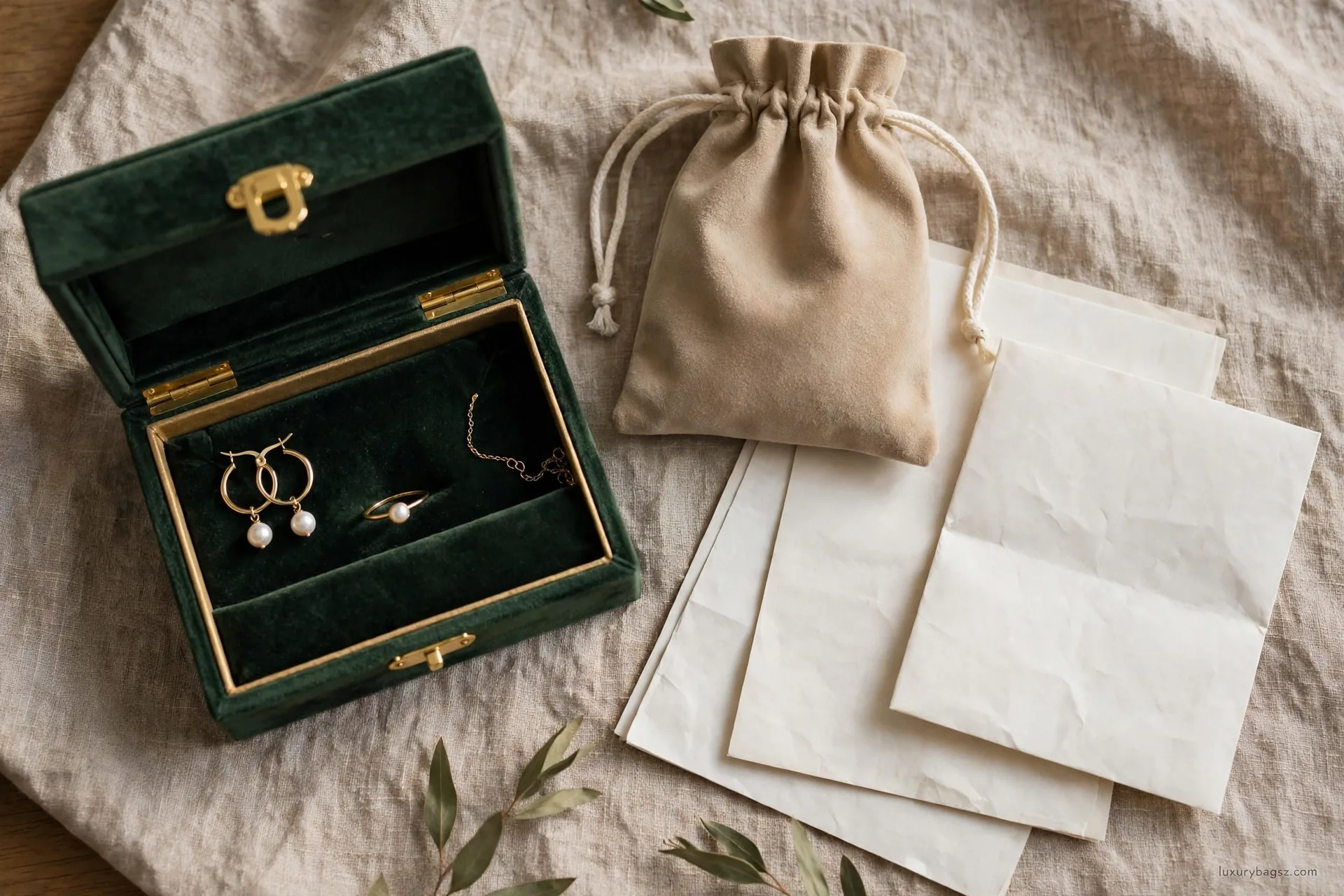
Yurman packaging includes a presentation box, a pouch, and papers as applicable, and genuine packaging is well made, with clean branding, correct colours, and materials that match the era of the bracelet. Papers should show the bracelet details and purchase information where applicable, with printing that is crisp and consistent.
As with other brands, however, packaging is supporting evidence, not a verdict: fake Yurman packaging is common, and genuine bracelets frequently lose their boxes and pouches, especially pre-owned ones.
Check packaging for internal consistency. The box style, pouch style, and papers format should suit the bracelet's era: a modern box with a 1990s bracelet, or vintage-style papers with a current bracelet, needs explaining. Papers should match the bracelet's collection, metal, and stones exactly, not approximately. A certificate for different stones, or papers describing a different collection, are mismatches that fail the check.
Common Traps: What Fools Yurman Buyers
The traps that fool Yurman buyers are consistent. The first is the cable-at-a-glance trap: a buyer sees twisted cable and stops, without checking its evenness, finish, and termination. The second is the hallmark trap: a buyer sees a Yurman mark and stops, without checking its quality, format, and era fit.
The third is the price trap in both directions: a high price does not guarantee genuineness, and a low price does not guarantee fakery, but a large discount combined with no returns and an irreversible payment method is the classic fake-sale pattern. The fourth is the photograph trap: Yurman fakes photograph well, and cable, hallmark, and craftsmanship details need the bracelet in hand or a jeweller's inspection.
The defence is procedural: collection and design first, then cable, end caps, clasps, hallmarks, metal, stones, craftsmanship, size and wear, and packaging, in that order, with a jeweller's inspection before payment on any high-value bracelet. A seller who welcomes that procedure is behaving like a seller of a genuine bracelet; a seller who resists it is providing behavioural evidence that should weigh heavily.
Buying Safely: Inspection, Returns, and Recourse
Before paying in full for a pre-owned Yurman bracelet, especially a gold or diamond piece, secure a written return period that allows an independent jeweller's inspection, and agree in writing what happens if the bracelet is judged fake or not as described. Take the bracelet to a reputable jeweller, ask them to check the cable, hallmarks, metal, stones, and craftsmanship, and get their opinion in writing.
If the seller refuses an inspection window, walk away.
Use payment methods with recourse and avoid irreversible transfers to unknown sellers. Escrow through a reputable marketplace can help, but check what it covers: some services verify only that the bracelet matches its listing photographs, not that it is genuine in the full sense of this guide.
Keep complete records of the listing, the seller's description, correspondence, photographs of the bracelet and its hallmarks, papers, and the inspection report. A genuine Yurman bracelet is a daily-wear classic; the days spent verifying it are a small price for years of confident wear.
The same inspection-first approach applies to Cartier jewellery purchases, as the Cartier Love bracelet fake guide and the Cartier Juste un Clou guide both show: check the whole piece, not just its most famous feature, before money changes hands.
Caring for Cable Bracelets: Cleaning, Storage, and Repairs
Cable bracelets need care that respects their construction. The twisted cable collects dirt, skin products, and lotions in its grooves, and that buildup, left for years, dulls the finish and can stiffen the bracelet's flex.
Clean cable gently with warm water, mild soap, and a soft brush, working along the cable's twist rather than against it, rinsing thoroughly, and drying fully, including in the grooves and around end caps, where moisture can linger.
Avoid abrasive polishes on cable, which wear the twist's ridges unevenly and can thin the strands over time, and avoid ultrasonic cleaning unless a jeweller advises it for that specific bracelet, particularly where gemstones are set.
Storage matters for cuffs in particular. Store cable cuffs separately from other jewellery, in a pouch or lined compartment, so that they do not scratch or get scratched by harder pieces, and so that their cable does not snag on chains or textiles. Do not stack heavy jewellery on top of a cuff, which can bend it, and do not force a cuff open wider than its design allows, which can kink the cable or weaken its spring.
A cuff that has lost its spring, developed a kink, or shows a loose end cap should go to a jeweller, not back onto the wrist, because continued wear worsens the damage.
Repairs should be disclosed and correctly done. A jeweller can re-polish cable lightly, re-secure end caps, replace worn clasps or hinges, and re-set loose stones, but each repair changes the bracelet's originality to some degree, and that change should be documented and reflected in any future sale price.
Keep repair records with the bracelet's papers, and choose a jeweller experienced with cable construction, because cable repair requires understanding how the twist is formed and finished. A Yurman bracelet cared for gently, stored separately, and repaired properly when needed will keep its cable crisp, its hallmarks legible, and its value intact for years of daily wear.
Yurman Collections: Renaissance, Albion, Cable Collectibles
Yurman collections beyond Cable Classics each carry distinctive details that buyers should learn before purchasing. Renaissance bracelets feature ornate, sculptural detailing inspired by classical motifs, with textured surfaces and elaborate end caps that demand precise casting and finishing.
Check Renaissance detailing under magnification: genuine detailing is crisp, deep, and consistent, with no soft, muddy, or uneven areas, while fake Renaissance detailing often looks shallow or blurred, because fine sculptural work is expensive to copy. Renaissance clasps and hinges should operate precisely and finish evenly, as with other Yurman collections, and any stones should be evenly set and consistent.
Albion bracelets, known for their cushion-cut gemstone centres, need stone-centred checks. The central stone should be correctly cut, evenly set, and consistent with the collection's specifications for size, colour, and quality, and its setting should hold it securely with clean, even prongs or bezel work.
A central stone that sits unevenly, wobbles, or differs obviously in quality from the collection's standard is a warning, whether the cause is fakery or replacement. Albion's cable and metalwork should meet the same cable standards as Cable Classics, with even twist and smooth finishing, because the collection's luxury lies in the combination of fine cable and fine stone, not in either alone.
Cable Collectibles, with gemstone end caps and varied cable designs, need end-cap and stone consistency checks above all. The two ends of a Cable Collectibles bracelet should mirror each other in stone size, colour, setting, and finishing, and the cable should meet the end caps cleanly with no gaps or steps.
Chain and beaded Yurman designs, where present, need link and bead consistency checks: links uniform in size and finishing, beads evenly matched, and clasps precise.
Across collections, the principle is the same as the guide's core: learn the collection's defining feature, whether Renaissance sculpture, Albion stone, or Collectibles end caps, and test the bracelet against that feature first, because counterfeiters copy the cable easily and the collection-specific detail badly.
Spotting Fake Yurman Listings Online: Red Flags Before You Buy
Online Yurman listings carry red flags that careful buyers can spot before spending anything, and learning them saves both money and disappointment. The first flag is photography: listings that use only stock photographs, that show the bracelet from a single angle, or that refuse close-up photographs of cable, hallmarks, end caps, and clasps are hiding the details that authentication requires.
A genuine seller with a genuine bracelet generally welcomes close-up requests, because those photographs close the sale; a seller who resists them is telling you something, even if they never say it directly.
The second flag is description vagueness. Listings that name no collection, give no metal or karat details, describe stones vaguely or not at all, and offer no measurements or hallmark information are either careless or evasive, and either quality should lower your confidence and your price.
Compare the listing's claims against verified examples of the named collection: a collection name that does not exist, a metal combination never offered, or a gemstone design never made are all listing-level fake tells, detectable without handling the bracelet.
The third flag is price and pressure combined: a large discount, a story about urgency, a refusal of returns, and a demand for irreversible payment together form the classic fake-sale pattern, however plausible each element looks alone.
The fourth flag is seller history. Check the seller's feedback, sales history, and specialisation: a seller with a history of jewellery sales, positive feedback mentioning authenticity, and detailed listings is more credible than a new account selling luxury jewellery at deep discounts with generic descriptions. That history is not proof, but it is evidence, and it should be weighed alongside the bracelet's own checks.
When a listing shows multiple flags, do not try to rescue it with hope; either demand the missing evidence, detailed photographs, collection identification, and an inspection window, or walk away. The Yurman market is large, and another listing, with better evidence, will come along. Patience online is the same virtue as patience in person: it is what separates a genuine bracelet bought well from a fake bracelet bought quickly.
Frequently Asked Questions
Can I authenticate a Yurman bracelet from photographs alone?
Sometimes for crude fakes, but not reliably for good ones. Cable evenness, hallmark depth, clasp interiors, and metal quality all need the bracelet in hand or a jeweller's inspection.
What is the most common fake Yurman tell?
Uneven or roughly finished cable combined with shallow or poorly formed hallmarks. Either flaw alone can have innocent explanations on a worn bracelet, but the pair together is a strong warning.
Do all genuine Yurman bracelets have twisted cable?
Most classic Yurman bracelets do, but the brand also makes chain, beaded, and other designs without cable. Judge the bracelet against its specific collection, not against a general cable expectation.
Does a missing box or papers mean a Yurman bracelet is fake?
No. Many genuine Yurman bracelets, especially pre-owned ones, have lost their boxes and pouches. Missing packaging lowers the price and raises the need for inspection, but it does not prove fakery.
Should a Yurman cuff flex?
Yes, cuffs are designed to flex slightly onto the wrist and return to shape. A cuff that bends too easily, kinks, or has lost its spring suggests damage, poor repair, or fake construction.
How can I tell if a Yurman bracelet is plated rather than solid?
Plated bracelets often feel lighter than solid metal and show base metal at worn cable ridges or end-cap edges. A jeweller's metal test identifies composition without damaging the bracelet.
Are gemstone Yurman bracelets faked more than plain cable ones?
Gemstone designs attract fakes because of their higher prices, but plain cable bracelets are faked too, in large volumes. No Yurman design should be assumed safe.
Can a jeweller verify Yurman stones independently?
Yes. A reputable jeweller can assess stone setting, consistency, and quality, and can advise whether certification is needed for high-value diamond pieces. Do not rely on paperwork alone.
Do Yurman hallmarks look the same on every bracelet?
No. Hallmark formats vary by collection and era. Judge hallmarks against verified examples of the same design and era, not against a single universal format.
Is a Yurman bracelet with replaced end caps still worth buying?
Only if the replacements are correct for the design, fully disclosed, and reflected in the price. Undisclosed replacements sold as original should end the deal unless a jeweller advises otherwise.
Final Verdict
A genuine David Yurman bracelet proves itself in its cable: precisely twisted, evenly finished, and cleanly terminated, combined with crisp hallmarks, precise clasps and end caps, solid metal that feels right, and stones, where fitted, that are evenly set and consistent. Fakes copy the cable look; they struggle to sustain that standard across the whole bracelet.
Check the collection first, run the twelve checks, and buy only with a jeweller's inspection window. The Yurman bracelet you bring home will then be what it claims to be: an everyday classic, twisted to perfection.






