How to Wear Engineer Boots: A Beginner’s Guide to Buying and Styling Them
A Simple Formula for Engineer Boots
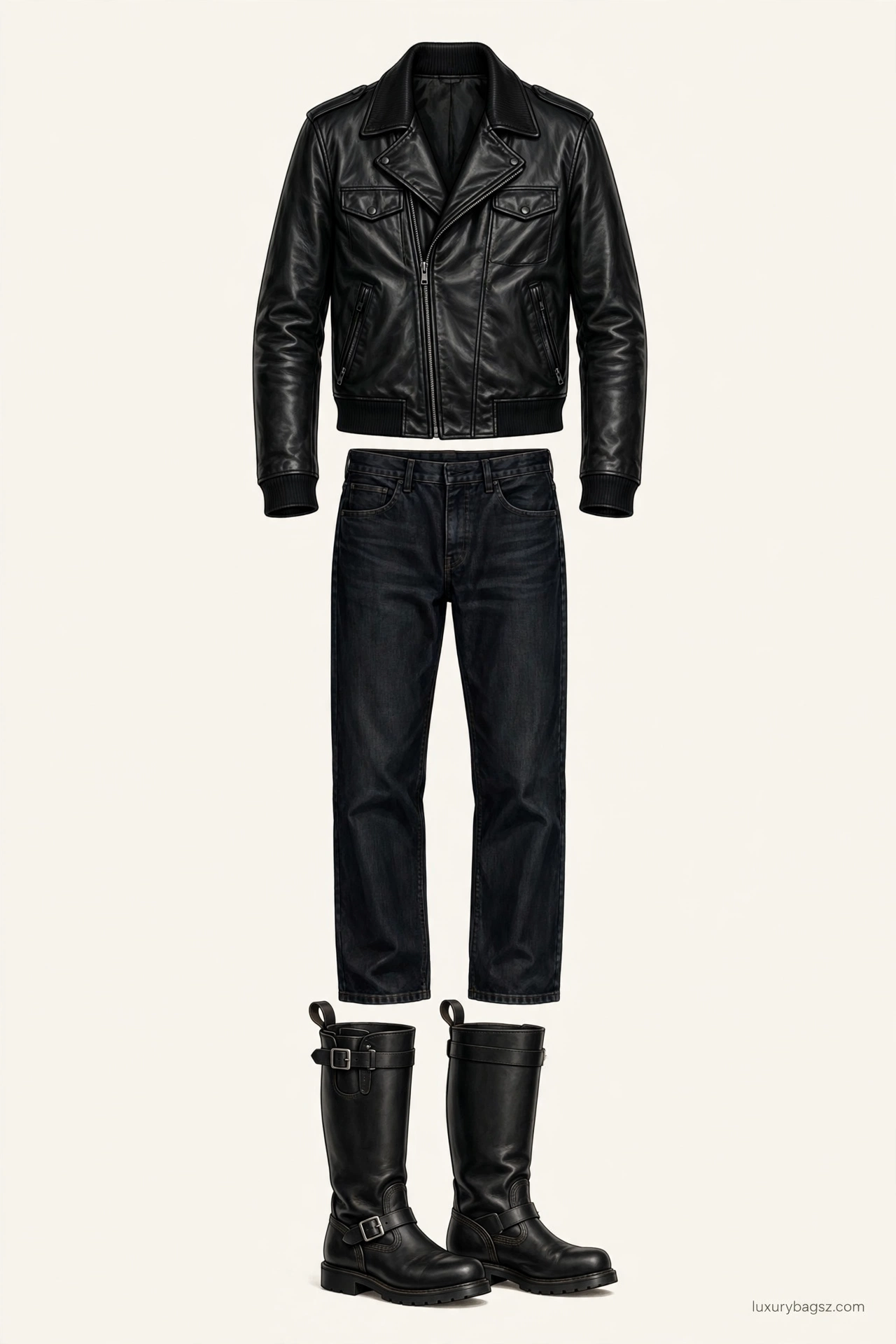
Keep the outfit deliberately plain and let the boots lead: dark jeans, a plain T-shirt in white or black, and a leather, denim or canvas jacket. That combination suits most beginners and balances the tall, laceless shaft, its ankle and top buckles, and the bold silhouette without competing detail.
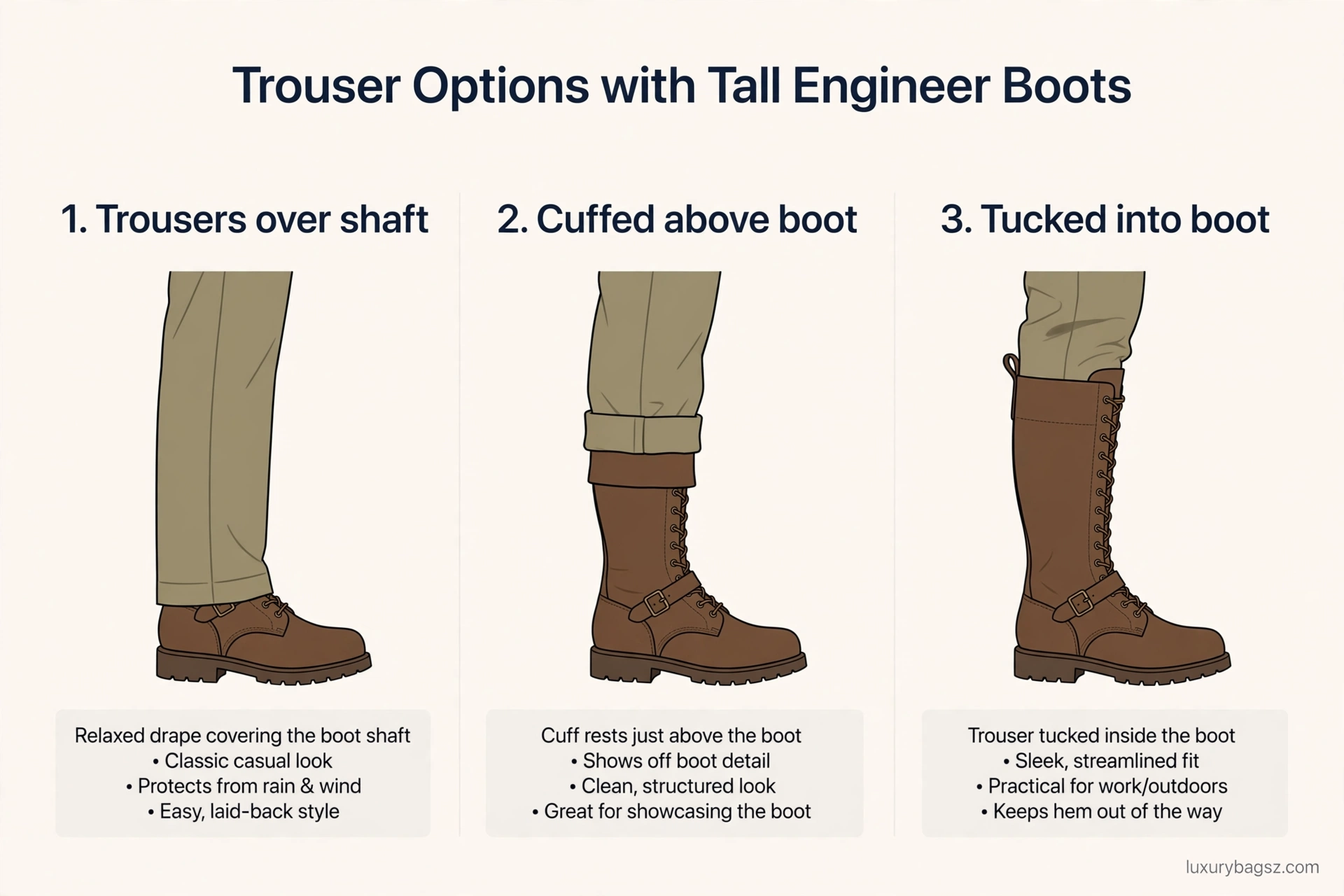
For trousers, the easiest choice is wearing them over the shaft so only the lower boot shows. Cuffing higher deliberately displays the buckles and shaft, while tucking fabric inside is the boldest route and the hardest to carry off casually, so avoid it while learning.
Match width to your trousers, pairing slimmer boots with tapered legs and broader styles with wider cuts. The boots remain firmly casual, so keep them away from suits and formal tailoring.
Engineer Boots, Explained for First-Time Buyers
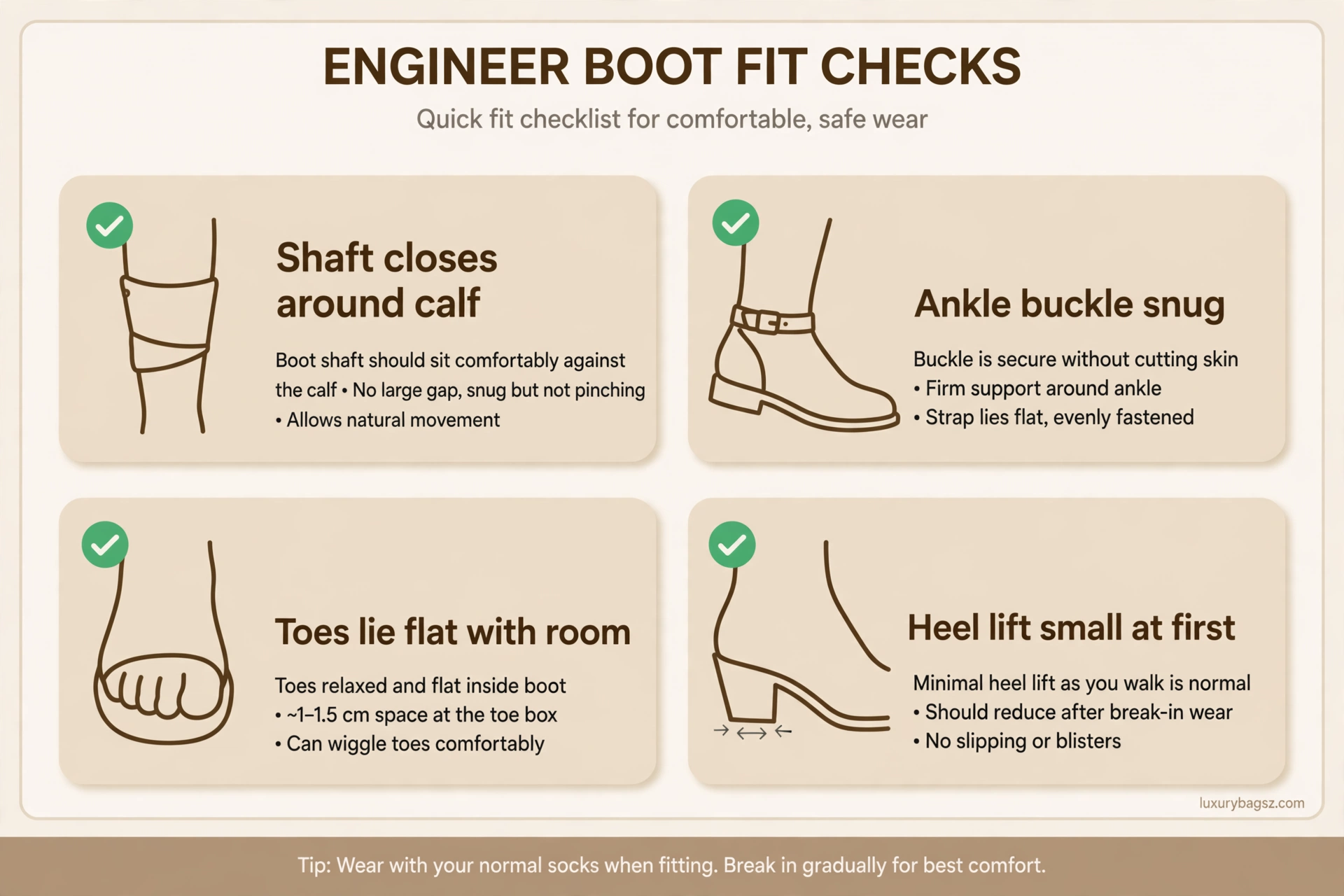
Engineer boots are tall, laceless leather boots with buckles at the ankle and the top of the shaft. They were made for railway and industrial workers who needed tough, slip-on boots.
Today they are a style boot first. Their tall shaft, wide opening and bold buckles make them stand out, which is why beginners often wonder whether they can pull them off.
Key Takeaways
- Engineer boots have a tall 10 to 12 inch shaft, no laces, and buckles at the ankle and shaft top.
- Wear trousers over the shaft for a subtle look, or cuff them to show the boot on purpose.
- Never tuck trousers into engineer boots casually; the classic look keeps denim over or above the boot.
- Choose slim or tapered boots for tapered trousers, and wider boots for wide-leg trousers.
- Engineer boots are firmly casual; they do not suit suits, formal tailoring or office dress codes.
What Engineer Boots Actually Are
Engineer boots date to Depression-era industrial work, where engineers and labourers needed boots that slipped on fast, protected the leg, and survived heat and rough ground.
The classic shape has a round or slightly squared toe, a stacked heel, a tall shaft, and two buckle straps. One buckle sits at the ankle, the other near the top of the shaft.
Modern engineer boots range from slim, tapered styles that fit under narrower trousers to wide, traditional styles with a roomy shaft. That width difference matters more than brand.
Leathers include smooth calfskin, rough-out leather and Chromexcel, a pull-up leather that lightens where it creases. Each ages differently, so choose by the look you want in a year.
Prices vary widely, from entry-level pairs to hand-made boots costing several times more. Beginners should start with a well-made mid-range pair, not the most expensive option first.
Fit: Shaft, Ankle, Toe and Heel
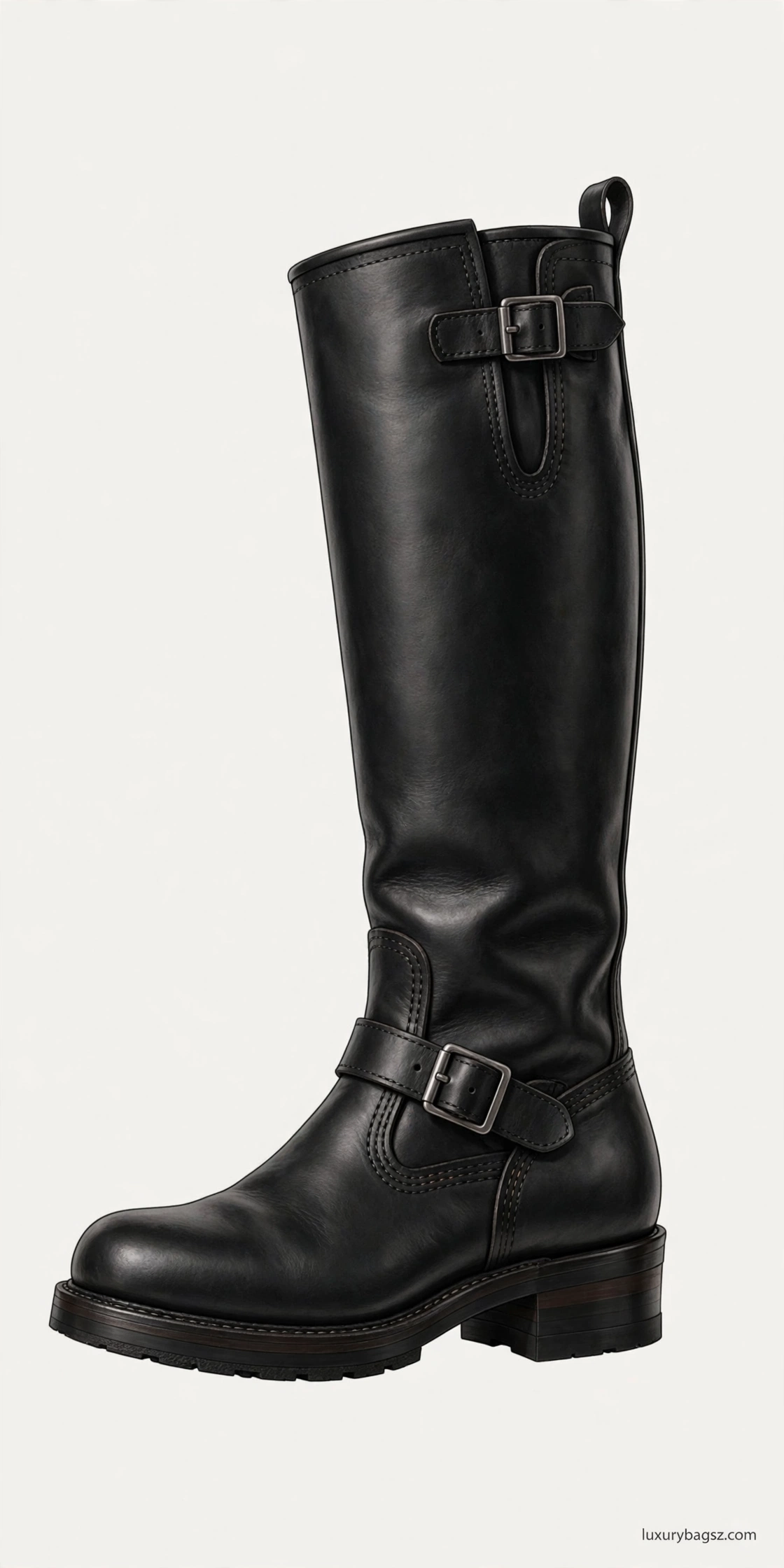
Engineer boot fit starts at the shaft. The shaft should close around your calf without gaping widely or squeezing, and the top buckle should fasten without forcing the leather.
Check the ankle buckle next. It should hold the boot snug at the ankle, since there are no laces to tighten. A loose ankle makes the whole boot feel sloppy when walking.
Check the toe box for room. Toes should lie flat with space to wiggle, and the widest part of your foot should sit in the widest part of the boot, not ahead of it.
Heel slip is normal at first, because the tall, stiff shaft needs break-in. A heel that lifts a little is fine; a heel that escapes the boot on every step means the size is wrong.
Try boots on with the socks you will wear, and walk in them for several minutes. Engineer boots feel rigid and awkward before break-in, so judge fit by pressure points, not by softness.
Buying Your First Pair: What to Look For
Start with black or dark brown leather. Black suits leather jackets and dark denim, while dark brown suits workwear outfits and lighter denim, and both age gracefully.
Choose a toe shape that suits your trousers. A slimmer toe fits under tapered trousers, while a rounder, wider toe suits wide-leg jeans and a more traditional workwear look.
Check construction: Goodyear-welted boots resole well and last longer, which matters for boots you may wear for a decade. Stitched soles beat glued soles for longevity.
Avoid steel toes for style wear. Steel-toe engineer boots are work tools, heavier and bulkier, and they change the boot's shape in ways that suit a jobsite better than a street outfit.
Set a budget that includes care: conditioner, a brush and shoe trees. A cheaper pair with proper care often outlasts an expensive pair that is never conditioned or rested.
The Basic Outfit Template
The simplest engineer boot outfit is dark jeans, a plain white or black tee, and a leather, denim or canvas jacket. It is hard to get wrong, and it lets the boots be the feature.
For a workwear version, wear straight jeans, a flannel shirt and a canvas or denim jacket. The fabrics share the boot's rugged character, so the whole outfit feels coherent.
For a bolder version, wear black jeans, a black tee and a black leather jacket. This is the classic motorcycle-inspired look, and it works best when every piece is simple and dark.
For a softer version, try wool trousers and a black turtleneck. This is a daring, fashion-forward pairing, so keep the trousers slim and the knit fine, not chunky.
Avoid pairing engineer boots with shorts, tailored suits or very formal shirts. Those combinations fight the boot's casual, industrial character and rarely look intentional.


Trousers Over, Cuffed or Tucked: The Big Decision
Wearing trousers over the shaft is the subtlest option. The boot peeks out at the bottom, the buckles stay mostly hidden, and the outfit reads as normal workwear with a strong shoe.
This works best with straight or wide-leg trousers that are wide enough to cover the shaft. If the trouser leg is too narrow, it will bunch above the boot and look strained.
Cuffing jeans above the boot shows the shaft and buckles on purpose. Cuff high enough to clear the top buckle, keep the cuff neat, and let the boot become the outfit's focus.
Tucking trousers into engineer boots is the boldest option and the hardest to pull off. It works with slim jeans and a motorcycle jacket, but it can look costumey in everyday settings.
As a beginner, start with trousers over the shaft. Once you are comfortable with the boots, try a cuffed version on a casual day, and only then experiment with tucking.
Jackets, Shirts and Accessories
Leather jackets are the classic partner for engineer boots. A simple cafe racer or moto jacket matches the boot's toughness without adding extra hardware or logos.
Denim jackets suit engineer boots with jeans, provided the washes differ. A dark denim jacket with lighter jeans, or the reverse, avoids the flat look of matching denim exactly.
Canvas and waxed jackets bring workwear character without leather's weight. They suit flannel shirts, plain tees and straight jeans, and they age alongside the boots.
Keep shirts simple: plain tees, henleys, flannels and chambray shirts all work. Avoid dress shirts, ties and formal patterns, which clash with the boot's industrial roots.
Accessories should be minimal: a simple leather belt, a plain watch and no flashy jewellery. Engineer boots already carry buckles and bulk, so extra hardware overloads the outfit.
Beginner Mistakes to Avoid
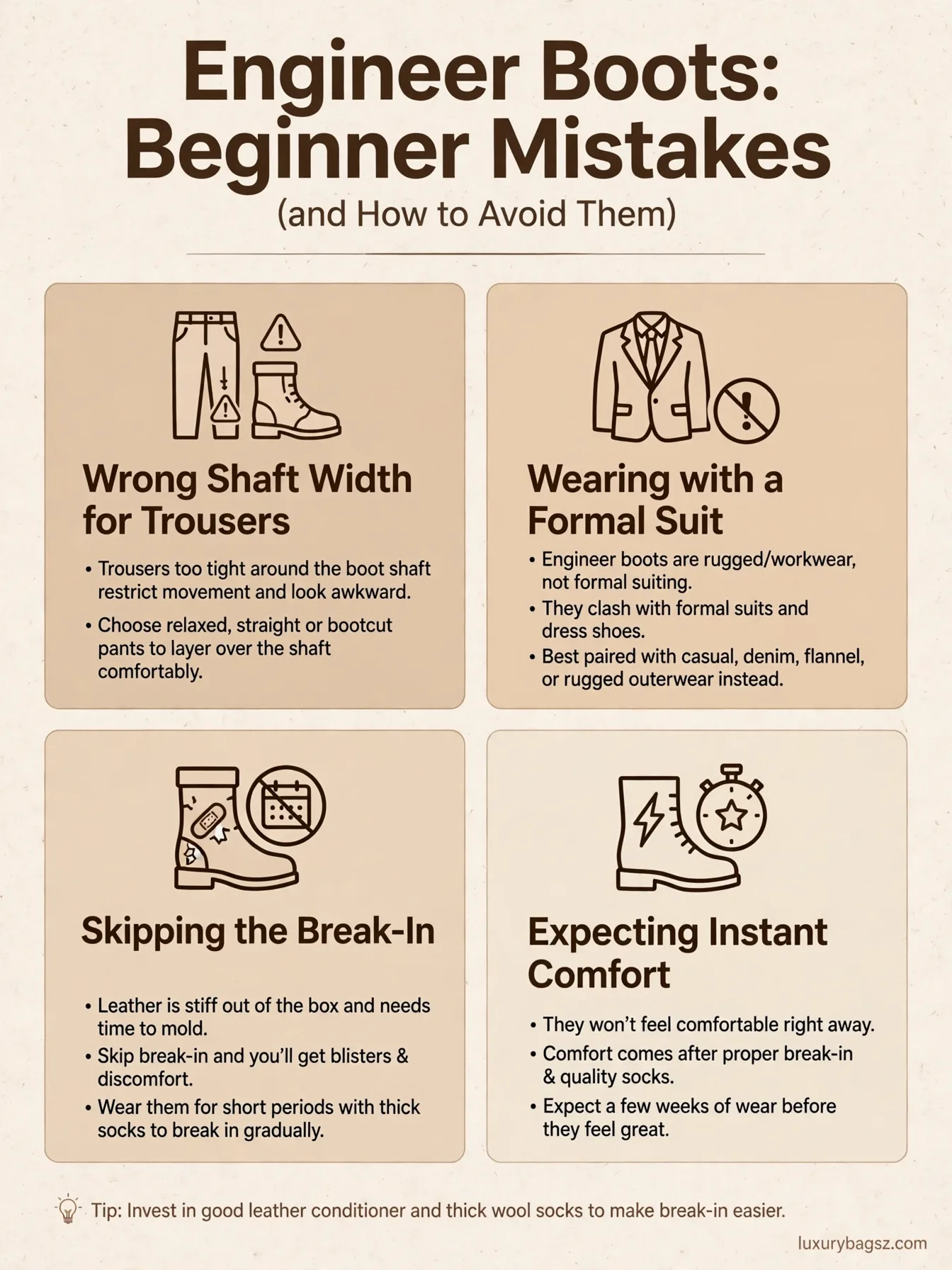
Buying too wide a boot for tapered trousers is a common first error. A wide shaft under a narrow leg bunches fabric and makes the boot look like it belongs to someone else.
Buying too slim a boot for wide trousers is the reverse error. A narrow shaft disappears under wide legs, so the boot's character, which you paid for, never shows at all.
Wearing engineer boots with a suit is a category mistake. These are casual boots with an industrial history, and tailoring needs sleeker, simpler shoes to look right.
Skipping break-in is a comfort mistake. New engineer boots are stiff, so wear them indoors first, then for short walks, before committing to a full day on your feet.
Expecting instant comfort is another trap. Engineer boots mould to your feet over weeks, not hours, and patience in the first month pays off in years of comfortable wear.
Break-In, Care and When to Resole
Break-in takes weeks of regular wear. The shaft softens, the heel counter moulds, and the leather creases where your foot bends, which is normal and adds character.
Wear thick socks during break-in to cushion pressure points, and take breaks if a spot rubs raw. Blisters in week one do not mean the boots are wrong, but sharp pain does.
Condition smooth leather when it looks dry, and brush rough-out leather dry only. Never use cream or oil on rough-out, which needs a brush and a protector spray instead.
Let boots dry slowly at room temperature after wet days, and use shoe trees to hold the shaft shape. Never dry engineer boots on a radiator or with direct heat.
Resole when the sole wears thin or the heel wears unevenly. A Goodyear-welted engineer boot can be resoled many times, which is why good construction is worth paying for.
Frequently Asked Questions
Are engineer boots comfortable?
Yes, after break-in. New pairs feel stiff and rigid, but the leather moulds to your foot over weeks, and broken-in engineer boots are comfortable for long days.
Can beginners wear engineer boots?
Yes, with a simple outfit. Dark jeans, a plain tee and a leather or denim jacket let the boots shine without requiring advanced styling knowledge.
Should trousers go over or inside engineer boots?
Over the shaft is the easiest and subtlest choice for beginners. Cuffing shows the boot on purpose, while tucking is the boldest option and suits motorcycle-inspired outfits.
Do engineer boots suit suits?
No, engineer boots are firmly casual. They suit workwear, denim and leather jackets, not suits, formal tailoring or conservative office dress codes.
How tall is an engineer boot shaft?
Typically 10 to 12 inches. That height is why trouser width matters: narrow legs bunch over the shaft, while straight or wide legs cover it cleanly.
How long does break-in take?
Several weeks of regular wear is normal. Wear them indoors first, then for short walks, and expect stiffness and creasing as the leather moulds to your foot.
What socks go with engineer boots?
Thick boot socks suit break-in and cold weather, while mid-weight socks suit daily wear. Thin dress socks are too light for tall, stiff engineer boots.
Are engineer boots good for motorcycling?
Traditional engineer boots were made for industrial and motorcycle use, and many riders still wear them. For serious riding, check that the sole and protection suit your bike and local rules.
Can women wear engineer boots?
Yes, the same fit and styling rules apply. Choose shaft width and toe shape for your trousers, and keep the rest of the outfit simple so the boots carry the look.
How much should a first pair cost?
A well-made mid-range pair is the best first buy. It should be Goodyear-welted if possible, in black or dark brown, with money left over for conditioner and shoe trees.
Final Verdict
Engineer boots look intimidating, but they are simple to wear once you accept their character. Start with a dark, well-fitting pair, wear trousers over the shaft, pair them with jeans and a plain jacket, and let break-in do its work. The boots will soften, the outfit will feel natural, and the bold silhouette will start to feel like your own.