

Givenchy Nightingale Bag Guide: The Black Slouchy Classic, Sizes and Checks
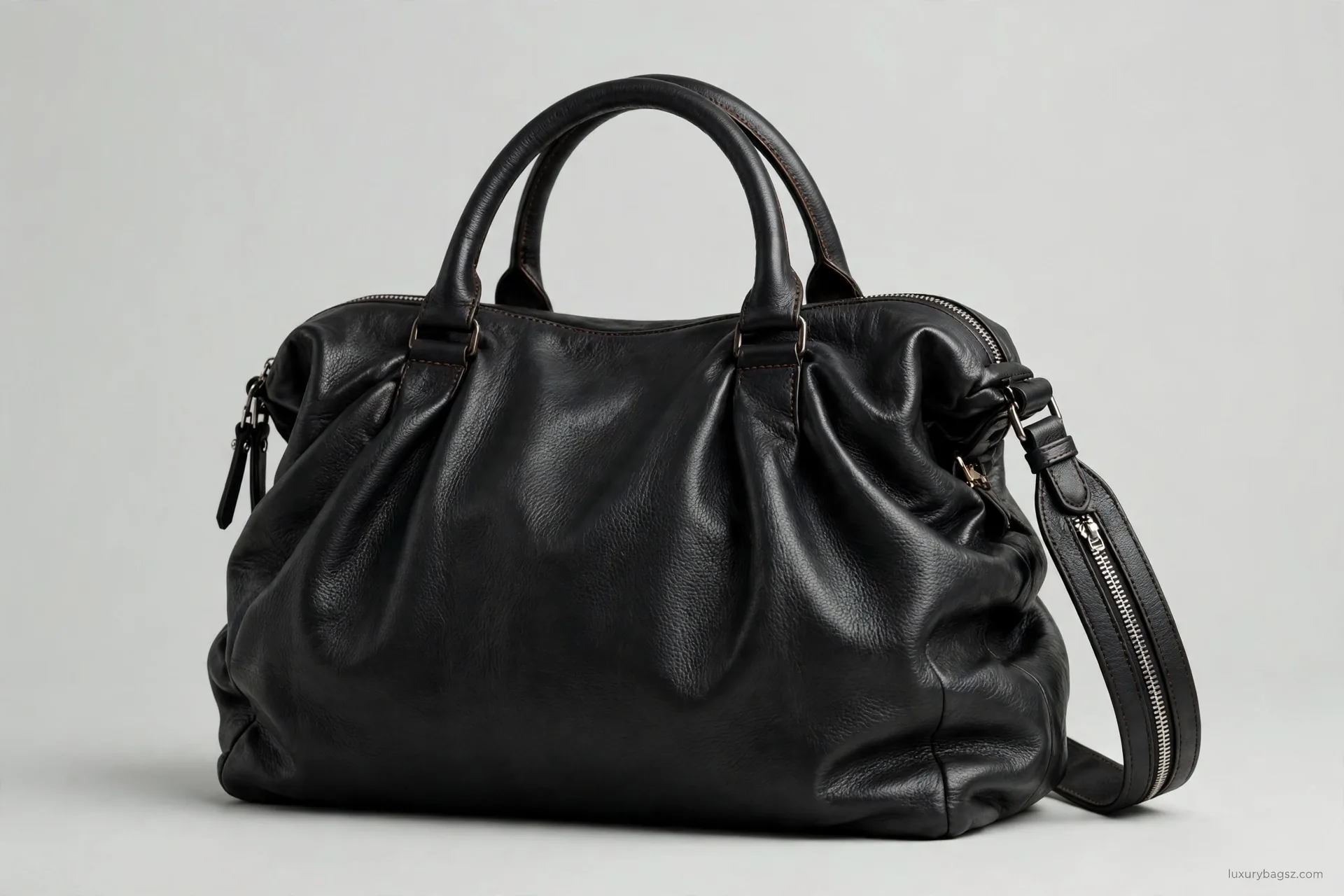
The Nightingale in Brief: Black, Soft and Built to Be Carried
The Givenchy Nightingale in black is the slouchy satchel that defined relaxed luxury in the late 2000s: soft leather, rounded handles, a zip-detail strap and room for a full day. It launched in 2006 under Riccardo Tisci and was relaunched in a sleeker form a decade later. Today it is mainly a pre-owned buy, and a good one. The short answer: a black Medium in grained or lamb leather is the most useful version, typically found resale for a few hundred to around £1,500 depending on condition and era.
Key Takeaways

- Launched in 2006 under Riccardo Tisci; named with reference to Florence Nightingale.
- Soft, slouchy satchel with rounded handles, double zips and a zip-detail strap.
- Sizes run from Micro through Small and Medium to larger travel versions.
- Black is the most sought-after and versatile colour, especially in grained leather.
- A 2015–2016 relaunch streamlined the shape; both eras trade pre-owned.
- Check leather softness, zips, handle bases and corners before buying used.
Where the Nightingale Came From
The Nightingale arrived in late 2006, early in Riccardo Tisci's Givenchy tenure. Where rival It bags chased logos and hardware, the Nightingale chased softness: a roomy, unstructured satchel that moulded to the body. The Olsen twins carried it early and often, and that off-duty styling — big soft bag, simple clothes — fixed its image. It sat alongside the Pandora and later the Antigona in Tisci's strong run of Givenchy bags. Celebrity use was unusually broad for a quiet design: actresses, models and stylists carried it through the late 2000s, which built the deep second-hand supply buyers benefit from today. The name is widely linked to Florence Nightingale, the nursing pioneer. Givenchy never made the bag medical in any literal way; the reference is to care, service and quiet capability rather than decoration. It is a fitting reference for a bag designed to be carried constantly and to carry a great deal, without ever announcing either fact loudly to the room. It contrasts neatly with its structured sister. Our Givenchy Antigona styling guide shows the polished opposite of the Nightingale's relaxed slouch, and many collectors own one of each.
Sizes: Micro, Small, Medium and Beyond
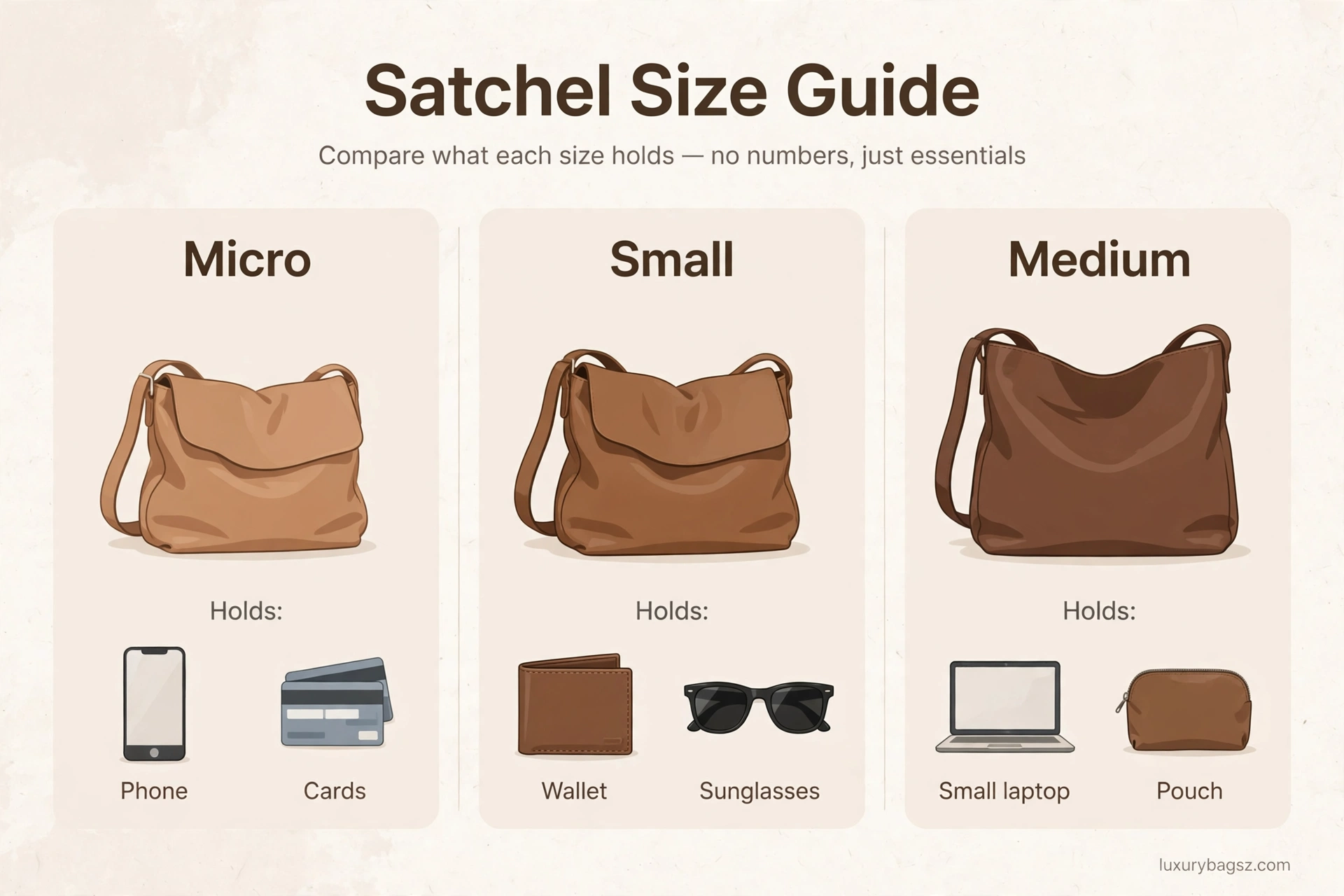
Micro is the smallest Nightingale, a compact crossbody-friendly size for a phone, cards and keys. It keeps the slouch in miniature and suits evenings, concerts and light days around town. Small is the balanced daily size, holding a wallet, phone, sunglasses and a small pouch with room to spare. For many buyers it is the easiest Nightingale to live with day after day, year after year, in any season. Medium is the classic: a genuine carryall that takes a small laptop, a change of shoes or a well-packed day. Reported dimensions for the Medium sit around 37 cm wide, varying by era. Larger and travel versions exist, including weekender-scale bags. When comparing listings, rely on the seller's measurements of the actual bag, since sizes shifted between the original and relaunch eras. Height matters as much as width with a soft bag. A Nightingale that measures generously but collapses low will carry less than its numbers suggest, so ask how tall it stands when empty and lightly stuffed.
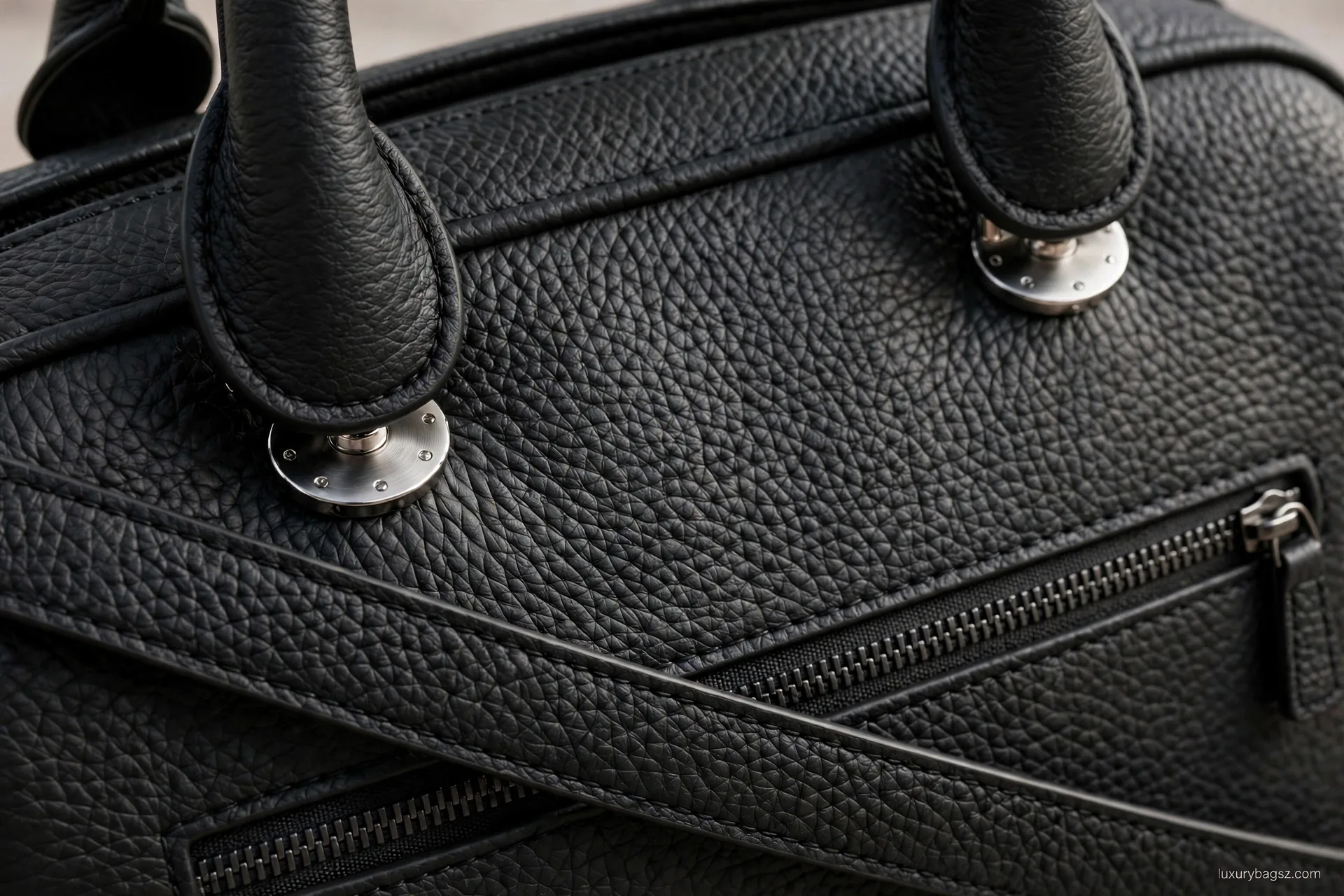
Design Details: Handles, Zips and That Strap
Two soft, rounded top handles are the Nightingale's handshake. They are comfortable in the hand or over the forearm, and small metal emblem discs sit at their bases on many versions. The double top zip opens wide, which is why the bag works as a carryall. Inside there is typically a zip pocket and slip pockets against a canvas or fabric lining. The detachable shoulder strap carries the signature zip detail running along it. It is a functional strap with a decorative spine, and it lets the bag swing between hand-carry and shoulder wear. Interior organisation is modest rather than clever: expect an open main space with small pockets, not a fitted layout. Owners who like order use a removable pouch, which also protects the lining from pens and makeup. Weight is the detail many listings skip. A Medium Nightingale in lambskin is comfortable all day; the same size in grained leather with hardware-heavy straps can tire a shoulder, so ask sellers for a weight if you commute on foot. Leathers include lambskin, calfskin and grained goatskin-style finishes, plus seasonal patent and embossed versions. Our leather types guide explains how these differ in softness and wear.
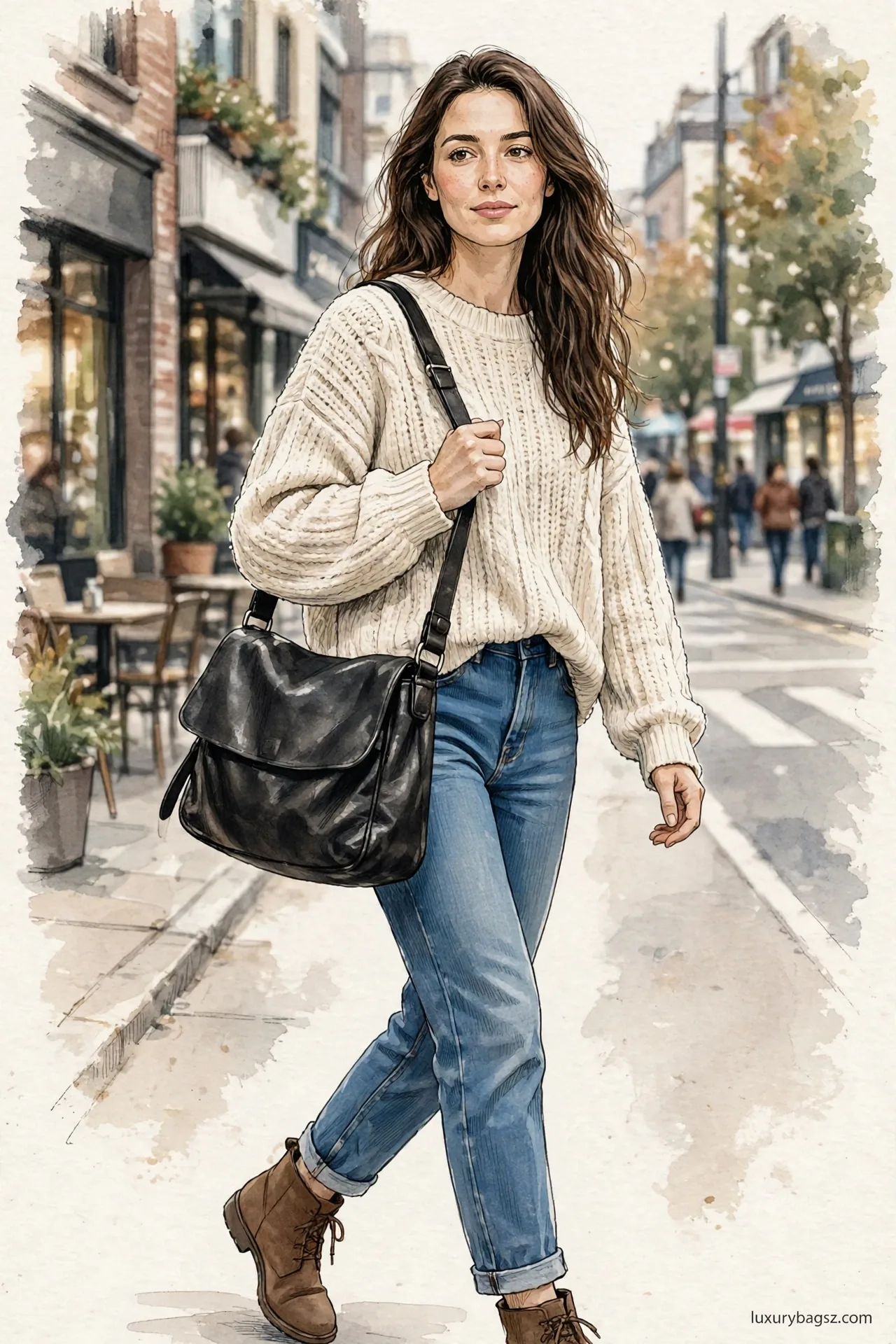
Why Black Is the Nightingale to Buy
Black suits the Nightingale's mood. The bag was born in Tisci's dark, gothic-leaning era at Givenchy, and black leather shows the slouch, grain and hardware at their best. Black also hides the realities of a soft bag's life: corner rub, light scratches and the gentle darkening that handled leather picks up. On pale colours, the same wear reads as damage. A black Nightingale works with almost everything: denim and knits by day, black tailoring at night. It is the colour least tied to a single season's fashion moment. Other colours — oxblood, grey, nude, seasonal brights — can be lovely and often cost less resale. Buy them because you love them, with black as the benchmark for price and versatility. Styling a black Nightingale is mostly about texture contrast. Against matte knitwear the leather's sheen stands out; against a leather jacket it blends in, so break the two leathers up with denim or wool between them. For smarter settings, carry it by the handles and keep the contents below the zip line. A Nightingale stuffed past its zips loses the drape that makes the design, and reads as luggage rather than a handbag.
Original Versus Relaunch: Which Era Suits You?
Original-era Nightingales, from 2006 into the early 2010s, are the softest and slouchiest, with the most relaxed proportions. Leather quality on good examples is excellent, and the look is pure late-2000s. The relaunch, arriving around 2015–2016, streamlined the silhouette. It kept the handles, zips and strap idea but tidied the lines, giving a bag that reads calmer and more minimal. Neither era is automatically better. Choose the original for character and capacity, the relaunch for a cleaner profile that sits more easily with current quiet-luxury dressing. Condition matters more than era. A well-kept original beats a tired relaunch bag every time, so judge the individual bag in front of you, not the year on a listing. Leather character differs by era too. Originals are often found in soft lambskin and grained finishes with a lived-in feel, while relaunch bags more often appear in tidier calfskin that holds a cleaner outline. Availability is the practical difference: originals are far more numerous on resale sites, so you can be choosier about condition and price. Relaunch bags surface less often and sell to buyers who know the difference.
Prices, Resale and Authenticity Checks
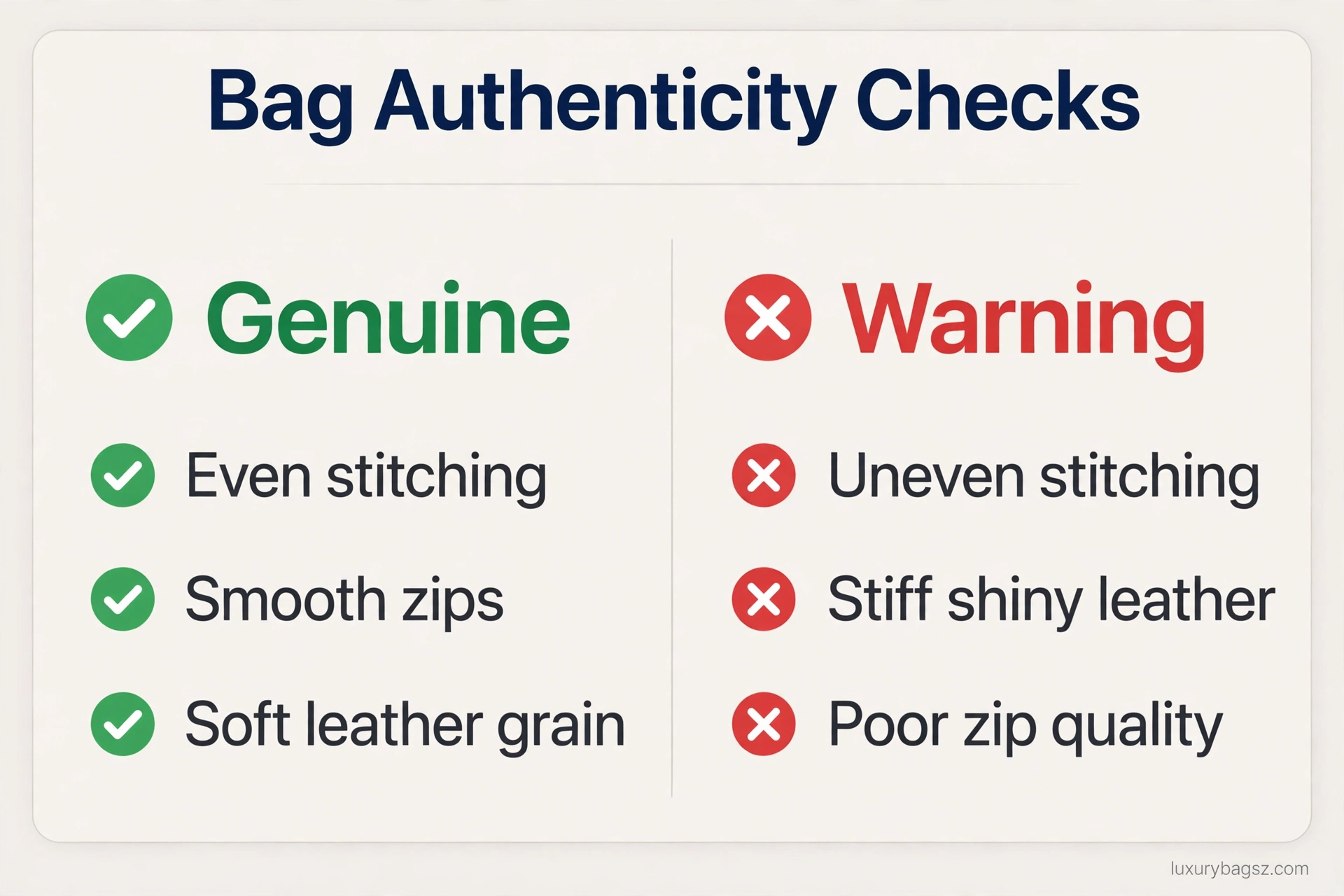
Original retail for Small and Medium Nightingales typically sat around £1,500 to £2,000 in their day, varying by leather and region. The bag is now found mainly through resale. Pre-owned prices vary widely: worn examples can sell for a few hundred pounds, while clean black Medium bags in sought-after leathers can reach around £1,000 to £1,500 or more. Our vintage designer bags investment guide puts such buys in context: the Nightingale is a use-and-enjoy purchase with steady demand, not a guaranteed earner. Start checks with the leather: genuine Nightingale leather feels soft, supple and naturally grained, never stiff or plasticky. Test both top zips and the strap zip for smooth running. Ask for unedited photographs of the base corners and the handle joins. Those two areas record how hard a Nightingale has lived, and listings that avoid them are usually avoiding them for a reason. Check handle bases and emblem discs for firm attachment, corners for rub, and the interior for a clean stamp and consistent lining. Our pre-owned designer bag authentication guide covers the wider routine.
Care for a Soft Leather Bag
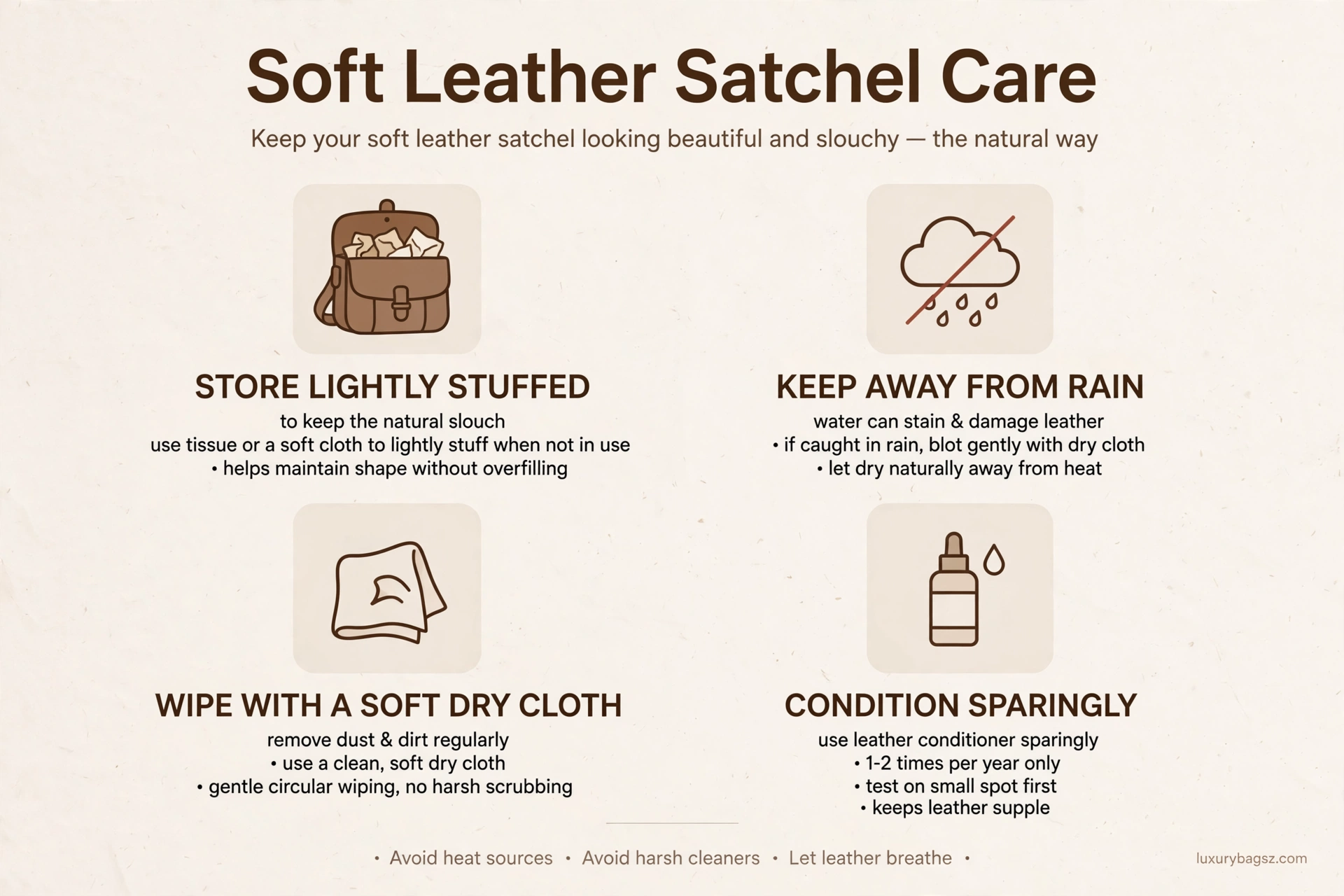
Store the Nightingale lightly stuffed — enough to support it, not so much that you stretch it. Its slouch is the design, so never store it crushed flat under heavier bags. Keep it from prolonged rain. If it gets wet, blot with a soft, dry cloth and let it dry naturally away from heat; never aim a hairdryer or radiator at soft leather. Wipe down with a soft, dry cloth after use, and condition very sparingly, testing any product on a hidden area first. Over-conditioning soft lambskin can darken it unevenly. Rotate the strap off occasionally and let the handles rest unshaped. Handles kept under constant tension from a hanging bag will stretch and curl faster than handles on a bag stored flat and supported. Our leather care guide gives the fuller routine. Grained versions forgive more; smooth lambskin rewards gentler handling and rotation.
Nightingale Versus Antigona: Choosing Your Givenchy
The Nightingale is soft, roomy and relaxed; the Antigona is structured, sharp and formal. They solve different days, which is why the pair covers most wardrobes between them. Choose the Nightingale for travel, busy daily carrying and casual outfits. Choose the Antigona for meetings, polish and occasions where a slouch would look underdressed. On price, Nightingales are usually the gentler pre-owned buy, since the Antigona's ongoing profile keeps its resale firmer. Our buying vintage designer bags guide weighs that trade-off. If you can only buy one black Givenchy, ask which day you live more often. The honest answer to that question picks the right bag more reliably than any trend report. Budget plays a part as well: for the price of a good pre-owned Antigona you can often secure an excellent Nightingale and keep change for professional conditioning. That arithmetic explains the Nightingale's loyal following among collectors who already own structured bags.
Frequently Asked Questions
When was the Givenchy Nightingale launched?
It launched in 2006, early in Riccardo Tisci's time at Givenchy, and became one of the house's defining bags of the late 2000s. A streamlined relaunch followed around 2015–2016.
Why is it called the Nightingale?
The name is widely linked to Florence Nightingale, the nursing pioneer. The reference is to care and quiet capability; the bag itself is a soft, practical satchel with no medical styling.
What sizes does the Nightingale come in?
Sizes run from Micro through Small and Medium to larger travel versions. Small and Medium are the most common pre-owned and the most practical for daily use.
What fits in a Medium Nightingale?
A small laptop, wallet, phone, sunglasses, a pouch and more — it is a genuine carryall. Many owners use it for work days and as a personal item on flights.
Is the Nightingale still sold new?
It is no longer a core current line in most markets, so most buyers find it pre-owned. Availability changes, so check the brand's current range before assuming either way.
How much does a Nightingale cost pre-owned?
Prices vary widely with condition and era: worn examples can sell for a few hundred pounds, while clean black Medium bags can reach around £1,000 to £1,500 or more.
Which leather is best for a Nightingale?
Grained leathers are the most forgiving for daily use. Lambskin is the softest and most luxurious-feeling, but it marks more easily and suits careful owners.
How can I tell a real Nightingale from a fake?
Feel the leather for soft, natural grain, test the double zips and strap zip, check handle bases, corners and the interior stamp, and seek independent authentication when unsure.
Is the Nightingale a good investment?
It holds steady resale demand, especially in black, but it is best bought to carry and enjoy. Condition and colour drive resale value more than any promised appreciation.
How do I store a Nightingale?
Lightly stuffed, in its dust bag, away from heat and sunlight. Light stuffing supports the shape while keeping the soft slouch that defines the design.
Summary: The Soft Classic That Still Earns Its Place
The black Nightingale endures because it does a real job beautifully: it carries a full day, feels soft against the body, and still looks like a piece of fashion history. Buy a clean black Small or Medium in grained or lamb leather, check the zips, handles and corners carefully, and carry it the way its first owners did — every day, without preciousness.






