Designer Dresses for Spring: The Shopping Edit, From First Warm Day to Wedding Season
Spring Dressing, Sorted in One Edit
The spring dress to buy first is a floral or pastel midi in cotton lawn, silk or a light crepe — long enough for bare legs later, layerable with a cardigan or jacket now. That one dress covers April lunches, May weddings and every warm afternoon in between. Spring is a layering season pretending to be a dress season. Shop for the dress and its layer together, and check the pairing in the mirror before either one is allowed to stay.
Key Takeaways
- Start with one floral or pastel midi; it is the hardest-working spring buy.
- Cotton lawn, silk and light crepe handle the season's temperature swings best.
- Buy the layer with the dress: cardigan, blazer or denim jacket, tried on together.
- Wedding-guest spring dresses should avoid white, ivory and bridal pastels.
- Ballet flats, heeled sandals and clean white trainers cover every spring dress.
- Sales for spring stock start early; the best sizes in popular prints go first.
The Spring Dress Line-Up
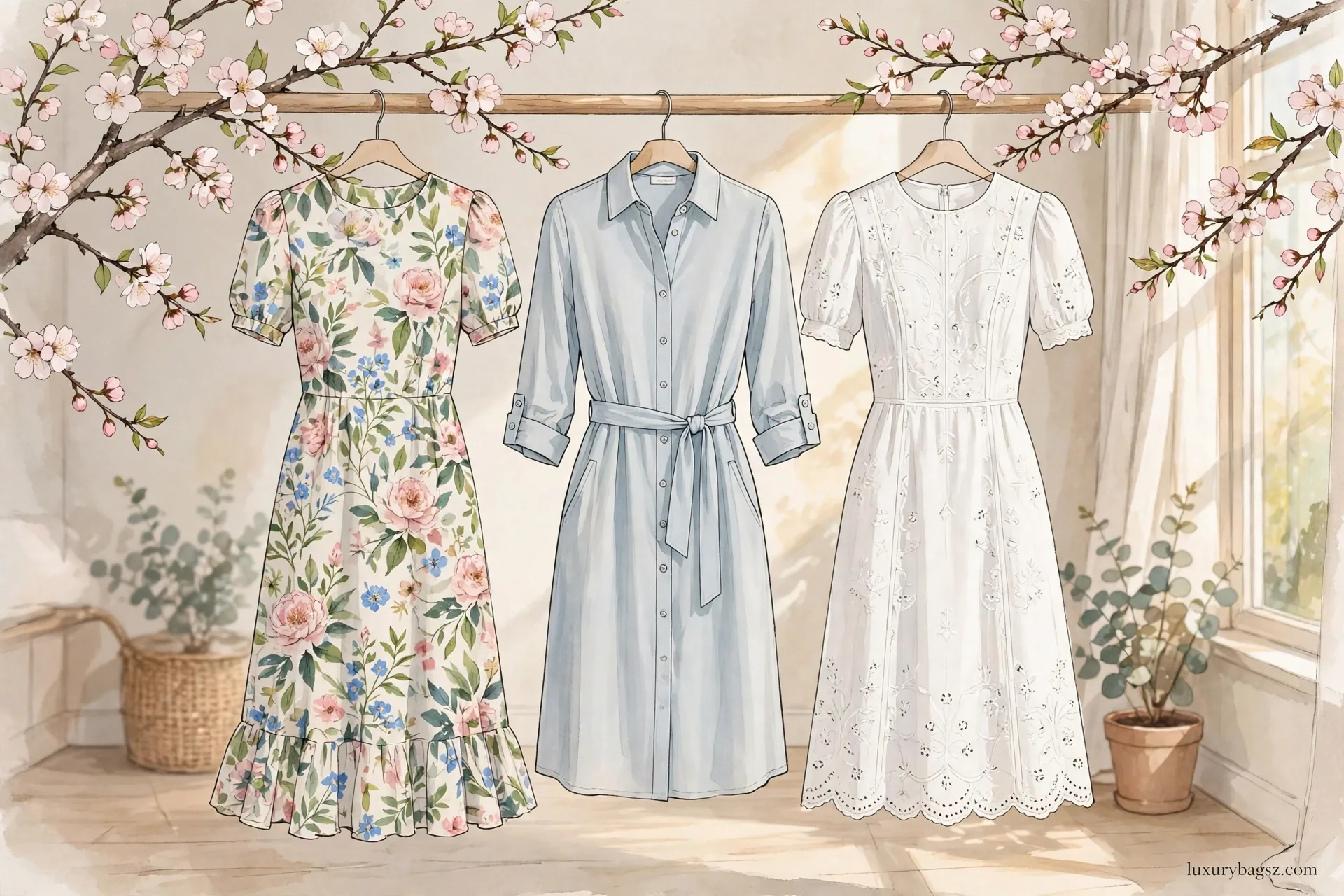
The floral midi is the season's anchor: sleeves or straps that take a layer, a hem below the knee, and a print small enough to repeat weekly without announcing itself. The pastel shirt dress is the worker: it goes to offices, lunches and school gates, and it takes a blazer without a fight. In pale blue, blush or butter yellow it is spring in a single garment. The occasion dress — silk, chiffon or a finer floral — is bought last and aimed at the calendar: weddings, christenings, race days and the parties that arrive with the light evenings. Sizing shifts in spring: dresses are cut for bare skin, not for the jumpers you try them on over in February. Try the finalists with the underwear and shoes you will really wear, or the fit you approve in the shop will not be the fit at the wedding.
Fabrics for a Season of Two Weathers
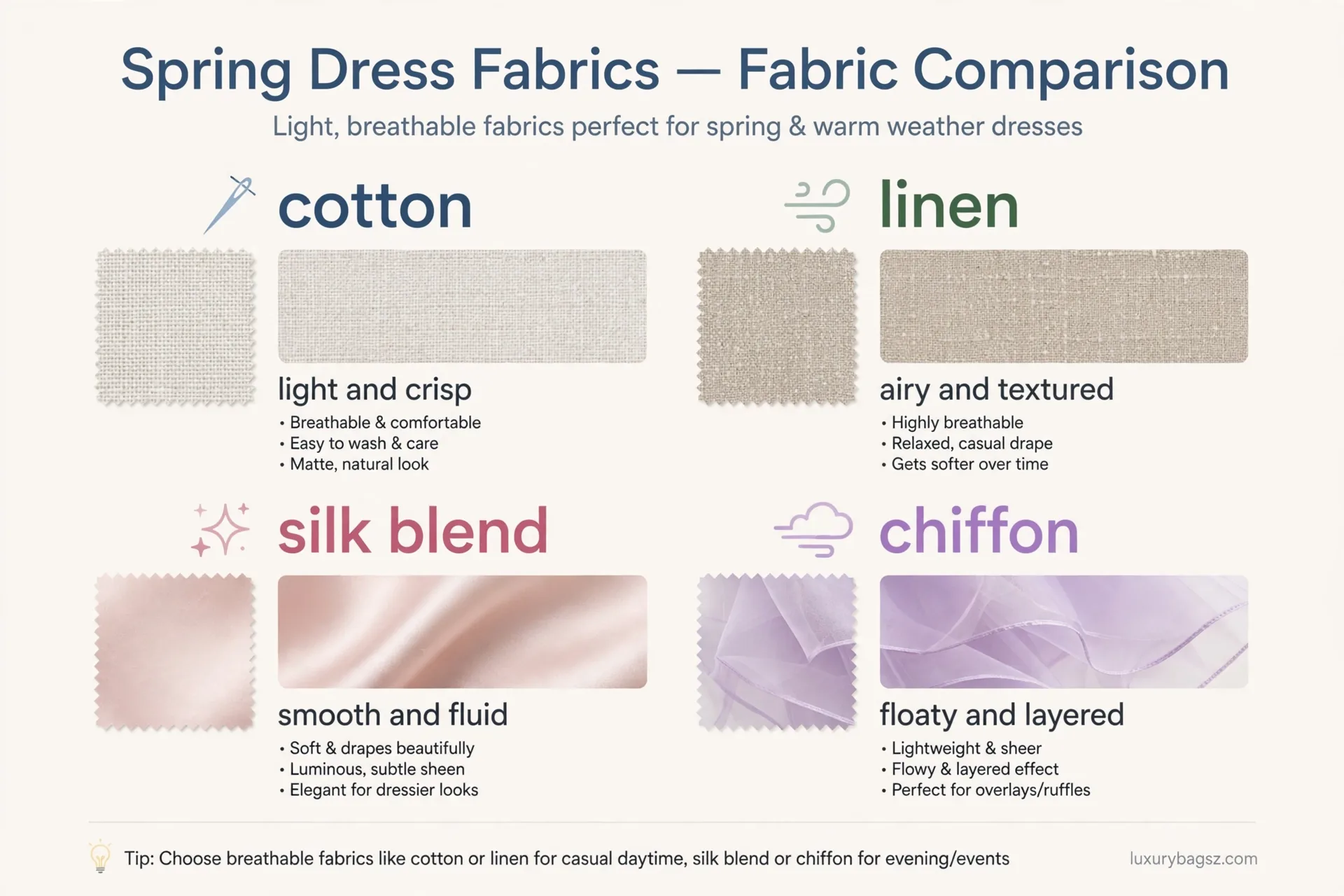
Cotton lawn is the spring staple: light, smooth and happy under a cardigan on a cold morning and alone by a warm afternoon. Our weave guide in designer cotton clothing for summer explains why lawn earns its place before summer even starts. Silk and silk blends bring the glow for occasions, while chiffon floats over a slip for weddings and parties. Light knits cover the cold end of spring better than any woven dress. Crepe is the quiet all-rounder: it resists creasing in a car, layers cleanly and works from March to June without ever looking like it belongs to only one month.
Colour and Print Rules
Spring colour is lighter, not necessarily paler: butter yellow, sky blue, blush, lilac, mint and soft coral all carry the season, and a saturated version of any of them beats a washed-out one. Florals should be scaled to the dress. A small, spaced floral on a midi reads as fabric; a huge floral reads as a statement, and statements repeat less often in a real wardrobe. Keep one plain dress in the rotation — white, cream or a single pastel — for the days a print feels like too much. Plain dresses also take printed scarves and bags without a negotiation. Green deserves its spring moment every year: sage for the soft end, leaf and grass greens for confidence. Green is the colour that looks most expensive in daylight and most alive in garden photographs.
Layering: The Real Spring Skill
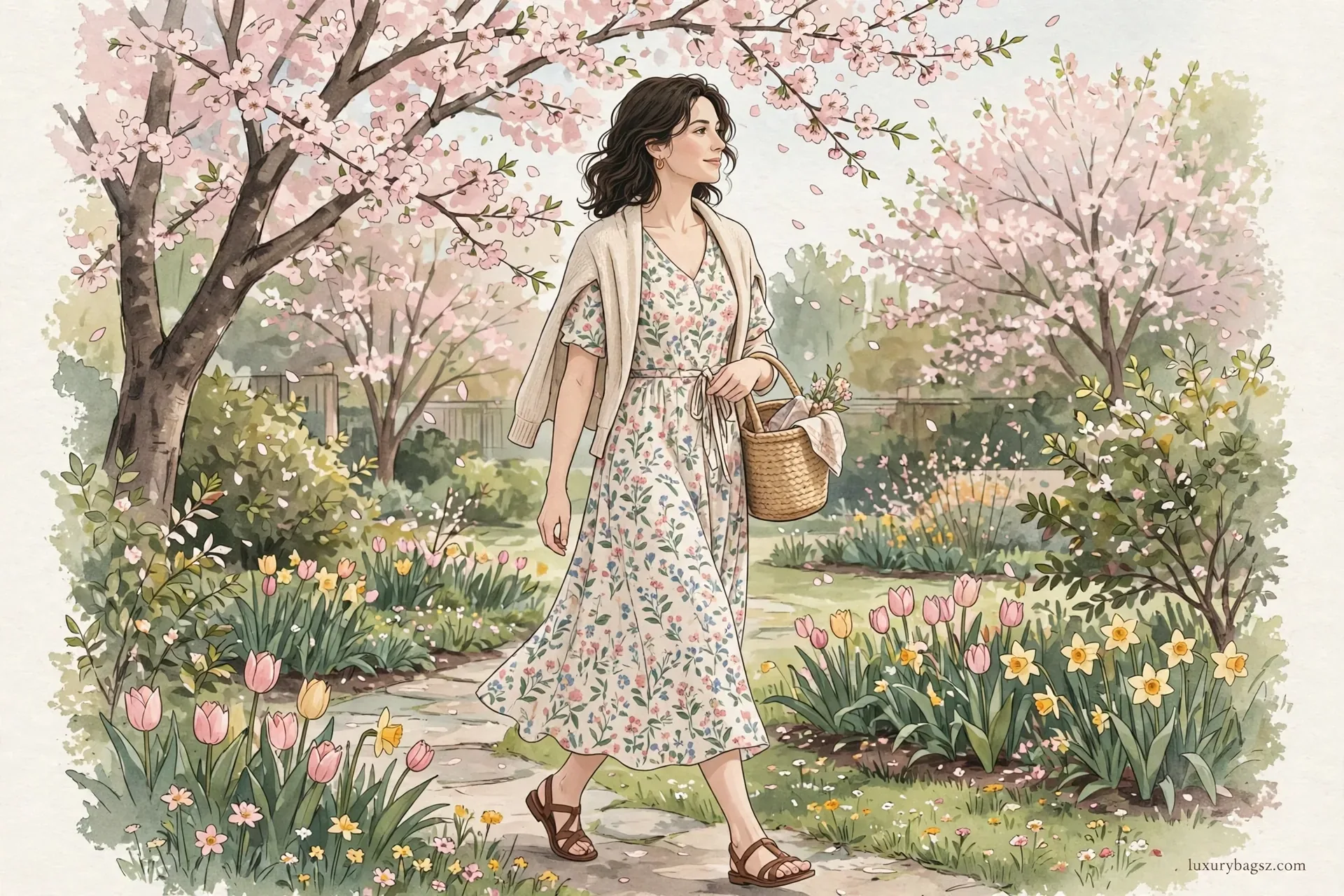
The layer is half the outfit until at least May. A cropped cardigan keeps a dress's waist visible; a long one swallows it. Choose cropped or belted layers for midi dresses. A blazer sharpens a floral into office wear, and a denim jacket relaxes a silk dress into weekend wear. Both tricks extend one dress across your whole life, which is the point of buying it well. Slip dresses need the most thought — a fine knit over or under changes everything — and the styling lineage in why the slip dress became a 90s favourite shows how little it takes to make one look current. Scarves are the layer nobody counts: a printed scarf at the neck or over the shoulders warms a dress by a surprising amount and gives a plain dress its print for the day.

Wedding Guests and Spring Occasions
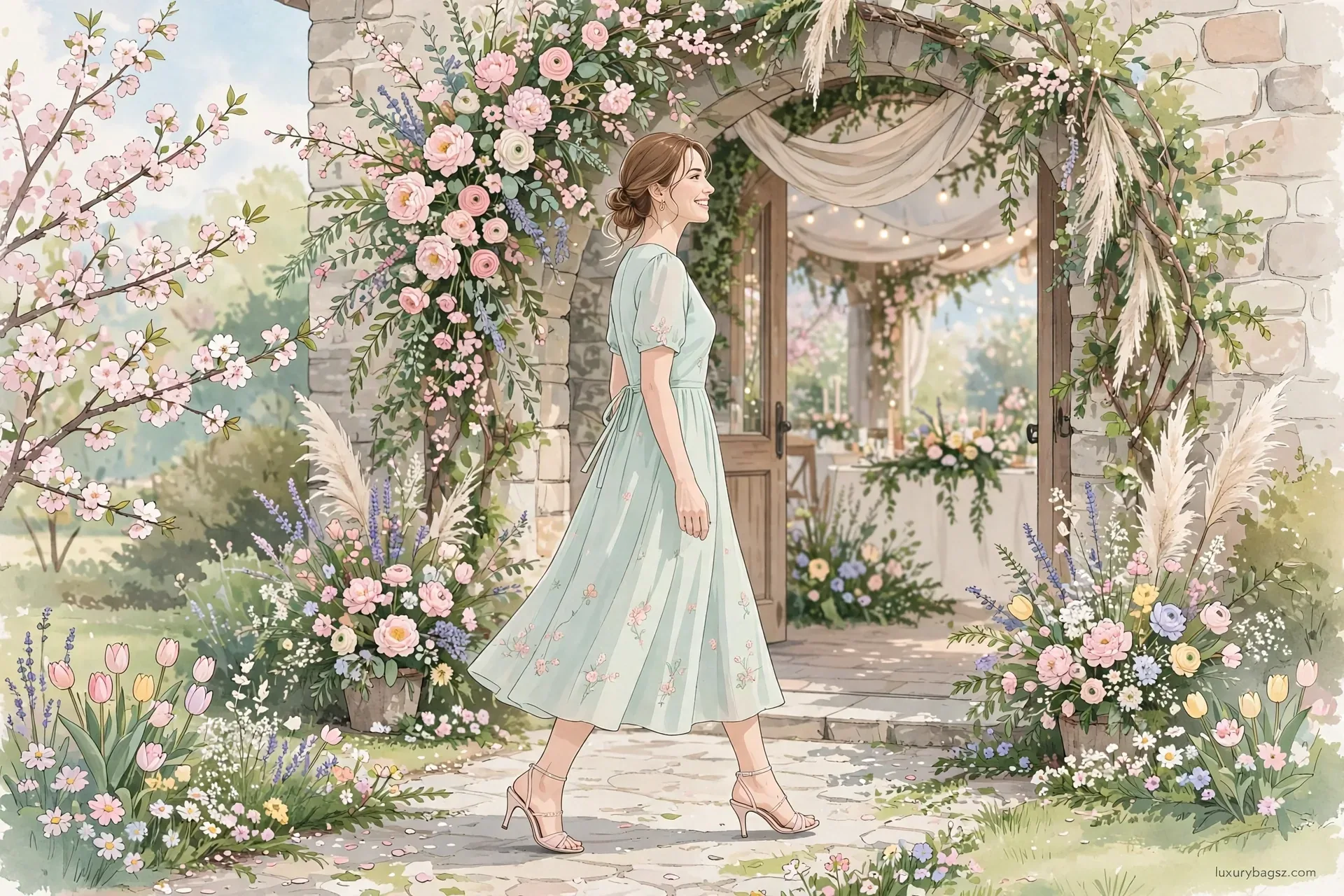
Spring is wedding season's opening act, and the guest rules are firm: no white, no ivory, no barely-there blush that photographs white, and nothing that competes with the bride's silhouette. A floral midi in silk or chiffon with heeled sandals is the safest beautiful answer. Footwear planning matters on grass and gravel, so browse designer wedding shoes before the invitations stack up. Carry the layer as part of the outfit, not an apology: a wrap or jacket in a colour drawn from the print looks deliberate in photographs, even when the weather turns at 4 p.m. Hats and fascinators belong to race days and formal weddings only. A beautiful dress with the wrong headwear looks costumed; when in doubt, immaculate hair and good earrings beat a doubtful hat.
Shoes That Carry the Season
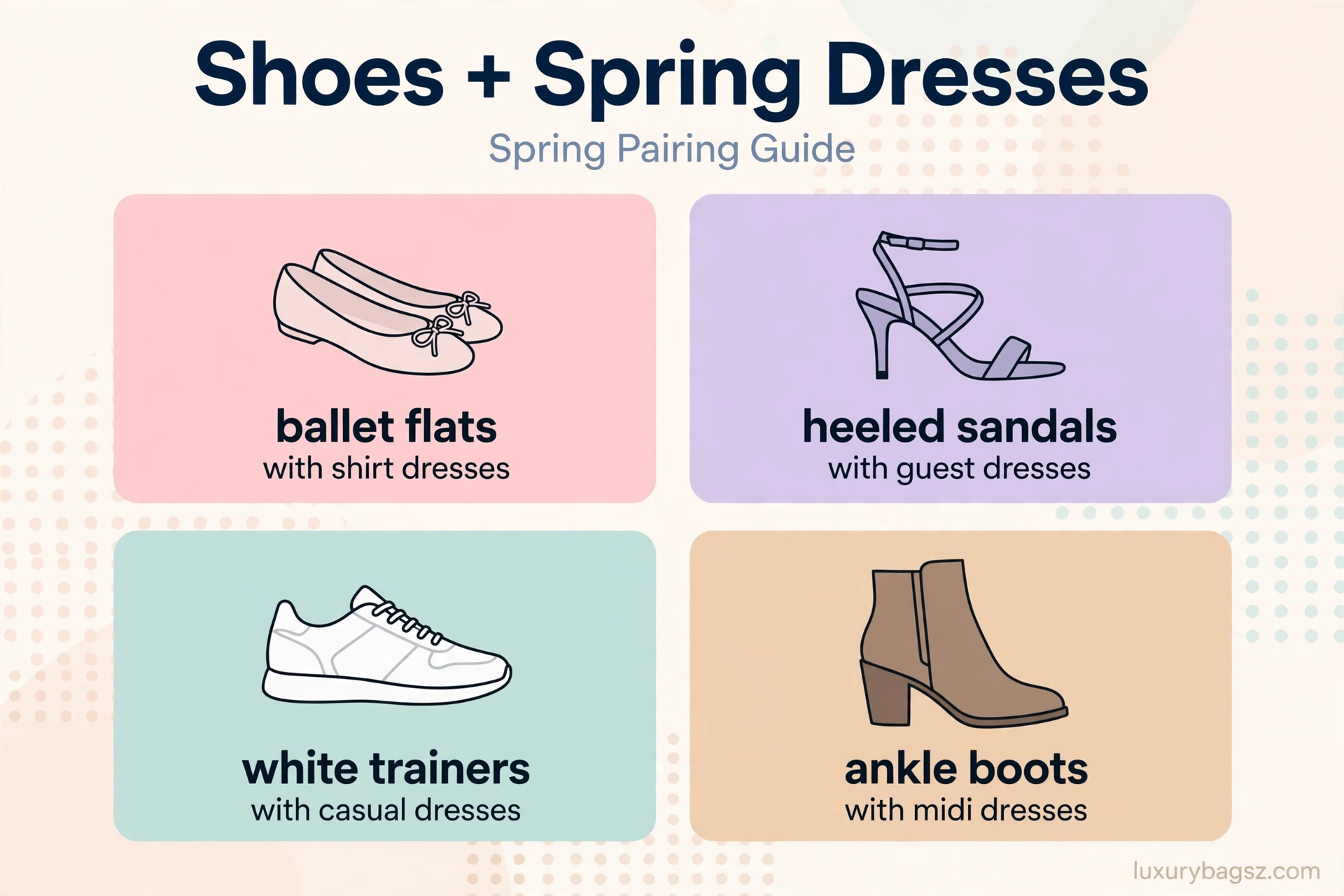
Ballet flats are the spring default: they suit midis, work on pavements and pack flat for a change into heels later. Heeled sandals take the same dress to weddings and evenings. Clean white trainers dress a floral midi down for weekends and markets; the dress must be neat and the trainers spotless, or the look slides from relaxed to careless. Ankle boots bridge the cold weeks, especially with darker florals and knits. Retire them the week the sandals come out, or the outfit keeps one foot in February. Shoe colour in spring runs lighter than winter: tan, cream, metallic and pastel all lift a dress, while black can anchor a pale outfit too heavily in bright daylight. Keep black for the deepest florals and evening wear.
Prices and Care
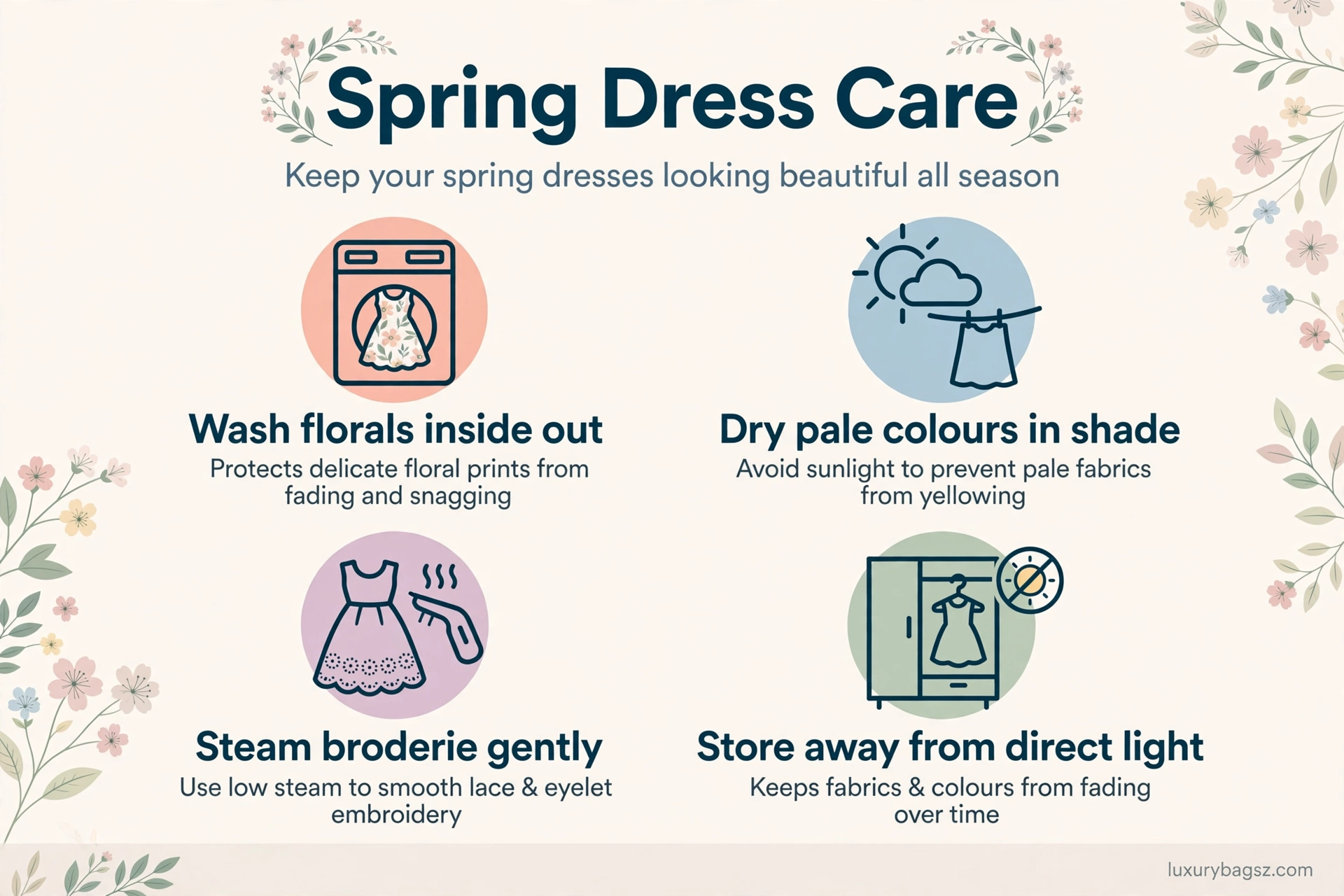
Expect typical spring designer dresses from around £140 to £480, with cotton lawn at the lower end and silk occasion dresses at the top. Buy the anchor midi at full price if needed; prints date faster than plains, so sale florals are a fair gamble. Wash lawn and cotton cool, steam silk and chiffon rather than ironing, and hang dresses to air between wears instead of washing on autopilot. Spring dresses live a long season and repay gentle handling. Store occasion dresses in cloth bags once the weddings are done, away from light. Pastels fade unevenly on a sunny rail, which only shows the following spring.
A Three-Dress Spring Rotation
Three dresses cover the season: the floral midi, the plain shirt dress, and one occasion dress in silk or chiffon. Everything else is a variation your wardrobe probably does not need. Rotate the layers and shoes and the three dresses produce a month of outfits. Add a printed scarf and one good bag and the rotation stretches further than most people ever test. Buy in that order, too. The midi earns its money by April, the shirt dress by May, and the occasion dress justifies itself the first time an invitation arrives and you feel calm instead of urgent. Keep the receipts until each dress has been worn once in real weather. Spring sizing over jumpers fools everyone in February, and an honest exchange in March is cheaper than a regret worn all season.
Frequently Asked Questions
What is the first spring dress to buy?
A floral or plain pastel midi in cotton lawn or light crepe. It layers now, stands alone later, and covers more occasions than any other dress in the season.
When do spring dresses arrive in shops?
From late January, with the fullest ranges by March. Buy the anchor pieces by early spring; popular prints in common sizes sell through before the warm weather does.
Can I wear a spring dress to a wedding?
Yes — florals and pastels are the classic guest choices. Avoid white, ivory and very pale blush, keep the silhouette guest-appropriate, and plan shoes for grass.
How do I wear a dress when it is still cold?
Layer properly: a cropped cardigan or blazer over, tights or ankle boots under, and a coat that suits the dress length. A spring dress under winter layers looks intentional, not hopeful.
Are pastels hard to wear?
The saturated versions are not. Choose the depth that suits your skin — butter rather than lemon, sky rather than ice blue — and pair pastels with white, navy or tan rather than black.
What shoes go with floral dresses?
Ballet flats for day, heeled sandals for occasions, white trainers for weekends and ankle boots for the cold weeks. Match the shoe's formality to the event, not the print.
How many spring dresses do I need?
Three well-chosen ones — a floral midi, a plain shirt dress and an occasion dress — cover the season for most wardrobes when layers and shoes rotate around them.
Do floral dresses date quickly?
Small, classic florals date slowly; huge novelty prints date faster. If you want a five-year dress, choose a modest print in a classic colour family.
Can spring dresses carry into summer?
Yes, the lawn and cotton ones become summer dresses with sandals and no layer. It is one reason to spend properly in spring rather than buying twice.
How should silk spring dresses be cleaned?
Steam to refresh, spot-clean marks, and use a trusted dry cleaner for full cleans, telling them the fabric. Store silk away from direct light to protect pale colours.
Conclusion: One Midi, Two Layers, Whole Season
Buy the floral or pastel midi first, pair it with a cropped cardigan and a blazer before it leaves the shop, and add a shirt dress and an occasion silk as the calendar fills. Rotate flats, sandals and trainers around them, and spring dressing stops being a weather gamble.