

Designer Beachwear Guide: Swimsuits, Cover-Ups and Resort Styling That Works
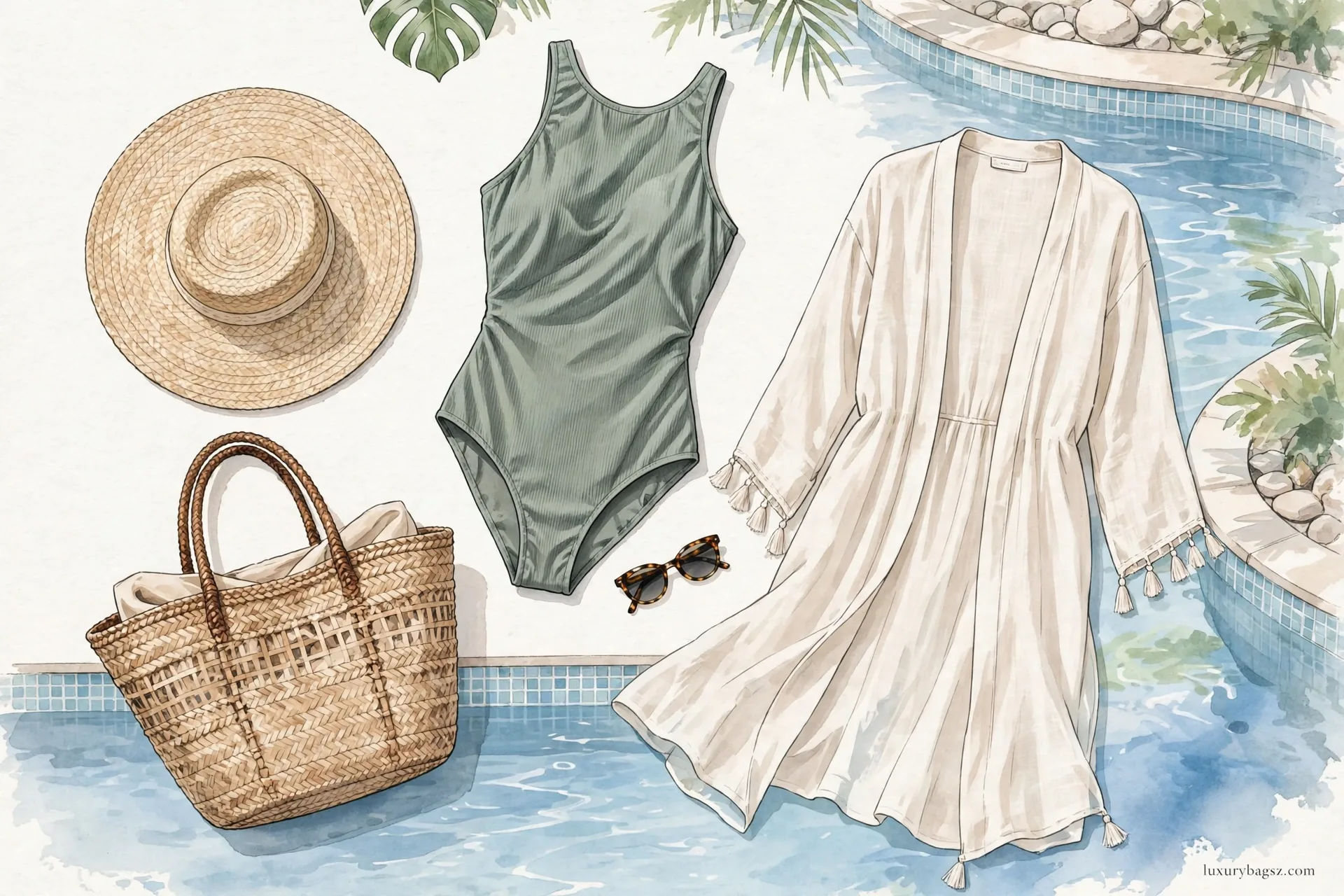
Beachwear That Earns Its Suitcase Space
Good designer beachwear does three jobs: it supports you properly in the water, it covers you politely on the walk to lunch, and it dries fast enough to wear again tomorrow. Buy one excellent swimsuit and one real cover-up before you buy anything decorative. Start with fit, not fashion. A swimsuit that fits your torso length and bust honestly will look more luxurious than any print, and a cover-up in cotton or linen will outlast every gauzy trend piece in the case.
Key Takeaways
- Fit first: torso length and bust support matter more than prints or hardware.
- One-pieces give the cleanest line; bikinis give mix-and-match value across a trip.
- A cotton or linen cover-up is clothing, not an accessory — budget for it properly.
- Two swimsuits per trip is the sweet spot: one worn, one drying, always ready.
- Rinse after every swim and dry in shade; chlorine and sun are what kill swimwear.
- Designer prices buy better elastic, lining and hardware that survives a season.
The Swimsuit Shapes That Actually Work
The one-piece is the reliable classic: it smooths the line, stays put in waves and doubles as a top with shorts or a skirt at lunch. Look for adjustable straps and a leg cut that sits, not rides. Bikinis earn their place when you mix sizes — many women need a different size top and bottom, and separates are the only honest way to buy that fit. High-waist bottoms and halter tops suit most bodies and nod to retro styling without costume. Tankinis help anyone who wants two-piece ease with one-piece coverage. Underwired and moulded-cup styles exist for a reason: anyone above a D cup will feel the difference within one swim. Support is not a sizing failure; it is engineering, and good labels offer it without making the suit look medical.
Cover-Ups: The Piece Everyone Underbuys
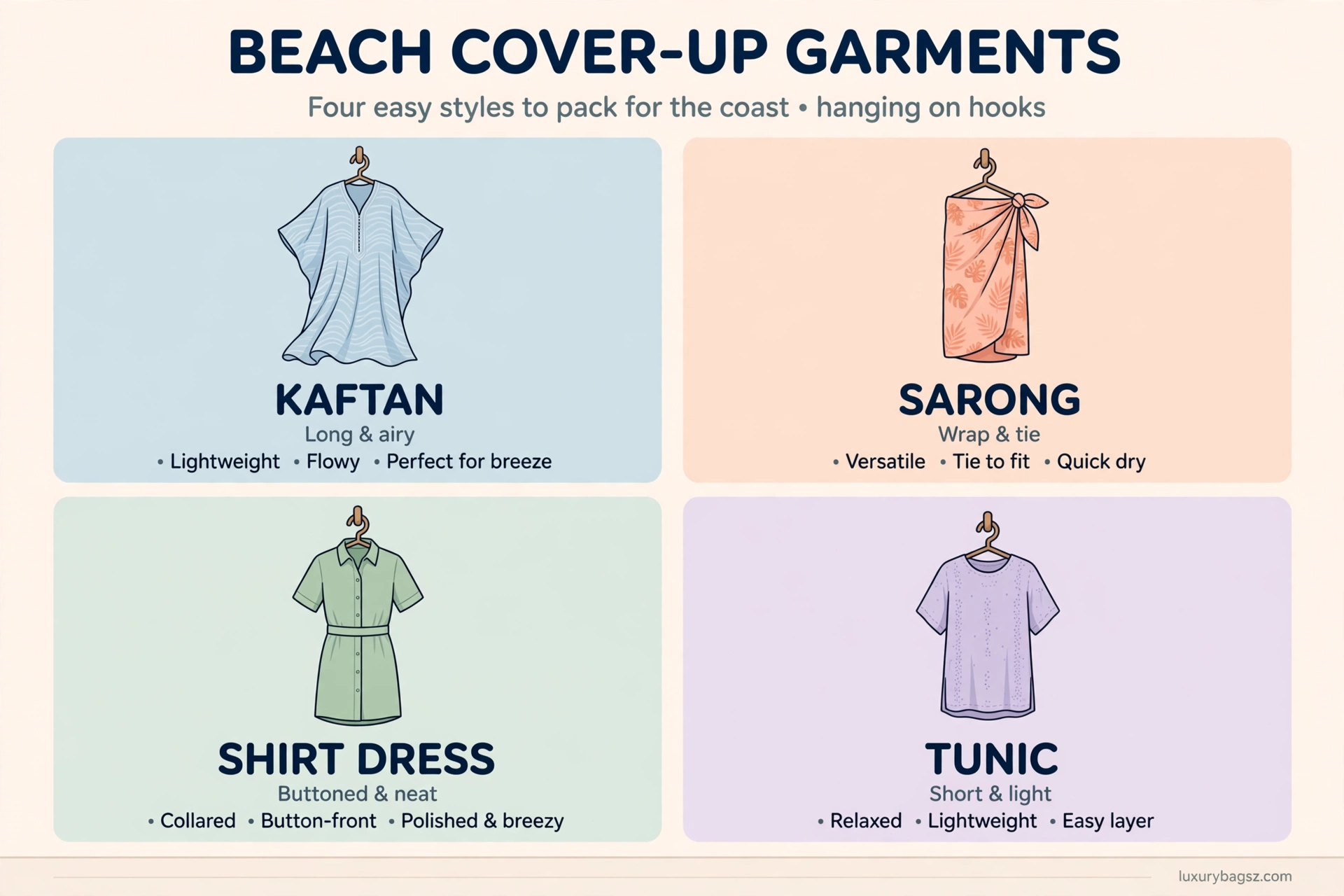
A kaftan is the most forgiving cover-up ever made: it covers arms, thighs and a full lunch, and it packs to nothing. Choose mid-thigh or knee length for the most use. A sarong is the hardest worker per gram. It is a skirt, a dress, a shawl and a beach towel stand-in, and it dries in minutes on a balcony rail. Shirt dresses and tunics in cotton behave like real clothes, which matters at resorts with dress codes. Our fabric advice in designer cotton clothing for summer applies to cover-ups word for word. Colour matters here too. A cover-up in the same colour family as the suit reads as an outfit; a clashing one reads as an afterthought, however much it cost.
From Sand to Lunch Without Changing
The test of a beach outfit is the walk off the sand. If you cannot walk into the beach cafe, order, and sit down without adjusting anything, the outfit is not finished. Add the cover-up, a hat with a brim that shades your face, and a bag that holds a book and a bottle. The edit of designer straw bags covers totes that survive sand and still look right at a table. Keep jewellery minimal and waterproof in spirit: small hoops, a watch you trust near water, nothing that chlorine will eat or sand will scratch. The hat deserves its own sentence. A brim of roughly 8 cm or more shades the face and the back of the neck, packs flat if the crown is soft, and saves more skin than any cream applied at breakfast and forgotten by noon.

Fabrics, Lining and Hardware
Good swim fabric is a nylon or recycled-fibre blend with strong elastane. It should snap back when stretched, not stay bagged where your fingers pulled it. Lining is non-negotiable in pale colours; white swimwear without a proper lining is a gamble nobody wins in a wet photograph. Nude lining under white is the professional fix. Hardware should be heat-proof and rust-proof. Metal sliders look smart but can burn skin after an hour in the sun; coated or resin fittings are the kinder choice. Recycled swim fabrics have improved fast and now match standard cloth for stretch and colour. If two suits fit equally, the recycled one is the better buy, provided the lining and elastic feel equally strong.

Packing: The Two-Swimsuit Rule
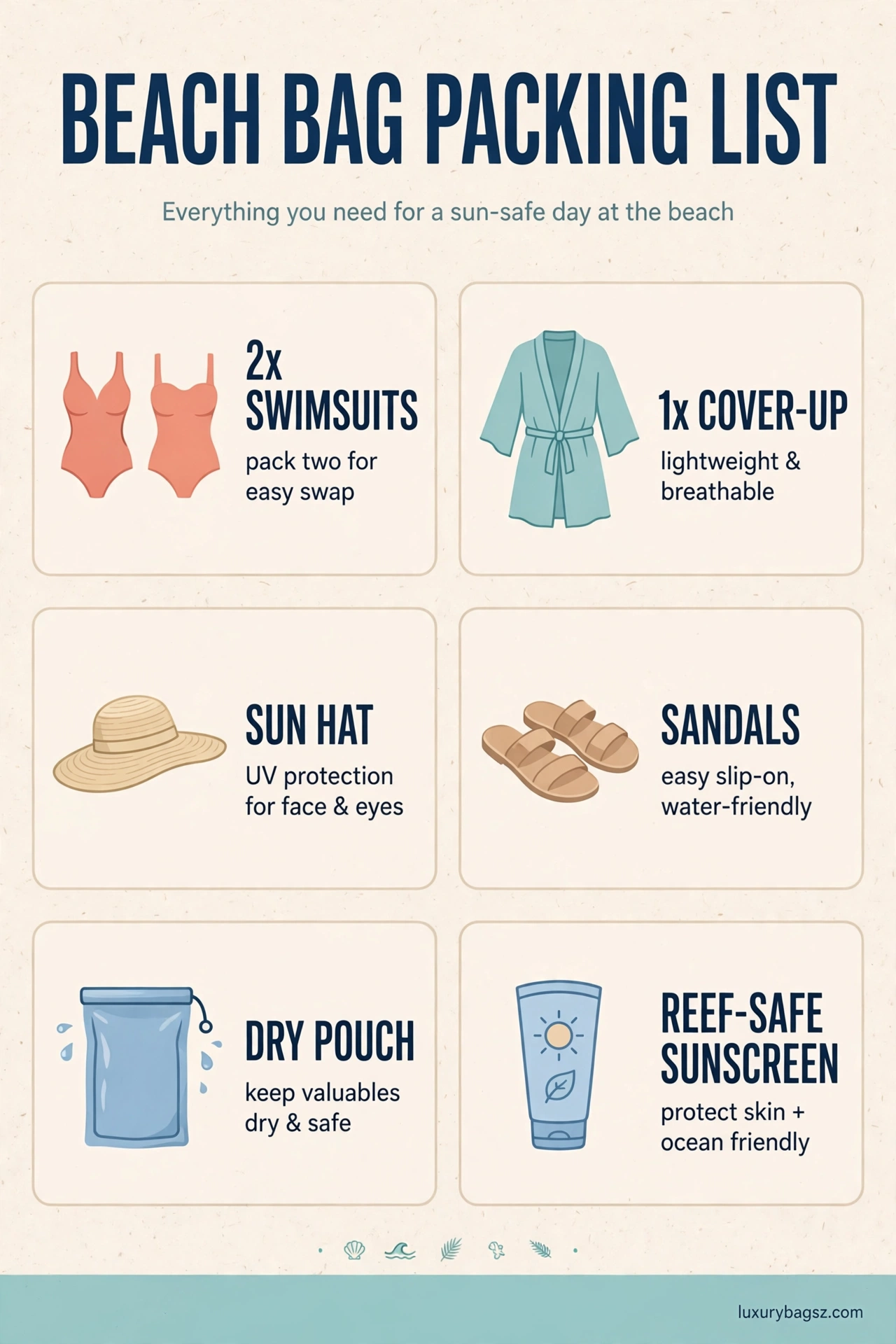
Pack two swimsuits, one cover-up, one hat and one pair of sandals that can get wet. That kit covers a week: wear one suit while the other dries, and rotate. Roll swimwear rather than folding it; cups and padding crease badly under a fold and recover slowly. Keep it in a dry pouch inside your bag, never loose against books or leather. Footwear is part of packing, not an afterthought; our summer sandals day to night guide shows the pairs that go from wet tiles to dinner. Add one small thing most guides forget: a plain oversized shirt of your own. It covers shoulders on the fiercest afternoon, protects a book from spray on a boat, and costs no extra packing space worth counting.
Fit Checks in the Changing Room
Jump, bend and sit in the suit before you buy. Straps that slide during a small jump will slide in the sea, and a bottom that shifts when you sit will shift on a sunbed. Check the torso length standing and seated; a one-piece that feels fine upright can pull painfully when you sit if the body is cut short. Try the straps last. Adjustable straps forgive a changing body across a season; fixed straps must be perfect on day one, which is a risk if you are between sizes. Comfort is the dress code nobody prints. Flat, walkable shoes like those in flat shoes and summer flats finish more beach outfits honestly than any heel.

What Designer Beachwear Costs
Expect typical designer one-pieces from around £120 to £350, bikinis in a similar band per set, and kaftans or cover-up dresses from roughly £90 to £300 at well-known resort labels. End-of-season sales are the smart way in: swim shapes change slowly, and last summer's navy one-piece is this summer's bargain at a third off. Pre-owned swimwear is the exception to most resale advice — hygiene and stretched elastic make new the sensible buy here, even at a higher price. Cost per swim is the honest measure. A £250 suit worn on four holidays beats a £60 suit replaced every trip, in money, in fit and in how you feel walking to the water on day one.
Care That Doubles a Swimsuit's Life
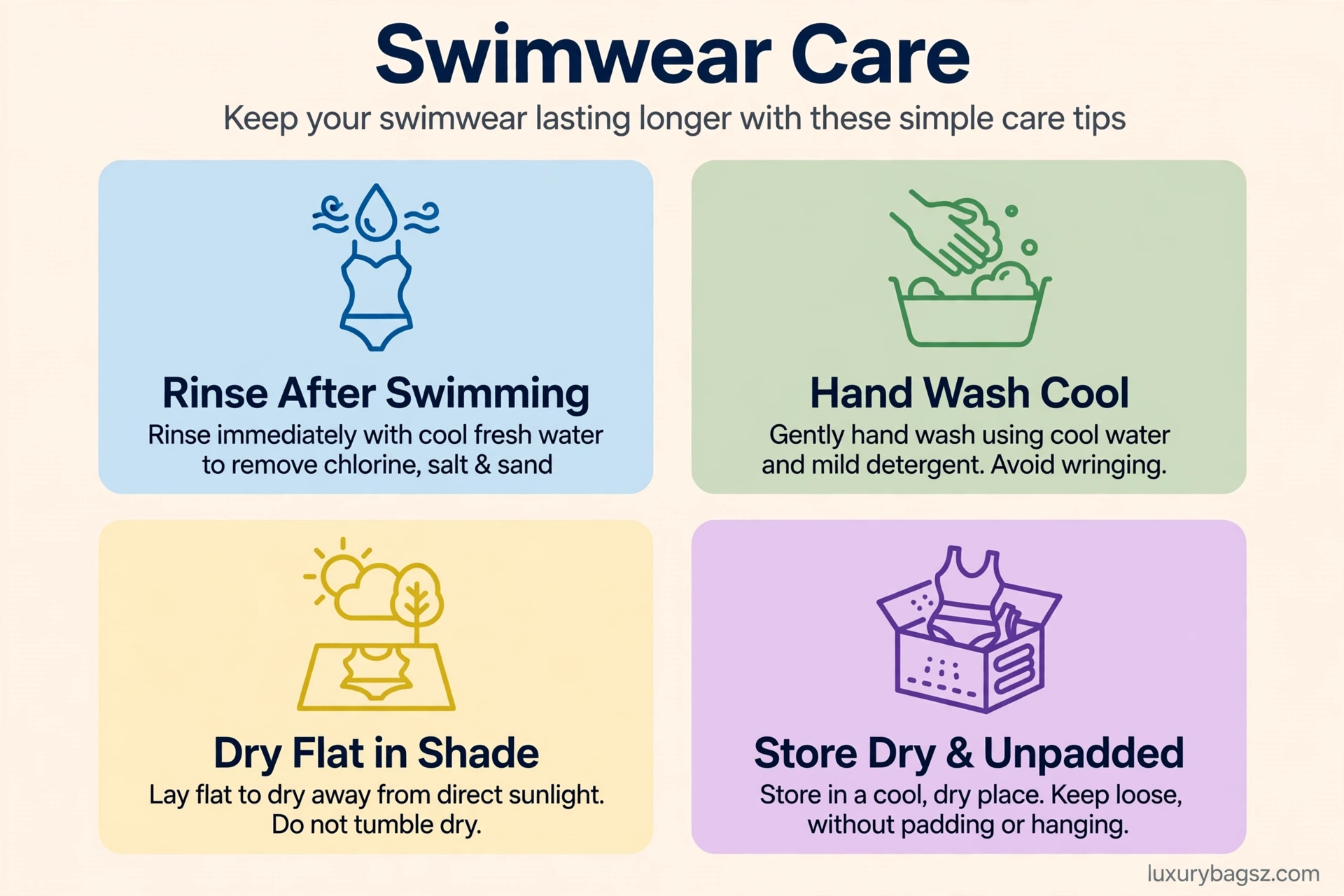
Rinse in cool fresh water after every swim, even if you only sat at the pool edge. Chlorine, salt and sunscreen lotion are the three things that rot elastane. Hand wash cool with mild detergent, never wring, and dry flat in shade. Sunlight fades colour and weakens stretch faster than the swimming does. Store dry and unpadded, away from plastic bags. Alternate two suits on a trip so each gets a full day of rest; elastic recovers its snap between wears. One more habit pays: rinse the suit before the first wear too. It settles loose dye, especially in deep colours, and stops that first-swim cloud of colour in a pale pool.
Frequently Asked Questions
How many swimsuits should I pack for a week?
Two. One to wear and one drying or resting. A third is a luxury, not a need, unless you swim twice a day every day of the trip.
Are designer swimsuits worth the money?
Usually, yes. The difference is in the elastic quality, the lining and the hardware, all of which decide whether a suit still fits in month three or sags by week two.
Which swimsuit shape is most flattering?
The one that fits your torso and supports your bust. Beyond that, high-waist bottoms, halter necks and plain dark one-pieces are the most widely forgiving choices.
Can I wear a one-piece as a top?
Yes — it works as a smooth body under shorts, skirts and trousers. Choose plain colours and matte fabric so it reads as clothing, not swimwear, at dinner.
What is the best cover-up for a resort with a dress code?
A cotton shirt dress or a knee-length kaftan. Both cover shoulders and thighs properly, look like clothes at a table and pack without creasing badly.
How do I stop white swimwear going see-through?
Buy lined styles, ideally with nude lining, and test them wet at home before the trip. Unlined white swim fabric is the one purchase that cannot be fixed later.
Does sunscreen damage swimwear?
It can stain pale fabrics and degrade elastic over time. Apply it, let it dry fully before dressing, and rinse the suit the same day to limit the damage.
What shoes work from beach to dinner?
A flat leather sandal or a low wedge in a neutral colour. They handle wet tiles, sand and a restaurant floor without a costume change in between.
How should I wash a swimsuit in a hotel?
Rinse it in the sink or under the shower in cool water, press water out in a towel, and dry it flat on the balcony in shade. Never hang it by the straps wet.
When should a swimsuit be replaced?
When the elastic crackles, the seat sags, or the colour has faded unevenly. At that point no wash will restore the fit, and a replacement is money properly spent.
Conclusion: Fit, Fabric, Then Fashion
Spend on the suit that fits your torso and bust, add a cotton cover-up that behaves like clothing, and rinse everything after every swim. Two swimsuits, one cover-up, one hat and sandals that can get wet will carry a whole holiday — and the same kit, cared for well, will still look sharp next summer.






