Catherine Travers and the Designer Closet: How a Curator Builds a Collection Worth Keeping
Who Catherine Travers Is, and What Her Closet Teaches
Catherine Travers is the Handbag and Shoes Category Manager at The Luxury Closet, where she curates #BagThursday, a weekly spotlight on special pre-owned designer handbags, with notes on each pick's history, style, and why it stands out.
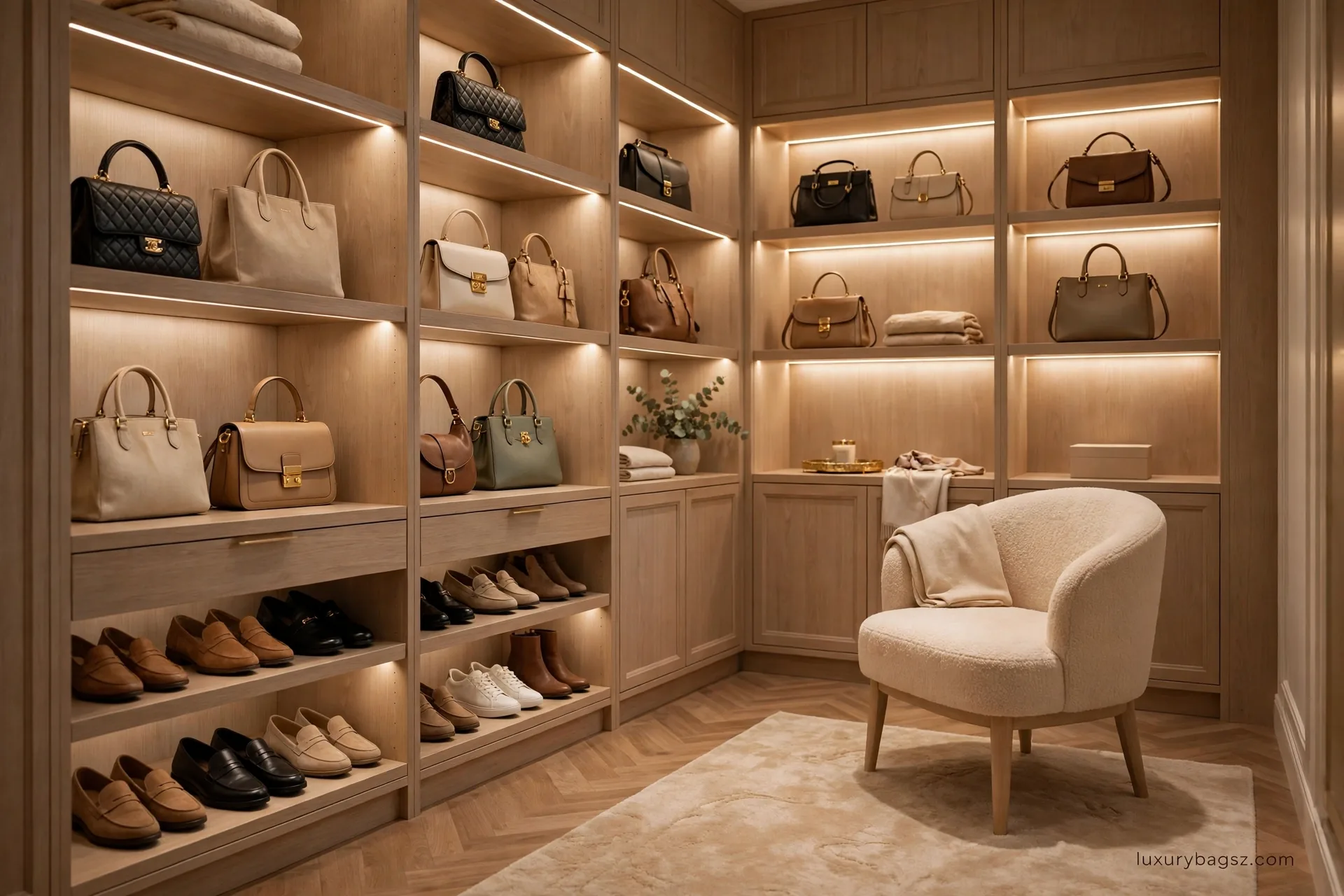
Her designer closet, in other words, is a curator's closet: not a pile of purchases, but a chosen collection where every piece earns its place. This guide explains her role honestly, then turns it into practical advice you can use on your own wardrobe.
One honesty note up front: Travers has not published a personal closet tour with an itemised list of her own bags, so this guide does not invent one. What it does is apply her public curation method to building a closet that lasts.
Key Takeaways
- Catherine Travers is Handbag and Shoes Category Manager at The Luxury Closet.
- She curates #BagThursday, a weekly pre-owned designer handbag spotlight.
- Her method favours history, condition, and wearability over novelty alone.
- A good designer closet is edited regularly, stored properly, and rotated.
- Pre-owned buying rewards authentication checks and patience over impulse.
The Curator's Job: Why Category Managers Matter
A category manager in luxury resale does far more than pick pretty bags. The job covers sourcing, authentication support, pricing sense, condition grading, and storytelling: why this bag, why now, and who will love it.
Travers's byline appears on Luxury Closet guides, including a Chanel 2.55 history piece, where she writes as a category specialist rather than a celebrity collector. That distinction matters. Her authority comes from handling many bags, not from owning one famous one.
For your own closet, borrow that mindset. Before buying, ask the curator's questions: what is this piece's history, what condition is it truly in, and how often will it actually leave the house? A bag that fails any of those tests is a poor addition, however tempting the price.
The Designer Closet, Defined Properly
A designer closet is not a room full of logos. It is a working collection where each piece has a job: everyday carry, work, evening, travel, and one or two pieces kept purely for joy.
Start by mapping your real life, not your imagined one. Count how many days you carry a large tote versus a small crossbody, how often you attend formal evenings, and whether you travel with a laptop. Those answers set your closet shape.
Then group what you own by job, not by brand. You may find three black shoulder bags doing one job, and no evening clutch at all. That imbalance is the most common closet fault, and it is fixed by editing, not by buying more.
Our guide to designer handbag styles helps name each shape, so you can spot gaps and duplicates clearly.
What a Curator Looks For in a Bag
When Travers spotlights a bag for #BagThursday, the notes typically cover history, style, and standout qualities. Apply the same three lenses to anything you consider buying.
History means provenance and context: when the design launched, why it mattered, and whether this version is a classic or a short-lived variant. A Chanel 2.55, for example, carries a story from February 1955 that still shapes its reissues today.
Style means honest wearability: does the bag suit your clothes, your height, and your daily load? A beautiful bag that fights your wardrobe will stay on its shelf.
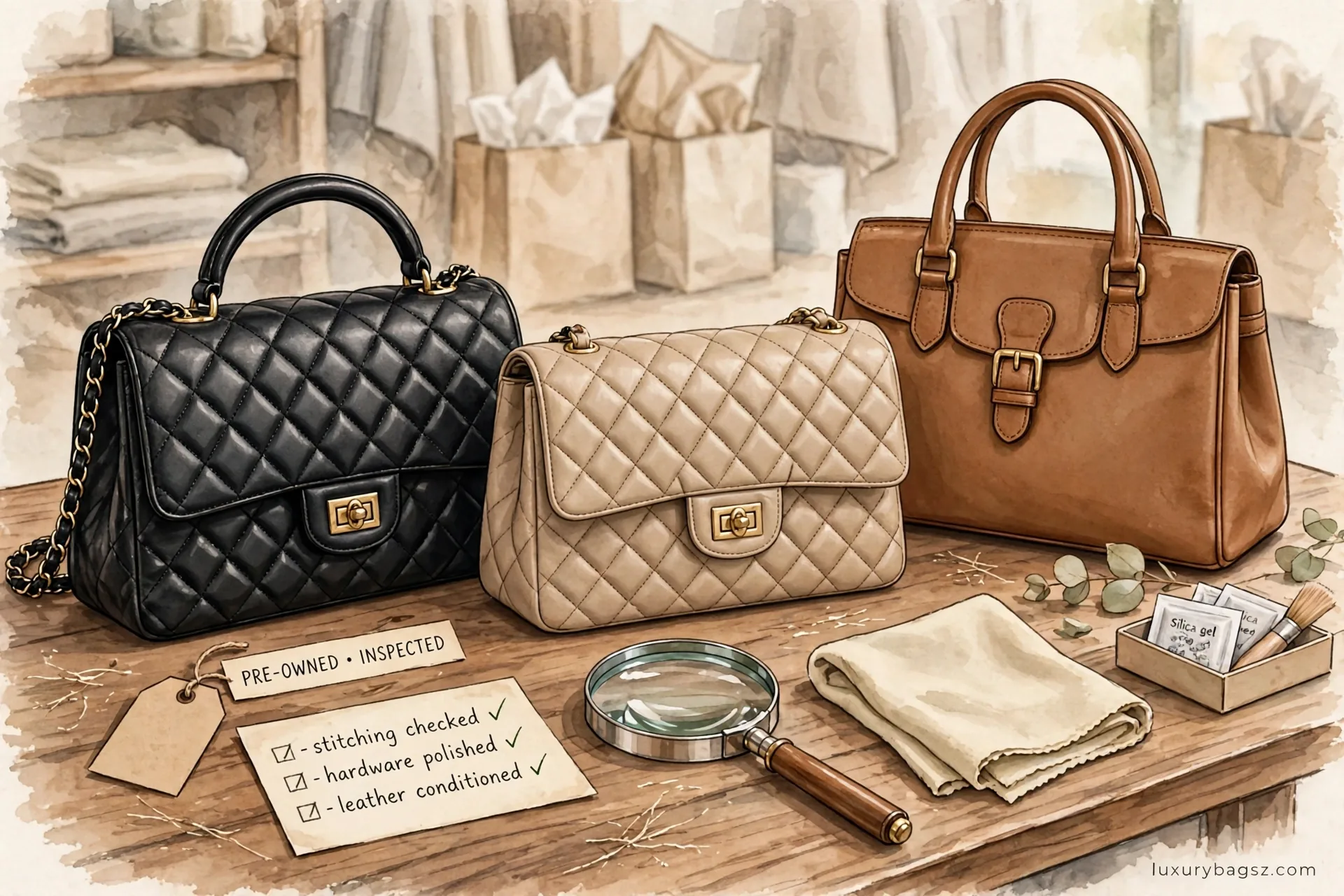
Standout quality means condition and rarity: clean corners, working hardware, even stitching, and a colour or size that is genuinely hard to find. Those are the traits that hold value over time.
Our Chanel Classic Flap sizes guide shows how size alone changes a bag's job, and our Chanel investment guide separates resale hope from resale evidence.
Building Through Pre-Owned: The Smart Curator's Route
Pre-owned is where a curator's closet is really built, because it offers discontinued colours, vintage shapes, and prices that make experimentation possible. It also demands discipline.
Set a rule before you browse: no purchase without a condition report, clear photos of corners, hardware, interior, and serial markings, and a returns policy you have actually read. If any of those are missing, walk away, however rare the bag seems.
Compare the piece against your closet map from the closet definition section. Does it fill a genuine gap, replace a worn-out workhorse, or duplicate something you already own? Only the first two answers justify a purchase.
Patience is the curator's edge. The right bag at the right price appears regularly if you watch and wait, while impulse buys are how closets fill with near-misses.

The Closet Edit: Keep, Repair, Sell, Store
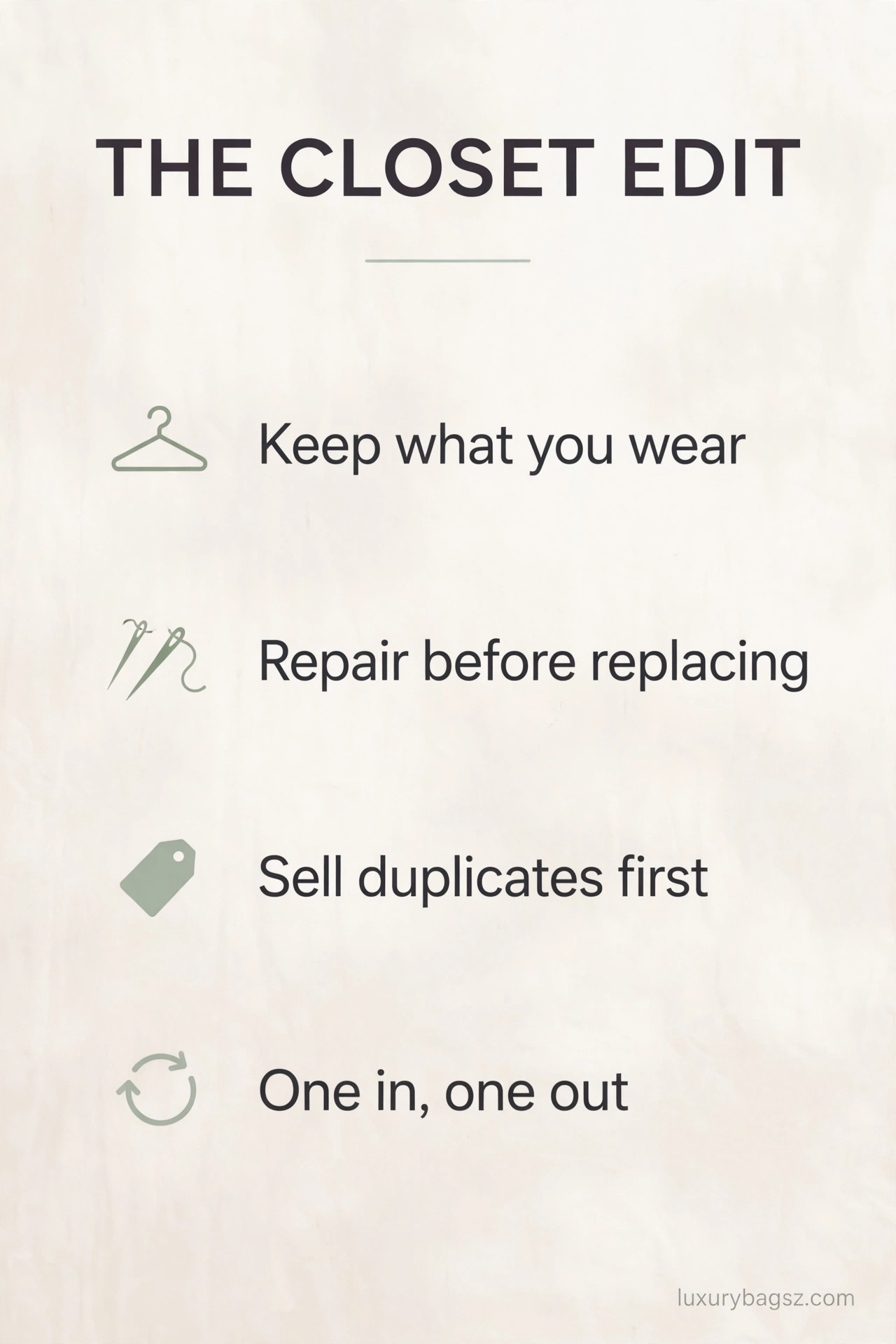
Edit your closet at least twice a year, ideally at seasonal changes. Take every bag out, inspect it, and sort it into four groups: keep and wear, repair then wear, sell, and store for a season.
Repair before replacing is almost always cheaper and greener. A good cobbler or bag spa can restore corners, replace a zip pull, or refresh edge paint for a fraction of a new bag's price. Only replace a bag when its structure or hardware has truly failed.
Selling deserves the same care as buying. Photograph honestly, describe wear plainly, and price from recently sold comparable pieces. A truthful listing sells faster than a flattering one, and it protects your seller reputation.
For the sell group, apply the one-in, one-out rule going forward: each new arrival means one departure. That single rule prevents most closet bloat.
Authentication Checks Every Buyer Should Know
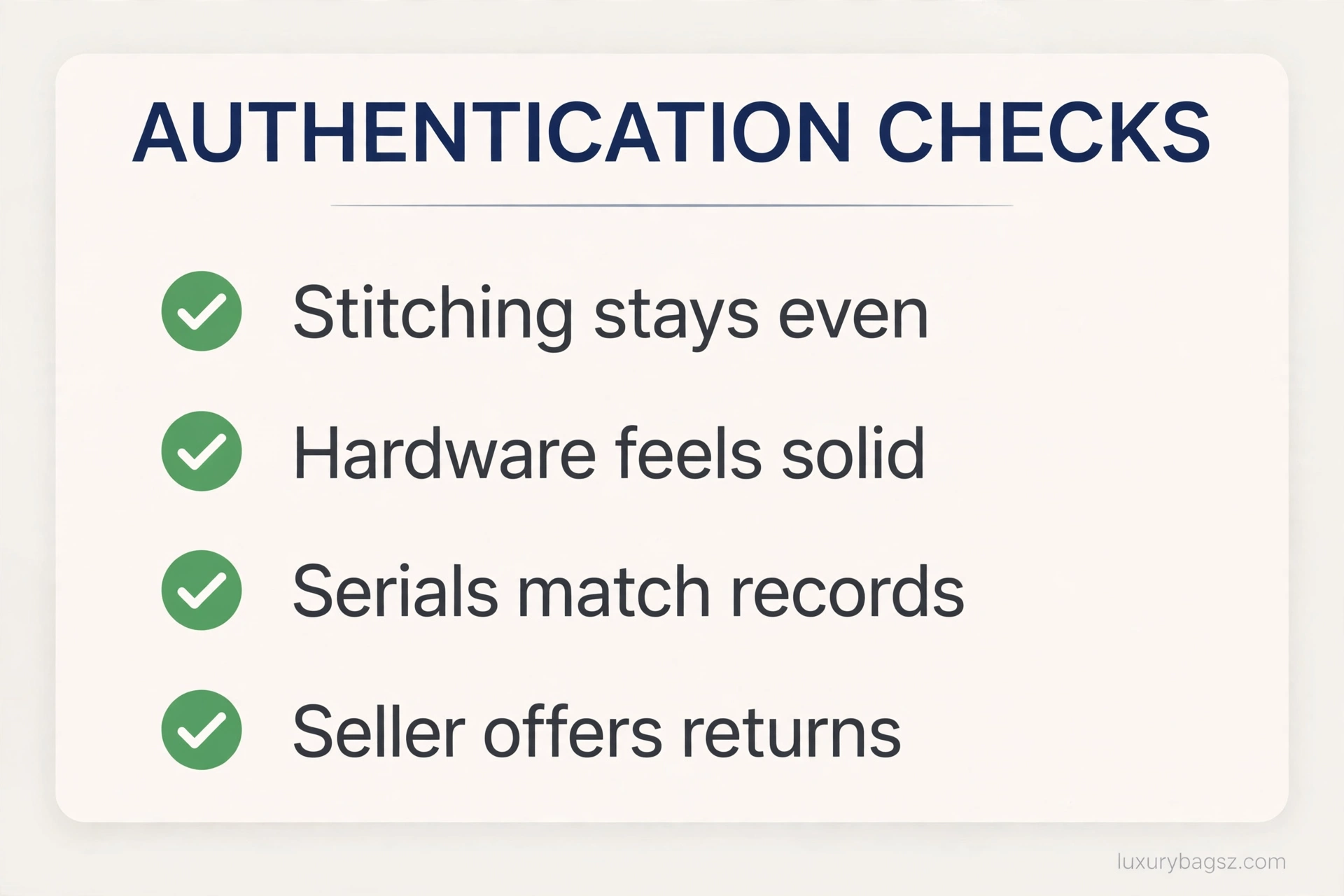
Authentication starts with the whole bag, not one detail. Fakes often get a logo right while missing the feel of the leather, the weight of the hardware, or the evenness of the stitching.
Check stitching first: it should be even, tight, and consistent in colour and length, with no loose threads at stress points. Then check hardware: it should feel solid, close cleanly, and show ageing consistent with the bag's claimed age.
Serial markings, date codes, and authenticity cards help, but none proves a bag alone, since cards and codes can be faked or swapped. Treat them as supporting evidence alongside condition, materials, and seller reputation.
When in doubt, pay for an independent authentication service or buy from a marketplace with a clear authentication guarantee. The fee is small beside the price of a fake.
Storage and Rotation: How Good Closets Stay Good
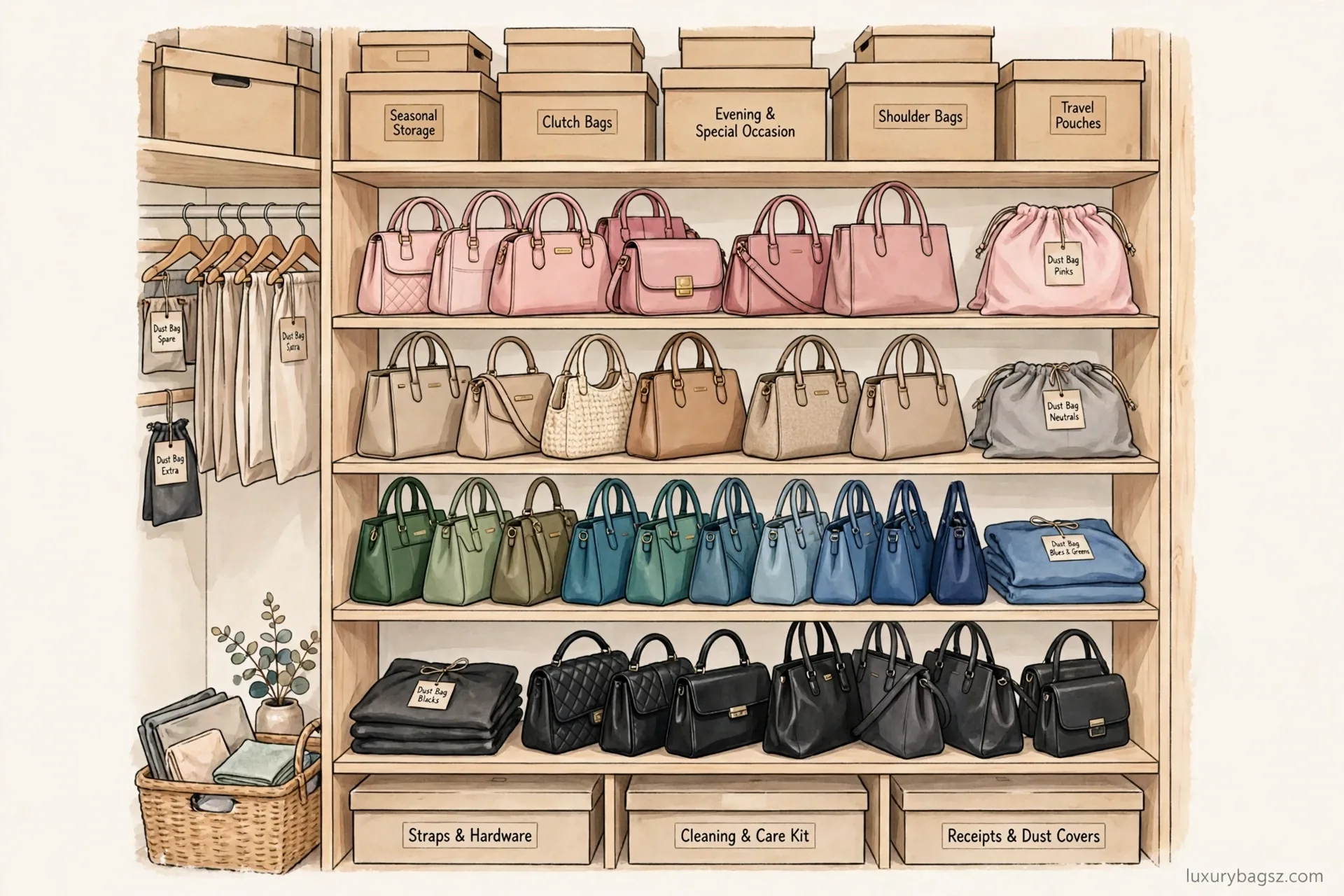
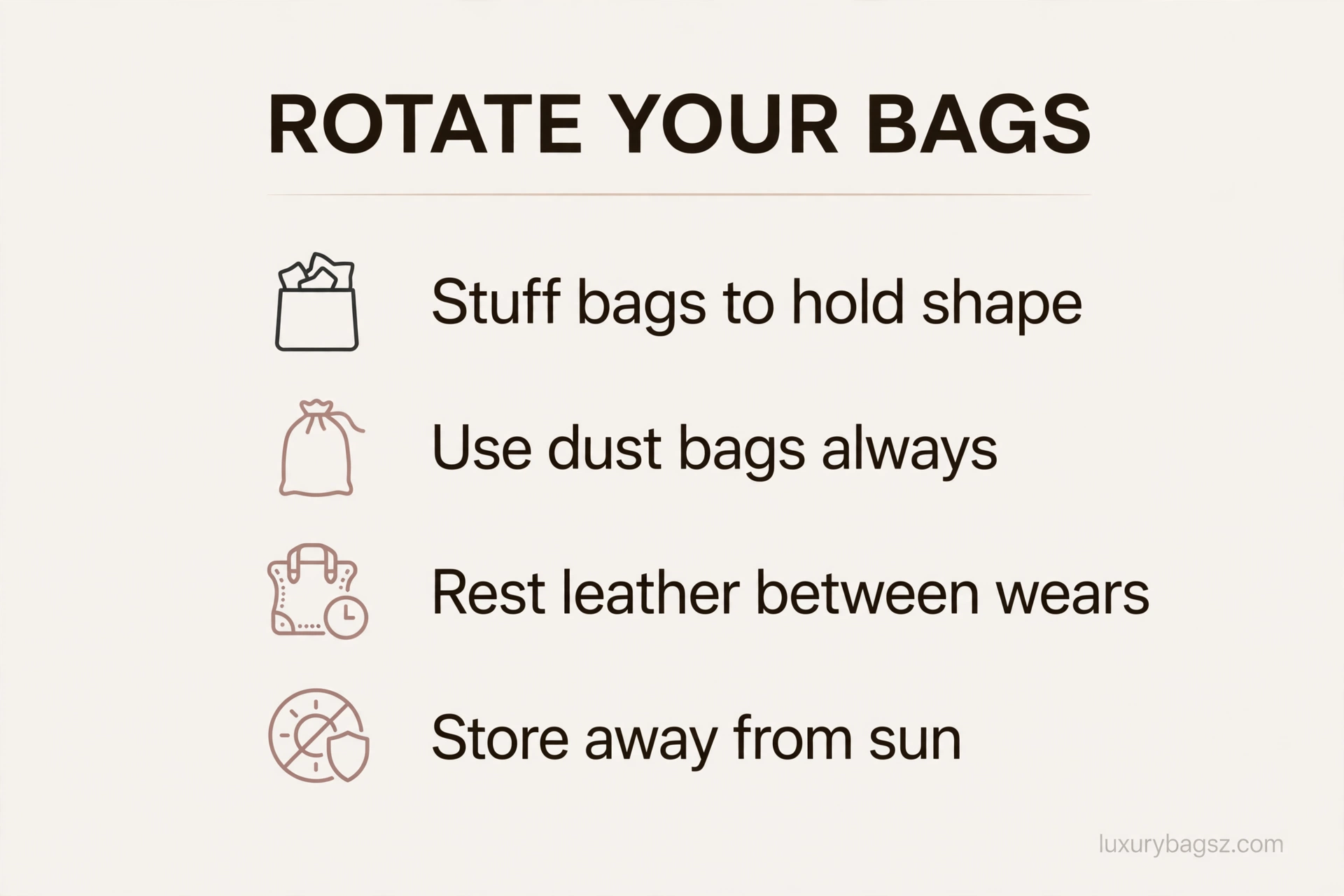
Storage is where collections are won or lost. Stuff bags lightly to hold their shape, keep them in dust bags, and store them upright or laid flat, never hung by their handles for long periods, which stretches straps.
Keep bags away from direct sun, damp, and heat, and separate light-coloured leather from dark pieces to avoid colour transfer. A simple shelf divider often does more good than an expensive organiser.
Rotation matters too. Resting leather between wears lets it recover its shape, and regular use prevents hardware from stiffening and leather from drying in storage. A bag worn twice a month in rotation will outlast one worn daily or never.
Finally, keep a simple closet record: brand, model, colour, size, purchase date, price, and condition notes. It takes minutes, and it transforms future selling, insuring, and editing decisions.
What to Avoid, and the Closet Worth Building
Avoid buying for a single event unless you can see ten further wears. Avoid trend bags at full price when a pre-owned version will appear within a season. And avoid duplicates: two near-identical black totes are one tote too many.
Instead, build toward a small, strong core: an everyday bag, a work bag, an evening piece, and one joyful extra. Add slowly, edit honestly, and let each piece prove itself by being worn.
That is the real lesson of a curator's closet. It is not about owning the most, but about choosing well, caring properly, and keeping only what earns its shelf.
Our comparison of vintage versus new buying can help you decide, piece by piece, which route suits each gap in your own collection.
Frequently Asked Questions
1. Who is Catherine Travers? The Handbag and Shoes Category Manager at The Luxury Closet, and curator of its weekly #BagThursday pre-owned handbag spotlight.
2. What is #BagThursday? A weekly feature curated by Travers, spotlighting special pre-owned designer handbags with notes on history, style, and standout qualities.
3. Has Catherine Travers published her own closet list? No public itemised personal closet tour was found, so this guide applies her curation method rather than inventing her collection.
4. How many bags should a designer closet hold? There is no fixed number; a strong core covers everyday, work, evening, and travel needs, with duplicates edited out.
5. Is pre-owned the best way to build a designer closet? Often yes, since it offers discontinued pieces and better prices, provided authentication and returns policies are checked first.
6. How often should I edit my closet? At least twice a year, sorting bags into keep, repair, sell, and store groups.
7. What is the one-in, one-out rule? Each new bag arrival means one existing bag leaves, which prevents accumulation and keeps the collection intentional.
8. How do I spot a fake designer bag? Check stitching evenness, hardware weight and ageing, materials, serial markings, and seller reputation together, never one detail alone.
9. How should I store designer bags? Stuffed lightly, in dust bags, away from sun and damp, never hung by handles long-term, with light and dark leather separated.
10. Should I repair or replace a worn bag? Repair first in most cases, since corner, zip, and edge work costs far less than replacement and keeps a proven bag in use.
Final Verdict: Curate Like Travers, Whatever Your Budget
You do not need a curator's job title to build a curator's closet. You need a map of your real life, honest condition checks, and the discipline to edit.
Choose slowly, store well, and keep only what you wear and love. That is how a designer closet stops being a collection of purchases and becomes a collection worth keeping.