

Cartier Ballon Bleu Guide: Sizes, Models, Prices, and Pre-Owned Checks
The Ballon Bleu at a Glance
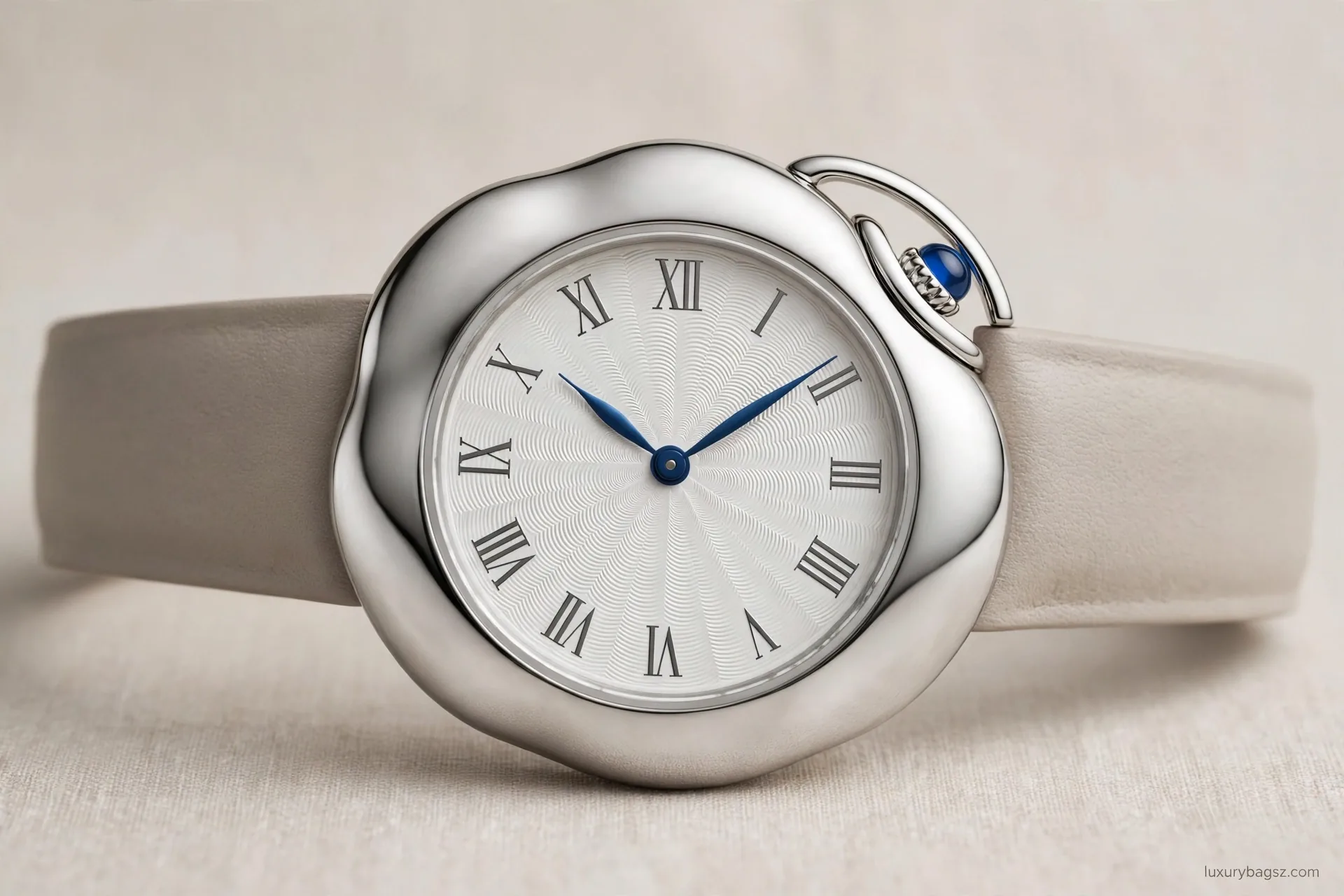
The Cartier Ballon Bleu is a round dress watch built around one idea: a smooth, pebble-like case with a blue sapphire cabochon crown tucked beneath a protective arch. That floating-crown look is the fastest way to spot one.
Buy size first and metal second. A 33mm steel automatic is the safest first Ballon Bleu, while 28mm suits discreet, jewellery-like wear and 40mm or 42mm suits a larger wrist. Prices rise steeply with gold and diamonds, so decide your ceiling before you fall for a diamond bezel.
Every Ballon Bleu is water resistant to 30 metres, covering splashes and rain but not swimming. Quartz suits buyers who want grab-and-go accuracy, while automatic suits buyers who enjoy mechanical watchmaking and wear the watch often enough to keep it running.
Key Takeaways

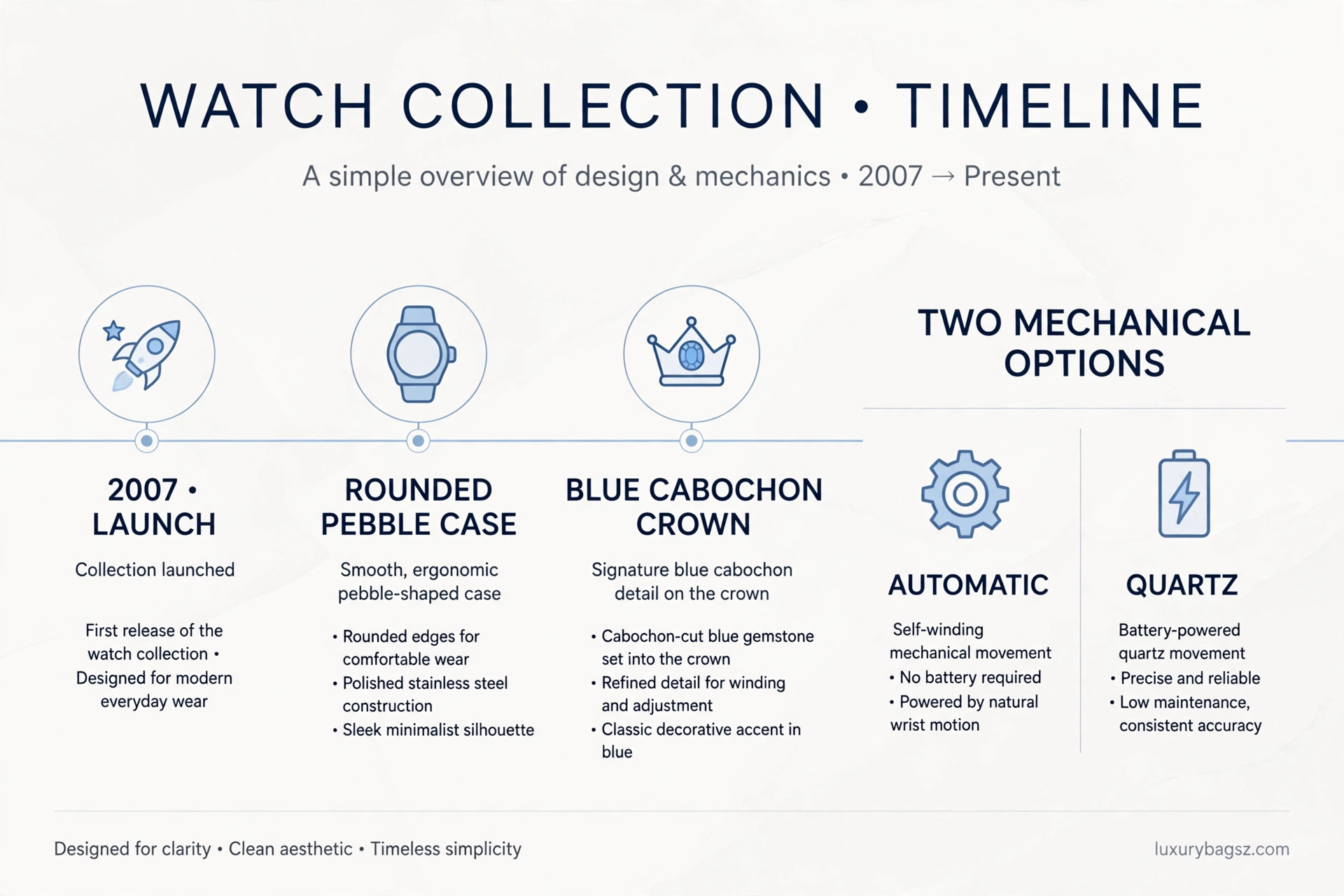
- The Ballon Bleu launched in 2007 and is one of Cartier's youngest, most recognisable collections.
- Core sizes run 28mm, 33mm, 36mm, 40mm, and 42mm, with chronograph and tourbillon references reaching 44mm to 46mm.
- Signature details: pebble case, blue cabochon crown under its arch, guilloché dial, Roman numerals, blued sword hands.
- Quartz suits occasional wear; automatic suits daily wear and needs regular wear or a winder.
- Steel models are the accessible entry point; gold and diamond-set models cost several times more.
- All Ballon Bleu models are rated to 30 metres, so treat them as splash resistant, not swim watches.
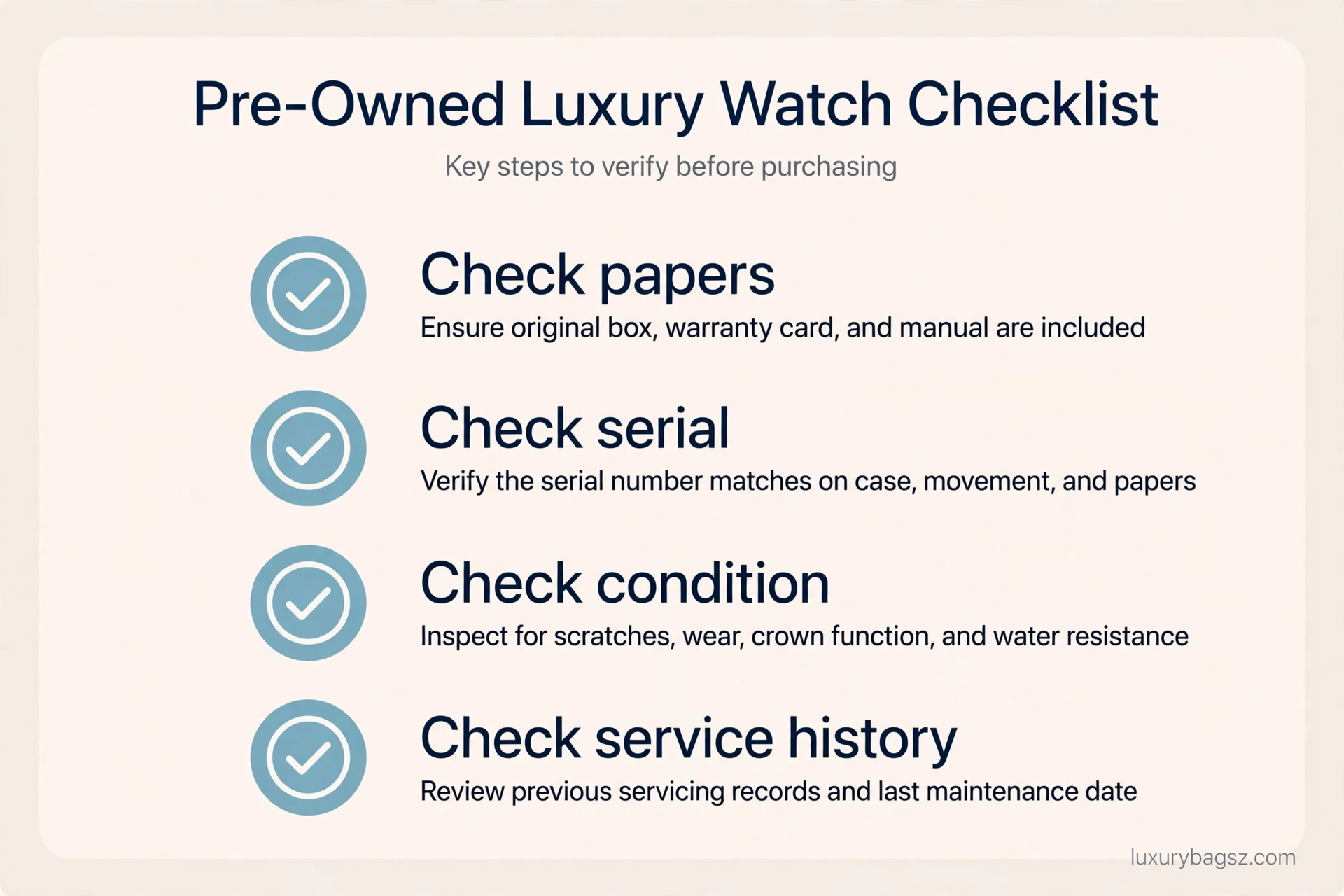
- Pre-owned, check papers, serial details, condition, and service history before paying.
What Makes a Ballon Bleu a Ballon Bleu
Start with the case. The Ballon Bleu case is double-convex, rounded on both sides like a pebble, so it sits softly on the wrist instead of standing proud like a flat sports watch. That curve is why it reads as jewellery as much as a timepiece, and slips under a cuff easily.
Next comes the crown: a fluted crown set with a blue sapphire cabochon at 3 o'clock, protected by a curved arch flowing from the case. The name says it plainly: "ballon bleu" means blue balloon, a nod to the round case and blue crown stone.
The dial completes the identity. Most Ballon Bleu dials are silvered with a radiating guilloché pattern, black Roman numerals, and blued-steel sword-shaped hands. Some references swap in blue, pink, or dark grey dials, and a few use gold, but Roman numerals and sword hands stay constant. If a watch lacks those three cues, it is not a Ballon Bleu.
Sizes: From 28mm to 46mm, and Who Each Suits
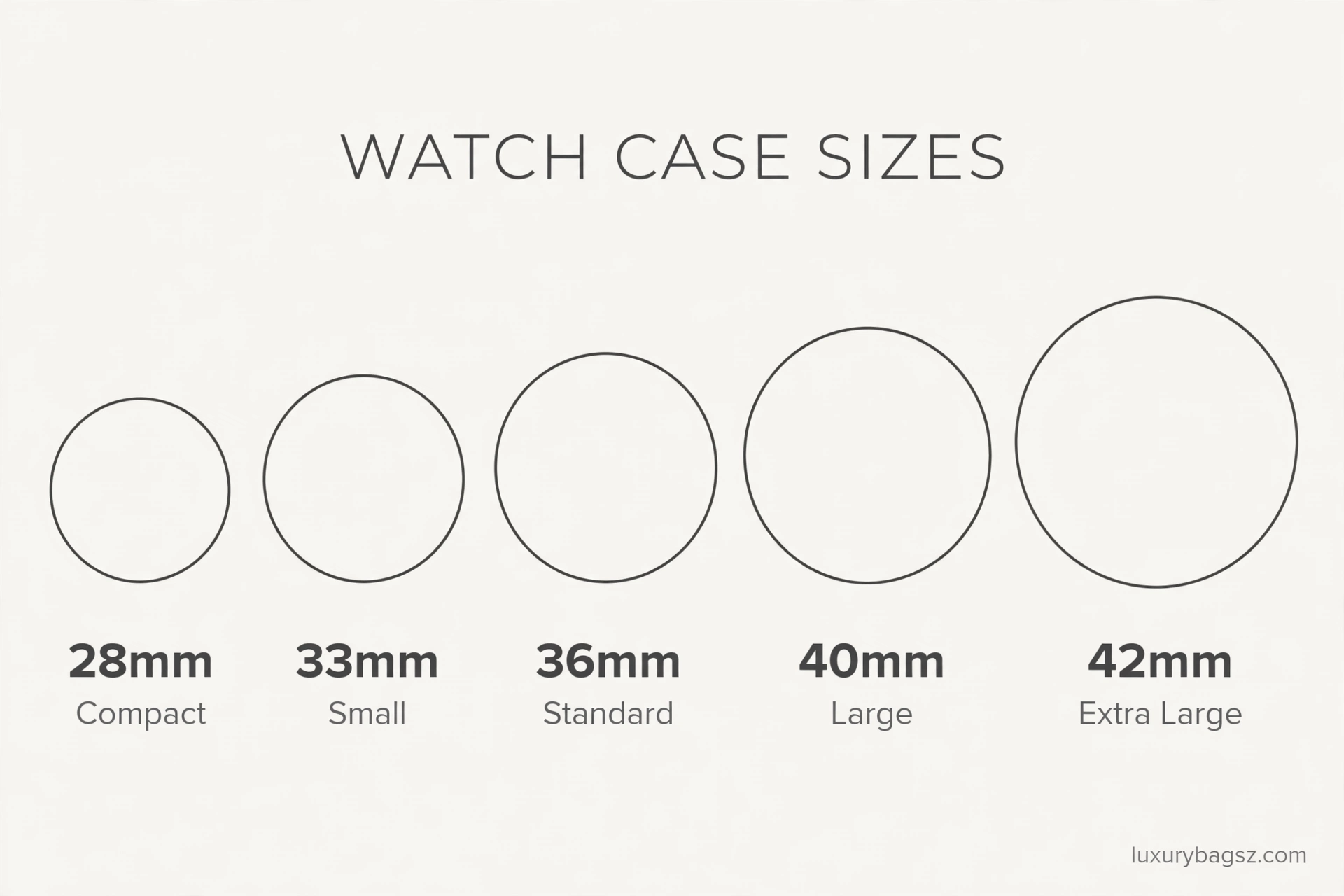
Size matters most, because it changes how the watch wears more than metal does. The main range runs 28mm, 33mm, 36mm, 40mm, and 42mm, with some guides listing chronograph and tourbillon references up to 46mm. Check the exact reference before buying, since the same name can hide several diameters.
The 28mm is the quietest Ballon Bleu. It suits a slim wrist or a dressier rotation, and it is usually quartz. The 33mm is the sweet spot for most buyers: present enough to read as a real watch, small enough to stack with bracelets, and available in both quartz and automatic forms.
The 36mm gives a stronger, more contemporary presence and works well as a unisex everyday watch. The 40mm and 42mm models are the standard larger-wrist choices, best on wrists over about 17cm, since the curved case can overhang a narrow wrist. Try before you buy wherever possible, because the pebble case wears larger than a flat case of the same diameter.
If you already wear Cartier jewellery, compare proportions before deciding. Our guide to Cartier Love bracelet sizes shows how small fit changes alter the whole look, and the same logic applies beside a bracelet stack.
Movements: Quartz Ease Against Automatic Craft
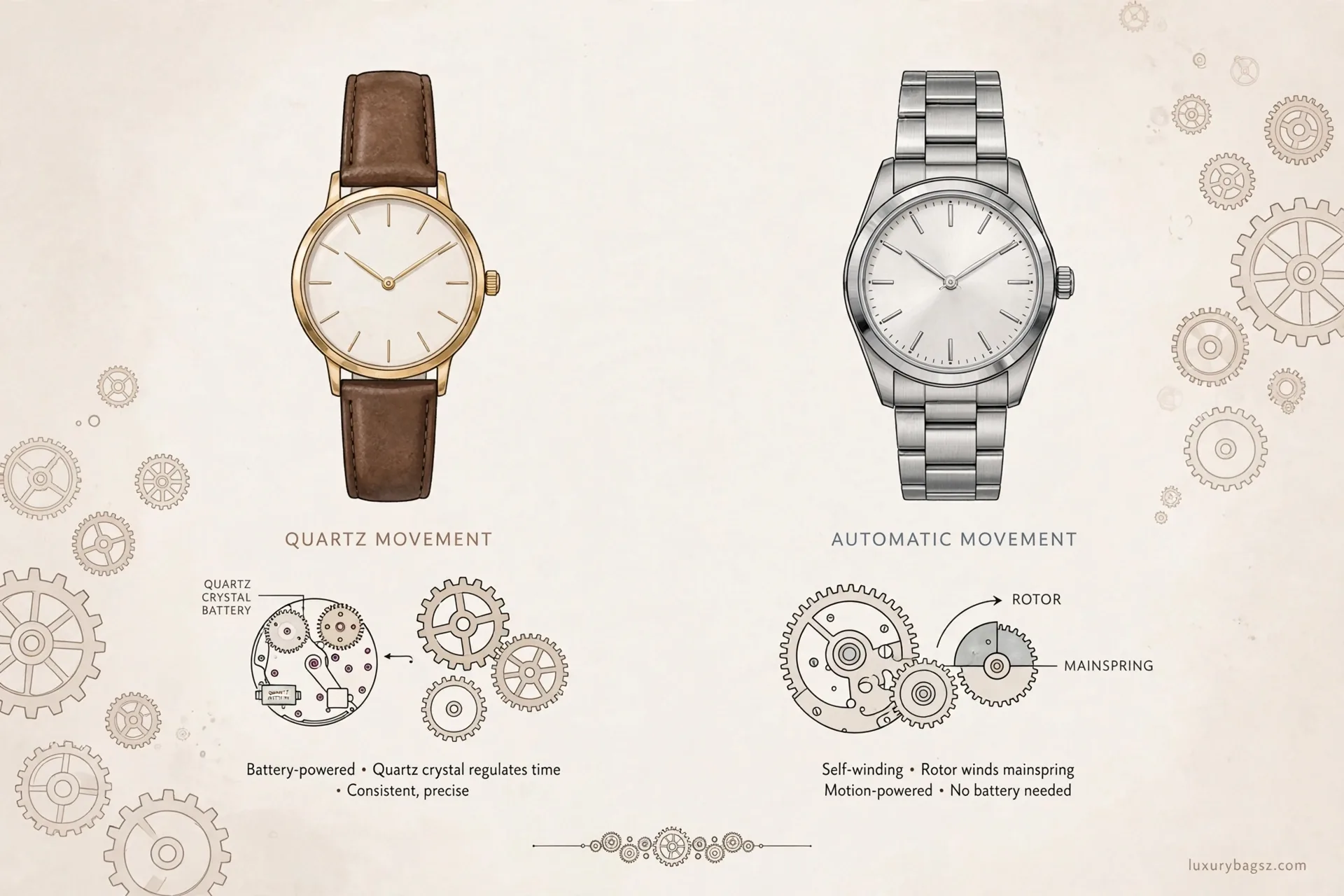
Ballon Bleu movements split into two camps, and the right one depends on how you wear watches. Quartz models run on a battery, keep steady accuracy with no daily attention, and usually last two to three years per battery, though some guides quote four to six years. That spread is normal: battery life varies with the calibre and the reference.
Automatic models wind themselves from wrist motion and appeal to buyers who enjoy mechanical watchmaking. Larger references use Cartier manufacture calibres, with the 1847 MC widely cited for 36mm to 42mm steel models, at around 42 hours' reserve. An automatic left unworn for a long weekend will stop and need resetting, so a winder helps if you rotate watches.
Smaller models complicate the picture. Some guides say 28mm and 33mm models come in quartz or automatic, while others describe 36mm and up as automatic only. Both claims appear in current retailer guides, so treat movement as a per-reference fact and confirm it on the exact reference.
The Models, From Everyday Automatic to Flying Tourbillon
The standard Ballon Bleu de Cartier Automatic is the core of the line. Rebag lists it from 28mm to 46mm in steel or rose gold, with silvered, blue, pink, or dark grey guilloché dials. It is the model most first-time buyers should start with.
The Chronograph adds a stopwatch function with a 30-minute counter and a 12-hour counter, in sizes from 33mm to 44mm. Its pushers are rectangular with rounded edges, and it appears in steel, yellow gold, rose gold, platinum, and two-tone combinations. Buy it only if you will use the chronograph, since it adds thickness, weight, and service cost.
The Moonphase places a moonphase display at 9 o'clock, using a deep blue aventurine disc with a golden moon and stars. Rebag lists it from 33mm to 42mm in steel or yellow gold, powered by the self-winding Calibre 9653 MC with a power reserve of about 48 hours. It is the pick for buyers who want a visible complication without tourbillon pricing.
The Flying Tourbillon is the line's high-end statement. Its exposed tourbillon cage rotates continuously to average out gravity's effect on timekeeping. Rebag lists it from 39mm to 46mm in platinum or rose gold, on the hand-wound Calibre 9452 MC with about 50 hours' reserve. It is a high-jewellery proposition, not a daily wearer for most budgets.
The Quartz and Diamond models round out the range. Quartz models run 28mm to 42mm with a date window at 3 o'clock, in steel or gold, on leather or bracelet. Diamond models add a diamond-set bezel and markers, run 28mm to 42mm, and use automatic or manual movements with reserves of roughly 38 to 42 hours.
Ballon Blanc: The Close Cousin Worth Knowing
Shoppers often confuse the Ballon Bleu with the Ballon Blanc, so learn the difference first. The Ballon Blanc replaces the blue cabochon crown with a single diamond set at 4 o'clock inside the case, and it is a distinctly feminine variation with a smaller, more jewellery-like stance.
Rebag lists the Ballon Blanc from 28mm to 46mm in rose gold or steel, with a silvered opaline dial, blue sword hands, and silver Roman numerals, powered by automatic movement. Its off-centre crown is the tell: a diamond at 4 o'clock, not a blue cabochon under an arch, means a Blanc, not a Bleu.
Sellers sometimes blur the two names in listings. Search both names when comparing, but filter by the crown detail, not the headline, so you do not pay Bleu money for a Blanc or miss a Blanc you actually wanted.
Materials, Dials, and Straps: What Changes the Price
Steel is the entry point and the most practical daily choice. It resists scratches better than gold, costs far less, and suits both leather straps and steel bracelets. Two-tone steel and gold models sit in the middle, adding warmth without the full cost of a solid gold case.
Solid gold changes the watch entirely. Yellow gold reads classic, rose gold reads softer and more modern, and white gold reads almost like steel until the price tag appears. Gold scratches more easily, so a gold Ballon Bleu worn daily will show its life faster than steel. Diamond-set bezels and markers push prices higher still, and high-jewellery references can reach well into six figures.
Dials deserve the same attention as metals. Silvered guilloché is the default and most versatile, while blue, pink, and dark grey dials add personality but narrow the watch's range. Straps change the character again: leather dresses the watch down slightly, while a steel or gold bracelet makes it read as jewellery. Budget for a strap change if you buy pre-owned.
Our guide to what to know about Patek Philippe shows the same pattern: steel first, gold and complications far above.
Prices: Retail Ranges and What Pre-Owned Really Costs
Prices move often, so treat every figure here as a reported range to verify, not a quote. Current retailer guides put small steel Ballon Bleu models near $5,300 to $5,750 at retail, the 33mm steel automatic near $7,050, and the 36mm steel automatic near $7,500. Broader guides put steel models from 28mm to 42mm at roughly $5,320 to $8,500, two-tone at $7,000 to $15,000, and solid gold at $15,000 to $50,000.
Pre-owned prices run lower but vary widely with condition, papers, and metal. One guide lists pre-owned 33mm steel near $3,000 to $4,500, two-tone near $4,500 to $7,000, and full gold from $8,000, while auction starting bids for older pieces have been reported near $1,661. Diamond and high-jewellery references sit far above all of these, with some retailer guides reaching $192,850 for the rarest pieces.
That spread is why you must compare like with like. A 28mm quartz steel watch and a 42mm gold automatic are both Ballon Bleus, but not the same purchase. Match reference, size, metal, and movement before comparing prices, and be suspicious of a price far below the range for that exact reference.
Pre-Owned Checks: Papers, Condition, and Fakes
Buy pre-owned only from a seller who welcomes scrutiny. Ask for original papers, box, and service records, and check that reference and serial details match the watch. Missing papers do not prove a fake, but they should lower the price and raise your questions.
Inspect the watch itself, slowly. The guilloché dial should be crisp and even, Roman numerals sharp, sword hands evenly blued, and the cabochon a clean blue under its arch. Look for over-polishing, which softens the case curves and arch, and check crown action, bracelet or strap wear, and the crystal for chips. A service history matters most on automatics, where a skipped service can mean a large bill later.
If anything feels off, get an independent authentication before paying, not after. Our checks for spotting a fake Panthère watch use the same discipline: compare details against known genuine pieces, and walk away when the details do not line up.
And if you later decide to sell, our guide to how to resell luxury jewellery covers the consignment and marketplace routes worth comparing.
Care, Servicing, and Daily Wear
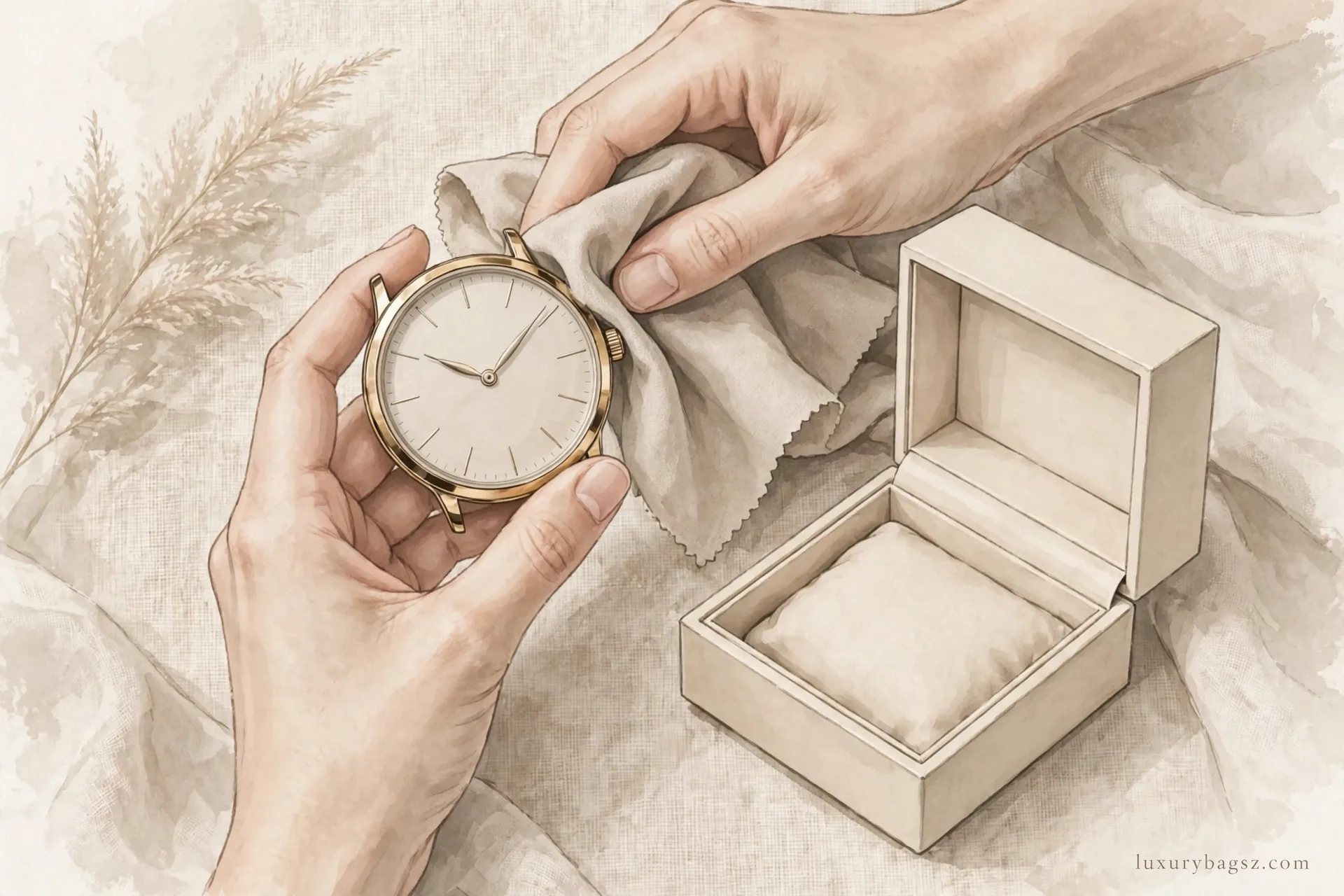
Daily care is simple: wipe case and crystal with a soft, dry cloth, and keep the watch away from hard knocks, which chip crystals and dent gold. Leather straps dislike water, so remove a leather-strapped Ballon Bleu before washing hands or rain, and let a wet strap dry naturally, never with direct heat. Our full routine for how to clean a watch covers the safe method in more detail.
Water resistance needs respect, not trust. The 30-metre rating covers splashes and rain, not swimming, showering, or hot water, and gaskets age, so an older watch may resist less than its rating suggests. Have seals checked at service, and never test water resistance yourself on a watch you care about.
Service intervals are where guides disagree, so follow Cartier's current advice for your reference rather than a single number from a retailer blog. Automatics need periodic complete services, quartz models need battery changes by a competent watchmaker who also checks seals, and any watch gaining or losing time sharply should go in early.
A serviced watch with records also sells better, which makes servicing a value decision, not just a maintenance one.
Frequently Asked Questions
When did the Cartier Ballon Bleu launch?
The Ballon Bleu launched in 2007, making it one of Cartier's youngest collections, yet it is now one of the house's most recognisable watches.
What sizes does the Ballon Bleu come in?
The main range runs 28mm, 33mm, 36mm, 40mm, and 42mm, with some chronograph and tourbillon references reaching 44mm to 46mm, so always confirm the exact reference.
Is the Ballon Bleu a men's or women's watch?
It is genuinely unisex, with 28mm and 33mm suiting smaller wrists and 40mm and 42mm suiting larger wrists, while 33mm and 36mm work across both.
Should I choose quartz or automatic?
Choose quartz for grab-and-go accuracy and occasional wear, and automatic if you wear the watch often and enjoy mechanical watchmaking, accepting it stops after about two days unworn.
Can I swim with a Ballon Bleu?
No. The 30-metre rating covers splashes and rain only, and swimming, showering, or hot water can damage seals and the movement.
What is the difference between the Ballon Bleu and the Ballon Blanc?
The Bleu has a blue sapphire cabochon crown under a protective arch at 3 o'clock, while the Blanc has a single diamond set at 4 o'clock and a more jewellery-like stance.
How much does a Ballon Bleu cost?
Steel models are reported near $5,300 to $8,500 at retail, two-tone near $7,000 to $15,000, and gold from $15,000, with pre-owned steel often lower, so verify the exact reference before comparing.
Is the Ballon Bleu a good pre-owned buy?
Yes, if you verify papers, reference, condition, and service history, and buy from a seller who welcomes independent authentication.
How often should a Ballon Bleu be serviced?
Follow Cartier's current advice for your reference, and take it in early if it gains or loses time sharply or the crown feels gritty.
Does the Ballon Bleu hold its value?
Steel holds value better than most fashion watches, gold and diamond depend heavily on condition and papers, and no watch should be bought purely as an investment.
Final Verdict
The Ballon Bleu earns its popularity honestly: a distinctive pebble case, a protected blue crown, and a dial that reads as Cartier from across a room. Choose size before metal, quartz for ease or automatic for craft, and never pay until reference, condition, and papers all line up.
Bought that way, a steel 33mm or 36mm automatic is a watch you can wear daily for decades and sell without regret. That is the appeal in one line: unmistakable, comfortable, and easy to live with.






