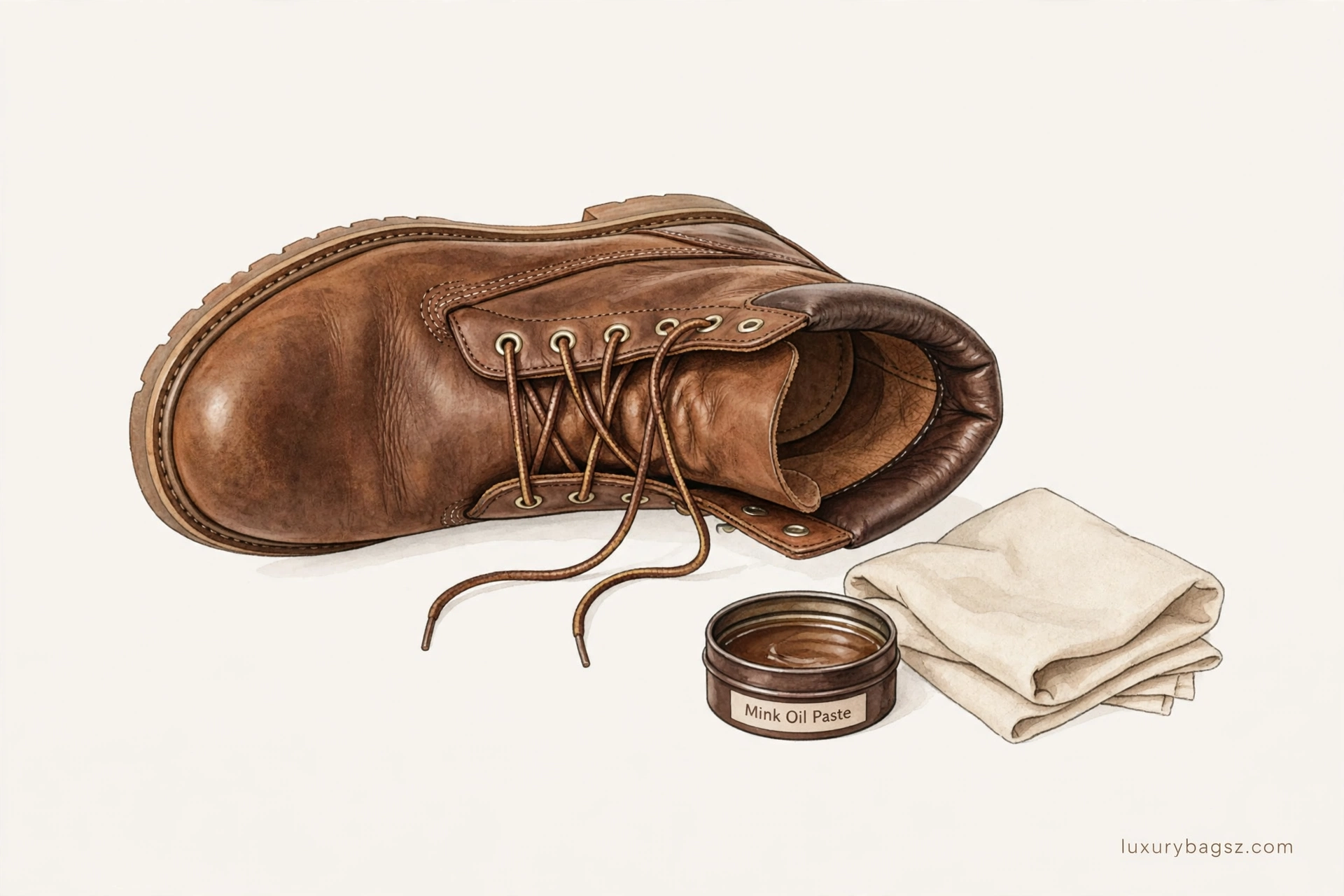
Yes, you can put mink oil inside boots, but only rarely, lightly, and on the right boots. A tiny coat on a fully dry leather footbed can stop curling and cracking, and it can soften a stiff new lining. That is the whole case for doing it.
The case against it is just as real. Mink oil traps moisture, so oiling damp boots invites mould and rot. Too much oil softens leather until it wears faster, and oil that reaches soles or uppers darkens colour and weakens glued bonds.
So the honest answer is conditional, not a yes or a no. Dry leather footbed, tiny amount, fully dried boots, excess wiped away: helpful. Damp boots, suede linings, bonded soles or a heavy pour: harmful. The rest of this guide shows where your boots fall.
Key Takeaways
Mink oil inside boots helps only on dry, full-leather footbeds and linings, and only in a tiny amount.
Never oil damp boots. Oil seals moisture in, which leads to mould, smell and leather rot.
A light coat can stop a leather footbed curling at the toes and ease fine cracks.
Too much oil over-softens leather, so the inside wears out faster instead of lasting longer.
Keep mink oil off soles, adhesives and uppers. It softens glued bonds and darkens outer leather.
Never use mink oil on suede linings, fabric linings or boots with bonded rubber soles.
Dry boots for two days, apply a pea-sized dab, wipe excess, and rest the boots for a day before wearing.
The Short Answer, by Boot Type
For sturdy leather work boots with a leather footbed and stitched construction, a rare, light inside coat is reasonable. Think of it as maintenance for a dry footbed, done once or twice a year at most, not as a regular conditioning routine.
For dress boots with fine calfskin linings, be more cautious. A tiny dab on a dry, cracking footbed is fine, but frequent oiling softens fine leather fast and changes how the boot holds its shape. When in doubt, use a lighter leather conditioner instead.
For boots with bonded or glued rubber soles, skip mink oil inside entirely. Several makers warn that mink oil degrades sole adhesion, and oil can seep through stitching and seams to reach the bond. A separated sole costs far more than any benefit inside the boot.
For suede-lined, fabric-lined or waterproof-membrane boots, also skip it. Oil mats suede fibres, stains fabric, and can block the breathability of a membrane. These boots need drying and airing, not oil, to stay healthy inside.
What Mink Oil Actually Does
Mink oil is a stable animal fat, traditionally taken from mink, that penetrates leather fibres and replaces oils lost through wear. Unlike surface creams, it soaks in deeply, which is why it softens stiff leather so well and why its effects last.
Inside a boot, that deep penetration is both the benefit and the danger. It reaches the footbed fibres that surface products never touch, so it can revive a dry, curling footbed. It also fills the pores, which changes how the leather handles moisture from then on.
Mink oil is hydrophobic, meaning it repels water. A thin, cured coat helps keep outside damp from soaking a footbed. But the same property seals in any moisture already present, so oiling a damp boot locks that damp inside the leather, where mould and bacteria thrive.
It also darkens leather, usually by a shade or two. Inside a boot, colour change matters little, but oil that creeps onto the upper through seams or stitching will darken the outside too. Wipe any stray oil at once, and keep the work away from the boot mouth.
The Real Benefits Inside a Boot
The leather footbed is the part of a boot that moulds to your foot and takes the most sweat. As salty sweat dries, the footbed can curl at the toes and develop fine cracks. A light mink oil coat keeps that leather hydrated, so it stays flat and flexible longer.
Cracked footbeds benefit most. Work a tiny amount along a crack with an up-and-down motion, let it absorb, and wipe away excess. The oil will not close a deep split, but it can stop fine surface cracks spreading, and it makes the footbed feel smoother underfoot.
New boots with stiff leather linings can also benefit. A tiny massage of mink oil into a stiff lining makes it more pliable, so the break-in feels easier and the lining shapes to your foot sooner. Use far less than you think you need, because a new lining is not yet dry or damaged.
Airing and shoe trees still matter more than oil. The best protection for a footbed is drying time after every wear, ideally with cedar trees inside. Oil is a rescue for dryness, not a replacement for drying, and boots that never air out will fail with or without oil.
The Risks Nobody Should Skip
Trapped moisture is the biggest risk. Boots worn all day are damp inside, even when they feel dry to the touch. Oiling before that damp has fully left seals it in, and trapped damp feeds mould, smell and fibre rot. Two full days of airing is the safe minimum.
Over-softening is the second risk. Leather needs some firmness to hold its shape and resist wear. A footbed soaked in oil goes soft and compresses faster, and a lining soaked in oil stretches and wears thin sooner. More oil does not mean more life; past a point, it means less.
Sole damage is the third risk. Mink oil softens adhesives and rubber compounds, so oil that reaches the sole edge or seeps through seams can loosen a bonded sole and make soles wear faster. It also makes sole edges sticky, so they collect dirt.
Colour transfer is a smaller but real annoyance. Excess oil inside a boot migrates to socks, especially in the first days after treatment. White or light socks will show it. Wiping excess and resting the boots for a day reduces this, but a flooded boot will stain socks for weeks.
The Safe Method, Step by Step
Start by resting the boots unworn for two days in a ventilated spot, with shoe trees or paper inside. The inside must be fully dry, not just surface-dry. If the boots smell damp or the footbed feels cool and clammy, wait another day.
Remove insoles if they come out, and brush out loose dirt. Take a pea-sized dab of mink oil, warm it between your fingers, and massage it evenly into the leather footbed with light pressure. Cover the surface thinly; do not pour oil into the boot.
For a cracked footbed, add a second tiny dab worked along the crack in short up-and-down strokes. For a stiff lining, use even less, massaged into the stiff area only, not the whole lining. Stop as soon as the leather looks evenly damp, not wet.
Wipe the inside with a clean, dry cloth to remove all surface excess. Pay attention to seams and the boot mouth, where oil creeps onto the upper. Then rest the boots for a full day before wearing them, so the oil absorbs instead of transferring to socks.
Repeat only when the footbed looks dry or cracked again, which for most wearers means once or twice a year at most. If you find yourself oiling monthly, something else is wrong, usually boots that never dry fully between wears, and rotation or trees will help more than oil.
When to Never Put Mink Oil Inside Boots
Never oil boots that are still damp from wear, rain or cleaning. This is the single most important rule in this guide, and breaking it causes the mould and rot problems that give inside-oiling a bad name. When in doubt, wait another day.
Never oil suede or fabric linings. Suede mats and darkens permanently under oil, and fabric linings stain and hold oil against the foot. These linings need brushing and airing, and a suede-specific product if they need anything at all.
Never oil boots with bonded soles, glued construction or a waterproof membrane if the maker warns against it. Some makers state plainly that mink oil degrades sole adhesion, and a separated sole is not a repair most cobblers can reverse cheaply.
Never oil boots you plan to resole soon. Oil-soaked footbeds and welts are harder for a cobbler to work with, and excess oil can weaken the new bond. Tell your cobbler if the boots have been oiled inside, so they can plan the repair properly.
Better Alternatives for Most Boots
For most boots, a light, neutral leather conditioner is a safer inside treatment than mink oil. It hydrates without the heavy waterproofing seal, so it is less likely to trap moisture, and it darkens less. Apply it the same way: tiny amount, dry boots, excess wiped away.
Cedar shoe trees are the best everyday investment for boot insides. They absorb moisture, hold shape, reduce odour and cut the drying time between wears. A pair of trees does more for a footbed over a year than any oil treatment.
Rotation helps too. Two pairs worn on alternate days last far longer than one pair worn daily, because each pair gets a full drying cycle. If your footbeds keep cracking, the cause is often daily wear without rest, not a lack of oil.
For smell, baking soda left inside overnight, then shaken out, freshens boots without any oil. For damp boots, newspaper stuffing changed once or twice draws moisture out fast. Both are cheaper and safer than reaching for the oil tin.
Frequently Asked Questions
Should you put mink oil inside boots at all?
Only rarely, lightly, and on dry leather footbeds in stitched boots. For most boots, drying, trees and rotation help more, and oil is a rescue for dryness, not a routine.
Does mink oil inside boots cause mould?
It can, if the boots are damp when oiled. Oil seals moisture in, which feeds mould and bacteria. Dry boots fully for two days first, and never oil damp boots.
How often should I oil the inside of my boots?
At most once or twice a year, and only when the footbed looks dry or cracked. Monthly inside-oiling over-softens leather and shortens boot life.
Can mink oil damage boot soles?
Yes, if it reaches adhesives or sole edges. It softens glued bonds and can make soles wear faster, which is why bonded-sole boots should not be oiled inside.
Will mink oil darken the outside of my boots?
It can, if oil creeps through seams or the boot mouth onto the upper. Wipe stray oil at once, work away from the boot mouth, and keep the coat tiny.
Can I use mink oil on suede-lined boots?
No. Oil mats suede fibres and darkens them permanently. Brush suede linings dry and air the boots instead, using suede-specific products only if needed.
What if I already put too much mink oil inside my boots?
Wipe out all surface excess, stuff with newspaper, and let the boots rest for several days. A saddle soap wipe can lift some oil, but deep saturation cannot be fully removed.
Is mink oil or conditioner better inside boots?
Conditioner is safer for most boots, because it hydrates without the heavy sealing effect. Mink oil suits only very dry, sturdy leather footbeds that need deep softening.
Can I wear boots right after oiling the inside?
No. Rest them for a full day so the oil absorbs. Wearing them at once transfers oil to socks and traps heat and sweat against freshly oiled leather.
Should I tell my cobbler if I oiled my boots inside?
Yes. Oil-soaked welts and footbeds change how a resole bonds, and your cobbler can plan cleaning or a different adhesive when they know in advance.
Summary
Mink oil inside boots is a sometimes tool, not an always tool. On a dry leather footbed in a stitched boot, a tiny coat stops curling, eases cracks and softens a stiff lining. On damp boots, suede linings or bonded soles, it causes more harm than good.
If you remember one rule, make it this: dry first, tiny amount, wipe excess, rest a day. Follow that, oil rarely, and let drying, trees and rotation do the everyday work. Your boots will last longer for it.
Jessica is the founder of Luxury Bagsz and a handbag specialist with more than 10 years in the bag industry. She owns and collects preloved designer bags, has examined over 500 bags by hand, and checks authenticity using the Entrupy app alongside stitching, hardware, engravings and date codes.
The Rolex 1908 is the watch that made people take Rolex dress watches seriously again. Launched at Watches and Wonders in 2023, it replaced the Cellini collection, introduced a brand-new movement, and — for the first time on a standard modern Rolex — showed that movement through a sapphire caseback. It is also a watch…
The Short Answer on Hermès Clothing Prices Most Hermès clothing sits between about $1,000 and $8,000 in the US: shirts and knitwear typically start in the low thousands, tailoring and dresses in the mid thousands, and coats and leather pieces at the top. Nothing in the clothing line is priced casually, but the spread is…
Ready-to-Wear Is Hermès Beyond the Bag Hermès ready-to-wear is the house's clothing: seasonal collections for women and men covering coats, tailoring, knitwear, dresses, shirts, trousers and leather pieces, made to the same hand-finished standard as its bags. It is one of the house's historic crafts, not a side line. Clothing sits inside the ready-to-wear and…
Two Houses, One Wrist The apple watch hermes is the longest-running luxury smartwatch partnership in the world: Apple's technology in a silver titanium Hermès case, with Hermès-made bands, exclusive watch faces and an extra orange Hermès sport band in the box. Current sets centre on 42mm and 46mm cases, with bands from the classic Single…
The Other Anchor-Chain Watch The hermes nantucket watch takes the same anchor chain that inspired Cape Cod and draws a slimmer conclusion from it: a narrow rectangular case whose ends are literally the two halves of a Chaîne d'Ancre link, split and pulled apart. It is a smaller, dressier watch than Cape Cod — mostly…
The Watch That Started Hermès Watchmaking The hermes arceau watch, designed by Henri d'Origny in 1978, is where serious Hermès watchmaking begins: a perfectly round case held by asymmetric lugs shaped like stirrups, with numerals that lean as if galloping. Arceau is the broadest Hermès watch family — quartz and automatic, 25mm to 43mm, plain…