Best Men’s Sports Watches: The Rolex, Audemars Piguet and Patek Philippe Icons
The Shortlist, Without the Noise
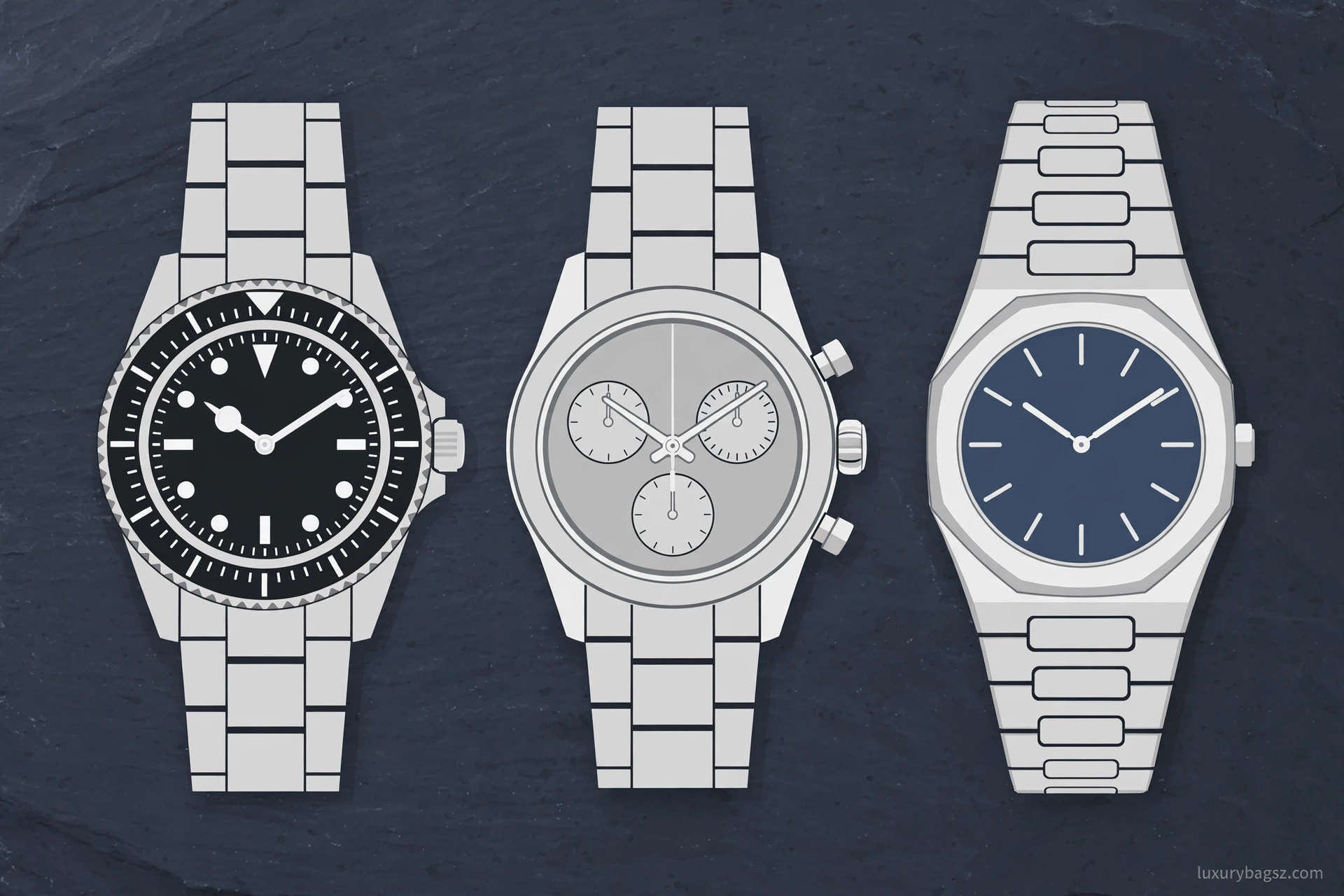
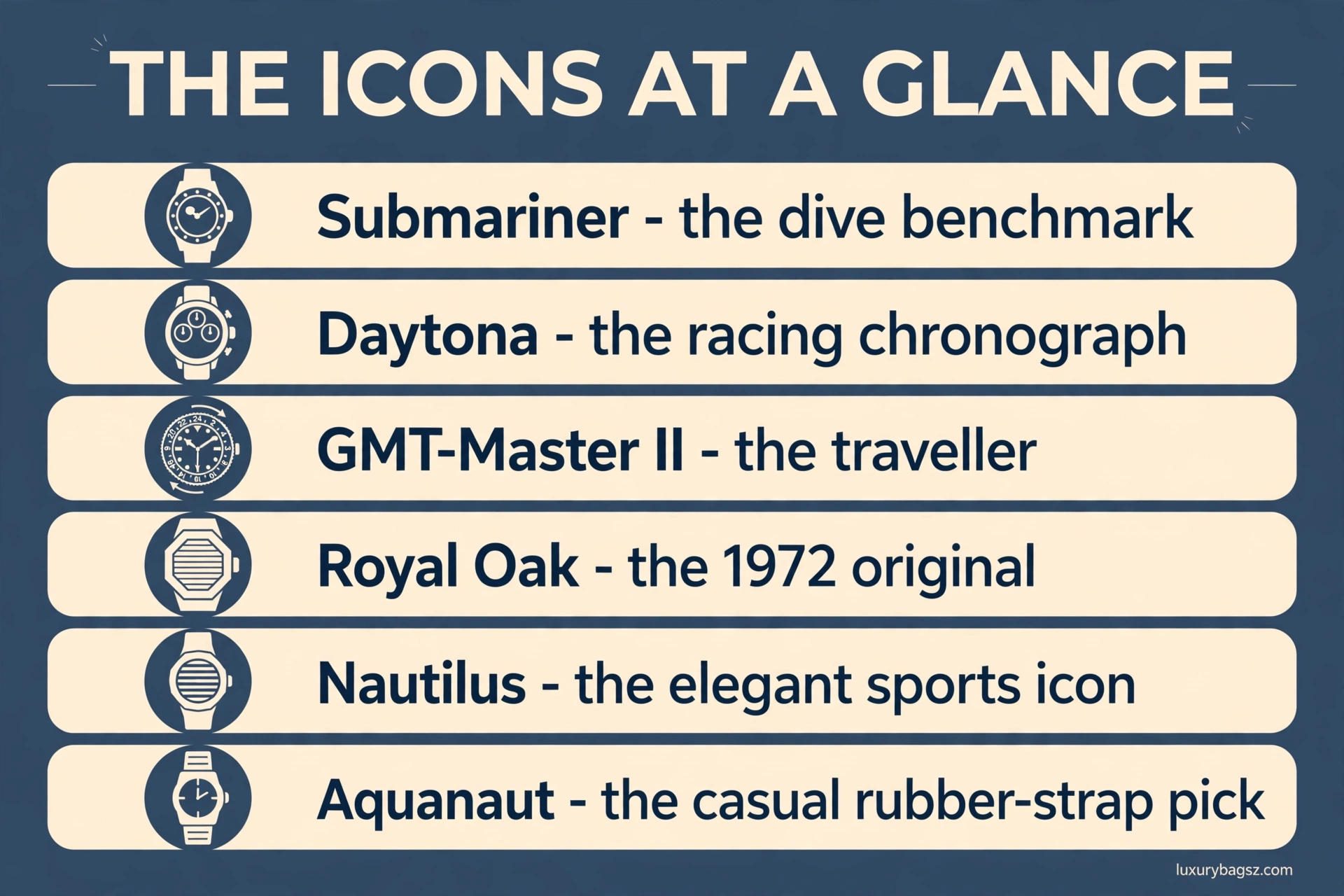
The best men's sports watches cluster around six icons from three houses: Rolex's Submariner, Daytona and GMT-Master II; Audemars Piguet's Royal Oak; and Patek Philippe's Nautilus and Aquanaut.
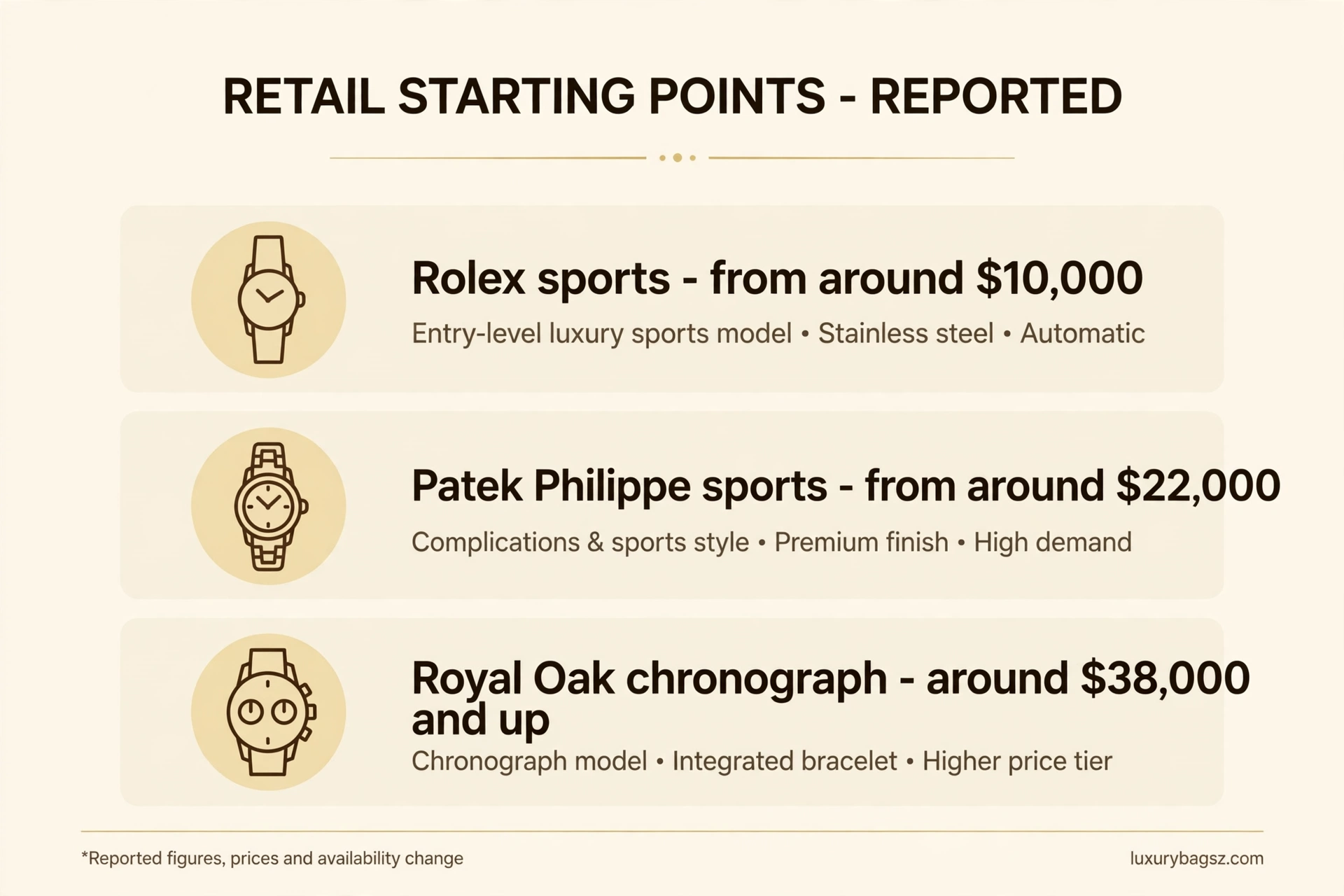
Rolex is the liquid, wearable benchmark, with retail starting around the $10,000 mark for core steel models. Patek Philippe is the pinnacle, with sports models from around $22,000 at retail and demand far beyond supply.
Audemars Piguet sits between in price and apart in design: the Royal Oak invented the luxury steel sports watch in 1972, and its chronographs have been reported around $38,000 and up at retail.
Key Takeaways
- Six icons lead the field: Submariner, Daytona, GMT-Master II, Royal Oak, Nautilus and Aquanaut.
- Rolex offers the broadest range and the deepest resale market of the three.
- The Royal Oak created the category in 1972; the Nautilus followed in 1976 with the same designer's hand.
- Patek Philippe makes very few watches a year, which keeps its sports models scarce and priced accordingly.
- Reported retail starts: Rolex sports around $10,000, Patek sports around $22,000, Royal Oak chronograph around $38,000.
- Buy condition and completeness first; at resale, the premium follows the best examples.
What Makes a Sports Watch an Icon
A sports watch earns icon status by surviving its own success: a design strong enough to stay recognisable for decades while the engineering quietly improves.
The shared recipe is a steel case built for water and knocks, a bracelet integrated into the design, and a dial you can read at a glance.
Each of the six watches here also owns a job. Diving, timing laps, tracking a second time zone, or simply being the dressiest way to wear steel.
Everything else in the category is measured against these six, which is why this guide stays with them rather than padding the list.
Rolex Submariner: The Benchmark Diver
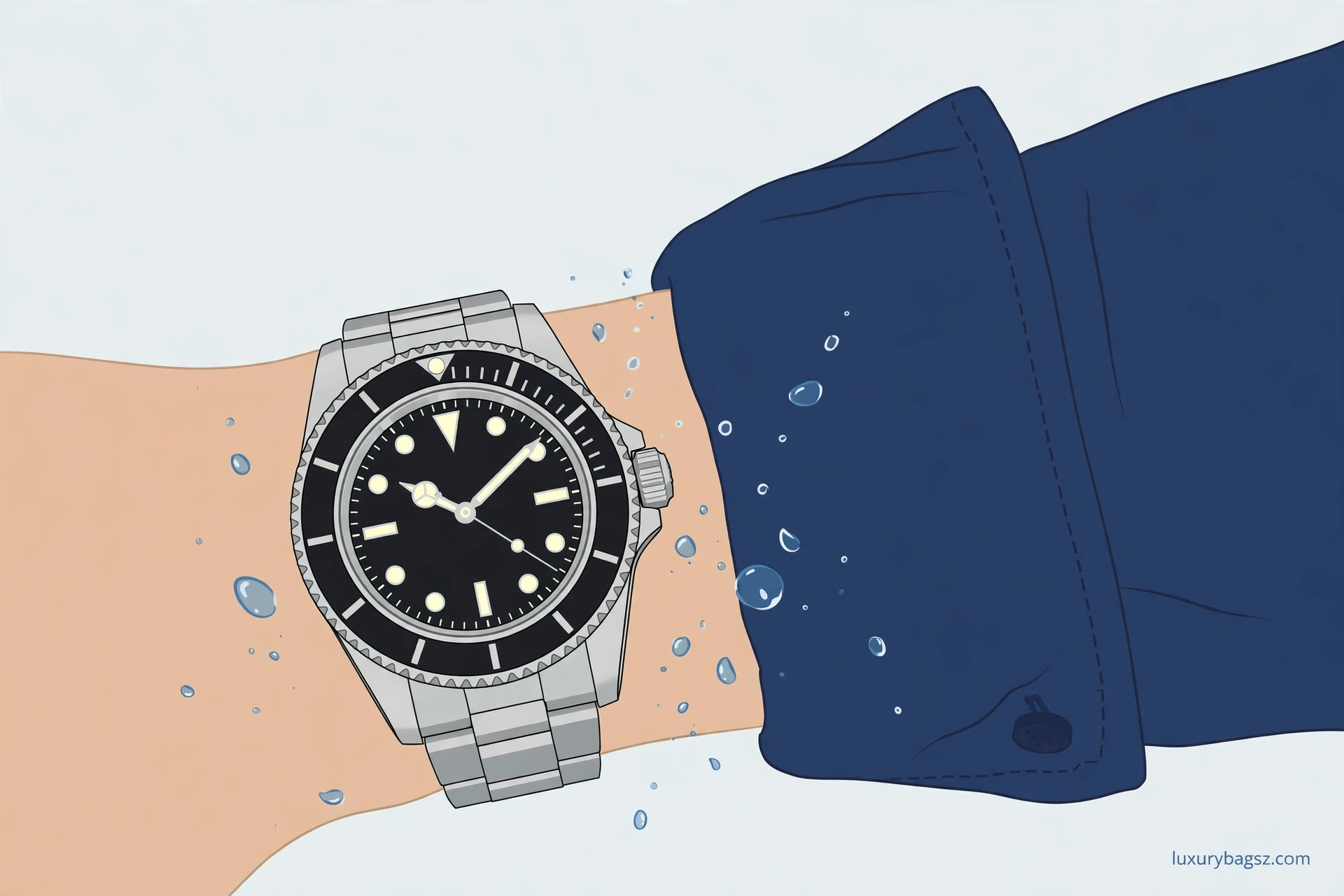
The Submariner is the dive watch all others answer to: a rotating bezel, a luminous dial, an Oyster case and 300 metres of water resistance in modern form.
It is also the most wearable icon here — equally at home under a cuff, on a boat or, honestly, doing nothing sportier than a school run.
Current models wear at 41 mm, and demand keeps even ordinary examples trading strongly. Our Rolex Submariner guide covers references, sizes and prices in depth.
If a man buys one sports watch in his life, the market has voted for this one for seventy years.
Rolex Daytona: The Racing Chronograph
The Cosmograph Daytona began as a tool for endurance drivers and became the most feverishly chased watch Rolex makes.
Its tachymeter bezel measures speed, its three subdials time laps, and its steel versions are the stuff of waiting-list legend.
Retail has been reported starting around $15,000, yet authorised dealers rarely have one to sell at that figure, which tells its own story.
Buy it because you love chronographs, not because of the queue. The queue is real, but the watch has to earn its wrist time after the hunt ends.
Rolex GMT-Master II: The Traveller
The GMT-Master II does the most useful trick in watchmaking: it tracks home time and local time at once, with a two-colour bezel for day and night.
For anyone who flies for work, it is the rare complication that gets used weekly rather than admired monthly.
It shares the Submariner's toughness — Oyster case, strong water resistance and Rolex's chronometer standard of about -2/+2 seconds a day.
Reported retail starts around the $10,000 mark, and consistent demand has kept resale strong across its colour combinations.
Royal Oak and Nautilus: The Designer Icons
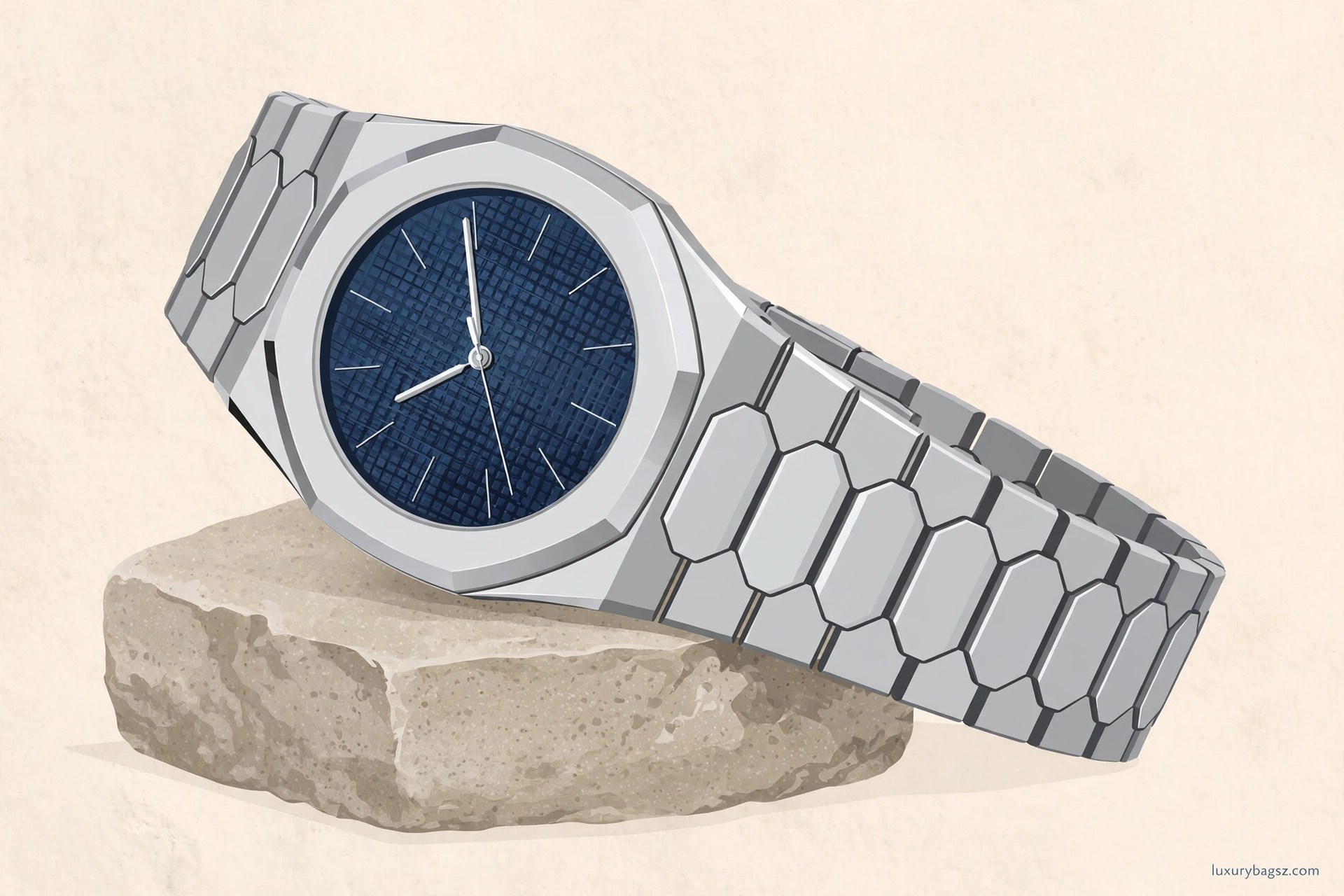
In 1972, Audemars Piguet launched the Royal Oak: an octagonal steel watch with an integrated bracelet, priced like gold. It created the luxury sports category.
Our guide to Audemars Piguet Royal Oak history and sizes traces that story and the modern range in detail.
Patek Philippe answered in 1976 with the Nautilus, from the same designer, Gérald Genta: softer, rounder, with its famous porthole case and horizontally embossed dial.
The Aquanaut followed in 1997 as the Nautilus's casual sibling, on a rubber strap. Our Patek Philippe Nautilus vs Aquanaut comparison separates the two properly.
Prices and the Resale Reality
Retail figures understate this market, because the hardest watches to buy new are priced by resale long before they reach a wrist.
The RealReal's reported starting points give the shape of it: Rolex sports models around $10,000 and up, the Daytona around $15,000, Aquanaut around $22,000 and Nautilus around $32,000 at retail.
Royal Oak chronographs were reported between roughly $38,000 and $80,000 at retail, depending on material and complication.
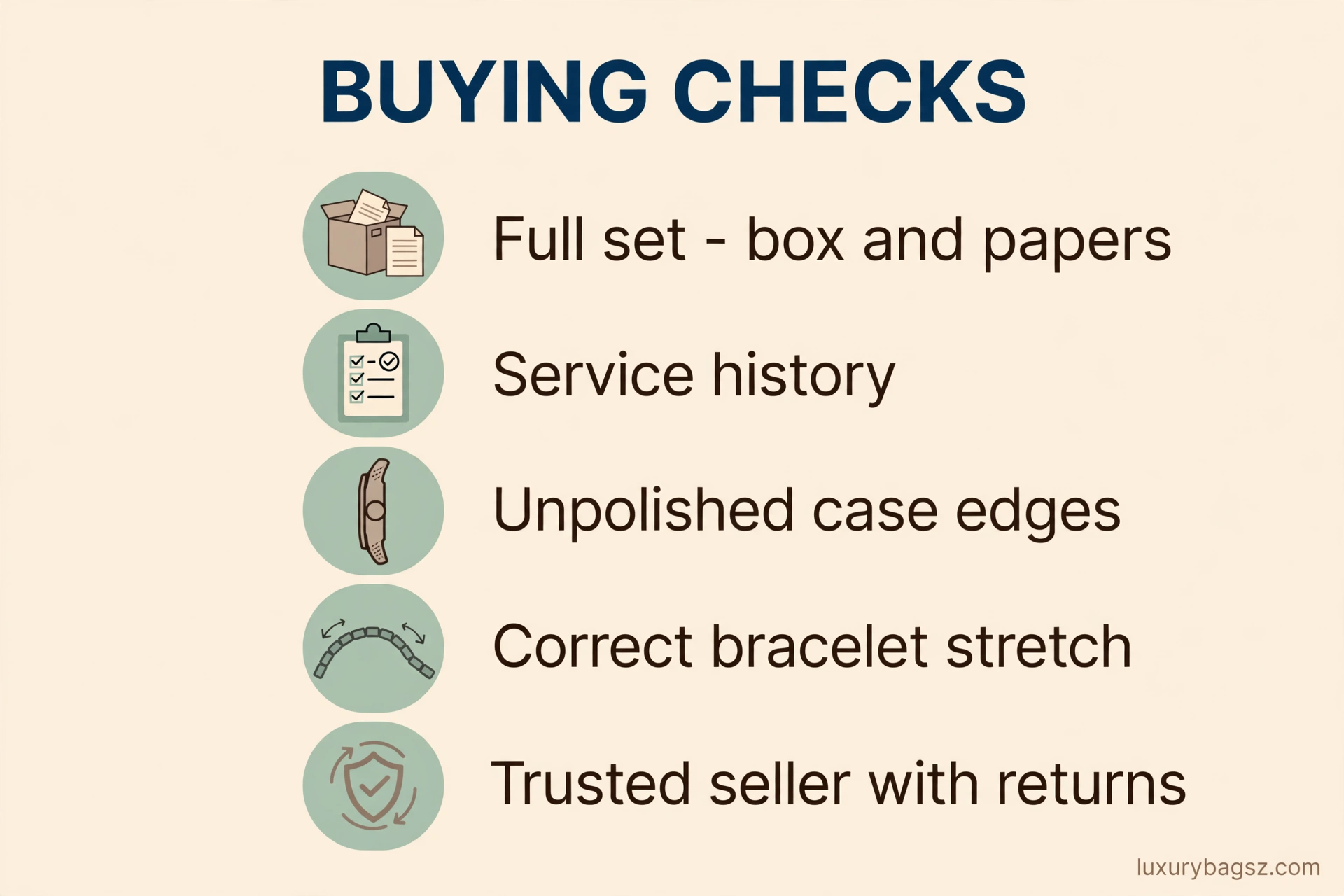
Above those numbers, condition rules. Full sets with papers, honest cases and service history command the premiums; polished, incomplete watches trail.
Buying One Without Regrets
Decide your route first: authorised dealer and patience, or pre-owned and a premium. Both are legitimate; mixing them up is where money leaks.
On any pre-owned watch, verify the reference and serial against the papers. Our Rolex serial number check shows how dating and verification work on the Rolex side.
Inspect case edges for over-polishing, bracelet stretch, dial originality and clasp function, and ask for the service history in writing.
Buy from a seller with a returns window and an authenticity guarantee. At these prices, the seller is part of the product.
Which One Should You Actually Buy?
Buy the Submariner for the one-watch life: toughest brief, easiest ownership, endless versatility.
Buy the GMT-Master II if you travel, the Daytona if chronographs are your thing, and the Aquanaut if you want Patek quality without ceremony.
Buy the Royal Oak or the Nautilus if design history is the point — they are the two watches that invented the world the others live in.
Whichever you choose, wear it. These watches were built to be used, and the best-kept examples at resale are loved, serviced and honestly worn — not locked away.
Frequently Asked Questions
What is the best men's sports watch overall?
The Rolex Submariner, for most buyers: it is tough, versatile, fairly priced within this field and supported by the deepest resale market. Icons above it cost far more.
Which sports watch holds its value best?
Steel models from Patek Philippe and Audemars Piguet have historically traded furthest above retail, with the Rolex Daytona close behind. Past performance never guarantees future prices.
Why is the Royal Oak so important?
Launched in 1972, it was the first luxury sports watch in steel, with an integrated bracelet and an octagonal bezel. The whole category descends from it.
Nautilus or Aquanaut?
The Nautilus is the dressier, bracelet-led icon from 1976. The Aquanaut, from 1997, is its casual sibling on a rubber strap. Both are scarce; taste and wardrobe decide.
How much should I budget for a first icon?
Around $10,000 and up at retail for core Rolex sports models, before pre-owned premiums. Patek Philippe sports models start around $22,000 at retail, and Royal Oak chronographs around $38,000.
Are these watches actually suitable for sport?
Within their ratings, yes. The Submariner is a genuine 300-metre dive watch. Dressier icons carry lower water resistance, so check the rating before swimming in one.
Is a waiting list the only way to buy at retail?
For the most demanded steel models, usually. Building a dealer relationship takes time; pre-owned buying is the immediate route, at a premium.
What does full set mean, and why does it matter?
Box, papers and accessories complete as originally sold. Full sets verify provenance and consistently achieve the strongest resale prices.
Should I buy a sports watch as an investment?
Buy it to wear. The icons have strong resale records, but prices move in cycles, and condition, authenticity and purchase price decide any individual outcome.
Which size suits most wrists?
Modern sports icons cluster between 40 and 42 mm. The Royal Oak and Nautilus wear larger than their numbers suggest because of their integrated bracelets, so try them on.
Final Verdict
Start with the job: diver, traveller, timer or design icon. Then pick the house whose story you want on your wrist — Rolex for the benchmark, Audemars Piguet for the original, Patek Philippe for the pinnacle.
All six are defensible purchases bought well and worn often. The only wrong answer in this field is a watch bought for someone else's wrist.