

Designer Leather Jackets: Leathers, Fits, Prices and Care
Designer Leather Jackets in Brief: A Decade Jacket, Priced Like One
A designer leather jacket costs from several hundred pounds to well over a thousand, and the money buys three things: better hides, better hardware and a pattern cut by people who understand how leather moves. Lambskin is the soft luxury choice for city wear; cowhide is the durable classic; goatskin sits between, light and pebbled. Fit should be close — leather eases with wear but never shrinks. This is a ten-to-twenty-year garment when chosen well. Buy the hide for your life, the fit for your body today, and condition it once or twice a year.
Set expectations before the details: a leather jacket is bought tight-ish, worn in like boots, and judged at year five, not week one. Nearly every disappointment in this category is a first-month judgement made too early.
Key Takeaways
- Lambskin is softest and most delicate; cowhide is toughest; goatskin balances both.
- Full-grain leather ages best; corrected and bonded leathers are the budget tells.
- Biker, racer and blazer fits suit different wardrobes — pick for your clothes, not trends.
- Fit close at purchase: leather relaxes roughly half a size with wear.
- Hardware quality — zips, snaps, lining — separates designer from imitation fastest.
- Care is leather care: condition yearly, hang wide, keep from radiators and plastic.
Why Leather Jackets Hold Their Place
The leather jacket has outlived every trend cycle since the 1950s because it does two jobs at once: protection and polish, in one garment. Leather also ages personally. Creases at the elbow, softening at the collar and a deepening sheen turn a bought jacket into your jacket over years. Designer houses justify their prices by making that ageing graceful: hides that patina rather than crack, and stitching that survives the softening. Few wardrobe purchases are still worn weekly after a decade. A well-chosen leather jacket is the standing exception, which reframes its price entirely.

Full-grain versus corrected grain decides the ageing story more than the animal does. Full-grain keeps the hide's real surface and patinas; corrected grain is sanded and coated, looks perfect at first and tired early.
The Leathers: Lambskin, Cowhide, Goatskin
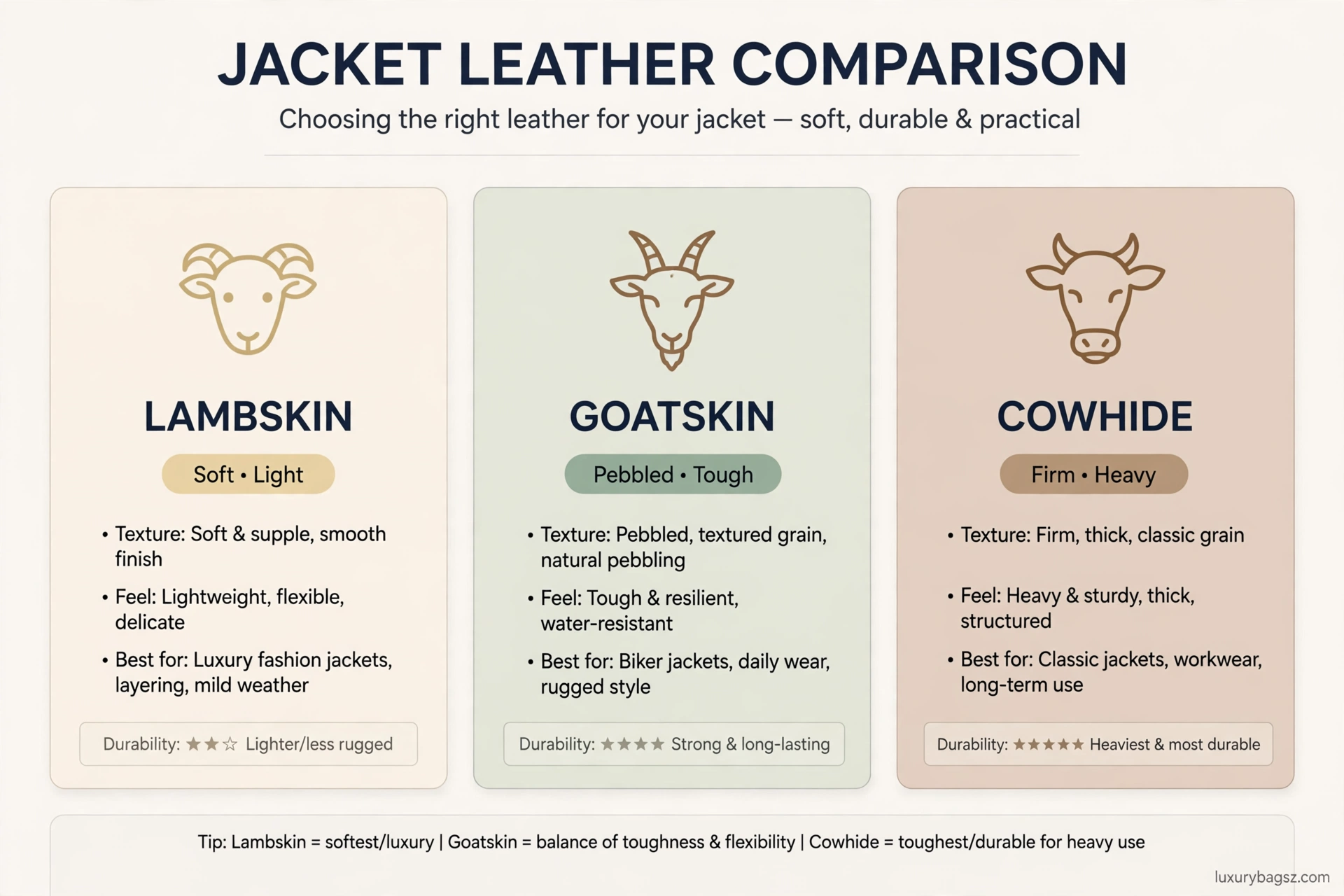
Lambskin is buttery, light and drapes almost like cloth. It suits blazers and city bikers, and it scuffs if your life involves motorbikes, toddlers or luggage racks. Cowhide is the original jacket leather: thicker, stiffer at first, and the most resistant to abrasion and weather. It breaks in over a season and then outlasts trends. Goatskin is pebbled, light and quietly tough, with natural water resistance that makes it a traveller's favourite. Suede and nubuck reverse the surface for softness at the cost of weather sense. Our leather types explained guide goes deeper on grains and finishes, including why full-grain matters more than the animal.
Lining choice is the warmth decision in practice: cupro or viscose for three-season city wear, quilted polyester for autumn depth, and shearling when the jacket must be the winter coat, not a guest in it.
Wind is leather's home ground: at motorway or coastal-walk levels it outperforms every cloth jacket of similar weight. Rain is the limit — a soaked jacket dries slowly and should never be hurried with heat.
Warmth, Weight and Seasons
An unlined leather jacket is a wind shield more than insulation: superb in spring and autumn, insufficient alone in deep winter. Quilted or shearling linings change the garment entirely, adding real warmth and real weight. Our explainer on whether leather jackets are warm breaks down lining types honestly. Weight matters across a day. A heavy cowhide biker is armour for an hour's ride and a burden through a day of shopping; lambskin disappears on the shoulders. Buy for your climate and your carrying habits. The warmest jacket is the one you will actually keep on.
Hardware colour is a wardrobe decision hiding inside a style one: silver zips read cooler and more modern, brass warmer and more classic. Match the metal to the jewellery and boots you already own.
The Fits: Biker, Racer, Blazer, Bomber
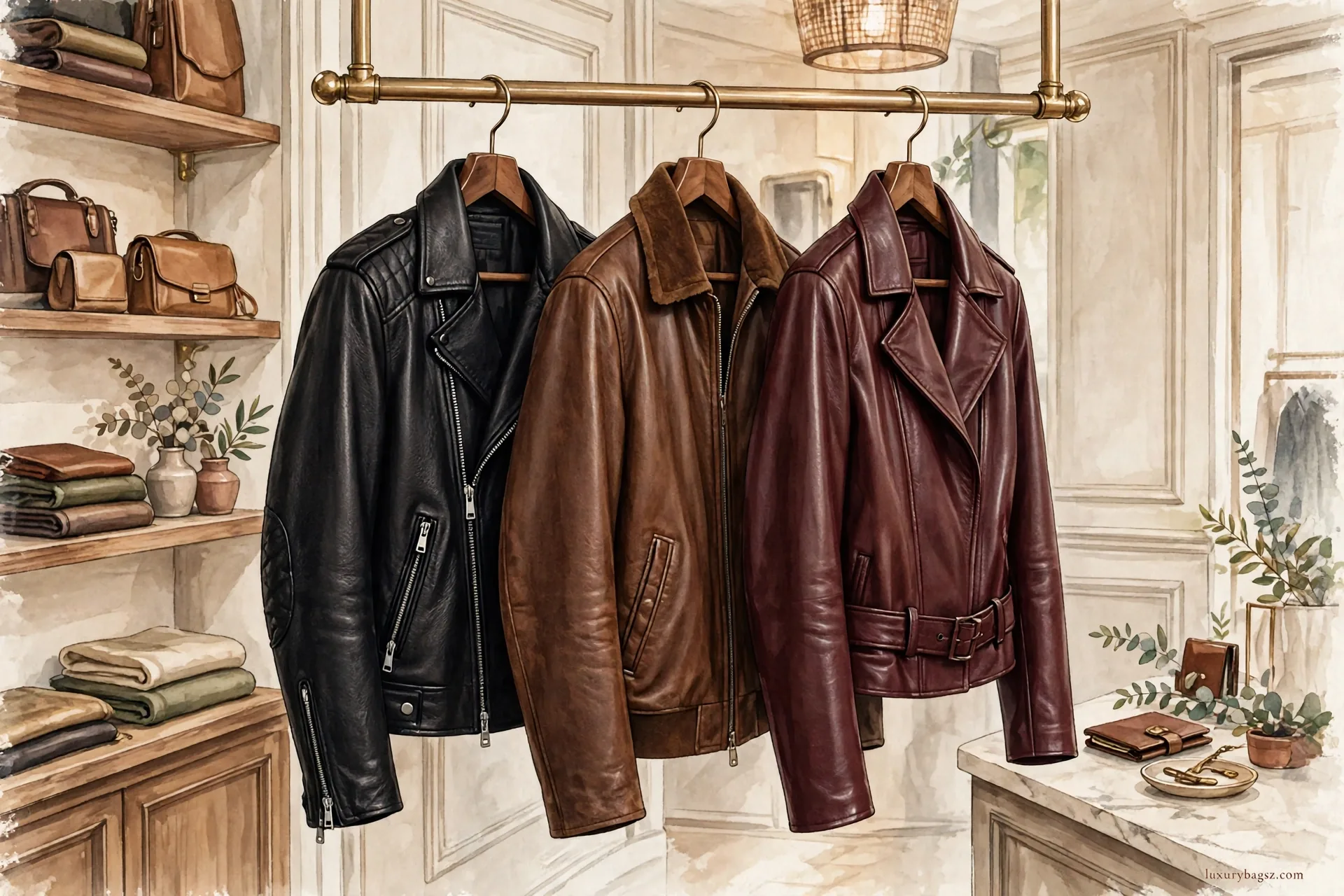
The biker — asymmetric zip, wide lapels, belted waist — is the icon. It sharpens dresses and plain outfits alike and carries the most hardware, so quality shows fastest here. The racer or café style strips the detail away: centre zip, small collar, clean lines. It is the easiest to wear with tailoring and the least likely to date. The leather blazer suits work wardrobes, in lambskin with proper lapels. The bomber adds ribbed cuffs and ease, and reads most casual of the four. Colour is the second decision: our brown vs black leather jacket comparison weighs versatility against patina before you commit.
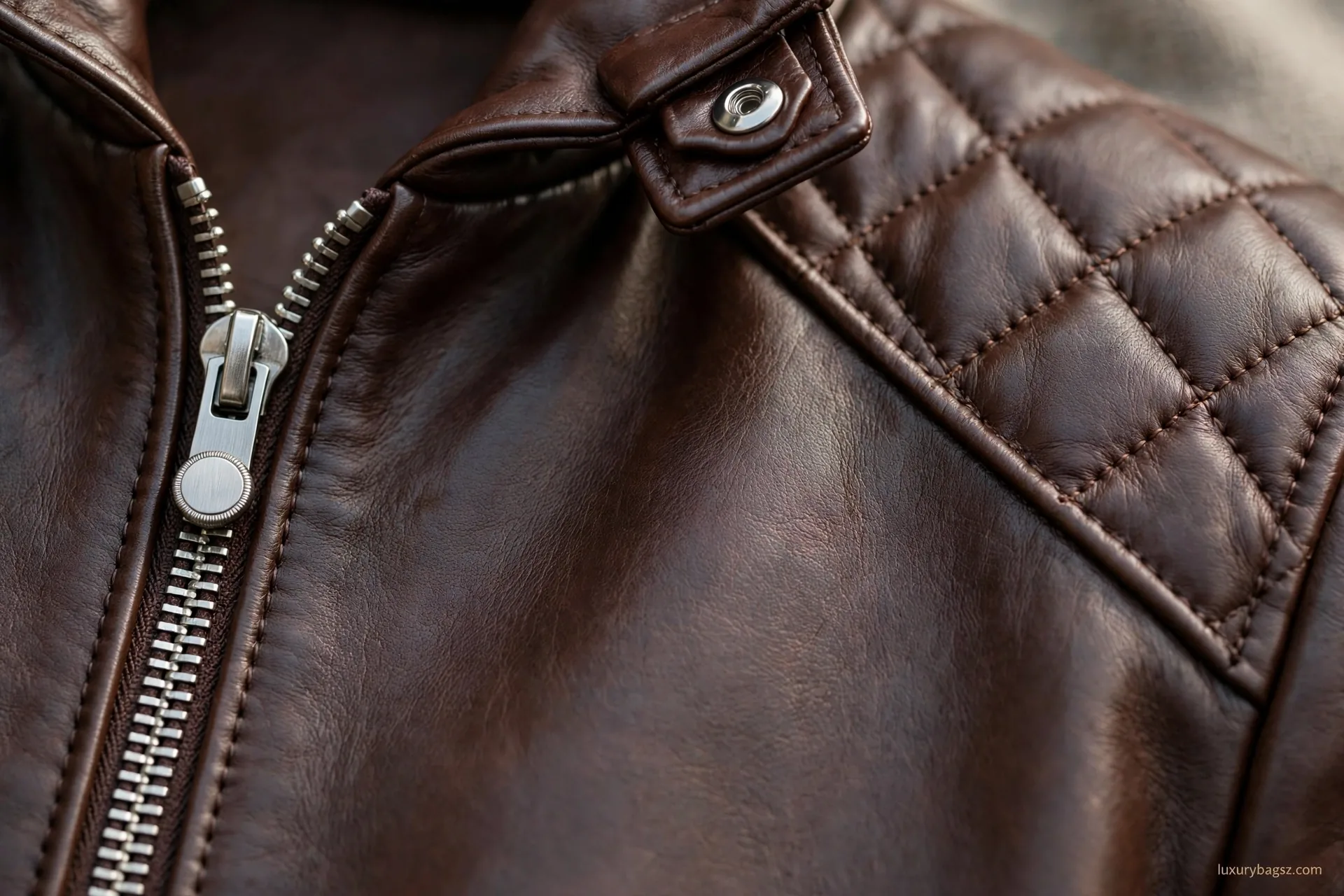
Smell and sound help in the shop: good garment leather smells rich, not chemical, and quality zips run with a smooth, low note. Grain should vary subtly across panels — leather is skin, not wallpaper.
Stitching density is visible quality: look for tight, even rows with no skipped stitches at stress points like pocket corners and cuff joins. Leather cannot be re-sewn along the same holes without weakening.
What the Designer Premium Buys
Hides selected for even thickness and few scars, cut so panels match in grain — that alone separates a designer jacket from a market-stall one at ten paces. Hardware follows: zips that run smoothly for decades, snaps with weight, and buckles that do not bend. Test every zip in the shop, twice. Linings are the quiet tell: breathable viscose or cupro rather than sweaty polyester, quilted where warmth is promised, and finished so seams do not chafe. The comparison film in this part walks the main leathers side by side, which is the fastest way to train your hands before a purchase.
Try the jacket with your arms forward, as if driving or typing. Shoulder and back ease decide daily comfort more than chest measurements do, and riding-up sleeves at the desk grow annoying by day three.
Gloves and boots share the hide logic, so a jacket that matches your existing leather goods in tone builds outfits for free. Chestnut with chestnut, black with black — the jacket becomes a system, not a soloist.

Sizing: Close Now, Kinder Later
Leather eases where it is stressed — across the back, at the elbows — gaining roughly half a size of comfort in the first months of wear. Buy so the jacket zips without strain and the shoulders sit at your shoulder point. Sleeves should end at the wrist bone; leather sleeves can be shortened but rarely lengthened. If you plan winter layering, say so before sizing: a jacket fitted over a tee will not close over a jumper, and no amount of breaking-in fixes arithmetic. For a lighter everyday alternative in the same wardrobe slot, our designer denim jackets guide covers the trucker with the same rigour.
Buy from sellers who show the jacket worn or on a form, with the lining photographed. Lining tears at the armpits are the commonest hidden defect, and they are invisible in flat-lay photographs by design or by luck.
Pre-Owned and Authenticity Checks
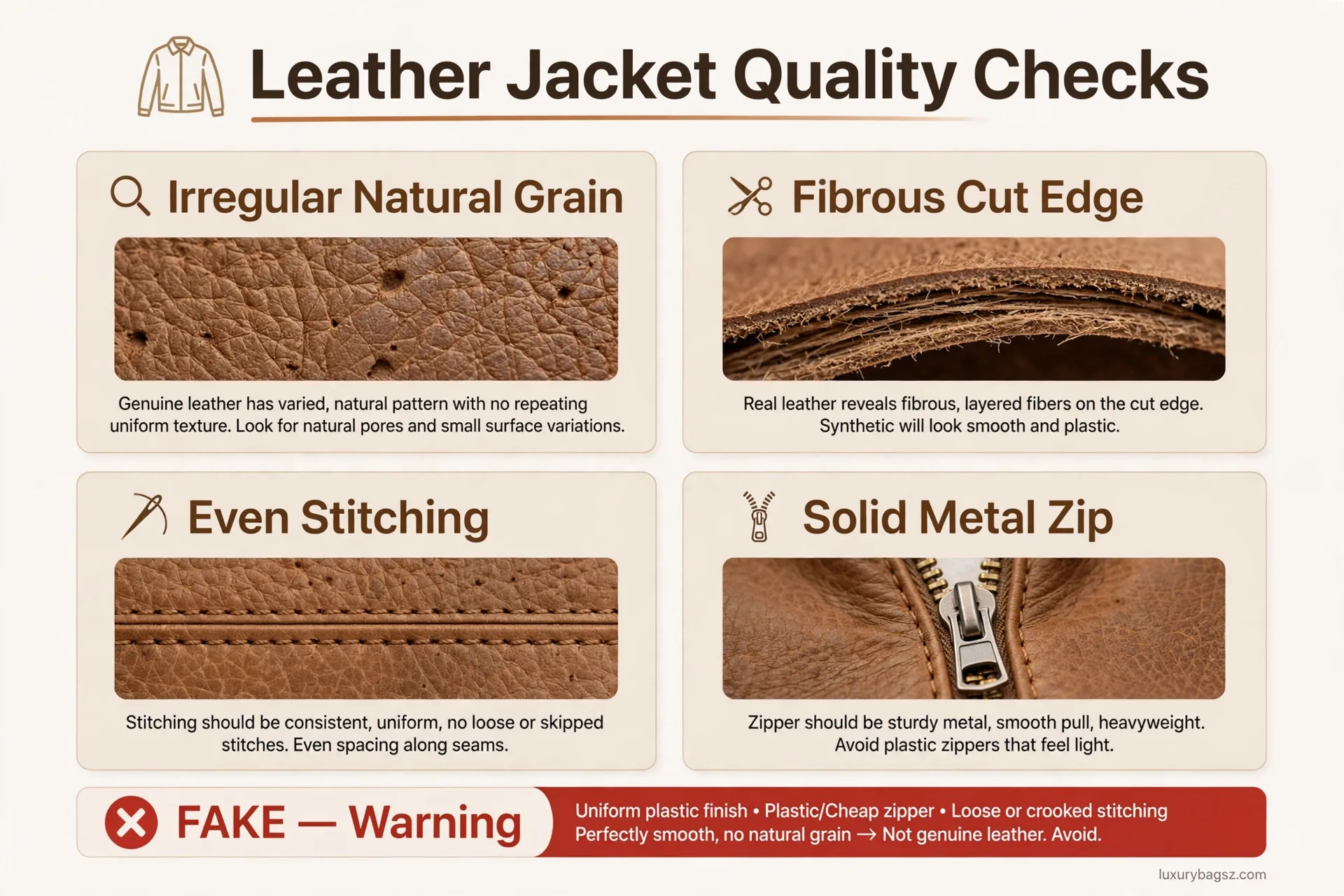
Smell the leather: real hides smell rich and faintly sweet; plastic-coated imitations smell of chemicals. Then look for pores — printed grain repeats too perfectly. Flex the elbow and collar. Quality leather creases finely and recovers; coated splits crack along the fold lines, which no conditioner can reverse. Check zips, snaps and lining against the brand's known hardware, and weigh the jacket: good hides and hardware have heft that fakes rarely match. Reject no-returns sales of high-value jackets unless the price truly prices the risk. The red warning on the checks visual is there for this exact purchase.
Rotate with the rest of your coats in heavy weather weeks. Leather benefits from rest days like good shoes do: shape returns, moisture leaves the lining, and the hide's fibres recover between wears.
Leather Care: Condition, Hang, Breathe
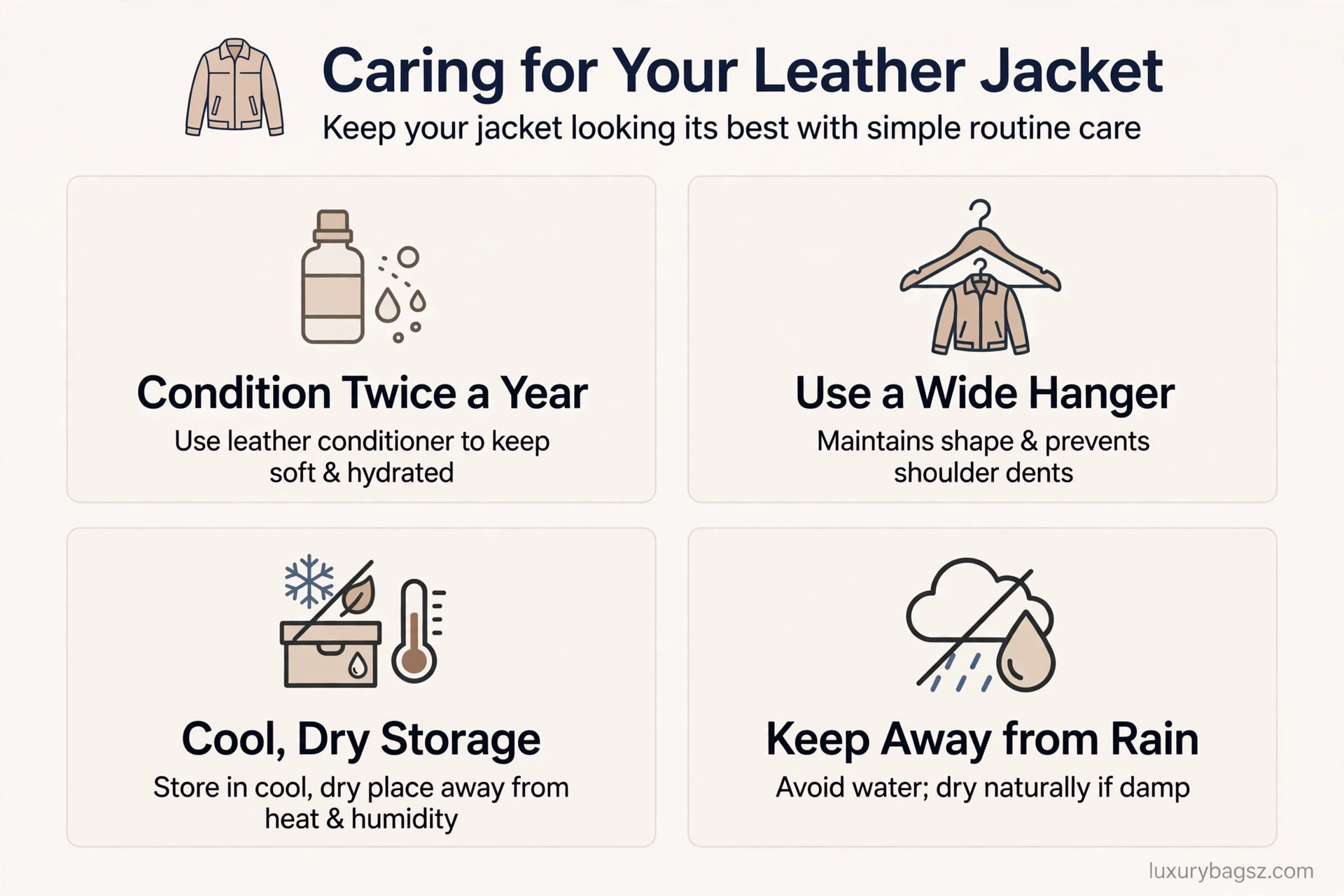
Condition once or twice a year with a product made for garment leather, sparingly: over-conditioning darkens light hides and softens structure that should stay. Hang on a wide, shaped hanger that fills the shoulders, in a wardrobe with air around it. Narrow hangers dent shoulders permanently; plastic covers trap moisture. If the jacket gets soaked, dry it slowly at room temperature, away from radiators, then condition once dry. Heat-dried leather cracks from the inside out. Store summer jackets in breathable cotton covers, and wear them on dry days through winter rather than letting them stiffen unworn for months.
Frequently Asked Questions
Which leather is best for a jacket, and how can I tell real leather from imitation?
For softness and city polish, lambskin. For durability and weather, cowhide. For light weight with toughness, goatskin. The best choice is the one matched to how roughly the jacket will live.
Smell for a rich, natural scent, look for irregular pores, and flex a fold: real leather creases finely and recovers. Perfectly repeating grain and a chemical smell give imitations away.
Do leather jackets stretch?
They ease about half a size where stressed — back, elbows, waist — over the first months. They never shrink, so buy close but never tight; a jacket you cannot zip will not become one you can.
How much does a designer leather jacket cost?
From several hundred pounds to well over a thousand, depending on hide, hardware, lining and house. Shearling-lined and exotic styles sit at the top of the range.
Are leather jackets warm enough for winter?
Unlined ones block wind but insulate little. Quilted or shearling-lined styles can handle real winter, especially layered. Choose the lining for your climate, not the label.
Can a leather jacket get wet, and how often should I condition it?
Light rain will not ruin a finished leather jacket: dry it slowly at room temperature and condition afterwards. Suede and nubuck are different — keep them dry or use protector sprays.
Once or twice a year is enough for most garment leather, using a light conditioner meant for clothing. Test inside a cuff first, especially on pale or suede finishes.
What fit should a first buyer choose?
A racer or a clean biker in black or dark brown, close but zippable, in the hide that suits your life. Versatile first, statement second — the statement one is the second jacket.
Do designer leather jackets hold value, and can they be altered?
Well-kept classics from respected houses resell steadily, especially bikers and racers in black. Condition of the leather and working hardware matter more than the season of purchase.
Sleeves can be shortened and waists adjusted by leather specialists, at higher cost than cloth tailoring. Shoulder width and length are effectively fixed, so size those right at purchase.
Conclusion: Buy the Hide, Then Give It Years
A designer leather jacket is priced like furniture and should be chosen like it: hide, hardware and fit first, fashion last. Pick the leather your life actually needs, fit it close, condition it yearly, and it will still be your best jacket when today's trends are a quiz question.






