

Designer Denim Jackets: Fits, Washes, Prices and What to Check
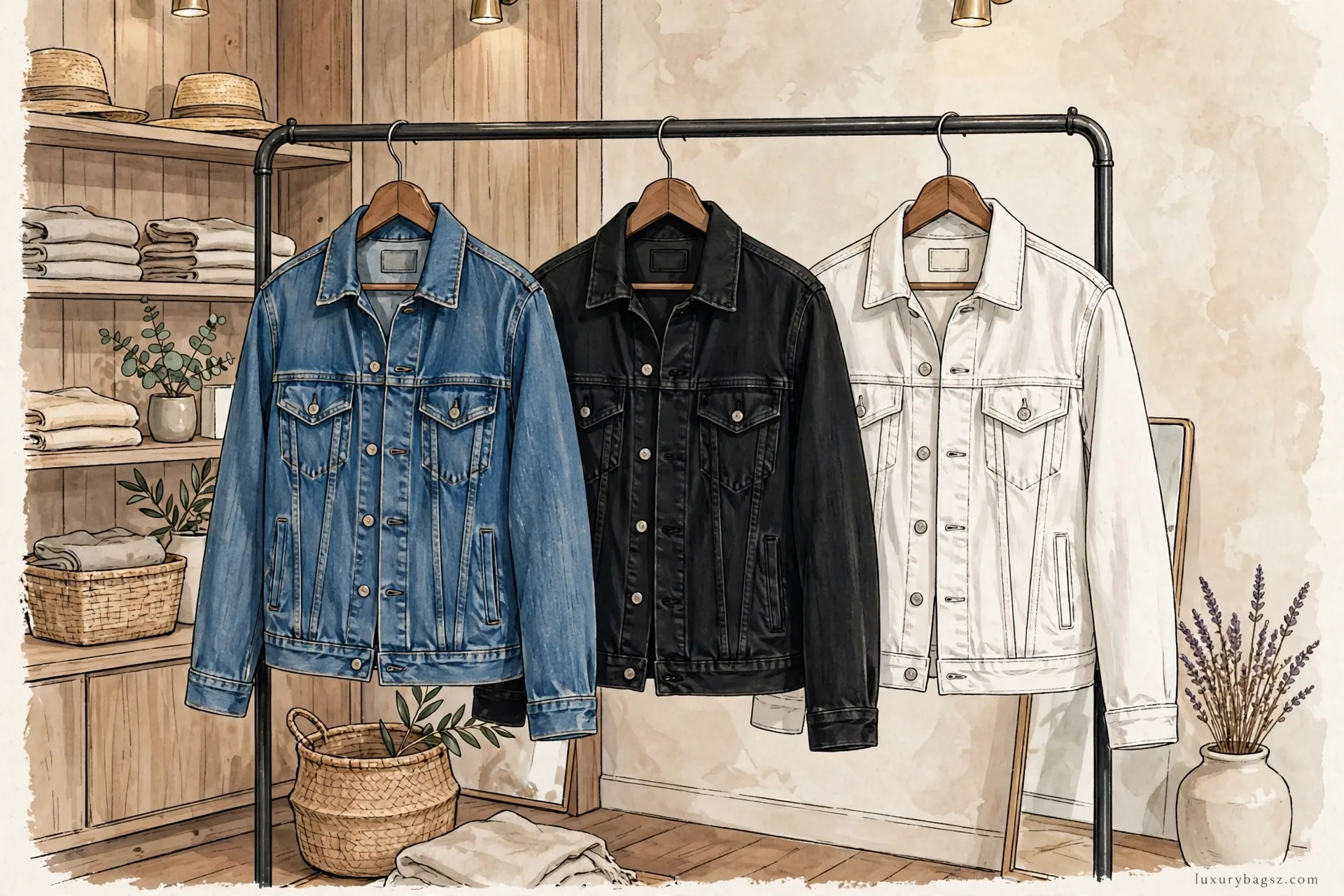
Designer Denim Jackets in Brief: The Trucker, Perfected
A designer denim jacket is the classic trucker shape made properly: heavier denim, better buttons and rivets, cleaner stitching and a fit that has been patterned rather than approximated. Prices typically run from around a hundred pounds at premium high-street level to several hundred for designer labels, with embellished or shearling-lined styles above that. Buy the mid-blue classic fit first — it is the hardest-working jacket in most wardrobes — and wash it rarely, cold and inside out, so the colour you bought is the colour you keep.
A quick buying order settles most indecision: fit first, because it cannot be altered much; wash second, because it sets the jacket's whole mood; weight third; and the label a distant fourth, every time.
Key Takeaways
- Three fits cover the market: classic trucker, cropped and oversized.
- Heavier denim (12oz and above) holds shape and ages better than thin cloth.
- The designer premium buys hardware, stitching, pattern and wash quality.
- Mid-blue is the versatile buy; raw and black are specialists; white is summer-only care.
- Pre-owned checks: button and rivet security, collar and cuff wear, true colour.
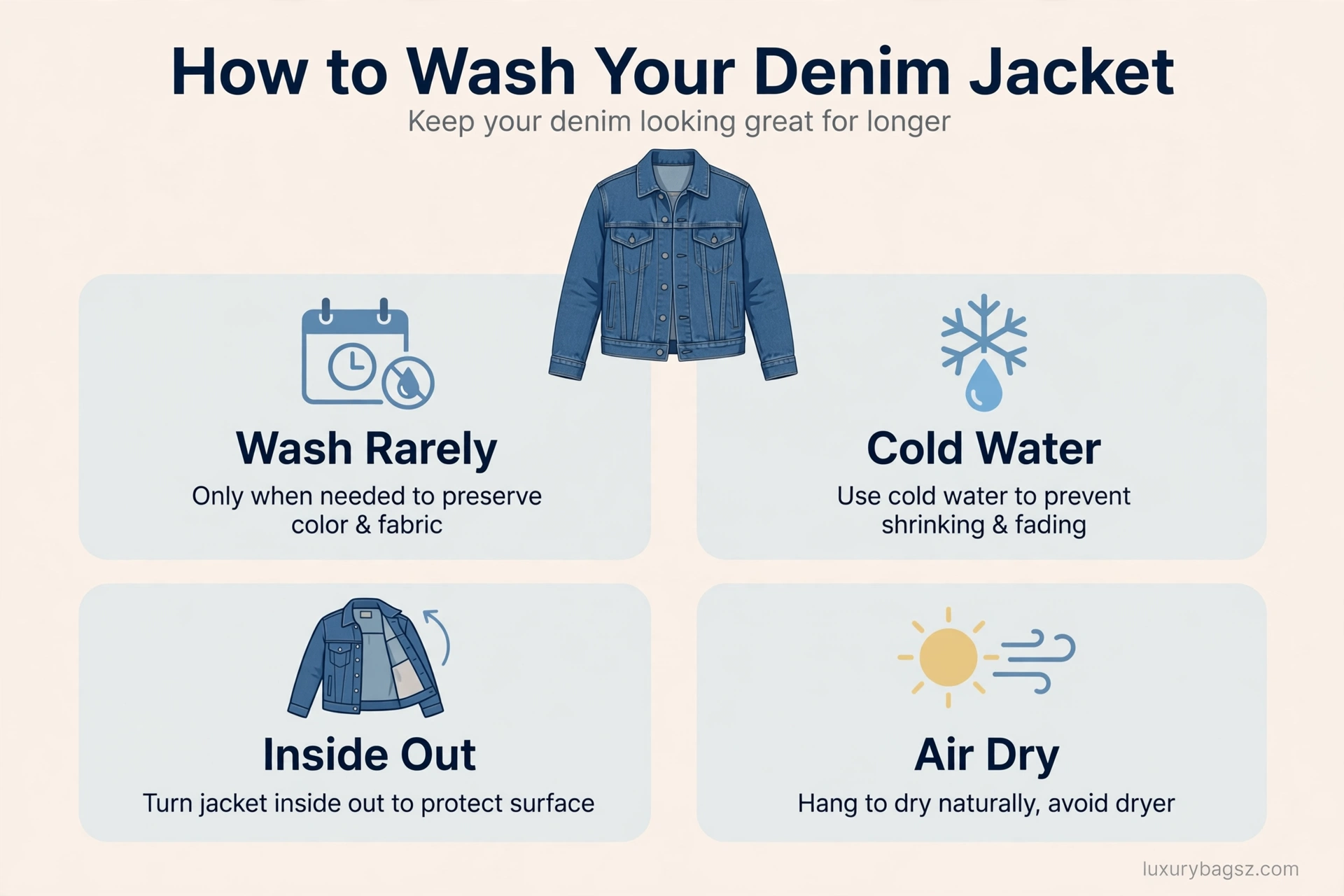
- Wash rarely, cold, inside out, and dry in shade to keep the fade even.
Why the Denim Jacket Never Leaves
Few garments cross as many lines: the denim jacket works over dresses, with tailoring, across seasons and across decades without looking like a costume. Its design settled early — waist length, button front, chest pockets, adjustable hem — and has barely changed since, which is why old ones rarely look dated. Designer versions do not reinvent it. They refine it: the collar sits better, the sleeves are the right length, and the denim has enough body to hold a line. That permanence is the value case. A good denim jacket is a ten-year garment in a wardrobe of two-year trends.
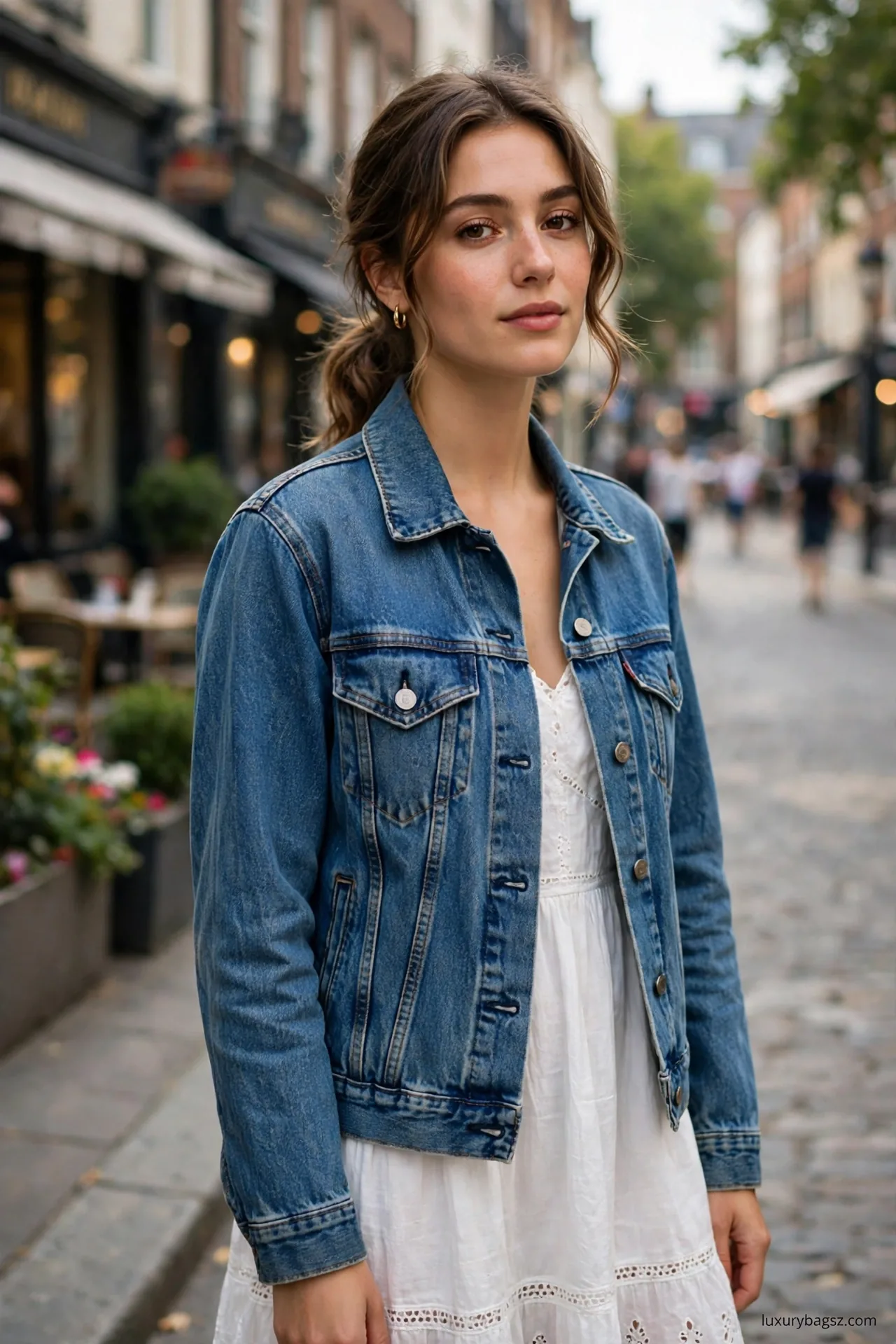
Fit through the shoulders decides layering destiny: a classic trucker that sits exactly on the shoulder takes knitwear beneath; one that drops off it is already in oversized territory, whatever the label says.
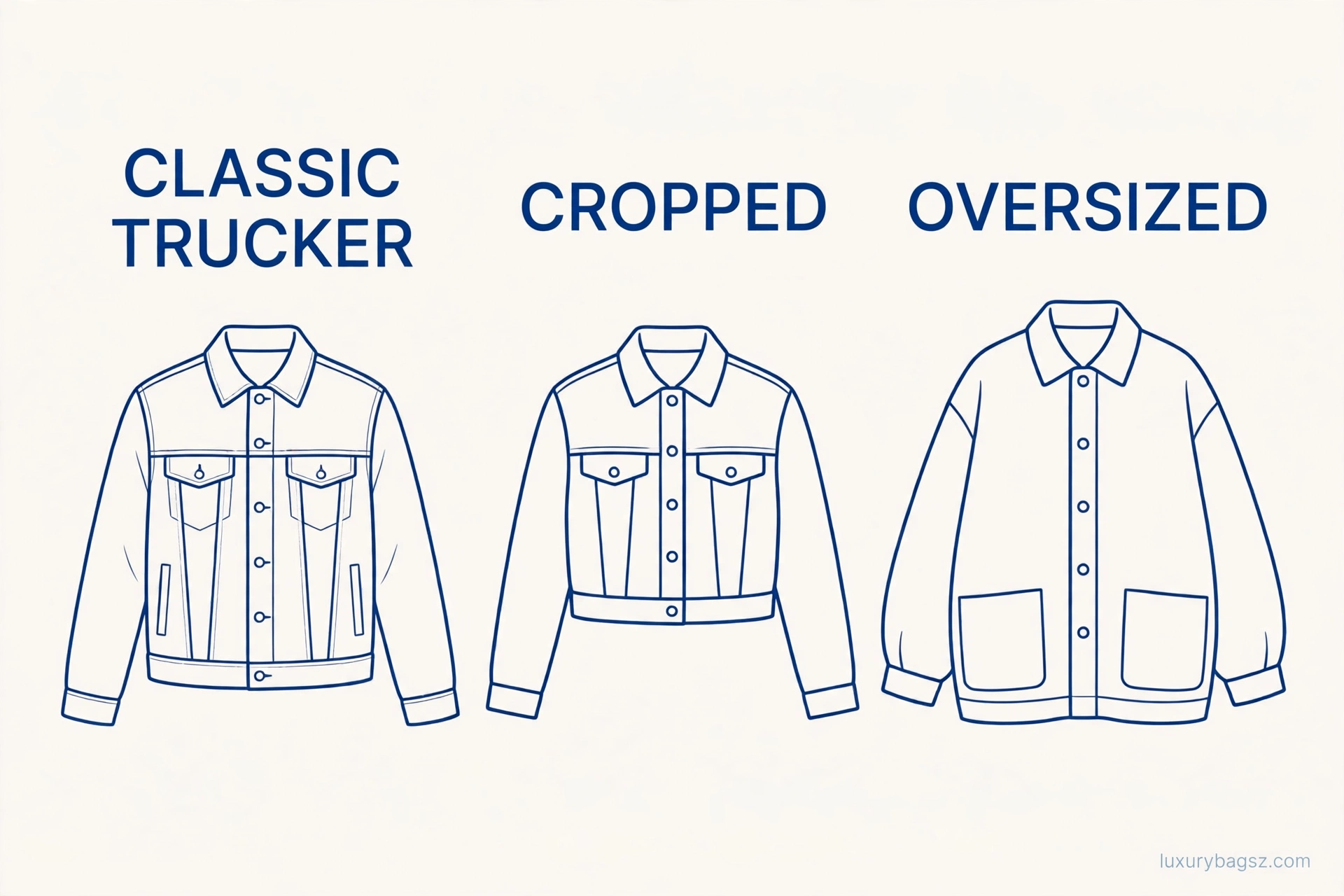
The Three Fits
The classic trucker ends at the waist, fits close without gripping, and layers over light knitwear. It is the default for a reason and the safest first buy. The cropped fit ends above the waist and pairs with high-waisted trousers, skirts and dresses. It is a proportion tool: it shows the waist and lengthens the leg line. Oversized fits borrow from workwear, with dropped shoulders and room for hoodies beneath. They suit casual dressing and swamp formal outfits quickly. Try each fit buttoned. A denim jacket you cannot button without strain will be worn open forever, which halves its weather value.
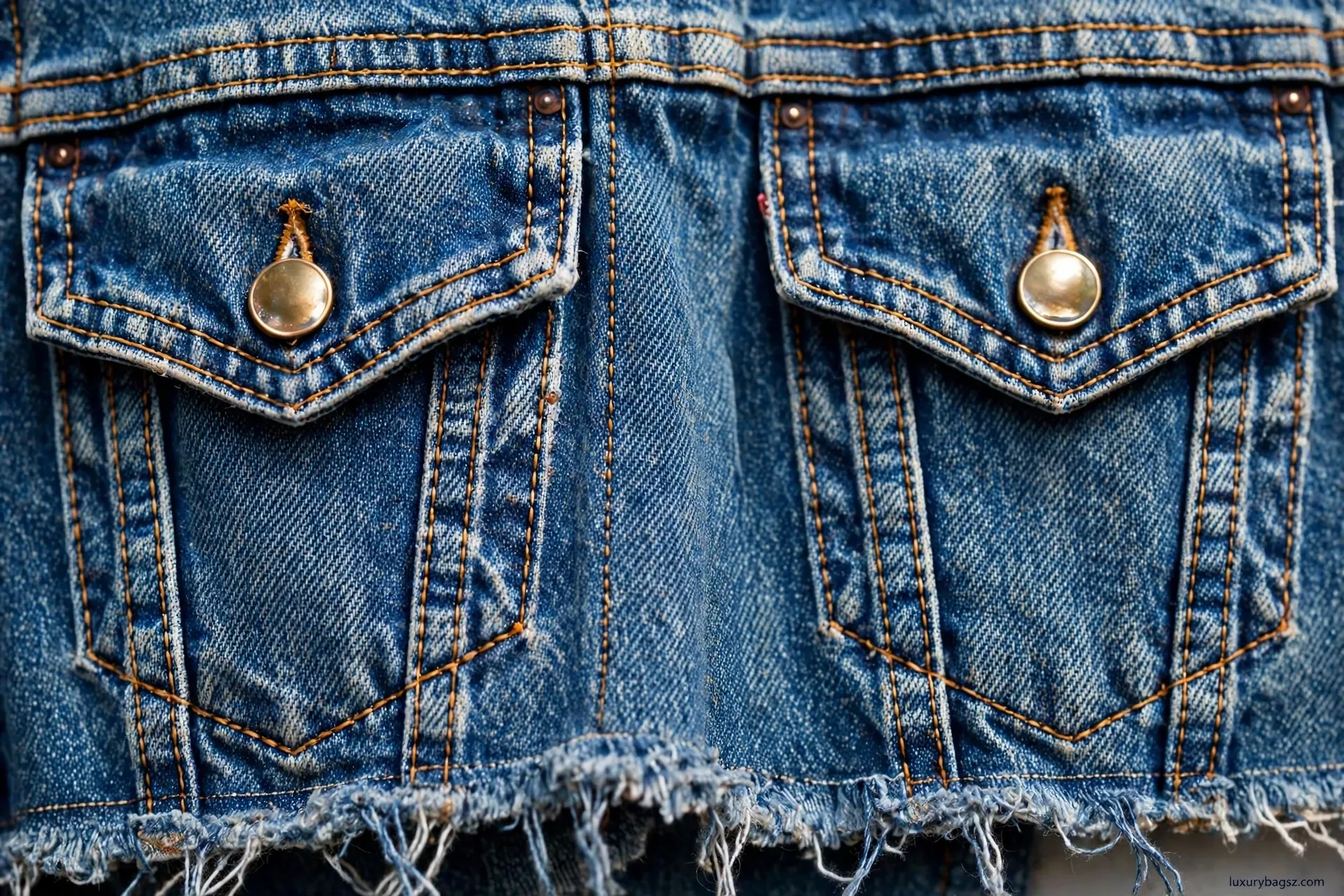
Distressing is the wash decision's loud cousin. Factory rips and fading arrive pre-written, while plain denim writes its own story on your body. Most long-term owners prefer the autobiography to the ghost-written version.
Wash also decides formality more than fit does: dark rinse reads almost smart, mid-blue reads classic casual, and bleached or distressed washes announce leisure. One jacket cannot cover all three registers.
Denim Weight and Wash: The Real Decisions
Weight is measured in ounces. Light denim under 10oz drapes softly and suits summer; 12–14oz cloth holds the classic structure and softens beautifully with wear. Raw or rinse denim starts dark and stiff, fading where your body bends it. It is the enthusiast's choice and rewards patience with a personal fade. Mid-blue stonewash is the versatile middle: already softened, casual without sloppiness. Black denim dresses up further but fades to grey at stress points. White and ecru jackets are summer specialists — glorious in June, a laundering commitment by August. Choose them second, not first.
Collars reveal construction honestly: a well-made collar rolls gently and lies flat when open. Collars that flip up or curl at the points betray thin interfacing that no amount of pressing will reform.
What the Designer Premium Actually Buys
Hardware first: shank buttons that do not wobble, rivets set clean, and buttonholes stitched densely enough to survive years of use. Stitching second: even, dense contrast stitching with no wandering lines at the pockets and placket. Cheap jackets confess themselves here within a glance. Pattern third: sleeves pitched correctly so the jacket does not twist, and a back yoke that keeps the shoulders square when you reach forward. Wash quality last: designer washes fade evenly and hold dye better, so the jacket ages into character rather than blotchiness.
Evening is the trucker's secret shift: over a slip dress with heels, or with black trousers and boots, the same jacket that did the school run becomes sharp enough for dinner. Few garments moonlight this well.
Colours beyond blue earn their place slowly: a white trucker for summer dresses, a black one for evening. Add them only when the mid-blue is genuinely worn out or worn weekly — they are specialists, not substitutes.
Styling: The Jacket at Work
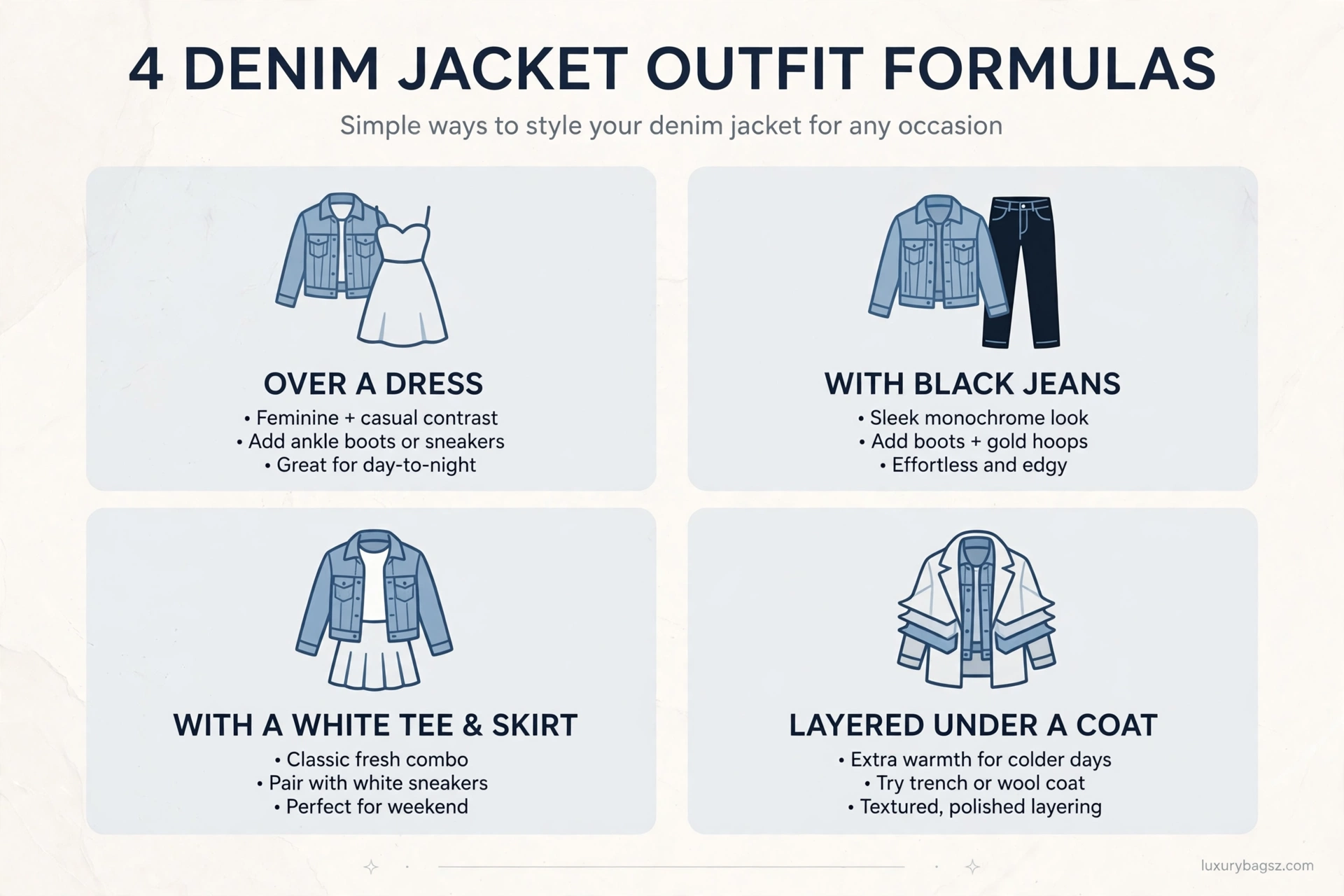
Over a summer dress is the classic formula — the jacket adds structure and warmth as the evening cools. Our guide to designer cotton clothing for summer builds whole outfits on this pairing. Double denim works when the two blues differ clearly in shade or weight. Match them exactly and the outfit reads as a uniform; separate them and it reads as a choice. With tailoring, keep the jacket classic and the trousers clean. With black jeans and boots, a mid-blue trucker does the sharpening on its own. The styling film below shows the range on real outfits. Notice how often the fit, not the label, is what makes each look work.
Women's and men's cuts differ more than labels admit: men's truckers run longer in body and sleeve with straighter waists. Many women buy the men's classic for an oversized fit and tailor the sleeves.
Pocket truth: trucker chest pockets are decorative for most modern purposes, and the hidden inside pocket on better jackets is the one that matters for a phone. Check for it if you carry yours on you.
Sizing and Layering Sense
Denim jackets are cut to be the outer layer of a light outfit. Size for what goes beneath: a tee in May, a jumper in October, or buy two fits for two seasons. Shoulders should end at your shoulder point on classic fits. Sleeves that cover the wrist bone completely will bunch at every desk and table. Rigid denim gives a little — perhaps half a size of ease across the back with wear — but never buy tight counting on stretch that heavy cloth does not have. Stretch-blend denim forgives more and wrinkles less, at the cost of the crisp ageing that makes rigid denim worth owning for a decade.
Store the jacket folded or on a wide hanger, never crushed behind coats: denim creases set hard, and a season of bad storage shows as white fold lines that read as damage, not character.

Pre-Owned Checks and Denim Care
Check buttons and rivets for wobble and corrosion, and the collar and cuffs for the fraying that shows first on hard-worn jackets. Look at true colour indoors and out: fading at folds is character, but blotchy bleach spots and yellowed white denim do not wash back to even. Wash rarely — denim improves with restraint — and follow the method in our denim care and washing jeans guide: cold, inside out, gentle. The same restraint runs through our wider notes on caring for designer clothing: less washing, shade drying, and storage folded or on wide hangers.
Resale is kind to this category: classic fits in mid-blue from known makers sell briskly at all sizes. If your wardrobe changes, a good trucker is one of the easiest designer pieces to pass on well.
When Designer Is and Is Not Worth It
It is worth it for the classic trucker you will wear weekly for years: hardware, stitching and wash quality compound over that much use. It is harder to justify for novelty styles — heavy distressing, extreme crops, loud embellishment — where the trend will date before the cloth wears. Shearling-lined and leather-trimmed hybrids sit between: lovely objects, but their care is no longer simple denim care, and prices climb accordingly. Buy the jacket your actual life needs. The best denim jacket is the one that leaves the house, not the one that photographs best in the wardrobe.
Frequently Asked Questions
How much should a designer denim jacket cost?
Expect from around a hundred pounds at the premium end of the high street to several hundred for designer labels. Embellishment, shearling lining and Japanese denim push prices higher.
What denim weight is best?
Around 12–14oz gives the classic structure that softens well with wear. Lighter cloth under 10oz suits high summer; heavier cloth takes longer to break in but lasts longest.
How often should I wash a denim jacket?
As rarely as you can manage — spot clean marks, air the jacket after wear, and wash only when it truly needs it. When you do: cold, inside out, gentle cycle, shade dry.
Can I wear denim on denim?
Yes, if the shades clearly differ. Pair a mid-blue jacket with black, white or much darker jeans. Matching blues exactly is what makes the outfit read as a uniform.
Which fit should I buy first?
The classic trucker in mid-blue. It layers over dresses, knitwear and tailoring, suits most bodies, and is the least likely to date of any jacket you will own.
Do designer jackets fit true to size?
Mostly, but cuts differ by house: some designer fits run slim. Check whether you can button it over your thickest intended layer before removing tags.
Is raw denim worth the effort?
For enthusiasts, yes: it fades uniquely to your wear. For everyone else, a good rinse or mid wash gives 90 percent of the look with none of the stiff first months.
How do I check a secondhand jacket?
Buttons and rivets firm, collar and cuffs unfrayed, colour even, and no bleach blotches. Denim hides little, so daylight inspection is genuinely reliable here.
Can a denim jacket be tailored?
Sleeves can be shortened and waists nipped by a good alterations tailor, though the flat-felled seams make work pricier than on a shirt. Shoulder width is effectively fixed.
Will a denim jacket keep me warm?
It blocks wind and suits spring and autumn layering, but it is not a winter coat. Lined versions extend the season; below that, layer knitwear beneath an oversized fit.
Denim: Buttons, Rivets and a Decade of Wear
The designer denim jacket earns its premium quietly: in buttons that stay, stitching that holds and a wash that ages with grace. Start with the mid-blue classic trucker in honest 12oz cloth, size it over your real layers, and let a decade of wear do the styling. Few purchases repay you so reliably.
A denim jacket is workwear wearing a designer label, so I check it like workwear: buttons and rivets secure, stitching unbroken, colour true. Those are the same checks — hardware and stitching — that decide a pre-owned bag for me. Pass them, and a classic trucker will repay you for a decade, exactly as this guide promises.






